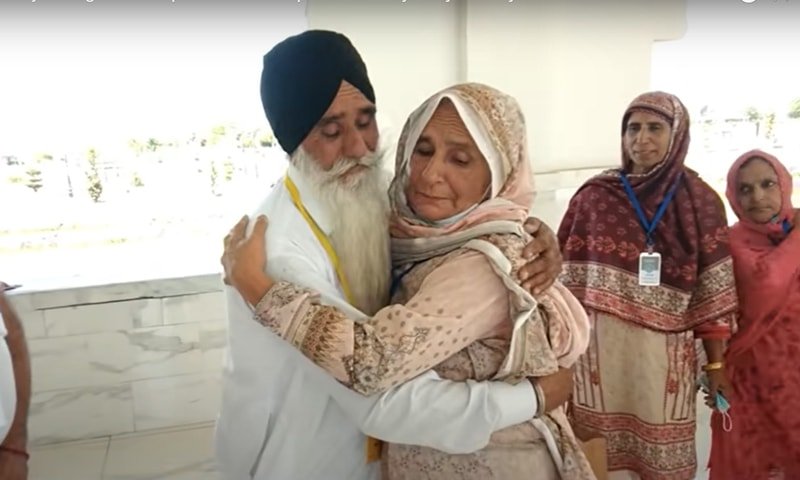
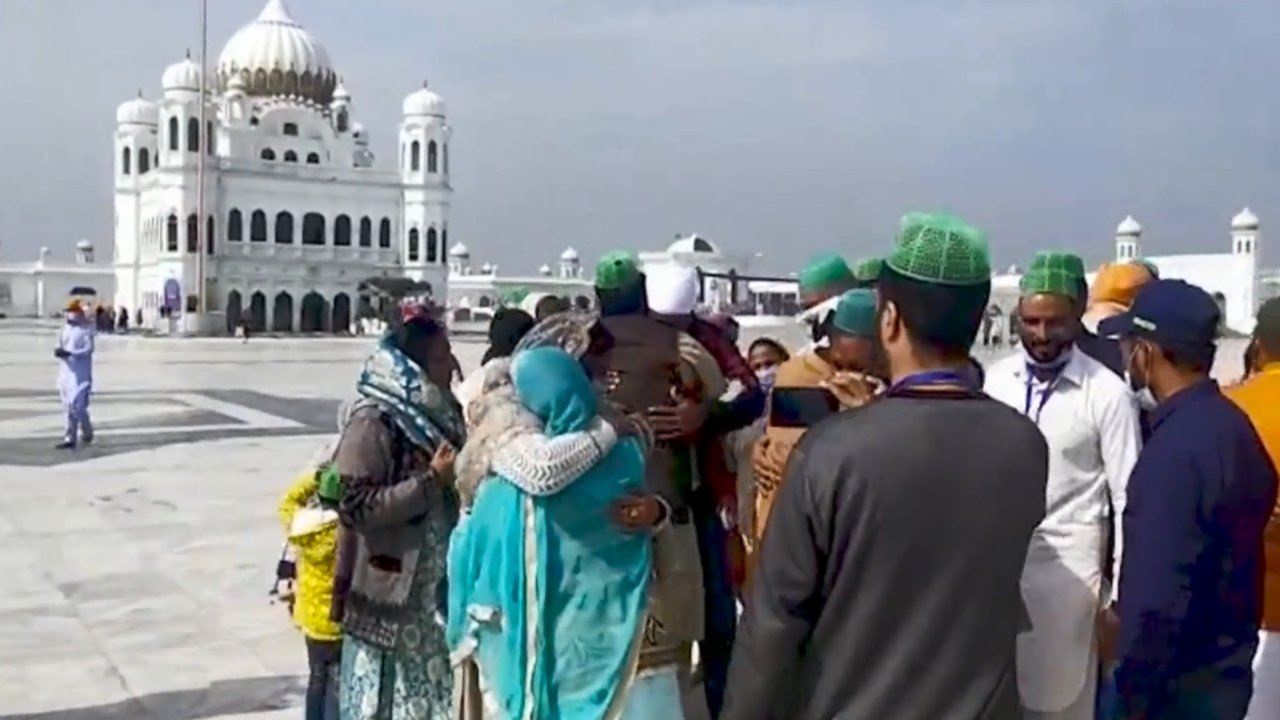
A woman who wasseparated from her family during the partition of the Indian subcontinent met her Sikh brothers at Kartarpur, reports Dawn.
In 1947, Mumtaz Bibi was an infant who was lying on the dead body of her mother who was killed by violent mobs. Muhammad Iqbal and his wife, Allah Rakhi, adopted Mumtaz Bibi during the time of partition and raised her as their own daughter.
Iqbal and his wife did not tell Mumtaz that she was not their daughter. Two years ago, Iqbal’s health suddenly deteriorated and he told Mumtaz that she was not his real daughter and that her real family was Sikh.
After Iqbal’s death, Mumtaz and her son Shahbaz started searching for her family through social media. They knew the name of Mumtaz’s real father and the village (Sidrana) in Patiala district of Indian Punjab where they settled after being forced to leave their native home.
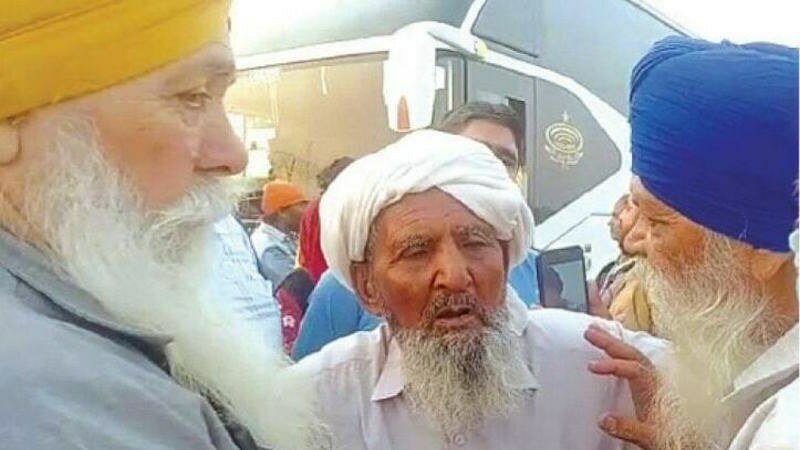
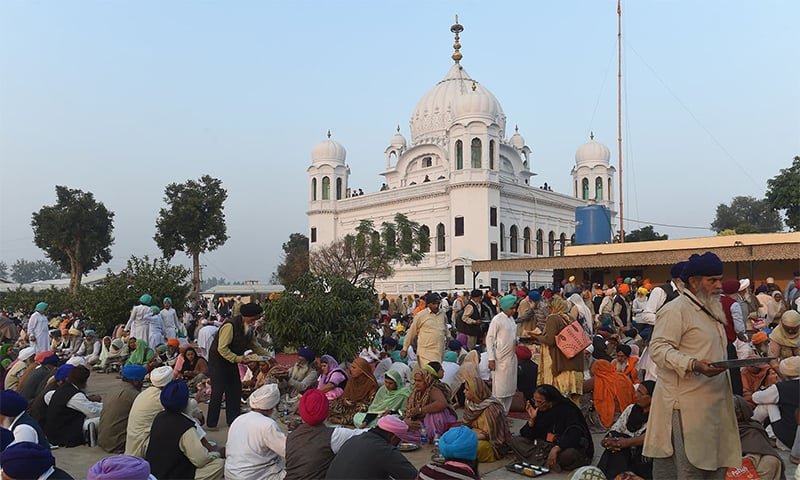
The families once lost through violence got connected through social media. Mumtaz, along with her other family members, reached Gurdwara Darbar Sahib at Kartarpur and met her lost brothers after 75 years. Mumtaz’s brothers Sardar Gurumeet Singh, Sardar Narendra Singh, and Sardar Amrinder Singh, accompanied by family members, also reached Kartarpur to meet their lost sister.
A Christian family reunited after 75 years at the Kartarpur Corridor. They were separated during the partition of the sub-continent.
Shahid Rafiq Matoo, a resident of Manawala in Nankana Sahib, along with his family met his relatives from India in Gurdwara Darbar Sahib Kartarpur. It was the first time that both families have met since 1947.
According to Rafiq Matoo, his grandfather Iqbal Masih arrived in Pakistan after partition whereas his two brothers, Bakhshish Masih and Inayat Masih, stayed in India.
Though Inayat Masih came to Pakistan, he could not meet other family members. He also revealed that his grandfather and his two brothers have died but now their families have been reunited after such a long time.
He said, “These are very happy moments for us. We had contacts on WhatsApp but today was the first time we were meeting our family members.”
He also added that his family members from India live in Amritsar. Six family members, including his cousin arrived at Kartarpur Corridor while eight members of Matoo’s family came from Manawala.
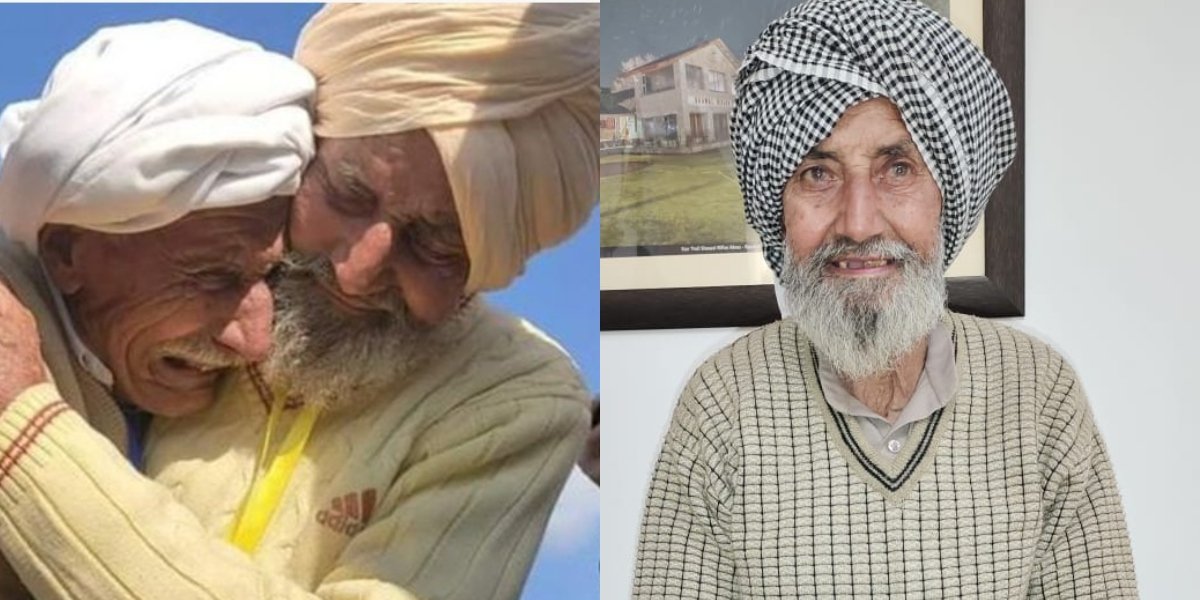
The Pakistan High Commission has issued a visa to Indian Sika Khan to visit Pakistan. Sika Khan was reunited with his brother Muhammed Siddique after 74 years at the Kartarpur Corridor.
“Today, Pakistan High Commission issues visa to Sika Khan to visit his brother, Muhammed Siddique and other family members in Pakistan. The two brothers separated in 1947 were recently reunited after 74 years at Kartarpur Sahib Corridor,” the Pakistan High Commission in India wrote in a tweet.
Sika Khan, in a video message, thanked Pakistan High Commission for issuing him a visa.
Sika Khan also met with CDA Aftab Hasan Khan and interacted with Mission’s officers. He appreciated his interaction and thanked the CDA for the cooperation extended to him. pic.twitter.com/ZS4zSpia9j
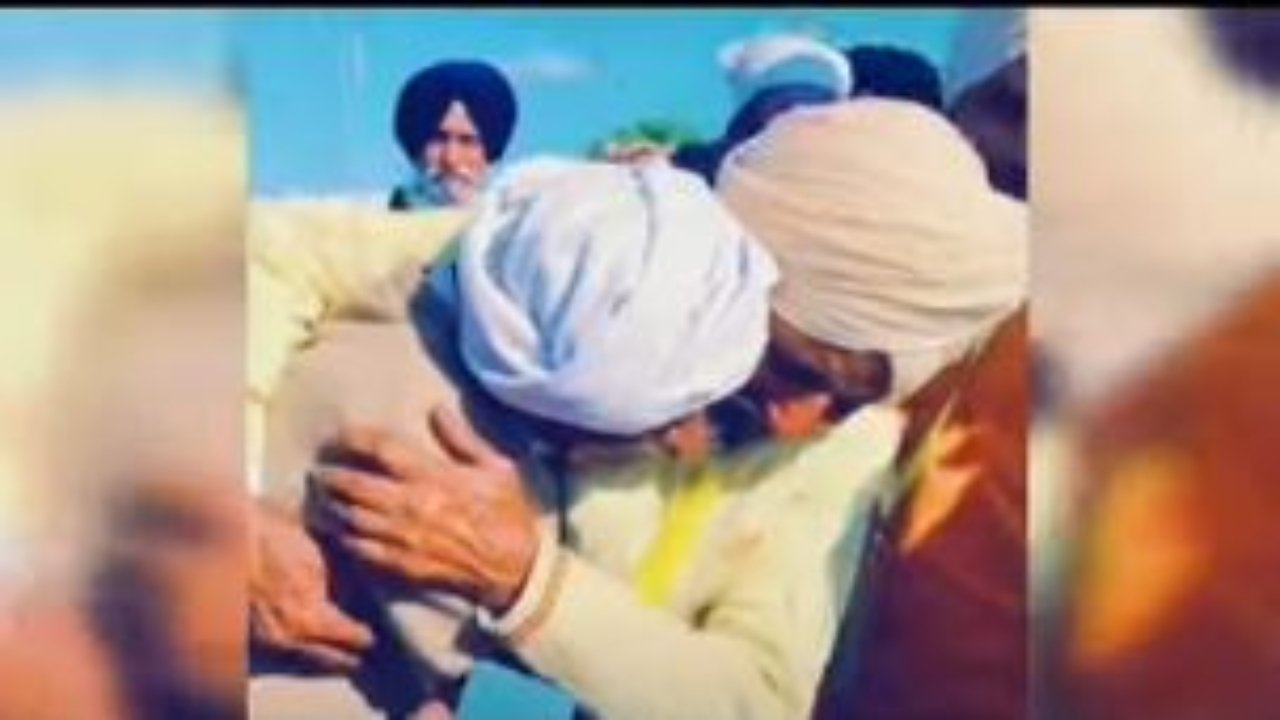
The video of them meeting after 74 years went viral on social media. The moment when they hugged each other brought tears to their eyes, and people watching the video.
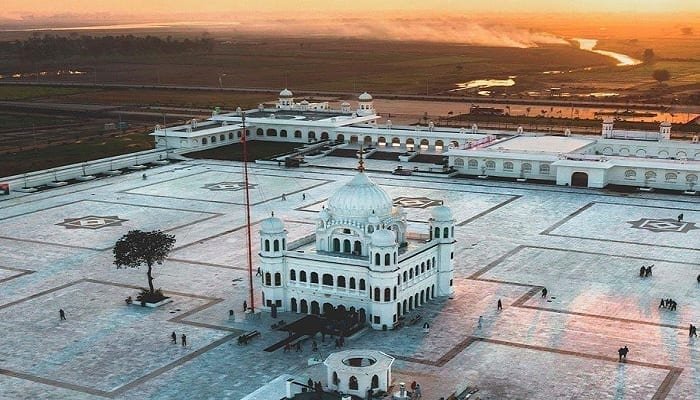
The Kartarpur Corridor, which links Gurdwara Darbar Sahib in Pakistan, the final resting place of Sikhism founder Guru Nanak Dev, to Dera Baba Nanak shrine in Gurdaspur district, reopened in November.
Two brothers who got separated during the partition of the sub-continent have finally reunited at the Kartarpur Corridor after 74 years, reports ARY News.
Muhammad Siddiq aged 80, residing in Faisalabad, Pakistan who separated from his family during the partition, and his brother, Habib who lives in the Indian Punjab. The moment when they hugged each other brought tears to their eyes.
The Kartarpur Corridor, which links Gurdwara Darbar Sahib in Pakistan, the final resting place of Sikhism founder Guru Nanak Dev, to Dera Baba Nanak shrine in Gurdaspur district, reopened in November.
The pilgrimage to the Kartarpur Sahib gurdwara was suspended in March 2020 due to the Covid-19 pandemic.
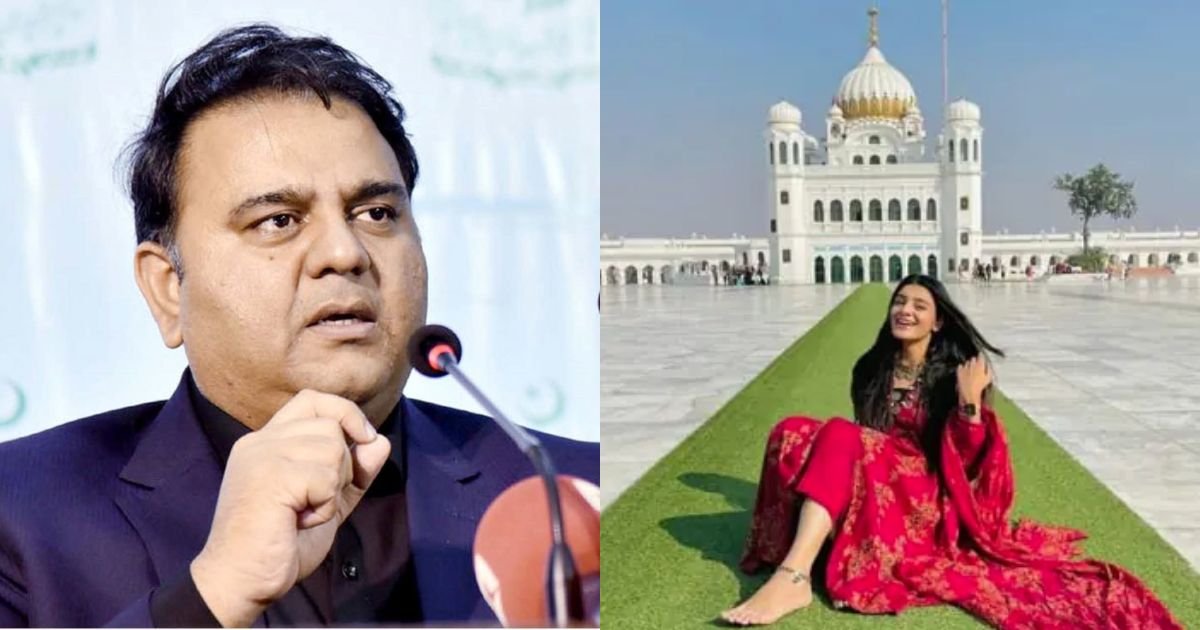
Minister of Information and Broadcasting of Pakistan Fawad Chaudhry has lashed out at a model for hurting the Sikh community after she posed ‘bareheaded’ for a clothing ad at the Kartarpur Gurdwara Darbar Sahib.
Taking to Twitter, the information minister wrote: “The Designer and the model must apologise to Sikh Community. KartarPur Sahib is a religious symbol and not a film set.”
According to reports, the woman who runs Mannat, a ready-to-wear women’s online clothing store in Pakistan, got a photo-shoot done at the Gurdwara Darbar Sahib complex in the recent past with the model posing bareheaded with her back towards the Gurdwara.
In the now-deleted photographs, the woman is seen wearing a red suit posing for the camera without covering her head with the Gurdwara Darbar Sahib in the background.
It should be noted that the Shiromani Gurdwara Parbandhak Committee, the single largest representative body of Sikhs, has pasted posters inside the gurdwara complex cautioning devotees not to shoot entertainment videos after a few of them were caught shooting TikTok videos.
Many have criticised the model and demanded her apology. Former president of Delhi Sikh Gurdwara Management Committee Paramjit Singh Sarna said in a statement that this is a “highly objectionable” act that has “severely hurt” the Sikh religious sentiments.
Sarna said that he would take up the issue with the Chairman of Pakistan Evacuee Trust Property Board Dr Amar Ahmad on priority and ask him to make the PMU staff aware of the Sikh “rehat maryada” (Sikh code of religious conduct).
He called upon Pakistani authorities to place written instructions in Urdu about Sikh “Maryada”. He also urged the Pakistan Sikh Gurdwara Prabandhak Committee (PSGPC) and local authorities in Narowal that visitors to the historical shrine must be sensitised about the Sikh code of conduct applicable at gurdwaras.
The Kartarpur Corridor has brought together two friends separated after India was divided into two countries, Dawn has reported.
Sardar Gopal Singh from India who is now 94 and Muhammad Bashir from Pakistan who is now 91 got separated in 1947. They both hugged each other when they met almost after six decades.
Sardar Gopal Singh came to Kartarpur to perform religious rites at Gurdwara Darbar Sahib and Bashir visited Kartarpur as a visitor.
Gopal Singh, while recalling old memories, said that both of them were young at the time of partition. Bashir, who is from Narowal, said that even before partition, Gopal and he used to visit Baba Guru Nanak’s Gurdwara.
Religion and pilgrimage aside for a moment… this is a heart-warming story from Kartarpur Sahib ❤️❤️
The Kartarpur Corridor reunited two nonagenarians friends, Sardar Gopal Singh (94) from India and Muhammad Bashir (91) from Pakistan. They had got separated in 1947. pic.twitter.com/VnKoxhKxLb
The Kartarpur Corridor, which links Gurdwara Darbar Sahib in Pakistan, the final resting place of Sikhism founder Guru Nanak Dev, to Dera Baba Nanak shrine in Gurdaspur district, reopened in November. The pilgrimage to the Kartarpur Sahib gurdwara was suspended in March 2020 due to the Covid-19 pandemic.
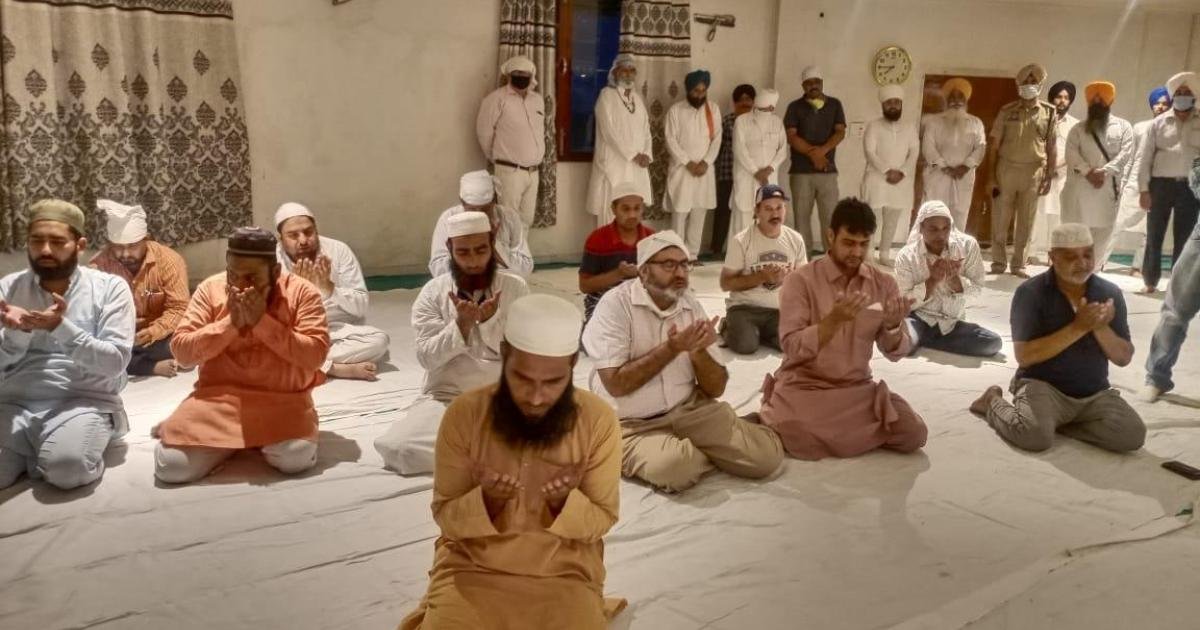
After an official ban on Muslim prayers at open places in India’s Gurugram city near New Delhi, a local organisation taking care of gurdwaras, holy places of the Sikh religion, has announced opening the doors of a gurdwara for Muslims.
Hindu extremists have been protesting against the Muslims’ act of offering Friday prayers at open places outside mosques for the last several weeks. As Muslims in larger numbers swarm to mosques to say their weekly Friday prayers, mosques mostly cannot accommodate these big numbers of worshipers and they have to use the open places outside the mosques to say their prayers.
Keeping in view the protests by Hindu extremists, the local authorities in Gurugram city have stopped Muslims from using the open places outside the mosques to offer their Friday prayers and cancelled the permission letters issued earlier in this regard.
Hindu extremists have also been disrupting the Muslim Friday prayers at open places by raising their religious slogans.
Last week, Hindu extremists filled an open place with cow dung where Muslims were going to say their Friday prayers the next day. They said they wanted to turn that place into a volleyball court.
Against this backdrop, an organisation associated with gurdwaras of the Sikh religion has come forward and announced opening a gurdwara in Gurugram so that Muslims can offer their Friday prayers there.
Harteerath Singh, Community Development Director at Hemkunt Foundation, wrote on Twitter, “Gurgaon’s Sadar Bazaar Gurudwara is now open for our Muslim brothers to offer their daily namaz keeping in mind the recent events that took place in the city.”
Despite of death threats, he said that he will “always stand up for truth and sewa (help).”
In another tweet, he added: “The best part is tomorrow is Guru Nanak Dev jis Gurpurab and Friday namaaz too. What a spectacular sight it will be tomorrow- prime example of brotherhood and humanity!”
The best part is tomorrow is Guru Nanak Dev jis Gurpurab and Friday namaaz too. What a spectacular sight it will be tomorrow- prime example of brotherhood and humanity! https://t.co/EDa3IDDwjO
Thousands of Sikh pilgrims will attend the 552nd birth anniversary commemorations in Kartarpur today. An 18-member delegation led by Indian Punjab Chief Minister Charanjit Singh entered Pakistan from the Kartarpur corridor on Thursday.
Prime Minister Imran Khan has also extended felicitations to Sikhs.
Wishing 552nd Guru Nanak Dev Ji Jayanti to all Sikhs around the world. On this auspicious occasion, we welcome thousands of Sikhs to visit their religious sites in Pakistan. I reiterate my govt’s commitment to continue facilitating them to perform their religious rituals.
The Kartarpur Corridor, which links Gurdwara Darbar Sahib in Pakistan, the final resting place of Sikhism founder Guru Nanak Dev, to Dera Baba Nanak shrine in Gurdaspur district, reopened on Wednesday. The pilgrimage to the Kartarpur Sahib gurdwara was suspended in March 2020 due to the Covid-19 pandemic.
On the directions of Prime Minister (PM) Imran Khan, the best arrangements are being made for Sikh pilgrims who are participating in 552 birthday celebrations of Baba Guru Nanak from all over the world, including India and within the country.
Nankana Sahib
On the direction of Prime Minister Imran Khan, best arrangements are being made for Sikh pilgrims who are participating in 552th birthday celeberations of Baba Guru Nanank from all over the world including India and within the country. 3/1 pic.twitter.com/dEzOsF1Qpb
After the inauguration of the Kartarpur Corridor in November 2019, Pakistan has repositioned itself as an attractive destination for the global Sikh community for religious tourism. The numbers so far have not reached the expectations because of many reasons including among others the spread of the coronavirus and the heightened tension between India and Pakistan.
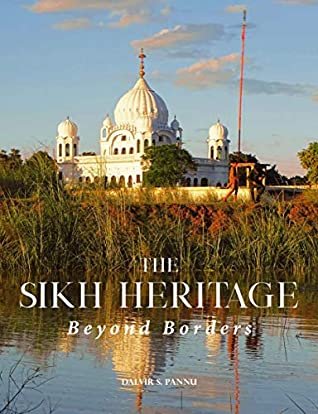
Despite many hurdles, the history of the land of Pakistan retains a rich potential for the Sikh diaspora to relive and reclaim their religious heritage. As an effort to highlight and elaborate the religious memorials, Gurdwara, and history of the important religious figures, we find an impressive effort of Dr Dalvir S. Pannu as, The Sikh Heritage: Beyond Borders of India and Pakistan.
The book is both a culmination of the writer’s ten years journey to explore the present condition of the memorial sites, also beautifully presented pictorially in it and a search for the authentic Sikh history with the help of archival and contemporary sources. The book also engages with the historical interaction between Muslims and Sikhs before 1947.
The book also engages with the historical interaction between Muslims and Sikhs before 1947.
To tell the story of eighty-four memorials in six districts of Punjab, the book sets off from the description of the Gurdwara Janam Asthan (the birthplace of Guru Nanak, the first of the ten Sikh Gurus), in the Nankana district.
Locating 13 more in Nankana, 03 in Sheikhupura and six in Sialkot, the book highlights the importance of Guru Nanak’s life to understand the development of Sikhism. One finds that Gurdwara Sacha Sauda in Sheikhupura commemorates the moment in Guru Nanak’s life when he gave twenty rupees to a group of hungry mendicants instead of using them for personal business purpose. The Gurdwara Babe Di Ber in Sialkot the meeting of Guru Nanak with a Muslim mystic whose anger with the locality was resolved by Guru by pointing out the importance of being forgiving.
Dr Pannu could locate the dilapidated remains of 17 memorials in the Kasur district. The remains of the memorials still exhibit dimly the frescoes on the walls and ceilings, paintings of the saints, dilapidating arches, inscriptions in Gurmukhi, and weakened parapets.
The book surprises its local Muslim reader with the recollection of the story of Baba Bulle Shah (1680-1757) taking refuge in a Gurdwara Sahib of Daftuh, the Union Council of the Kasur district. The famous poet, and later Sufi saint of the Muslims, took refuge in the Gurdwara to save his life from the angry Muslim mob of village Pandoke, his ancestral village.
The shared communal traditions engulf the reader further once the book ferrets out the shrines and memorials in Lahore. The half of the total number of Sikh shrines, the book mines them in Lahore highlighting the importance of the city not only as a center stage for the development of the Sikh religion but also for being a witness to a long history of mutual engagement, strife, and coexistence of Sikhs and Muslims.
One comes to know that Lahore is the birthplace of the sister of Guru Nanak and first GurSikh Bebe Nanki (1464-1518) in a village Chahal memorialized as Dera Chahal, and Guru Ram Das (1534-1581), the fourth of the ten Sikh Gurus, memorialized as Gurdwara Janam Asthan Guru Ram Das.
Lahore also became a place where a Mughal ruler martyred Guru Arjan (1563-1606), the fifth of the ten Sikh Gurus, and the site is memorialized as Gurdwara Dehra Sahib. The city has the site of Gurdwara Shaheed Ganj, memorialized as a site of a painful memory of Sikhs killed in hundreds during the period of Mughal Viceroys of Lahore, including Abdul Samad Khan (1713-1726), Zakariya Khan (1726-1745), and Mir Mannu (1748-1753).
The same city is also important for the shrines of figures including Pir Sheikh Abdul Qadir Jilani Sani (d. 1560), Wazir Khan (Sheikh Il mud Din Ansari, famous for making a grand mosque) and Hazrat Mian Mir (1550-1635), radiating the cheerful memories of friendly and intellectual interaction with Sikh Gurus.
The book ends its journey in the Narowal district at the Gurdwara Darbar Sahib, Kartarpur (God’s dwelling). The story of Gurdwara Darbar Sahib is also the story of the last eighteen years of the life of Guru Nanak who finally settled in this village and favored the life of the household instead of Udasis or life as a Divine Mission.
As the book collected its data before 2019, the story of the Gurdwara Darbar Sahib does not include the development of the site as a Gurdwara Kartarpur Corridor inaugurated in November 2019. However, the details of Guru Nanak’s household life introduce the reader with interesting anecdotes coloring Sikhism with the teachings of Guru in a more practical fashion.
The book is an outcome of the authentic and deep-seated urge to find one’s own identity in the communally divided region.
In the backdrop of the birth of Pakistan that entailed violent communal clashes resulted in the uprooting of almost 2 million Sikhs from the region of Pakistan and constant tension on the borders between India and Pakistan since then, there has been seldom space, especially during the whole twentieth century for conducting such a study.
This book is a witness to the beginning of a new turn in the history of Pakistan, when, instead of bracketing with the victims or perpetrators communally, the painful memories of violence can be commemorated from the humanistic perspective. The search of the Global Sikh community for the Sikhism within this region may become an opportunity for Pakistan to embrace its own heritage truly.
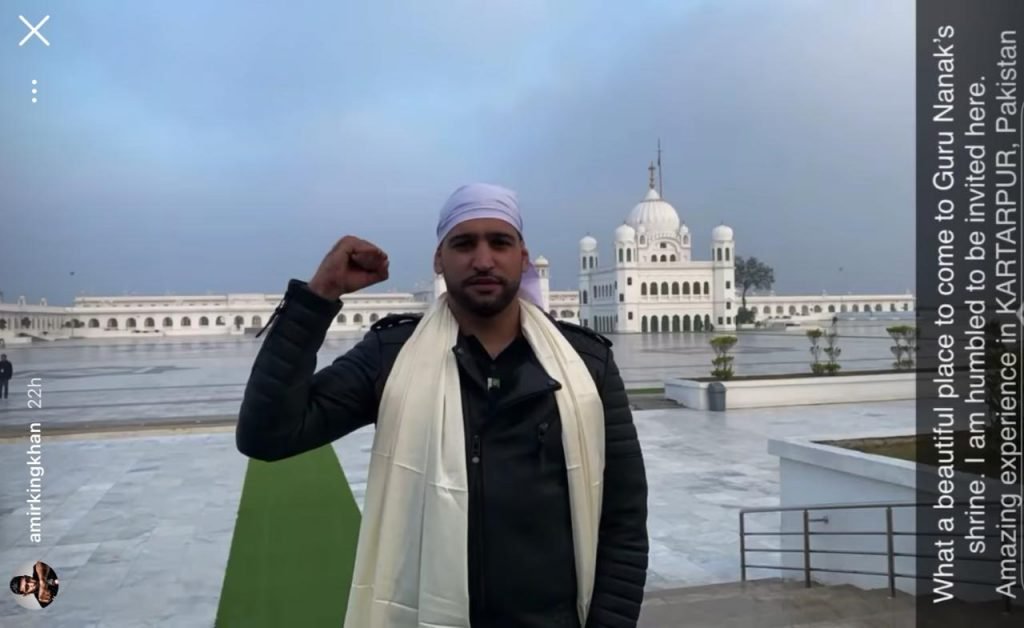
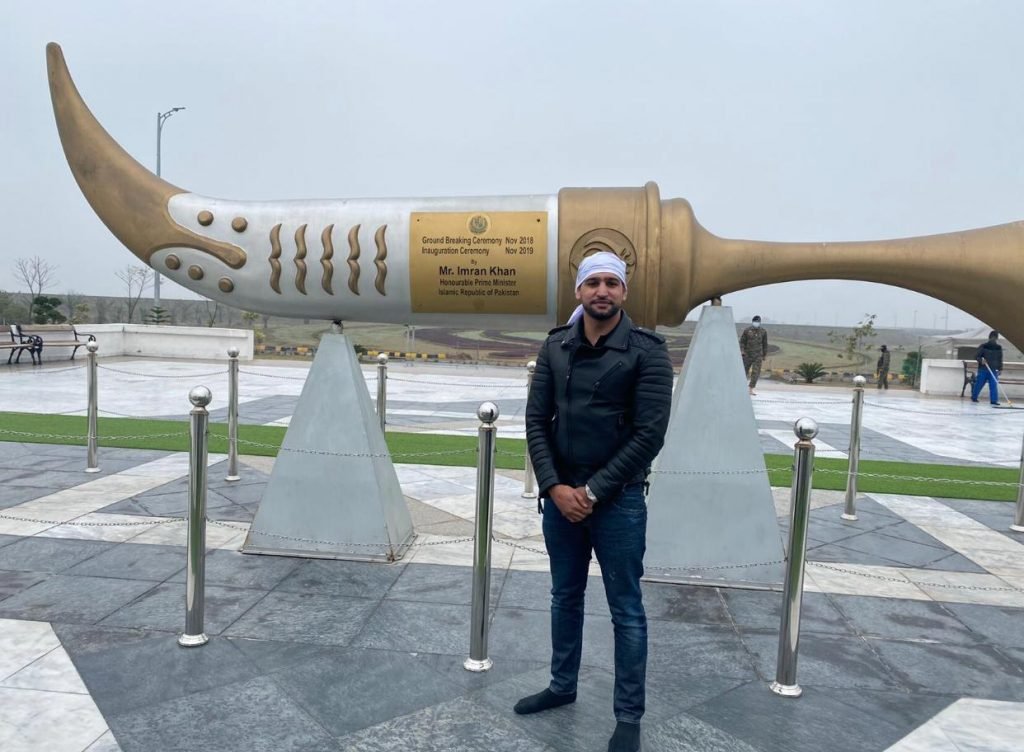
British-Pakistani boxer Amir Khan visited Kartarpur on Wednesday and requested the Indian government to allow the Sikh community to visit Guru Nanak’s shrine.
Calling the Gurdwara a true symbol of interfaith harmony, Amir in a video, said that Pakistan is giving real religious freedom to all minorities while India is taking steps against its minorities.
“I request the Indian government to allow Sikh people to visit Pakistan Kartarpur and to open the gates,” he said.
Amazing experience visiting Kartarpur today at Guru Nanak’s shrine. Thank you for the hospitality ❤️. I request the Indian government to allow the Sikh community to visit pakistan kartarpur @PakistanFauj@OfficialDGISPRpic.twitter.com/L5gHri55CA
The sportsman also posted pictures and videos from his trip on his Instagram account. The boxer can be seen exploring the shrine and interacting with members of the Sikh community.