Tag: Kashmir

  • Pakistan asks UN to take notice of rights violations in occupied Kashmir, fulfill plebiscite promise

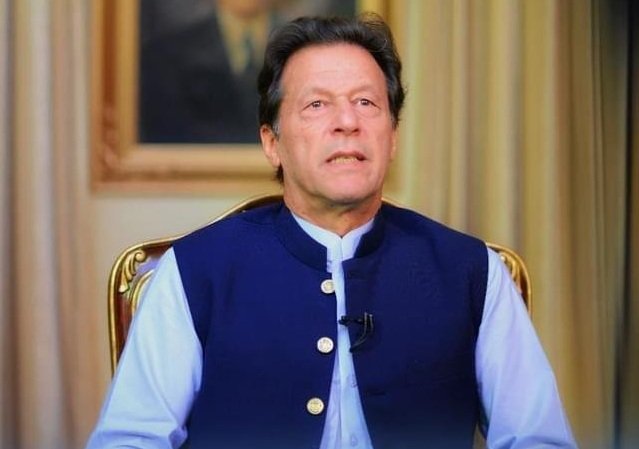
    Prime Minister Imran Khan has asked the United Nations and its member states to take notice of atrocities in occupied Kashmir while reminding the world body of its promise of holding an impartial plebiscite in the region.

    The PM said Pakistan would stand with the Kashmiri people till the realisation of their right to self-determination, adding that on Jan 5, 1949, the UN “guaranteed the right to self-determination for the people of Jammu and Kashmir through an impartial plebiscite”.

    “We observe this day as a reminder to the UN and its member state of their unfulfilled commitment to the Kashmiri people.”

    In a statement shared by the APP, the PM said: “Being a direct party to the Jammu and Kashmir dispute, Pakistan will continue to underscore the imperative of holding a free and impartial plebiscite under the UN auspices in accordance with the United Nations Security Council resolutions.”

    According to the PM, the importance of the right to self-determination has been acknowledged in various human rights conventions and decisions of the United Nations General Assembly and the Security Council. However, due to the “Indian intransigence, the Security Council has failed to fulfill its pledge to the Kashmiri people”.

    The PM said that Pakistan calls on the international community to take against the well-documented human rights violations being committed by the Indian occupation forces against Kashmiris and ensure that they get their right to self-determination.
  • Army’s intervention in politics detrimental to country, says ex-ISI chief

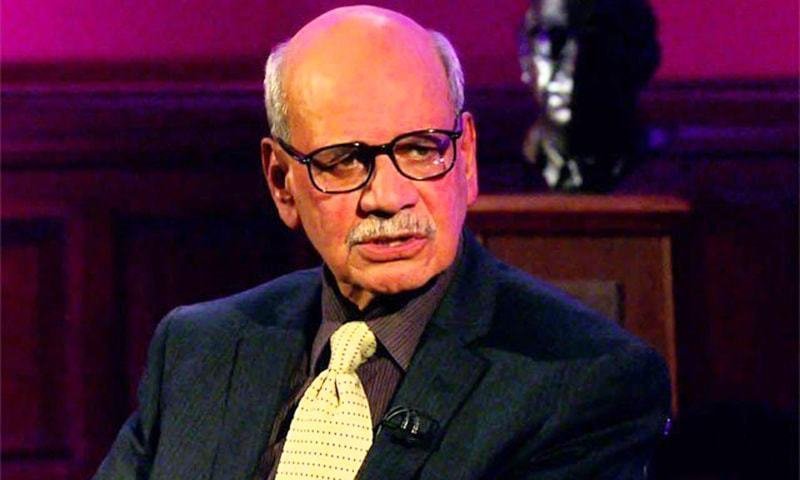
    Army’s intervention in politics detrimental to country, says ex-ISI chief

    Former Inter-Services Intelligence (ISI) director general Lt Gen (r) Asad Durrani has said that the meddling of the military in the political affairs, though a reality, was “detrimental to the country”.

    In an interview with BBC Urdu, the former general said whether the army should intervene in politics or not is a debate that has led us nowhere. “Our experience tells us that whenever the military intervened, the political parties ostracised staged a comeback,” Durrani said.

    “Gen Ayub Khan was supposed to keep Zulfikar Ali Bhutto out, but he staged a comeback and got elected. After Ziaul Haq, Benazir Bhutto came to power.”

    The same thing happened during the regime of Gen (retd) Pervez Musharraf. “The two parties which he thought should be kept out – PPP and PML-N –were elected to power. So, this political engineering is harmful,” he said.

    “Imran Khan’s biggest problem is the impression that he did not come to power by himself and that he came with a khaki burden. Some people don’t learn from history because they say we will create our own history,” Durrani added.

    The former general also talked about challenges faced by Pakistan on external and internal fronts.

    “If you ask me challenges from outside, I would say Iran, Saudi Arabia, and Turkey pose new challenges,” he said. The former ISI chief went on to say that “India has not always been the biggest threat to us”.

    “The country is facing three types of challenges: economy, political instability, and social cohesion,” he said.

    “There are some areas like Balochistan where there is unrest among people who feel politically alienated and deprived. The economy is in bad shape…. The government’s credibility is bad because people believe it has been brought into power by the military,” he said.

    He also opposed the changing of status of Gilgit-Baltistan which, he said, will be a blow to the Kashmir cause.

    “When I was looking after the affairs of Kashmir, a close friend of mine, Yusuf, explained to me that the day we made the mistake of changing GilgitBaltistan status, it would be a big blow to our Kashmir cause,” he said but did not explain who Yusuf was.

    “You may give more rights to G-B, if you want to, but it should not be forcibly made a province of Pakistan,” said Durrani, while commenting on recent government promises of giving Kashmir the provincial status.

  • Celebrities ‘honoured’ to be part govt’s special advisory board on Kashmir

    Chairman of the Special Committee of the Parliament on Kashmir Shehryar Afridi has announced the formation of a special advisory board, that will work in liaison with the entertainment industry in Jammu and Kashmir towards internationally promoting the rich and diverse cultural heritage of the valley and its people. The aim of the board is to highlight the plight of the Kashmiris under decades of Indian oppression.

    According to a press release, the due to be notified board will be a “creative alliance of some of Pakistan’s top media personalities from the country’s television, cinematic and sporting spheres as well as in equal ratio some of J&K’s finest academics, thinkers and artists, and will be aimed at propagating Kashmir’s cultural richness both at home and abroad.”

    The initiative is in line with Pakistan’s long-standing position, which is to promote the freedom of the Kashmiris from Indian oppression.

    Actors and celebrities who have been invited to be part of the board include Humayun Saeed, Saba Qamar, Fahad Mustafa, Atif Aslam, Anwar Maqsood, Shaan Shahid, Ali Azmat, Yousaf Salahuddin, Saira Kazmi, Rahat Fateh Ali, Hadiqa Kiani, Shehzad Roy, Humaima Malick, Yousaf Salahuddin, Shaniera Akram, Adnan Siddiqui, Bilal Ashraf, Samina Peerzada and Shafqat Amanat Ali.

    Film Producers Jerjees Seja, Momina Duraid and Ammara Hikmat have been chosen for the advisory role, while directors Syed Noor, Nadeem Baig and Bilal Lashari are also part of the list.

    Meanwhile, sportspersons including Aisam ul Haq, Jahangir Khan, Jansher Khan, Maria Toorpakai, Wasim Akram, Sana Mir and Karishma Ali have been also been invited to join.

    In a tweet, Adnan Siddiqui said that the invitation to join the board was a “matter of great honour and immense pride for him”.

    Shaan said that everyone must support every initiative taken for Kashmir.

    “No political point scoring should be done on issues that are of immediate attention,” added the actor.

    The Legend of Maula Jatt’s producer Ammara Hikmat also said that she was honoured to be part of the board.

  • Saudi Arabia angers India over new currency notes

    Saudi Arabia angers India over new currency notes

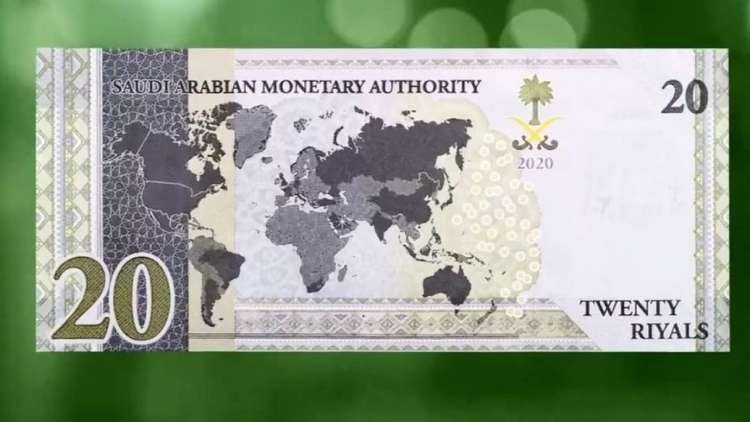
    India has lodged a protest over the issuance of Saudi Arabia’s new currency notes that do not feature Jammu and Kashmir as a part of India.

    The 20 Riyal bank note was issued by the Saudi Arabian Monetary Authority on October 24 to mark the Kingdom’s presidency of the upcoming G20 summit in November. The note, with an image of the world map, has shown Kashmir as separate states and not belonging to any of the rival Asian states of Pakistan and India.

    Anger erupted in India because of the map, even though the country has illegally occupied the territory of Kashmir and there is a United Nations Security Council (UNSC) decree recognising it as an international dispute.

    External Affairs Ministry spokesperson Anurag Srivastava is reported to have said that New Delhi has raised “serious concerns” about the banknote both at the Saudi Embassy in India, as well as at India’s embassy in Riyadh.

    “We have taken up this gross misrepresentation of India’s external territorial boundaries on an official and legal banknote of Saudi Arabia… we’ve asked the Saudi side to take urgent corrective steps in this regard,” he said.

    Additionally, it was found that the distortion was in the Pakistani map as well.

    The G20 summit is set to be held from November 21-22 this year in Saudi Arabia and India is a part of it. Although the relations between Saudi Arabia and India are seen as healthy, with Saudi crown prince Mohammed bin Salman referring to India’s Narendra Modi as his “elder brother” during a meeting last year, the new developments might create some hurdles.

    Earlier, India put a ban on Qatar-based broadcaster Al Jazeera in 2015 for publishing a map of the country that excluded Kashmir. Also, the country has frequently censored the Economist magazine for showing Kashmir as a disputed region.

  • We are with you, Mr PM, but take a look back at home too

    We are with you, Mr PM, but take a look back at home too

    Prime Minister (PM) Imran Khan has addressed the United Nations General Assembly (UNGA), warning India against any misadventures.

    “I want to make it clear that any attempt by the fascist totalitarian RSS-led Indian government to aggress against Pakistan will be met by a nation that will fight for its freedom to the end,” he said, exposing India’s fascism.

    “While the Nazis’ hate was directed at the Jews, the RSS directs it at the Muslims, and to a lesser extent, the Christians.”

    Talking about Islamophobia around the world, PM Imran said India is the one country in the world where “the state sponsors Islamophobia”.

    On the Kashmir issue, he emphasised that Pakistan had always called for a peaceful solution to the Kashmir dispute. He said that India must repeal the measures it had instituted since August 5, 2019, end its military siege and other gross human rights violations, and agree to “resolve the Jammu and Kashmir dispute in accordance with the relevant UN Security Council resolutions and, of course, the wishes of the people of Kashmir”.

    He also pointed out that what India did on August 5 last year was in violation of the UN Charter, council resolutions and international law, particularly the 4th Geneva Convention. “Changing demographic structure of occupied territory is a war crime.”

    PM Imran is right about the atrocities in India being committed against religious minorities, especially the Muslims in India. From beef lynchings to Delhi riots to Modi himself laying the foundation stone of the Ram Mandir on the one-year anniversary of revoking the special status of Indian-occupied Kashmir (IoK), the message that the Indian government is giving to its Muslim citizens is quite clear: the Hindutva supremacy brigade is in charge and you can only live here on our terms.

    This is a grave indictment of the so-called world’s largest democracy where the rights of minorities now are almost non-existent. The media in India has largely become pliant, a few honourable exceptions aside. We hardly see them questioning the state on issues that matter the most.

    PM Imran’s comments on India are spot on. We do hope that he would also take notice of the new sectarian fire that is roaring in Pakistan these days.

    The huge anti-Shia rallies that were taken out in Karachi and Islamabad should be a wake-up call for our state. It took a long time for the state to put out the sectarian conflict in the country. It would be extremely dangerous if sectarianism starts again. We cannot forget the target killings of Shia Hazaras in dozens just a few years ago.

    The state must end this before it becomes uncontrollable again. Interfaith harmony as well as sectarian harmony is important for any society and for people to co-exist peacefully. Pakistan’s media has been quite responsible in the recent sectarian rift. We hope that the state, too, will play its part.

  • India in flames as govt moves to change status of Gilgit-Baltistan with representation in parliament?

    India in flames as govt moves to change status of Gilgit-Baltistan with representation in parliament?

    The Prime Minister (PM) Imran Khan-led Pakistan Tehreek-e-Insaf (PTI) government plans to make Gilgit-Baltistan (GB) the country’s fifth province, two years after powers of the Islamabad-controlled council for the region were transferred to a local assembly.

    The government’s plans have been outlined by Federal Minister for Kashmir and Gilgit-Baltistan Affairs Ali Amin Gandapur, who said the region will be accorded the status of a full-fledged province with constitutional rights such as representation in both houses of the parliament.

    “After consultation with all stakeholders, the federal government has decided in principle to give constitutional rights to GB,” he said, adding that the government has decided to deliver on the promise it made to the people there.

    PM Imran is expected to visit the region soon and make a formal announcement about the change, Gandapur said.

    While there has been no immediate reaction to the minister’s remarks from Indian officials, New Delhi has consistently opposed changes made in the region by Pakistan because it claims GB as part of Jammu and Kashmir.

    Gandapur also said that subsidies and tax exemptions for the region wouldn’t be withdrawn after the grant of constitutional rights. “Until the people there stand on their feet, they will continue to enjoy this facility,” he said.

    The minister contended that the deprivation faced by the people of GB for 73 years would end with the change. “Besides constitutional rights and a provincial setup, important steps are being taken for developing the region.”

    People familiar with developments told The Current that people concerned, including those a part of the establishment, had been in touch with political parties regarding the changes.

    “The PTI is backing changes with an eye on upcoming elections in GB so that it can make political gains and form the next government in the region,” an official told this scribe on the condition of anonymity.

    Preparations for the elections that are likely to take place in November are complete, and the distribution of tickets by the PTI will begin soon, they added.

  • Kangana Ranaut calls Mumbai ‘Pakistan’ after authorities demolish her offices

    Kangana Ranaut calls Mumbai ‘Pakistan’ after authorities demolish her offices

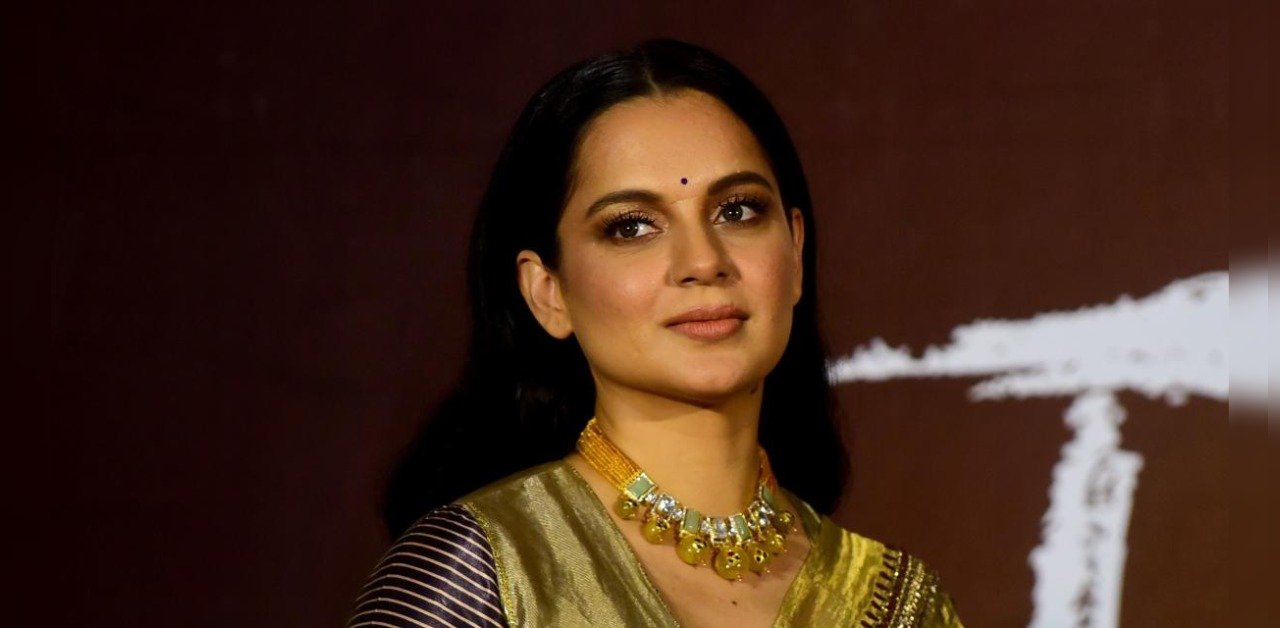
    Kangana Ranaut has referred to Mumbai as ‘Pakistan’ after the Brihanmumbai Municipal Corporation (BMC) demolished her office in Bandra. Sharing pictures of the demolition taking place in her office, Kangana wrote “Pakistan”, along with the hashtag ‘Death of Democracy’.

    Her successive tweet read: “I am never wrong and my enemies prove again and again this is why my Mumbai is ‘PoK’ (Pakistan-occupied Kashmir) now.”

    According to details, BMC had listed 14 “violations” at the offices of Manikarnika Films, Ranaut’s movie production house. The bungalow, which the actress had bought three years ago, is listed as a residential property by the BMC.

    As per the notice, violations included: merging of two bungalows, converting a ground-floor toilet into an office cabin, converting a storeroom into a kitchen, making an unauthorised pantry in the ground floor, adding toilets near the storeroom and a parking area, illegal partitions in the first-floor living room, an illegal meeting room in the pooja room, converting a balcony into a habitable area besides a floor extension. At the time of the demolition, Kangana was not in Mumbai but was in fact on her way to the city.

    The demolition work was stopped midway today after the Bombay High Court ordered a stop to the demolition and served notice to the BMC, which is controlled by the Chief Minister’s Shiv Sena.

    Ranaut reacted to the demolition by terming the act as the death of democracy. She also questioned how the officials could demolish the structure when such procedure is banned till September 30 amid the COVID-19 pandemic.

    Kangana has sparked controversy with her recent comments about the Mumbai Police and Maharashtra. In response to a remark by Shiv Sena leader Sanjay Raut where he asked her not to come back to the city after she claimed she felt unsafe in the city, Kangana had compared Mumbai with ‘PoK’.

    Earlier, Feroze Khan, Muneeb Butt and Momina Mustehsan called out Kangana for unnecessarily dragging in Pakistan in all her arguments.

  • Indians are having a meltdown over Aamir Khan’s meeting with Turkish first lady Emine Erdoğan

    Aamir Khan, who is currently in Turkey for the shooting of his film ‘Laal Singh Chaddha’, has met the Turkish first lady, Emine Erdoğan, drawing strong reactions from Indians, who are not happy with the meeting that took place Saturday, India’s Independence day. 

    According to reports, Aamir had requested the meeting, as he wanted to update Erdoğan about the work of Paani Foundation, a non-profit organisation set up by the actor and his wife Kiran Rao.

    The main reason behind Indians’ outrage was that Turkish President Tayyip Erdoğan has always condemned Indian brutality in occupied Kashmir and extended his support to Pakistan and Kashmiris following the troubled valley’s illegal annexation.  

    The Kashmir conflict can be solved not by conflict or oppression, but on the basis of justice and fairness, Turkish President Recep Tayyip Erdoğan had said in his address to Pakistani parliament in Islamabad.

    The Turkish leader had also called President of Pakistan on Eidul Azha and shared their views on different issues.

    A tweet by the president’s office read, “President Dr Arif Alvi and President Erdoğan exchanged Eidul Azha greetings in a telephonic conversation. Important matters, including Kashmir and COVID-19 were discussed.”

     With Aamir meeting Erdoğan, Indians called him “anti-national” and expressed their disappointment.

    https://twitter.com/tarun_priyanshu/status/1295260188228771842?s=20
    https://twitter.com/Bhavana17851510/status/1294998721143476227?s=20
    https://twitter.com/Gyana46465996/status/1294995521082241024?s=20

    Some also came forward in the defence of the actor and posted pictures of Indian Prime Minister (PM) Narendra Modi with the Turkish leader.

    https://twitter.com/Nadeem_gaur92/status/1295076278769455109?s=20
  • Foreign Minister Qureshi likely to be replaced by Shireen Mazari as govt, army mend Riyadh ties: report

    Foreign Minister Qureshi likely to be replaced by Shireen Mazari as govt, army mend Riyadh ties: report

    Rumours regarding the removal of Foreign Minister Shah Mehmood Qureshi, ever since his statement regarding ditching Saudi Arabia for Kashmir’s sake, have gone rife in the federal capital as reports claim he is likely to be replaced by Federal Minister for Human Rights Shireen Mazari amid Islamabad’s attempts to mend ties with Riyadh.

    Qureshi had earlier this month accused the Organisation of Islamic Conference (OIC) of dilly-dallying on the Kashmir issue in remarks that were seen by Riyadh as an attack on its leadership of the organisation.

    “I am once again respectfully telling OIC that a meeting of the Council of Foreign Ministers (CFM) is our expectation. If you cannot convene it, then I’ll be compelled to ask Prime Minister Imran Khan to call a meeting of the Islamic countries that are ready to stand with us on the issue of Kashmir and support the oppressed Kashmiris,” Qureshi had said during an interview.

    Days after his statement, as diplomatic strains occur between Islamabad and Riyadh over the Kashmir issue, it was announced by the Inter-Services Public Relations (ISPR) that Chief of Army Staff (COAS) General Qamar Javed Bajwa will be visiting Saudi Arabia to discuss regional security issues and Kashmir dispute with the Saudi leadership.

    “Yes, he [Gen Bajwa] is travelling,” the Pakistan Army spokesperson told the foreign media outlet, adding that the visit was pre-planned and “primarily military affairs oriented”.

    However, reports had said that while the two countries are traditionally close and Saudi Arabia in 2018 gave Pakistan a $3 billion loan and $3.2 billion oil credit facility to help its balance of payments crisis, Riyadh is irked by criticism from Islamabad that Saudi Arabia has been lukewarm on the Kashmir territorial dispute, motivating COAS Bajwa’s fence-building visit Sunday.

    Meanwhile, Human Rights Minister Shireen Mazari publicly criticised Qureshi, saying his statements had let down both the Kashmiris and PM Imran.

    While her statement was seen as the first step to replace Qureshi in a bid to pacify the Saudis, it suggests that the Imran Khan government is publicly distancing itself from the actions and statements of the incumbent foreign minister.

    If there is any truth to the claims, it won’t be the first time cash-strapped Pakistan will be prioritising relations with Saudi Arabia, as most recently, Islamabad had also pulled out of a Muslim nations’ forum in Malaysia at the last minute on insistence by Riyadh, which saw the gathering as an attempt to challenge its leadership of the OIC.

    Saudia Arabia had already made Pakistan pay back $1 billion two weeks ago, forcing it to borrow from another close ally, China, and Riyadh is yet to respond to Pakistan’s request to extend the oil credit facility.

  • Army chief to visit Saudi Arabia days after govt’s oops-a-daisy moment

    Chief of Army Staff (COAS) General Qamar Javed Bajwa will visit Saudi Arabia on Sunday to discuss regional security issues and Kashmir dispute with the Saudi leadership, as diplomatic strains occur between Islamabad and Riyadh over the Kashmir issue.

    Inter-Services Public Relations (ISPR) Director-General (DG) Major General Babar Iftikhar confirmed the visit while talking to a foreign news agency on Thursday.

    “Yes, he [Gen Bajwa] is travelling,” the Pakistan Army spokesperson told the foreign media outlet. He added that the visit is pre-planned and “primarily military affairs oriented”.

    During the visit, General Bajwa will have meetings with top Saudi leadership.

    The two countries are traditionally close and Saudi Arabia in 2018 gave Pakistan a $3 billion loan and $3.2 billion oil credit facility to help its balance of payments crisis. But Riyadh is irked by criticism from Islamabad that Saudi Arabia has been lukewarm on the Kashmir territorial dispute, motivating COAS Bajwa’s fence-building visit on Sunday.

    Pakistan has long pressed the Saudi-led Organization of Islamic Countries (OIC) to convene a high-level meeting to highlight alleged Indian violations in the part it controls. But the OIC has only held low-level meetings so far.

    “If you cannot convene it, then I will be compelled to ask Prime Minister Imran Khan to call a meeting of the Islamic countries that are ready to stand with us on the issue of Kashmir and support the oppressed Kashmiris,” Pakistan’s Foreign Minister Shah Mahmood Qureshi told local media last week. Qureshi’s remarks angered Riyadh.

    Last year, Islamabad had pulled out of a Muslim nations’ forum in Malaysia at the last minute on insistence by Riyadh, which saw the gathering as an attempt to challenge its leadership of the OIC.

    Saudia Arabia had already made Pakistan pay back $1 billion two weeks ago, forcing it to borrow from another close ally, China, and Riyadh is yet to respond to Pakistan’s request to extend the oil credit facility.