Tag: Kashmir

  • Modi’s Hindu Rashtra

    Modi’s Hindu Rashtra

    This year, August 5 marked the one-year anniversary of occupied Kashmir’s illegal annexation and subsequent lockdown.

    Last year, India changed the special status of the troubled valley to union territories. The gross human rights violations that followed and are still taking place is no secret. Pakistan has tried highlighting the issue internationally.  Unfortunately, the international community is least bothered because of economic reasons; every country wants a share in the Indian market pie.

    The myth of Muslim Ummah was also shattered when except for countries like Turkey and Malaysia, nobody raised voice for the plight of the Kashmiris. The same led to what appeared to be a major foreign policy shift for Pakistan as Foreign Minister Shah Mahmood Qureshi asked Saudi Arabia-led Organisation of Islamic Cooperation (OIC) to stop dragging feet on the convening of a meeting of its Council of Foreign Ministers (CFM) on the Kashmir issue.

    READ: VIDEO: FM Qureshi says Pakistan ready to ‘ditch’ Saudi Arabia for Kashmir’s sake

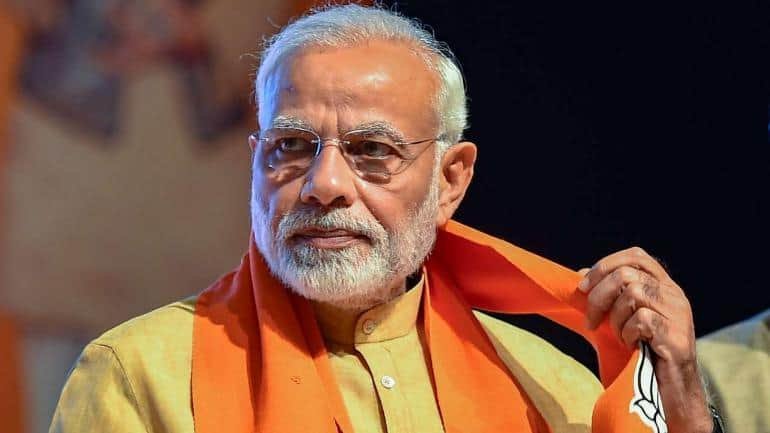
    Revoking the special status of held Kashmir was a step towards establishing Modi’s Hindu Rashtra. The first five years of Modi paved the way for an India that shattered all foundations of secularism. Modi regime’s six years have resulted in a wave of palpable fear amongst the Muslim minority in India. Modi’s Gujarat — where Muslims were killed as if it was a sport — is now being replicated in other parts of India; from beef lynchings to riots, the Muslim minority in India is being subjugated endlessly.

    Modi chose August 5, 2020, as the day of laying down the foundation of the Ram Mandir in Ayodhya. As the New York Times put it, “In a moment of triumph that India’s Hindu nationalists had worked toward for years, Prime Minister (PM) Narendra Modi on Wednesday set the ceremonial cornerstone for a new Hindu temple at the site of a destroyed mosque in Ayodhya.”

    This gesture was a slap in the face of the Muslim minority of India as well as the last nail in the coffin of Indian secularism. Modi’s Hindu nationalism has destroyed the fabric of Nehruvian secularism. It is a reminder that when a fascist ruler is in power, even strong traditions and constitutions cannot guarantee fundamental rights, human rights, freedom of speech and all other traditions of a free society.

    The cataclysmic shift of the Indian polity towards the right under Modi’s rule is not a surprise. In fact, what was surprising was the denial of Indian liberals when Modi was first elected in 2014. They were of the view that India’s secular traditions and constitution could never be destroyed but many pointed out how Modi’s victory was an indictment of the majoritarianism in India.

    This is happening all over the world. From Trump’s America to Brexit in Britain, the world’s shift to right-wing politics is quite disappointing. We hope that some day, sane voices of India and the world will take a stand against Modi’s fascism.
  • Coronavirus in Pakistan: A July-August diary

    Since the beginning of July, there has been a decline in new coronavirus cases and the number of recovered patients has also increased. By the time this report was filed, there were 26,834 active COVID-19 cases in the country.

    While Prime Minister (PM) Imran Khan, as well as members of his team and other experts, repeatedly urged people to follow social distancing guidelines and standard operating procedures (SOPs) on Eidul Azha in order to avoid a June-like surge in coronavirus cases in the days to come, people were seen flaunting the same not only over the Eid weekend but also during rallies protesting illegal Indian annexation of held Kashmir on August 5.

    It was reported by Gulf News that the upper class of Karachi completely ignored Sindh government directives by sacrificing animals wherever they wished to despite 500 sites being designated by the provincial administration for the purpose. “Residents in the most expensive and posh neighbourhoods of the city were no exception… officials didn’t make any effort to ensure the people followed the law,” the report said.

    Meanwhile, the Punjab government on August 3 announced to lift the smart lockdown two days ahead of the scheduled date. The government announced to lift all restrictions on the third day of Eid because of a “significant” reduction in coronavirus cases.

    While Punjab Chief Minister (CM) Usman Buzdar expressed satisfaction over the observance of SOPs on Eidul Azha, Federal Minister for Planning, Development and Special Initiatives Asad Umar announced on Thursday that restrictions on the hospitality and recreational sectors, put in place nearly five months ago to curb the spread of the coronavirus, would be lifted by August 10.

    Dine-in restaurants, parks, cinemas, tourist spots and salons would be re-opened while marriage halls would remain closed at least until September 15 and the decision to re-open educational institutes would be looked into during the first week of September, he said.

    However, just a day after the announcement, Punjab witnessed a sudden increase in the number of new coronavirus cases. The everyday cases that had on an average dropped to below 100 during the past one month after reaching a new high in June, once again increased to around 300.

    Although some medical experts were not perturbed and declared it a routine surge, others believed that it might be a signal for the beginning of the second wave of the outbreak. Punjab reported 277 new confirmed cases of COVID-19 besides five deaths during the last 24 hours against 235 a day earlier, Dawn reported.

    Besides the lifting of lockdown restrictions for the economy’s sake in July, the surge is also being attributed to the fact that next to none social distancing guidelines were followed during the preparations and hosting of seminars and rallies to mark ‘Youme Istehsal [Exploitation Day]’ on the first anniversary of Narendra Modi-led India’s annexation of occupied Kashmir.

    Even though the coronavirus situation in Pakistan is getting better on paper, how the pandemic turns out over the next few days is subject to the behaviour of the masses and the policies of the government.

  • VIDEO: FM Qureshi says Pakistan ready to ‘ditch’ Saudi Arabia for Kashmir’s sake

    In what appears to be a major foreign policy shift for Pakistan, Foreign Minister Shah Mahmood Qureshi has asked Saudi Arabia-led Organisation of Islamic Cooperation (OIC) to stop dragging feet on the convening of a meeting of its Council of Foreign Ministers (CFM) on the Kashmir issue.

    “I am once again respectfully telling OIC that a meeting of the CFM is our expectation. If you cannot convene it, then I’ll be compelled to ask Prime Minister (PM) Imran Khan to call a meeting of the Islamic countries that are ready to stand with us on the issue of Kashmir and support the oppressed Kashmiris,” he said while speaking to a private media outlet.

    When asked if Pakistan will “move forward” with or without Saudi Arabia, the foreign minister said, “with or without…”. In response to another question, he said Pakistan could not wait any further.

    WATCH VIDEO:

    According to Dawn, Pakistan has been pushing for the foreign ministers’ meeting of the 57-member bloc of Muslim countries, which is the second-largest intergovernmental body after the United Nations (UN), since India annexed occupied Kashmir in August 2019.

    Qureshi had at an earlier presser explained the importance of CFM for Pakistan. He had then said that it was needed to send a clear message from Ummah on the Kashmir issue.

    Although there has been a meeting of the contact group on Kashmir on the sidelines of UN General Assembly session in New York since last August and OIC’s Independent Permanent Human Rights Commission has made statements on the rights abuses in the occupied valley, but no progress could be made towards the CFM meeting.

    A major reason behind the failure to call the foreign ministers’ meeting has been Saudi Arabia’s reluctance to accept Pakistan’s request for one specifically on Kashmir. Riyadh’s support is crucial for any move at the OIC, which is dominated by Saudi Arabia and other Arab countries.

    Qureshi said Pakistan skipped Kuala Lumpur Summit last December on Saudi request and now Pakistani Muslims, who are ready to lay down their lives for the Kingdom, are demanding of Riyadh to “show leadership on the issue”.

    “We have our own sensitivities. You have to realise this. Gulf countries should understand this,” the foreign minister said, adding that he could no more indulge in diplomatic niceties.

    “We cannot stay silent anymore on the sufferings of the Kashmiris,” he said.

  • ‘Article 370’ details how horrific the Kashmir lockdown could be

    ‘Article 370’ details how horrific the Kashmir lockdown could be

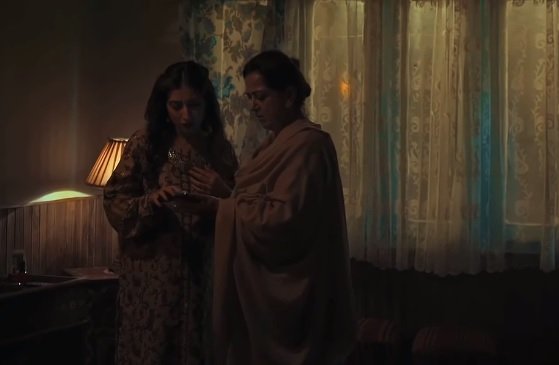
    It has been a year since India revoked the special status of Indian Occupied Kashmir (IoK) and imposed a curfew in the region. To highlight Indian atrocities in the region and share a glimpse of life in lockdown, filmmaker Ibrahim Baloch has released a short film on the issue titled Article 370.

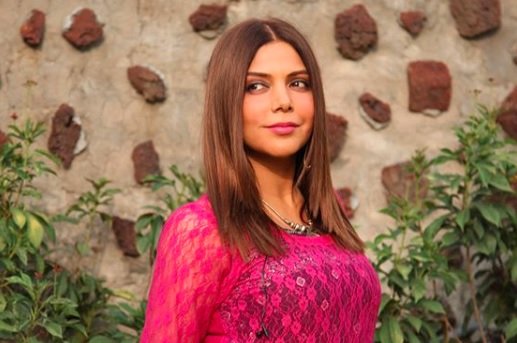
    The film tells the story of Gul-e-Rana (Mariyam Nafees), a pregnant girl living in IoK. She is awaiting the birth of her child when a complete lockdown is imposed in the region and her husband goes missing. The short 16-minute video touches a chord and your heart goes out to those living in the region.

    Speaking about the film, Baloch told a local media outlet that he wanted to highlight the human side of the political move.

    “I started following the situation in Kashmir after India announced its decision and realised that it was primarily debated from a political perspective,” he said. “I was more interested in the human side of the issue. So after doing some research, I came across stories of Kashmiri women in Srinagar who gave birth during the lockdown imposed by the Indian administration.”

    Meanwhile, the film’s official synopsis states: “An untold tale of people who have made sacrifices the world is unaware of, while they lived their lives in hell. Gul-e-Rana didn’t know her fairytale would end so soon and her blessing would turn into a curse.”

    Read more – PPP Senator Rehman Malik is making a movie on Kashmir

    The film has been produced by Madiha Majeed under the banner of ‘See Prime’.

    Watch the film below:

  • Turkey with Pakistan on Kashmir: president

    Turkey with Pakistan on Kashmir: president

    President Recep Tayyip Erdogan has assured Turkey’s support for Pakistan’s stance on the Kashmir dispute, President Dr Arif Alvi has said.

    According to a statement by the President’s Office, the two counterparts held a telephonic conversation in which they “exchanged Eidul Azha greetings” besides discussing the Kashmir issue and the coronavirus pandemic.

    President Alvi said that occupation regimes were continuing their “extreme repression” in Palestine and Indian occupied Kashmir even during the coronavirus pandemic.

    “[The] Turkish president assured that his country would continue to support Pakistan’s stance on Kashmir as both brotherly countries have similar goals.”

    Erdogan also invited Alvi to visit Turkey after the end of the pandemic.

    While congratulating Erdogan on the reopening of Istanbul’s historical Hagia Sophia as a mosque after nearly nine decades, President Alvi “reiterated Pakistan’s steadfast support to Turkey on its legitimate interests and assured that Pakistan will continue its policy to provide Turkey with all possible support”.

    The Turkish leader also called Prime Minister Imran Khan and the two leaders shared their views on a range of issues.

    The prime minister too felicitated Erdogan on reopening of the Hagia Sophia for prayers and told him that “millions of Pakistanis watched it live on television”, according to a tweet by the Prime Minister’s Office (PMO).

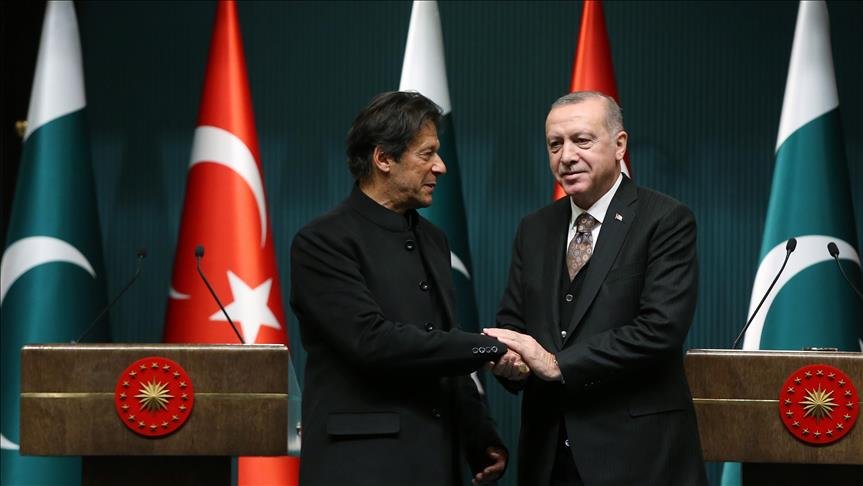
    During their conversation, Prime Minister Imran recalled Erdogan’s visit to Pakistan for the sixth session of the High-Level Strategic Cooperation Council (HLSCC) in February and reaffirmed Pakistan’s commitment to “further fortify bilateral cooperation” in all areas.

    “Pakistan deeply appreciates Turkey’s steadfast support for the just cause of Kashmir, which President Erdogan reaffirmed during his address to the joint session of parliament in February 2020,” the PMO said.

    Erdogan’s contact with the Pakistani leadership comes days before the world marks one year since India revoked the semi-autonomous status of occupied Kashmir and split it into two federal territories, causing further determination in New Delhi’s ties with Islamabad.

  • Hadiqa Kiani collaborates with Turkish singer to honour Kashmiri martyrs

    Hadiqa Kiani collaborates with Turkish singer to honour Kashmiri martyrs

    Hadiqa Kiani has collaborated with Turkish singer Ali Tolga for a song dedicated to Kashmiri martyrs and those during the failed coup attempt in Turkey in 2016.

    The song titled Daimi Bahar, which means ‘eternal spring’ opens with the line: “In everlasting memory of our beloved martyrs: July 13, 1931, Kashmir Martyr’s Day, July 15 2016, Failed Turkish Coup Attempt.”

    The song features lyrics in both Urdu and Turkish, with Hadiqa singing in both the languages.

    The music video features some stunning shots of Indian-occupied Kashmir in all its snow-covered glory, clips of Prime Minister Imran Khan’s meeting with Turkish President Tayyip Erdoğan, the plight of the Kashmiris and the struggle against the failed coup in Turkey back in 2016.

    https://youtu.be/X6z1ET4O0GY

    Daimi Bahar hits all the rights notes and your heart goes out to all those suffering in the picturesque valley.

    Kiani has often raised her voice against Indian atrocities in Kashmir. Earlier, the singer had said that the Kashmir issue is no longer Pakistan vs India but is in fact an issue for humanity, for families, “for the greater good”.

  • ‘We want freedom’: Protests in Kashmir after elderly man’s killing in front of 3yo grandson

    ‘We want freedom’: Protests in Kashmir after elderly man’s killing in front of 3yo grandson

    Hundreds of people in occupied Kashmir staged protests on Wednesday, accusing government forces of killing an elderly man in front of his minor grandson during a gun battle with Kashmiri fighters, which also left a trooper dead.

    The Kashmiri fighters opened fire from a mosque attic in the northern town of Sopore, setting off a battle with security forces, paramilitary police spokesperson Junaid Khan told AFP.

    The family of Bashir Ahmed Khan alleged that he was dragged out of his car after the showdown and shot dead by paramilitary troopers.

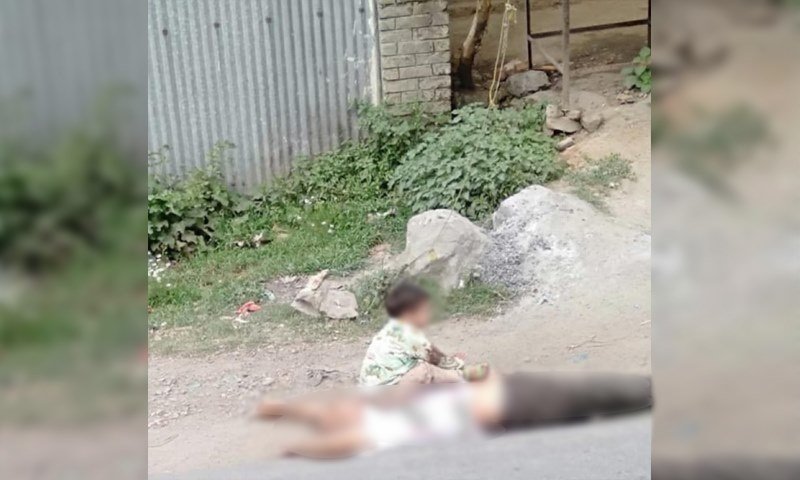
    His three-year-old grandson, who was travelling with him, was later pictured sitting on his chest.

    “Locals said that he [Khan] was brought out of his car and shot dead by the forces,” Farooq Ahmed, a nephew of the deceased man told AFP.

    “They told us that someone in uniform then put the child on his chest as he lay dead on the road and took photographs,” Farooq Ahmed said.

    The photo of the child sat on the body of his dead grandfather was widely shared on social media.

    Paramilitary spokesman Khan said the allegation was “baseless”. Police also denied the claims, saying legal action would be taken for “false reports and rumours”.

    “There was no retaliation from the security forces,” Inspector General of Police Vijay Kumar told reporters.

    Hundreds assembled at the man’s funeral near the main city of Srinagar shouting, “We want freedom”.

    Government forces have intensified counterinsurgency operations against Kashmiri fighters since a coronavirus lockdown was imposed in March.

    Since January, at least 229 people have been killed during over 100 military operations across occupied Kashmir, including 32 civilians, 54 government forces and 143 fighters, according to the Coalition of Civil Society (JKCCS), a rights group.

  • Ertuğrul becomes a popular name for newborns in IoK

    Ertuğrul becomes a popular name for newborns in IoK

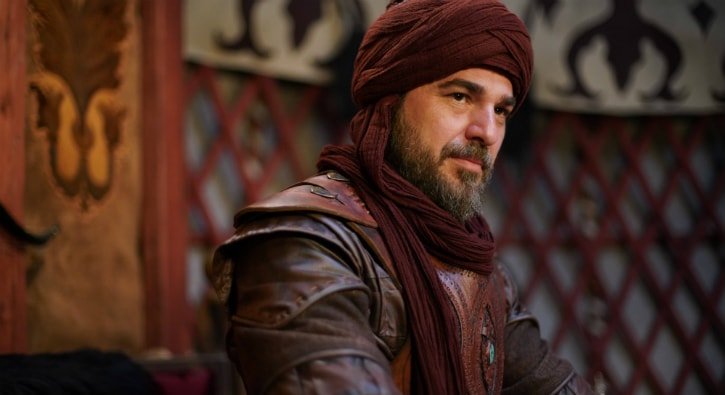
    Seems like it’s not only Pakistanis who have caught the Ertuğrul fever because according to a report in Outlook India, parents in Indian occupied Kashmir (IoK) are naming their newborns Ertuğrul after the protagonist of the hit Turkish series Diriliş: Ertuğrul.

    Read more – ‘Diriliş: Ertuğrul is a gift to Pakistan from Erdoğan’

    Consultant Pediatrician and president Doctors Association of Kashmir Dr Suhail Naik told the media outlet that Ertugrul is a frequently encountered name in his outdoor department.

    Earlier, during the winters ‘Ertuğrul caps’ with fur also became popular in IoK. Ottoman soldiers and the civil officers used to wear the slightly claret red headwear called fez.

    Set in 13th century Anatolia, the historic drama series is based on the struggle of Ertuğrul Gazi, father of Osman I – the founder of the Ottoman dynasty.

    The serial became popular in Kashmir after a lockdown was imposed in the region when the Modi-led government revoked Article 370 on August 5, 2019. Despite the communication blockade and local cable operators banned from airing content produced by Muslim countries such as Turkey, Pakistan and Iran, the series began to travel from one household to another in flash drives.

    Read more – Kashmiris are finding solace in Turkish drama ‘Diriliş: Ertuğrul’

    The COVID-19 lockdown and the airing of the series by PTV in Urdu further propelled the series’ success and made it a bigger hit in the region.

  • Gen Bajwa for sorting out long-pending disputes

    Chief of Army Staff (COAS) General Qamar Javed Bajwa on Monday said that the future of enduring peace and stability in South Asia hinges on the ability to resolve long-pending disputes within the region.

    “This can be complemented through meaningful international support and will to take on challenging regional issues,” he said while addressing officers and faculty during a visit to Command and Staff College in Quetta, a press statement issued by the Inter-Services Public Relations (ISPR) said.

    The statement comes two days after Islamabad approached the United Nations (UN) over New Delhi’s blatant attempt to turn the Muslim-majority in Indian Occupied Jammu and Kashmir (IoJ&K) into a minority.

    Foreign Minister Shah Mahmood Qureshi has written letters to the UN Security Council president and the UN Secretary General, apprising them of the latest situation in the occupied valley particularly the recent changes brought by the Modi government in domicile laws that would pave the way for non-Kashmiris to acquire permanent residence there.

    Addressing the military officials, Gen Bajwa said that a well-trained and professionally competent Army is guarantor for peace. “Pakistan Army with the backing of the nation is one such formidable force,” he maintained.

    The COAS stressed the need for officers to remain focused on pursuit of professional excellence and keeping abreast with latest developments to overcome new challenges.

    Dilating upon COVID-19 pandemic, Gen Bajwa said that Pakistan Army along with other state institutions will do all to mitigate the challenges faced by people of Pakistan.

    Only a cohesive national effort shall take Pakistan to progress and prosperity COAS, he stressed.

  • Taliban deny plan to target Delhi, say ‘Kashmir is India’s internal matter’

    Taliban deny plan to target Delhi, say ‘Kashmir is India’s internal matter’

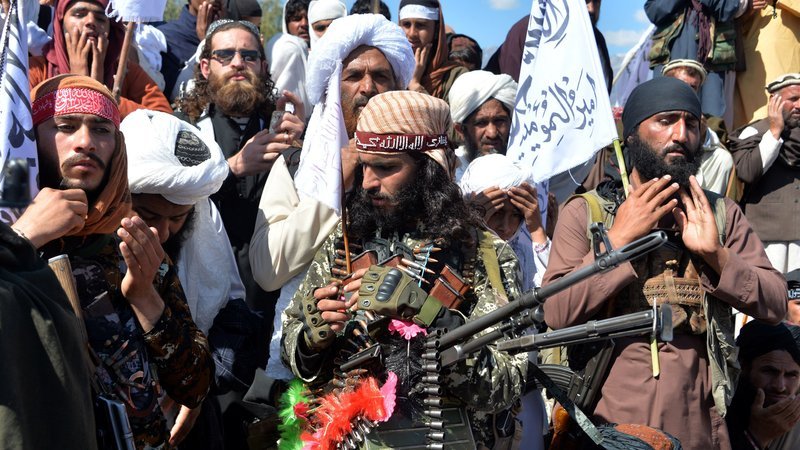
    Taliban have denied claims of joining Kashmiris’ freedom movement and attack New Delhi in retaliation against Indian atrocities under Prime Minister (PM) Narendra Modi’s regime that Pakistan and the international community fear is leading to the ethnic cleansing of the troubled valley’s majority Muslim community.

    According to Hindustan Times, the militant group has underlined that the Taliban “do not interfere in internal affairs of other countries”, saying the statement published in the media about the group joining Jihad in Kashmir was wrong.

    “The policy of the Islamic Emirate is clear that it does not interfere in the internal affairs of other countries.” Suhail Shaheen, the spokesperson for the Islamic Emirate of Afghanistan, as the political wing of Taliban calls itself, tweeted in Arabic.

    The clarification came after officials monitoring social media noted a spike in posts around claims that Taliban spokesperson Zabihullah Mujahid had said it was impossible to be friends with India unless the Kashmir dispute was resolved. The spokesperson was also claimed to have said that the Taliban, after capturing power in Kabul, would also “capture Kashmir from infidels”.

    Diplomats based in Kabul and Delhi said that the Taliban spokesperson’s clarification came after India worked the backchannels to confirm reports about the group’s approach to India, and on Jammu and Kashmir.

    New Delhi was told that the social media posts were fake and did not reflect Taliban’s position.

    But analysts have also underlined that Taliban comprises people holding different beliefs. For example, while the group has alleged deep linkages with the deep state of some countries, there are also some who favour an independent line.