Tag: Kashmir

  • India loses it after ISPR chief’s posters surface in held Kashmir despite curfew

    India loses it after ISPR chief’s posters surface in held Kashmir despite curfew

    Posters and handbills with pictures of Inter-Services Public Relations (ISPR) Director General (DG) Major General Asif Ghafoor have surfaced in Indian occupied Kashmir (IoK) despite a lockdown in the troubled valley.

    According to Kashmir Media Service, the posters and handbills with pictures of Pakistan army’s spokesperson popped up in the disputed valley with the message that Pakistan would continue fighting for Kashmiris till its last soldier and bullet.

    In the posters, pro-independence Hurriyat activists also announced that the people of majority-Muslim IoK would jointly push India out of their homeland, which is a paradise on earth.

    The posters are reportedly being removed by Indian security forces.

    The valley is under strict lockdown since August 5 when the Narendra Modi-led government stripped IoK of its special status by repealing Article 370 of the Indian Constitution and robbing the region of its autonomy.

    The occupation forces have converted the valley into a garrison by deploying hundreds of thousands of troops and paramilitary personnel in every street, line and by-lane to stop people from staging demonstrations against the abrogation of the special status of the territory.
  • ‘Pakistan even has atom bombs as small as 250 grams,’ Sheikh Rasheed warns India

    ‘Pakistan even has atom bombs as small as 250 grams,’ Sheikh Rasheed warns India

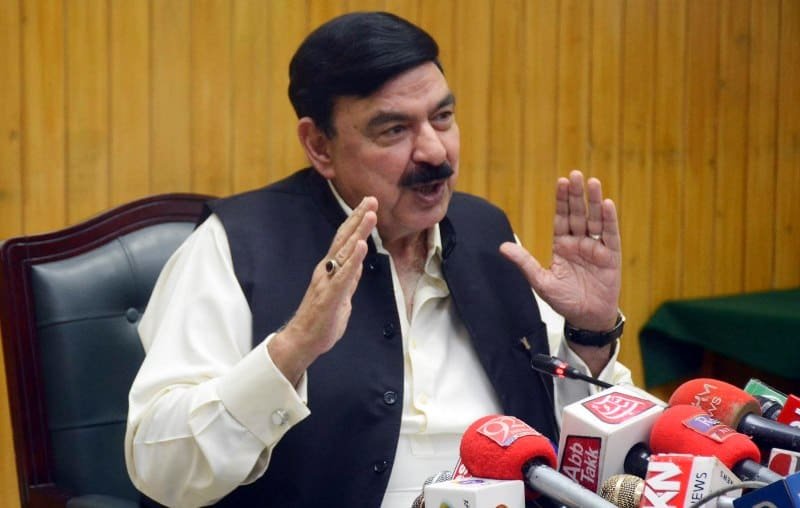
    Federal Minister for Railways Sheikh Rasheed Ahmad has warned India that Pakistan even has small nuclear bombs weighing 125-250 grams, which can hit and destroy targeted areas, The News reported.

    “We know if we want to use our 1-inch, 2-inch or half an inch [atomic bombs],” the minister said on Sunday, leaving netizens all cracked up.

    WATCH VIDEO:

    “India committed two blunders. The first one was carrying out atomic explosions while presuming that Pakistan would not do so and secondly, it scrapped special status of Kashmir on August 5 this year, believing Kashmiris won’t react”, the minister said further.

    Tensions soar on either side of the border ever since New Delhi on August 5 revoked Article 370 of the Indian constitution, robbing the people of the troubled valley of their autonomous state. India has since kept Kashmir under lockdown.

  • ‘Hide in a basement, take a bath’: Indian media airs tips on surviving nuclear attack

    ‘Hide in a basement, take a bath’: Indian media airs tips on surviving nuclear attack

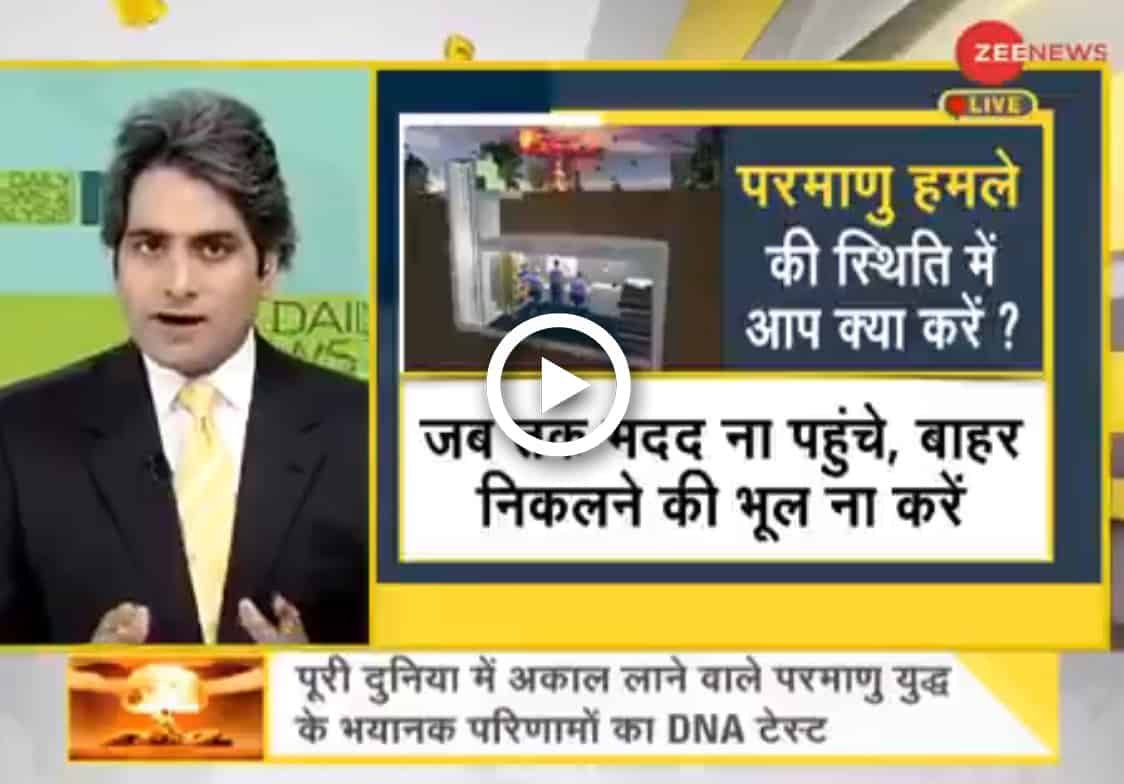
    As tensions continue to soar between nuclear-capable Pakistan and India amid Kashmir crisis, an India media outlet has aired tips on how to survive a nuclear attack, Scroll.in reported.

    According to the details, a recent video clip from television channel Zee News, informing its viewers about what to do in case of a nuclear attack, has left people on social media in disbelief.

    News anchor Sudhir Chaudhary’s tips on surviving nukes include not looking directly at the explosion, running to the basement of the strongest building around you for shelter, taking a bath and sealing clothes exposed to radioactive waves to avoid them from being spread further.

    WATCH VIDEO:

    “The spe­c­ter of nuclear war haunts tensions between Pakistan and India, and the disputed territory of Kashmir could provide the spark that lights South Asia’s nuclear fuse,” warned a report published by a United States (US) think-tank last week.

    The report — by Stratfor, a geopolitical intelligence platform based in Austin, Texas — also disputed the classification of the Kashmir issue as India’s “internal affair” or a “bilateral” issue between the two neighbours.

    “It isn’t. A potential nuc­lear conflagration cannot be anything other than a matter of international peace and security,” the report warned.

    According to the report, the possibility of “the conflict going nuclear may have increased on Aug 16”, when Indian Defence Minister Rajnath Singh seemed to abandon India’s “no first use” doctrine.

    “India has strictly adhered to this doctrine. What happens in the future depends on the circumstances,” he had tweeted.

  • Information Ministry uses Indian poem for new Kashmir song

    Information Ministry uses Indian poem for new Kashmir song

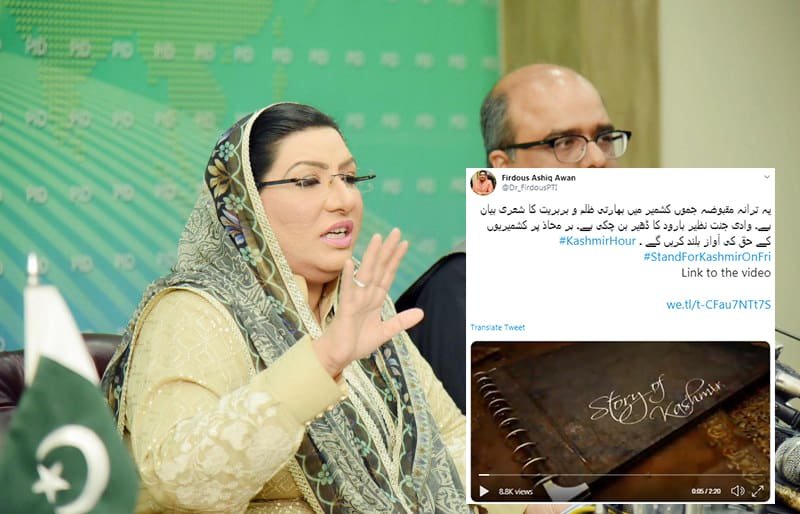
    The Information Ministry has come under fire for using an Indian poem as a new national song to mark Friday’s “Kashmir Hour” that was observed across the country on Prime Minister (PM) Imran Khan’s call.

    As per the details, the poem “Han Main Kashmiri Hun” by Indian poet and politician Imran Pratapgarhi was played on television channels across the country as the nation expressed solidarity with Kashmiris suffering at the hands of Indian occupying forces.

    Special Assistant to the PM on Information and Broadcasting Dr Firdous Ashiq Awan also shared the song on Twitter and wrote, “This poem accurately describes the plight of residents of Kashmir and how they are enduring Indian cruelty. We are standing with Kashmiris.”

    The move was criticised by Twitterati, who asked why an Indian poem was used by the government when several Pakistani poets had also written about Kashmir.

    PM’s aide was also criticised for not giving credit to the Indian poet who had written the poem over a decade ago.

  • Kashmir ‘Curfew Clock’ installed in Islamabad

    Kashmir ‘Curfew Clock’ installed in Islamabad

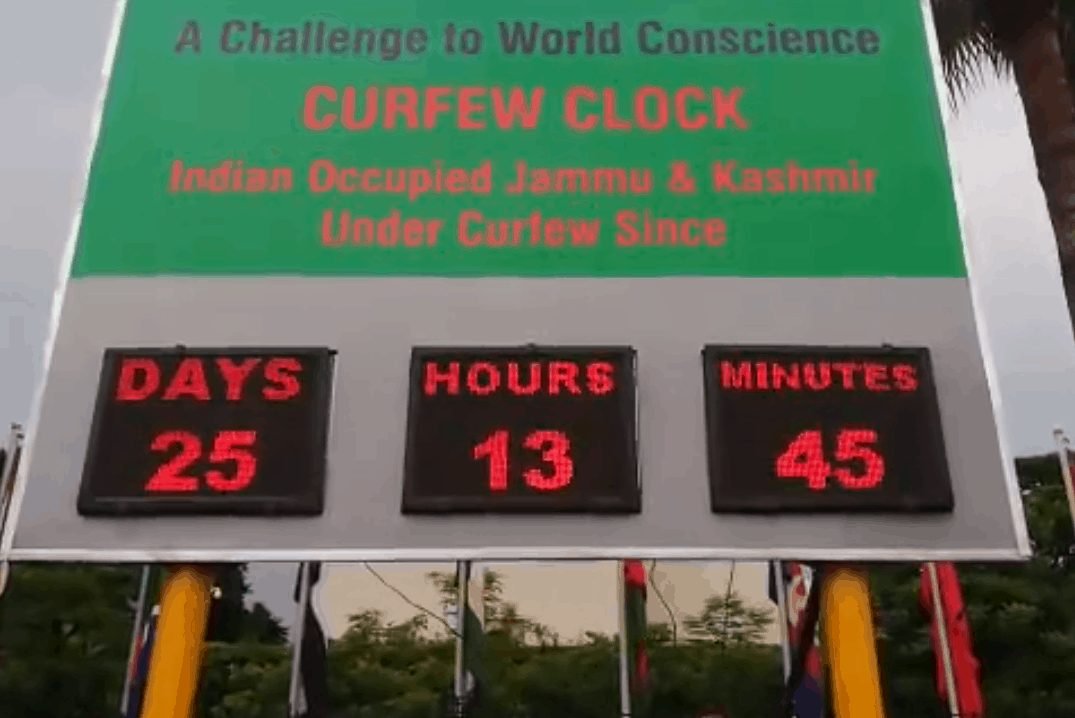
    A digital clock called “Curfew Clock” has been installed in the federal capital, which shows the number of days, hours and minutes since India has kept occupied Kashmir under curfew.

    The video of the curfew clock that “challenges the world conscience” was tweeted by Central Film Censor Board chairman and Information Minister’s Office director Danyal Gillani.

    Pakistanis on Friday came out in hordes on Prime Minister (PM) Imran Khan’s call to observe “Kashmir Hour” to show solidarity with the people of Indian occupied Kashmir (IoK).

    People of the Muslim-majority troubled valley have been held hostage by Indian occupying forces since August 5 when New Delhi abrogated Article 370 of its constitution to rob the disputed territory of its autonomy.

  • Kashmir crisis: Sri Lanka rejects claims, says ‘it never supported Pakistan’

    Kashmir crisis: Sri Lanka rejects claims, says ‘it never supported Pakistan’

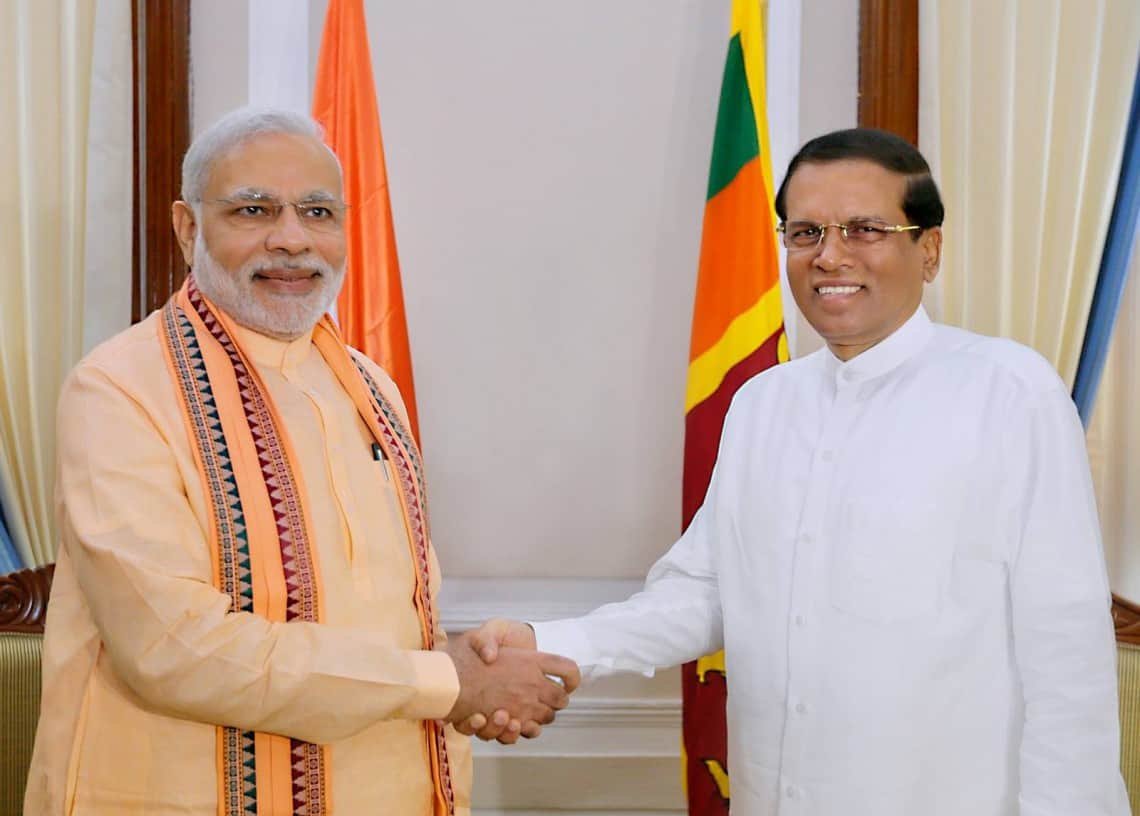
    In what is being termed as an embarrassment for the country, Sri Lanka has rejected Pakistan’s claims of enjoying President Maithripala Sirisena’s support against Indian decision to revoke Article 370 of its constitution in held Kashmir.

    “The president acknowledged that Jammu and Kashmir is a disputed territory and expressed his desire that this dispute should be resolved according to wishes of Kashmiris under UN [United Nations] Resolutions,” read a statement issued following Pakistani High Commissioner Maj Gen (r) Dr Shahid Ahmad Hashmat’s meeting with the Sri Lankan president Tuesday.

    According to the statement, President Sirisena “also offered Sri Lanka’s mediation and facilitation of dialogue between Pakistan and India to re-activate the SAARC [South Asian Association for Regional Cooperation] forum”.

    The Pakistani High Commission’s claims, however, were rejected by the Sri Lankan president on Thursday.

    “The President’s Media Division wishes to state that the said meeting took place at the request of the High Commissioner of Pakistan and during which he briefed the president about the recent developments with regard to India’s abrogation of Section 370 and annulling of Article 35A of the Constitution of India.”

    It added that the president gave a patient hearing to the high commissioner’s views and said that both Pakistan and India have excellent friendly relations with Sri Lanka, adding that the country’s interest is to see the growth of regional cooperation.

    “The president did not make any other comment on the issues pertaining to Pakistan and India,” it concluded.

  • Over 40 Azad Kashmir residents stranded in India after authorities ‘refuse to open border’

    Over 40 Azad Kashmir residents stranded in India after authorities ‘refuse to open border’

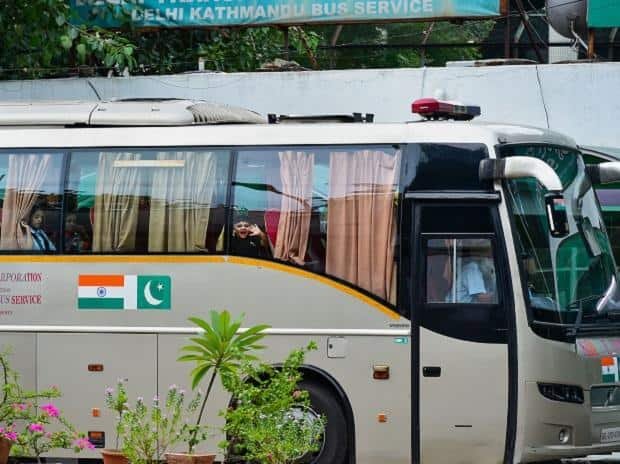
    As many as 42 residents of Pakistan’s Azad Jammu and Kashmir (AJK) region have been left stranded in India after authorities reportedly refused to open “Rah-e-Milan” gate on the Line of Control (LoC) for the weekly bus service.

    The bus service that runs across the LoC — between AJK’s Rawalakot and Indian occupied Kashmir’s (IoK) Poonch district — is the brainchild of former IoK chief minister (CM) Mufti Mohammed Sayeed.

    “Every Monday the weekly bus service operates between Rawalakot and Poonch via Chakan da Bagh, but this week it didn’t,” Indian media reports quoted an Indian official as saying.

    Out of 42 AJK residents left stranded in Poonch, 27 were due for their return today and taken to the gates at the LoC around 11 am on Monday, but Pakistani authorities didn’t let them pass forcing their return to Chakan da Bagh crossing point.

    “We conveyed the message to Pakistani authorities but they didn’t respond and hence the bus service could not operate,” the official said.

    Tensions are running high on either side of the border ever since New Delhi abrogated Article 370 of its constitution to rob the disputed valley of its autonomy.

    The disruption in cross border travel follows Pakistan’s decision to suspend operations of Samjhauta Express between Wagah in Pakistan and Attari in India along with Thar Express that used to connect Khokhrapar in Pakistan with Munabao in India’s Rajasthan state.

    Earlier this month, the Lahore-Delhi bus service was also suspended.

  • Video shows Gandapur accusing ex-PM Nawaz of ‘issuing visas to Indian spies’

    Video shows Gandapur accusing ex-PM Nawaz of ‘issuing visas to Indian spies’

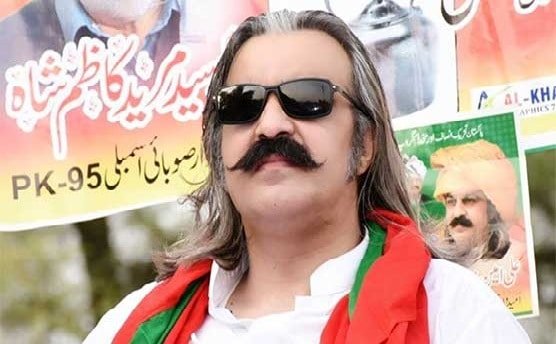
    With tensions soaring on both sides of the border as the Kashmir crisis worsens, an old video of Federal Minister for Kashmir Affairs and Gilgit-Baltistan Ali Amin Gandapur, accusing ex-prime minister (PM) Nawaz Sharif of issuing visas to Indian spies, has resurfaced.

    Fear grips Indian occupied Kashmir (IoK) ever since New Delhi imposed a curfew after scrapping Article 370 of its constitution — robbing the disputed territory of its autonomy. Pakistan has strongly reacted to the moves on all fronts, as it believes the development could lead to the ethnic cleansing of Muslims in the troubled valley.

    Amid tensions running high, an old video of the Pakistan Tehreek-e-Insaf (PTI) leader has surfaced, wherein Gandapur is accusing Nawaz of “issuing visas to Indian spies and employing them as millworkers”.

    He also accuses the outgoing government of “giving a safe passage” to Indian spy Kulbhushan Jadhav, who continues to remain in the custody of security agencies after the verdict of the International Court of Justice (ICJ).

    WATCH VIDEO:

    The video further shows Gandapur’s statements attracting a strong response from Pakistan Muslim League-Nawaz (PML-N) leader Muhammad Zubair and the anchorperson, who ridicule the federal for his ignorance.

  • U-turn: India admits Kashmir is disputed territory, not ‘internal matter’

    U-turn: India admits Kashmir is disputed territory, not ‘internal matter’

    Soon after the United Nations Security Council (UNSC) held its first-ever meeting over the Kashmir issue in almost 50 years, India has backtracked on its statement and admitted that Indian-occupied Kashmir (IoK) is disputed territory.

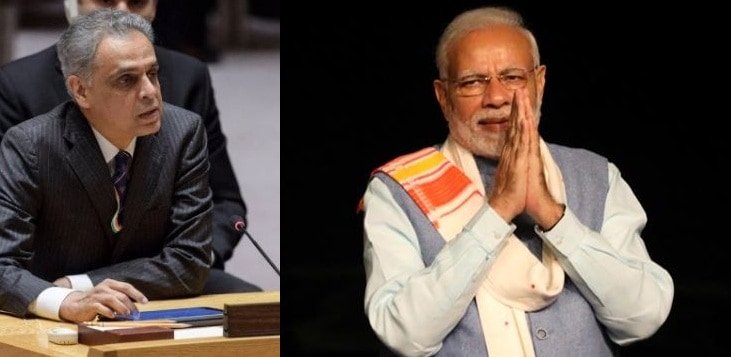
    According to The Express Tribune, facing a barrage of questions in a press briefing following the historic meeting at the UN headquarters on Friday, India’s envoy to the United Nations Syed Akbaruddin said that India was committed to the Shimla Agreement inked with Pakistan in 1972, which explicitly declares Kashmir as disputed between the two countries.

    Earlier, New Delhi had regularly blocked discussion on held Kashmir at the UN, saying it considers the matter an “internal affair”.

    “So let me begin by coming across to you and shaking your hand… as we’ve already extended our hand of friendship by saying we are committed to Shimla Agreement. Let us wait on that from the Pakistani side,” said the Indian ambassador while awkwardly reaching out to Pakistani journalists and shaking their hands.

    WATCH VIDEO:

    Responding to a question, he said: “In closed consultations at the UNSC, anyone, especially parties to the dispute, can try and throw in anything at the members of the Security Council. That’s the nature of the beast.”

    “We are ready to address these issues in a matter in which states who have normal approaches to international ties address them… and in our case, we are committed to Shimla Agreement,” he added.

  • Islamabad responds to Indian hint at ‘using nukes against Pakistan’

    Islamabad responds to Indian hint at ‘using nukes against Pakistan’

    Pakistan has taken exception to Indian defence minister’s statement on the use of nuclear weapons, saying the “substance and timing of the statement was highly unfortunate and reflective of India’s irresponsible and belligerent behaviour”.

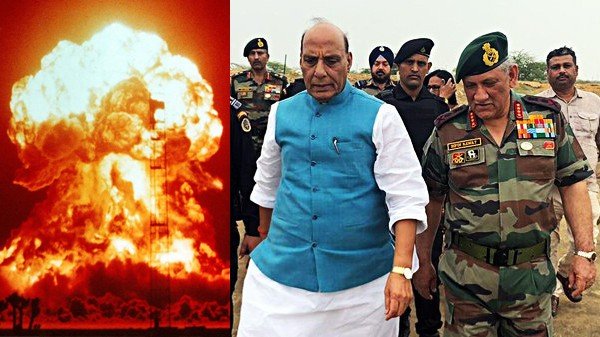
    Rajnath Singh had on Friday said that New Delhi may see a major shift in its nuclear weapons doctrine by doing away with the ‘no first use’ policy in the future. ‘No first use’ is a pledge to not use nuclear weapons as a means of warfare unless first attacked by an opposition using its nuclear arms.

    “Till today, our nuclear policy is ‘no first use’. What happens in future depends on the circumstances,” the Indian defence minister had said while addressing a gathering in Pokhran, the site of India’s nuclear tests in 1998.

    In a subsequent tweet, Singh had added:

    “It further exposes the pretense of their no first use policy, to which we have never accorded any credence,” Pakistan Foreign Office said while reacting to the Indian defence minister’s statement.

    “No first use pledge is non-verifiable and cannot be taken at face value, especially when the development of offensive capabilities and force postures belie such claims,” the statement read and added that Pakistan always proposed measures relating to nuclear restraint in South Asia.

    “Pakistan will continue to maintain a credible minimum deterrence posture.”