Tag: Kashmir

  • Fact Check: Is the UNSC meeting on Kashmir crisis an emergency session?

    Fact Check: Is the UNSC meeting on Kashmir crisis an emergency session?

    Claim: United Nations Security Council is to convene in an emergency meeting on revoking Kashmir’s special status

    Fact: UNSC was to convene in a mostly informal, closed-door session and not in an emergency

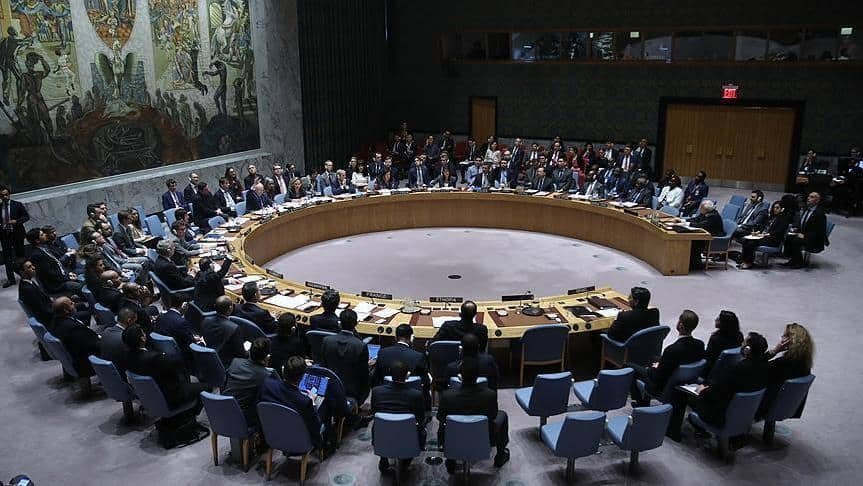
    The United Nations Security Council (UNSC) will meet behind-closed-doors on Friday at the request of Pakistan and China to discuss India’s decision to revoke the special status of occupied Kashmir.

    However, contrary to earlier reports, the meeting is not an “emergency session”, but a consultation, which is mostly informal, closed-door and does not allow the participation of non-members, lawyer Reema Omer tweeted.

    In letters to the UN secretary general and the UNSC rotating chair for the month of August, Poland, Islamabad had sought an open discussion at the top-decision making forum, with a personal pitch from Foreign Minister Shah Mahmood Qureshi to his Polish counterpart Jacek Czaputowicz.

    What Pakistan has been granted at the UN is a “consultation”, not an “open” or a “closed meeting”.

    DIFFERENCE:

    Both open and closed meetings are formal meetings of the UNSC. Closed meetings are not open to the public and no verbatim record of statements is kept, instead, the UNSC issues a press release.

    Consultations, on the other hand, are informal meetings of the council members.

    Clarifying the situation further, Reema tweeted:

    While it is not a formal meeting, it is extremely rare for the UNSC to discuss Kashmir, which has been divided between Pakistan and India since independence from Britain in 1947.

    The last time there was a full UNSC meeting on the Himalayan region was in 1965.

    Verdict: MISLEADING
  • Indian media falls for Pakistani meme, fact checks Arya Stark’s picture as ‘Kashmiri girl’

    Indian media falls for Pakistani meme, fact checks Arya Stark’s picture as ‘Kashmiri girl’

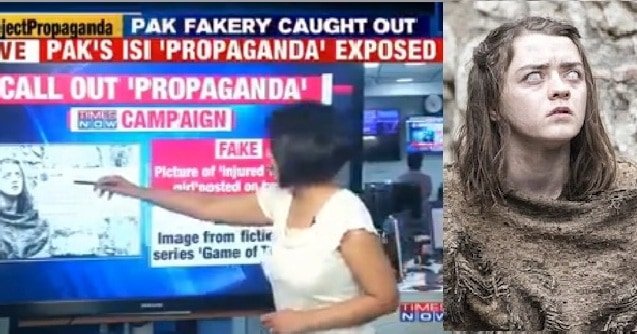
    Amid the ongoing unrest in held Kashmir, a viral picture of Game of Thrones (GoT) character Arya Stark being portrayed as a Kashmiri girl, has been fact-checked by Indian media.

    As per the details, the image was first shared by a Twitter handle, “Fan of Zaidu”, mentioning Arya — played by Maisie Williams — as a Kashmiri girl “who had gone blind after being hit by a pellet gun”.

    https://twitter.com/TheZaiduLeaks/status/1157727539873402882?ref_src=twsrc%5Etfw%7Ctwcamp%5Etweetembed%7Ctwterm%5E1157727539873402882&ref_url=http%3A%2F%2Fnewsmobile.in%2Farticles%2F2019%2F08%2F14%2Fpicture-of-gots-arya-stark-shared-as-kashmiri-girl-heres-the-fact-check%2F

    It wasn’t later that the image took the micro-blogging website by storm.

    Despite the handle clearly stating that its tweets are nothing but satire and “100% fake”, Indian media has started doing fact checks over the image, claiming that Pakistan’s premium intelligence agency, the Inter-Services Intelligence (ISI), was “leading the propaganda campaign against India”.

    Moreover, a noted Indian scholar and activist, Madhu Kishwar, has retweeted the image and asked Fact Check India to “confirm if it is real”.

    India TV Editor-In-Chief Rajat Sharma has also accused Pakistan of spreading false propaganda.

    https://twitter.com/TheZaiduLeaks/status/1161722132214308864

    The image comes as tensions soar on either side of the border ever since India robbed occupied Kashmir of its special status. Pakistan fears the move can lead to a Muslim genocide in the troubled valley.

  • Gandapur announces heading to LoC, leading from front if war breaks out

    Gandapur announces heading to LoC, leading from front if war breaks out

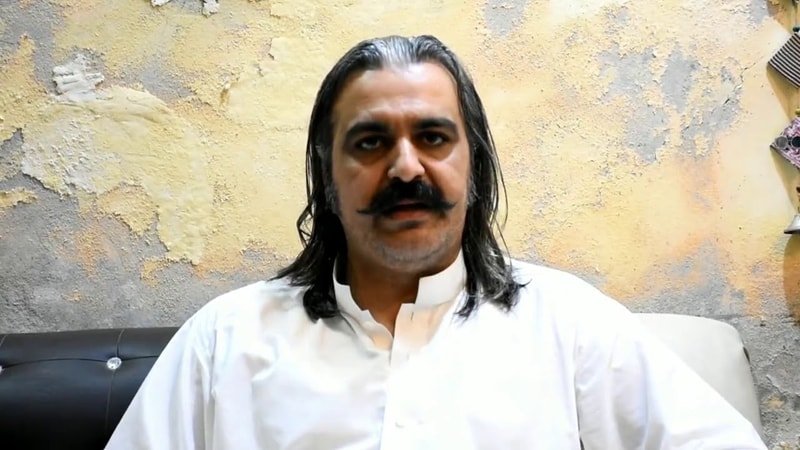
    As tensions soar on either side of the border, Federal Minister for Kashmir Affairs and Gilgit-Baltistan Ali Amin Khan Gandapur has announced heading to the Line of Control (LoC) and leading from the front if a war breaks out.

    Heavy troop movements reportedly continue along the LoC in both Azad Jammu and Kashmir (AJK) and the Indian occupied Kashmir (IoK) after India revoked Article 370 of its constitution last Monday.

    The move that snatched away the disputed territory’s autonomy, can lead to the ethnic cleansing of Muslims and ultimately result in the transformation of the region into majority-Hindu.

    READ: Articles 370 and 35A explained

    Speaking to a private media outlet, Gandapur on Friday eulogised those who had laid their lives for the Kashmir cause and said that if India imposed war, he would be in the forefront in fighting the occupying forces.

    “The entire nation stands in solidarity with Kashmir and if needs be, I will head to the LoC to fight the war,” the minister added.

    In an earlier statement, Gandapur had said that Kashmir was the country’s jugular vein and every Pakistani was ready to fight for it till death. He had further said that the country’s armed forces were ready to befittingly respond to any Indian misadventures.

  • Kashmir crisis: Russia steps up to support India

    Kashmir crisis: Russia steps up to support India

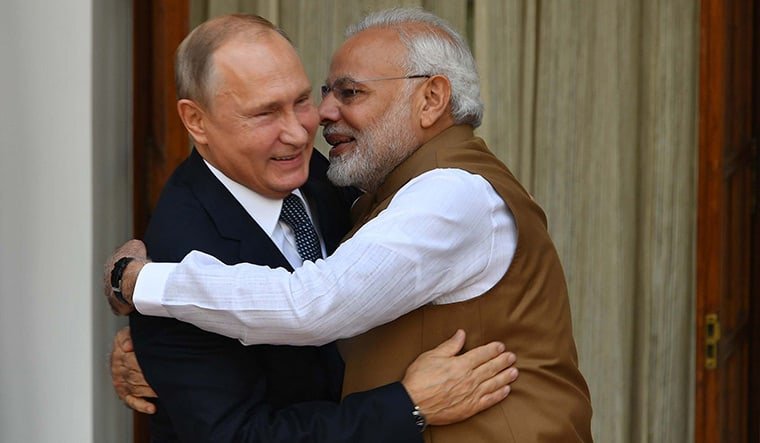
    Russia has come out in support of India’s move to revoke Article 370 of its constitution and integrate occupied Kashmir, which can lead to the ethnic cleansing of Muslims and transform the region into majority-Hindu.

    According to media reports, Moscow has become the first among the permanent members of the United Nations Security Council (UNSC) to formally state that abrogation of the provision is “an internal matter for India”.

    “Moscow expects that Pakistan and India will not allow aggravation of the situation in the region due to the change by New Delhi in the status of the state of Jammu and Kashmir,” Russian Ministry of Foreign Affairs was quoted as saying.

    “We proceed from the fact that the changes associated with the change in the status of the state of Jammu and Kashmir are within the framework of the Constitution of the Republic of India,” it said.

    The ministry further said that Russia was a consistent supporter of peace between the two neighbouring countries.

    “We hope that the differences between them will be resolved by political and diplomatic means on a bilateral basis in accordance with the provisions of the Shimla Agreement of 1972 and the Lahore Declaration of 1999.”

    Tensions are soaring between Pakistan and India after New Delhi on Monday revoked Article 370, which gave special status to held Kashmir and moved a separate bill to split the state into two union territories of Jammu and Kashmir and Ladakh.

    Pakistan believes the move, other than snatching away occupied Kashmir’s autonomy, can pave way for a Muslim genocide as it allows people from all over India to settle in the disputed territory which could result in a massive demographic shift.

  • MS Dhoni spotted polishing military boots in occupied Kashmir

    MS Dhoni spotted polishing military boots in occupied Kashmir

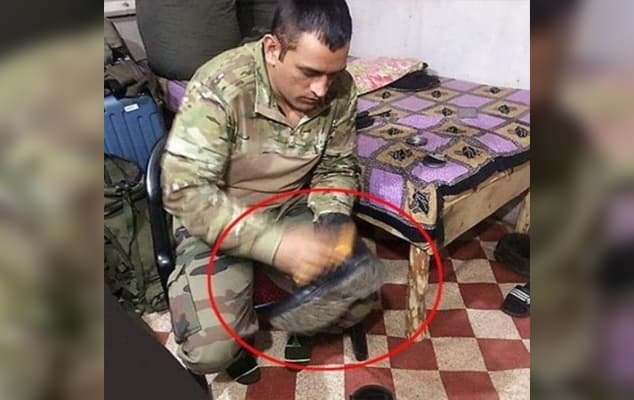
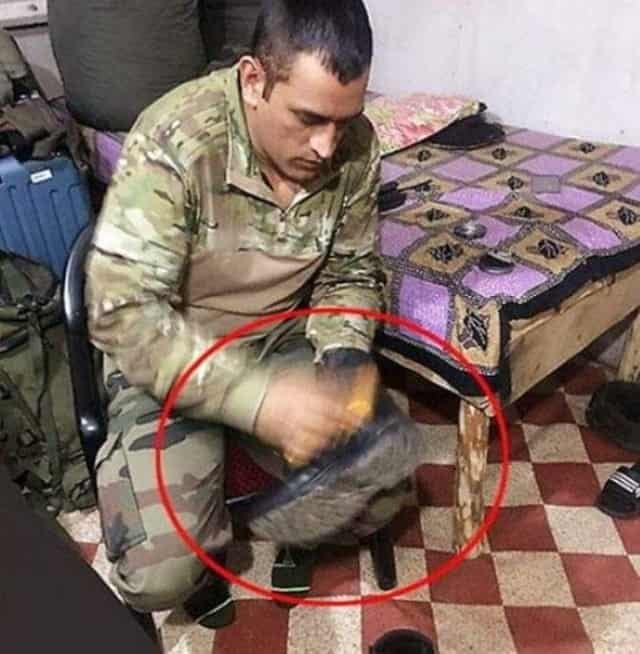
    Former Indian cricket team captain Mahendra Singh Dhoni, commonly known as MS Dhoni, has been spotted polishing military boots in Indian occupied Kashmir (IoK), where he is serving the army.

    The 38-year-old wicketkeeper-batsman, who holds the honourary rank of lieutenant colonel in the Territorial Army Unit of the Indian army’s Parachute Regiment since 2011, had earlier made himself unavailable for the West Indies tour.

    He had then left for the troubled valley to undertake the duties of patrolling, guard and post for a period of 15 days starting July 31.

    “As requested by the officer and approved by army headquarters; he will be taking on the duties of patrolling, guard and post and would be staying with troops,” the Indian army had said in a statement issued last month.

    In the Men in Blue’s ongoing West Indies tour, the two teams are crossing swords in three T20s, three ODIs and two Test matches.

    Earlier, Dhoni was received with “Boom Boom Afridi” chants by the Kashmiris. Former Pakistan captain Shahid Afridi aka Boom Boom Afridi has been known to voice out his opinion when it comes to Kashmir.

    Recently, after the Indian government’s recent decision to scrap Article 370, Afridi had taken to Twitter to highlight the unprovoked aggression and crimes in IoK.

    He had also urged the United Nations (UN) to take action and asked United States (US) President Donald Trump to mediate on the matter.

  • Kashmir crisis: Pakistan’s aggressive diplomacy at UN puts India on backfoot

    Kashmir crisis: Pakistan’s aggressive diplomacy at UN puts India on backfoot

    Islamabad’s aggressive diplomacy, ever since India revoked Article 370 of its constitution to snatch occupied Kashmir’s autonomy, has put New Delhi on backfoot at the United Nations (UN), ARY News reported.

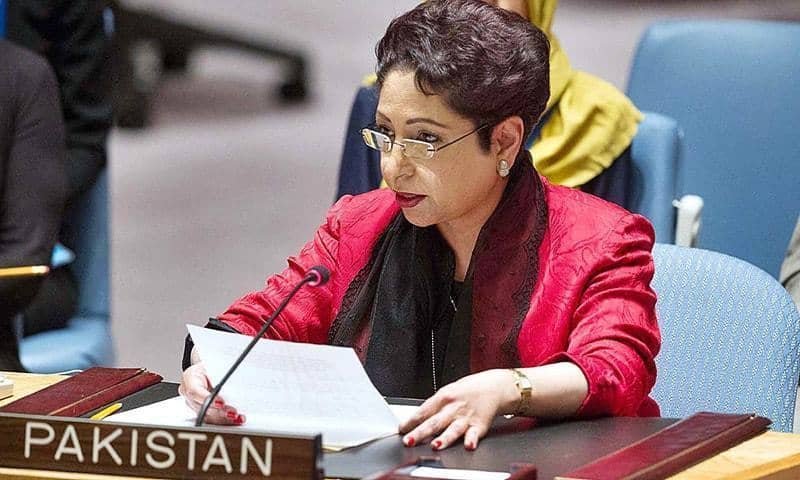
    According to reports, Pakistan’s Representative to the UN Maleeha Lodhi has highlighted the need to ensure that the crisis triggered by India’s unlawful annexation of Jammu and Kashmir is addressed in accordance with UN Security Council (UNSC) Resolutions on the disputed region.

    During Lodhi’s meeting with UN Political Affairs chief Rosemary DiCarlo on Thursday, she focused on the illegality of Indian actions and called on the UN, especially the secretary general, to clearly enunciate its position on the subject.

    The meeting was part of a series of contacts Pakistan’s envoy has been making to brief senior UN officials from all regions of the world about Pakistan’s stance on the Indian government’s decision to strip Indian occupied Kashmir (IoK) of its special status and placing the disputed state under a lockdown.

    She also informed DiCarlo about the complete lockdown in IoK, including shut down of internet services and landlines that had begun even before the announcement of the controversial decision.

    A statement issued on behalf of UN Secretary General Antonio Guterres has also acknowledged the critical importance of UN Resolutions on Kashmir to deal with the crisis.

    Lodhi also met three non-permanent members of the UN Security Council — Kuwait, Indonesia and South Africa — as India, on backfoot, also stepped up its campaign to have the world believe that the decision was taken for the socio-economic development of the Kashmiris and that they enjoy the same rights as Indians.

  • Now anyone can get married to a white-skinned Kashmiri woman: BJP lawmaker

    Now anyone can get married to a white-skinned Kashmiri woman: BJP lawmaker

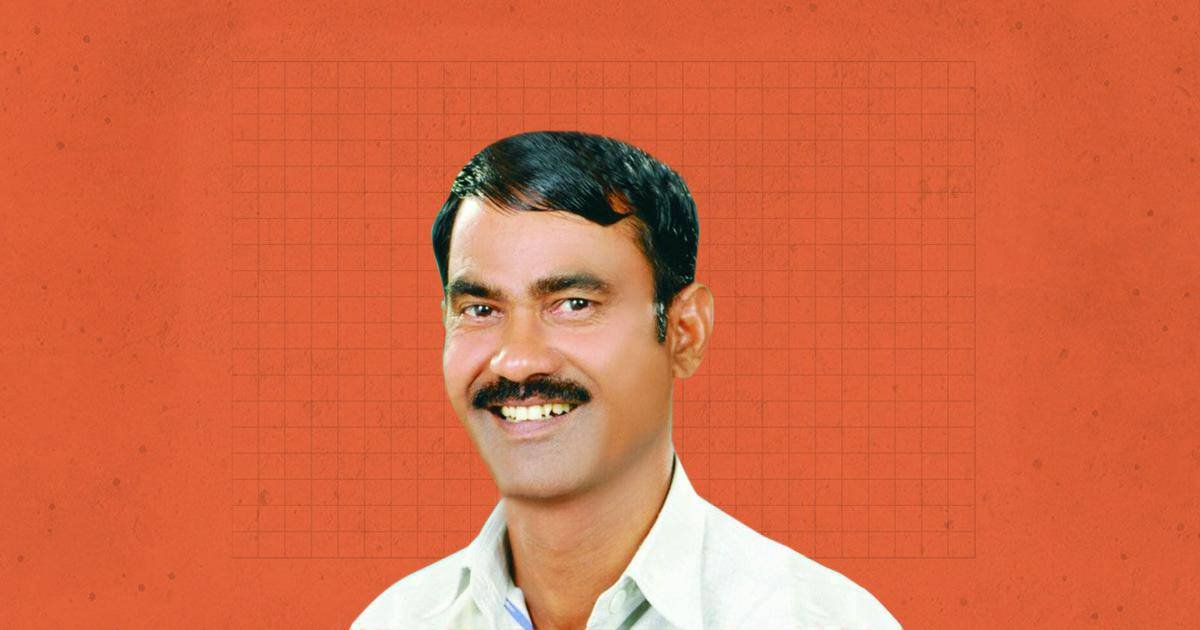
    A lawmaker from Indian Prime Minister (PM) Narendra Modi’s Bharatiya Janata Party (BJP) has said that his colleagues are “excited because they will now be able to get married to white-skinned women from Kashmir”.

    In a video that went viral after the hardliner BJP-led government abolished Article 370 of the Indian Constitution — lifting restrictions that barred non-Kashmiri individuals from permanently shifting to the majority-Muslim region — Vikram Singh Saini can be seen speaking at an event to celebrate the scrapping of Kashmir’s special status.

    “The [BJP] workers are very excited and those who are bachelors, they can get married there. There is no issue now. If a woman from there [Kashmir] got married to a man from Uttar Pradesh, her citizenship would be revoked,” the lawmaker can be heard as saying.

    WATCH VIDEO:

    https://twitter.com/Benarasiyaa/status/1158767988243234816

    “Muslim party workers should rejoice in the new provisions. They can now marry white-skinned women of Kashmir. There should be celebrations. Everyone should celebrate… be it Hindus or Muslims. This is something the entire country should be celebrating,” he says, which is followed by applause.

    Social media in India has been flooding with misogynistic remarks ever since the India government revoked Article 370 and 35A.

    The development now allows people from all over India to permanently move to occupied Kashmir and start businesses there. Natives of the troubled valley fear that it may lead to the ethnic cleansing of Muslims to transform the region from majority-Muslim to majority-Hindu.

  • US knew about India’s plans for occupied Kashmir: report

    US knew about India’s plans for occupied Kashmir: report

    With Indian occupied Kashmir (IoK) being robbed of its special status, it has emerged that the United States (US) already knew about the development that could lead to a Muslim genocide in the troubled valley.

    In a move to tighten its grip on occupied Jammu and Kashmir, India on Monday dropped a constitutional provision that allowed the disputed territory to make its own laws.

    According to The Print, Prime Minister (PM) Narendra Modi-led government’s External Affairs Minister S Jaishankar had told his American counterpart Mike Pompeo of his government’s plan last week.

    It, however, wasn’t the first time Washington was briefed on the matter as two days after February 14’s Pulwama attack, India’s National Security Adviser Ajit Doval had also called his US counterpart John Bolton and shared New Delhi’s plans to do away with the special status, reports said.

    While the decision to bifurcate the state came much later than the Doval-Bolton phonecall, Jaishankar’s meeting with the US secretary of state came on the sidelines of the 9th East Asia Summit Foreign Ministers’ Meeting in Bangkok on August 1.

    Jaishankar had also reiterated to Pompeo that the US does not need to mediate in the Kashmir dispute and that any discussion on this issue, “if at all warranted”, will only be with Pakistan unilaterally.

    The Modi government did not want to take any chances when it came to the US, and so, all necessary safeguards were taken, the report quoted sources as saying.

    KASHMIR ROBBED OF SPECIAL STATUS:

    The Bharatiya Janata Party (BJP) government on Monday revoked the disputed Himalayan territory’s special status by abrogating Article 370 of the Constitution.

    With IoK’s autonomy snatched, people from the rest of India would have the right to acquire property in the valley and settle there permanently.

    Kashmiris fear the move would lead to a demographic transformation of the region from majority-Muslim to majority-Hindu, paving way for Modi’s hardliner BJP and resulting in major setbacks to their freedom struggle.

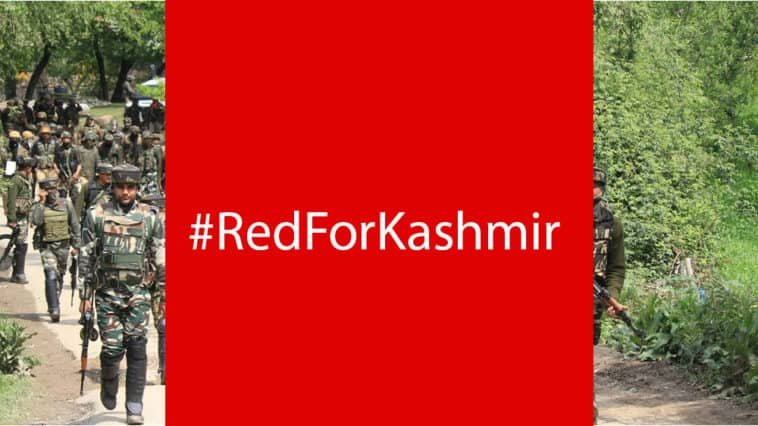
  • #RedForKashmir: Social media goes red in solidarity with Indian occupied Kashmir

    #RedForKashmir: Social media goes red in solidarity with Indian occupied Kashmir

    After the Indian government scrapped the Article 370
    of the constitution which allowed Indian occupied Kashmir to have special
    status.

     By eliminating Article 370 of the constitution,
    people from the rest of India will have the right to get property in occupied
    Kashmir and settle there permanently. This is seen as an attempt to dilute the
    demographics of  Indian occupied Kashmir.

      Thousands have taken to social media to show their support and stand with the citizens of the disputed valley. This action of the Modi-led BJP government was widely condemned by social media users from across the globe.

    A large number of social media users are changing their profile pictures to red and using hashtags like #RedForKashmir, #BleedForKashmir, #StandWithKashmir, and #Kashmirunderthreat to express solidarity with Kashmiris.

    https://twitter.com/youdawood/status/1158146341371076613
    https://twitter.com/nrafiqii/status/1158127648658341890

  • Wilders hails India’s illegal decision, calls Pakistan ‘100% terror state’

    Wilders hails India’s illegal decision, calls Pakistan ‘100% terror state’

    Dutch Politician Geert Wilders, who is known for his anti-Islam rhetoric, has hailed India’s decision to nullify Article 370 of the Constitution in occupied Kashmir and called Pakistan “a 100% terror state”.

    “India is a full Democracy and Pakistan is a 100% terror state [sic],” leader of the far-right Party for Freedom (PVV) tweeted after the Indian government paved way for a Muslim genocide in held Kashmir.

    Wilders had earlier made headlines when he had announced his plans to hold a blasphemous caricatures contest as part of his “campaign against Islam”.

    His tweet comes after the Indian government on Monday through a presidential decree abolished Article 370 that gave a measure of autonomy to Indian occupied Kashmir (IoK).

    Now with the special status of Kashmiris repealed, among other feared outcomes is that people from the rest of India would have the right to acquire property in IoK and settle there permanently, which could lead to ethnic cleansing.

    A massive shift in demographics of the Muslim-majority disputed territory can also follow.