Tag: Kashmir

  • Indian-occupied Kashmir: Articles 370 and 35A explained

    Indian-occupied Kashmir: Articles 370 and 35A explained

    The Indian government has rushed through a presidential decree to abolish Article 370 of the Constitution, which gave a measure of autonomy to the Muslim-majority Indian occupied Kashmir (IoK).

    Here is everything you need to know about Article 370 and what could follow the development that comes as tensions mount in the troubled valley.

    WHAT IS ARTICLE 370?

    Article 370 was the basis of Jammu and Kashmir’s accession to the Indian union at a time when former princely states had the choice to join either Pakistan or India after their independence from the British rule in 1947.

    The article, which came into effect in 1949, exempts Jammu and Kashmir state from the Indian Constitution.

    It allows IoK to make its own laws in all matters except finance, defence, foreign affairs and communications. The article established a separate constitution, a separate flag and denied property rights in the region to the outsiders.

    That means the residents of the state live under different laws from the rest of the country in matters such as property ownership and citizenship.

    WHAT IS ARTICLE 35A?

    Article 35A is a branch of Article 370, which was introduced through a presidential order in 1954 to continue the old provisions of the territory regulations.

    The article permits the local legislature in IoK to define permanent residents of the region. It forbids outsiders from permanently settling, buying land, holding local government jobs or winning education scholarships in the region.

    While Article 35A has remained unchanged, some aspects of Article 370 have been diluted over the decades.

    WHY ARE THEY BEING ABOLISHED?

    The ruling Bharatiya Janata Party (BJP) and its right-wing allies have challenged Article 35A which it calls discriminatory. Last month, a senior BJP leader had hinted that the government was planning to form exclusive Hindu settlements in the region.

    With the special status repealed, people from the rest of India would have the right to acquire property in IoK and settle there permanently.

    Kashmiris fear the move would lead to a demographic transformation of the region from majority-Muslim to majority-Hindu, paving way for Prime Minister (PM) Narendra Modi’s hardliner BJP in the disputed territory.
  • Anupam Kher believes Muslim genocide is ‘Kashmir solution’?

    Anupam Kher believes Muslim genocide is ‘Kashmir solution’?

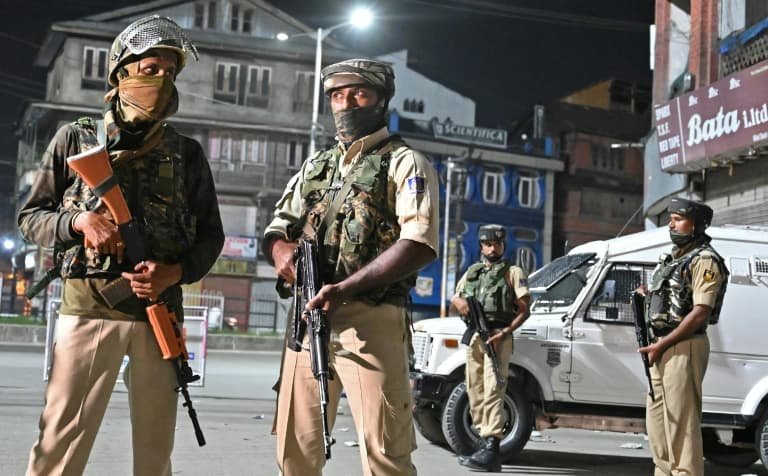
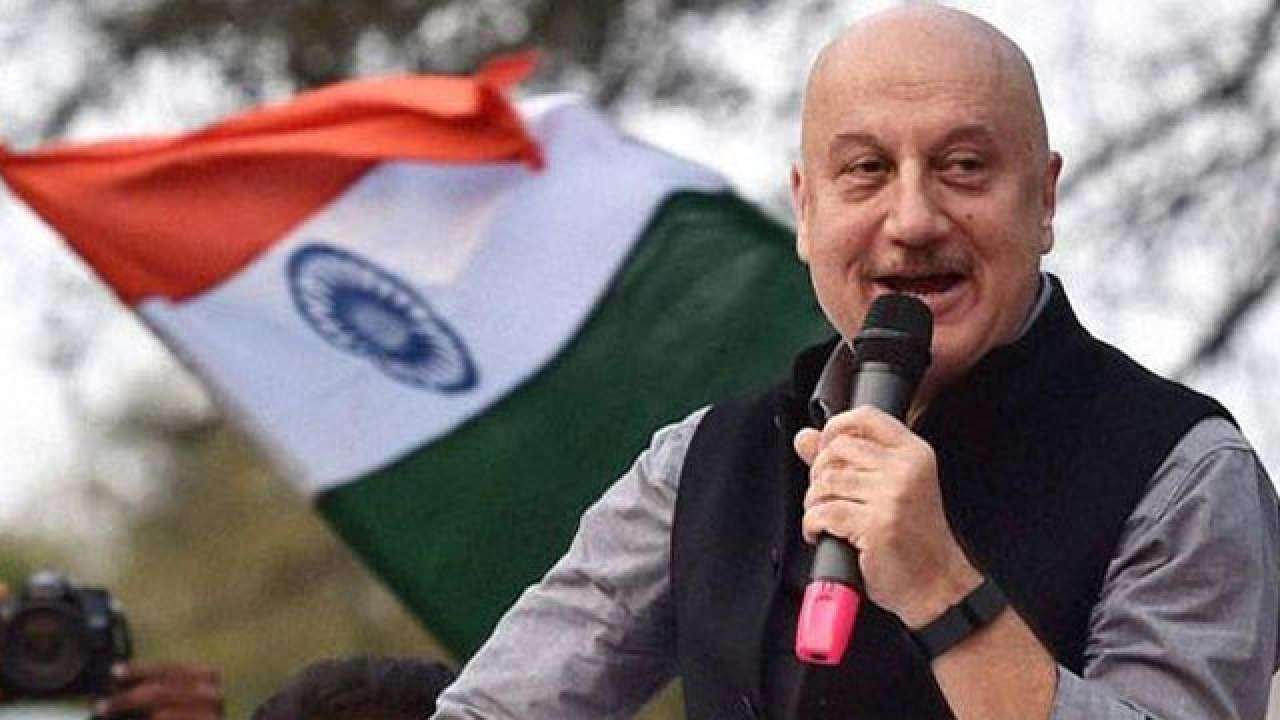
    With tensions mounting in Indian occupied Kashmir (IoK) as the government revokes special status granted to the valley, calls in additional troops and orders tourists to evacuate the region, a statement by veteran Bollywood actor Anupam Kher has left people stunned.

    Prominent Hurriyat leader Syed Ali Geelani had on Saturday taken to Twitter to urge the global Muslim community to help “save their souls” from “the biggest genocide” India is about to launch in held Kashmir.

    With the situation in the Himalayan territory worsening as Indian armed forces martyr at least 10 Kashmiri youth within the last three days and the government announcing its decision to scrap Article 370 of the Indian Constitution, actor Anupam Kher believes that “Kashmir solution has begun”.

    Kher, a Kashmiri Pandit, has been seen supporting Prime Minister (PM) Narendra Modi on several occasions. His wife Kirron Kher is also a lawmaker of the hardliner ruling Bharatiya Janata Party (BJP).

    The veteran actor had earlier said that “all the issues in the valley will be resolved if Article 370, which provides special autonomous status to Jammu and Kashmir is abolished”.

    ARTICLE 370:

    Article 370 of the Indian Constitution is a “temporary provision” that grants special autonomous status to occupied Kashmir. All the provisions of the constitution that are applicable to other states are not applicable to the disputed territory.

    According to this article, except for defence, foreign affairs, finance and communications, the Indian Parliament needs the state government’s approval for applying all other laws.

    The residents of occupied Kashmir, therefore, live under a separate set of laws as compared to Indian citizens elsewhere in the country, including those related to citizenship, ownership of property, and fundamental rights.

    As a result, Indian citizens from other states cannot purchase land or property in occupied Kashmir. With the government moving to revoke the article, fate of IoK’s 13 million population hangs in balance.

  • BBC clarifies Channel 5 misreporting on Hurriyat leader Yasin Malik

    BBC clarifies Channel 5 misreporting on Hurriyat leader Yasin Malik

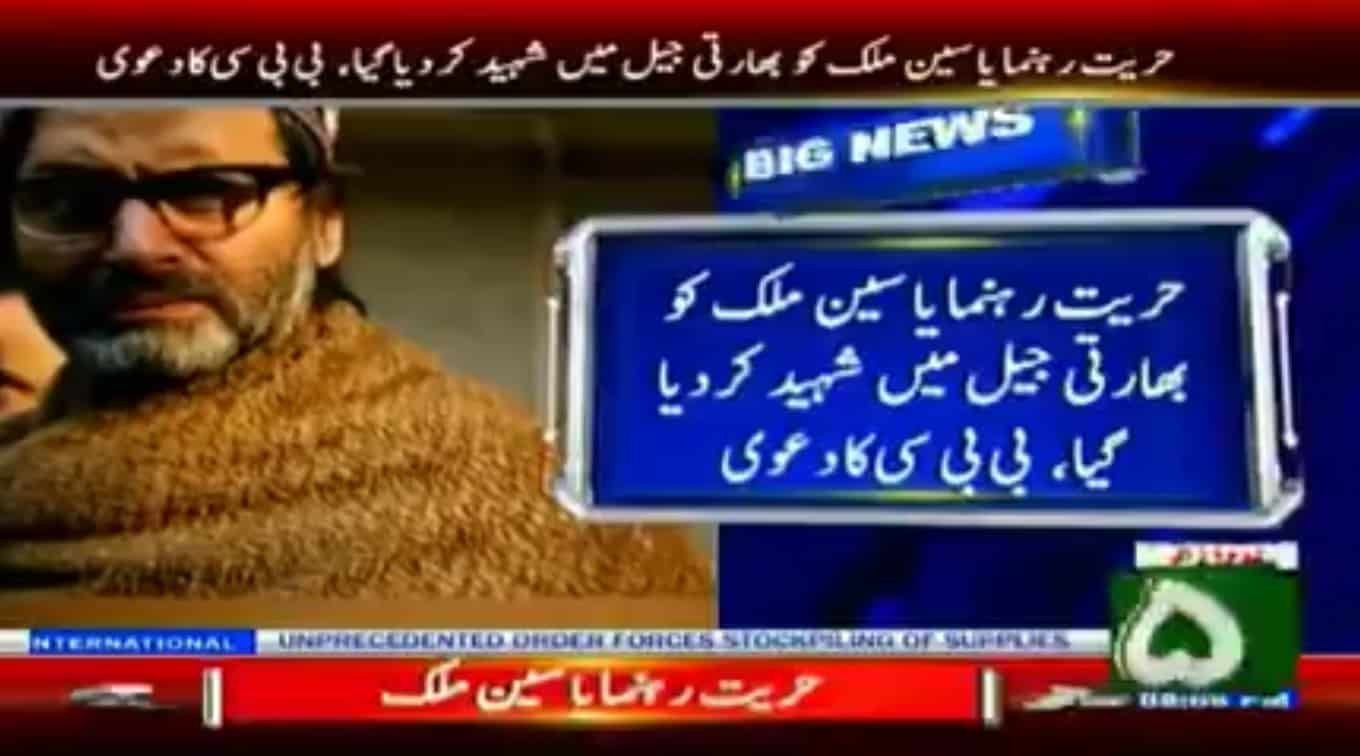
    Amid fear that grips Indian occupied Kashmir (IoK) ever since the government called in additional troops and ordered tourists to evacuate the region, Channel 5 reported that Hurriyat leader Mohammad Yasin Malik is dead as reported by BBC.

    The reports came a day after the Kashmiri separatist leader’s wife, Mushaal Hussein Mullick, demanded notice of her husband’s fast deteriorating health in the notorious Tihar Jail for raising voice against atrocities unleashed by Indian occupying forces.

    She said that Yasin was in solitary confinement for the past four months, strengthening the perception that unspoken orders to inflict miseries had been given to the jail authorities so that the Hurriyat leader may die a slow and painful death.

    The statement was followed by reports citing BBC as claiming the separatist leader’s death in confinement.

    WATCH VIDEO:

    With the video report taking over the internet by storm, it wasn’t later that BBC took to Twitter and issued a clarification.

    “The claim circulating on social media that the BBC has reported the death of Yasin Malik is fake,” it tweeted, urging the people to verify stories they see on social media by visiting its official news website.

    While the reports regarding his death have been rejected, it is pertinent to note that incarcerated Yasin is being tortured and denied basic health facilities by the Indian government for being a political adversary.

    According to his wife, being a heart patient, the separatist leader suffers from certain serious ailments related to vital organs of his body and needs certain life-saving drugs, which he was not allowed to take in jail.

  • Indian troops use Kashmiris as human shields in latest operation: report

    Indian troops use Kashmiris as human shields in latest operation: report

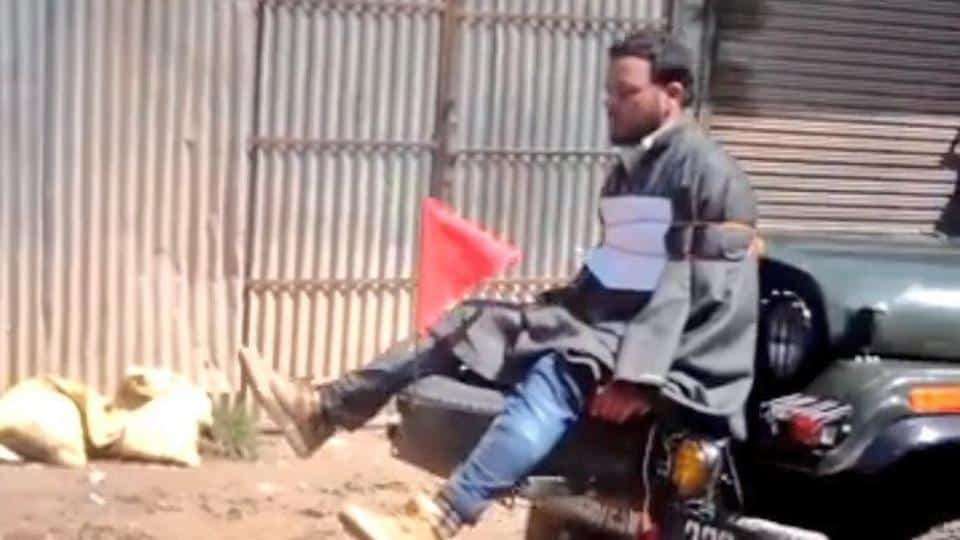
    At least four civilians were used as human shields by Indian troops as they launched an 18-hour-long operation in the Pinglan village of Indian Occupied Kashmir (IOK), Reuters reported.

    According to the report, by the time the operation ended, one civilian, three freedom fighters and five members of the Indian forces were dead, a row of houses was reduced to rubble and more than 120 villagers had sought treatment for exposure to tear gas, assault and mental trauma.

    Eyewitnesses were quoted as saying that soldiers forced at least four villagers to act as human shields. The civilians were sent first into a building where the fighters might be hiding, using a phone to record a video that could be viewed by soldiers present nearby.

    Human rights lawyers say such tactics — which are meant to deter local fighters from firing on soldiers carrying out the raids — are highly questionable and could even be a war crime under international law.

    But they would not be illegal under Indian law.

    “[The] Indian army has never used civilians as human shields,” said military spokesperson Lieutenant Colonel Mohit Vaishnava while speaking to Reuters.

    However, he said that during encounters, local people are sometimes asked to mediate between the army and freedom fighters.