Tag: Kashmir

  • Indian Supreme Court validates the revocation of Article-370

    Indian Supreme Court validates the revocation of Article-370

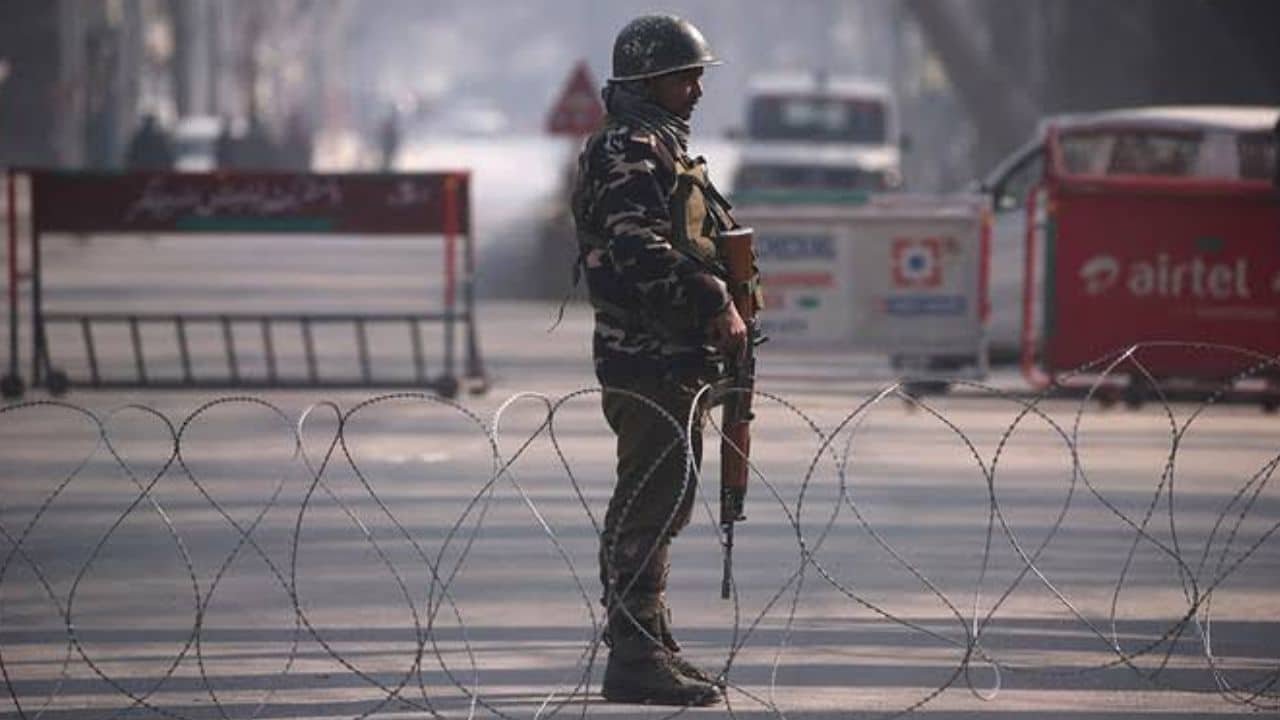
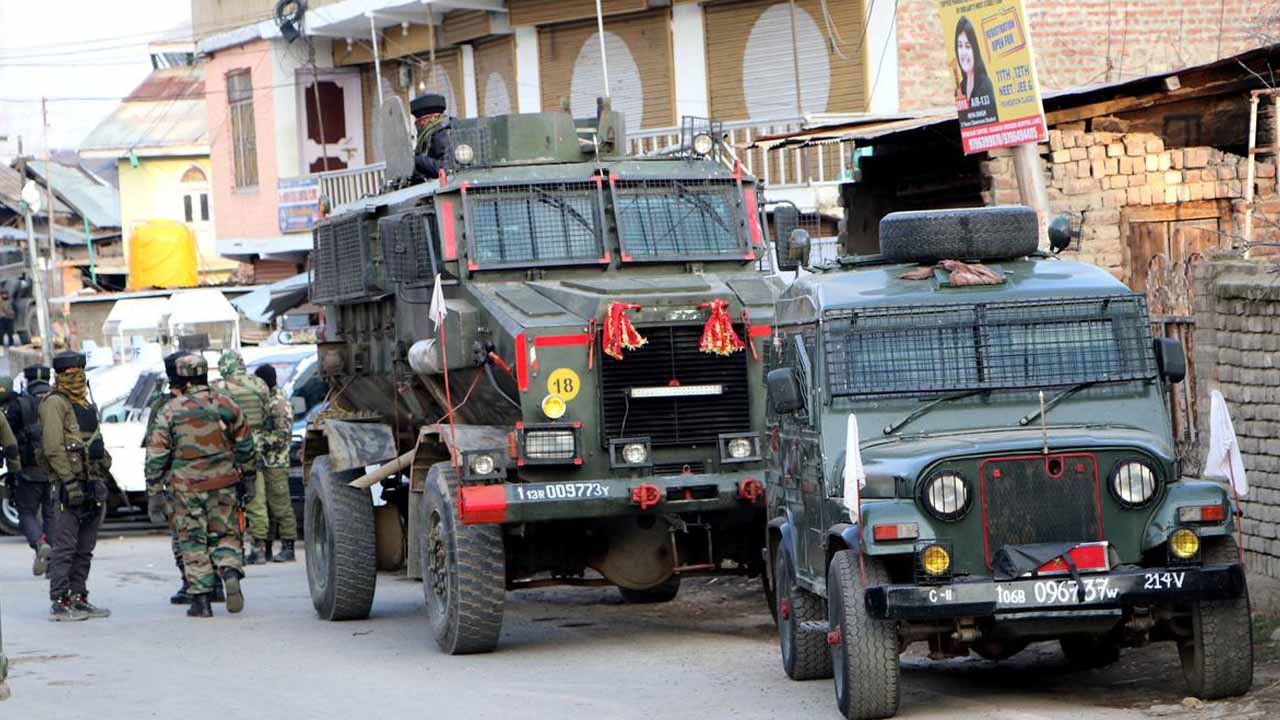
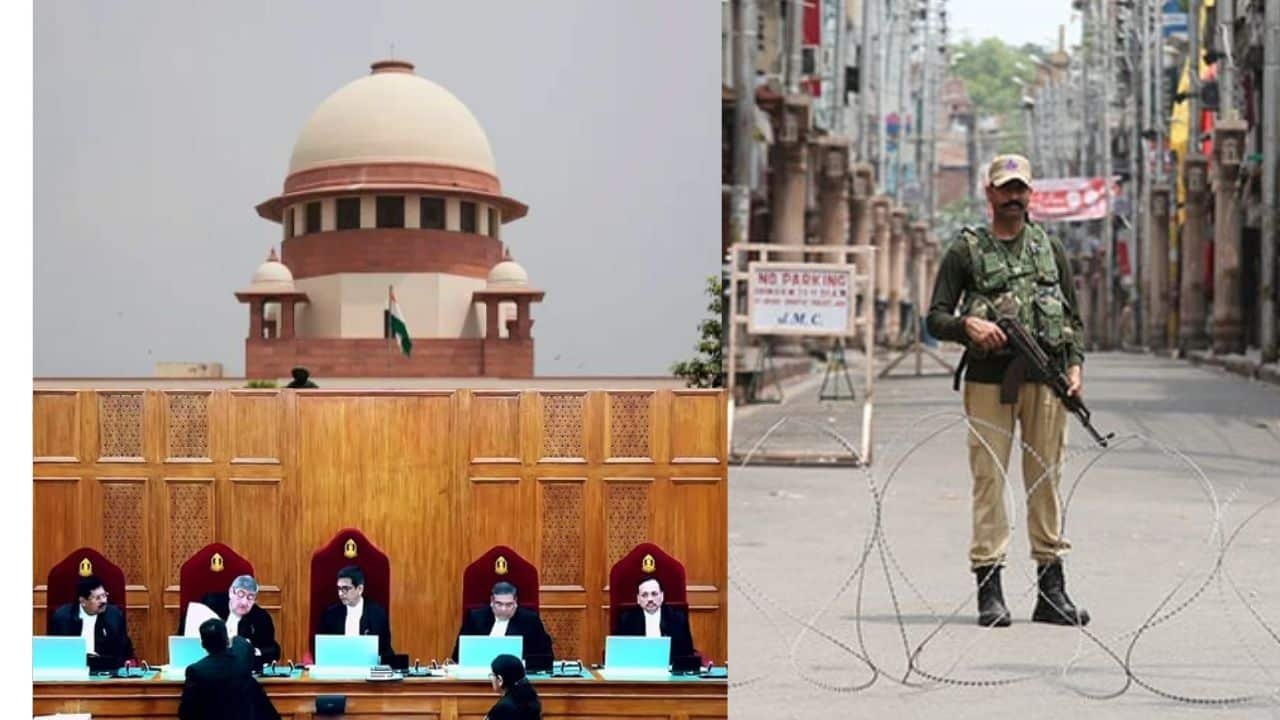
    A five-judge constitution bench, presided by Chief Justice of India DY Chandrachud, has given its verdict on the Union government’s 2019 move to amend Article 370 of the constitution, the abrogation of which ended the special status of Jammu and Kashmir.

    The decision was reserved earlier on September 5 this year, after 16 days of hearings.

    The unanimous verdict by the panel of five judges came in response to more than a dozen petitions challenging the revocation and a subsequent decision to split the region into two federally administered territories, the central government, on the other hand, had defended its action, asserting there was no “constitutional fraud” in nullifying the provision.

    Chief Justice said that Jammu and Kashmir held no internal sovereignty after accession to India. The court maintains that the president has the right to abrogate any of the articles in the Constitution. The same was carried out on August 5 2019.

    The order also declared that the reorganisation of the erstwhile state into Union Territories in 2019 was a temporary move, it directed the Centre for the restoration of statehood and for Legislative Assembly elections to be held.

    However, Justice Kaul recommended in his opinion that a Truth and Reconciliation Commission should be set up in Jammu and Kashmir, for the acknowledgement of acts of rights violations in the region.

    The revocation was one of Mr Modi’s poll promises in 2019 and the court’s decision comes months before he seeks a third term. Local politicians in the region have expressed disappointment over the order.

    Former Chief Minister Omar Abdullah posted on X (formerly Twitter) that he was “disappointed but not disheartened”. An hour later, he also posted Faiz Ahmed Faiz poem, “Dil na umeed to nahi, na kaam he to hai”.

    Meanwhile, Narendra Modi, Prime Minister of India wrote this decision is “a resounding declaration of hope, progress and unity”.

    Amit Shah, a major proponent of Hindutva supremacy and Indian Home Minister, criticised India’s first Prime Minister, Jawaharlal Nehru, on the Kashmir issue, saying in Parliament, “I say this with full responsibility that Kashmir suffered due to two blunders by Nehru. First, the ceasefire (with Pakistan) was announced when our forces were winning…before winning the whole of Kashmir. The second blunder was to take the Kashmir issue to the United Nations.”

    Today he posted on Twitter that because of this decision “separatism and stone pelting are now things of the past.”

    Asaduddin Owaisi says, ” We are disappointed by this verdict.”

    “Pakistan categorically rejects the judgement announced by the Supreme Court of India on the status of Indian Illegally Occupied Jammu and Kashmir (IIOJK),” states the statement released by the Ministry of Foreign Affairs in Pakistan.

    Caretaker Foreign Minister of Pakistan Jalil Abbas Jilani posted on Twitter that “The judicial endorsement by the Indian Supreme Court has no legal value.”

  • Friday prayers banned for second week in a row in occupied Kashmir

    Friday prayers banned for second week in a row in occupied Kashmir

    Jamia Masjid in Srinagar was closed down last Friday, October 20, during Friday prayers to bar prayers for Palestine.

    Kashmir Life reported that a press release from masjid authorities stated that for the second consecutive Friday, “police officials once again closed the gates of Jama Masjid Srinagar and informed the Auqaf not to open the gates for Friday prayers”.

    Jammu Kashmir People’s Freedom League Chairman Muhammad Farooq Rehmani condemned authorities for barring Muslims from praying and banning them to pray for Palestine.

    He highlighted the restraining of Mirwaiz Umar Farooq and others throughout Indian Illegally Occupied Jammu Kashmir (IIOJK) who had been praying for peace and safety in Gaza.

    He further called out on Modi and his approach towards Palestine as it contradicts the central stance of India’s first Prime Minister Jawahar Lal Nehru and other advocates of the freedom movement.

    India had taken a pro-Palestine stance in 1948 in the UNSC and voted against the Palestinian segregation to provide a separate state for the Jews in Palestine.

    He also reflected on undermining peace and freedom in Kashmir and Palestine, both, under India and Israel through forces.

  • Author Arundhati Roy to be prosecuted in India for 2010 speech

    Prolific writer Arundhati Roy, the only non-expatriate Booker prize winning author of The God of Small Things, is one of the most high-profile critics of Indian Prime Minister Narendra Modi and a voice for the voiceless in her country.

    Amidst the dire situation of press freedom in India, the author may face prosecution for a speech she delivered in 2010 about Kashmir, as per media reports. A top-official in New Delhi, VK Saxena, has given approval for the case to proceed before the courts. According to Saxena’s directive, Roy and her co-defendants were allegedly advocating for the secession of Kashmir from India at a public function and that is enough evidence for a legal case.

    Under the Modi Government, sedition laws are often used to curb the freedom of expression and journalism, raising a question over the so-called biggest democracy’s principles. Added to that are PSA laws exclusive to Jammu and Kashmir which allow detention of individuals “preventively” for up to two years, without a trial or warrant. In IOK, a number of journalists have been held in detention.

    The revocation of Article 370 ensuring the special status of Kashmir on August 6, 2019, has caused voices like Roy to become more loud. “In Kashmir when we wake up and say, ‘Good Morning’ what we really mean is ‘Good Mourning,’” exclaimed one of the characters from her novel, The Ministry of Utmost Happiness. Her house was besieged when the speech became public and the complaint that lodged against her has now proceeded after 13 years.

    Roy, now 61, has always been fearless in her expression and is known for her work as a journalist, activist and a novelist. Her work is a scribbled protest whereas her speeches and the articles she reads in conferences is vocal dissent in the face of oppressors. In one of her famous speeches, she voices out the basic facts of Kashmir’s reality that “it is not an integral part of India and even the Indian Government has accepted this years back in the UN.” Her latest book Azadi Freedom, Fascism, Fiction is an honest account of the situation of minorities, Dalits and activists in India.

  • Major weather change on its way in Pakistan

    The Pakistan Meteorological Department (PMD) has issued a forecast for heavy rainfall spanning from September 22 to September 24, affecting various regions of the country. Read the story to see if it will rain in your city or not.

    Met Office has confirmed that weak to moderate moist currents from the Arabian Sea are likely to penetrate in upper parts of the country from September 22, 2023. A westerly wave is also likely to affect the upper parts on September 22.

    Under the influence of this weather system rain/wind-thundershowers (with few moderate to heavy falls) are expected in:

    Kashmir (Neelum valley, Muzaffarabad, Poonch, Hattian, Bagh, Haveli, Sudhanoti, Kotli, Bhimber, Mirpur)

    Gilgit Baltistan (Diamir, Astore, Ghizer, Skardu, Hunza, Gilgit, Ghanche, Shigar)

    Punjab: Murree, Galliyat, Islamabad, Rawalpindi, Attock, Chakwal, Jhelum, Mandi Bahauddin, Hafizabad, Gujranwala, Gujrat, Sialkot, Narowal, Lahore, Kasur, Sheikhupura.

    Chitral, Dir, Swat, Shangla, Buner, Kurram, Mansehra, Kohistan, Abbottabad, Haripur, Kohat, Peshawar, Mardan, Swabi and Nowshera from 22nd to 24th September with occasional gaps.

    Rain/wind-thundershower is also expected in Lakki Marwat, Dera Ismail Khan, Bannu, Karak, Waziristan, Mianwali, Sargodha, Khushab, Faisalabad, Toba Tek Singh, Jhang, Bhakkar, Layyah, Dera Ghazi Khan, Multan and Bahawalnagar on 23rd & 24th September with occasional gaps.

    Possible Impacts:

    Moderate to heavy falls may cause urban flooding in low-lying areas of Lahore, Gujranwala, and Rawalpindi on the said dates.

    Moderate to heavy rains may trigger landslides in the vulnerable areas of Murree, Galliyat, Kashmir, Gilgit Baltistan, Chitral, Dir, Swat, Kohistan, Shangla, Buner, Mansehra & Abbottabad from September 22-24.

    Farmers are advised to manage their crop activities accordingly. Tourists and travelers are advised to remain cautious to avoid any untoward situation during the period.

    Wind thunderstorms may damage loose structures like electric poles, solar panels, etc. The general public is advised to stay at safe places during windstorms/lightning/moderate/heavy rains.

  • Modi accuses Pakistan of supporting cross-border terrorism at SCO Summit

    Modi accuses Pakistan of supporting cross-border terrorism at SCO Summit

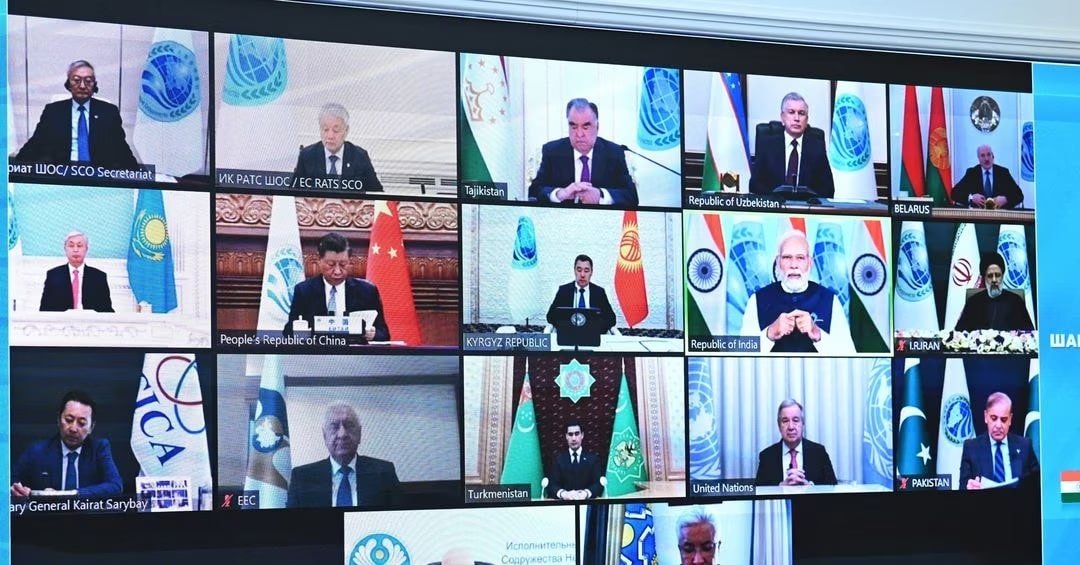
    This year, the Shanghai Cooperation Organisation’s (SCO) summit was hosted by India, where Indian Prime Minister Narendra Modi launched thinly veiled accusations against Pakistan, saying “some countries” are “terror havens“.

    Pakistan’s Prime Minister Shehbaz Sharif was in attendance, along with other SCO member countries leaders, such as Xi Jingping and Vladimir Putin.

    The SCO is a Eurasian political, economic and security organisation, which unites China, Russia, India, Kazakhstan, Kyrgyzstan, Pakistan, Tajikistan, Uzbekistan, and, as of yesterday, Iran. It’s currently the world’s largest regional bloc in terms of geographic scope and population.

    Addressing the online summit, Dawn reports Modi to have said, “Some countries use cross-border terrorism as an instrument of their policies, provide shelter to terrorists. SCO should not hesitate to criticise such nations. There should be no place for double standards on such serious matters.”

    India claims that a part of the China–Pakistan Economic Corridor passage passes through a ‘disputed’ region. Modi told leaders that “terrorism has become a major threat to regional and global peace. Dealing with this challenge requires decisive action. Regardless of its form or manifestation, we must unite in our fight against terrorism.”

    Pakistan PM Shehbaz Sharif responded in turn, saying that the SCO stands for observance of the UN principles of sovereignty, territorial integrity and people’s right to self-determination, considered a reference to the Kashmir dispute.

    “UNSC resolutions offer us a workable framework for the resolution of longstanding disputes in the region,” Dawn reported Shehbaz to have said. “These must be addressed immediately and settled amicably before it is too late.”

    Kashmir has been a contentious point between the two countries since partition, but especially since India abolished Articles 370 and 35A in 2019. These articles were decades-old and provided a measure of autonomy to the disputed Muslim-majority region.

    In the earlier SCO summit in May, Pakistan’s Foreign Minister Bilawal Bhutto criticised India’s decision to scrap the special status of the disputed region of Kashmir, saying New Delhi’s unilateral move in 2019 had undermined the possibility of holding talks between the neighbours.

    India has also accused Pakistan’s military of backing Kashmiri rebels, a claim Islamabad has denied.

  • Indian soldiers accused of forcing Muslim worshippers to chant ‘Jai Shree Ram’ in occupied Kashmir mosque

    Indian soldiers accused of forcing Muslim worshippers to chant ‘Jai Shree Ram’ in occupied Kashmir mosque

    Two former chief ministers of India-held Kashmir, Mehbooba Mufti and Omar Abdullah, have called for an investigation into an alleged incident where Indian soldiers reportedly forced Muslim worshippers in a mosque in Pulwama to chant Hindu slogans.

    Mufti expressed her concern over the incident and requested a probe into the matter, while Abdullah described the reports as distressing and hoped for a transparent investigation.

    According to Indian media, the soldiers arrived in a village in Pulwama and conducted a nighttime drill, keeping the villagers awake until dawn.

    At sunrise, they allegedly forced the Muezzin to chant “Jai Shree Ram” slogans and detained several villagers, some of whom were subjected to physical assault.

    The incident has drawn attention from senior army officials, who stated that they are assessing the situation and will provide details once they have clarity.

    The army has reportedly apologised to the villagers, and an army major involved in the incident has been removed.

  • Greece migrant boat disaster; Pakistani survivors claim vessel was deliberately sunk

    Greece migrant boat disaster; Pakistani survivors claim vessel was deliberately sunk

    According to video accounts of Pakistani survivors, Greek authorities deliberately sunk the vessel and provided no rescue efforts. 

    In the video, survivors can be heard saying: “They have done this [on purpose]. They have sunk it themselves.” The other added, “We did not sink for five days, so why would we sink now?”

    They recounted that the ship’s engine had broken down, leaving them still for almost a week. “We did not drown even though our engine had [completely] shut down. [the boat] sunk because of the one-maund-rope they threw into the boat.”

    In an investigation conducted by the BBC, many discrepancies were found in the statements released by the Greek authorities. For one, the coastguard claims that in the hours before the boat capsized, it was on a “steady course to Italy and not in need of rescue.” 

    However, analysis of the movement of other ships in the area suggests that the migrant boat was not moving for at least seven hours before the disaster. This corroborates eyewitness accounts of Pakistani survivors.

    The UN has called for an investigation into Greece’s handling of the disaster. Greek authorities have not yet responded to the BBC’s findings. 

    FIA arrests 10 alleged traffickers

    Calamity struck a migrant boat that capsized off the south-eastern coast of Greece last week on Wednesday, leaving hundreds of Pakistani migrants dead. On Sunday, Prime Minister Shehbaz Sharif announced a high-level investigation to trace the human traffickers behind the incident. So far 10 alleged traffickers have been arrested in connection to the tragedy.

    The Federal Investigation Agency (FIA) arrested the suspected human traffickers from Azad Jammu and Kashmir, and another one from Karachi airport who was attempting to flee abroad, Geo News has reported.

    The 10 suspected traffickers are “presently under investigation for their involvement in facilitating the entire process” according to Chaudary Shaukat, an official from Pakistan-administered Kashmir.

    Condemned Pakistanis

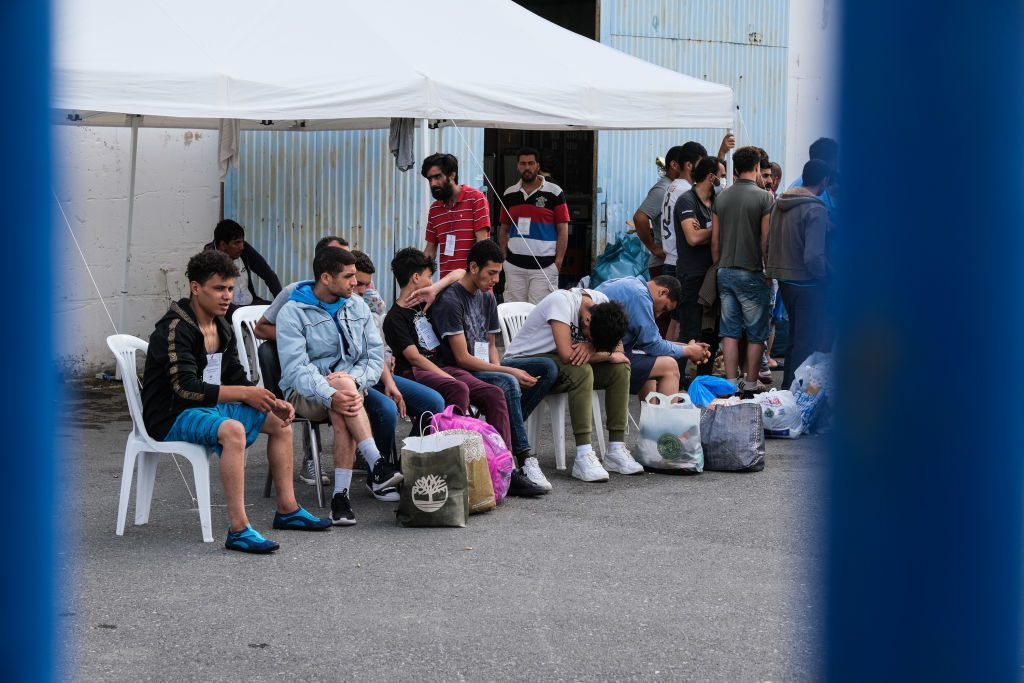
    Last week in the early hours of Wednesday morning, a migrant boat capsized off the Southern Peloponnese while on its course to Italy from the Libyan town of Tobruk. The Guardian reported most of the victims were men from Pakistan and Afghanistan. More sinister details have since emerged from witness accounts.

    According to witnesses, the Pakistanis onboard were ‘forced below deck’ where they had far less chance of surviving a capsize. The Observer also reported that crew members were maltreating the Pakistanis below deck when they would appear in search of fresh water or tried to escape.

    The number of Pakistani lives lost is estimated to be around 298. 135 of them are reported to be from the Kashmir region. Greek authorities have yet to release a confirmation on Pakistan’s death toll.

    Mismanagement and alleged cover-up

    Many questions have been raised since witness accounts spread across global news, specifically about the role of Greek authorities in the tragedy.

    On Friday, two days after the accident, a spokesperson of the Greek government claimed that their assistance had been refused by the migrant boat after they threw a rope to the vessel to “stabilize and check if it needed help.” This contradicted the coastguard’s earlier statements that it had kept a ‘discreet distance’ from the boat.

    According to a witness interviewed by CNN, Greek authorities were seen towing the vessel with ropes, but since the ropes were tied in the “wrong places”, the boat capsized.

    The witness, Tarek Aldroobi, had three relatives on board. He told CNN, “Their boat was in good condition and the Greek navy tried towing them to the beach but the ropes were tied in the wrong places,” Aldroobi said. “When the Greek navy tried pulling them it caused the boat to capsize.”

    Nikos Alexiou, a spokesman for the coastguard, defended their response. He said their patrol boat only used a small rope to stabilize itself while it was close to the migrant boat, and that they were unable to tow it.

    In an interview with CNN, Alexiou explained: “Regretfully there was movement of people, a shift in weight probably caused by panic and the boat capsized. As soon as we got there, we started our rescue operation to collect those who were in the water.”

    In a report by The Guardian, Maurice Stierl, from the Institute for Migration Research and Intercultural Studies at Osnabrück University in Germany, responded to the coastguard’s defense: “What caused the sudden shift in weight? Was there a panic on board? Did something happen during the attempt to provide them with something? Or was it towed? And due to this towing, did the boat go down?”

    According to Stierl, EU countries ‘weaponise time’ by delaying rescue as long as they can. “They have managed to build in delays into European engagement at sea. They’re actively sort of hiding, in fact, from migrant boats, so that they are not drawn into rescue operations. We can see how a strategy is being created, that slows down –actively and consciously slows down – rescue efforts,” Stierl explains.

    Questions arose over whether the Greek coastguard should have intervened earlier, as government officials confirmed patrol boats and cargo ships had been shadowing the migrant vessel since Tuesday afternoon.

  • 10 dead as bus plummets into ditch in Azad Jammu And Kashmir

    10 people have died and 13 were critically injured when the bus they were travelling in plunged into a ravine in Azad Jammu and Kashmir (AJK) on Sunday, Express News has reported. The 35 passengers in the bus were going to Gujranwala from Nairiyan, a small village in the Sudhnoti district near Kotli, for urs festivities.

    The injured were taken to Mirpur district headquarter hospital.

    Rescue personnel reached the spot after receiving information, Mirpur Commissioner Chaudhary Shaukat has said. He further stated that at least three of the 13 injured passengers are in critical condition. He added that the accident was caused by brake failure.

    Shaukat also confirmed that a large number of Jamia students reached the hospital to voluntarily donate blood for the victims.

  • India seeks death penalty for Kashmir separatist Yasin Malik

    India seeks death penalty for Kashmir separatist Yasin Malik

    India’s National Investigation Agency (NIA) has moved Delhi High Court, seeking the death penalty for Jammu Kashmir Liberation (JKL) Front chief Chief Yasin Malik.

    The hearing is due on Monday.

    Following the news, Yasin’s wife Mushaal, said in a tweet, “Modi wants to hang my husband but I’m afraid Modi’s actually hanging his entire political career down the drain. Don’t think this Will ever silence us”.

    Yasin was arrested in 2018, months before New Delhi cancelled the held state’s special status of Kashmir on August 5, 2019.

    Last year, Malik pleaded guilty for funding the separatist movement. He was then sentenced to life imprisonment and is currently serving time in jail.

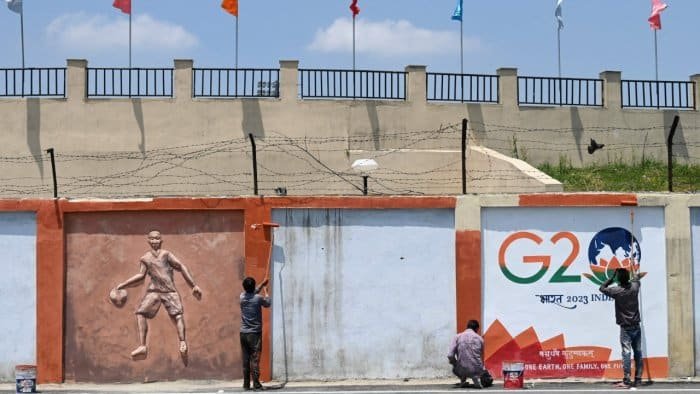
  • China will not attend G20 meeting to be held in Indian-Occupied Kashmir

    China will not attend G20 meeting to be held in Indian-Occupied Kashmir

    China has said that it is opposed to a G20 tourism meeting next week in the disputed Himalayan territory in Indian-Occupied Kashmir, confirming that it will not attend, handing a significant diplomatic victory to Pakistan.

    “China is firmly opposed to holding any kind of G20 meetings in disputed territory, and will not attend such meetings,” Chinese Foreign Ministry spokesperson Wang Wenbin said.

    India, which holds the chair of G20 this year, has organised a series of meetings across the country in the run-up to the summit in New Delhi in September.

    Srinagar, the capital of the occupied territory of Jammu and Kashmir, will host a meeting of the tourism working group for G20 members on May 22-24.

    Despite backlash for holding the meeting in disputed territory, the Modi-led government has not backed off from its plans to do so.