Tag: Kashmir

  • Youm-e-Istehsal Kashmir: Pakistan highlights Indian oppression in IOK

    Youm-e-Istehsal Kashmir: Pakistan highlights Indian oppression in IOK

    Pakistan is observing Youm-e-Istehsal Kashmir today to express solidarity with the people of Kashmir, as August 5 marks two years of Indian Occupied Kashmir’s (IOK) military siege by the Modi regime in India.

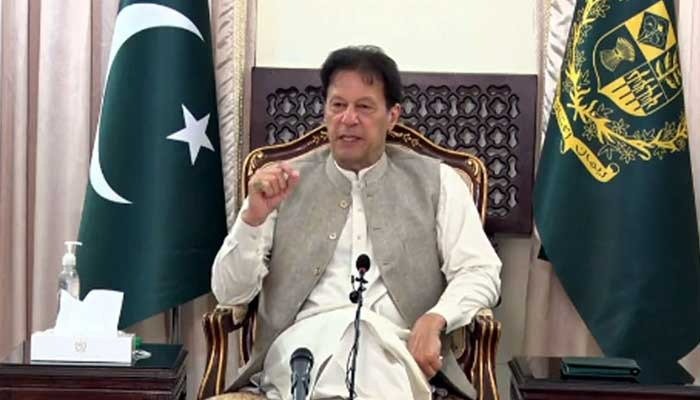
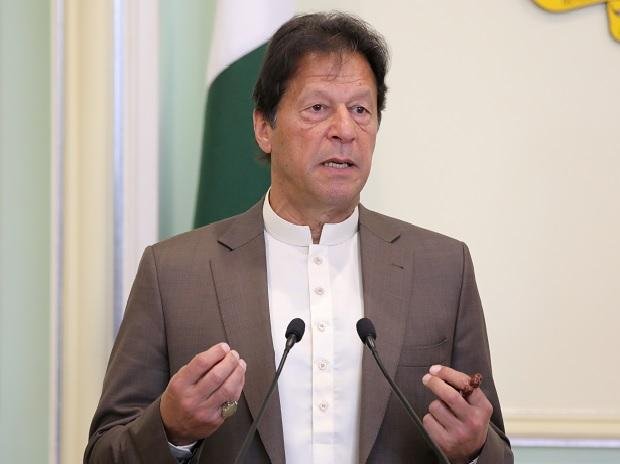
    Prime Minister Imran Khan, in a series of tweets, said: “Today marks two years since India’s unilateral and illegal actions of 5 Aug 2019 in IIOJK. In these two years, the world has witnessed unprecedented oppression in IIOJK (Indian Illegally Occupied Jammu and Kashmir) by Indian Occupation forces. It is also witnessing Indian efforts to force demographic change and destroy Kashmiri identity.”

    PM Khan further said that the government and the people of Pakistan salute their Kashmiri brothers and sisters for their “sacrifices in their determined & legitimate struggle” for their inalienable rights.

    The Inter-Services Public Relation (ISPR), the military’s media wing, quoted Cheif of Army Staff (COAS) Qamar Javed Bajwa as saying that the “continuation of an inhuman military siege, machinations to bring demographic changes and gross violations of human rights and international laws are perpetuating humanitarian and security crises in IIOJ&K” that imperil regional security.

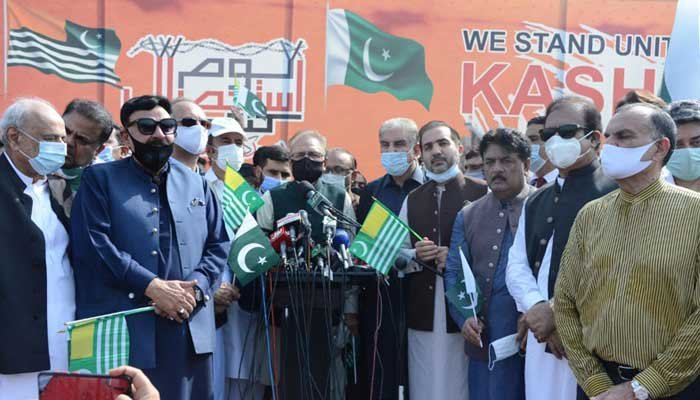
    Speaking to a rally arranged to salute the bravery and courage of Kashmiri brothers and sisters in Islamabad, President Arif Alvi said no Pakistani will rest until occupied Kashmir, under Indian military siege is liberated. 

    “Pakistan will liberate occupied Kashmir,” he said. “Let me warn India that Pakistan is a strong nation.”

    President Arif Alvi addressing a rally in Islamabad. -Radio Pakistan

    Foreign Minister Shah Mahmood Qureshi said Pakistan will continue to support oppressed Kashmiris. 

    Events have been arranged in order to call out India’s unilateral, illegal actions against the Kashmiri people. Solidarity walks of one mile have been planned in all the main cities, including the federal capital. 

     A one-minute silence was observed across the country while traffic was also halted for a minute, and sirens were sounded.

    Two years ago, on August 5, 2019, the Narendra Modi government revoked the special status of the people of Kasmir. The Indian government rushed through a presidential decree and abolished Article 370 of the Indian Constitution, which gave a measure of autonomy to the Muslim-majority Occupied Kashmir.

  • Bear cub rescued by Pakistan at LOC goes back in Kashmir wild

    Bear cub rescued by Pakistan at LOC goes back in Kashmir wild

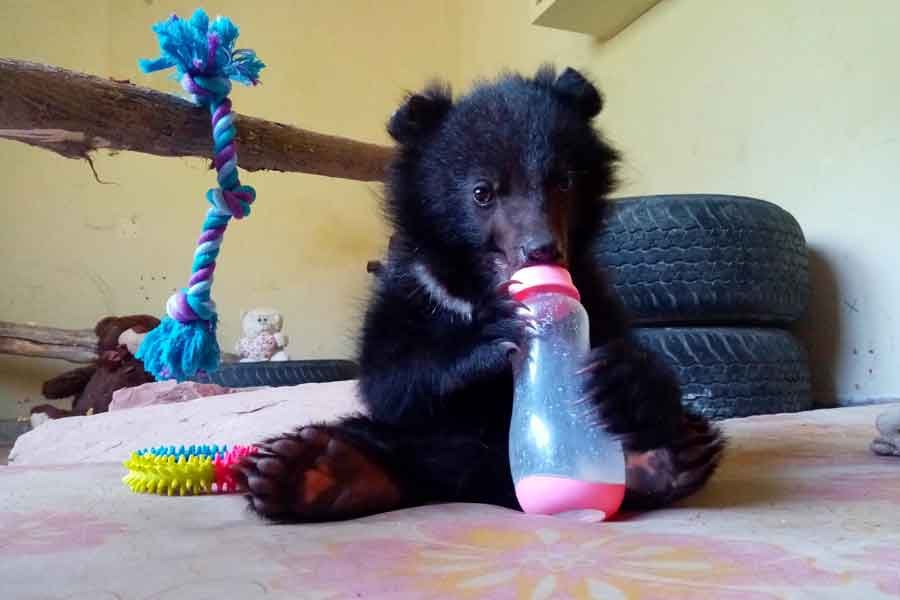
    When poachers shot and killed a black bear mother, her baby, Daboo was too young to open his eyes. The poachers put it in a sack and were about to sell it to baiters when the baby bear was rescued and taken to an animal sanctuary in Islamabad.

    “He was a little baby bear that was stolen from his mother; in fact, his mother was murdered,” said Rina Satti, chairperson at Islamabad Wildlife Management Board (IWMB), where he is being nursed back to health.

    Though banned, bear-baiting persists in some parts of Pakistan and, at the time of his rescue, two-month-old Daboo was half-starving and suffering from scabies and a serious ear infection.

    Picture via Reuters

    Now, two months on filled out and with a glossy black coat, he plays in his wooded sanctuary, taking baths and nibbling at the fruit and vegetables scattered among shrubs as his carers try to teach him how to fend for himself.

    Read More: Heartwarming video shows Punjab cop buying food for stray dogs, feeding them

    According to details, the authorities hope to release him, microchipped, back into the wild when he turns one, near the Line of Control in Kashmir that separates Pakistan and India, where he was caught.

    “We will take him to his habitat, but we will not just leave him there,” said IWMB caretaker Anees Hussain. “We will have to keep monitoring him for some time to ensure that he can survive there.”

  • National security briefing

    National security briefing

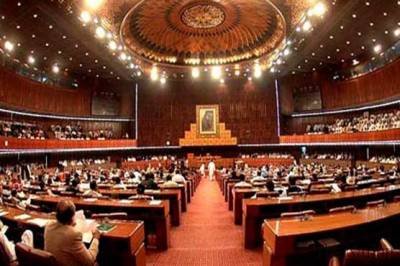
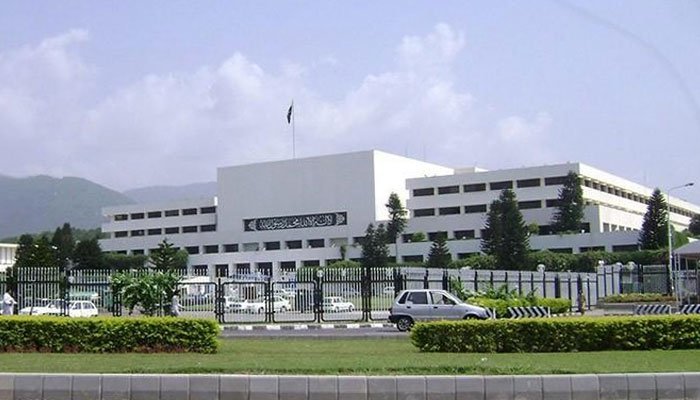
    Speaker National Assembly (NA) Asad Qaiser summoned a session of the Parliamentary Committee on National Security on July1. Army chief and heads of security institutions participated in the meeting. Politicians and legislators were given an in-depth briefing on Kashmir, Afghanistan, and internal security challenges.

    Leader of the Opposition Shehbaz Sharif, Pakistan People’s Party (PPP) Chairman Bilawal Bhutto-Zardari, Mohsin Dawar, Yousaf Raza Gillani, Shahid Khaqan Abbasi, Mustafa Nawaz Khokhar and many others were part of the in-camera briefing.

    However, Prime Minister Imran Khan did not attend the meeting. Government spokespersons said that PM Khan was going to attend the meeting but Speaker Asad Qaiser conveyed to him that Shehbaz Sharif would not attend the briefing if Khan attended it. However, Pakistan Muslim League-Nawaz (PML-N) leaders have denied this. But NA Secretariat spokesperson also clarified that PM Imran Khan was always willing to attend the meeting but the only reason for not attending the meeting was reservations conveyed to the Assembly secretariat by some Opposition leaders.

    First of all, why did the Opposition ask the PM not to attend the meeting? Some say that the message by Shehbaz Sharif was miscommunicated. Well, the PML-N should clarify what message was conveyed, if any, and why.

    Sharif wanted to sign a Charter of Economy in order to improve Pakistan’s economy so why would he not allow PM Khan to attend such a meeting. Prime Minister Imran Khan does not need Mr Sharif’s permission or anyone else’s to attend an important parliamentary meeting.

    Secondly, even if Shehbaz Sharif had sent this message, why did the prime minister give in? This meeting was extremely important in light of the US withdrawal from Afghanistan and its consequences for Pakistan. All political leadership should have been there, including the PM, so as to come to a national consensus on these security issues. When has the prime minister ever listened to the Opposition before that he chose to finally pay heed to them now?

    Thirdly, Speaker NA Asad Qaiser was the convenor of the meeting. Why did he discourage the prime minister from attending such an important and sensitive meeting.

    Our leadership should not let their political differences come in the way when it comes to national security issues. Such differences should be limited to electoral politics, not on issues that have an impact on the future of the country. We hope that the next time there is such a meeting, or when issues related to the country’s future are discussed, all leaders would sit on the same table and build a national consensus.

  • DG ISI to brief lawmakers on Kashmir, Afghanistan, and security challenges

    DG ISI to brief lawmakers on Kashmir, Afghanistan, and security challenges

    “A meeting of the National Security Committee will be held today (Thursday). Army chief and heads of security institutions will participate in the meeting. A briefing on Kashmir, Afghanistan and internal security challenges will be discussed,” Minister for Information and Broadcasting Fawad Chaudhry tweeted on Thursday.

    Speaker National Assembly (NA) Asad Qaiser had summoned a session of the Parliamentary Committee on National Security on July 1 for an in-camera briefing on the latest regional situation in light of the US withdrawal from Afghanistan. Director-General of the Inter-Services Intelligence (ISI) Lieutenant General Faiz Hameed will brief the lawmakers.

    Leader of the Opposition in NA Shehbaz Sharif, Leader of the Opposition in the Senate Yousaf Raza Gillani, Pakistan People’s Party Chairman Bilawal Bhutto-Zardari, and other lawmakers will attend the meeting. According to reports, Interior Minister Sheikh Rasheed, Foreign Minister Shah Mahmood Qureshi, and Defence Minister Pervez Khattak will also be part of the in-camera meeting from the government’s side. Senate Chairman Sadiq Sanjrani will also attend the meeting as well as other parliamentarians.

    Prime Minister Imran Khan will not attend the briefing.

    Interior Minister Sheikh Rasheed said that Pakistan’s politics will change after today’s in-camera briefing on the situation in Afghanistan and other security issues. He said it will now centre on national security.

  • We accept the Chinese version on Uyghurs in Xinjiang: PM Khan

    We accept the Chinese version on Uyghurs in Xinjiang: PM Khan

    Prime Minister (PM) Imran Khan on Thursday said that the relationship between Pakistan and China is very deep. “It’s not just the governments, but it’s a people-to-people relationship.”

    “Whatever will happen…[the] relationship between our two countries, no matter what pressure is put on us, is not going to change,” PM Khan said in response to a question.

    Speaking to Chinese journalists as Beijing marked the centenary of the ruling Communist Party of China (CPC), the premier said the Chinese version about the treatment of Uyghur Muslims in Xinjiang was completely different from what was being reported in the western media.

    “Because of our extreme proximity and relationship with China, we actually accept the Chinese version,” added PM Khan.

    He said that it was hypocritical that while the Uyghur situation and Hong Kong were being highlighted, attention was not being given to the human rights violations in Indian-Occupied Kashmir.

    “It is hypocritical. There are much worse human rights violations taking place in other parts of the world such as in occupied Kashmir. But western media hardly comments on this,” he said.

    PM Khan praised the Communist Party. He said that until now, it was believed that electoral democracy is the best way to bring leaders on merit and hold them accountable.

    “But China’s process to hunt talent and then polish it is better than any electoral democracy.”

    PM Khan also praised President Xi for his success in the fight against poverty and corruption in China.

    “China has lifted 700 million people out of poverty in a few years, which is a great achievement. We want to further develop political, economic and trade relations between the two countries.”

    PM Khan said that Pakistanis are impressed by the Chinese president’s fight against corruption and consider him “a great politician of modern times”.

    “President Xi Jinping’s anti-corruption campaign is effective and successful.”

    PM Khan said that it is unfair of the US and western powers to expect countries like Pakistan to take sides. “Pakistan will not downgrade its relations with China.

    “The United States expects Pakistan to choose a side. This is not appropriate,” he added.

  • Meet Manu Bebo, first transgender makeup artist in occupied Kashmir

    Meet Manu Bebo, first transgender makeup artist in occupied Kashmir

    Manu Bebo, Kashmir’s first transgender makeup artist is breaking barriers in her area. Manu is winning hearts all over social media with her flawless makeup tutorials.  

    Speaking to Geo News, Manu said, “Everyone appreciates my work. It makes me feel very happy and proud.”

    Manu was born in a middle class family in Srinagar and was raised as a boy. She had a happy childhood like other children. She enjoyed playing video games. But as she turned 13, she started feeling different.

    “After my sister got married, I was feeling very lonely. I had many female friends and I started realising that I too wanted to be a girl. I started to wonder why God didn’t make me a girl,” Manu said.  

    She said with time she understood that she had the “soul” of a girl.

    She received backlash from family, friends and relatives for thinking like this. She faced rejection and society made fun of her.

     “I was badly bullied during my high school days and I felt mentally tortured to such an extent that I decided to quit my studies. Later on, I got used to it, and eventually, I didn’t care.”

    She said that even her family was ridiculed because of her. But as the time passed, they too stopped caring about what others said.

    Manu was not able to continue her studies after the 12th grade but she was ambitious to make something of herself. She decided to start her own business.

    Transgender community in Kashmir mostly earns their living by singing and dancing at weddings or by matchmaking. But Manu chose to stand out and make her own way. That is when she decided to improve her makeup skills.

    “Makeup is something that I’ve always enjoyed doing and when one has an opportunity to start a career in something that is enjoyable, then why not do that? I am totally self-taught and don’t have any professional training,” said Manu, who speaks and writes fluently in English.

    Manu started her venture four years back and with her hard work and commitment, she earned a name for herself everywhere in Kashmir. She has thousands of followers on social media.

    “I believe in doing the work that earns you respect. Why should I dance at weddings and bear people’s shameless, humiliating laughter?”

    Manu credited her mother for her success.

    “I am happy with my life. I don’t have any regrets. It doesn’t matter what anyone thinks or how they react. I earn my own money and my family is fine with whatever I do.”

    She said that people in Kashmir are supportive  and people are more welcoming and respectful of them.

    Motivating her fellow transgenders, she said, “To all the transgenders out there, or even those people who are forced to hide: be yourself, as life is too short to give weight to what people think. Whether you do good or bad, people will always have something negative to say. So just don’t pay attention to such people, and rise, like a boss.”

  • ‘Pakistan wants a civilised relationship with the US’: PM Khan

    Prime Minister Imran Khan recently gave an interview to The New York Times about Pakistan’s planned future strategy once the United States (US) leaves Afghanistan and said that in the past, the US kept expecting more from Pakistan, while previous governments “tried to deliver what they were not capable of”.

    The interview was published on June 25, when US President Joe Biden had his first face-to-face meeting with his Afghan counterpart, Ashraf Ghani, at the White House.

    Replying to a question related to Pakistan’s future relationship with the US after the withdrawal of American troops from Afghanistan, PM Khan said that Pakistan has always had a closer relationship with the United States than neighbouring India.

    “After 9/11, Pakistan again opted to join the US war on terror. Now, after the US leaves Afghanistan, basically Pakistan would want a civilised relationship, which you have between nations, and we would like to improve our trading relationship with the US,” he said.

    Mr Khan recalled that Pakistan has had a closer relationship with the United States than other nations in the region, such as India, and was a US partner in the war against terrorism, an argument used by previous Pakistani rulers as well without much success.

    “Now, after the US leaves Afghanistan, basically Pakistan would want a civilised relationship, which you have between nations, and we would like to improve our trading relationship with the US,” the prime minister replied.

    “Unfortunately, the relationship during the war on terror was a bit lopsided,” he said, adding, “It was a lopsided relationship because [the] US felt that they were giving aid to Pakistan, they felt that Pakistan then had to do US’s bidding. And what Pakistan did in terms of trying to do the US bidding cost Pakistan a lot … 70,000 Pakistanis died, and over $150 billion were lost to the economy because there were suicide bombings and bombs going on all over the country.”

    Asked if Pakistan was still using its leverage with the Taliban to move the peace talks towards a deal, Mr Khan said: “Pakistan has used the maximum leverage it could on the Taliban.”

    The prime minister said Pakistan has been emphasising to the Taliban that they should not go for a military victory because it would only lead to a protracted civil war. And since the Taliban are primarily a Pashtun movement, this will have two effects: Another influx of refugees into Pakistan and upset Pakistan’s efforts to lift its economy through trade, he explained.

    ‘We have signed very good trade deals with the Central Asian republics, but we can only go there through Afghanistan. If there is a civil war, all that goes down the drain,’ he said.

    “Let me assure you, we will do everything except use military action against the Taliban. I mean, we will do everything up to that,” Mr Khan said, adding: “All sections of our society have decided that Pakistan will take no military action.”

    The premier was also questioned whether Indo-Pakistan relations would improve if the Modi government leaves power. In response, he said that he “knows India better than any other Pakistani”.

    He said that he has had “love and respect from India [more] than anyone because cricket is a big sport”.

    “And the best way would be if India and Pakistan had a normal, civilised trading relationship. It would benefit both countries,” the PM said he told Modi.

    “So we tried. Didn’t get anywhere. I think that it is a particular ideology of the (Hindu nationalist group) Rashtriya Swayamsevak Sangh (RSS), which Narendra Modi belongs to, which just came up against a brick wall. And therefore the answer to your question is yes. Had there been another Indian leadership, I think we would have had a good relationship with them. And yes, we would have resolved all our differences through dialogue.”

    When asked if Pakistan would consider it an Indian win if Kashmir’s status quo remains the same, PM Imran Khan said that it would be a “disaster for India.”

    “[That is because] it will just mean that this conflict festers on and on. And so as long as it festers, it’s going to stop there being any relationship — normal relationship — between Pakistan and India.”

    The premier was questioned about Pakistan’s relationship with China and how it affects both the US and India. In response, he said that he finds it “very odd” that China and the US would become great rivals. 

  • ‘If a woman is wearing very few clothes, it will have an impact on men, unless they are robots,’ says PM Khan

    In an interview with “Axios on HBO” with Jonathan Swan, which aired at 3am PST on Monday morning, Prime Minister Imran Khan said that “if a woman is wearing very few clothes, it will have an impact on the men, unless they are robots”.

    Prime Minister Khan discussed various issues in his interview with Axios’ Swan ranging from US withdrawal from Afghanistan to Pak-US relationship, Uyghur Muslims in China and sexual violence in Pakistan.

    Rape and sexual violence

    Swan asked PM Khan about his previous comments pertaining to rape and vulgarity, PM said that it is “such nonsense”.

    “I said that the concept of purdah is avoid temptation in the society. We don’t have discos here, we don’t have night clubs, so it is a completely different society, way of life here. So if you raise temptation in the society to the point and all these young guys have nowhere to go, it has consequences in the society.”

    Swan asked: “Do you think that what women wear has any affect, that that’s part of this temptation?”

    “If a woman is wearing very few clothes, it will have an impact on the men, unless they are robots. I mean it’s common sense,” replied PM.

    Swan asked if this would provoke acts of sexual violence, to which PM Khan responded, “It depends which society you live in. If in a society, people haven’t seen that sort of thing, it will have an impact on them. If you grow up in a society like you, maybe it won’t on you. This cultural imperialism, whatever is in our culture must be acceptable to everyone else. It’s not.”

    “Jonathan, it’s about my society. My priority is how my society behaves, what reactions are caused in my society so when I see sex crime going through the roof, we sit down, we discuss how we are going to tackle this. It is having an impact in my society. We have to do something about it.”

    US withdrawal from Afghanistan

    Axios’ Swan asked PM Khan if he was happy that the US military is finally withdrawing from Afghanistan after 20 years. PM said, “Happy in one way because there was never going to be a military solution in Afghanistan. Anxious that they [the US] are leaving without a political settlement, there is a possibility of civil war.” When asked what would a political settlement look like, PM said that a political settlement in Afghanistan “would mean a sort of a coalition government, a government from the Taliban side and the other side. There is no other solution”.

    Swan asked if PM Khan thinks the Americans made a mistake by saying they are getting out by September 11. The PM said they got themselves in such a big mess that they had to give some sort of timeframe. “But the moment they gave a timeframe, Taliban would have considered that a victory.” PM was asked how he felt about the prospect of the Taliban effectively controlling Afghanistan and if he is happy to welcome them into the community of nations. “As far as Pakistan is concerned, whoever represents the people of Afghanistan, we will deal with them.”

    Swan asked what if they were not democratically elected and does it not concern you on some level that this group of people is accumulating power right next door to you. PM Imran Khan said, “Look, I am not a spokesman for Taliban. For me to say, you know what they are doing or what they shouldn’t be doing is pointless. In case Taliban go for an all-out victory, there is going to be incredible amount of bloodshed. And let me tell you, the country that is going to suffer the most after Afghanistan is going to be Pakistan. We already have three million Afghan refugees here. And this could lead to another exodus so that is our biggest concern. The Americans, before they leave, there must be a settlement.”

    Relationship with the United States

    Swan asked PM Imran Khan why the American CIA Director Bill Burns made an unannounced visit to Islamabad. “Ever since 9/11, there’s constantly been in touch between our intelligence agencies.” PM Khan said he did not meet the CIA director but the head of ISI met him.

    Swan said that the Americans want to have their spies and special forces based in Pakistan to keep an eye on what is happening across the border. To a question if he will allow the American government to have CIA here in Pakistan to conduct cross-border counterterrorism missions against al-Qaeda, ISIS or the Taliban, PM Khan emphatically said, “Absolutely not.” The host interjected and asked: “Seriously?”

    “There is no way we will allow any bases, any sort of action from Pakistani territory into Afghanistan. Absolutely not. Pakistan suffered 70,000 casualties, more than any other country by joining the American war. We cannot afford any more military actions from our territory. We will be partners in peace, not in conflict,” added Khan.

    Swan said that the American military is discussing doing airstrikes potentially to support the Afghan forces against the Taliban. “Would you allow the American Airforce to use your air space for those airstrikes?”

    “We are not going to be part of any conflict anymore,” replied Khan.

    But you haven’t decided yet whether you will let them use your airspace, asked Swan again. PM Khan said this has not been discussed at all. “Why would the Americans be using bombing Afghanistan after it hasn’t worked for 20 years, why will it work again?”

    Kashmir resolution

    PM Khan said he has not spoken to US President Joe Biden since he took office. “Whenever he has time, he can speak to me. But at the moment, clearly he has other priorities.” When asked what would he say to Biden when he does meet him, PM said: “The US has a big responsibility as the most powerful nation in the world. Almost 1.4 billion people are living in the subcontinent. We are held hostage to one dispute in Kashmir. A disputed territory. According to the United Nations Security Council resolutions, there should have been a plebiscite for the people of Kashmir to decide about their own future. That has never taken place. It’s festering. If the Americans have the resolve, the will, it can be sorted out.”

    Nuclear weapons

    Prime Minister Khan that the purpose of Pakistan’s nuclear weapons “is not an offensive thing”. He said that any country that has a neighbour seven times the size as Pakistan has, “would be worried”. PM Khan said he is “completely against nuclear arms. I always have been”. Ever since the nuclear deterrence, Pakistan and India have not been to war despite three wars in the past. “We have border skirmishes but we have never faced war. The moment there is a settlement on Kashmir, I believe the two neighbours will live as civilised people. We will not need to have these nuclear deterrence.”

    Uyghur Muslims in China

    Swan asked PM Khan why he does not speak about Uyghurs in China when he is so vocal about Islamophobia in the west.

    “What our conversations have been with the Chinese, this is not the case according to them. Whatever issues we have with the Chinese, we speak to them behind closed doors. China has been one of the greatest friends to us in our most difficult times. When we were really struggling, our economy was struggling, China came to our rescue so we respect the way they are,” said PM Khan. He also questioned why the people of Kashmir are ignored and how this is hypocrisy.

    “Am I going to start talking about everything? I concentrate on what is happening on my border, in my country…that concerns me more.”
  • Relations with India would be ‘betrayal’ to Kashmir: PM

    Relations with India would be ‘betrayal’ to Kashmir: PM

    Prime Minister (PM) Imran Khan said that normalisation of terms with India would be a betrayal to the Kashmiri struggle.

    PM Imran held a live Question and Answer (Q&A) session with the public on Sunday. He said that “re-establishing ties with India would be ignoring all the struggle of Kashmiris as more than 100,000 people have martyred.”

    PM Imran said he tried to resolve problems with India through dialogue. However, it cannot be the case now as India has illegally annexed Kashmir. The normalisation of terms after this is a betrayal to the Kashmir cause, said PM Khan.

    “There is no doubt that trade will improve but all their [Kashmiris] blood will be wasted, so this cannot happen. This cannot happen that our trade improves at the cost of their blood.”

    Pakistan can resume talks if New Delhi reverses its longstanding semi-autonomous status of Indian Occupied Kashmir, he maintained.

    On August 5, 2019, Modi government revoked the status of Article 370 and other related provisions and split Kashmir into two federally controlled areas. The government also locked down the region, imposed movement restrictions while imposing communication blackout.

    In retaliation, Pakistan downgraded diplomatic ties with India while also suspending trade.

  • ’PPP not discussed in PDM’: Maulana Fazl

    ’PPP not discussed in PDM’: Maulana Fazl

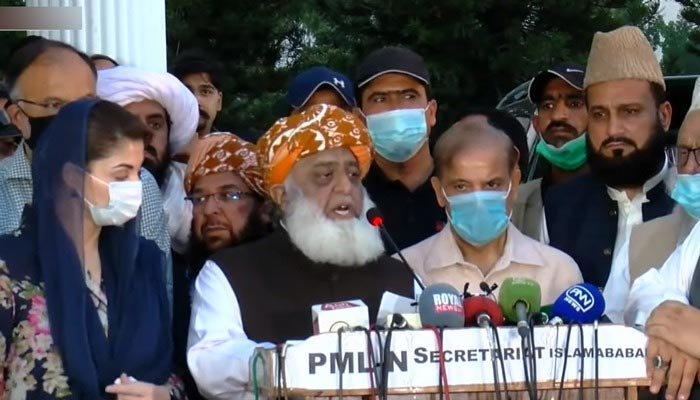
    Pakistan Democratic Movement (PDM) chief Maulana Fazl ur Rehman on Saturday said that the Pakistan People’s Party (PPP) and Awami National Party (ANP) were not discussed in the forum, as they are not part of the alliance.

    “They [PPP] can still contact the PDM leadership and apprise them about their intentions. But it is not something that we will waste time over anymore during PDM meetings,” said Maulana Fazl.

    Earlier on Friday, Shehbaz Sharif said that no party has the right to bring or kick another party out of the alliance. “PDM is a forum and decisions are taken with consensus.”

    PDM also rejected the government’s “one-sided” electoral reforms, which include the use of electronic voting machines (EVMs), and announced a fresh wave of anti-government protests.

    “PDM rejects the government’s unilateral electoral reforms ordinance, including the voting machines, and terms it as pre-poll rigging,” said Fazl.

    In this regard, the Election Commission of Pakistan, which is responsible for holding transparent elections, should call a meeting of all political parties to take a unanimous decision on reforms, Fazl added.

    The Opposition alliance announced a future course of action. On July 4, a massive anti-government protest will be held, followed by another one in Karachi on July 29.

    On the occasion of August 14, a massive protest will be held in Islamabad, with PDM showing solidarity with Kashmiris and Palestinians.

    The Pakistan Muslim League-Nawaz (PML-N) will host a budget seminar soon to form a unified strategy during the budget session, while the task to hold the event has been given to PML-N President Shehbaz Sharif.

    The PDM chief said PML-N supremo Nawaz Sharif attended the meeting via video, while other Opposition party leaders were present in person.