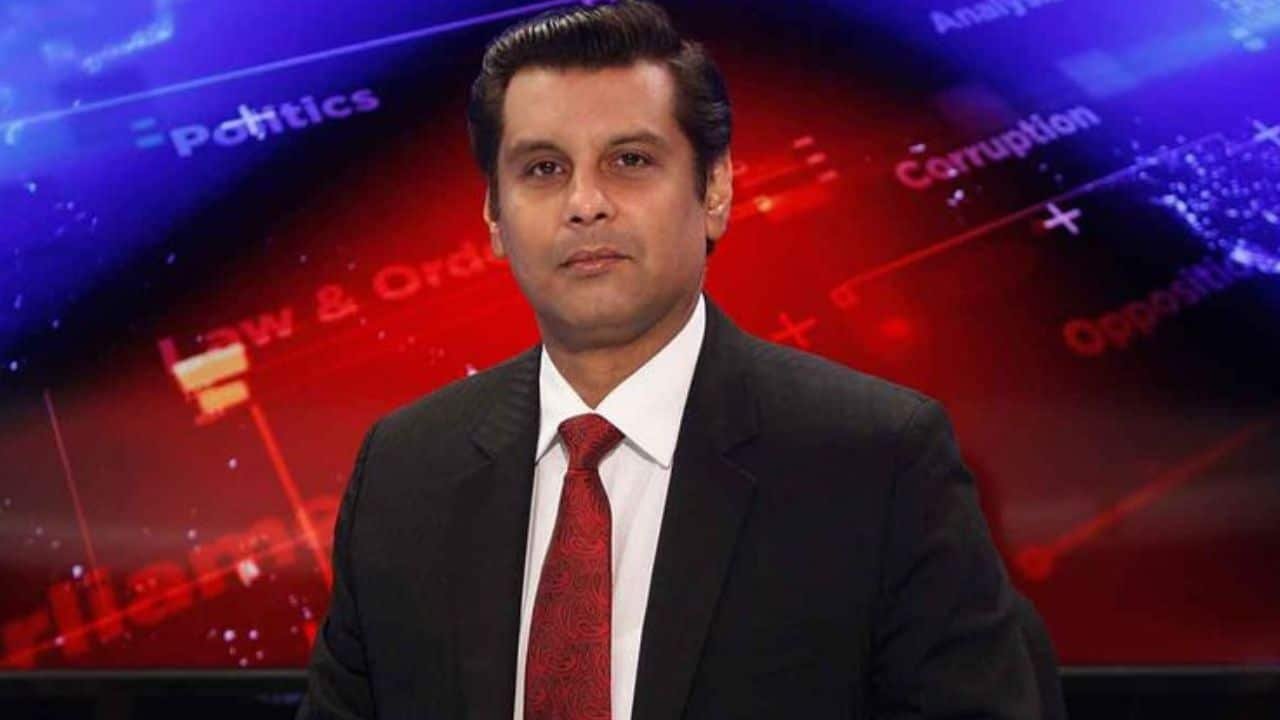
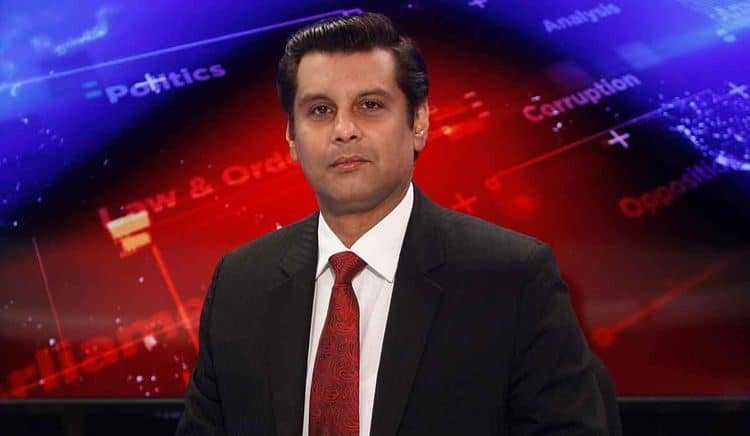
A High Court in Kenya has ordered payment of Rs. 2 crore 17 lakh as damages to the family of slain Pakistani journalist Arshad Sharif, while also declaring his assassination unconstitutional and illegal. It emphasized that his killing was not a case of mistaken identity and held those government institutions named in the petition responsible.
The court also ordered relevant departments to initiate criminal proceedings against the two police officers involved in the shooting, ruling on the petition filed by the journalist’s wife.
The court also found that the victim’s rights were violated by the failure of the Director of Public Prosecutions (DPP) and the Independent Police Oversight Authority (IPOA) to prosecute two police officers for the fatal shooting. It ordered them to conclude the investigation and charge both officers, along with paying ten million local currency in interest until full payment to the petitioner.
In 2022, Pakistani anchor and journalist Arshad Sharif was killed in Kenya on October 23. Subsequently, Kenyan police admitted that Arshad Sharif’s car was mistakenly hit by police bullets.
Officials stated that the involved policemen were initially detained but later reinstated. Following this, Arshad Sharif’s wife Jawaria Siddique filed a petition against the involved police officers in the Kenyan court.
At least 30 people died in protests in Kenya this week sparked by a government drive to substantially raise taxes in the East African country, Human Rights Watch said Saturday.
“Kenyan security forces shot directly into crowds of protesters on (Tuesday) June 25, 2024, including protesters who were fleeing,” the NGO said in a statement.
“Although there is no confirmation on the exact number of people killed in Nairobi and other towns, Human Rights Watch found that at least 30 people had been killed on that day based on witness accounts, publicly available information, hospital and mortuary records in Nairobi as well as witness accounts,” the statement said.
“Shooting directly into crowds without justification, including as protesters try to flee, is completely unacceptable under Kenyan and international law,” said Otsieno Namwaya, associate Africa director at Human Rights Watch.
“The Kenyan authorities need to make clear to their forces that they should be protecting peaceful protesters and that impunity for police violence can no longer be tolerated,” Namwaya added.
The largely peaceful rallies turned violent on Tuesday when lawmakers passed the deeply unpopular tax increases following pressure from the International Monetary Fund (IMF).
After the announcement of the vote, crowds stormed the parliament complex and a fire broke out in clashes unprecedented in the history of the country since its independence from Britain in 1963.
President William Ruto’s administration ultimately withdrew the bill.
– IMF pressure –
The state-funded Kenya National Commission on Human Rights said it had recorded 22 deaths and 300 injured victims, adding it would open an investigation.
“Eight military officers came out and just opened fire on people. They killed several people, including those who were not part of the protests,” HRW quoted a rights activist in Nairobi as saying.
“Kenya’s international partners should continue to actively monitor the situation… and further urge Kenyan authorities to speedily but credibly and transparently investigate abuses by the security forces,” the rights watchdog said.
Ruto had already rolled back some tax measures after the protests began, prompting the treasury to warn of a gaping budget shortfall of 200 billion shillings ($1.6 billion).
The cash-strapped government had said previously that the increases were necessary to service Kenya’s massive debt of some 10 trillion shillings ($78 billion), equal to roughly 70 percent of GDP.
The Washington-based IMF has urged the country to implement fiscal reforms in order to access crucial funding from the international lender.
“The bill was expected to raise an additional $2.3 billion in the next fiscal year, in part to meet IMF requirements to increase revenues,” HRW said.
“Widespread outrage should be a wake-up call to the Kenyan government and the IMF that they cannot sacrifice rights in the name of economic recovery,” Namwaya said.
“Economic sustainability can only be achieved by building a new social contract that raises revenues fairly, manages them responsibly, and funds services and programs that protect everyone’s rights.”
As the world marks the International Day to End Impunity for Crimes against Journalists, Pakistan’s journalistic community continues to grapple with an alarming surge in violence and impunity.
Several reports have highlighted the deteriorating situation, shedding light on the challenges faced by media professionals in the South Asian nation.
According to the recently released annual report by the Islamabad-based independent media watchdog, Freedom Network, Pakistan has failed to combat the rising impunity of crimes against journalists, painting a grim picture of the state of press freedom in the country.
The report titled ‘One Step Forward, Two Steps Back,’ outlines the harrowing experiences faced by journalists, including incidents of kidnapping, physical assaults, and unjust legal cases.
Pakistan made history in 2021 by passing two special laws to protect journalists.
The Sindh Assembly passed the “Sindh Protection of Journalists and other Media Practitioners Act-2021” while the National Assembly passed “Protection of Journalists and Media Professionals Act-2021” in space of few months.
Azad Jammu and Kashmir, Gilgit-Baltistan, Balochistan, Khyber Pakhtunkhwa, and Punjab have not passed a similar law for their jurisdictions.
According to the Freedom Network’s report at least 37.5 percent of the violations in Pakistan – 93 out of the total 248 cases in the period between August 2021- August 2023 – were recorded in Islamabad alone.
The report further states that during this period there were 11 cases of murders of journalists, plus another 20 unsuccessful assassination attempts.
25 instances of legal cases registered against journalists.
11 cases of abductions, plus another case of an unsuccessful kidnapping attempt.
25 cases of arrests, detentions, or illegal confinements of journalists by the State.
59 cases of physical assaults, 26 of which caused bodily injuries.
05 cases of attacks on the homes of journalists.
30 cases of specific threats of murder or other dire consequences issued to journalists.
59 cases of harassment of journalists.
At least 37.5% of the violations (93 out of a total 248 cases) were recorded in the federal capital Islamabad alone.
Sindh was the second worst with 22.5% of the violations (56 cases) and Khyber Pakhtunkhwa (KP) was a close third at 18.5% (46 cases).
These were followed by Punjab with 17.3% (43 cases), Balochistan with about 2.5% (6 cases), Azad Kashmir (AJK) with 1.2% (3 cases) and Gilgit-Baltistan (GB) with 0.5% (1 case).
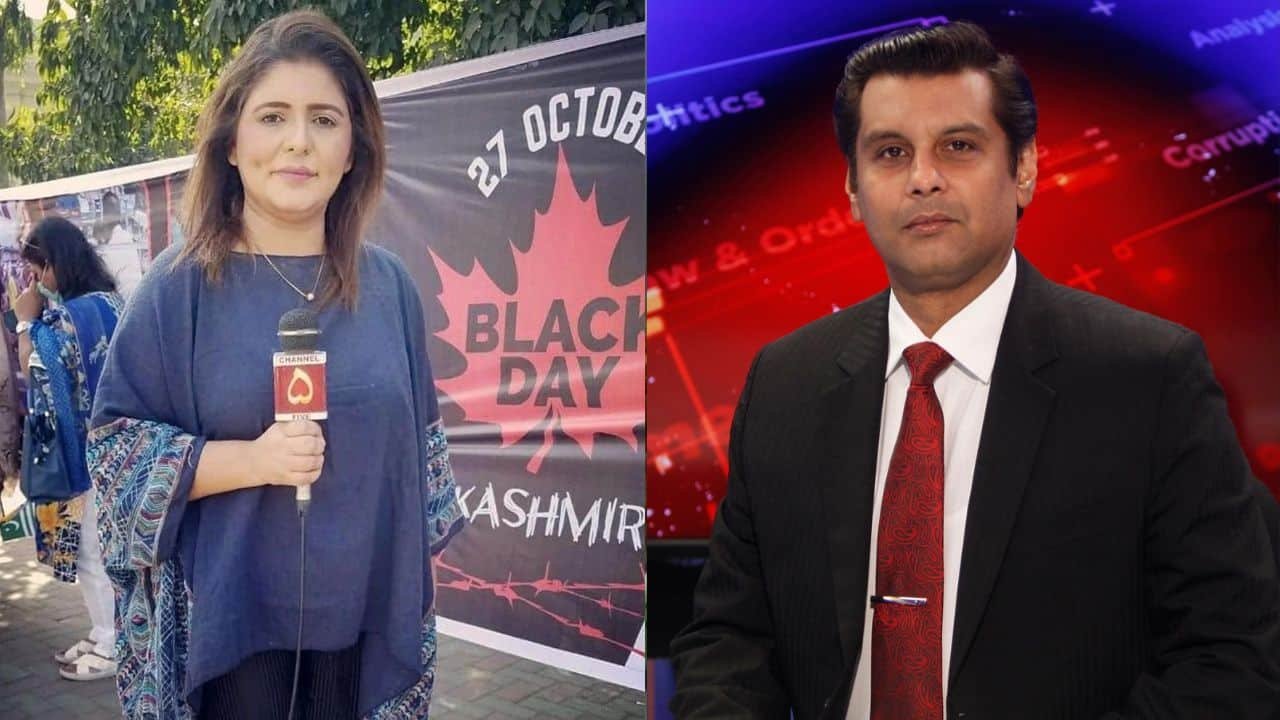
The report also cited specific incidents, such as the tragic death of Channel 5 reporter Sadaf Naeem during the coverage of former Prime Minister Imran Khan’s rally in Punjab in October 2022.
The report notes that another Pakistani journalist Ashad Sharif was killed in Kenya on October 23, 2022, and there is still no clarity on his murder.
Pakistan Press Foundation has also documented at least 157 media-related attacks, including 16 instances of arrests, five instances of detention, and 44 cases of assault this year.
Between January and September 2023, PPF has documented at least 157 attacks on the media in connection with their work, including 16 instances of arrests and five instances of detention, 44 cases of assault, two cases of damage to property, four instances of raids, 18 instances of registration of cases against media professionals and two instances of legal action, 26 instances of censorship, 20 instances of harassment of journalists or media practitioners, 13 cases of threats, seven confirmed cases of kidnappings and three unconfirmed cases.
While the country witnessed an improvement in its ranking in the World Press Freedom Index, climbing from 157 in 2021 to 150 in 2023, this progress is overshadowed by the failure to effectively implement the laws designed to protect journalists.
Javeria Siddique, the wife of Pakistani journalist and anchor Arshad Sharif who was killed in Kenya in 2022, has filed a petition in the Nairobi High Court on Thursday against the Kenyan police officials named in her husband’s murder case.
Arshad Sharif was killed in Kenya on October 23 last year. The Kenyan police admitted at the time that Arshad’s car came under fire due to ‘mistaken identification’.
After arresting the policemen involved in the incident, recent media reports have told of their reinstatement.
Javeria has approached the court in Nairobi following this news, confirming in a conversation with Independent Urdu that an application has been filed in the High Court.
According to Javeria: “GSU (Journal Service Unit) has been made a party to the petition filed. His accomplices include five police officers who were named in the murder case.
In addition, the Attorney General of Kenya, the Director of Public Prosecutions, the IG National Police Service, the Independent Police and the National Police Service Commission have been made parties.”
She further stated that she is the petitioner herself and is accompanied by the Kenya Union of Journalists, Kenya Correspondence Association. Apart from this, four international organisations, ICFJ, IWMF, Media Defense and Women Journalism are also included which will provide all kinds of support.
She said that she got the idea of filing the application in Kenya because there has been no progress in the case in Pakistan.
“No one has been arrested or punished in Kenya. When a nuclear state will not make any effort for any of its individuals, individual efforts have to be made,” she stated.
“Individually, I have hired a lawyer to file the application because practising law in another country is difficult”, she added.
Javeria Siddique also said that filing the application in Kenya was difficult and that no help was granted from Arshad’s friends except from international organisations, adding that there has been no progress in the case in the Supreme Court in Pakistan for two months because “the government had no intention to do so”.
This is not a movie plot-line but a baffling revelation of an imposter working as a lawyer with a streak of 26 victories in a row. Brian Mwenda Njagi, an alleged advocate, now faces arrest and unsettling questions about the country’s judicial credibility.
The unmasking happened when Njagi dared to represent former leader Maina Njenga. A video of the courtroom went viral, prompting the Law Society of Kenya(LSK) Nairobi Branch to dig deep into the matter only to find out that Mwenda was never registered as a member of the society. On top of that, he also had no legal qualifications.
He had been presenting himself as a lawyer for three years and had handled 26 cases before High Court Judges, Magistrates, and Court of Appeal Judges. He won all the 26 cases before his arrest.
This shocking expose has garnered a range of reactions, from shock to amusement that someone without any qualification outperformed established lawyers in the court.
One social media user posted “So he won 26 cases against Lawyers who went to the law school but he’s rather being punished? Those lawyers should rather be punished for letting one who hasn’t attended a law school win cases against them,”
Other pleaded to give him the lisence. “Fair enough. Winning 26 cases isn’t beans. He deserves that license.”
Another user pointed out the forgery of Law Schools. “Brian Mwenda has proved that Law School is a Scam and Law Bar Examination is a Scam too these are Standards made by the Colonial systems this man litigated and won all his cases give him the Law license to practice Law.”
Pakistan has made a significant foray into the global automobile market, marking a historic moment as it exported a batch of 14 SUV vehicles to Kenya and Tanzania, as reported by ARY News on Thursday.
In a landmark achievement, Pakistan, through the collaboration of Master Changan Motors, a joint venture between Pakistan and China, has officially joined the league of car-exporting nations. This endeavour has solidified their position as the first automotive company to send SUV vehicles to foreign shores.
The occasion was celebrated with a ceremonial event held in Karachi, commemorating the milestone of becoming the inaugural Pakistani-Chinese auto entity to export vehicles to two overseas destinations. Notably, the ceremony was attended by the Federal Secretary of Industries and Production, Asad Rehman.
Rehnan also revealed the government’s intent to urge auto manufacturers to revise their car prices, especially in light of the notable depreciation of the US dollar (USD). He underlined the efforts in this direction by mentioning a recent newspaper advertisement released by an auto company, signaling its commitment to reducing vehicle prices.
The export of the Oshan X7 SUV is a significant milestone for Pakistan as it ventures into the global automobile market, and this achievement carries even greater importance given the challenging economic conditions the country is currently facing.
In a groundbreaking move, Pakistan’s collaborative effort with a Chinese automotive company, Master Changan Motors, marked their entry into the league of car exporters. They proudly achieved this milestone by sending the initial consignment of 14 SUV vehicles to Kenya and Tanzania.
A special ceremony was organised in Karachi to celebrate the occasion, as it signified the first instance of a Pakistani-Chinese automotive company venturing into foreign vehicle exports.
The Federal Secretary of Industries and Production, Asad Rehman was also present at the ceremony.
During the ceremony, Asad Rehman conveyed the government’s intention to encourage auto companies to lower their car prices, given the significant decline in the value of the US dollar (USD).
He also mentioned that an automotive firm had recently placed a newspaper advertisement advocating price reductions.
Master Changan Motors, the Pakistan-Chinese automotive collaboration, proudly shipped its SUV model, the Oshan X7, to Kenya.
This achievement is a notable milestone for Pakistan, considering the challenging economic circumstances it faces.
Master Changan Motors, a noteworthy Pakistani-Chinese collaboration, has initiated the export of its Oshan X7 mid-size crossover to Kenya.
The sight of containers laden with Oshan X7 vehicles en route to the port in Karachi has confirmed this export venture.
Reliable sources affirm that a substantial quantity of Oshan X7 SUVs will soon grace Kenyan roads.
While the official announcement of this export endeavour is yet to be made, it is anticipated to be unveiled at a ceremony scheduled for October 12, hosted at their Karachi manufacturing facility.
In the past, Changan Pakistan’s CEO, Danial Malik, articulated the company’s intention to export right-hand drive vehicles initially designed for the Pakistani market to various other regions.
Historically, the parent company produced left-hand drive vehicles exclusively for its domestic clientele.
Danial Malik also emphasised that Changan’s Pakistan-assembled vehicles would find their way to distributors in South Africa, Malaysia, Indonesia, and other countries where right-hand drive vehicles are customary.
This development unfolds against a backdrop of considerable economic challenges confronting Pakistan, including soaring inflation and the burdensome cost of conducting business. Exacerbating the situation, interest rates are presently at historic highs, resulting in decreased demand for automobiles.
Furthermore, car prices within Pakistan have surged significantly, amplifying the financial strain on hard-pressed consumers.
In response, the government has been strongly encouraging the automotive sector, which is heavily reliant on imported materials, to bolster its exports. The initial objective was to achieve 2 per cent of the total imports, a target unmet in FY23.
According to Samaa, in May 2022, Pakistan marked a milestone by exporting its first vehicle crafted by Master Changan Motors under the newly implemented Auto Industry Development and Export Policy (AIDEP 2021-26). Notably, Pakistan stands as the sole country outside China to manufacture the latest Changan Oshan X7 model.
Concurrently, the Pakistan Automotive Manufacturers Association (PAMA) disclosed on October 11 that car sales in Pakistan had risen by 10 per cent in September compared to the preceding month, with a total of 8,312 units sold.
Nevertheless, this apparent short-term upturn can be attributed to improved access to raw materials, whereas the year-on-year data indicates a substantial 26 per cent decrease in sales for the corresponding period.
The proceedings of senior journalist Arshad Sharif’s murder trial have been put to halt in District and Sessions Courts Islamabad.
According to the details reported by Samaa news, witnesses have failed to appear and there is a lack of interest on their behalf; and so the case’ file was sent to the record room.
Judicial Magistrate Abbas Shah issued the written decision of the previous hearing.
According to the decision, on March 16, the court received a challan of Penal Code Section 512 in the Arshad Sharif murder case. On April 5, the court summoned witnesses to record their statements. They were summoned several times, but no one appeared.
The court says that they are not interested in recording the statements of the witnesses in the Arshad Sharif murder case; the prosecution was given an opportunity to submit evidence 15 times. And so, at the previous hearing, the prosecution was given notice that perhaps the file should be sent to the record room. According to the prosecutor, private and official witnesses are not coming to the court to record their statements.
In the judgement, it has been said that the prosecution can file an application for a new date considering the appearance of the witnesses, till further orders the Arshad Sharif murder case file is sent to the record room.
Interim Prime Minister Anwaar-ul-Haq Kakar has cancelled a three-day official trip to Kenya, scheduled to start on September 4 (Monday), The News has reported. According to the Foreign Office, PM Karar was invited by President William Samoei Ruto to travel to Nairobi, Kenya, from September 4 to 6, where he would attend the Africa Climate Summit. The publication claimed that the prime minister decided to cancel the trip after weighing the advantages and disadvantages of the prevailing atmosphere in the country.
Kakar’s trip to the African country would have been his first foreign sojourn since taking oath of office as interim Prime Minister of Pakistan. Interim Foreign Minister Jalil Abbas Jilani, caretaker cabinet members, advisers, and special assistants would have accompanied the PM on the visit. It was previously reported that the trip to Kenya was related to the strategy the previous government had developed to promote bilateral relations with African countries.
Geo news has been investigating journalist Arshad Sharif’s murder case. In their latest update, Geo has revealed that the five Kenyan police officers involved in the killing have resumed duties without any action taken against them.
A security source also told Geo that the two of the shooters have been promoted to senior ranks.
Kenya’s Independent Policing and Oversight Authority (IPOA), investigating the conduct of police officers and after Sahir’s murder, had assured authorities of giving updates on Sharif’s murder within weeks but more than nine months later, no findings have been made public.
IPOA had said in a statement that “We shall give an update on the matter once we are done with the investigations”.
The authority’s spokesperson neither provided a timeframe nor responded as to why the watchdog has taken so long and why the police officers have been absolved of any accountability.
Geo further reported that IPOA had submitted its file to the Office of the Director of Public Prosecution (DPP) but it was returned back and gaps were asked to be filled before the prosecution began.
According to a Geo News, “Investigations into the murder of the journalist seem to have gone silent in the East African country”.
A police officer attached to the General Service Unit (GSU), Kevin Kimuyu Mutuku, was allegedly shot at the time of Sharif’s killing.
The police officer rejoined work right after he was discharged from hospital. He has claimed that was shot and wounded when bullets were fired from inside Sharif’s vehicle but the forensic investigation showed he was lying.
Geo reports that a trusted Kenyan intelligence source, who chooses to remain anonymous, said that the National Police Service (NPS) in Kenya had slackened on Sharif’s investigation because “it involved its members and the body allowed to carry out such investigations was IPOA”.
“The police cannot investigate themselves and for that matter IPOA is expected to issue their findings. However, the police also have their own file on the same matter just in case,” said the investigator who has internal details of the matter.
According to Kenya’s Human Rights Commission member Martin Mavenjina, “Unfortunately, Kenya does not have a law that gives police officers timeliness whenever they are doing an investigation. When Arshad Sharif died things looked promising that the police would take action and would find facts — until they just came to a halt and everything went silent from the Kenyan side,” he said.
Geo investigations have also found that the police has conducted a parallel investigation of Arshad Sharif’s murder case but the findings are yet to be made public.
“The police investigations are on hold for now,” said Kennedy Kirwai, the investigating officer in the case.
The case is being pursued back in Pakistan too. Sharif’s family has asked the former Islamabad High Court judge Shaukat Siddiqui to take up their case.
The advocates say that Kenya is cordial with Pakistan but the Kenyan authorities have not been cooperative in the investigations. “I have no doubt in my mind that Kenyan Police were privy to this planned murder. It is so painful for the family of Arshad Sharif that even those officials who played the role of hired assassins have been let free and brought back to their ranks. Unfortunately, due to non-cooperation and having over the two suspects of Pakistani origin, investigation of the case has badly been jeopardised. In my opinion, now is the time for the Govt of Pakistan to take up the matter with the United Nations (UN),” said Siddiqui.
Caretaker Prime Minister Anwaar-ul-Haq Kakar is set to visit Kenya next month at the invitation of Kenyan President Dr William Samoei Ruto. He will be accompanied by Caretaker Foreign Minister Jalil Abbas Jilani and other cabinet members and advisors.