Tag: khan

  • Imran Khan asks NAB for his shaving kit left in police lines Islamabad

    Imran Khan asks NAB for his shaving kit left in police lines Islamabad

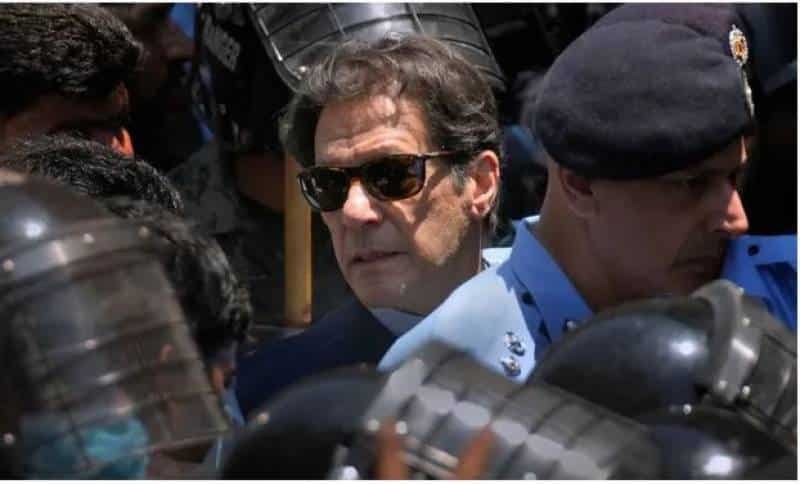
    Pakistan Tehreek-e-Insaf (PTI) Chairman Imran Khan has submitted a written response to the National Accountability Bureau (NAB) in connection with the Al-Qadir Trust case.
    The PTI chairman was summoned today by NAB in connection with an investigation related to a £190m settlement from the UK at 10am today.

    In the written response, Imran said that it was not possible for him to appear before NAB Rawalpindi and join the investigation as he was in Lahore for obtaining bail in a multitude of cases.

    Imran said that the allegations made by NAB are “absolutely false, frivolous and concocted”.

    He said he was in the process of applying for, and obtaining, bail in a number of other legal cases and would not be available before his protective bail expired on May 22.

    Imran has also asked back for his shaving kit and the clothes that he left behind in Police Lines Islamabad. “Kindly note that although the inquiry report was provided to me during custody, I could not carry the said Inquiry report, or for that matter, my clothes and shaving kit, with me when I attended the court proceedings before the honourable Islamabad High Court on 12-05-2023,” read the document.

    “As such, I would request that before serving me a Call Up Notice and pursuant thereto recording my statement and requiring production of documents accordingly, a copy of the said Inquiry report (along with my clothes and shaving kit that have been left behind in the room where I stayed in Police Lines Islamabad) may be immediately forwarded to me at my address at Zaman Park, or, in the alternate I will instruct my legal counsel in Islamabad, Mr. Gohar Ali Khan, ASC to visit your office at your convenience, to collect the copy of the report of Inquiry I left behind while proceeding to attend the Court hearing on 12-05-2009.”
  • Former Governor Omar Cheema is new Punjab Home Advisor

    The name of former Governor of Punjab, Omar Sarfraz Cheema, has been approved by Pakistan Tehreek-e-Insaf (PTI) Chairman Imran Khan for the slot of adviser to the Chief Minister (CM) Punjab on home affairs.

    This decision came about after the resignation of Punjab Home Minister Hashim Dogar, who reportedly left his post after differences with Imran Khan.

    Punjab Home Minister resigns as IK reportedly not happy with him

    Punjab Home Minister Hashim Dogar has stepped down from his office, citing personal commitments and health issues.

    On Tuesday, Dogar shared his resignation on Twitter with a caption saying: “Today I have resigned from my post due to my personal reasons. Inshallah, I will continue to work as a regular worker of Pakistan Tehreek-e-Insaf (PTI).”

    His resignation states: “It was a great pleasure to have served as Minister for Home and Prison Department under your able command. I feel regretted to inform you that I shall not be able to continue due to my personal commitments and some health issues.”

    “I was and will always be available to serve you and my party chairman for times to come”, he added.

    However, Journalist Hamid Mir, on Geo News’ programme “Capital Talk”, claimed that Pakistan Tehreek-e-Insaf (PTI) Chairman Imran Khan called Dogar and asked for his resignation. Reportedly, he was not happy with the provincial minister.

    “Imran was told that Dogar belongs to the unit of a senior officer of the establishment and often meets him”, he said.

    Mir claimed that the PTI chairman had been getting information about Dogar. It is yet to be proved whether the information was correct or not.

    Earlier, Dogar said, “If Imran Khan announces a long march then the Punjab government will not become part of it. We will not facilitate the participants of the long march but security will be provided”.

    He also said that government resources will not be used and called Khan’s long march a “political matter”.

    On the contrary, reacting to Dogar’s statement, Chief Minister (CM) Punjab Pervaiz Elahi said, “That is, as such, no matter”.

  • ‘Neutrals ka pressure tha’: Imran Khan blames the establishment for crackdown on PTI

    ‘Neutrals ka pressure tha’: Imran Khan blames the establishment for crackdown on PTI

    Pakistan Tehreek-e- Insaf (PTI) Chairman Imran Khan blamed the ‘neutrals’ for the crackdown against his party.

    Addressing a political gathering at Rawalpindi’s Liaquat Bagh on Sunday (August 21), Khan said that according to the reports he had received, the neutrals were responsible for the crackdown against his party.

    “On May 25, when the police used violence against us, I was told by insiders that the police were ordered from above, which means that neutrals pressurised them to give PTI workers a thrashing,” said Khan. 

    “The chief election commissioner is giving every decision against us … [He] is fully trying to disqualify me. I got information from the inside that he [the CEC] was not doing anything on his own but there was pressure of the boot.”

    Khan further accused the authorities of harassing visitors to Bani Gala, his residence in Islamabad, and said the people who came to meet him “received calls from the intelligence agencies” and are asked why did they go there.

    “People who come to visit my home, police outside my house takes off their shoes. Police is not doing all this. They tell us that we have orders from neutrals.”

    “So I ask you, whether you are neutral or not? If you stand with these people [PDM government], will the nation stop thinking of them as thieves? And now that you are standing with them, will they start considering them pious?”

    YouTube blackout

    After Pakistan Electronic Media Regulatory Authority (PEMRA) imposed a ban on the live telecast of speeches of PTI Chairman Imran Khan after he threatened the police, bureaucracy, and Additional District and Sessions Judge (ADSJ) Zeba Chaudhry, YouTube services in parts of the country reportedly faced disruptions during Imran Khan’s speech at Rawalpindi’s Liaquat Bagh.

    NetBlocks, which tracks network disruptions and shutdowns, confirmed reports of YouTube being “briefly” blocked on multiple internet providers during Khan’s speech on Sunday.

    “Real-time network data show the disruption in effect on some but not all mobile and fixed-line internet providers in Pakistan during the live-streamed speech. Access was restored after the speech concluded. The study is taken from a sample size of 100 measurements from 14 vantage points across Pakistan,” a statement issued by the watchdog read.

  • Fact Check: Imran Khan falsely claims that PTI worker from Malakand was killed during Azadi March

    Fact Check: Imran Khan falsely claims that PTI worker from Malakand was killed during Azadi March

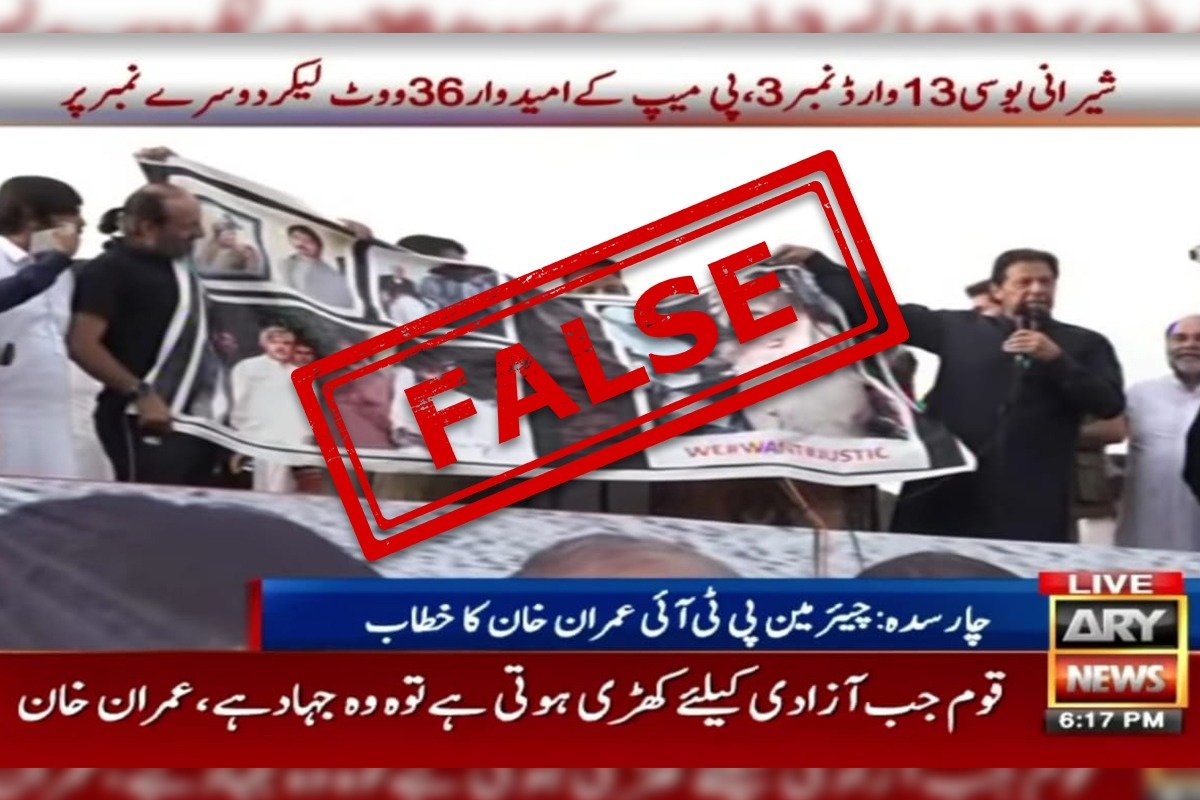
    Claim: A PTI activist from Mardan was killed last week as a result of Punjab police’s acts of brutality

    Fact: The banner showed images of Muhammad Zada Agra who was killed by drug smugglers in 2021

    During the PTI Workers’ Convention in Charsadda, Imran Khan raised a banner to tribute the two PTI workers which he alleged in this tweet were killed during last week’s processions. This tweet has 1,135 total Twitter interactions and was shared to 829,798 social media users on Twitter.

    He named these workers to be Faisal Abbas Chaudhry from Lahore and Syed Ahmed Jan from Mardan in his tweet and claimed that they both died as a result of police violence.

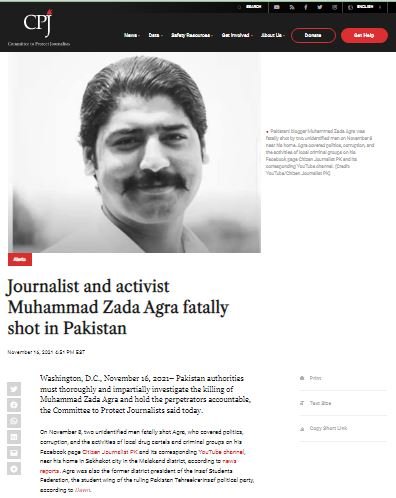
    During his speech, not only did he say the name of the second activist from Mardan was Syed Ali Shah, but the banner which he raised, showed an image which showed Muhammad Zada Agra, a journalist and social activist who was murdered in Sakhakot, his home city in Malakand, for Agra’s reporting and advocacy against local drug cartels, in 2021.

    Screenshot of the CPJ report on Muhammad Zada Agra’s killing in 2021

    Although Agra was a PTI supporter and a former district president of the Insaf Students Federation, the student wing of PTI, he was not murdered by the police or on the dictation of Rana Sanaullah, as Khan claims in his address.

    In fact, this Committee to Protect Journalists’ report explains that the Deputy Commissioner Malakand district police announced that the two men who killed Agra were confirmed to be associated with local drug smugglers after their arrest.

    Verdict: MISLEADING

  • Fact Check: Did the federal government shut down the internet?

    Fact Check: Did the federal government shut down the internet?

    Claim: Internet was shut down for people in various parts of Pakistan in order to suppress the coverage of Imran Khan’s PTI rallies

    Fact: The internet was not shut down but there is evidence of internet ‘throttling’ by internet service providers throughout the country

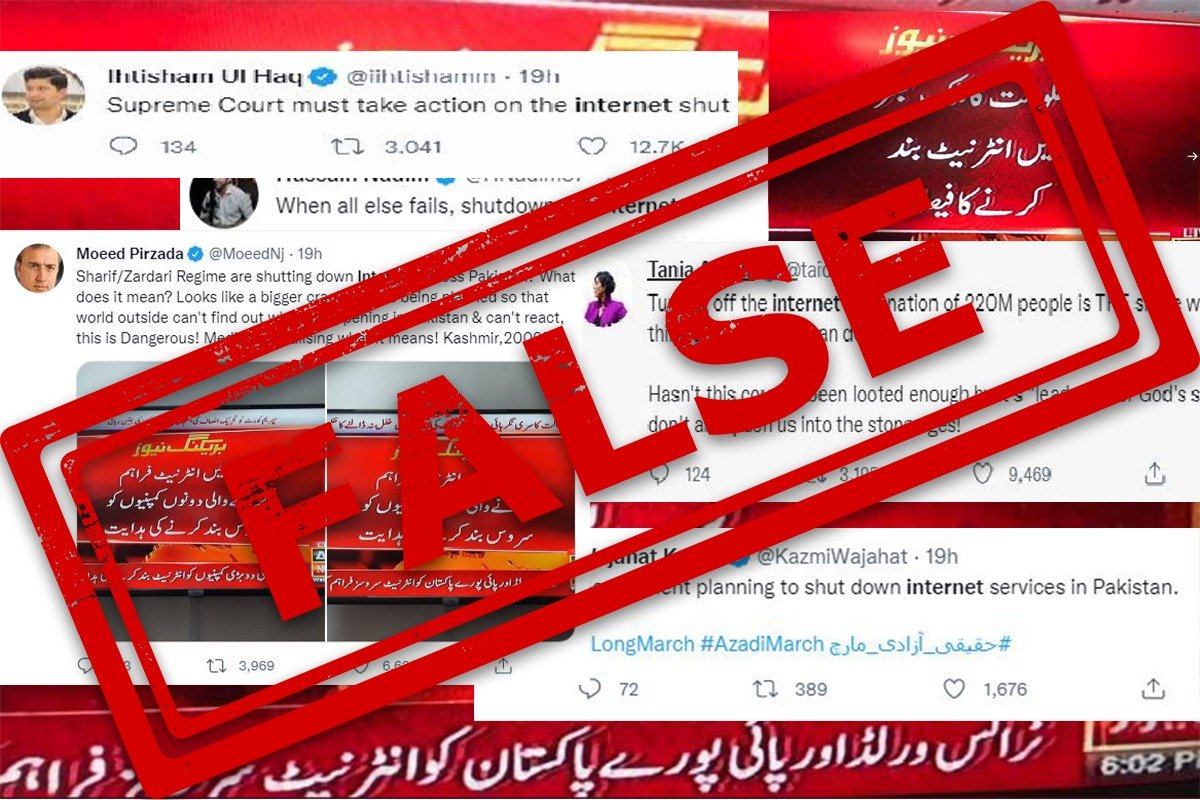
    On May 25, several social media users took to Twitter to condemn the government’s “draconian” decision to shut down the internet. Popular personalities came out on Twitter, with their verified accounts with millions of followers and announced that the federal government has decided to shut down the internet, in light of the escalating tensions in Islamabad and to avoid social media coverage of Imran Khan’s rally.

    Internet throttling is when your internet service providers limit the speed or bandwidth of your internet without taking your consent or informing you. In some cases, throttling also helps manage an unusual amount of traffic on the internet in order to equally distribute the bandwidth.

    However, this is false.

    Several people also tweeted that they had internet services available. However, everyone noted varying speeds at different times in the day. At The Current Check‘s office, we faced internet slowdowns throughout the day, but it was never shutdown.

    Hija Kamran, digital rights advocate working at Media Matters for Democracy, tweeted asking people in Pakistan to confirm whether their internet is working fine and several people reported operational internet in Karachi and Islamabad, others claimed that they were facing issues in internet speed.

    An internet observatory organization called Net Blocks released a report on the same day confirming “disruptions” in the internet across Pakistan. However, according to their report these disruptions only lasted for two hours within the whole day, which does not even come close to the claim that the internet was shut down.

    In their report, NetBlocks confirms that disruptions were faced by multiple internet service providers across Paksitan after 5pm on Wednesday, May 25. The service was restored within two hours, following the surge in complaints being posted on social media about the internet being throttled by ISPs across the country.

    NetBlocks used “diffscans”, a tool which allowed them to map the IP address space of Pakistan in real time and display corresponding internet connectivity levels and outages, which are represented in the graph attached in their tweet.

    Verdict: FALSE

  • The recent ban on imports might barely make a dent

    The recent ban on imports might barely make a dent

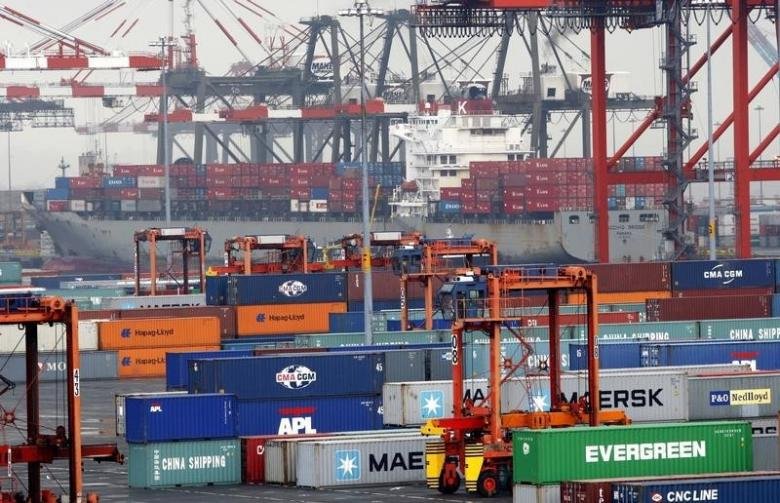
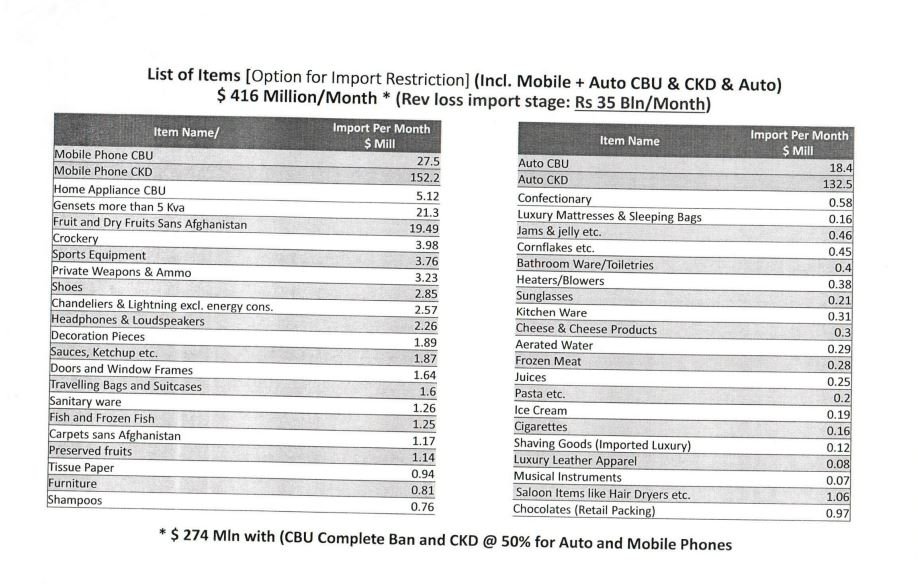
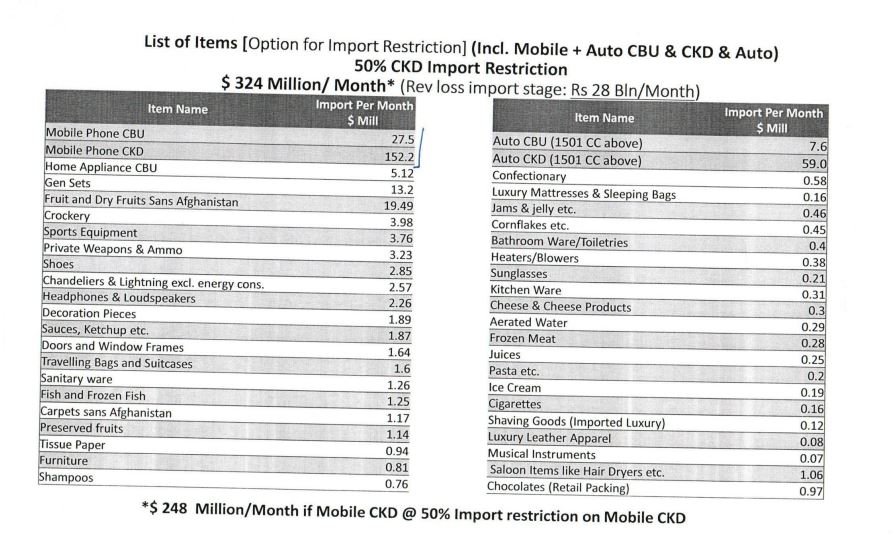
    On Thursday, May 19th, 2022, the federal cabinet issued a list of 41 items which will be banned from being imported for two months. This is in an attempt to address the current account deficit. The list of products is banned from being imported into the country, which means that essentially any shops or restaurants which rely on using these products will be forced to find local alternatives.

    These products will be banned regardless of what branding or packaging they use and only on the basis of whether the specific product is imported or not. Even products which are imported from abroad but packaged locally, will now be banned.

    Economists, university professors and business journalists took to Twitter to analyze and assess the merits and demerits of this decision. The discussion around luxury products and the fact that a lot of products which are labelled as “luxury items” are actually essential. Sanitary imports, valued at $16.4m are wrongly categorized as non-essential and although local alternatives also exist but it is definitions like these which disallow such decisions to be founded in research and expertise.

    The valuation of these imports which was published by the Pakistan Bureau of Statistics, was being quoted to ridicule the decision by many. What’s interesting to note is that most brands which appear to be entirely local, import a major chunk of their supply and will now be forced to smuggle goods instead.

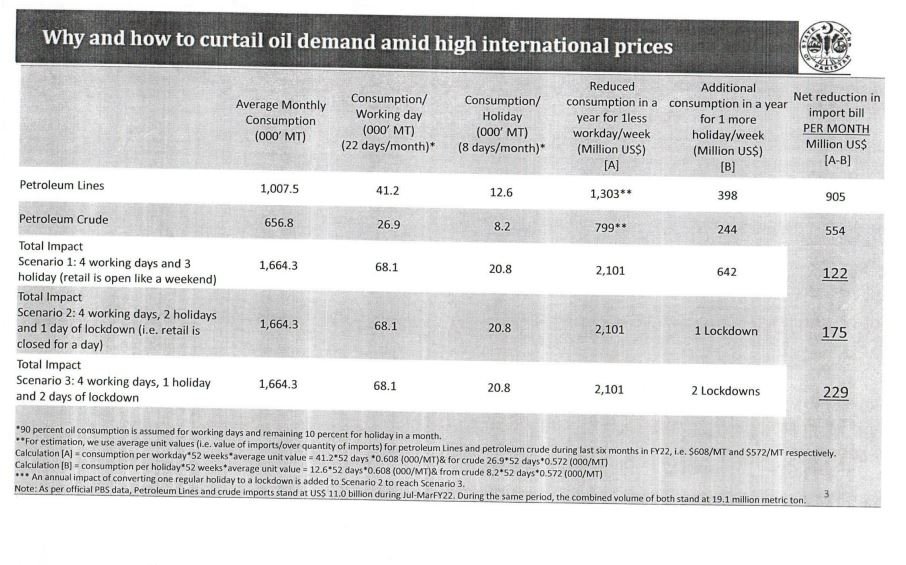
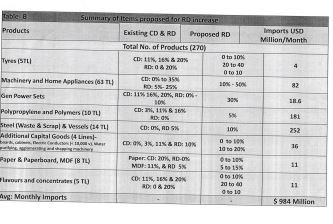
    Only from the data shared by PBS it becomes clear that for the fiscal year 2022, June to March, the total value of petroleum imports was $11 billion, while the total value of banning all these non-essential “luxury” items is a total $984 million, which forms only about 8.9% of the total value of petroleum imports.

    In conversation with Profit Magazine’s Ariba Shahid, she clarified that this would still prove to be a largely fruitless move since the most significant chunk of the import bill is still being used up to run the energy sector without any thought being given to the humongous fuel subsidies . “For a very long time the State Bank of Pakistan has been talking about how if we remove the oil component from it, the current account deficit is improving, which is true and basically means that people are not spending money to buy other items and most of the import bill is petrol and soy bean oil.”

    Economists Ammar Khan and Atif R Mian also took to Twitter to analyze this decision of “patchwork economics”. Commenting on this unsustainable gap in Pakistan’s balance of payment, on April 15th, 2022 during a discussion on Pakistan’s economy at Princeton University, he explains that for Pakistan to grow it is a necessary condition for Pakistan to deal with this problem and digs deeper into the structure of the economy. He particularly takes apart urban land reforms, the necessity to levy a capital gains tax on speculative real estate transactions and analyzes how Pakistan is not even economically stable enough to grow at the rate of India and Bangladesh and it is primarily due to the elite capture of the economy that disallows the economy to attempt to fix its loopholes.

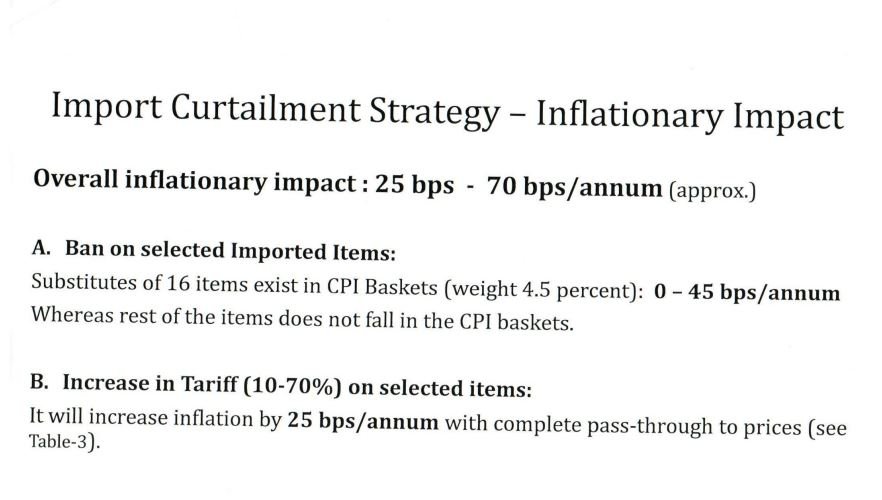
    Echoing similar sentiments, Ariba Shahid explained that due to a weaker economy, the import bill is not as significantly high due to a reduced demand pull because of a lowered purchasign power and hence banning these products will be insignificant and might barely make a dent in the current account deficit. “The need of the hour is to reverse the fuel subsidy,” says Shahid, “This decision will swell up the grey market economy and smuggling will increase.”

  • ‘Martial law or elections – your choice’: Khan threatened to impose martial law, states report

    ‘Martial law or elections – your choice’: Khan threatened to impose martial law, states report

    Imran Khan, who was ousted as Pakistan’s prime minister (PM) on Saturday, April 9, had threatened to impose martial law rather than facing the no-trust motion and handing over the power to the Opposition, reports The Guardian.

    The news outlet writes, “On Friday, a senior minister from his ruling government sent a message to an Opposition leader that read: “Martial law or elections – your choice.”

    “It appeared to threaten the Opposition with the ultimatum that they should agree to Khan’s demand for fresh elections or he would bring in Pakistan’s powerful military to take control, as has happened repeatedly in the country’s history,” writes The Guardian.

    “Imran Khan believed it should be him or no one,” says the news report, attributing, to one figure from the Opposition who said he had refused the demand.

    The news report also states that the premier had attempted to sack Chief of the Army Staff (COAS) General Qamar Javed Bajwa in order to provoke the military into taking control and imposing martial law.

    “Imran Khan wanted to sack the army chief, but the forces received information about it and they thwarted his plan after they came to know about it,” said a security official on condition of anonymity. “Khan wanted to create a huge crisis to remain in power,” writes The Guardian.

    There were also reports that the COAS and the former PM had 45 minutes meeting in Prime Minister House. The Inter-Services Public Relations (ISPR)  has dismissed BBC Urdu’s story that claims that Khan was pushing for the removal of COAS.

    The Opposition’s no-confidence motion against former Prime Minister Imran Khan succeeded on Sunday with 174 members voted in favour of the motion. The magic number to oust Khan was ‘172’. The National Assembly debated on the matter for more than 12 hours and the political situation in the country took a critical turn.

    Later, PM Khan was voted out as Prime Minister of Pakistan a little after midnight with 174 votes.