The Meteorological Department has predicted heavy rain and strong winds in Karachi today. In Lahore, strong winds have caused the temperature to drop.
According to the Meteorological Department, it may drizzle at some places in Karachi, Sajawal, and Thatta today. Strong winds will continue to blow in Karachi till this evening with cloudy skies.
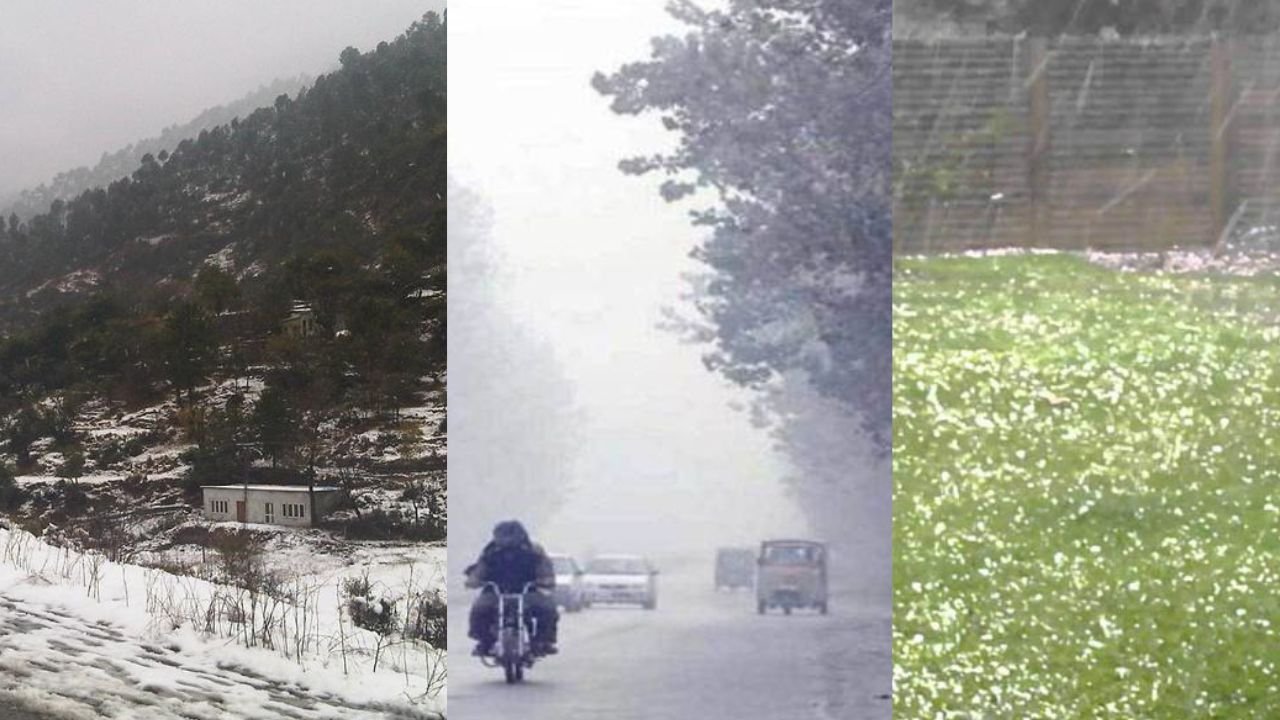
There is a possibility of rain and snowfall in the mountains today in the Pothohar region, Punjab, Khyber Pakhtunkhwa, North Balochistan, Kashmir, and Gilgit-Baltistan, reports Geo News. Various areas of the country including Islamabad, Rawalpindi, Peshawar, Kohat, Malakand, Muzaffarabad, Diamar, Chilas, and Chaman received rain while snowfall was recorded in the mountains.
Rescue teams have been put on high alert in Rawalpindi, Attock, Jhelum, Chakwal, Talagang, and Murree due to strong winds and rain.
Commissioner Rawalpindi said that they are monitoring the situation caused by wind and rain in Murree, the Deputy Commissioner has given specific instructions to Murree for necessary arrangements.
On the other hand, in Azad Kashmir and Khyber Pakhtunkhwa, heavy snowfall occurred in Neelum Jhelum Valley, which affected the movement of traffic due to slippage on connecting roads, the weather became colder due to snowfall in Swat, Upper and Lower Dir, Karam district.
Abbottabad and Mansehra are experiencing rain in the plains and light snow in the upper reaches, with up to 2 inches of snow in Shogran and 4 inches in Naran.
Additionally, the western system of rainfall entered North Balochistan after which heavy rain and hailstorms occurred in Pak-Afghan border areas including Chaman, Qila Abdullah, Muslim Bagh, Toba Kakadi, Toba Achakzai, and Sheila Bagh.
In the politics of Pakistan Tehreek-e-Insaaf (PTI), the Urdu letter “Ain” holds immense importance.
PTI founder Imran Khan has nominated Omar Ayub Khan, whose name starts with “Ain,” as the prime ministerial candidate.
PTI also nominated Ali Amin Gandapur, whose name also starts with “Ain,” as the party candidate for the chief minister of Khyber Pakhtunkhwa (KP).
There are interesting and funny comments about this on social media, reminding us that Imran also begins with Ain, Usman Buzdar with Ain, Arif Alvi, Omar Ayub, and Ali Amin Gandapur all start with Ain.
During PTI government, speculation was rife that Bushra Bibi asked Iman Khan to appoint a person whose name starts with ‘Ain’ as the chief minister of Punjab. After that, the PTI founder chose Usman Buzdar.
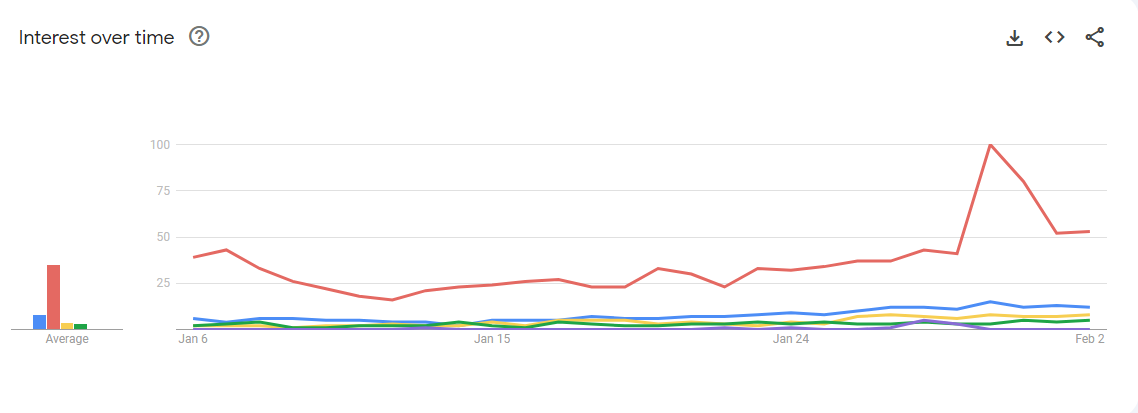
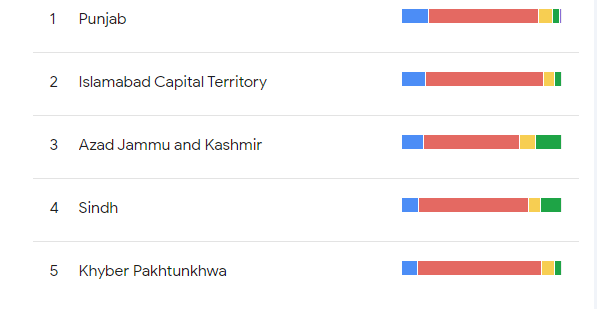
Google Trends offer an insight into the popularity and curiosity political leaders enjoy among the masses. As the elections are drawing near, we took a peak into the data Google Trends have recorded over the last 30 days.
The highest and ever-increasing line graph is Imran Khan’s. The highest peak was shown on January 30 with Khan hitting the record 100 score whereas his contemporaries, Nawaz stood on 15, Maryam Nawaz at eight, Bilawal-Bhutto Zardari at three, and Hamza Shehbaz being the lowest: less than one.
However, it is important to note that Imran’s progressively increasing arc starts dropping successively in the days after Jan 30.
On the other hand, except for Hamza Shehbaz, the other three is slowly on an upward trend.
Breakdown of regions
PTI founder and jailed leader Imran Khan is most popular all over Pakistan according to Google Trends.
Punjab
In Punjab, the most popular choices for Chief Ministership, Hamza Shehbaz, and Maryam Nawaz contrary to popular perception, are not being searched so much. After Khan winning with more than 69 percent of searches, Nawaz Sharif is at 17 percent while Maryam is at nine percent. It appears that people in Punjab are comparatively more interested in Bilawal than Hamza who has 1 percent searches from all over the province.
However, it is important to note that out of all the provinces, Punjab has shown more interest in PML-N leader Nawaz Sharif. Sindh has shown the most interest after Punjab, which is 11 percent, 10 percent in Khyber Pakhtunkhwa, nine percent in Balochistan, and seven percent in former FATA.
Sindh
After Imran Khan (69 percent) former Foreign Minister and Chairman of Pakistan People’s Party, Bilawal Bhutto Zardari is unsurprisingly most popular in Sindh with 13 percent of Google searches. Second in line is Punjab and third is Balochistan. After him is Nawaz (11 percent) followed by Maryam (7 percent).
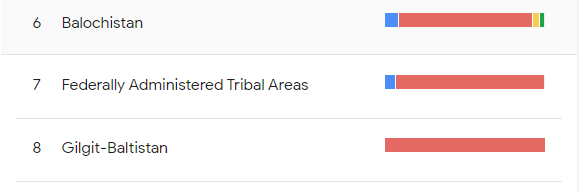
Balochistan
Imran Khan leading the slot here with 84 percent followed by Nawaz (9 percent), Maryam (4 percent), and Biawal Bhutto (3 percent). Hamza does not invoke public curiosity even the slightest.
Gilgit Baltistan
Imran Khan has a 100 percent popularity rate in Gilgit Baltistan, where it seems no other party leader stands a chance, implying that there were minor searches of them in GB.
Former FATA
Interestingly, in the former federally administered tribal areas, only Imran Khan and Nawaz Sharif were searched for, Khan at 93 per cent of searches and Nawaz at seven percent.
Though Google search and Google trends are not the ultimate parameter of a party leader’s popularity, they certainly are proof of what netizens are most interested in and the social media footing of a politician.
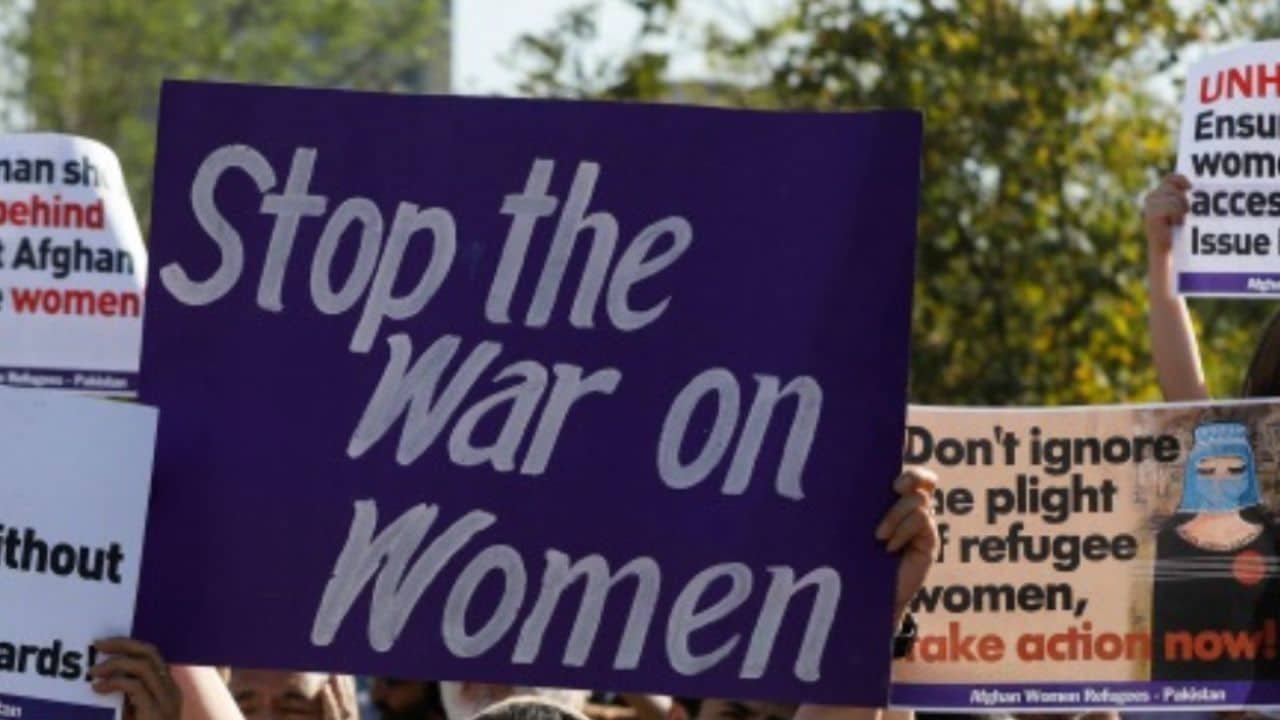
Perched on her traditional charpai bed, Naeem Kausir says she would like to vote in Pakistan’s upcoming election — if only the men in her family would let her.
Like all the women in her town, the 60-year-old former headmistress and her seven daughters — six already university-educated — are forbidden from voting by their male elders.
“Whether by her husband, father, son or brother, a woman is forced. She lacks the autonomy to make decisions independently,” said Kausir, covered in a veil in the courtyard of her home.
“These men lack the courage to grant women their rights,” the widow told AFP.
Although voting is a constitutional right for all adults in Pakistan, some rural areas in the socially conservative country are still ruled by a patriarchal system of male village elders who wield significant influence in their communities.
In the village of Dhurnal in Punjab, spread across crop fields and home to several thousand people, men profess myriad reasons for the ban of more than 50 years.
“Several years ago, during a period of low literacy rates, a council chairman decreed that if men went out to vote, and women followed suit, who would manage the household and childcare responsibilities?” said Malik Muhammad, a member of the village council.
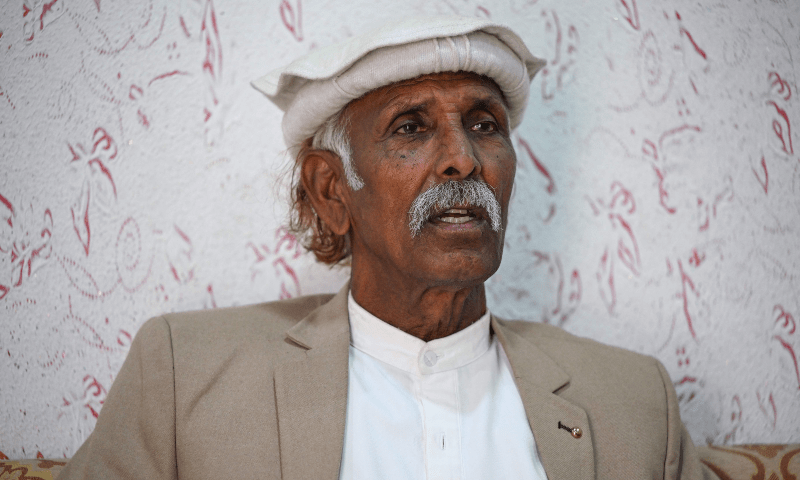
In this photograph taken on January 29, 2024, Malik Muhammad, a member of the village council, speaks during an interview with AFP in Dhurnal of Punjab. — AFP
In this photograph taken on January 29, 2024, Malik Muhammad, a member of the village council, speaks during an interview with AFP in Dhurnal of Punjab. — AFP
“This disruption, just for one vote, was deemed unnecessary,” he concluded.
Muhammad Aslam, a shopkeeper, claims it is to protect women from “local hostilities” about politics, including a distant occasion that few seem to remember in the village when an argument broke out at a polling station.
Others told AFP it was simply down to “tradition”.
The Election Commission of Pakistan (ECP) has stressed that it has the authority to declare the process null and void in any constituency where women are barred from participating.
In reality, progress has been slow outside of cities and in areas that operate under tribal norms, with millions of women still missing from the electoral rolls.
The elders in Dhurnal rely on neighbouring villages to fill a government-imposed quota which maintains that 10 percent of votes cast in every constituency must be by women.
Those who are allowed to vote are often pressured to pick a candidate of a male relative’s choice.
In the mountainous region of Kohistan in Khyber Pakhtunkhwa province home to almost 800,000 people, religious clerics last month decreed it un-Islamic for women to take part in electoral campaigns.
Fatima Butt, a legal expert and a women’s rights activist, said women are allowed to vote in Islam, but that religion is often exploited or misunderstood in Pakistan.
“Regardless of their level of education or financial stability, women in Pakistan can only make decisions with the ‘support’ of the men around them,” she said.
Pakistan famously elected the world’s first Muslim woman leader in 1988 — Benazir Bhutto, who introduced policies that boosted education and access to money for women, and fought against religious extremism after military dictator Zia ul-Haq had introduced a new era of Islamisation that rolled back women’s rights.
However, more than 30 years later, only 355 women are competing for national assembly seats in Thursday’s election, compared to 6,094 men, the election commission has said.
Pakistan reserves 60 of the 342 National Assembly seats for women and 10 for religious minorities in the Muslim-majority country, but political parties rarely allow women to contest outside of this quota.
Those who do stand often do so only with the backing of male relatives who are already established in local politics.
“I have never seen any independent candidates contesting elections on their own,” Zara Butt added.
Forty-year-old Robina Kausir, a healthcare worker, said a growing number of women in Dhurnal want to exercise their right to vote but they fear backlash from the community if they do — particularly the looming threat of divorce, a matter of great shame in Pakistani culture.
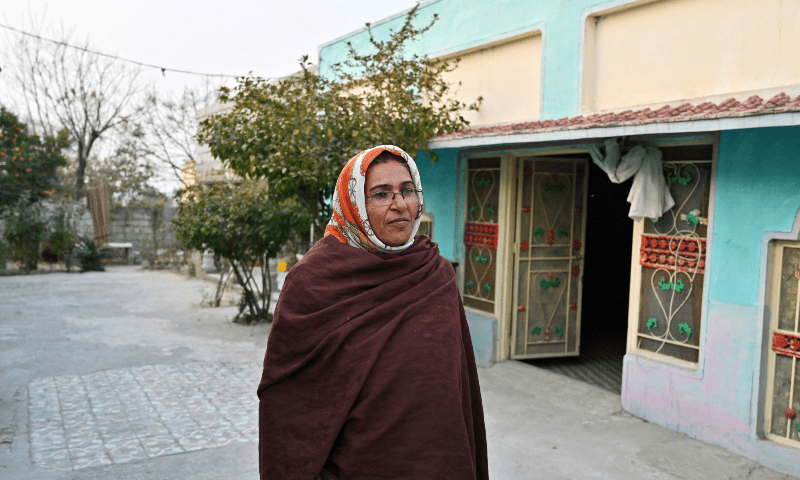
In this photograph taken on Jan 29, 2024, Robina Kausir, a healthcare worker, looks on during an interview with AFP in Dhurnal of Punjab. — AFP
She credits part of the shift to access to information as a result of the rising use of smartphones and social media.
“These men instil fear in their women — many threaten their wives,” she told AFP.
Robina, backed by her husband, is one of the few prepared to take the risk.
When cricketing legend Imran Khan swept to power in the 2018 election, Robina arranged for a minibus to take women to the local polling station.
Only a handful joined her, but she still marked it as a success and will do the same on Thursday’s election.
“I was abused but I do not care, I will keep fighting for everyone’s right to vote,” Robina said.
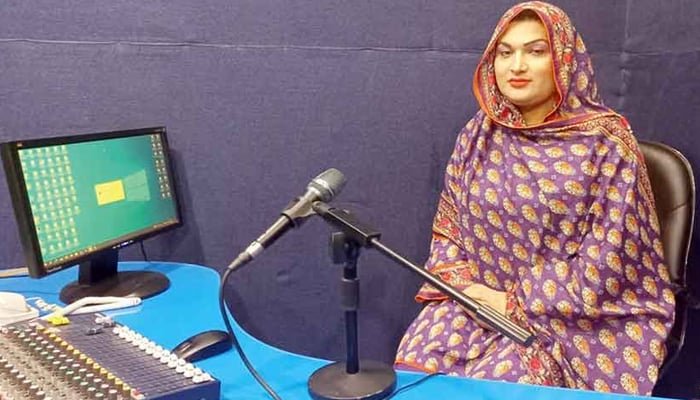
Peshawar High Court has directed authorities in the province to establish a separate queue for transgender voters in PK-81 from where trans rights activist Sobia Khan is contesting elections as Khyber Pakhtunkhwa’s first transgender individual participating in general polls.
The court’s verdict highlighted the absence of specific documents for the transgender quota, as no such provision currently exists. Additionally, the court-mandated security measures for transgender candidate Subiya during the general elections, where she is running independently in PK-81.
Who is Sobia Khan?
Sobia is hailing from Peshawar and she has filed nomination papers for the provincial assembly seat from constituency PK-81. She is running her campaign as an independent candidate.
Notably, Sobia Khan, a graduate and the first transgender broadcaster in Khyber Pakhtunkhwa has been hosting TNN’s “Sobiya Khan Show” for the past four years.
Sobia welcomed the court ruling. Talking to Tribal News Network, Sobia detailed her broader goals, aiming not only to champion transgender rights but also to challenge societal perceptions. She aspires to work for the welfare of the constituency, particularly focusing on the rights of women and children, breaking stereotypes about the capabilities of transgenders.
Sobia Khan, backed by her family and local support, appealed to NGOs, civil society, and the district administration for assistance in her election campaign. Acknowledging the unprecedented nature of a transgender participating directly in elections, she stressed the need for security during her campaign.
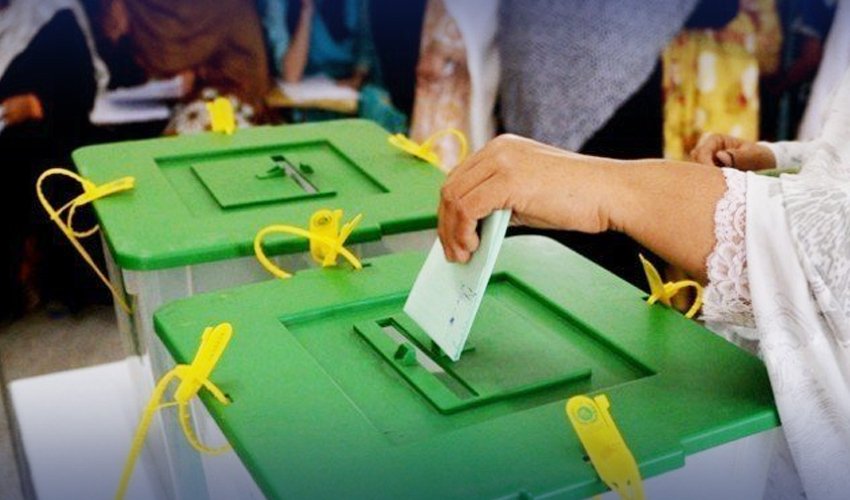
The Election Commission of Pakistan (ECP) has declared on Thursday that it is determined and ready to conduct upcoming elections on February 8 as per schedule, despite facing security challenges in Khyber Pakhtunkhwa and Balochistan provinces.
With only one week remaining until the February 8 polls, election preparations and campaigns are in full swing. However, the country is grappling with a series of violent incidents that have led to multiple deaths, particularly at political party rallies in the two provinces most affected by terrorism.
Law enforcers have tightened security across the country to maintain law and order during the upcoming general elections.
“The February 8 polls will take place on time. Though the security challenges exist but the election commission is fully ready [to hold the elections], and with the help of Law Enforcement Agencies (LEAs) and Pakistan Army, the elements involved in hindering the electoral process and disrupting security situation will be dealt strictly,” Chief Election Commissioner (CEC) Sikandar Sultan Raja said during the ECP’s security meeting.
On Thursday evening, the electoral body held an important meeting on the worsening law and order situation in two provinces.
After the meeting ended, the ECP released a statement saying that the CEC voiced concerns about the worsening security situation in KP and Balochistan. However, he emphasised that the electoral process will continue despite the challenges.
The Khyber Pakhtunkhwa government has approved the recommendations of the reform committee regarding textbook size and the format in which they will be provided to students in the future, reports Geo.
According to the official announcement, the heads of government schools will collect the old books from the students and will encourage them to keep the books in good condition. It also said that 100 per cent of new books will be published for nursery to third class, 80 per cent new books will be published for fourth and fifth class and 20 per cent old books will be used.
Similarly, 50 per cent new books will be published for sixth to twelfth standard while 50 per cent old books will be given to students of sixth to twelfth standard.
The declaration also stated that the size of government textbooks will be reduced up to 8th grade in the year 2025-26 and the size of textbooks will be reduced without changing the syllabus.
The reform committee has suggested to use soft copies of books on mobile phones and laptops of students in the year 2025-26.
Previously, it was decided that to cope with the financial crunch in the country, the size of textbooks will be reduced and half of schoolchildren will be given old course books hoping this will save over three billion rupees for printing books.
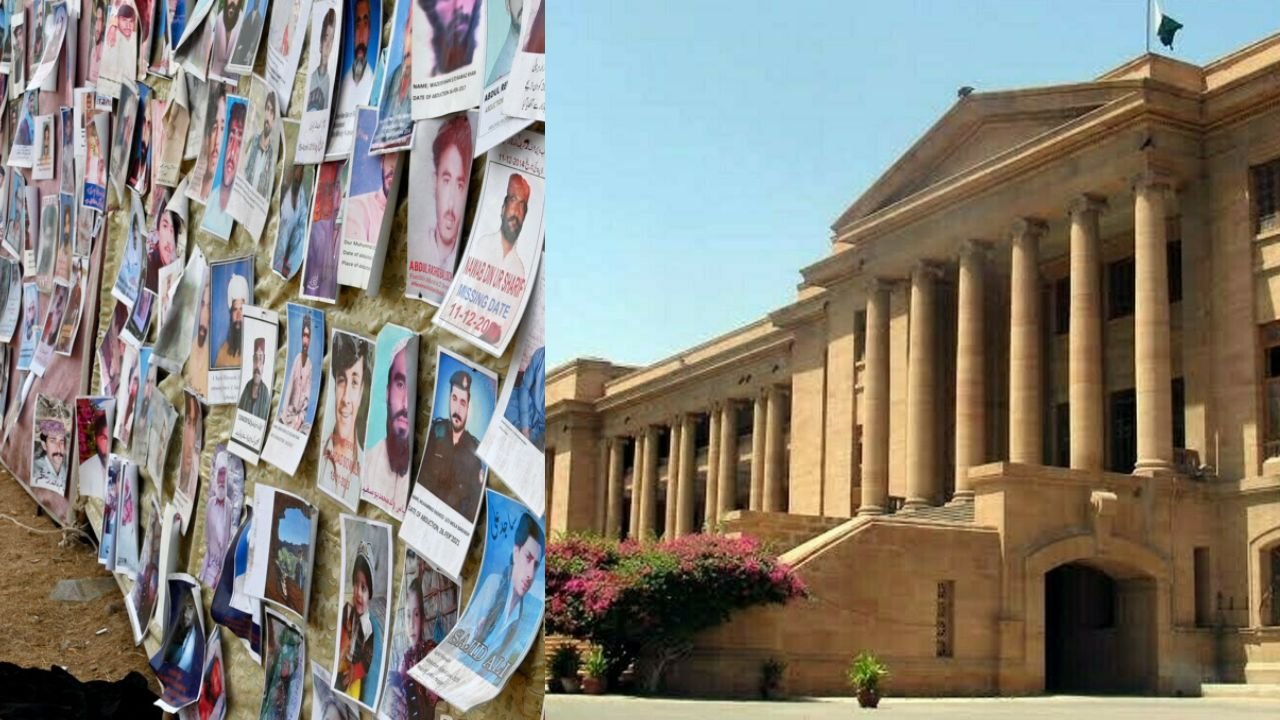
In a significant development, the Sindh High Court (SHC) has granted a three-week deadline to the Federal Defence Ministry and the Sindh Home Department to submit a comprehensive report on all detention camps across the country.
The directive came from a two-judge bench, with Justice Naimatullah Phulpoto presiding, during a hearing on Thursday concerning petitions related to the recovery of missing persons.
The bench took cognizance of the case after one petitioner revealed that her husband, Tahir Rehan, had been missing since 2015, with no investigative action taken by the police.
Expressing dissatisfaction with the public prosecutor’s claim of providing Rs500,000 in compensation, the petitioner asserted that she had not received any such compensation.
The Sindh Home Department officially announced the suspension of compensation payments to families of missing persons, as revealed in a report submitted to the Sindh High Court.
The court had directed the submission of a comprehensive report to federal authorities, including the Interior Secretary and Defense Secretary, concerning applications related to compensation for families of missing persons.
In a proactive measure, the court ordered the publication of advertisements in both print and electronic media to aid in the search for Shahri Majid, missing since 2015.
Additionally, the court directed the gathering of information on missing persons from jail authorities and various locations across the country.
Cold weather has increased in different cities of Balochistan after rain spells while a drizzle is expected in Karachi tonight (Saturday). The cold wave in other parts of the country is likely to become stronger, the Meteorological Department has said, reports Geo.
The coldest temperature during the last 24 hours was hit in Skardu, where the mercury dropped to minus 9 degrees Celsius.
The federal capital, Islamabad, is shrouded in dense fog which is affecting the flight schedule. Three international flights to Islamabad have been grounded in Karachi and Lahore. Due to low visibility, more than 500 flights have been delayed in the first 20 days of 2024.
The Meteorological Department has predicted heavy fog in the plains of Khyber Pakhtunkhwa, Punjab and Upper Sindh during the next few days. Karachi is likely to remain partially cloudy during the next 24 hours, while the possibility of drizzle has also been indicated at some places this evening. On Sunday and Monday, the city is expected to be partly cloudy and cool at night.
The minimum temperature of the coastal city is expected to be between 13 and 15 degrees Celsius, while winds will continue to blow from the northeast and southwest in the city throughout the day.
A murder case of 11 members of the same family has been registered in Lakki Marwat and the uncle of the deceased has nominated the father-in-law of one of the deceased daughters in the case.
The murders took place in the Takhtikhel area of Lakki Marwat district in Khyber Pakhtunkhwa.
According to the authorities, the uncle, Umar Gul, has claimed that the daughter-in-law of the accused father-in-law, Madar Khan came to her home after a fight within the family. Khan apologised for the fight and entered the home of his daughter-in-law as a guest, on the pretext of solving the matter. He spent the night with the family.
Umar Gul stated that Khan shot and killed 11 family members after feeding them poisoned food.
According to the police, two men, two women and six children are among those killed.
Efforts are being made to arrest Madar Khan, according to Geo News.