Tag: KSE-100

  • PSX witnesses recovery as KSE-100 index surpasses 41,000-mark

    PSX witnesses recovery as KSE-100 index surpasses 41,000-mark

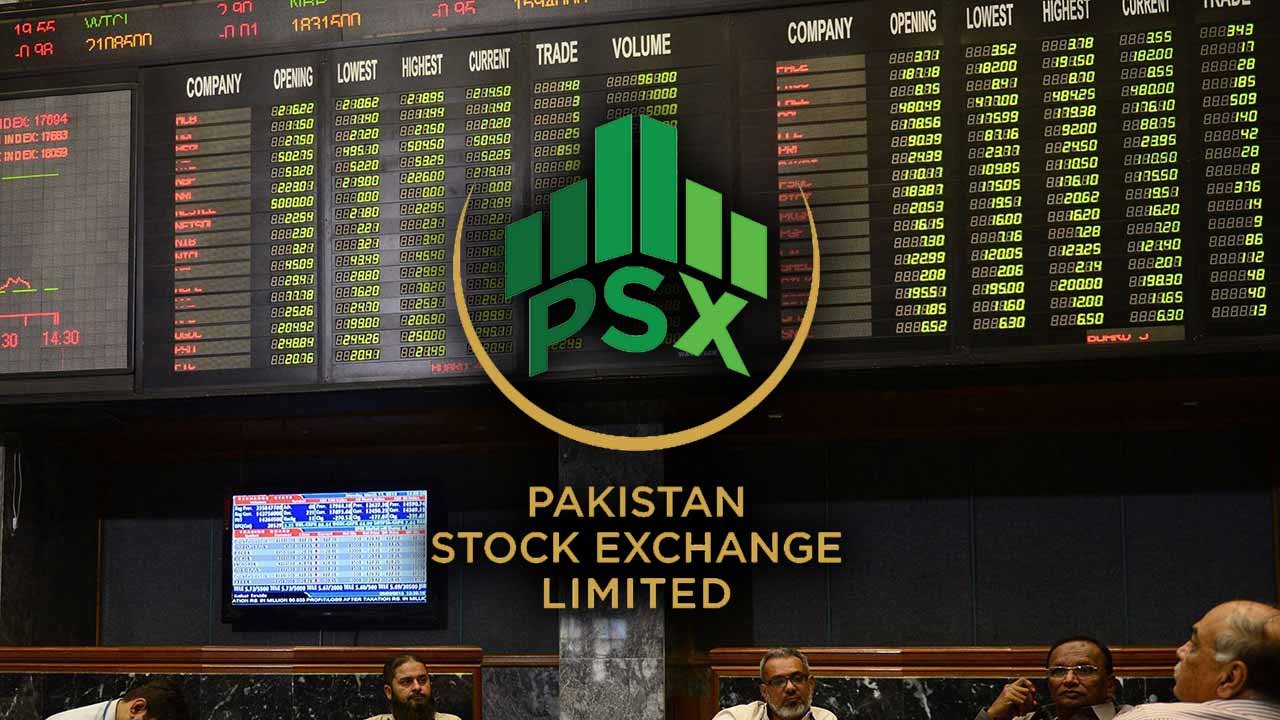
    The week started off well for shares at the Pakistan Stock Exchange (PSX), with analysts attributing the rise to the Pakistani rupee’s robust rebound, which was supported by a drop in global oil prices.

    By 10:45 AM, the benchmark KSE-100 index had risen 411 points, or 1.01 per cent, to 41,031 points.

    The PSX had optimistic activity in early trade, according to Ahsan Mehanti of Arif Habib Corporation, as a result of a higher rupee and the impending appointment of a new finance minister, which is expected to stabilise economic uncertainties.

    At 10 AM, the Pakistani rupee was trading at Rs235.5 per US dollar, up Rs4.15 from earlier today.

    Furthermore, Ishaq Dar is scheduled to return to Pakistan today and take charge as Pakistan’s finance minister. Senior PML-N officials met Miftah Ismail on Sunday after he submitted his resignation. Dar’s appointment as finance minister was announced by Nawaz Sharif and PM Shehbaz, according to a statement issued following the meeting.

    Amir Shehzad, the director at First National Equities Limited, concurred with Mehanti’s assessment, stating that the sentiment that built in anticipation of Dar’s return and the optimism that the situation would get under control was the main driver of the index’s advances and a reason for increased investor confidence.

    The industry with the greatest potential to raise the index’s point total, according to Shehzad, is cement.

    Raza Jafri, Head of Research at Intermarket Securities, stated that the KSE-100 was recovering as a result of a number of factors, including lower oil prices, the West’s apparent willingness to consider Pakistan’s requests for debt restructuring, and the belief that Senator Dar might be able to control the PKR.

    No negative political developments over the weekend are also fostering positive sentiments, he continued.

    In light of the terrible floods, which are estimated to have cost $30 billion in losses, PM Shehbaz had last week made a plea to the globe and wealthy nations for an immediate debt relief.
  • PKR continues losing ground against dollar amid fears of widening trade deficit

    PKR continues losing ground against dollar amid fears of widening trade deficit

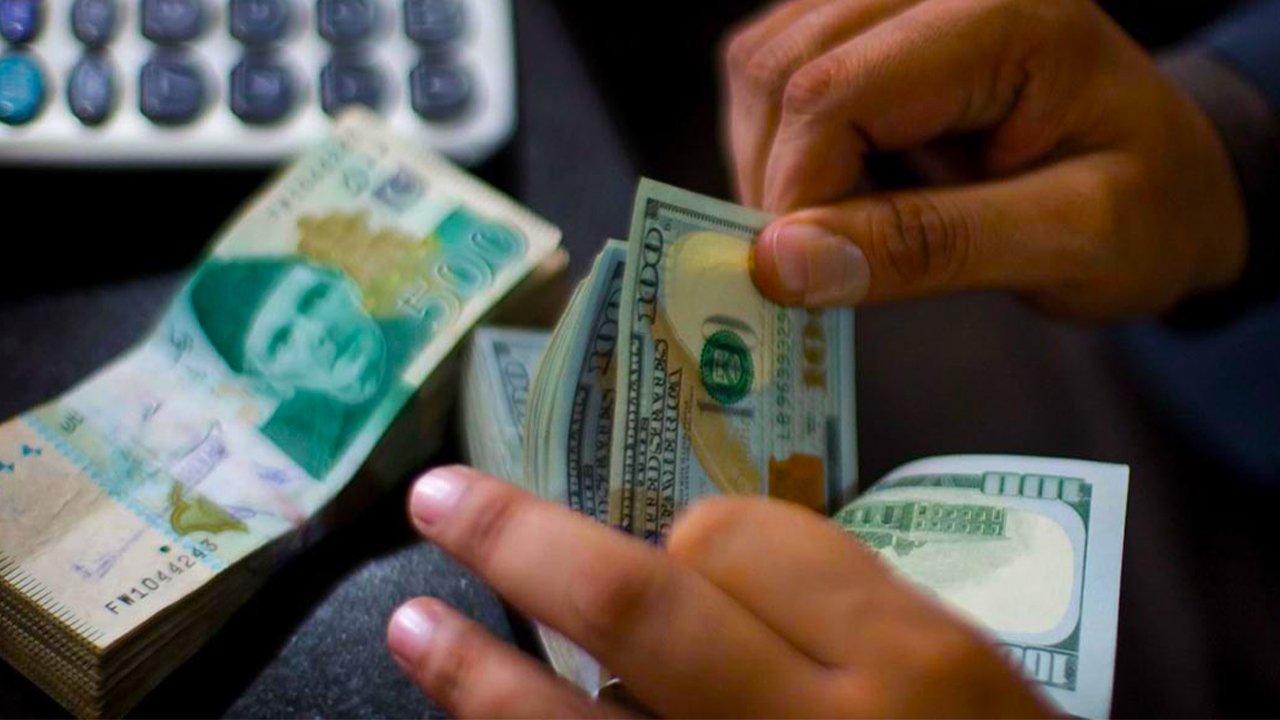
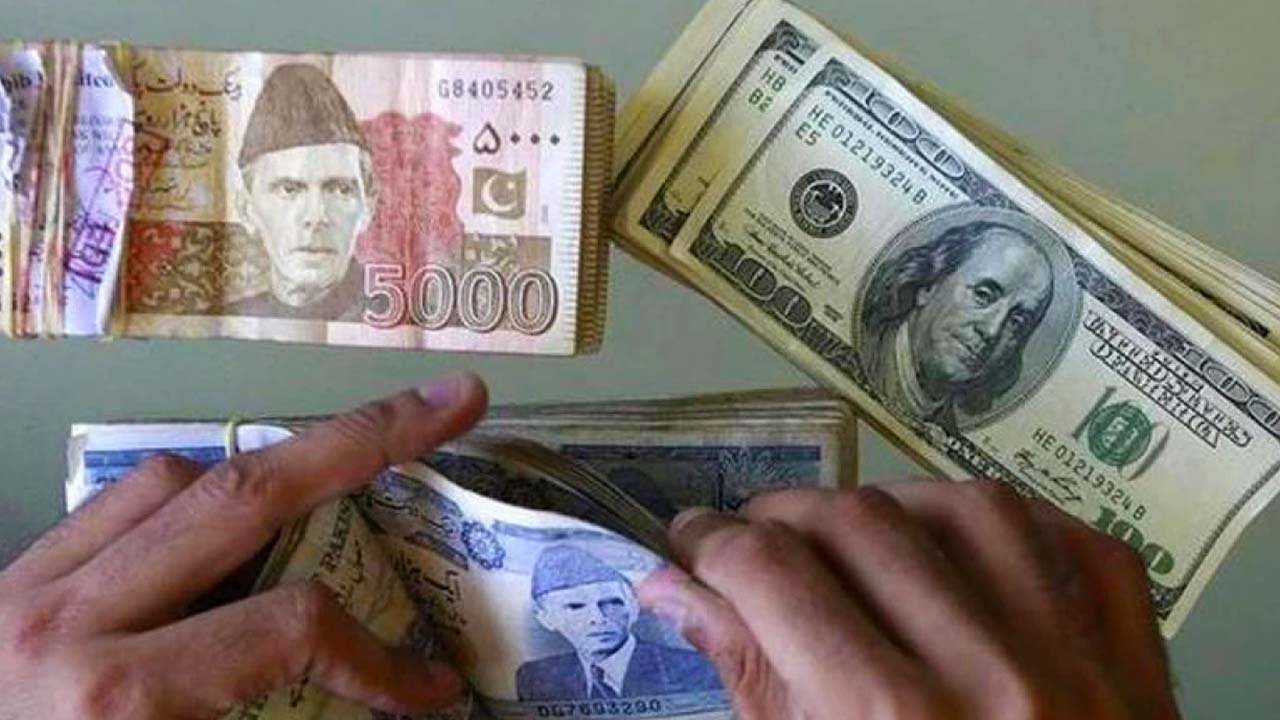
    In the interbank market during the first hours of trading on Monday, the Pakistani rupee was trading between Rs229 and Rs230 versus the US dollar.

    When intra-day trading began at 11:00 AM, the rupee was quoted at Rs229.88, depreciating by 0.31 per cent against the US dollar.

    The rupee had a terrible prior week, falling against the US dollar in the inter-bank market to close at Rs228.18 after losing value in each of the five sessions for a total loss of almost 4 per cent.

    In the interbank market during the first hours of trading on Monday, the Pakistani rupee was trading between Rs229 and Rs230 versus the US dollar.

    When intra-day trading began at 11:00 AM, the rupee was quoted at Rs229.88, depreciating by Re0.70 or 0.31 per cent against the US dollar.

    The rupee had a terrible prior week, falling against the US dollar in the inter-bank market to close at Rs228.18 after losing value in each of the five sessions for a total loss of almost 4 per cent.

    The dollar index, which compares the value of the dollar to six important rival currencies, held steady at Rs108.82, retreating from a two-decade high achieved on Wednesday. In the previous session, it fell to Rs108.35, its lowest level since August 30.

    Investors remain cautious ahead of Tuesday’s release of the US CPI data, despite the fact that Fed officials continued to use hawkish language on Friday, the last day before a period of silence prior to the Federal Open Market Committee’s meetings.

    A significant factor in currency parity, oil prices fell on Monday as the outlook for global fuel demand was overshadowed by COVID-19 limitations in China and the possibility of future interest rate increases in the US and Europe.

  • Intraday trade: PKR resumes downward spiral against US dollar, falls to Rs223

    Intraday trade: PKR resumes downward spiral against US dollar, falls to Rs223

    The Pakistani rupee was trading between Rs222-223 on Wednesday as losses against the US dollar persisted in the early hours of trading.

    During intra-day trading, the rupee was quoted at Rs222.49 at roughly 10:30 am, depreciating by Rs1.07 or 0.48 per cent against the US dollar.

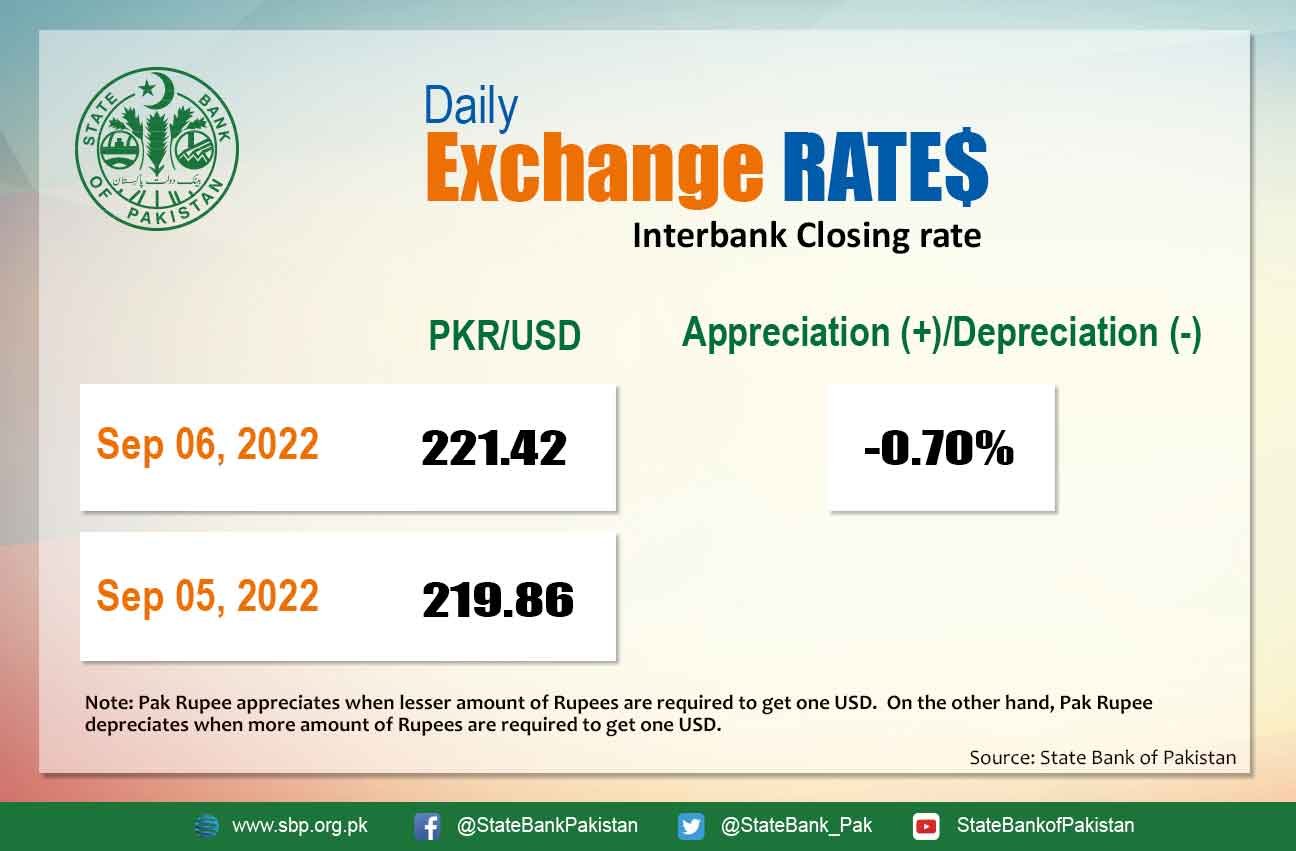
    The local unit lost for the third session in a row on Tuesday, falling down Rs1.56 or 0.7 per cent against the dollar to close at Rs221.42.

    According to analysts, the government’s decision to let the duty-free import of edible commodities to promote food security after floods severely damaged the nation’s agriculture sector has led to a spike in demand for dollars on the local market.

    However, the dollar is also strengthening globally. On Wednesday, after U.S. economic data supported the notion that the Federal Reserve will continue with policy tightening, it reached fresh highs against the yen and the Australian and New Zealand dollars.

    The US dollar index, which compares the value of the dollar to six important rival currencies, increased 0.08 per cent to Rs110.43, remaining close to the 20-year high set on Tuesday of Rs110.57.

    On Wednesday, oil prices, a major factor in determining currency parity, fell more than $1 to their lowest level since before Russia invaded Ukraine as COVID-19 restrictions in the world’s top crude importer China and anticipation of further interest rate increases stoked concerns about a global economic slowdown and a decline in fuel demand.

  • Pakistani rupee loses Rs2.01 against dollar to close at Rs216.66

    Pakistani rupee loses Rs2.01 against dollar to close at Rs216.66

    On Monday, the Pakistani rupee (PKR) remained under pressure to start the week, falling Rs2.01, or 0.93 per cent, versus the US dollar in the interbank market.

    The local currency dropped from Friday’s closing rate of Rs214.65 to Monday’s closing rate of Rs216.66 per dollar, according to the State Bank of Pakistan.

    The dollar fluctuated between Rs213-214 during the previous week. It ended at Rs214.65 on Friday after ending at Rs213.98 on Monday. Last week, the rupee lost 0.31 per cent of its value against the dollar.

    The KSE 100-index of the Pakistan Stock Exchange (PSX), on the other hand, experienced a bearish trend on Monday, shedding 443.99 points, or 1.03 per cent, and finishing at 42,826.66 points as opposed to 43,270.65 points on the last working day.

    When compared to the previous trading day, when 306,208,580 shares were traded, a total of 194,667,559 shares were traded on Monday (today). The price of the shares was Rs5.331 billion as opposed to Rs6.393 billion on Friday.

  • Pakistani rupee continues to recover, PSX witnesses bullish trend

    Pakistani rupee continues to recover, PSX witnesses bullish trend

    The dollar was trading at Rs223 on Thursday, as the Pakistani rupee (PKR) increased by Rs5.79 in interbank trade to extend its winning streak versus the dollar to five days.

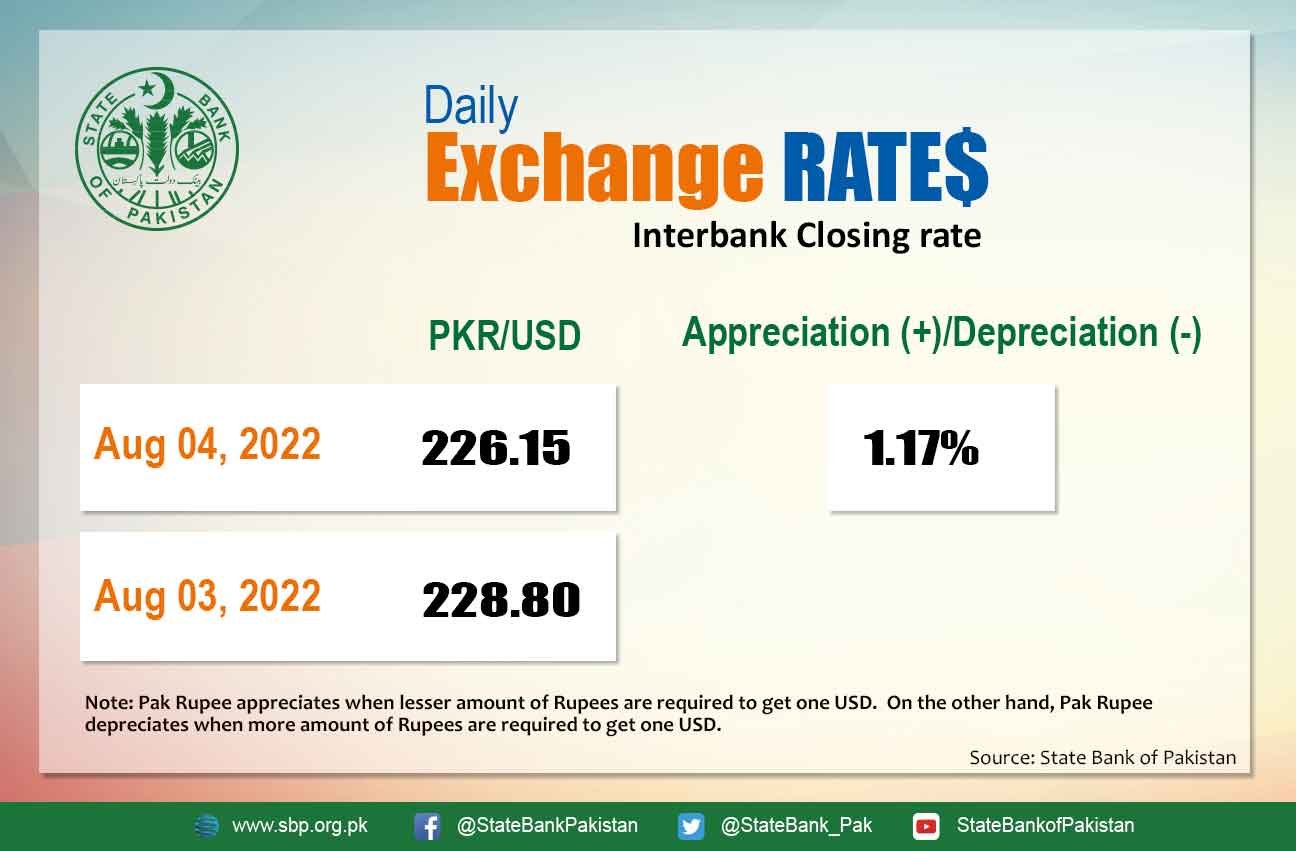
    The Pakistani rupee increased against the US dollar for the fifth day in a row, rising Rs2.65 to close at Rs226.15.

    US dollar to Pakistani rupee rate – 4 August 2022

    As the market opened on a good note and remained optimistic with heavy volumes in nearly all sectors for a while, the benchmark KSE-100 likewise rose up to 500 points before 12:00 pm. However, as of 1:40 pm, the market fell by 290 points.

    On Wednesday, the rupee gained the most against foreign currencies in a single day, ending the day at Rs228.80. The dollar’s decline versus the rupee reached its biggest level since November 2, 1998, when it dropped by Rs5.10.

    The local currency is strengthening as a result of increased export inflows and reduced import expenditures, with optimism that the cash-strapped nation was getting closer to winning an IMF bailout bolstering confidence.

    A board meeting is provisionally scheduled for late August after sufficient finance assurances are secured, according to a statement released on Tuesday by Esther Perez Ruiz, the IMF’s Resident Representative for Pakistan.

    Read more: Pakistan rupee appreciates Rs9.58 against US dollar, closes at Rs228.8

    The dollar may devalue between Rs180 and Rs190 against the Pakistani rupee if the IMF releases the $1.2 billion tranche in August, according to Malik Bostan, chairman of the Exchange Companies Association of Pakistan (ECAP).

  • Modi Administration exposed – India’s COVID crisis

    Modi Administration exposed – India’s COVID crisis

    The visuals from our next-door neighbour, India, are just horrendous. The record-breaking surge in coronavirus cases and the reports from India have left the entire world in shock. According to the Indian health ministry, 3,689 people have died within the past 24 hours. Last month, India became the first country in the world to register over 400,000 coronavirus infections in a single day. The situation in India continues to get worse. The second wave of coronavirus has exposed the Modi administration.

    The Modi administration gravely mishandled the COVID-19 crisis in India. From declaring a premature victory after the first wave, the Modi government is now downplaying the crisis. According to a report published in the New York Times, “Interviews from cremation grounds across the country, where the fires never stop, portray an extensive pattern of deaths far exceeding the official figures. Nervous politicians and hospital administrators may be undercounting or overlooking large numbers of dead, analysts say. And grieving families may be hiding Covid connections as well, out of shame, adding to the confusion in this enormous nation of 1.4 billion.”

    We have seen how journalists in India are being attacked online for telling the truth. The Modi government, it seems, is more worried about its international image than handling the crisis. From pro-Modi actors like Kangana Ranaut to media channels like Times Now to websites acting like the government’s mouthpieces, we have seen journalists Rana Ayyub and Barkha Dutt being attacked for their journalism. What is worse is how Indian government is also directly involved in intimidating those critising it. The police in Uttar Pradesh (UP) – a state run by BJP’s Yogi Adityanath – filed a criminal case against a man who used Twitter to appeal for an oxygen cylinder for his grandfather. CM Adityanath also asked the UP administration to “crack down” on hospitals that discharge patients due to shortage of oxygen or “complain” about it to the media. Just a week ago, India’s Ministry of Electronics and Information Technology said it had asked Twitter, Facebook and other social media platforms to remove some posts “in view of the misuse of social media platforms by certain users to spread fake or misleading information”. Such sort of censorship and intimidation just points to one thing: the Modi government is more interested in its image-building than addressing the disastrous COVID-19 crisis. Hospitals across India have run out of beds, oxygen supply is dwindling, the vaccination rollout programme is slow. All of this combined with election rallies and large gatherings that were allowed by the government in recent months led to catastrophic results.

    Pakistan government has offered relief and support to India. Prime Minister Imran Khan as well as others expressed their solidarity with India in this difficult time. We hope and pray that the situation changes for the better in India. 

  • Pakistan Stock Exchange crashes after 2,200 points wipe off KSE-100 index

    The stock market on Monday crashed during the early trading hours as confusion and uncertainty surrounded potential investors due to the decline in international oil prices by about 30 per cent — the worst since the Gulf War in the 1990s.

    As per the details, the Pakistan Stock Exchange’s (PSX) benchmark KSE 100-Share Index tumbled 2,291.69 points or 6 per cent around 10 am, before recovering to 36,862.34 in the afternoon. The apex of the day remained 38,219.67 (the previous close) and 35,917.34, the lowest.

    The crash was triggered amid a global sell-off on coronavirus fears as well as a crude oil price war between Saudi Arabia and Russia. 

    Trading floors were a sea of red across Asia, with Tokyo, Sydney and Manila plunging around 6 per cent, while Hong Kong shed 3.5 per cent by lunch.

    Mumbai, Singapore, Seoul, Jakarta and Wellington were more than 3 per cent down, Shanghai and Taipei shed at least 2 per cent and Bangkok gave up 5 per cent. The losses tracked sharp falls in Europe and Wall Street on Friday.

    “PSX has triggered a market halt at 9:37 am which will last for 45 minutes,” the management wrote in a press release. “The market halt is triggered as a standard protocol for risk management purposes.”