Tag: Kulbhushan Jadhav

  • ‘Used’:Rana Shamim in trouble as court frame charges against ex-judge

    ‘Used’:Rana Shamim in trouble as court frame charges against ex-judge

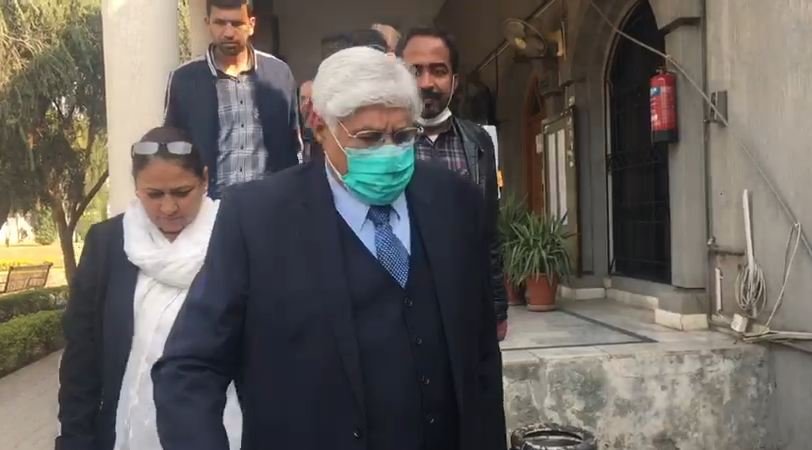
    The Islamabad High Court (IHC) on Tuesday set January 7, 2022, as the date for framing charges against former Gilgit-Baltistan Chief Judge Rana Shamim and others in a case related to an affidavit that accuses former Chief Justice of Pakistan (CJP) Mian Saqib Nisar of colluding to deny bails to Pakistan Muslim League-Nawaz (PML-N) leadership prior to the 2018 elections.

    During the hearing today, CJ IHC Athar Minallah observed that Shamim’s written response submitted to the court had “laid the entire blame” on journalist Ansar Abbasi [the journalist who published the story accusing CJP Nisar], recalling that the former jurist had also maintained that he had not shared the affidavit with anyone.

    He added that in similar circumstances, courts in the United Kingdom asked journalists to disclose their sources but the IHC would not do so.

    “The judge [mentioned in] the affidavit was on leave at the time. Attempts were also made to cast doubt on the two judges on the bench,” Justice Minallah said.

    Justice Minallah said the matter had “nothing to do” with the former CJP. “Go and do what you want to do with Mian Saqib Nisar,” he remarked.

    He recalled that proceedings had started because of an attempt to cast suspicion on judges of the high court. “[This] perception is being created which everyone has started believing as true,” Justice Minallah said.

    “Where was that perception when bail was granted two weeks later by this same court?” he questioned.

    Attorney General of Pakistan (AGP) Khalid Jawed Khan said that the concerned document was very important in contempt of court case. Shamim’s counsel, Lateef Afridi, responded that Shamim had said the affidavit was a “private document” and was written at his wife’s request.

    “By now, even Rana Shamim must have come to know how sensitive this issue is,” Justice Minallah remarked.

    “Contempt of court cases were initiated against Firdous Ashiq Awan in [the IHC] and Imran Khan in the Supreme Court. What happened in those cases? Such cases are initiated and the court has to show mercy,” Afridi responded.

    Afridi said Shamim “did not know about the affidavit’s consequences when he wrote it”. The judge reiterated his question about who the beneficiaries were to which Afridi again responded that he did know and requested the court to not waste time on the issue since there were other cases pending.

    The chief justice remarked, “What if Kulbhushan Jadhav (Indian spy) submitted an affidavit saying his case should not be heard by this court since it is compromised? This is a serious matter. Understand the consequences of this affidavit.”

    Meanwhile, journalist Ansar Abbasi said that he had talked to Shamim a day before the report was published. “Rana Shamim also [messaged] me that what I read out was correct,” the journalist said.

    Subsequently, the attorney general requested the court to indict Shamim and others. Terming Shamim responsible since he was the one who wrote the affidavit, the AG said the ex-judge had committed contempt of court.

    “Since the past three days, there are [reports] that the affidavit was written in someone’s office. It is surprising that no denial has come forth,” the AG said.

    Shamim’s counsel responded that the matter had been denied in a TV interview. However, the AGP argued that no denials were made by those related to the matter.

    “Rana Shamim should accept that he was used and apologise. If he does, then I too will [ask the court] to not take action. If he doesn’t apologise, then set a date quickly for indictment,” the AG requested the court.

    Subsequently, the court set January 7, 2022, as the date for framing charges.
  • Jadhav refuses Pakistan’s offer to challenge conviction in IHC

    Jadhav refuses Pakistan’s offer to challenge conviction in IHC

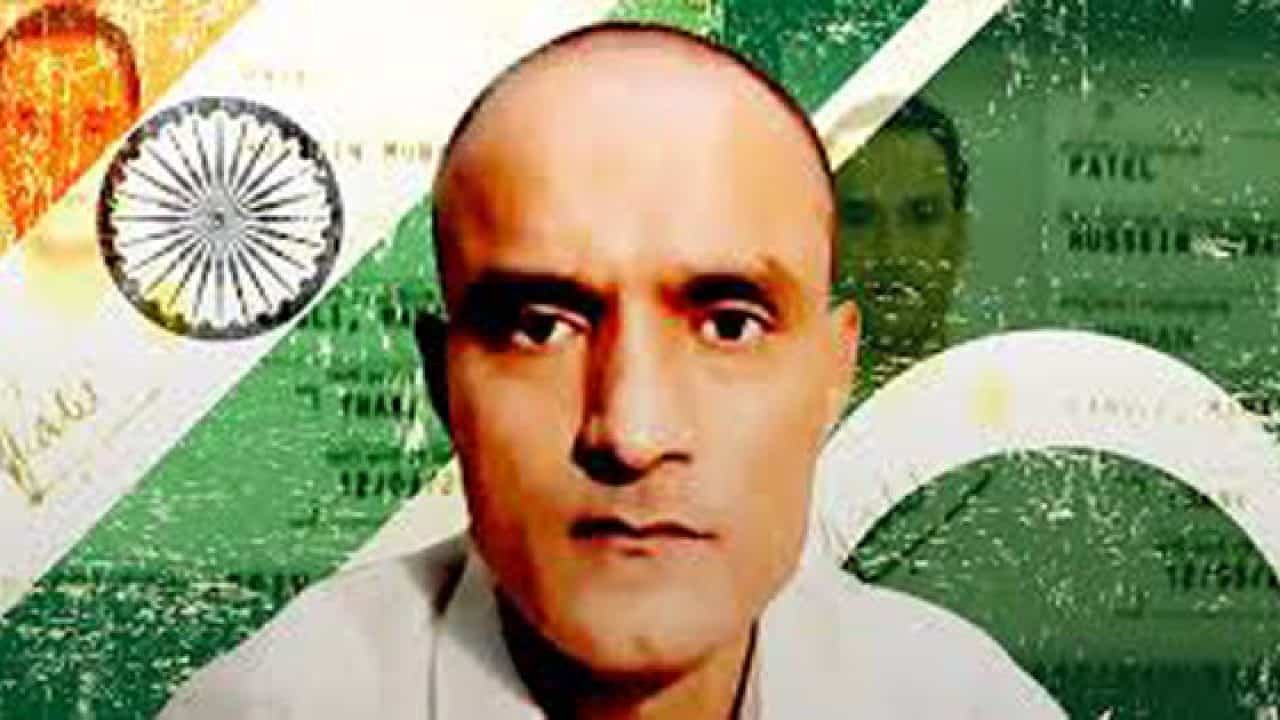
    While refusing Pakistan’s offer to file an appeal in the Islamabad High Court (IHC) against his conviction, Indian spy Kulbhushan Jadhav has decided to apply for a mercy petition, the Foreign Office (FO) has said.

    Jadhav alias Hussein Mubarak Patel — a serving commander of the Indian Navy associated with Indian spy agency Research and Analysis Wing (RAW) — was arrested on March 3, 2016, from Balochistan while attempting to crossover into Pakistan through the country’s border with Iran. Subsequently, in April 2017, a Field General Court Martial (FGCM) handed him death sentence on charges of espionage and terrorism.

    In a press conference in Islamabad on Wednesday, Additional Attorney General (AAG) Ahmed Irfan and Director General (DG) (South Asia & SAARC) Zahid Hafeez Chaudhry said that an ordinance was promulgated by the government on May 20, which allowed the Indian government, Jadhav and his legal representative to file a review petition in IHC within 60 days, which expire on July 19.

    According to Dawn, they said Indian authorities had requested to appoint an Indian lawyer to advocate for Jadhav but if an appeal is filed in the IHC, only a lawyer that holds a license of the respective court would be able to represent the spy. Therefore, an Indian lawyer cannot advocate for the convicted spy but they may be allowed to assist Jadhav’s counsel.

    The Pakistani government had allowed consular access to Jadhav twice in the past and has offered to do so again, the officials said. Authorities have also offered to arrange Jadhav’s meeting with his father and wife, they added. The AAG and DG (South Asia & SAARC) expressed hope that the Indian government will respond positively to this offer.

    Both officials recalled that Pakistan had earlier allowed Jadhav’s mother and wife to meet him and said that the government had complied with the verdict of the International Court of Justice (ICJ) passed last year.

    They said Pakistan had provided evidence of Indian state terrorism to the international community multiple times and will continue to do so.

  • Right to appeal: Army Act to be amended for relief to Indian spy

    Right to appeal: Army Act to be amended for relief to Indian spy

    The Pakistan Tehreek-e-Isnaf (PTI) government has decided to amend the Army Act so as to allow Indian spy Kulbhushan Jadhav to appeal against his conviction on charges of espionage before a civilian court, Dunya News reported.

    Jadhav of India’s Research and Analysis Wing (RAW) was arrested from Balochistan three years ago. In 2017, he was convicted by a military court in Pakistan and sentenced to death on charges of espionage and terrorism.

    The punishment was awarded by the Field General Court Martial (FGCM), a military court consisting of Pakistan Army officers.

    While Jadhav had confessed to working for the covert agency to destabilise Pakistan, India had rejected the charges and maintained that he was a former Indian Navy officer “kidnapped by Pakistani forces”.

    The Indian spy’s death sentence had later been challenged in the International Court of Justice (ICJ).

    After a long battle, the court, in its verdict, had rejected a number of Indian demands, including the annulment of the military court’s decision, Jadhav’s release and safe passage to India.

    It had, however, directed Pakistan to provide appropriate remedies to the spy, such as providing him effective review and reconsideration of his conviction and sentences according to its own justice system.

    The Army Act forbids any individuals or groups being tried in a military court from filing an appeal and seeking justice from a civilian court, but a special amendment is now reportedly being made for Jadhav.

  • Pakistan to swap Jadhav for ex-army officer ‘in Indian custody’?

    Pakistan to swap Jadhav for ex-army officer ‘in Indian custody’?

    While Indian spy Kulbhushan Sudhir Jadhav remains in Pakistan’s custody over terror charges, media reports have claimed that a former Pakistan army officer is in Indian custody, raising speculation about a possible prisoner swap.

    “The government is making all-out efforts to locate Lt Col (r) Habib Zahir,” Foreign Office spokesperson Dr Mohammad Faisal said while taking exception to Indian media reports and denying the claims.

    “Pakistan maintains that the involvement of hostile agencies cannot be ruled out,” he was quoted as saying by Dawn.

    Sharing the details of the episode, Dr Faisal said that Zahir was a retired Pakistani officer who went missing in Nepal, where he had gone for a job interview in April 2017.

    The spokesperson added that according to his family, he had posted his CV on LinkedIn and the United Nations (UN) website for a job. “In response, he received a call and email from one Mark stating that he had been shortlisted for the job of vice president.”

    He was asked to visit Nepal and he was sent an Oman Airlines ticket for an interview on April 6, 2017.

    After landing in Nepal, which he visited for the first time in his life, he left Kathmandu airport (from where he had WhatsApped his pictures and boarding pass to his family), for Lumbini airport by Buddha Air.

    At 1300 hours, he messaged his wife from his mobile phone intimating that he had landed safely at Lumbini (a municipality 5 kilometres from the Indian border) after which his mobile appeared switched off and his family lost all contact with him.

    Investigations revealed that Mark’s United Kingdom (UK) cell number was fake and was actually an internet/computer-generated number. The website that he was contacted from was found to be operated from India and was subsequently taken down.

    The government of Nepal constituted a special team to look into his disappearance but there was no progress in the matter so far.

    In view of his disappearance from Lumbini and the involvement of Indian nationals (who reportedly received him at Lumbini, made his hotel reservations and booked his tickets), Pakistan also repeatedly reques­ted the government of India to assist in locating him.

    However, no positive response had been received from the Indian side.

  • Kulbhushan Jadhav case: Both Pakistan and India claim victory, but who really won?

    Kulbhushan Jadhav case: Both Pakistan and India claim victory, but who really won?

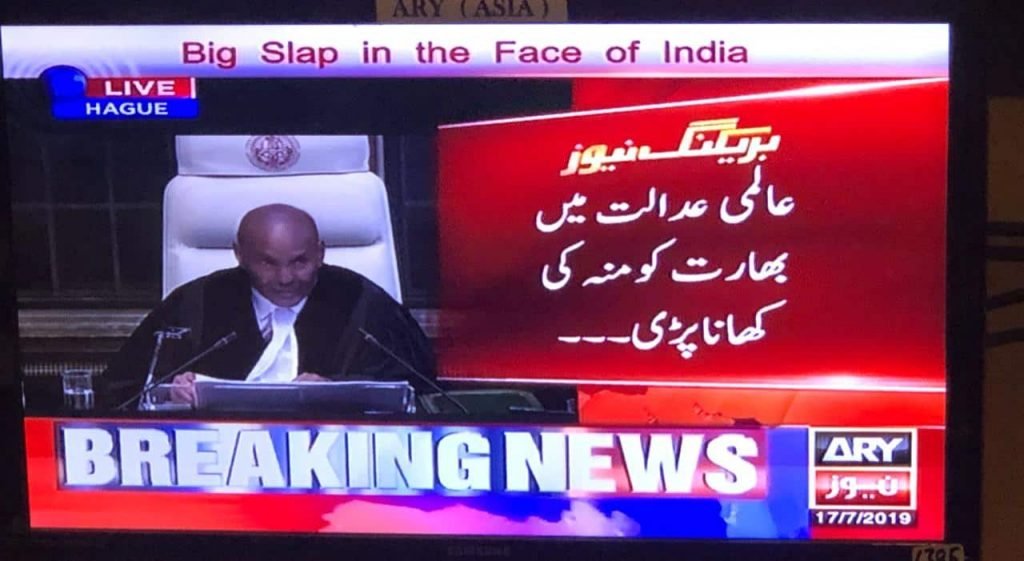
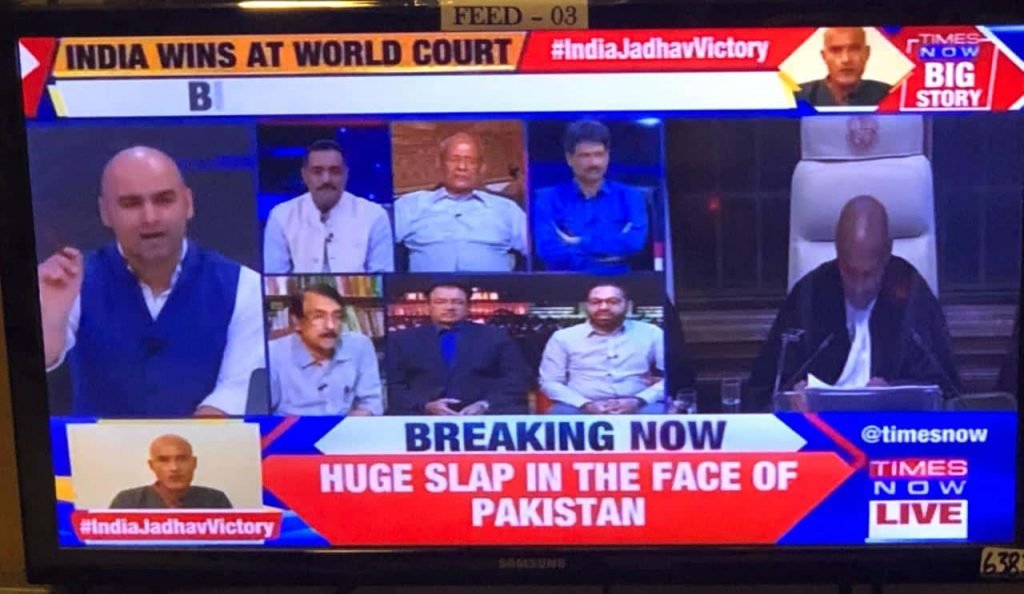
    With the International Court of Justice (ICJ) pronouncing the long-awaited verdict in the Kulbhushan Jadhav case, both Pakistan and India have claimed victory.

    The narrative in Indian media paints a different picture of the judgment than the one shown by Pakistan. But how is that even possible?

    PAKISTAN’S WIN:

    According to the ICJ, Jadhav’s conviction and sentence by a military court were not to be regarded as a violation of Article 36 of the Vienna Convention, which India had claimed.

    “As regards India’s claim based on the Vienna Convention, the court considers that it is not the conviction and sentence of Jadhav which are to be regarded as a violation of the provisions of the Vienna Convention,” read the verdict.

    Article 36 states that foreign nationals who are arrested or detained be given notice without delay of their right to have their embassy and consulate be notified of the arrest and have consular officers visit them.

    Among other Indian demands were the annulment of the military court’s decision and permitting Jadhav a safe passage to India. However, the same was denied.

    But what exactly is that India is celebrating?

    INDIA’S WIN:

    India had also demanded that Jadhav be tried once again by a civilian court after giving him consular access. No retrial was granted, however, Pakistan was ordered to grant the convicted spy consular access.

    India also demanded the relief of “review and reconsideration” for its spy, which ICJ has granted, but by means of Pakistan’s own choice.

    It means that Islamabad is now required to judicially review Jadhav’s trial and assess if denial of consular access prejudiced his trial.

    FOREIGN MEDIA:

    Meanwhile, international media reports focused on the ICJ’s directive to Pakistan to review its death sentence to Kulbhushan Jadhav.

    “World Court Orders Review of Pakistan Death Sentence for Indian Convicted of Spying”, The New York Times‘ headline said. The Washington Post story on the judgment said: “Alleged Indian spy on death row in Pakistan wins reprieve from execution”.

    British media also focussed on the part of the ICJ judgment which went in India’s favour. “UN court orders Pakistan not to execute Indian man accused of spying” The Guardian said in its report.

    KULBHUSHAN JADHAV:

    Commander Jadhav — an Indian Navy officer working for Indian covert agency Research and Analysis Wing (RAW) — was arrested on March 3, 2016, from Balochistan after he entered Pakistan from Iran.

    Jadhav was tried in a military court that sentenced him to death for espionage and subversive activities. In a reaction to the move, Pakistan’s relations with neighbouring India tensed and New Delhi approached the ICJ to hear the case.

    On May 18, 2017, the ICJ had ordered Pakistan to halt the execution of Jadhav until a final decision was made.