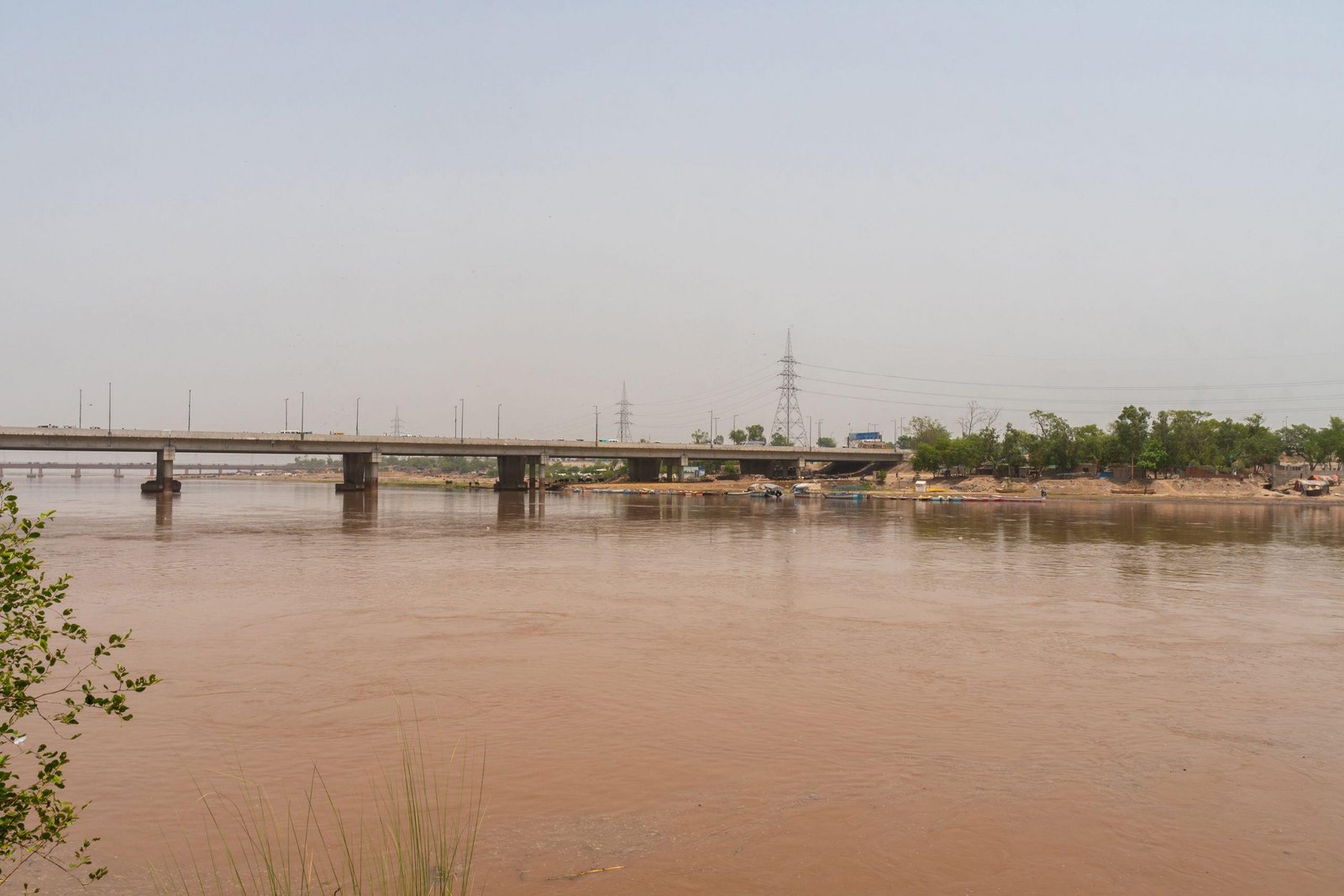
The water flowing through River Ravi has been found to be among the most polluted in the world, reports Dawn.
A study, which is part of the University of York-led Global Monitoring of Pharmaceuticals Project, measured the presence of 61 pharmaceuticals in 258 rivers around the world. More than 1,000 test sites in over 100 countries provided samples for the study. More than a quarter of the 258 rivers sampled had “active pharmaceutical ingredients” present at a level deemed unsafe for aquatic organisms.
Waterways in Lahore, Bolivia, and Ethiopia are among the most contaminated, according to the study while rivers in Iceland, Norway, and the Amazon rainforest fared best.
Pollution of the world’s rivers by medications and pharmaceutical products, according to the research, constitutes a “threat to environmental and global health”.
According to the Punjab Relief Commissioner Babar Hayat Tarar, the province has registered over 2,970 First Information Report (FIR) in less than three months (October 1 to December 18) to tackle the smog problem, reports Geo News.
A heavy fine has been imposed on industrial emissions, stubble burning, and traffic violations.
The commissioner also stated that the smog has been reduced as a result of effective government measures.
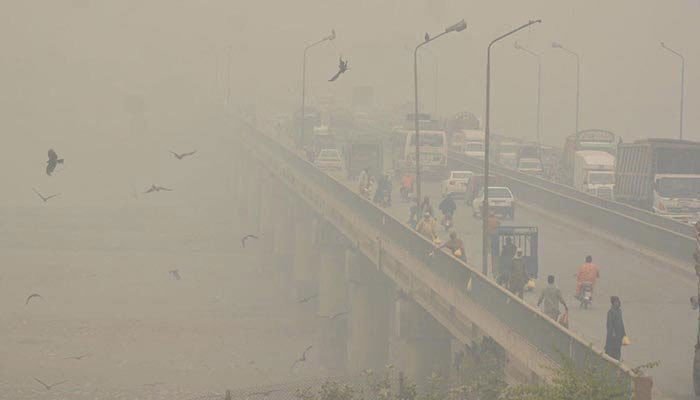
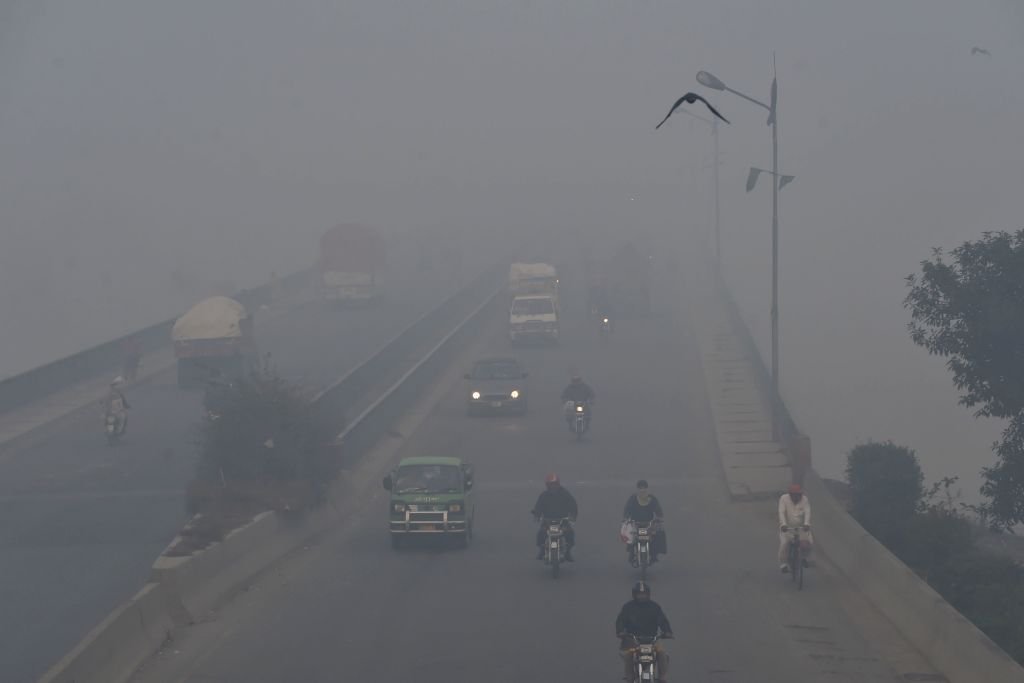
In the past few weeks, travel had been affected due to smog and poor visibility.
The Motorway-2 (M2) from Bhera, M4 from Shershah to Shamkot, and M5 from the Jalalpur interchange to Shershah and from Rohri to Guddu were also blocked due to fog and smog.
Recently, several flights from the Lahore and Sialkot airports faced delays and four flights scheduled for Lahore were diverted to Islamabad. The schedule of trains from Karachi and Quetta was also affected.
Air pollution contaminates the air in Punjab and it shoots up in winter as farmers burn rice stalks left behind after harvesting to clear their fields to plant wheat.
During these cooler months, Lahore, which is surrounded by rice-growing districts, is covered with thick smog, putting people, especially the elderly and sick, at an increased risk.
“It is a health emergency – the air quality monitors in Lahore routinely show hazardous levels in November,” said Farah Rashid, a climate and energy program coordinator for green group WWF-Pakistan.
Now the Punjab government hopes to tackle the problem by providing 500 rice farmers around Lahore with a set of machines named ‘Happy Seeder’ that together eliminate the need to burn crop stubble.
The machines include a shredder that breaks down rice stubble and mulches it into the ground and a seed drill that follows to sow wheat through the mulch.
Malik Amin Aslam, climate change adviser to Prime Minister Imran Khan, called air pollution a “silent killer” and said Lahore’s smog had increased in intensity and frequency over the last five years.
He explained that rice farmers traditionally use combine harvesters to cut their rice in October, leaving behind about four inches of stubble.
With less than two weeks before they have to ready their fields to sow wheat, burning is the fastest way to clear the land, he told the Thomson Reuters Foundation.
In Pakistan, rice is grown on an area of about 2 million hectares (5 million acres), mainly in the Punjab and Sindh provinces. Many of the fields are cleared by burning every year.
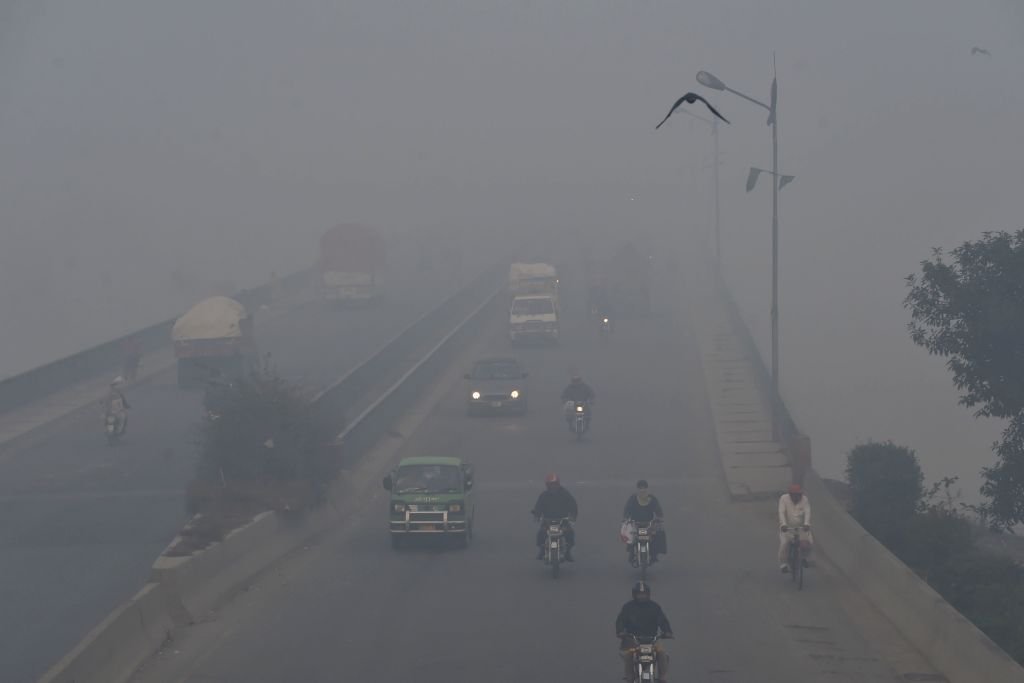
Commuters drive their vehicles amid heavy smog conditions in Lahore
In October and November, Lahore’s Air Quality Index level can jump to over 300, a number that the US Environmental Protection Agency says corresponds to a “health warning of emergency conditions.”
CUTTING EMISSIONS
Farmers say the new farm equipment can help combat smog but note that crop burning produces only a small share of the province’s pollution.
“The stubble is burned only for a few weeks in the winter. It is a fact that the problem becomes worse during this short period,” Bhandara said.
“But farmers are not the only reason for this pollution,” he added.
A 2018 report by the UN Food and Agriculture Organisation (FAO) on the underlying causes of smog in Punjab noted that agriculture — mainly rice residue burning — accounts for 20 percent of total air pollutant emissions.
That puts it behind the industry, which produces a quarter of the air pollution in the province, and transport, which contributes more than 40 percent.
Tackling air pollution — and leaving stubble on the soil as mulch, rather than burning it — also has the benefit of reducing carbon emissions that contribute to climate change.
In India, where farmers have been using the rice stubble shredder and Happy Seeder for the past few years, a group of scientists published a report last year stating the technology could cut greenhouse gas emissions by as much as 78 percent.
CHOSEN BY LOTTERY
In Mandi Bahauddin district, where famed Basmati rice is grown, Muhammad Afzal, an agriculture officer at Punjab’s Government Agriculture Seed Farm, has been experimenting with the Happy Seeder for the past two years.
“Stubble management is a serious issue for farmers,” said Afzal, who helps farmers adopt new farming techniques.
Pakistan has penalties for rice stubble burning, including fines of up to Rs20,000 per acre — but most farmers have little other choice and simply continue the practice and pay the penalty when they are charged.
But a growing number are looking for alternative solutions, Afzal said.
The total cost for the stubble shredder and Happy Seeder is about Rs637,500 rupees, and the government this year is paying about 80 percent of the price for 500 farmers, he noted.
“For those who can’t afford it, bigger farmers are willing to rent out the machines. In the future, more service providers will come up to rent them out,” Afzal said.
One drawback to the machines, he noted, is the need to mount them on the back of a tractor — and not just any tractor will do.
“It requires a large, 85-horsepower tractor,” he noted, something most rice farmers in Pakistan do not have.
Bhandara, the farmer in Pakpattan, said the subsidised machines also are only available in certain districts around Lahore, in the so-called smog “red zone.”
“The subsidised machines should be made available to rice farmers in South Punjab and Sindh as well, otherwise they are too expensive for most farmers,” he said.
Despite the limitations, the Happy Seeder has proven so popular that the government has had 10 applicants for each of its 500 machines, according to Aslam, the climate change adviser.
He said authorities are using a lottery system to decide who gets the subsidised equipment.
The government has plans to expand the Happy Seeder program next year and cover the whole of the Punjab rice belt by 2023, Aslam noted.
In the meantime, he added, it is already working on a technology upgrade.
“The agriculture extension department has developed a prototype to combine the two shredder [and] seeder machines into one ‘Pak Seeder’, which will be even more effective and efficient” — plus 30 percent cheaper, he said.
As smog levels rise across Pakistan and Lahore reaches hazardous levels, air purifiers are selling out across the country. The biggest debate: do they actually work?
According to research, air purifiers do work and have benefits. The demand for air purifiers is increasing worldwide and in 2022, there will be a 10.2 billion dollar global market for air purifiers.
Air purifiers filter out harmful particles, kill germs and removes volatile organic compounds that can harm the lungs, liver or kidneys.
In Pakistan, most air purifiers are now out of stock as Karachi and Lahore are facing the brunt of the air pollution. The Current brings you a daily smog level check at 7AM on Instagram and Facebook for your city and what’s really worrying is that Lahore has hit hazardous levels and Karachi is at very unhealthy – and about to get worse.
Wearing smog masks can help protect you against air pollution and air purifiers are also a great investment. They aren’t cheap but worth it in the long run.
Here are three air purifiers that are currently in stock on Pakistani websites and have been tried and tested by customers
1. Smart Air Cannon Air Purifier
Available here this small but powerful air purifier is effective for a room sized 323 square feet. It was effective in removing pollution particles and comes with a one year warranty. It is cheapest air purifier that is currently available, at 18,000 rupees.
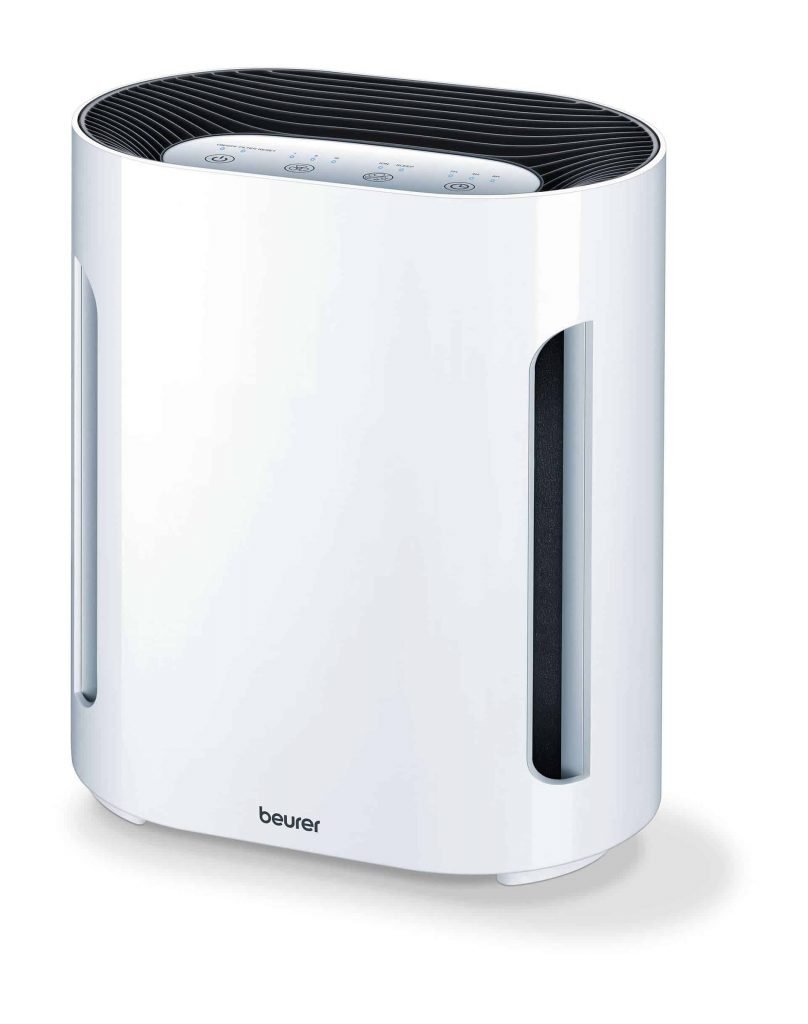
2. Beurer LR 200 Air Purifier
Available here Beurer is a tried and tested company, with a popular humidifier range. The air purifier is sleek but according to reviews, it’s difficult to clean the filter. It is for 27,500 rupees and also has a one year warranty.
3. Hextio Air Purifier
At 60,000 Rupees the Hextio is available here. It has automatic settings where it detects air pollution and increases the level of the fan. It also has a two year warranty.