Tag: Lahore

  • ‘They made it harder to breathe’: Coronavirus patient from Lahore shares horrifying experience

    ‘They made it harder to breathe’: Coronavirus patient from Lahore shares horrifying experience

    With the country struggling to contain the outbreak of the new coronavirus, horrifying experiences of both suspected and confirmed patients of the COVID-19 have started pouring in as people narrate their ordeals amid the global health crisis.

    In this regard, I reached out to a “recovered” coronavirus patient, who remained admitted to Lahore’s Mayo Hospital for three long weeks.

    Not only did I ask them what it was like to stay away from their family at such a critical time, fearing never getting to see them again, but also about their experience at a rather infamous government facility.

    “Nothing you have heard is untrue. The deplorable condition of the hospital, the initial inattention of the government and slackness of the hospital staff… all these things made headlines because they were true,” said the patient, who asked not to be named.

    They said they had travelled from Abbottabad to Islamabad in the last week of February and later to Lahore following a two-week stay in the federal capital. “I fell sick two days after arriving in Lahore, my hometown. At first, I ignored the symptoms… a mild fever, after all, is quite common when you’ve been travelling back and forth.”

    “But then I started developing other symptoms. I couldn’t stop coughing and [my] fever just didn’t go away,” the patient said, adding that they had already isolated themself as a precautionary measure after returning from Islamabad where the virus was rumoured to be spreading.

    They said they got themself tested from a government facility but the results turned out to be negative and a second test from a different facility proved that they actually had contracted the virus.

    “One suspected patient, two different facilities, two different tests, two different results in two days. Doesn’t make sense, does it?”

    It merits a mention here that the patient hasn’t been the only one to receive two different test results from two different facilities in Lahore. Last month, the wife of a political bigwig had reportedly tested positive at a private facility and later negative at a government facility. Fashion designer Maria B’s cook had also tested negative for coronavirus on March 26, a few days after testing positive at a private laboratory and being admitted to a Lahore hospital.

    According to reports, the federal government is also sceptical of Punjab’s coronavirus testing data. “So far, 13,380 people have been tested for [COVID-19] in Punjab,” Chief Minister (CM) Usman Buzdar tweeted on March 28.

    While according to statistics of the provincial government, the figure jumped to 14,890 on March 30 in Punjab, it doesn’t tally with the data maintained by the National Institute of Health (NIH) that coordinates with all provinces to update it on a daily basis. According to NIH data, only 13,321 tests had been conducted in Punjab till March 28.

    “Mayo [Hospital] was not an option for me, owing to the poor condition it is known to be in for the past several decades. But I had to go there because a doctor in the family advised me to seek treatment at Mayo,” the patient said.

    They added that they had no other option but to listen to their “doctor-friend” since the government had been keeping people in the dark. “I had no idea where else to go or what else to do.”

    The patient then started narrating their experiences from the hospital and shared what their family had to go through due to the Punjab government’s policy of “criminalising patients”.

    “Not only was I admitted after a group of men in hazmat suits picked me up from my residence, but my house was also guarded by police as other family members were home-quarantined.”

    Although Punjab government officials say that such policing is required to arrest the pandemic, many believe such dealings have led to creating panic among citizens.

    “At the hospital, nobody came to check my temperature within the first 24 hours. Hygienic conditions were pathetic at the hospital, there were bloodstains on the floor and walls, clean drinking water was not available and the bedsheets we were being forced to lie on were pitiful.”

    They said given how disgusting the washroom was, going there was like a punishment and it felt like they would get sicker if they stayed at that hospital any more.

    “While things did start getting better with the number of cases in Punjab increasing and media bringing patients’ ordeal to the notice of authorities concerned, there still was a long way to go. Those around me at the hospital and no escape from my dreadful reality made it harder to breathe with infected lungs,” they said.

    “Every passing second added to my anticipation to recover and get back home, or just lose my battle against coronavirus instead of being forced to live in that depressing environment.”

    Internet, they added, “is always a sweet relief”, but the ages-old structure of the hospital with limited access made it nearly impossible to get any signals.

    “I thought things would get better for me and nothing could be as hard as the first week, but it only got worse when people I had seen being brought in, started to get very sick. One of them, a really old patient, even passed due to the staffers’ [alleged] negligence.”

    The patient in question was a 73-year-old, who was seen tied helplessly to his bed in a video on social media. In the hospital’s isolation ward, the patient could be heard asking for medical staff to tend to him, but his hands and feet were tied to the bed.

    The patient was allegedly not given medication, oxygen or adequate attention by the staff, following which he reportedly passed away. Subsequently, Punjab CM Buzdar ordered an investigation into his death.

    “But you cannot put the blame entirely on doctors and other staff members. They too are humans who are being forced to work under extremely poor conditions. Until my second-last day at the hospital, which was last Friday, I had not seen all staffers in the coronavirus ward with proper protective equipment.”

    To a question, the patient said they were extremely grateful to the doctors performing their duties on the frontline in the war on the pandemic, “and to Allah for finally making the provincial government authorities take the matter seriously”.

    “I don’t know how I survived both the infection and my stay at Mayo Hospital. But what matters is that I did,” the patient said while also urging people to stay at home “if not for themselves, for their loved ones who might not be able to survive such an ordeal”.

    At least 2,079 people had contracted the illness by the time this report was filed on Wednesday. The number of infections in Punjab stood at 748 with Sindh trailing behind at 676 cases, 253 infections in Khyber Pakhtunkhwa (KP), 184 in Gilgit-Baltistan (GB), 158 in Balochistan, 54 in Islamabad and six in Azad Jammu & Kashmir (AJK).

    The number of fatalities stood at 27 while 82 recoveries had been reported.
  • Lahore’s Defence and Cantt report majority coronavirus cases

    Lahore’s Defence and Cantt report majority coronavirus cases

    Majority of the coronavirus cases being reported in Lahore are from the Defence and Cantt areas of the city, an official of Punjab’s Provincial Disaster Management Authority (PDMA) has revealed.

    As per reports, Director Pperations at PDMA Nisar Ahmed said, “These people from the posh areas usually have a travel history and they are continuing their kitty parties and not practicing social distancing.”

    According to the provincial government’s daily statistics of those tested positive in the city, six people are “not traceable”.

    Ahmed, however, denied the information. “I don’t think that is true,” he said, adding that the Punjab government is using cellphone data and artificial intelligence to trace people, once they enter the province.

    “We can trace the travels of each one of the 11 million people in Lahore.  Anyone who leaves the airport, we know exactly where there they went, where they stopped and for how many minutes. This state-of-the-art technology is being used in Punjab for the first time,” he explained.

  • Online grocery stores in your city

    Online grocery stores in your city

    After the spread of coronavirus outbreak, people are asked to stay at their homes and practice social distancing to avoid the spread of the virus. Amid all this, people need groceries for their homes and some people might be worried about how to go and get them from the market.

    The Current did some research and listed a few online grocery stores in your city.

    Karachi

    Agha’s Supermarket

    Facebook Page: https://www.facebook.com/AghasSupermarket/

    Freshiez

    Facebook Page: https://www.facebook.com/freshiezpk/

    Fowry

    Facebook Page: https://www.facebook.com/fowrryofficial/

    Website: https://www.fowrry.com/

    Lahore

    Road Runner

    Facebook Page: https://www.facebook.com/roadrunnerpk/

    Grocer App

    Facebook Page: https://www.facebook.com/GrocerApp.pk/

    Jalal Sons

    Islamabad

    Shaheen Grocers

    Fowry

    Facebook Page: https://www.facebook.com/fowrryofficial/

    Other cities

    Al Fatah

    If you have a branch of Al Fatah in your city then you can order your groceries from there.

  • COVID-19: Colony in Lahore under lockdown after massive increase in cases?

    Residents of Lahore’s Imamia Colony claim that the area has been sealed off by the police amid “a massive increase in the COVID-19 cases” as authorities told them to not leave their houses; however, both the government and police deny doing so.

    Reports quoted locals as saying that amid an increasing number of coronavirus cases in Punjab, especially Lahore, the government had put the residential area in the provincial capital under lockdown. They claimed that a fatality was also reported in the locality and the health department was “downplaying the situation”.

    The government, they said, had failed to screen people returning from Iran which led to the outbreak in the colony.

    “The health department is hiding the actual number of the cases,” the residents claimed, urging higher-ups to take notice of the cases.

    According to an audio clip viral on social media, a purported sub-inspector stationed at Shahdara Police Station could be heard telling someone to stay away from Imamia Colony due to a higher number of cases there. As per the clip, a patient also died of the virus and at least 80 per cent were infected in the colony.

    Shahdara Police denied this and said they didn’t seal the area, whereas the health secretary and his spokesperson remained unavailable despite many calls.

    Punjab government spokesperson Mussarat Jamsheed said it was all rumours. “All the areas are under observation and we are not hiding anything from the public,” the official said while asking people not to panic.

  • Pakistan blamed for spread of coronavirus to Muslim World

    Pakistan blamed for spread of coronavirus to Muslim World

    The first two cases of the new coronavirus in the Gaza Strip — a war-shattered Palestinian territory with a fragile health system — were confirmed in men who attended a mass religious gathering 10 days ago in Pakistan, United States’ (US) National Public Radio (NPR) has quoted an Islamabad-based Palestinian diplomat as saying.

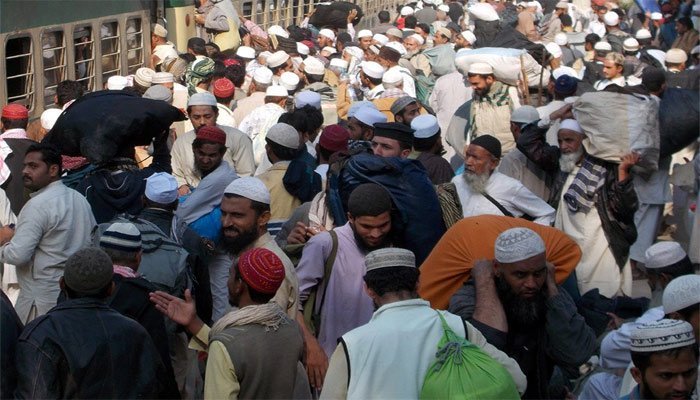
    The diplomat said the men were part of a two-day gathering that ended March 12. The gathering of the Tablighi Jamaata global Muslim missionary group, brought together tens of thousands of preachers from some 80 countries and raised concerns about the virus’ spread in Pakistan and beyond.

    The Pakistani authorities had urged for the cancellation of the five-day Tablighi Ijtema congregation hosted annually near Lahore but organisers from the movement had ignored government advice to postpone, The News reported.

    A longtime Pakistani Tablighi Jamaat member, Arif Rana, said the gathering was canceled on March 12 because of rain — attendees sleep in the open. But Azhar Mashwani, focal person to the Punjab chief minister (CM) on digital media, said that it ended because of coronavirus fears.

    Most attendees were Pakistani, but at least a few thousand came from other countries, Rana told NPR.

    Omar al-Tabatibi said his 79-year-old grandfather, Mohammed, and friend Amer Doghmosh had attended the Lahore event.

    Previous statements from health officials had misidentified the men as being between 30 and 40. “My grandfather learnt about the conference by chance from a friend while he was in Pakistan so he wanted to attend,” Tabatibi said.

    After returning from Pakistan, his grandfather stayed several days in Egypt before taking the long journey overland to Gaza, Tabatibi said. “Maybe, my grandfather caught corona in Egypt and not Pakistan, no one knows,” he added.

    Five preachers from Kyrgyzstan stayed in a mosque in Islamabad after attending the Tablighi Jamaat gathering and have also tested positive, said a senior health official who did not want to be named because he was not authorised to speak to the press.

    On Twitter, Muhammad Hamza Shafqaat, the deputy commissioner of Islamabad, accused the Kyrgyz group of “criminal carelessness” because “they knew that one of them had symptoms and they kept on roaming around”.

    Concerns have also been raised in Southeast Asia about infection after a Tablighi Jamaat gathering outside Kuala Lumpur, Malaysia, in late February and early March. Malaysian media reported that more than half of the country’s known coronavirus cases were traced to the gathering. Preachers who attended also spread the virus to Brunei and Thailand, The New York Times reported, saying the gathering created “the largest known viral vector in Southeast Asia”.

  • Cleaner hands, bluer skies: what has coronavirus done for us?

    Deaths, economic meltdown and a planet on lockdown: the coronavirus pandemic has brought us waves of bad news, but squint and you might just see a few bright spots, AFP reported.

    From better hygiene that has reduced other infectious diseases to people reaching out as they self-isolate, here are some slivers of silver linings during a bleak moment.

    WASH YOUR HANDS!

    The message from health professionals has been clear from the start of the outbreak: wash your hands.

    Everyone from celebrities to politicians has had a go at demonstrating correct technique — including singing “Happy Birthday” twice through to make sure you scrub long enough, and hand sanitiser has flown off the shelves.

    All that extra hygiene appears to be paying off, at least in some countries, including Japan, where the number of flu cases appears to be sharply down.

    Japan recorded 7.21 million cases by early March — usually around the peak of the flu season that runs until May.

    That was far below figures for previous years, including the 21.04 million infections seen during the 2017/18 season.

    “We estimate that one of the reasons behind it is that people are now much more aware of the need to wash hands… given the spread of the new coronavirus,” Japanese health ministry official Daisha Inoue told AFP.

    CARBON CURBS

    Factory shutdowns, travel bans and a squeeze on demand spell economic disaster, but it isn’t all bad news for the environment.

    In the four weeks to March 1, China’s CO2 emissions fell 200 million tonnes, or 25 percent, compared to the same period last year, according to the Centre for Research on Energy and Clean Air.

    That’s a decline equivalent to annual CO2 emissions from Argentina, Egypt or Vietnam.

    The slowdown in China also saw coal consumption at power plants there down 36 percent, and the use of oil at refineries drop by nearly as much.

    Air travel is also grinding to a virtual halt, achieving at least a short-term drop-off in emissions from a highly polluting industry.

    And there have been other environmental benefits, including crystal-clear waters in Venice canals usually choked with tourist-laden boats.

    Unfortunately, experts say the cleaner air may be short-lived.

    Once the health crisis is over, experts expect countries will double down to try to make up for lost time, with climate change concerns likely to be sidelined in a race to recover economic growth.

    SAVE THE PANGOLIANS

    The source of the coronavirus remains in question, but early tracking focused on a market in China’s Wuhan where a variety of live wildlife was on sale for consumption.

    A number of animals, including bats and the highly endangered pangolin, have been identified as possible culprits for the virus.

    As a result, China in February declared an immediate and “comprehensive” ban on the trade and consumption of wild animals that was welcomed by environmentalists.

    Beijing implemented similar measures following the SARS outbreak in the early 2000s, but the trade and consumption of wild animals, including bats and snakes, made a comeback.

    This time the ban is permanent, raising hopes that it could end the local trade in wildlife.

    “I do think the government has seen the toll it takes on national economy and society is much bigger than the benefit that wild-eating business brings,” said Jeff He, China director at the International Fund for Animal Welfare.

    Reports linking the virus to the pangolin have also scared off would-be consumers of the scaly mammals elsewhere, with bushmeat vendors in Gabon reporting a plunge in sales.

    APART, TOGETHER

    One of the most difficult aspects of the stringent lockdowns imposed to slow the spread of the virus has been loneliness, with families and friends forced to endure weeks or even months apart.

    But some people have found the measures are creating a sense of community spirit and prompting them to make more of an effort to check in with family and reconnect with friends.

    In Colombia, where a nearly three-week period of self-isolation is now in place, 43-year-old Andrea Uribe has organised everything from group exercise classes to family talent shows using video messaging programs including Zoom.

    “I have called my parents more often, I have talked to friends that I usually don’t talk to… I have organised Zoom meetings with friends in multiple countries,” Uribe, who works in development, told AFP.

    “It is wonderful to be forced to be there for one another. It has made me more creative. It just shows that we need to be present in people’s lives.”

  • Coronavirus: Four Chinese nationals test positive at Lahore’s Services Hospital

    Coronavirus: Four Chinese nationals test positive at Lahore’s Services Hospital

    Four individuals have tested positive out of the 19 Chinese nationals who were tested for the coronavirus at Lahore’s Services Hospital late on Sunday.

    According to Dunya News, the Chinese nationals were working on various projects of the China-Pakistan Economic Corridor (CPEC). The patients were shifted to an isolation ward of the hospital.

    According to hospital administration, the Chinese nationals will be kept in the isolation ward for a period of 14 days to stop the spread of the virus.

    Meanwhile, the number of confirmed cases of COVID-19 in the country rose to 892 after Punjab and Sindh reported new cases in the province on Tuesday.

    According to Punjab Chief Minister (CM) Usman Buzdar, there are 176 confirmed cases of the virus in Dera Ghazi Khan, 51 in Lahore, five in Gujrat, six in Gujranwala, three in Jhelum, two each in Rawalpindi and Multan and one case each in Faisalabad, Mandi Bahauddin, Rahim Yar Khan and Sargodha.

    Sindh remains the worst affected province by the coronavirus in the country so far, with a total of 399 coronavirus cases. In Karachi alone, the numbers of cases of the virus are 130, with the majority said to be cases of “local transmission”.

    According to Khyber Pakhtunkhwa (KP) Health Department, the number of cases in the province stands at 38 after four new patients were reported earlier this week, while the number of reported cases in Gilgit-Baltistan (GM) is 80.

    Balochistan has reported 108 cases, while one case has been reported from Azad Jammu and Kashmir (AJK). In Islamabad, 15 patients have been confirmed to have contracted the virus, Geo reported.

    The country has also reported six deaths from the virus.

  • Coronavirus: Is Buzdar administration failing Punjab?

    Coronavirus: Is Buzdar administration failing Punjab?

    As the global pandemic of the new coronavirus — COVID-19 — continues to spread in Pakistan with nearly 250 infections, the Chief Minister (CM) Usman Buzdar-led Punjab government appears to be lagging behind other provincial administrations such as that of Sindh where a spike in coronavirus cases has led to strict measures being put in place to contain the disease.

    SOCIAL INTERACTION:

    As per the details, Punjab has woken up late to the grave challenge of coronavirus, a proof of which is it appearing scrambled to find ways to deal with the crisis while struggling to enforce its own imposition of Section 144 to discourage public gathering as chaos and panic mar daily routine.

    While 10,000 people reside at the Tableegi Markaz in Raiwind, another mosque, Masjid Ibrahim, is ramping up preparations to hold a big gathering to mark ‘Shabe Jumma‘. These centres are sending off at least a dozen parties to 150-200 mosques in the city for preaching purposes, whereas almost 1,000 parties [jamaats] are going across Pakistan for the same.

    The activities are nothing but a recipe for disaster as they can lead to a countrywide spread of the virus. But Raiwind Assistant Commissioner (AC) Adnan Rasheed says the ijtima [gathering] won’t lead to an increase in the coronavirus cases as the authorities have washed and chlorinated the area where the gathering is being held.

    Deputy Commissioner (DC) Afzal Danish, on the other hand, says the Raiwind gathering is in violation of the law and such transgression would be dealt with. “All gatherings have been banned. There is no decision on Friday prayers as of yet because we need the sanction of religious authorities,” he said, adding any other activity inside or outside any mosque would be a violation.

    But that’s not it.

    While according to the DC, shelter homes — another place with maximum social interaction — have been told to serve food to groups of two or three at a time in addition to bedding made at a distance of three feet, The Current has learnt that none of the shelter homes in Lahore are observing the measures as almost 4,484 people are living together and hundreds gather there to eat on a daily basis.

    EDUCATIONAL INSTITUTIONS:

    Meanwhile, schools and universities are also flouting the government’s ban. The Lahore University of Management Sciences (LUMS) and various private schools remain open for faculty in complete disregard of the measures taken by the government.

    To prevent children and students from getting infected by the coronavirus pandemic, the government of Punjab had last week ordered all educational institutes, including private ones, throughout the province to remain closed till April 5 at least.

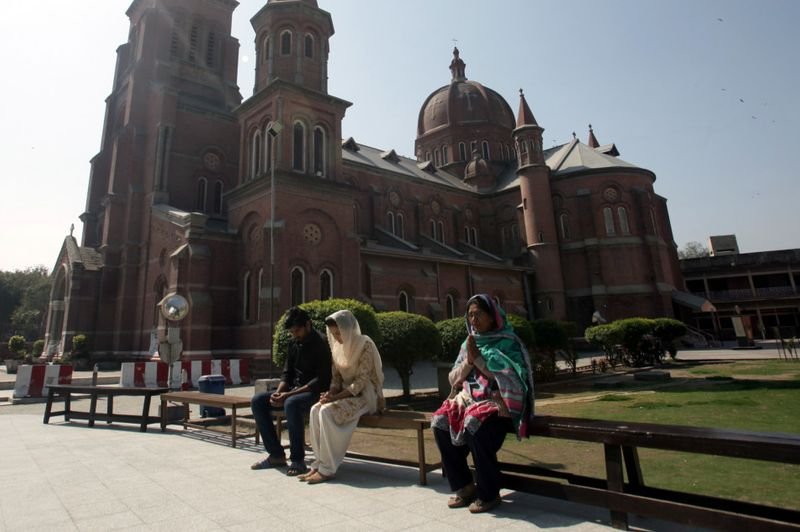
    LAHORE: People pray outside the Sacred Heart Cathedral as it was closed after Pakistan shut all its schools and discouraged large gatherings amid coronavirus fears. (Reuters)

    The instructions had come keeping in view the situation of the pandemic as the government had also imposed an emergency in the province. Punjab Health Minister Dr Yasmin Rashid had said that the Punjab CM reviewed the situation emerging out of an increasing number of positive coronavirus cases in the region and the status of preparedness at health facilities in the province.

    ECONOMICS:

    According to reports, the Punjab government is also grappling with the shortage of hand sanitisers while face masks are being sold at exorbitant rates. “Most of the stores do not have face masks and hand sanitisers, and if they have, they are selling these items at a 300 per cent surge rate,” read a report submitted to CM Buzdar.

    With the courts being petitioned to take notice in this regard, Lahore High Court (LHC) Chief Justice (CJ) Mamoon Rashid Sheikh has summoned the federal and provincial authorities concerned to explain their position. In an earlier hearing, Punjab healthcare officials had told the court that the government imposed a ban on hoarding and profiteering of surgical masks in wake of their demands following the coronavirus pandemic.

    It said FIRs [Firs Information Reports] were being registered against the hoarders and profiteers under Price Control and Prevention of Profiteering and Hoarding Act of 1977 among other laws. However, shopkeepers, amid the unavailability of these commodities, are blaming wholesalers.

    DOCTORS AT RISK:

    Separately, young doctors have also gone on a strike over the shortage of safety kits.

    Young Doctors’ Association (YDA) has demanded safety kits for the entire staff of hospitals dealing with the suspected corona patients, including doctors, nurses and paramedics, while terming the arrangements made by the government as insufficient.

    The YDA office bearers said that the safety kits provided to the doctors in hospitals are not according to the standards of the World Health Organization (WHO) and that they were working under highly vulnerable circumstances. “The N95 masks are not available in the hospitals despite the fact that the staff treating corona patients used the same mask in all the hospitals across the globe,” the doctors said.

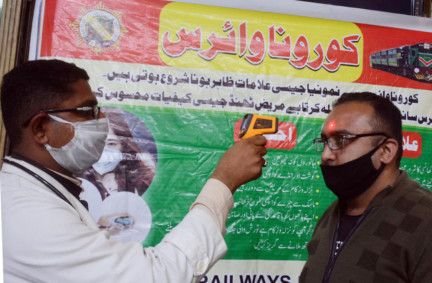
    LAHORE: A view of scanning and checking of body temperature of passengers arriving from different cities in the provincial capital of Punjab. (Online)

    While following a meeting with Punjab Governor Chaudhry Muhammad Sarwar, YDA has announced calling off its strike in public sector hospitals, they have warned taking to streets once again if their demands are not met at the earliest. Sarwar has reportedly taken notice and ordered the vice chancellor of the University of Health Sciences to provide safety kits to the doctors within 24 hours.

    WHAT THE GOVT IS DOING:

    It has been reported that the government is going to purchase 200 ventilators and expand isolation wards in Mayo and Services hospitals. The Pakistan Kidney and Liver Institute and Research Center (PKLI&RC), on the other hand, has been dedicated to coronavirus treatment while a separate 70-bed block is being established.

    Punjab government would also purchase 300 screening kits. Further, the government will provide coronavirus kits at subsidised rates to private hospitals and laboratories.

    A hostel of the University of Engineering Technology (UET) has been converted into a 400-bed hospital for coronavirus patients, while the campuses of UET and GCU in Kala Shah Kaku are where suspected patients will be kept.

    A government spokesperson told The Current that while CM Buzdar is engaging senior journalists and religious leaders to help the government in spreading coronavirus awareness, the government itself is also doing its best to deal with the crisis.

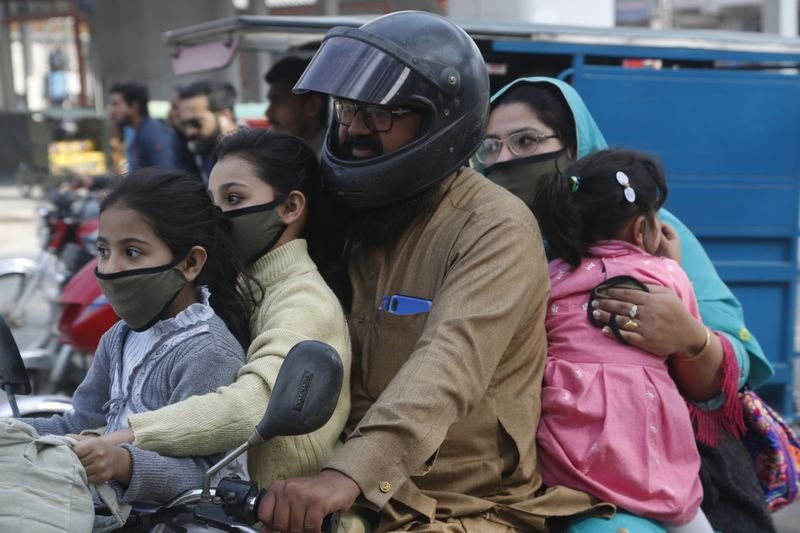
    LAHORE: A family wears face masks to help prevent exposure to the new coronavirus as they travel on a motorbike. (AP)

    The spokesperson shared that the government had 40 high dependency units (isolation wards) in major government hospitals across Punjab, one government testing facility in Lahore and Rawalpindi each and a private testing facility of Shaukat Khanum helping them for free. They also shared details of the quarantine facilities the government has ready for patients and said that protective suits were provided to all healthcare professionals working in isolation wards.

    “The CM himself is at the forefront, and in this regard, will today (Wednesday) chair an apex committee meeting, visit the quarantine facilities established in Multan and Dera Ghazi Khan besides holding a media briefing to clarify the situation for people,” the spokesperson added.

    To a question, they said the government was deliberating certain other steps too, but couldn’t do much without the masses’ help.

  • CM Buzdar rubbishes reports of first COVID-19 death, says deceased tested negative

    Punjab Chief Minister (CM) Sardar Usman Buzdar has rubbished reports claiming that the individual who passed away at Lahore’s Mayo Hospital was suffering from the new coronavirus — COVID-19 — and marked the first fatality in Pakistan due to the global pandemic.

    Earlier, it was reported that Pakistan’s first death due to coronavirus had been reported in Lahore. Reports that had come following a viral video that showed the deceased being brought out of the hospital in a coffin by staff in hazmat suits, had not drawn any official statements except Punjab Health Minister Dr Yasmin Rashid saying that results of the patient’s coronavirus test were still awaited.

    A private media outlet had, however, quoted health officials as saying that the patient “did die due to coronavirus”.

    “We have received test reports of Imran Ali, who lost his life in Mayo Hospital, and his cause of death was not #COVID19. So far Punjab has 8 confirmed cases and are being provided best available treatment [sic],” Buzdar tweeted later in the day.

    He further urged everyone “to act responsibly” in these testing times.

  • Punjab Governor House to open doors for weddings, commercial events

    Punjab Governor House to open doors for weddings, commercial events

    After allowing the general public to visit his official residence on recreational tours earlier, Punjab Governor Chaudhry Muhammad Sarwar has announced that the Governor House in Lahore will soon open its doors for weddings and commercial events.

    Addressing a news conference at the Governor’s House on Wednesday, Sarwar announced that the lawn of the building was available for corporate events at Rs1 million per function while any kind of function could be hosted for Rs500,000 in Darbar Hall. Wedding shoots can be arranged for Rs50,000 and commercial photo-shoots against Rs1 million, while guided tours of the Governor’s House will be organised for groups of 10 persons on Saturdays and Sundays.

    “We believe the business plan will help the Governor’s House to reduce its burden on the public kitty. The Pakistan Tehreek-e-Insaf (PTI) government has made this business plan as its promise and all earnings of these functions will be directly deposited in the government of Pakistan’s account,” The Express Tribune quoted Sarwar as saying.

    “The estate will be rented out for commercial events only and no political party will be allowed to host its function at the Governor’s House,” he said and indicated that all events would be booked on the official website of the Governor’s House.

    “When someone will send his request to book an event at the website, the Governor’s House staff will contact the person to finalise arrangements. All the payments will be made through bank account and no Governor’s House employee will be authorised to receive payments in cash from the person or company holding the event,” he elaborated while highlighting the procedure for booking.

    The Governor’s House website shows that name, CNIC, passport number, nationality, mobile phone number and address is required for booking of events. Events can be booked for two slots from 10 am to 2 pm and 2 pm to 6 pm for seven days a week. Event booking will be granted subject to approval. Prior approval is required for payment and confirmation will be made accordingly while two functions can be booked for the same date and time.

    As per booking terms mentioned on the website, the applicant has to provide a complete list of participants, staff and workers. Administration of Governor’s House will not be responsible for arrangements or installation of any temporary facility.

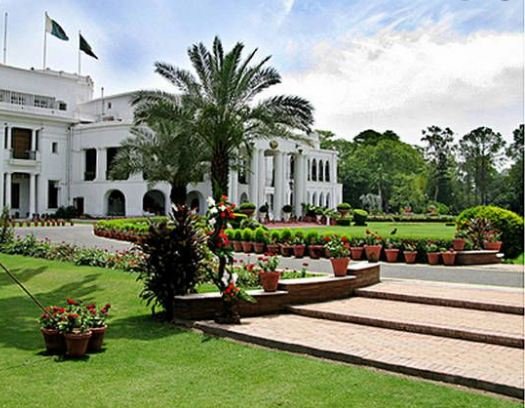
    A glimpse of Governor House: