Tag: law

  • Haiti declares state of emergency after thousands of prisoners escape

    Haiti declares state of emergency after thousands of prisoners escape

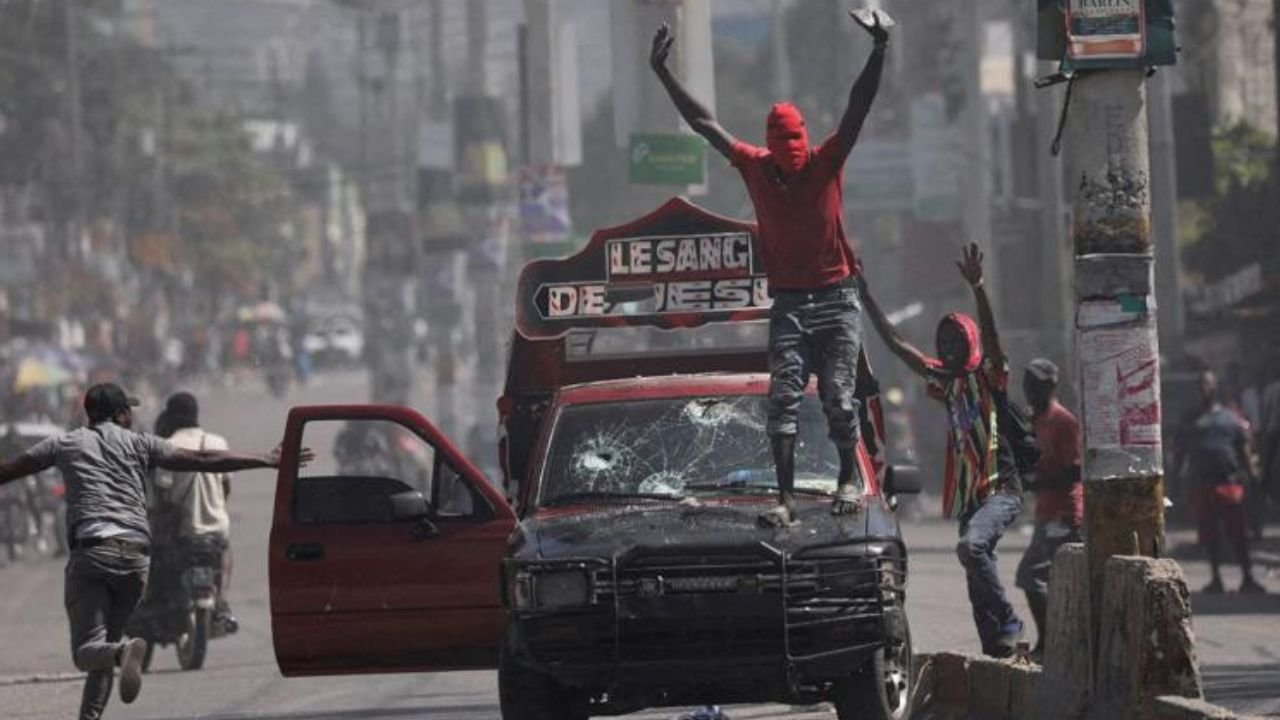
    Haiti’s government declared on Sunday a state of emergency and nighttime curfew in a bid to regain control of the country after a deadly gang assault on the capital’s main prison that allowed thousands of inmates to escape.

    The curfew will be enforced from 6 pm to 5 am in the Ouest region, which includes the capital, through Wednesday, the government said in a statement, adding that both the curfew and the state of emergency can be extended.

    About a dozen people died as gang members attacked the National Penitentiary in Port-au-Prince overnight Saturday into Sunday, an AFP reporter observed.

    The attack came as part of a new spate of extreme violence in the Haitian capital, where well-armed gangs who control much of the city have wreaked havoc since Thursday.

    The gangs say they want to oust Prime Minister Ariel Henry, who has led the crisis-wracked Caribbean nation since the assassination of president Jovenel Moise in 2021.

    Only around 100 of the National Penitentiary’s estimated 3,800 inmates were still inside the facility Sunday after the gang assault, Pierre Esperance of the National Network for Defense of Human Rights said.

    “We counted many prisoners’ bodies,” he added.

    An AFP reporter who visited the prison on Sunday observed around a dozen bodies outside it and hardly anyone inside. Some bodies had wounds from bullets or other projectiles.

    In its statement late Sunday, the Haitian government said security forces had “received orders to use all legal means at their disposal to enforce the curfew and detain those who violate it.”

    It said the objective was to allow the government to “re-establish order and take the appropriate measures to take back control of the situation.”

    Economy Minister Patrick Michel Boisvert signed the statement as the country’s acting prime minister.

    Prime Minister Henry was in Kenya last week to sign an agreement to deploy police from the East African country to lead a UN-backed law and order mission to the gang-plagued nation.

    Haiti’s government is notoriously weak — kidnapping and other violent crime is rampant and gangs are described as much better armed than the police themselves.

    Gang members also attacked a second prison called Croix des Bouquets, police said earlier.

    Known gang leaders and people charged in the assassination of Moise were among those incarcerated in the main prison, located a few hundred meters from the National Palace, the Haitian daily Le Nouvelliste said.

    The prison had been “spied on by the assailants since Thursday via drones,” before it was attacked early Saturday evening, according to Le Nouvelliste.

    Esperance said it was not immediately clear how many inmates escaped from the second prison, which he said held 1,450 inmates.

    – Kenya-led security mission –

    Powerful gang leader Jimmy Cherisier, known by the nickname Barbecue, said in a video posted on social media that armed groups in Haiti were acting in concert “to get Prime Minister Ariel Henry to step down.”

    It was not immediately clear on Sunday if the prime minister had returned to Haiti after his Kenya trip.

    The UN Security Council in October approved an international police support mission to Haiti that Nairobi had agreed to lead, but a Kenyan court ruling has thrown its future into doubt.

    On Friday, Henry signed an accord in Nairobi with Kenyan President William Ruto on deploying the force.

    Ruto said he and Henry had “discussed the next steps to enable the fast-tracking of the deployment,” but it was not immediately clear whether the agreement would counter a court ruling in January that branded the deployment “illegal.”

    Haiti, the Western hemisphere’s poorest nation, has been in turmoil for years, and the 2021 presidential assassination plunged the country further into chaos.

    No elections have taken place since 2016 and the presidency remains vacant.

    Protesters have demanded Henry’s resignation in line with a political deal that required Haiti to hold polls and for him to cede power to newly elected officials by February 7 of this year.
  • More than 4,000 cases of child abuse recorded in Pakistan in 2023: Report

    More than 4,000 cases of child abuse recorded in Pakistan in 2023: Report

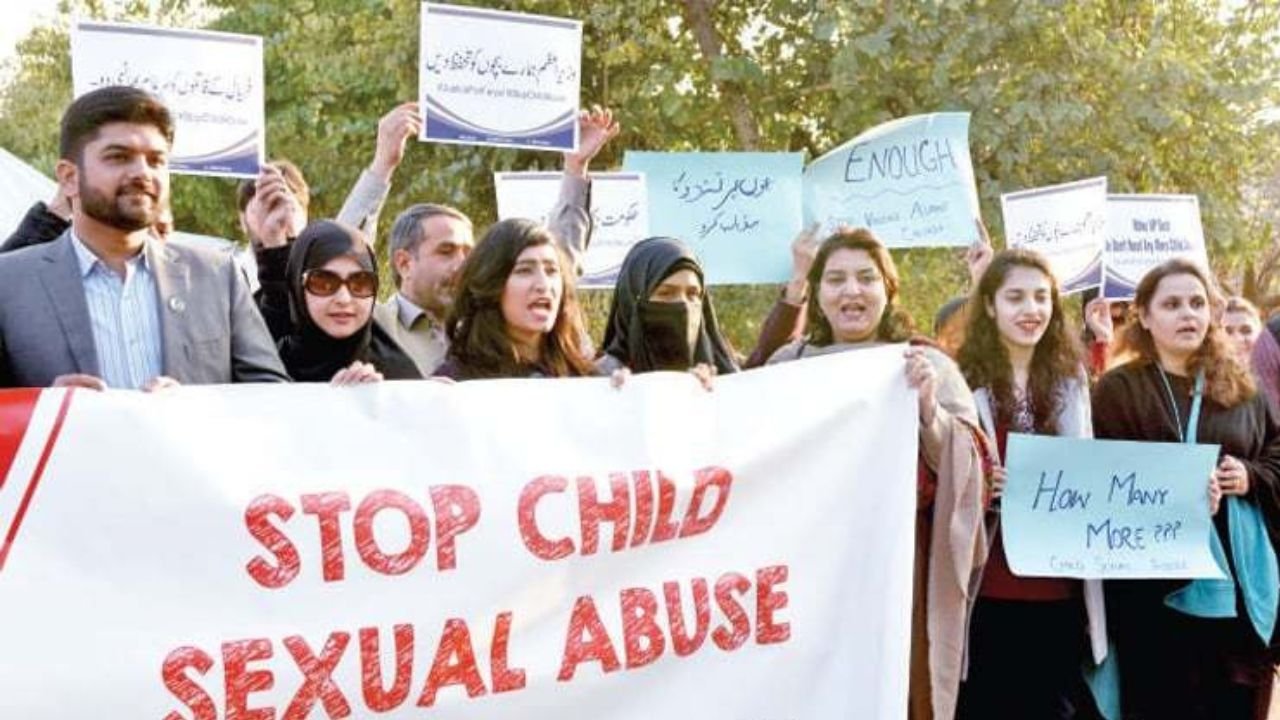
    The latest National Commission for Human Rights (NCHR) report reveals another concerning figure of child abuse recorded in 2023.

    According to the report, Cruel Numbers 2023, a total of 4,213 children were reportedly affected by abuse of various kinds in Pakistan.

    This indicates that 11 children were abused everyday.

    The report is compiled by Sahil and as per the reported cases, 53 percent of the victims were girls while 47 percent were boys.

    The youngest age group of children sexually abused was between 0-5 years old.

    Highest number of cases recorded were in Punjab with 75 percent reported incidents.

    Sahil Executive Director Manizeh Bano points out that Article 25-A of the Constitution assures free education for children aged between five to 16 years, further asserting on the “importance of providing life-skills based education to empower children and protect them from exploitation”.

  • Two People To Be Publicly Executed In Eastern Afghanistan

    Two People To Be Publicly Executed In Eastern Afghanistan

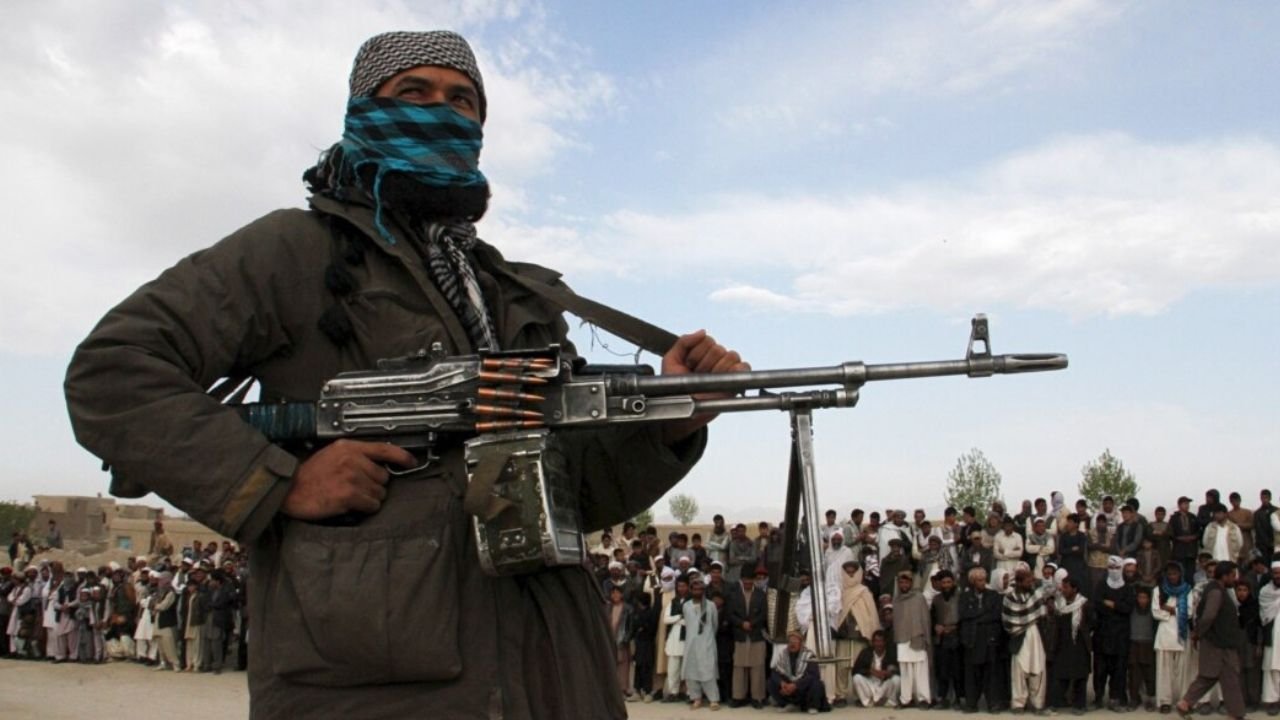
    Two people were due to be publicly executed in a football stadium in eastern Afghanistan on Thursday, provincial officials said, in the third and fourth death penalties carried out since the Taliban returned to power.

    The Ghazni province information and culture department said in a public notice that the execution was a qisas punishment — equating to “an eye-for-an-eye” — but did not initially provide details on the prisoners or their crimes.

    Although public executions were common during the Taliban’s first rule from 1996 to 2001, they have only carried out two others since surging back to power in August 2021. Both were for the crime of murder.

    There have been regular public floggings for other crimes, however, including theft, adultery and alcohol consumption.

    Taliban Supreme Leader Hibatullah Akhundzada last year ordered judges to fully implement all aspects of sharia — including qisas punishment.

    The last execution was carried out in June 2023, when a convicted murderer was shot dead in the grounds of a mosque in Laghman province in front of some 2,000 people.

  • Domestic violence victim Rizwana admitted to hospital again

    Domestic violence victim Rizwana admitted to hospital again

    The child victim of abuse at the hands of her employers, Rizwana has been admitted to Lahore General Hospital again.

    According to the General Hospital administration, Rizwana, a minor and a victim of domestic violence, was discharged after recovering a few months ago.

    Three weeks ago, however, Rizwana was again brought to the hospital due to pain in her arm. The doctors admitted her after examination.

    According to hospital administration, a surgery will be performed on the girls’ arm.

    Last year, in July, it was revealed that Rizwana, a young girl working at the house of a civil judge in Islamabad, was subjected to assault by her employers. The torture continued and when her condition worsened, the civil judge’s wife handed her over to her mother.

    Rizwana had torture marks all over her body. A wound on her head had rotted due to lack of treatment, becoming infected by worms.

  • Top UN court rejects South Africa request for more Gaza measures

    Top UN court rejects South Africa request for more Gaza measures

    THE HAGUE: The UN’s top court Friday rejected South Africa’s request to put more legal pressure on Israel to halt a threatened offensive against the Gaza city of Rafah, saying it was “bound to comply with existing measures.”

    Pretoria has already filed a complaint against Israel in the International Court of Justice (ICJ) in The Hague, alleging that its assault on Gaza amounts to a breach of the Genocide Convention.

    The court has yet to rule on the underlying issue, but on January 26 it ordered Israel to ensure it took action to protect Palestinian civilians from further harm and to allow in humanitarian aid.

    South African officials on Tuesday filed a further request to the court, asking it to order new measures in the light of Israel’s preparation of a new operation against Rafah.

    More than half of Gaza’s 2.4 million population have sought shelter there from Israel’s offensive on the Gaza Strip.

    The ICJ’s judges acknowledged that the recent developments “’would exponentially increase what is already a humanitarian nightmare with untold regional consequences’” — citing remarks by UN Secretary-General Antonio Guterres.

    But although Israel needed to act immediately to ensure the safety and security of Palestinians, that did not require “the indication of additional provisional measures,” they added.

    Israel remained “bound to fully comply with its obligations under the Genocide Convention and with the said Order,” the ICJ ruling said.

    Hamas’s October 7 attack resulted in the deaths of about 1,160 people in Israel, mostly civilians, according to an AFP tally based on official Israeli figures.

    Militants also took about 250 people hostage, around 130 of whom are still in Gaza, including 30 who are presumed dead, according to Israeli figures.

    Israel’s assault on Gaza has since killed at least 28,775 people, mostly women and children, according to the territory’s health ministry.

    Israel’s foreign minister on Friday said the country would coordinate with Egypt before launching any military offensive in the southern border city of Rafah.

    “We will operate in Rafah after we coordinate with Egypt,” Israel Katz told journalists on the sidelines of the Munich Security Conference, where 180 dignitaries have gathered to discuss conflicts around the globe.

    Fears had been growing for the hundreds of thousands of people who have fled the north of Gaza to Rafah as Israeli troops advanced into the territory to wage war on Hamas.

    But Israel is now planning a major operation in the overcrowded city. With the border to Egypt closed, nearly 1.5 million Palestinians are essentially trapped there.

  • International Court of Justice acknowledges Israeli genocide against Palestinians; does not call for ceasefire

    International Court of Justice acknowledges Israeli genocide against Palestinians; does not call for ceasefire

    The International Court of Justice (ICJ) has announced its first ruling on South Africa’s genocide case against Israel on Friday evening, calling on Israel to take urgent and effective measure to protect Palestinians, contain death toll and destruction, acknowledging that there is a risk of genocide in Gaza. However, it did not call for an immediate ceasefire.

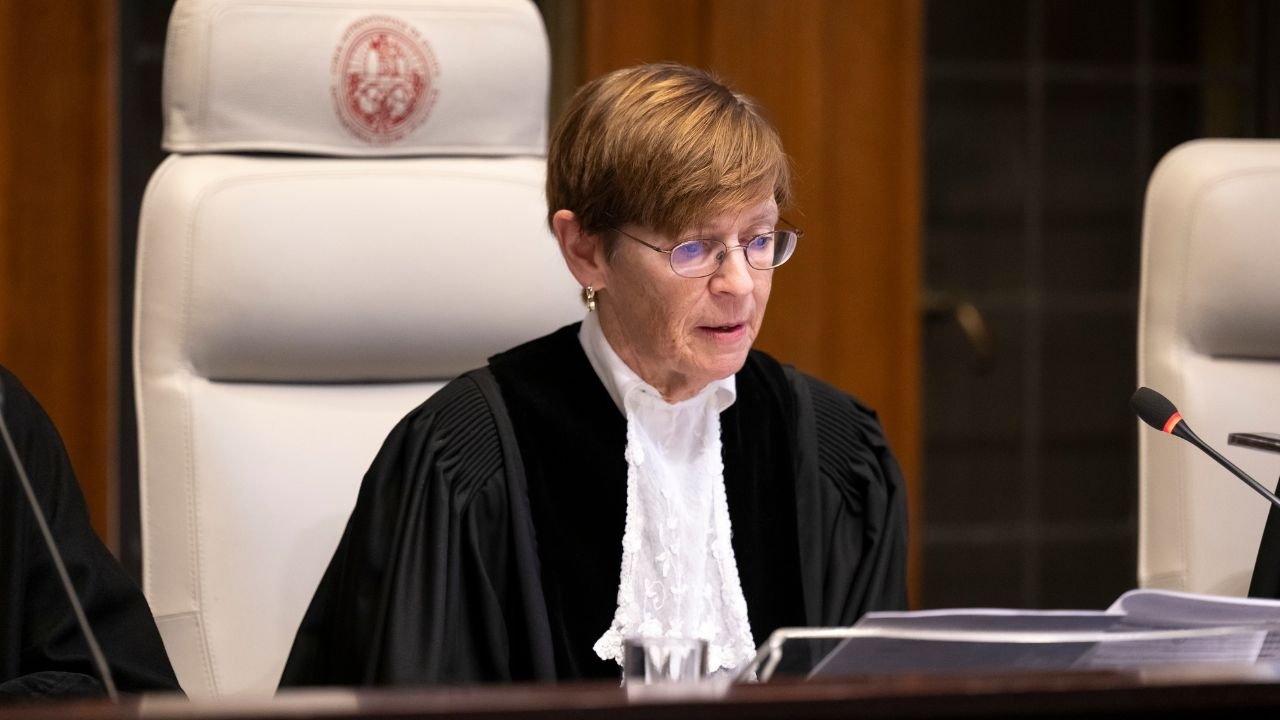
    The hearing took place on Friday with 16 judges out of the court’s 17-member panel, present. Presiding Judge Joan Donoghue asserted that the court has the authority to rule over emergency measures in the case.

    The court noted that the charges against Israel fall under the provisions of the Genocide Convention, additionally acknowledging that Israeli military operations have killed as well as injured a large number Palestinians in Gaza, destroyed a number of homes and infrastructure, and resulted in the internal displacement of about 1.7 million people.

    It was further acknowledged that the Palestinians’ have the right to be protected from acts of genocide.

    The issue of “dehumanising language” used against Palestinians was also highlighted, particularly shedding light on statements by Israeli Defence Minister Yoav Gallant ordering a “complete siege” of Gaza and apprising the soldiers that they are fighting against “human animals”.

    Social Media Reacts

  • Israel weakly counters South Africa’s strong stance in genocide case: What’s next?

    Israel weakly counters South Africa’s strong stance in genocide case: What’s next?

    On January 11-12, the International Court of Justice (ICJ) heard the genocide case filed against Israel by South Africa.

    On Day 1, South Africa’s legal team put forward its case, pointing at the atrocities being committed against Palestinians in Gaza by Israel.

    Israel is accused of committing genocidal acts during their military operations which included mass killings of Palestinians, bodily and mental harm, forced displacement and food blockade, destruction of the healthcare system, and preventing Palestinian births.

    On Day 2, Israel defended itself against the charges, arguing that South Africa “ignored” the incident of October 7 and that Israel had the right to defend itself, adding that the court should put provisional measures against South Africa, accusing it of having ties with Hamas. Israel did not submit any evidence to support its claims that Hamas was the cause of the attacks in Gaza whereas South Africa submitted video evidence of Israeli atrocities in Gaza.

    They also blamed Hamas for the high civilian death toll in Gaza, claiming that Israel did not bomb hospitals and that they enabled humanitarian aid.

    What’s next?

    Al Jazeera explains that even though South Africa’s case against Israel can take years, an “interim measure” intended to halt Israel’s attack in Gaza can be taken “within weeks”.

    If the interim measure is implemented, Israel will be legally obligated to put an end to its offences. And while the “court’s rulings are final”, it has no authority to impose them, nonetheless.

    On the other hand, if the court does not implement an interim measure, “it could still decide it has jurisdiction and proceed with the case”, adds Al Jazeera’s explainer.

  • India’s Top Court Overrules Early Release Of 11 In Gang Rape Case

    India’s Top Court Overrules Early Release Of 11 In Gang Rape Case

    India’s top court ruled Monday that 11 murderers convicted of a gang rape that drew global outrage but who were released early must return to jail.

    Bilkis Bano and two of her children were the only survivors among a group of Muslims attacked by a Hindu mob in the western state of Gujarat in 2002 during one of post-independence India’s worst religious riots.

    Bilkis was pregnant at the time and seven of the 14 people murdered were relatives, including her three-year-old daughter.

    The attack took place when Hindu nationalist Narendra Modi, now India’s prime minister, was the premier of Gujarat.

    Modi was accused of turning a blind eye to the riots but was cleared of any wrongdoing in 2012, two years before his Bharatiya Janata Party (BJP) won national power.

    The 11 convicts were freed in August 2022 following a recommendation by a state government panel, but must now return to jail within two weeks, the Supreme Court in New Delhi ruled.

    “Their plea for protection of their liberty is rejected,” the Supreme Court said.

    Allowing them to remain free would “not be in consonance of the rule of law”, it added.

    The men were accorded a heroes’ welcome when they were released in 2022 and a viral video showed relatives and supporters welcoming them with sweets and garlands.

    The convicts’ release triggered angry reactions across the country, especially since it coincided with India’s Independence Day celebrations, when Modi spoke about women’s safety and security.

    Soon afterwards, Bilkis said she was “bereft of words”.

    At the time, she said in a statement released by her lawyer that she “trusted the system” and was “learning slowly to live with her trauma”.

    “The release of these convicts has taken from me my peace and shaken my faith in justice,” she said then. “My sorrow and my wavering faith is not for myself alone but for every woman who is struggling for justice in courts.”

    The opposition Congress party welcomed Monday’s ruling, saying it exposed the BJP’s “callous disregard for women”.

    “It is a slap on the face of those who facilitated the illegal release of these criminals and also those who garlanded the convicts and fed sweets to them,” spokesman Pawan Khera posted on X, previously known as Twitter.

    “India will not allow administration of justice to be incumbent on the religion or the caste of the victim or the perpetrator of a crime.”

  • Nobel winner Yunus convicted in Bangladesh labour law case

    Nobel winner Yunus convicted in Bangladesh labour law case

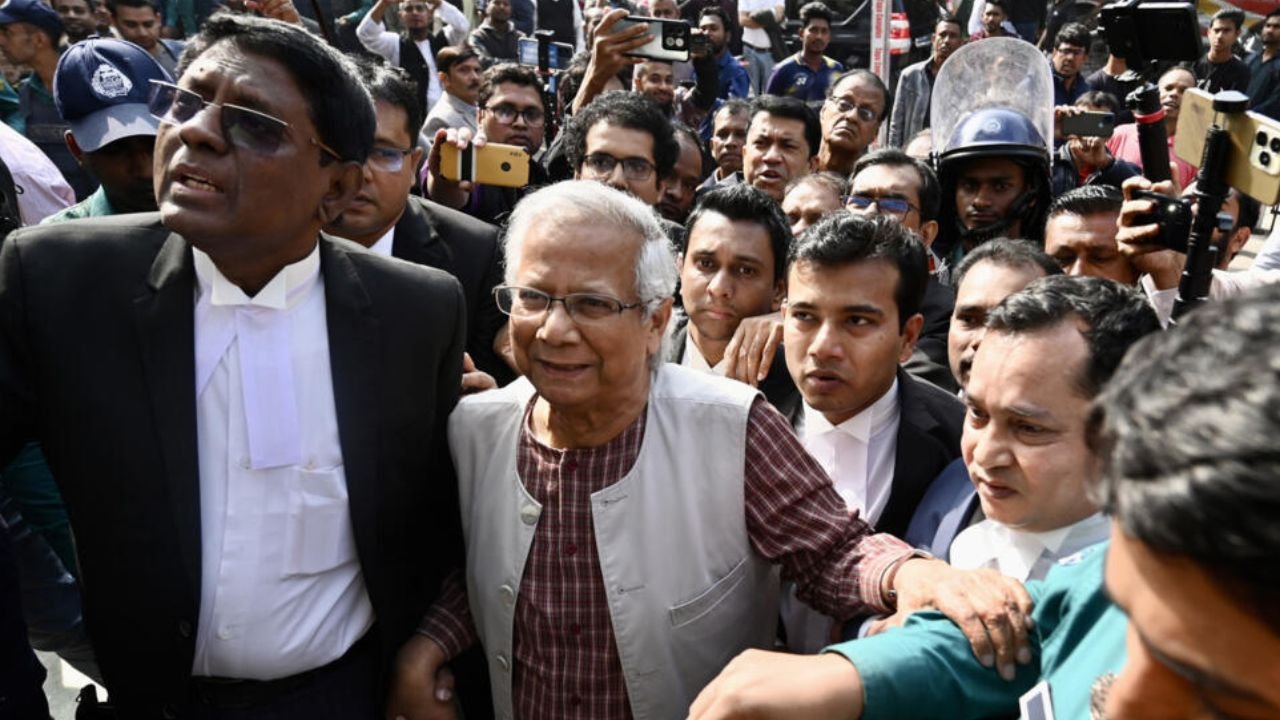
    Dhaka (AFP) – Nobel peace laureate Muhammad Yunus was convicted on Monday of violating Bangladesh’s labour laws in a case decried by his supporters as politically motivated.

    Yunus, 83, is credited with lifting millions out of poverty with his pioneering microfinance bank but has earned the enmity of longtime Prime Minister Sheikh Hasina, who has accused him of “sucking blood” from the poor.

    Hasina has made several scathing verbal attacks against the internationally respected 2006 Nobel Peace Prize winner, who was once seen as a political rival.

    Yunus and three colleagues from Grameen Telecom, one of the firms he founded, were accused of violating labour laws when they failed to create a workers’ welfare fund in the company.

    A labour court in the capital Dhaka convicted and sentenced them to “six months’ simple imprisonment”, lead prosecutor Khurshid Alam Khan told AFP, adding that all four were immediately granted bail pending appeals.

    All four deny the charges. Dozens of people staged a small demonstration of support outside the court for Yunus, who left without speaking to media.

    “This verdict is unprecedented,” Abdullah Al Mamun, a lawyer for Yunus, told AFP. “We did not get justice.”

    Yunus is facing more than 100 other charges over labour law violations and alleged graft.

    He told reporters after one of the hearings last month that he had not profited from any of the more than 50 social business firms he had set up in Bangladesh.

    “They were not for my personal benefit,” Yunus said.

    Another of his lawyers, Khaja Tanvir, told AFP that the case was “meritless, false and ill-motivated”.

    “The sole aim of the case is to harass and humiliate him in front of the world,” he said.

    ‘Travesty of justice’

    Irene Khan, a former Amnesty chief now working as a UN special rapporteur who was present at Monday’s verdict, told AFP the conviction was “a travesty of justice”.

    “A social activist and Nobel laureate who brought honour and pride to the country is being persecuted on frivolous grounds,” she said.

    In August, 160 global figures, including former US president Barack Obama and ex-UN secretary-general Ban Ki-moon, published a joint letter denouncing “continuous judicial harassment” of Yunus.

    The signatories, including more than 100 of his fellow Nobel laureates, said they feared for “his safety and freedom”.

    Critics accuse Bangladeshi courts of rubber-stamping decisions made by Hasina’s government, which is all but certain to win another term in power next week at elections boycotted by the opposition.

    Her administration has been increasingly firm in its crackdown on political dissent, and Yunus’s popularity among the Bangladeshi public has for years earmarked him as a potential rival.

    Amnesty International accused the government of “weaponizing labour laws” when Yunus went to trial in September and called for an immediate end to his “harassment”.

    Criminal proceedings against Yunus were “a form of political retaliation for his work and dissent”, it said.

  • Judges in England and Wales allowed to use ChatGPT to write judgments

    Judges in England and Wales allowed to use ChatGPT to write judgments

    Judges in England and Wales have been allowed to use artificial intelligence (AI) tool, Chat GPT, to write judgments.

    The permission has been granted despite concerns that artificial intelligence could write references to cases that never happened.

    The Judicial Office has issued guidelines for the use of AI Chat GPT for thousands of judges in England and Wales, saying that artificial intelligence can help summarise long texts.

    Master of the Rolls Sir Geoffrey Voss has described artificial intelligence as a better, faster and cost-effective digital assistant for the justice system.

    Only earlier this year, two American lawyers were fined for citing fake cases created by ChatGPT.