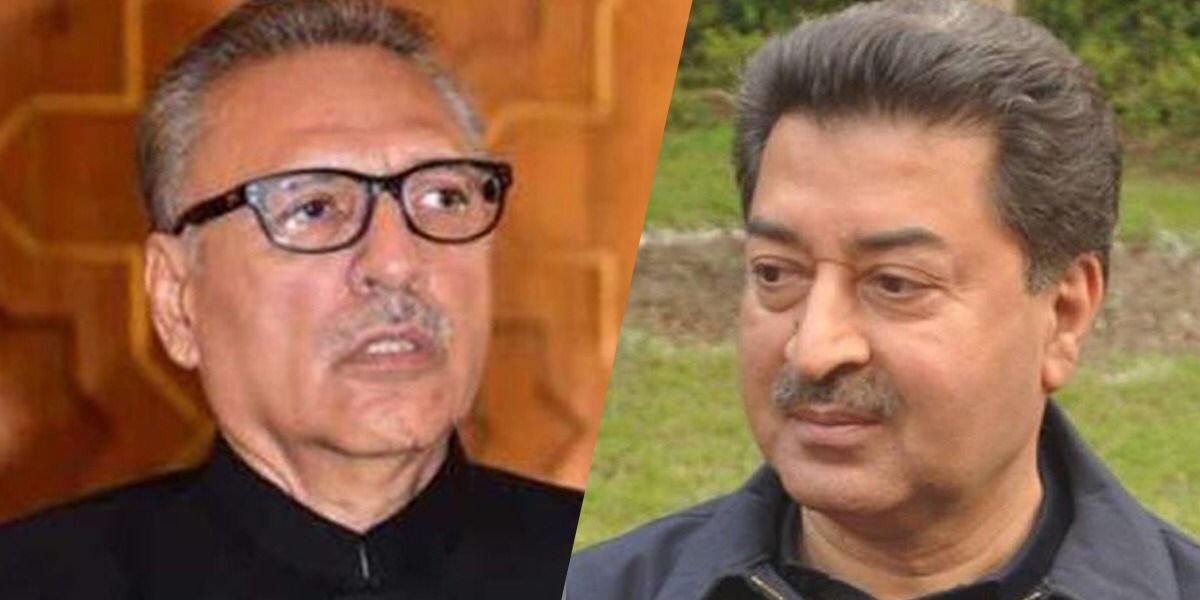
Tag: law

  • 60,000 cases are pending in the Supreme Court: Vice Chairman Pakistan Bar

    60,000 cases are pending in the Supreme Court: Vice Chairman Pakistan Bar

    Pakistan Bar Council Vice-Chairman Haroon-ur-Rashid has said that there are an estimated 60,000 cases pending in the Supreme Court, emphasizing that despite being repeatedly highlighted, important cases are still not scheduled for early hearing.

    Addressing the full court ceremony at the commencement of the new judicial year, Haroon-ur-Rashid said that no transparent system has been devised for the hearing of pending cases.

    He pointed out that in most cases, detailed decisions are not issued on time, and in between, judges retire. In some cases, larger benches were ordered, but that has not happened either. He requested the nominated Chief Justice to fix the benches in the same week as new and urgent cases are filed.

    Haroon-ur-Rashid added that a large number still await the first hearing. “There is a general impression that when the cases of a few special people are filed, they are immediately settled, whereas the general cases are fixed after a long time resulting in disappointment,” he said, adding that this practice should, henceforth, be dispelled.

    He further said that a system should be created in which cases are assigned without discrimination, the common people do not feel deprived and trust in the institution persists. He further highlighted that decisions have been made in many cases but their written orders have not been provided.

    Vice-Chairman Pakistan Bar Council Haroon-ur-Rashid also said that complete information should be provided to the Supreme Body of Lawyers, hoping the apex court will not be deprived of the right to access information.

  • Suspects granted bail in yet another housemaid torture case

    Suspects granted bail in yet another housemaid torture case

    A Rawalpindi court has granted bail to a husband and wife on Thursday, both of whom were charged with torturing their minor housemaid. The father of the eight-year-old told the judge that the case was filed over a “misunderstanding.”

    The couple, Bakhtawar and Alisher, were arrested after the child maid escaped their house and informed her family about the beating. According to The Express Tribune, the case registered by police included sections pertaining to cruelty to children and uprooting hair, attempted murder, illegal confinement and trafficking not included.

    However, on Thursday, when the accused appeared before Judge Meharun Nisa, a document of a ‘compromise’ between the two parties was also presented. It contained the thumb impression of the complainant, a labourer from Rahim Yar Khan.

    Additionally, the investigation officer (IO) presented a statement of the girl’s father who no longer wants to pursue the case.

    The Express Tribune reports that the girl and her father appeared in the court teary-eyed. The girl’s head was covered in a dupatta.

    The court concluded the case with the release of the couple against surety bonds of Rs 50,000 each.

    Victim under pressure

    Initially, before the arrest, the girl’s family admitted that she had been repeatedly tortured. Her medical reports also revealed bruises, dislocations and fractures.

    The couple allegedly even tried killing her by placing a polythene bag on the girl’s face.

    However, the family back tracking within the span of 24 hours of the couple’s arrest indicates pressure from the accused as well as the family.

    The Express Tribune highlights that according to sources within the police department, the accused bribed the Investigation Officer who then deemed the argument as weak. Additionally, the IO pressured the complainant ‘in a sweet way’ while also threatening him with arrest for letting his under-age daughter work.

    He also urged for an out-of-court settlement.

    He stated in the court that the case was based on a misunderstanding, and that the family no longer wanted to pursue the case.

    According to people present in the courtroom, as reported by The Express Tribune, the father clutched his daughter’s hand throughout the proceedings. “Now I am going back to Rahim Yar Khan with my daughter and we are never coming back,” he told The Express Tribune.

    The accused and the investigating officer, reportedly, came out of the court smiling.

  • Who are the people using free electricity in Pakistan?

    A sharp hike in electricity bills has led to public protests across the country with consumers burning electricity bills collectively to express their objection to the exorbitant sums. The protesters are demanding that free electricity is not given to WAPDA employees and other officials because it is the general public who has to bear its burden — something they can no longer do.

    We News’ reporter, Bilal Abbasi, has investigated the amount of electricity being used every month by individuals like the Prime Minister, President, Supreme Court and High Court Judges, Federal Ministers, Chairman NAB, Governor State Bank, Senior Bureaucrats and senior government officials.

    Here are the details that We News has uncovered:

    During presidency, unlimited power unit; after retirement, 2000 units per month

    According to the President’s Salary, Allowances and Privileges Act 1975, unlimited electricity units will be provided to the President and after their retirement, the President will be able to use 2000 units per month for free.

    After the death of the president, 2000 units of free electricity will be provided to his widowed wife.

    Similarly, the Prime Minister of Pakistan is also provided unlimited free electricity.

    The Chief Justice of the Supreme Court and other judges have the right to use 2000 units of electricity during and after their service.

    A High Court Judge is provided 800 units of free electricity after retirement.

    22 thousand rupees for utility bills to the Federal Minister

    As per public perception, electricity provided to federal ministers and members of assembly is free of charge; but that isn’t so. Federal Ministers are paid 22,000 rupees in monthly salary to pay all utility bills, while Members of the Assembly are not paid any amount for any utility nor for their official residence ‘Parliament Lodges’.

    Similarly, senior bureaucrats also pay their own electricity bills.

    Chairman NAB 2000 units, Governor State Bank unlimited electricity units

    Chairman NAB is also provided with free electricity units equal to judges of the Supreme Court. They are provided with 2000 units of electricity per month for free.

    The Governor State Bank, however, is provided with unlimited electricity free of cost and the amount is paid by the State Bank. The officers of government institutions are also provided free electricity, but the relevant department/institution pays their bills to WAPDA.

    How many billions of rupees of electricity did WAPDA employees use for free in a year?

    Heavy units are provided free of charge to WAPDA employees and those working in power generation and transmission.

    According to statistics presented by the Ministry of Energy in the Senate Committee, 189,000 WAPDA employees were provided with 34 crore units of electricity for free in a year, using electricity worth 8 billion rupees for free.

    How many electricity units are provided free to WAPDA officers?

    WAPDA earning officers start getting free electricity units from 16th grade onwards. 16th grade officers are provided with 300 units per month, 17th grade officers with 450 units per month, 18th grade officers with 600 units, 19th grade officers with 880 units per month, 20th grade officers with 1100 units while 21st and 22nd scale WAPDA officers are provided with 1300 per month. These power units are provided free of charge. The perks are provided after retirement as well.

  • Blasphemy: what happened to the man who falsely accused 14-year-old Rimsha?

    In August 2012, Rimsha Masih was arrested on blasphemy charges. At the time, Masih was only 14 years old. She had allegedly desecrated the pages of Holy Quran by burning them.

    But what really went down?

    A local Muslim boy, Hammad, had asked Rimsha Masih to hand over the trash bag she was carrying. He inspected it and took the bag to the cleric of the local mosque named Hafiz Mohammed Khalid Chishti. As evidence against the girl, Chishti showed a few burned pages of the Holy Scripture to the police. As this incident came to light, there was a collective outrage from the local Muslims. And as narrated by Mohammad Hanif in an article for The Guardian, 300 local Christian families were forced to escape their residence and seek refuge in a forest in Islamabad.

    Chishti told AFP News that he thought Rimsha had ‘“deliberately” burnt the pages as part of a Christian “conspiracy” to insult Muslims and that action against such activities should have been taken “sooner”.

    Resultantly, minor Rimshah Masih was arrested. She spent more than three weeks on remand in an adult jail. During her trial, her age was evaluated through medical reports that concluded it to be 14 but with a “mental age younger than that”. This supported the claims of Masih being a child with Down’s Syndrome that the accuser’s lawyer rejected stating that the doctors are “favouring the victim and the state is also supporting her”.

    Rimsha was released on bail the following month of September after the police clarified in court that she was not guilty of the accusations made against her and that it was, in fact, the cleric himself who allegedly conspired against the young girl.

    But did Rimsha Masih get justice in the face of a false blasphemy case?

    Following Rimsha Masih’s acquittal, Hafiz Mohammed Khalid Chishti was arrested. Several witnesses against him were taken into record. It was claimed that Chishti had included the Holy Scriptures in the trash bag himself in order to portray Rimsha as the desecrator. The witnesses also claimed that Chishti believed that this was the only way to drive out Christians from their community.

    This meant that Chishti himself was now guilty of desecrating the Holy Scripture. The-then Investigation Officer (IO) Munir Jafferi, while talking to The Express Tribune, said that Chishti could be sentenced to life imprisonment if convicted of desecrating the Holy Book.

    He was sent on 14-day judicial remand under Section 295-B of the Pakistan Penal Code.

    By 2013, Rimsha Masih and her family escaped to Canada because even in her innocence, she was not safe in Pakistan. They were given permanent Canadian residency on “humanitarian and compassionate grounds”.

    All the while, that same year, all witnesses against Chishti withdrew their claims, and thus, the court dismissed all charges against him.

    History of Blasphemy Laws in Pakistan

    In 1860, the British colonisers introduced the Indian Penal Code. It consisted of a chapter that criminalised offences relating to religion in order to counter Muslim-Hindu-Sikh conflict in the Indian Subcontinent:
    Section 295, Injuring or defiling place of worship, with intent to insult the religion of any class
    Section 296, Disturbing religious assembly
    Section 297, Trespassing on burial places, etc.–Whoever, with the intention of wounding the feelings of any person (Section 297)
    Section 298, Uttering words, etc., with deliberate intent to wound religious feelings

    But in 1927, the laws buoyed out as vague clauses were added in the Penal Code, further deregulating the conflicts. As per 295 A, “Deliberate and malicious acts intended to outrage religious feelings of any class by insulting its religion or religious beliefs” was also a punishable offence.

    It is to note that the maximum punishment under these laws was from one year to a maximum of 10 years in jail, with or without a fine.

    In some instances, people took the law into their own hands. A case often recounted from the pre-partitioned India is of an objectionable book on Islam. It was written by a man named Pandat Chamupatt but anonymously published. The publisher was a journalist, Mahashe Rajpal, who owned a publishing house called ‘Rajpal & Sons’.

    The book was deemed as blasphemous by Muslims. Lawsuit against the publisher was filed under section 153 A: “Promoting enmity between different groups on ground of religion, race, place of birth, residence, language, etc.” Punjab High Court in Lahore, however, acquitted the publisher of the charges on “technical grounds” since the law did not highlight ‘adverse discussions of the life and character of a deceased religious leader’.

    The British Raj then made amendments to the law and included section 295-A to punish “deliberate acts intended to outrage religious feelings of any community… by words, either spoken or written”.

    The acquittal, nonetheless, led to protests, criticism, and threats; and after several failed attempts, the editor of the publishing house was assassinated in 1929.

    The next reported case was in Karachi in 1934. Nathu Ram, an active member of Arya Samaj, too, had allegedly written an objectionable book on the history of Islam.

    This, once again, prompted an angry reaction by the Muslims. After a trial, he was imprisoned for a year and fined for his offence. Ram had filed an appeal in the court but during one of his hearings in March 1936, he was attacked and killed.

    His killer was a man named Abdul Qayum from Hazara from the North West Frontier Province (now Khyber Pakhtunkhwa). Muslims back then gave him the status of Ghazi and a shrine was built after his death.

    Even then, however, killings over blasphemy were comparatively a rarity.

    Post-1947, with Muslims and Hindus officially divided, the anti-blasphemy laws remained intact in Pakistan.

    These laws were cemented under the dictatorship of General Zia-ul-Haq.

    General Zia made changes to the Penal Code and added five new clauses between 1980 to 1986, including:
    295 B, which criminalises the desecration of the Quran.
    295 C, which criminalises with life imprisonment or the death penalty any direct or indirect desecration of Prophet Muhammad (PBUH).
    298 A, which criminalises direct or indirect desecration of wives and relatives of Prophet Muhammad (PBUH).

    At first, section 295-C only contained life imprisonment as the punishment for blasphemy but it was replaced with death penalty as the parliamentarians pushed it on the basis of ijma (consensus of Islamic scholars). The Federal Shariat Court (FSC), too, defended the death penalty for blasphemy even though four out of seven ulemas that were consulted by the FSC opposed the ruling. The opponents of the death penalty included Jamaat-e-Islami’s founder, Maulana Maududi; head of the Barelvi sect, Ahmad Raza Khan; and the head of the Deobandi sect, Mahmood Deobandi.

    They all agreed that blasphemy was a pardonable offence and that “death penalty cannot be given for single offences”.

    In 2010, Dawn published an article tracing the qualitative results of the anti-blasphemy laws. While less than 10 cases of blasphemy were reported between 1927 and 1986; post-1986, as many as 4,000 cases were recorded. Then, between 1988 and 2005, 647 people were charged out of which 50 percent were non-Muslim. More than 20 people have been murdered for alleged blasphemy.

    49 per cent of 361 cases of blasphemy offences registered between 1986 and 2007 were against non-Muslims even though non-Muslims make less than four per cent of the total population.

    The situation began to worsen in 2011 with the murder of former governor of Punjab, Salmaan Taseer, who was vocal against the anti-blasphemy laws and supported Asia Bibi who was then given death penalty for committing blasphemy (but acquitted in 2019). Taseer’s killer, Mumtaz Qadri, was arrested and was later hanged but he became a hero to many who hailed him for his deed. More than 100,000 people attended his funeral and his shrine is still visited by hundreds.

    Lawyer Asad Jamal recalls the day after Salmaan Taseer’s death. He was on Mall Road, Lahore, where he spoke with sepoys regarding Taseer’s murder. “No one wanted to condemn the act”, he still remembers. “It was very telling of the direction the country was heading towards.”

    Since 2011, the number in cases, accusations, and killings have increased. In a report by Centre for Research and Security Studies (CRSS), as of 2021, 43 people have been extrajudicially killed since 2011 and 1,185 accused.

    When it comes to the role of lawyers and judges in blasphemy cases, Jamal believes that it is simply reflective of the socio-political situation of Pakistan. The state of affairs have worsened over the past 20 years. Apart from frail economy and political rifts, there is a major element of fundamentalism that comes in the shape of parties like TLP and their massive support.

    “Such an environment doesn’t encourage a lot of lawyers to take up blasphemy cases.”

    He also adds that very few lawyers have “worthwhile legal skills” to take up blasphemy cases. Many simply do not want to deal with these issues. People like Asma Jahangir and Abid Hasan Minto were not mainstream but exceptions. Apart from being courageous, they were competent. “But now, the times have changed,” he adds.

    Peter Jacob, a human rights activist and the director of Centre for Social Justice (CSJ), says that while some politicians condemn violence against the minorities like the recent Jaranwala case, it, nonetheless, always has a cost one has to bear due to the sensitivity of the matter.

    While talking about the youth belonging to religious minorities, Jacob has noticed a segment within Christians and Hindus who are actively participating in political discussions on- and offline. The examples are the recent protests held in various cities across Pakistan, including Karachi, Lahore, Swat, Kurram district, and Rawalpindi against the Jaranwala incident.

    “I am quite impressed by their sense of belonging and their affiliation with the case of a better Pakistan, their respect for human rights and democracy. Civil liberty will play a role of a natural healer — healing of the society and articulation of the way forward out of these troubled times,” he added.

    Jacob, however, believes that there has to be resolve at the national level by powerful quarters to understand the height of radicalisation that has taken place in order to control the lethality of the problem. “While there is political fragmentation, a free and fair atmosphere must be created where political forces can play their role and come up with people-centric solutions that will entail the process of self-healing and accountability.”
  • President Alvi returns 13 bills

    President Alvi returns 13 bills

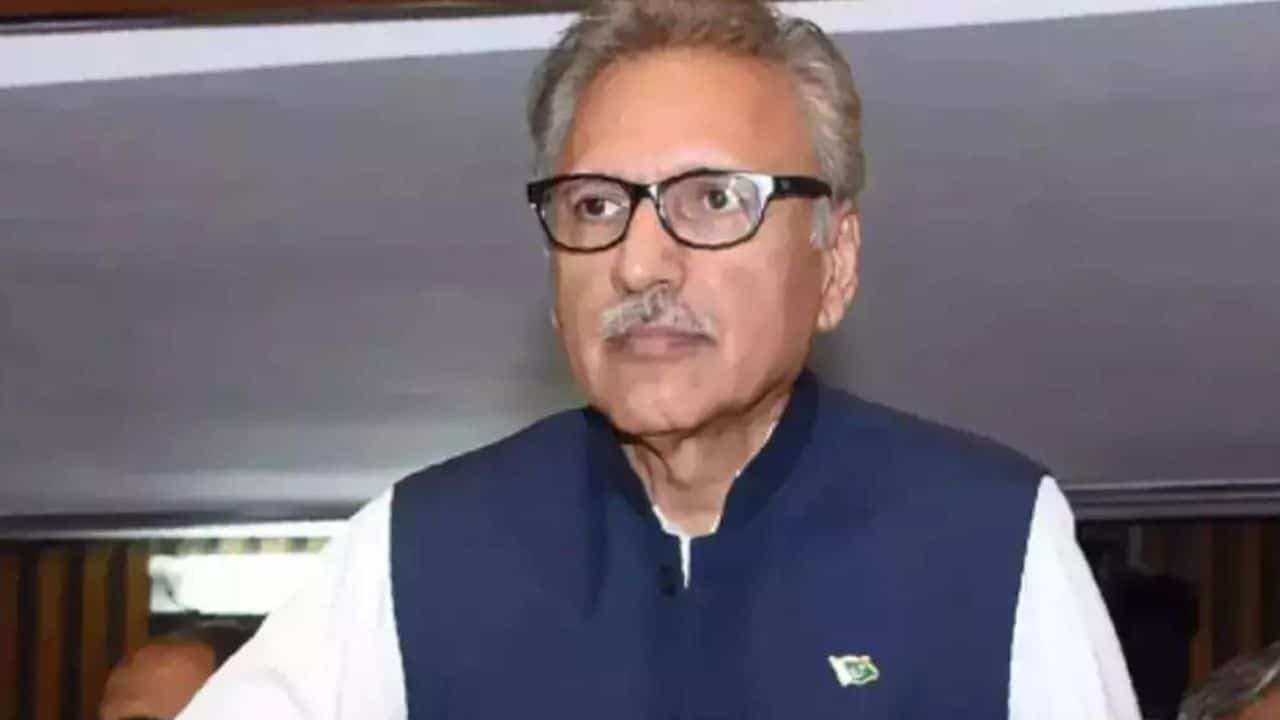
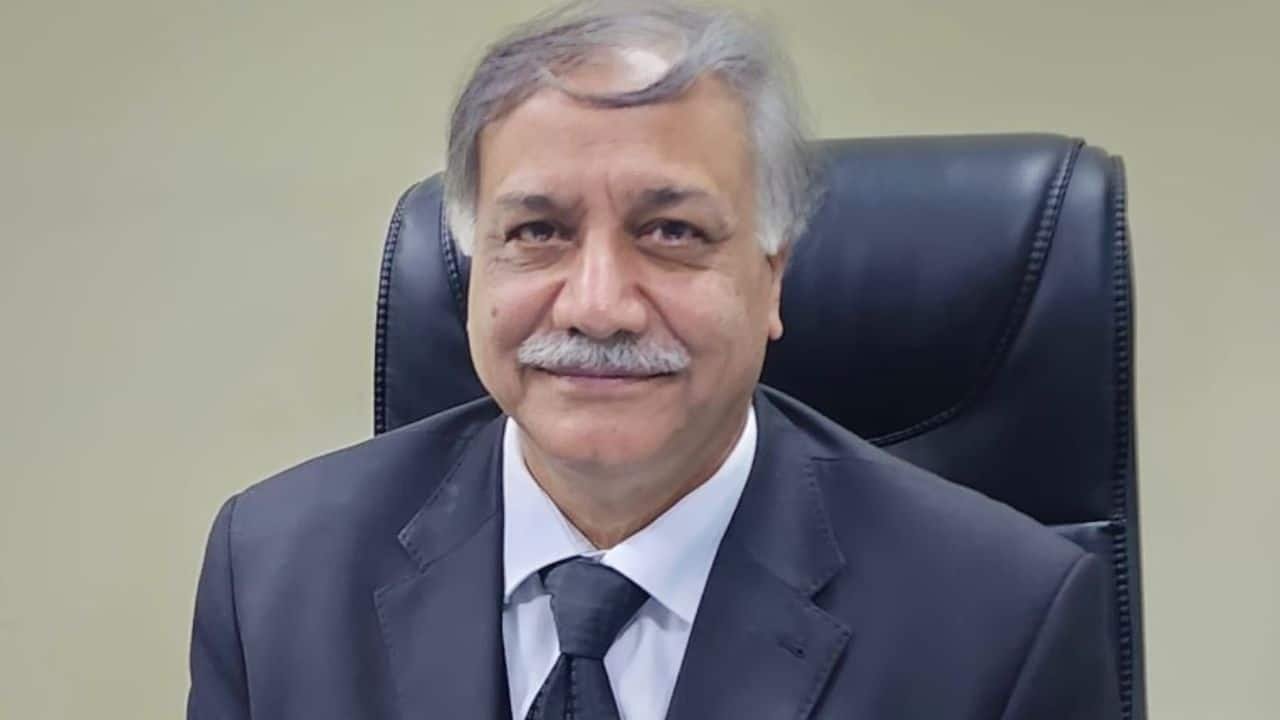
    President Dr. Arif Alvi has returned over a dozen bills for reconsideration by the parliament, resulting in an indefinite delay in their progression since a new assembly will be formed after the general elections, to be held later this year. The bills were approved by both houses of the parliament towards the end of the PML-N-led government’s term.

    Among these bills is the recently proposed amendment to the Code of Criminal Procedure, aimed at increasing penalties for those found guilty of showing disrespect to the Holy Prophet (PBUH), his companions, and other revered religious figures.

    Additional bills that have been sent back include the amendment to the Press, Newspapers, News Agencies, and Books Registration legislation, which seeks to change the term ‘federal government’ with ‘Prime Minister’ wherever mentioned in the law.

    Similarly, the Bill for the Protection of Journalists and Media Professionals aims to shift the jurisdiction over journalist protection from the Ministry of Human Rights to the Ministry of Information. The National Commission for Human Development (Amendment) Bill is also among the returned bills, proposing revisions to the functions of the National Commission for Human Development (NCHD) and changes in its administrative structure to enhance efficiency and facilitate business operations.

    Furthermore, a returned bill linked to the 2023 amendment of the Imports and Exports (Control) Bill.
    This measure addresses instances of economic difficulty and has been prompted by appeals from the business community and other sectors, seeking temporary relief from import/export-related restrictions.

    President Alvi also returned the bill related to the Higher Education Commission (HEC), which seeks to extend the term of the HEC chairman to four years.

    The remaining bills that have been sent back include amendments to the Public Sector Commission legislation, the Institute of Management Sciences Bill, the Horizon University Bill, the Federal University Bill, NFC Institute of Engineering and Technology Multan Bill, and the National Institute for Technology Bill.

  • FIA report reveals fake LLB students

    FIA report reveals fake LLB students

    Nearly 4000 students from affiliated law colleges of Bahauddin Zakariya University (BZU) in Multan are suspected of being “non-genuine”, according to a  Federal Investigation Agency (FIA) report.

    The FIA submitted the report to the Supreme Court on Monday, which disclosed that 3,997 individuals allegedly attempted to sit the LLB exam without ever attending classes.

    According to Dawn, the FIA, along with officials from the Pakistan Bar Council (PBC) and the Higher Education Commission (HEC), constituted a joint investigation team (JIT) to question BZU officials and law college owners as ordered by the Supreme Court.

    The team examined BZU’s records and found that 3,997 students were suspected of being non-genuine. An additional 2,230 students are currently under investigation, but no adverse findings have been reported thus far.

    The JIT recommended taking legal action against the BZU officials and law colleges involved in the alleged fraud. It also called for improvements in the system of affiliating law colleges, registering students, collecting fees, and monitoring attendance to prevent future scams.

  • Man fined $11,000 for taking 4,500 smoke breaks during 14 years of employment

    A Japanese government employee has been fined approximately $11,000 for smoking more than 4,500 times during the course of his 14-year employment.

    The human resource department discovered a secret stash of tobacco owned by the man and two other employees in the organisation.

    The 61-year-old director-level employee was deemed to have violated the “duty of devotion” under the Local Public Service Act.

    Osaka has stringent smoking regulations that are mandated by law. Since 2008, smoking has been prohibited on government property, including offices and public institutions. 2019 saw the addition of smoking prohibitions at work.

  • PTI says they now respect next Supreme Court Chief Justice Faez Isa who they had taken to court

    PTI says they now respect next Supreme Court Chief Justice Faez Isa who they had taken to court

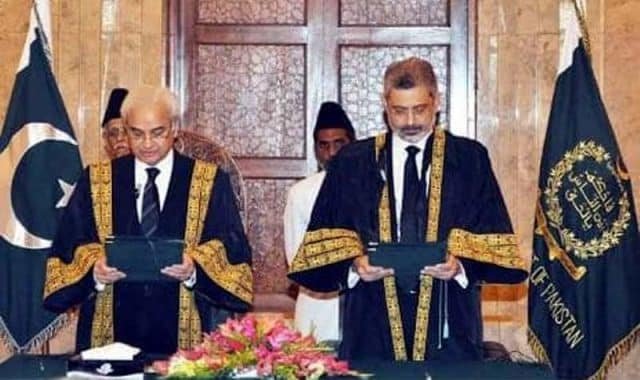
    Pakistan Tehreek-e-Insaf (PTI) senior leader Fawad Chaudhry has said in an interview that the party respects Justice Qazi Faez Isa who is set to become the next Chief Justice of Pakistan (CJP) later this year.

    In an interview with WE news, he said, “We have a relationship of respect with Justice Faez Isa”, adding that he disapproved the idea of filing a reference against the top judge.

    He said when the current government files a reference against the judiciary, it means they want to put the judges under pressure.

    “The government must allow the judiciary to function independently,” he asserted.

    In 2020, Justice Faez was accused of concealing assets and PTI filed a reference against him. Justice Isa then asked the Supreme Court that a full bench be constituted, a plea that was accepted by then CJP Asif Saeed Khosa and after a months-long trial, a full bench of the apex court dismissed the petition against him.

    Later, Khan himself accepted his mistake of filing a presidential reference against the judge.

    During the interview, Fawad Chaudhry once again said that the former ruling party is ready for talks. He mentioned that the Chief of Army Staff (COAS) General Asim Munir has also talked about the consensus but as of yet no effort has been made.

    Talking about PM Shehbaz, Chaudhry said that he is running from the elections and is being “non-serious”.

    He claimed that “they [government] want martial law in the country”.

  • In historic first, Sabahat Rizvi becomes first female secretary of LHC Bar

    In historic first, Sabahat Rizvi becomes first female secretary of LHC Bar

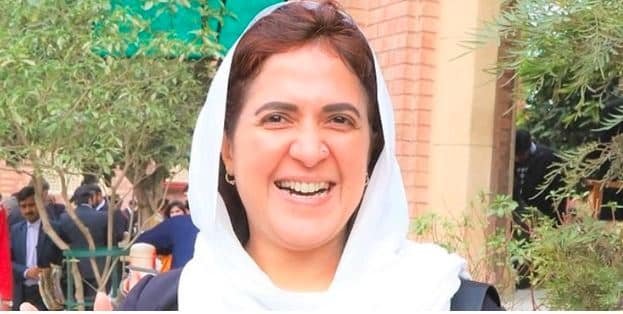
    In a historic first, on Saturday Sabahat Rizvi has become the first woman Secretary of the Lahore High Court Bar Association (LHCBA). The Bar has selected a female secretary for the first time since its establishment.

    After receiving 4,310 votes in the Saturday election of the LHC Bar Association, Rizvi was chosen as the organization’s first female secretary. Rizvi was the candidate of the independent group.

    Rizvi was followed by Mian Irfan and Qadir Baksh Chahal who secured 3,745 and 2,627 votes respectively.

    Another female candidate, Rabbiya Bajwa got elected as Vice President LHCBA after bagging 3590 votes.

  • ECP to consult with AGP on Alvi’s election date

    ECP to consult with AGP on Alvi’s election date

    The Election Commission of Pakistan (ECP) on Tuesday held a meeting to review the situation evolving after President Arif Alvi’s unilateral announcement of a date for elections in Punjab and Khyber Pakhtunkhwa (KP).

    ECP decided to consult Attorney General for Pakistan and other legal experts in this regard.

    The meeting was called to after the president announced April 9 as the date for the polls of provincial assemblies.

    On Monday, Alvi exercising his power under Section 57 (1) of the Elections Act, 2017, announced the election date and further asked the ECP to issue an election programme in accordance with Section 57 (2) of the Act.

    Alvi’s move was rejected by federal ministers who were of the view that the president had abrogated the Constitution and he had no right to announce the date.

    The ECP stated that “the commission has been and will continue to make decisions without any pressure according to the Constitution and law”.

    It added that the electoral watchdog is always ready to conduct an election within 90 days as per the Constitution and law, but nowhere in the Constitution, it is written that the commission will give the date for the election.