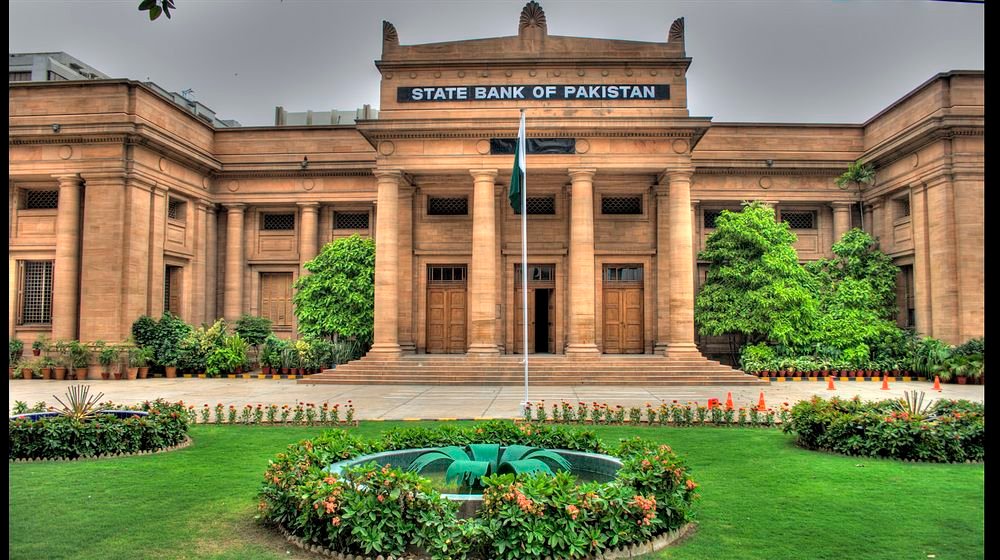
“We must understand that we do need to make SBP autonomous, or else it would continue to get exploited by the government to gain political advantages through expansionary fiscal policies.”
If you have wondered in recent days what’s the real deal with the proposed changes in the State Bank of Pakistan law but have failed to understand the issue, perhaps this is just the right piece for you.
Lately, there has been a lot of noise in the media about this issue. Many leading economists have claimed that this would mean compromising on government’s independence. Others have equated it to a deep conspiracy against Pakistan. But there are many contrarian voices as well, claiming that these amendments are justified and well needed. It’s time to put this debate to rest. Let’s objectively look at both sides of the argument and come to an independent conclusion.
Firstly, why is there so much mistrust about the proposed amendments in the SBP Act?
While there is always noise in the media, motivated by vested interests, it is hard to attribute all criticism to political motivations when it’s coming from multiple credible economists. There has to be a deeper reason for why so many people are apprehensive about it. There are a few cogent reasons. Pakistan is facing a fifth-generation war, and anything out of the ordinary is bound to raise eyebrows. Given our geostrategic location, it is not a farfetched idea that international powers could have a clandestine agenda. The fact that the current Governor State Bank is a former IMF employee has also not helped, given our eternal mistrust about the Bretton Woods institutions. People have confused two different issues: choice of the Governor and autonomy of the State Bank. Merely because the current governor is a former IMF employee, it’s a bit of a stretch to say that the proposed law will make the SBP subservient to the IMF. Lastly and most importantly, many economists have taken a clue from the recent past, when there was a hyper-reaction by the SBP to the headline inflation, which slowed down the economy. A legitimate question is what would prevent the State Bank from over-reacting in the future if Pakistan were to face similar circumstances.
The second question is that where these amendments came from and why they are required.
Pakistan has witnessed repeated boom-and-bust cycles that have taken a toll on national economic health. Many previous governments have spent generously to appease their voters and then got the State Bank to finance the ballooning budget deficits (by literally printing money). Under the government’s pressure, the central bank had kept the interest rates low and exchange rate overvalued to stimulate demand and drive growth. By the time the import-led consumption led to a crisis, it was the next government’s turn to run to the IMF yet again. No one can deny that this pattern had to break.
How can this cycle be broken?
The IMF reports from 2008, 2013 and 2018 all highlighted SBP’s continued financing of large fiscal deficits and currency support operations draining external reserves and recommended enhanced autonomy for SBP with domestic price stability as the primary objective, flexible exchange rate policies and an end to direct lending to the government. Those who criticise the proposed amendments, unfortunately, have not come up with a better practical alternative.
But the devil is always in the details. So what exactly has the IMF proposed?
The IMF ran a safeguards assessment, which recommended ensuring full operational independence of SBP, making price stability the primary objective of the central bank, prohibiting monetary financing of public sector debt, and removing quasi-fiscal operations. It also suggested improving SBP’s governance, including creating a firewall between management and oversight functions, establishment of the Executive Board and protecting personal autonomy of members of SBP Board and Monetary Policy Committee. In addition, IMF also proposed strengthening legal provisions for audit and statutory mechanisms for sufficient capitalisation and profit retention.
Let’s translate these proposed changes into simpler terms. What is the change that we actually need, which should not be unduly criticised?
Putting an end to government’s direct borrowing from SBP, dissolution of Monetary and Fiscal Policies Coordination Board and removal of Secretary Finance from SBP’s Board, all aimed at cutting the cord between MoF and SBP. This is essential if we intend to remove the government’s influence on the State Bank to take politically motivated decisions.
The tenure of the Governor also needs to be increased to delink his appointment from electoral cycle, depoliticise the Governor’s role and ensure policy continuity. The proposed tenure of five years is in line with other central banks including India. Some have criticised the provision for reappointment of the Governor, which is actually not new and was also present in the previous draft, albeit with a shorter tenure of three years.
Then there has been a lot of criticism on proposing domestic price stability as the primary objective and ‘supporting general economic policies’ as a tertiary objective. No one has bothered to check that even the existing law does not mention supporting economic policies or growth as objectives of the SBP, and instead focuses on supporting the regulation and growth of monetary and credit systems. Moreover, putting price stability as a primary objective is not a novel concept and has been embraced by many countries. In fact, macro-economic stabilisation is critical for sustained economic growth and for preventing the boom-and-bust cycles – the kind we have repeatedly experienced.
Nevertheless, the new law should mention sustainable growth as the ultimate objective. The Indian Reserve Bank Act also mentions price stability as its primary objective but keeping in view the objective of growth. But this would be a semantic change. The central bank cannot operate in isolation from the rest of the economy and ignore the growth considerations altogether.
The proposed amendments also have a provision for the SBP to support growth. The end to quasi-fiscal operations would not mean the discontinuation of re-financing facilities, at least in the foreseeable future. These schemes have much lesser risk since the credit allocation decisions rest with the commercial banks, which in turn remain accountable for asset quality indicators, like non-performing loans, while the SBP steers clear of the credit risk.
Another misunderstanding is about inflation targeting. Inflation targeting does not necessarily mean that SBP alone would be able to control inflation, especially if the country is facing supply-driven and cost-pushed inflation, and in the wake of weak monetary policy transmission mechanisms. But even in that situation, SBP’s interventions are required to mitigate the second-round effects of supply-driven inflation. However, given the track record, the SBP will also have to be cautious and not get carried away by inflationary concerns.
There has also been much criticism about the new accountability clauses, especially the provision of getting prior permission of the SBP Board before NAB or FIA can initiate an investigation. But this is not an unusual concept in Pakistan. Securities and Exchange Commission enjoys the exact same protection under Section 41 (b) of the SECP Act. Why then fear it for the SBP?
Moreover, a new accountability clause has been proposed to be added whereby the Governor will have to appear in person before the parliament, which wasn’t there earlier. Other than these, no accountability provision has been taken out from the existing law.
Furthermore, all SBP officials continue to be considered public servants and therefore subjected to Pakistan Penal Code’s stipulated offences for public servants (sections 161-171) including corruption. Similarly, the SBP’s accounts will continue to be audited by the Auditor General of Pakistan, besides two external auditors. In addition, the law now includes a conflict-of-interest clause, which will ensure transparency.
Does this mean that all the proposed amendments are good, and nothing really needs to change? Not really. There are a number of proposed amendments that need reconsideration.
For instance, the new law is not clear on who will set the inflation target. It should be made clear that National Economic Council is the legitimate forum to provide the target range.
Similarly, the independent directors will now be appointed by the President, but on recommendation of the federal government. The only problem here is that the government will need to base its recommendations on list of candidates proposed by SBP’s Board itself, which seems cyclical and does not make sense. The federal government should be free to propose members who meet the requisite criteria.
The section on removal of Governor has also been diluted, where previously they could be removed on breach of trust, but not anymore. Even the ground of serious misconduct has to be determined now by the court, which is ridiculous and needs to be fixed.
Lastly, if the SECP Act is to be considered a benchmark for accountability clauses, then it should also be followed for other provisions. One can see that the newly inserted conflict of interest provision and the amended provision for removal of governor in the SBP Act are quite weak and must be strengthened in light of how these have been provisioned in the SECP Act.
Most importantly, the question that we all need to ask is if there is anything for us to worry about the new SBP Act. Perhaps not as much as the media has portrayed.
Many are confusing the issue of who occupies the seat of the governor with whether the central bank should be autonomous. The current governor might be from IMF, but that’s not always the case. So autonomy should not mean IMF controlling the central bank.
Then, no matter what we write in the law, the parliament will always have the right to amend it. If we can change it once, we can always do that again. The President can even change it overnight through an ordinance if the parliament is not in session.
Most importantly, there is a big difference between de jure and de facto power. By merely amending the law, the SBP cannot ignore the Prime Minister, the cabinet and the whole federal government.
Lastly, before criticising the change and fearing the ‘new’, we must ask how the ‘old’ has delivered. We do know that it has not worked in the past, given our economic situation. So something must change.
In short, we must understand that we do need to make SBP autonomous, or else it would continue to get exploited by the government to gain political advantages through expansionary fiscal policies. But we should not do it in a hush-hush manner and instead debate the proposed amendments in the parliament and only then pass them into law.