Tag: Leader of Opposition

  • Do you know how Speaker, Deputy Speaker, Prime Minister, and Leader of Opposition are elected in assembly?

    Do you know how Speaker, Deputy Speaker, Prime Minister, and Leader of Opposition are elected in assembly?

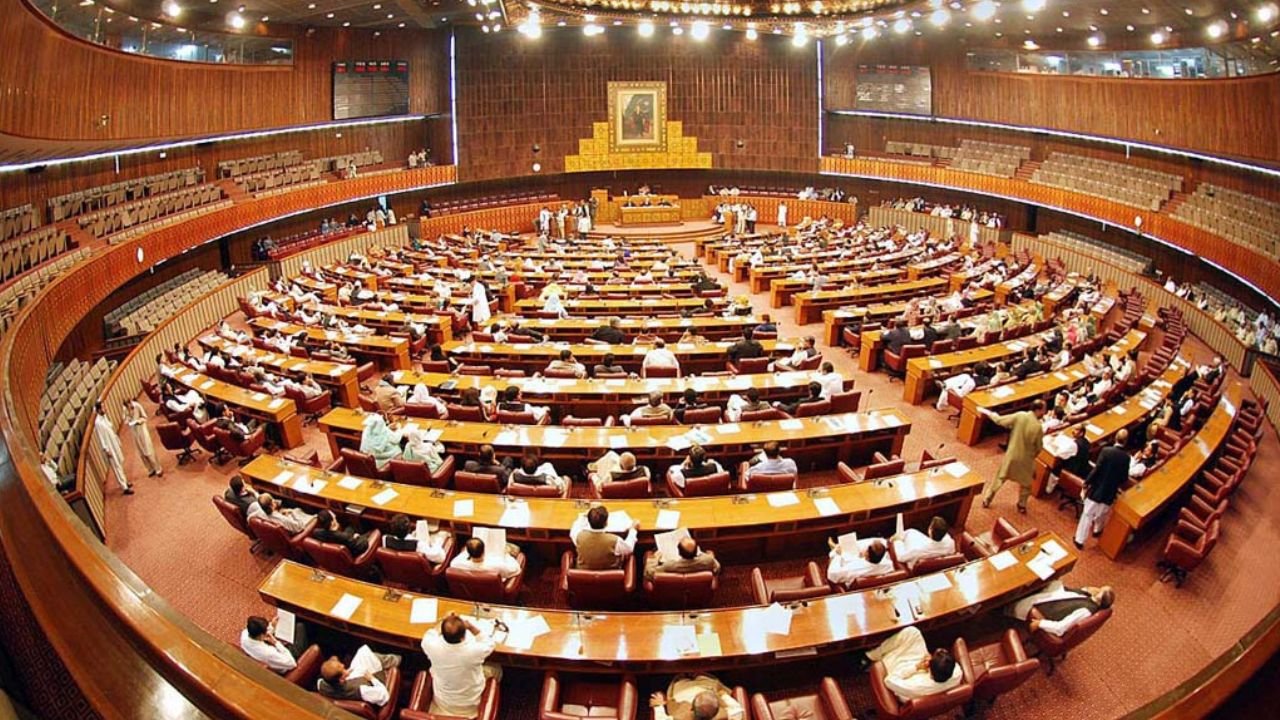
    By constitutional obligation, Speaker Raja Pervaiz Ashraf has convened a session of the newly elected National Assembly, scheduled for February 29th, following the general elections on February 8th. President Arif Alvi’s reluctance to fulfill this duty prompted Speaker Ashraf to take matters into his own hands, ensuring the timely commencement of parliamentary proceedings.

    Oath-Taking Ceremony for Newly Elected Members

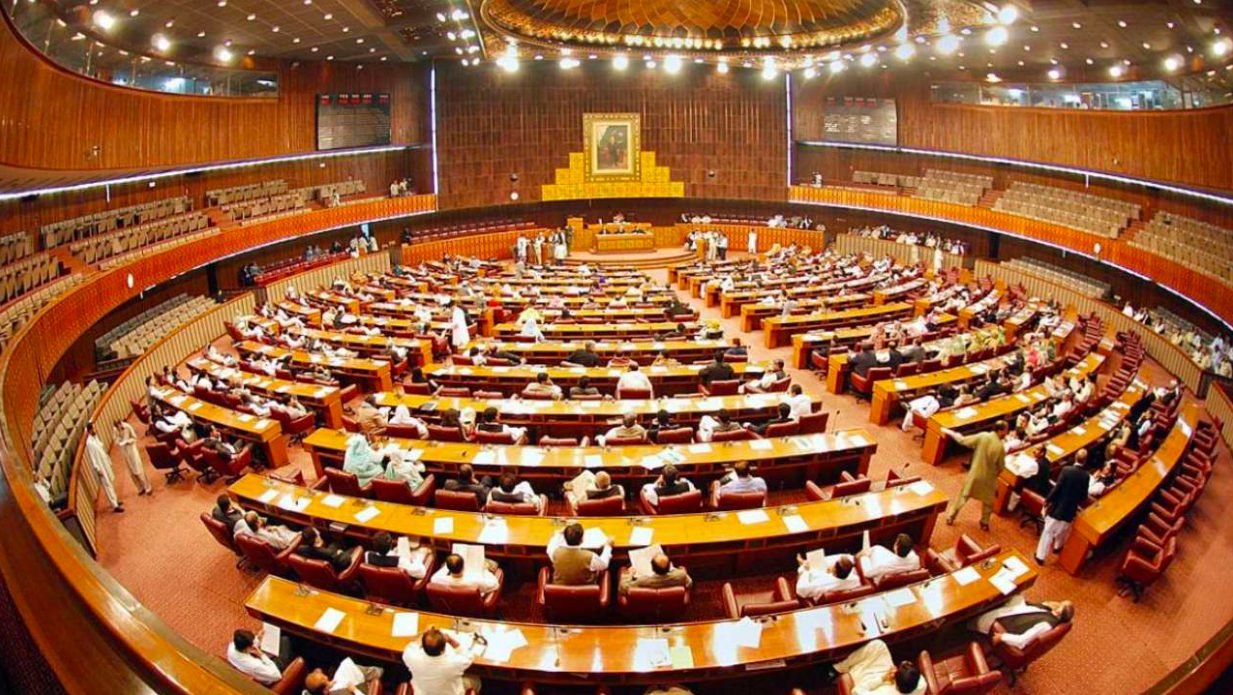
    The inaugural session of the new assembly will first see all the lawmakers take oath. In the 336-member house, 60 seats are reserved for women and 10 for minorities.

    Allocation of Reserved Seats

    The Election Commission of Pakistan (ECP) has already allocated 40 reserved women seats to different political parties. These include 20 out of 32 of Punjab, two out of 10 of Khyber Pakhtunkhwa, all 14 of Sindh and all four of Balochistan.

    Seven out of 10 seats reserved for minorities have also been allocated. The ECP is yet to allot reserved minority and women seats to the Sunni Ittehad Council (SIC), which has allied with the PTI.

    Election of Speaker and Deputy Speaker

    Speaker Ashraf, continuing in his role until a successor is elected, will preside over the session’s proceedings.

    “At the first meeting of the Assembly, following a general election, after the members have made oath and before the transaction of any other business, the Assembly shall proceed to elect a Speaker under clause (1) of Article 53, by secret ballot,” states Rules of Procedure and Conduct of Business in the National Assembly, 2007.

    Article 53 of the Constitution of Pakistan says, “After a general election, the National Assembly shall, at its first meeting and to the exclusion of any other business, elect from amongst its members a Speaker and a Deputy Speaker and, so often as the office of Speaker or Deputy Speaker becomes vacant, the Assembly shall elect another member as Speaker or, as the case may be, Deputy Speaker.”

    “At any time before 12:00 noon on the day preceding the day on which the election is to be held, any member may propose another member for election as Speaker by delivering to the Secretary a nomination paper signed by him and accompanied by a statement by the member whose name is proposed that he is willing to serve as Speaker, if elected,” states the official procedure.

    The voting process will be conducted through a secret ballot, and whoever receives more votes will be elected the new speaker of the house. In case the speaker’s election ends in a tie, the election will be held again.

    Subsequently, the new speaker will announce the schedule for the deputy speaker’s election. In the same manner, through a secret ballot, the deputy will be elected.

    Prime Ministerial Election Process

    Once the Speaker and Deputy Speaker are elected, the schedule for the Prime Minister’s election, also known as the leader of the house, will be announced. This process, outlined in Section 91(3) of the Constitution, involves nominations and an open vote by division, requiring a simple majority for victory.

    Section 91(3) of the Constitution says: “After the election of the speaker and the deputy speaker, the National Assembly shall, to the exclusion of any other business, proceed to elect without debate one of its Muslim members to be the Prime Minister.”

    In the same way, nomination papers for the prime minister’s election will be submitted to the assembly’s secretariat.

    While the election for the speaker, his deputy, and the leader of the opposition are free from any religious limitation, the prime minister’s election is open to only the Muslim members of the house.

    “Before voting commences, the Speaker shall direct that the bells be rung for five minutes to enable members not present in the chamber to be present. Immediately after the bells stop ringing, all the entrances to the lobby shall be locked and the assembly staff posted at each entrance shall not allow any entry or exit through those entrances until the voting has concluded,” according to the official procedure for recording of votes in the Second Schedule.

    Under the supervision of the speaker, an open vote will take place — by division.

    For instance, if there are two candidates, the speaker would say that ‘whoever wants to vote for candidate A can go to lobby A’ and ‘whoever wants to vote for candidate B, can go to lobby B’.

    At the entrance of the said lobbies, there will be an member of the assembly secretariat staff who will record every MNAs name in their register. This whole process will be open and people sitting in the galleries will be able to see who votes for whom.

    Here, the political parties have to vote collectively and every member has to vote for the candidate that their party is voting for.

    After every member has picked their lobby and registered their vote, the speaker will call them back and announce the result. To be selected as the prime minister, one needs a simple majority — more than half of the votes in the house i.e. 169 votes out of the total 336.

    Section 91(4) of the Constitution states, “The Prime Minister shall be elected by the votes of the majority of the total membership of the National Assembly: Provided that, if no member secures such a majority in the first poll, a second poll shall be held between the members who secure the two highest numbers of votes in the first poll and the member who secures a majority of votes of the members present and voting shall be declared to have been elected as Prime Minister: Provided further that, if the number of votes secured by two or more members securing the highest number of votes is equal, further poll shall be held between them until one of them secures a majority of votes of the members present and voting.”

    This means that the two most-voted candidates will contest another round of elections till one ultimately gets 51 percent of votes or more, and wins.

    Selection of Leader of the Opposition

    After the Prime Minister’s election, the Speaker will facilitate the nomination of candidates for the Leader of the Opposition, a position crucial for parliamentary balance. The selection process entails the submission of candidate names along with signatures, with the individual garnering the most support from opposition members being appointed.

    “After the [election of the Prime Minister] the Speaker shall inform the members about the date, time and place for submission of a name for the Leader of the Opposition under their signatures,” says the official procedure in Chapter V 39(2).

    The third point of the same section adds, “The Speaker shall declare a member as Leader of the Opposition having the greatest numerical strength after verification of the signatures of the members: Provided that any member who is not signatory to the proposal, if he presents himself before the count, and signs the proposal, shall be included in the count.”

    This announcement will be made right after the prime minister’s election but submission of these lists can take time.

    Changes in Selection Procedures

    Before the implementation of the 18th Amendment to the Constitution, the designation of the opposition leader rested solely with the discretion of the speaker.

    During the era of Parvez Musharraf, this discretionary power was perceived to be misused, notably when Fazlur Rehman was appointed as the opposition leader despite the clear majority held by the PPP and PML-N.

    However, the process has transformed now. In the current scenario, if multiple candidates are contending for the position, they are required to submit lists of opposition members, along with their signatures, to the speaker. The candidate who garners greater support from opposition members will be conferred the title of the leader of the opposition.

    Furthermore, it’s worth noting that in each of the aforementioned elections, the votes of the candidates themselves will also be taken into account.
  • Accountability court indicts Shehbaz Sharif’s wife in money laundering case

    Accountability court indicts Shehbaz Sharif’s wife in money laundering case

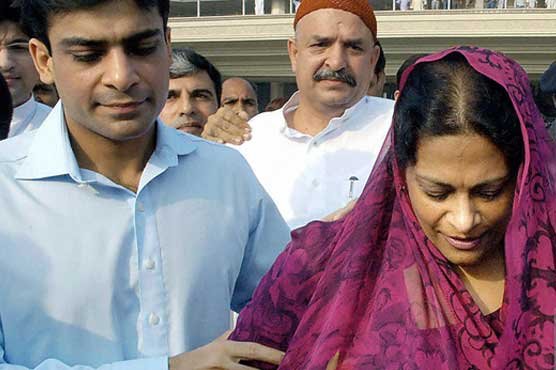
    An accountability court in Lahore indicated Pakistan Muslim League-Nawaz (PML-N) President Shehbaz Sharif’s wife Nusrat Shehbaz in money laundering case reference filed by the National Accountability Bureau (NAB), reports Dawn.

    During the hearing, Judge Naseem Virk indicted Sharif’s wife who is currently residing in London. NAB prosecutor Usman Rashid Cheema was also present there.

    Shehbaz Sharif’s plea for exemption from appearance got accepted as he has been advised complete rest by doctors after he slipped from the stairs.

    The hearing was adjourned till October 18.

    Following the decision by British National Crime Agency (NCA) about unfreezing of Sharif and his family’s bank accounts, NAB sources had claimed that the money laundering case is very different from it.

    Last year in August, NAB had filed before an accountability court a Rs8 billion reference of money laundering against Shehbaz, his wife, his two sons and other family members.

    Some sources had claimed that NAB Lahore investigated the assets of Sharif’s family through money laundering and fake foreign telegraphic transfers. 

  • National security briefing

    National security briefing

    Speaker National Assembly (NA) Asad Qaiser summoned a session of the Parliamentary Committee on National Security on July1. Army chief and heads of security institutions participated in the meeting. Politicians and legislators were given an in-depth briefing on Kashmir, Afghanistan, and internal security challenges.

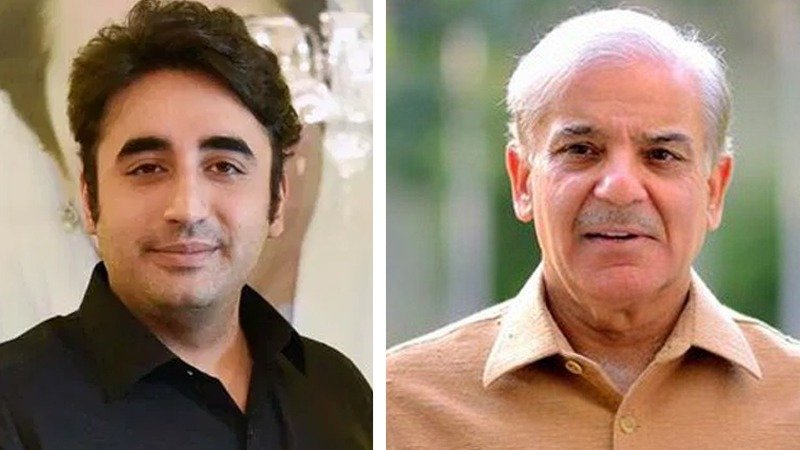
    Leader of the Opposition Shehbaz Sharif, Pakistan People’s Party (PPP) Chairman Bilawal Bhutto-Zardari, Mohsin Dawar, Yousaf Raza Gillani, Shahid Khaqan Abbasi, Mustafa Nawaz Khokhar and many others were part of the in-camera briefing.

    However, Prime Minister Imran Khan did not attend the meeting. Government spokespersons said that PM Khan was going to attend the meeting but Speaker Asad Qaiser conveyed to him that Shehbaz Sharif would not attend the briefing if Khan attended it. However, Pakistan Muslim League-Nawaz (PML-N) leaders have denied this. But NA Secretariat spokesperson also clarified that PM Imran Khan was always willing to attend the meeting but the only reason for not attending the meeting was reservations conveyed to the Assembly secretariat by some Opposition leaders.

    First of all, why did the Opposition ask the PM not to attend the meeting? Some say that the message by Shehbaz Sharif was miscommunicated. Well, the PML-N should clarify what message was conveyed, if any, and why.

    Sharif wanted to sign a Charter of Economy in order to improve Pakistan’s economy so why would he not allow PM Khan to attend such a meeting. Prime Minister Imran Khan does not need Mr Sharif’s permission or anyone else’s to attend an important parliamentary meeting.

    Secondly, even if Shehbaz Sharif had sent this message, why did the prime minister give in? This meeting was extremely important in light of the US withdrawal from Afghanistan and its consequences for Pakistan. All political leadership should have been there, including the PM, so as to come to a national consensus on these security issues. When has the prime minister ever listened to the Opposition before that he chose to finally pay heed to them now?

    Thirdly, Speaker NA Asad Qaiser was the convenor of the meeting. Why did he discourage the prime minister from attending such an important and sensitive meeting.

    Our leadership should not let their political differences come in the way when it comes to national security issues. Such differences should be limited to electoral politics, not on issues that have an impact on the future of the country. We hope that the next time there is such a meeting, or when issues related to the country’s future are discussed, all leaders would sit on the same table and build a national consensus.

  • ’PPP not discussed in PDM’: Maulana Fazl

    ’PPP not discussed in PDM’: Maulana Fazl

    Pakistan Democratic Movement (PDM) chief Maulana Fazl ur Rehman on Saturday said that the Pakistan People’s Party (PPP) and Awami National Party (ANP) were not discussed in the forum, as they are not part of the alliance.

    “They [PPP] can still contact the PDM leadership and apprise them about their intentions. But it is not something that we will waste time over anymore during PDM meetings,” said Maulana Fazl.

    Earlier on Friday, Shehbaz Sharif said that no party has the right to bring or kick another party out of the alliance. “PDM is a forum and decisions are taken with consensus.”

    PDM also rejected the government’s “one-sided” electoral reforms, which include the use of electronic voting machines (EVMs), and announced a fresh wave of anti-government protests.

    “PDM rejects the government’s unilateral electoral reforms ordinance, including the voting machines, and terms it as pre-poll rigging,” said Fazl.

    In this regard, the Election Commission of Pakistan, which is responsible for holding transparent elections, should call a meeting of all political parties to take a unanimous decision on reforms, Fazl added.

    The Opposition alliance announced a future course of action. On July 4, a massive anti-government protest will be held, followed by another one in Karachi on July 29.

    On the occasion of August 14, a massive protest will be held in Islamabad, with PDM showing solidarity with Kashmiris and Palestinians.

    The Pakistan Muslim League-Nawaz (PML-N) will host a budget seminar soon to form a unified strategy during the budget session, while the task to hold the event has been given to PML-N President Shehbaz Sharif.

    The PDM chief said PML-N supremo Nawaz Sharif attended the meeting via video, while other Opposition party leaders were present in person.

  • ‘No party has the right to kick another party out of PDM’: Shehbaz Sharif

    ‘No party has the right to kick another party out of PDM’: Shehbaz Sharif

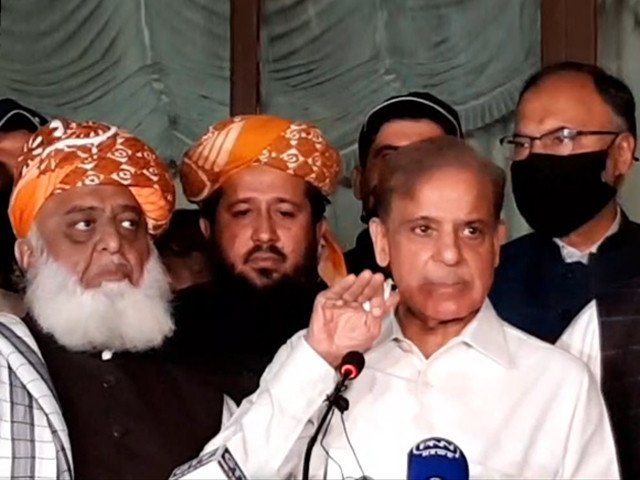
    “No party has the right to bring or kick another party out [of the alliance]. Pakistan Democratic Movement (PDM) is a forum and decisions are taken with consensus,” said President of Pakistan Muslim League-Nawaz (PML-N) Shehbaz Sharif on Friday.

    Shehbaz further added that we had invited ‘parliamentary leaders’ to the dinner, which had nothing to do with the PDM

    “Shahid Khaqan Abbasi has already clarified this matter. I, being the Leader of the Opposition in the National Assembly, have a duty to fulfil. We had gathered to discuss the upcoming budget, the ill-performance, and massive failures of the sitting government,” added Shehbaz.

    Meanwhile, Federal Minister for Information and Broadcasting Fawad Chaudhry, took to Twitter to comment on Shehbaz Sharif’s stance. “Shehbaz Sharif should first focus on uniting the PML-N instead of uniting the opposition. The boat is in a whirlpool.”

    Chaudhry further added that the government was ready to sit with the Opposition to discuss election reforms.

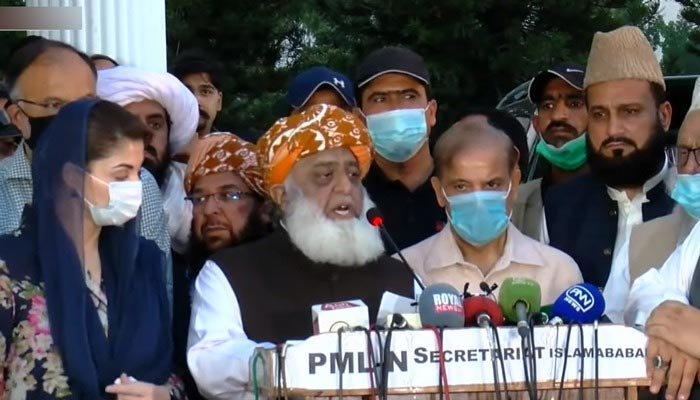
    The PML-N will host an important meeting of the PDM in Islamabad today. The meeting will take place at the PML-N secretariat. The meeting will be held under the chairmanship of the Leader of Jamat Ulema-i-Islam Fazl (JUI-F) and acting president of PDM Maulana Fazlur Rehman.

    Matters relating to the Pakistan People’s Party (PPP) and the Awami National Party (ANP) will be contemplated upon. Opposition leaders will decide if both parties can be taken back again in the alliance or not.

    The PDM leaders will discuss the political situation in the country and the future strategy of the anti-government alliance.

    Just a day ago, Shehbaz in a TV show hinted at his plan to convince his elder brother and the PML-N supreme leader Nawaz Sharif on these issues in the larger national interest.

  • PPP to attend Shehbaz Sharif’s dinner today

    PPP to attend Shehbaz Sharif’s dinner today

    The PPP has decided to attend a dinner being hosted by PML-N President Shehbaz Sharif for members of the opposition parties today (Monday).

    The PPP delegation will reportedly include Opposition leader in the Senate Yousaf Raza Gilani, Raja Pervez Ashraf and Sherry Rehman.

    PPP leader Nayyar Hussain Bukhari said that this was an invitation for opposition leaders and not of the Pakistan Democratic Movement alliance ( PDM). He further added, “Neither does the PDM president nor its secretary-general has the authority to kick PPP out of the alliance.”

    “The differences with PPP could have been resolved over discussions or sit downs instead of sending show-cause notices,” Bukhari added.

    Sources in the PPP said the party’s senior leadership thought attending the dinner would serve in the best interest of the opposition, in giving a tough time to the PTI government in the up coming budget session in the National Assembly, The News had reported.

    As per earlier reports, Shehbaz Sharif invited the opposition leaders for a dinner on Monday, in Islamabad.

    However, PPP and ANP were not invited by the PML-N at an Opposition meeting luncheon in Senate earlier today.

  • Race for leader of opposition in Senate

    Race for leader of opposition in Senate

    Reports indicate that the Pakistan People’s Party (PPP) and the Pakistan Muslim League-Nawaz (PML-N) are fighting over the slot of leader of opposition in the Senate. On March 8, Pakistan Democratic Movement (PDM) Information Secretary Mian Iftikhar Hussain told the media that it has been decided that the candidate for deputy chairman Senate would be from JUI-F and leader of the opposition in the upper House would be from the PML-N. Yousaf Raza Gillani was the PDM’s joint candidate for Senate chairman.

    Sources say the PPP is now vying for this position as they have reservations over the nomination of newly elected Senator Azam Nazeer Tarar by the PML-N. Tarar is a senior lawyer and is representing two accused police officers in the Benazir Bhutto murder case. When he was asked about these reservations in Geo News programme ‘Capital Talk’, Tarar said that he has his own professional commitments [as a lawyer] and he was representing the two police officers who were being tried for negligence in BB murder case. “These two have no role in the assassination but are being tried for negligence related to washing the crime scene.”

    As per media reports, Sherry Rehman will be PPP’s candidate for leader of opposition but she has denied that she is the candidate for the position.