Tag: Lebanon

  • Iran blames Israel, US for deadly blasts near grave of Guards general Soleimani

    Iran blames Israel, US for deadly blasts near grave of Guards general Soleimani

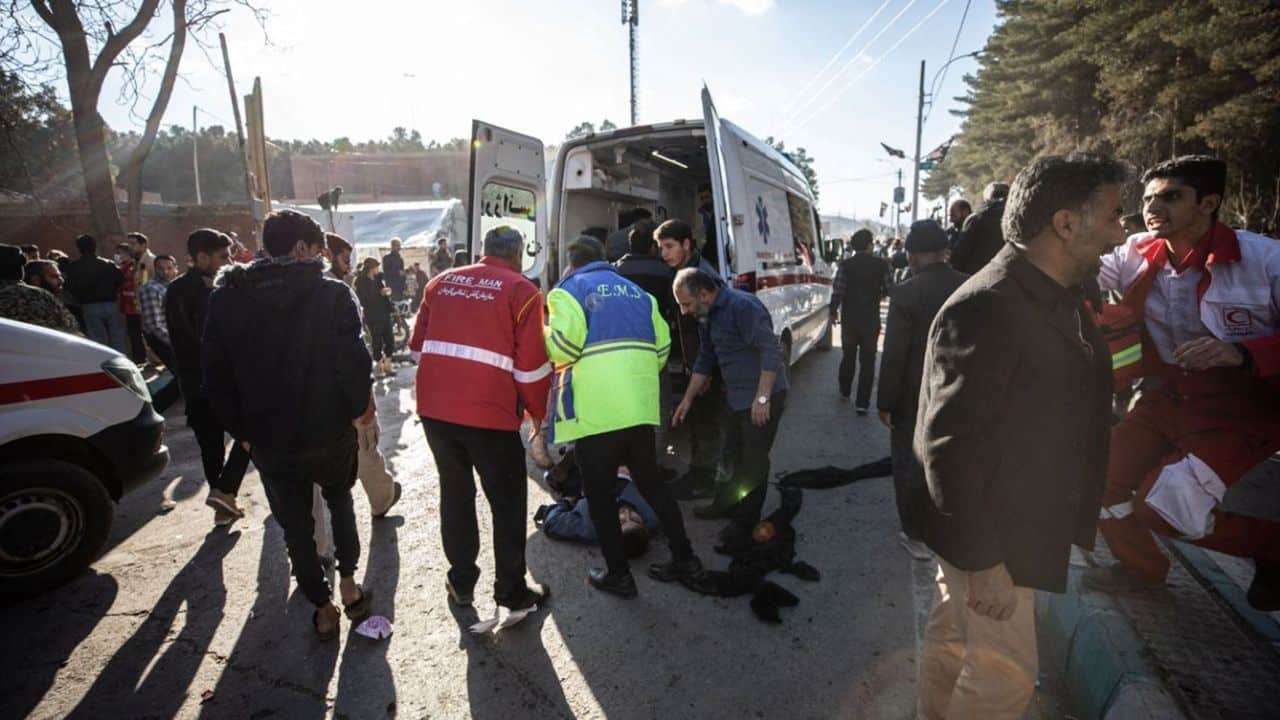
    Iran blamed Israel and the United States on Wednesday for twin bomb blasts that killed more than 100 people in the country’s south, ripping through a crowd commemorating Revolutionary Guards general Qassem Soleimani four years after his death in a US strike.

    The two explosions – labelled a “terrorist attack” by state media and regional authorities – came amid high Middle East tensions over the Israel-Hamas war in Gaza and the killing of a Hamas senior leader in Lebanon on Tuesday.

    The unclaimed attacks, which sparked fears of a widening conflict in the region, rattled global markets, where oil prices jumped more than three percent and sparked global condemnation.

    “Washington says USA and Israel had no role in terrorist attack in Kerman, Iran. Really? A fox smells its own lair first,” the Iranian president’s political deputy, Mohammad Jamshidi, wrote on X, formerly Twitter.

    “Make no mistake. The responsibility for this crime lies with the US and Zionist regimes (Israel) and terrorism is just a tool,” he added.

    The United States had earlier rejected any suggestions that it or ally Israel were involved while Israel declined to comment.

    “The United States was not involved in any way … We have no reason to believe that Israel was involved in this explosion,” State Department spokesman Matthew Miller said.

    Asked about the blasts, Israeli army spokesman Daniel Hagari said: “We are focused on the combat with Hamas”.

    Iran’s supreme leader Ayatollah Ali Khamenei blamed “evil and criminal enemies” of the country for the attack and vowed a “harsh response”.

    President Ebrahim Raisi, who scrapped a visit to Turkey on Thursday, condemned the “heinous” crime as Iran declared Thursday a national day of mourning.

    The blasts, about 15 minutes apart, struck near the Martyrs Cemetery at the Saheb al-Zaman Mosque in Kerman, Soleimani’s southern hometown, as supporters gathered to mark his killing in a 2020 US drone strike in Baghdad.

    Tehran’s official news agency IRNA quoted Interior Minister Ahmad Vahidi as saying that “according to forensic statistics, the number of martyrs from this incident has been announced as 84 so far”.

    The death toll was also confirmed by the head of Iran’s emergency services, Jafar Miadfar, who said an earlier tally of 95 was due to the fact that some bodies had been dismembered and counted “several times”.

    Miadfar said 284 people had been injured and “195 are still hospitalised”.

    Three paramedics who rushed to the scene after the first explosion were among those killed, said Iran’s Red Crescent.

    IRNA said the first explosion took place around 700 metres from Soleimani’s grave while the other was around 1 kilometre away.

    Tasnim news agency, quoting what it called informed sources, said that “two bags carrying bombs went off” and “the perpetrators … apparently detonated the bombs by remote control”.

    Online footage showed panicked crowds scrambling to flee as security personnel cordoned off the area.

    ‘Shocking cruelty’ 

    State television showed bloodied victims lying on the ground and ambulances and rescue personnel racing to help them.

    “We were walking towards the cemetery when a car suddenly stopped behind us and a waste bin containing a bomb exploded,” an eyewitness was quoted as saying by the ISNA news agency.

    “We only heard the explosion and saw people falling.”

    By nightfall, crowds returned to the Martyrs Cemetery in Kerman chanting: “Death to Israel” and “Death to America”.

    In Tehran, thousands gathered at the Grand Mosalla Mosque to pay tribute to Soleimani.

    “We condemn today’s bitter terrorist incident … I hope the perpetrators of the crime will be identified and punished for their actions,” Soleimani’s daughter, Zeinab, said.

    Soleimani headed the Quds Force, the foreign operations arm of the Islamic Revolutionary Guards Corps, overseeing military operations across the Middle East.

    The United Nations, European Union, and several countries including Saudi Arabia, Jordan, Germany and Iraq denounced the blasts.

    UN chief Antonio Guterres “strongly condemns” the blasts, his office said, and the EU said: “This act of terror has exacted a shocking toll of civilian deaths and injuries.”

    The EU’s top diplomat, Josep Borrell, said that he spoke to Iranian Foreign Minister Hossein Amir-Abdollahian to “convey condolences” and “condemned this terrorist attack in the strongest terms and expressed solidarity with the Iranian people”.

    Russian President Vladimir Putin wrote to Raisi and Khamenei that “the killing of peaceful people visiting the cemetery is shocking in its cruelty and cynicism”.

    Iran ally Hamas denounced the “criminal attack” while the Saudi foreign ministry in Riyadh voiced “solidarity with Iran in this painful event”.

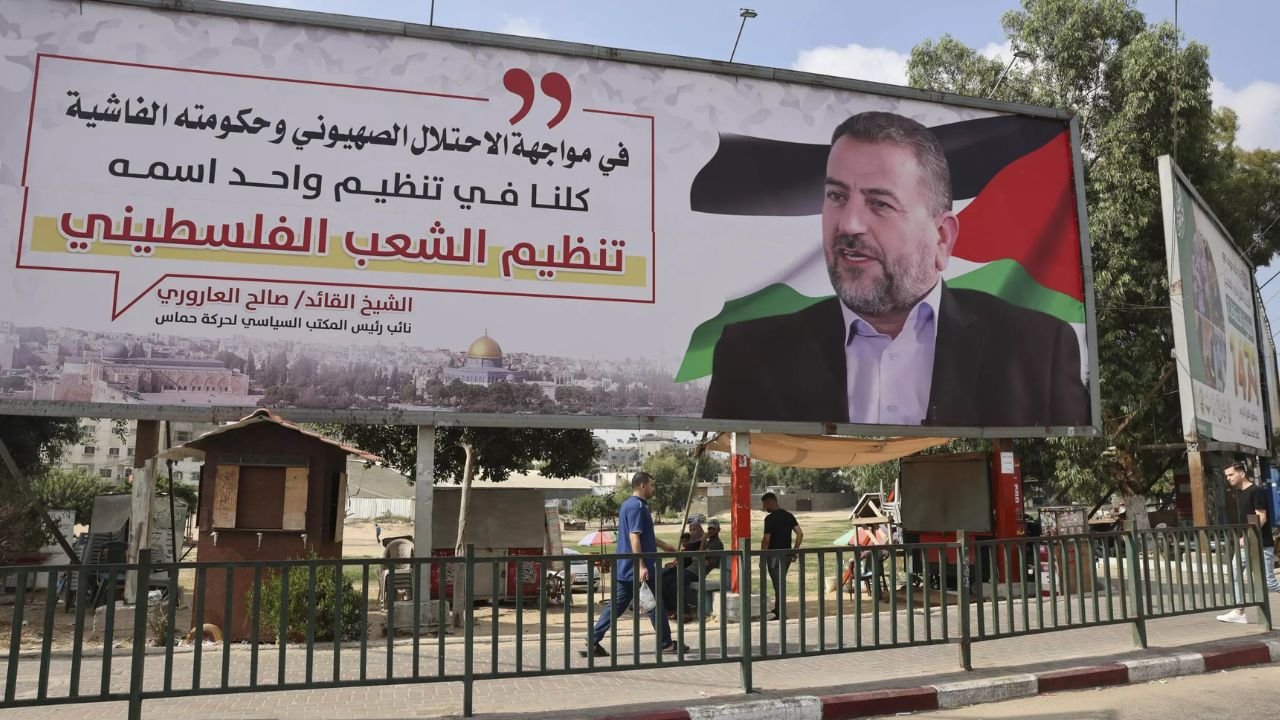
    The blasts came a day after Hamas deputy leader Saleh al-Arouri – an Iran ally – was killed in a strike, which Lebanese officials blamed on Israel, in a southern Beirut suburb that is a stronghold of Iran-backed armed group Hezbollah.

    Wednesday’s bomb blasts were Iran’s deadliest since a 1978 arson attack at the Cinema Rex in the southwestern city of Abadan, which killed at least 377 people, according to AFP archives.

    Previous plots 

    Iran has long fought a shadow war of killings and sabotage with archenemy Israel while also battling various jihadist and other militant groups.

    In September, the Fars news agency reported that a key “operative” affiliated with the Islamic State (IS) group, in charge of carrying out “terrorist operations” in Iran, had been arrested in Kerman.

    In July, Iran’s intelligence ministry said it had disbanded a network “linked to Israel’s spy organisation” that had been plotting “terrorist operations” across Iran, IRNA reported.

    The alleged plots included “planning an explosion at the grave” of Soleimani, it said.

    Soleimani, whom Khamenei years ago declared a “living martyr”, was widely regarded as a hero in Iran for his role in defeating IS in both Iraq and Syria.

    Long seen as a deadly adversary by the United States and its allies, Soleimani was one of the most important powerbrokers across the region, setting Iran’s political and military agenda in Syria, Iraq and Yemen.
  • Israel ready ‘for any scenario’ after strike kills Hamas deputy in Lebanon

    Israel ready ‘for any scenario’ after strike kills Hamas deputy in Lebanon

    Jerusalem (AFP) – The Israeli army has said it is “prepared for any scenario” after a strike in Beirut that killed Hamas’s deputy chief, stoking fears that it could boil over into wider regional conflict.

    A high-level security official in Lebanon told AFP that Saleh al-Aruri was killed along with his bodyguards in a strike by Israel.

    A second security official confirmed the information, while Hamas TV also reported Israel had killed Aruri in Lebanon.

    Israeli army spokesman Daniel Hagari did not directly comment on the killing, but said afterwards that the military was in “very high state of readiness in all arenas, in defence and offence. We are highly prepared for any scenario.”

    Israel has previously announced the deaths in Gaza of Hamas commanders and officials during the war, but Aruri is the most high-profile figure to be killed, and his death came in the first strike on the Lebanese capital since hostilities began.

    The strike adds to widespread fears that it could lead to a wider regional conflagration.

    Hamas said Aruri’s death would not lead to its defeat, while its Lebanon-based ally Hezbollah vowed the killing would not go unpunished, calling it “a serious assault on Lebanon… and a dangerous development”.

    Lebanese Prime Minister Najib Mikati condemned the killing and said it “aims to draw Lebanon” further into the war.

    Aruri, who lived in exile, is accused by Israel of masterminding numerous attacks.

    Following his death, Hamas chief Ismail Haniyeh said that a movement “whose leaders fall as martyrs for the dignity of our people and our nation will never be defeated”.

  • ‘Deliberate’ Israeli strike on journalists in Lebanon warrants ‘war crime’ investigation: watchdogs

    ‘Deliberate’ Israeli strike on journalists in Lebanon warrants ‘war crime’ investigation: watchdogs

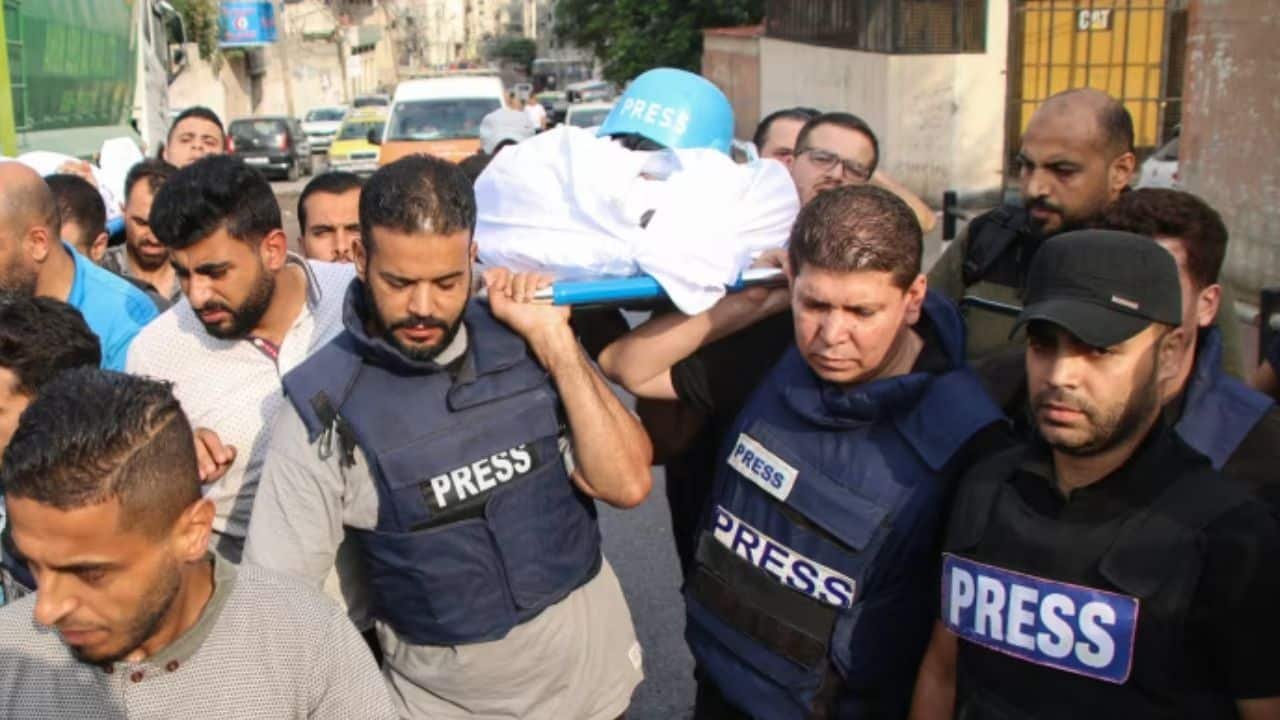
    The Israeli strike that killed one journalist and wounded six others in Lebanon merits a “war crime” investigation, rights groups Amnesty International and Human Rights Watch (HRW) told AFP on Thursday.

    Reuters journalist Issam Abdallah, 37, was killed instantly in the strike on October 13 in the south of the country near the Israeli border.

    The others present — two more Reuters journalists, two from Al Jazeera, and two from AFP — were all injured.

    AFP photographer Christina Assi, 28, was seriously wounded, later had a leg amputated and is still in hospital.

    Independent investigations by both rights groups concluded, like an AFP investigation published earlier on Thursday, that the first strike that killed Abdallah and severely wounded Assi was most likely a tank round fired from Israel.

    Amnesty said the strikes “were likely a direct attack on civilians that must be investigated as a war crime”.

    “Those responsible for Issam Abdallah’s unlawful killing and the injuring of six other journalists must be held accountable,” said Aya Majzoub, Amnesty’s deputy regional director for the Middle East and North Africa.

    “No journalist should ever be targeted or killed simply for carrying out their work. Israel must not be allowed to kill and attack journalists with impunity.”

    HRW said the two Israeli strikes “were apparently deliberate attacks on civilians, which is a war crime”.

    Under international humanitarian law, “it is forbidden in any circumstances to carry out direct attacks against civilians”, it said.

    The group’s investigation indicated that the journalists were “well removed from ongoing hostilities, clearly identifiable as members of the media, and had been stationary for at least 75 minutes before they were hit”.

    Amnesty said images it verified showed “the seven journalists were wearing body armour labelled ‘press’, and that the blue Reuters crew car was marked ‘TV’ with yellow tape on its hood”.

    “The evidence strongly suggests that Israeli forces knew or should have known that the group that they were attacking were journalists,” HRW’s Lebanon researcher Ramzi Kaiss said.

    “This is an unlawful and apparently deliberate attack on a very visible group of journalists,” he said.

    ‘Justice and accountability’

    Speaking at a press conference in Beirut, Dylan Collins, the other AFP journalist wounded in the attack, said: “I know they (the investigations) won’t bring Issam back to life. I know they won’t help Christina walk again.

    “But what I do hope is that they at least will mark the start of some sort of process of justice and accountability,” he said.

    He shared a message from Assi that said: “We chose journalism with a mission to deliver the truth, and despite the inevitable costs, our commitment remains unwavering. Nothing can silence us.”

    Lebanese Prime Minister Najib Mikati said in a statement his government would “take all measures to include” the conclusions of the investigation “in the complaint filed before the UN Security Council”.

    Since Israel’s bombardment of Gaza started after Palestinian fighter group Hamas struck Israel in a surprise attack on October 7, 63 journalists and media workers have been killed — 56 Palestinians, four Israelis and three Lebanese, the Committee to Protect Journalists says.

    The New York-based rights group on Thursday called for “an immediate, independent, and transparent investigation that holds the perpetrators to account” for the strike on journalists in Lebanon.

  • Death toll crosses 9,000: What we know about day 27

    Death toll crosses 9,000: What we know about day 27

    Biden finally calls for a ‘pause’ in war

    For the first time since October 7, US President Joe Biden has called for a humanitarian “pause” to Israel’s war in Gaza, asserting the eimportance of evacuation of all citizens in Gaza.

    “I think we need a pause,” he said on Wednesday when a heckler referred to an immediate ceasefire during a campaign speech.

    Biden was asked what he meant by “pause” to which he responded, “Time to get the prisoners out.”

    The White House later clarified that the reference was of captives under Hamas.

    Almost 200 killed, over 100 missing in Jabalia bombing

    According to a report by Gaza’s Government Media Office, more than 1,000 people have been affected by bombing on Jabalia refugee camp which includes 195 killed, 120 missing and at least 777 wounded.

    The Israeli military attacked the camp on Tuesday as well as Wednesday promoting the UN Secretary-General Antonio Guterres to deem the attacks “appalling”, while the UN High Commissioner for Human Rights said the “disproportionate attacks” could amount to “war crimes”.

    Israel, on the contrary, claimed to have targeted a Hamas commander.

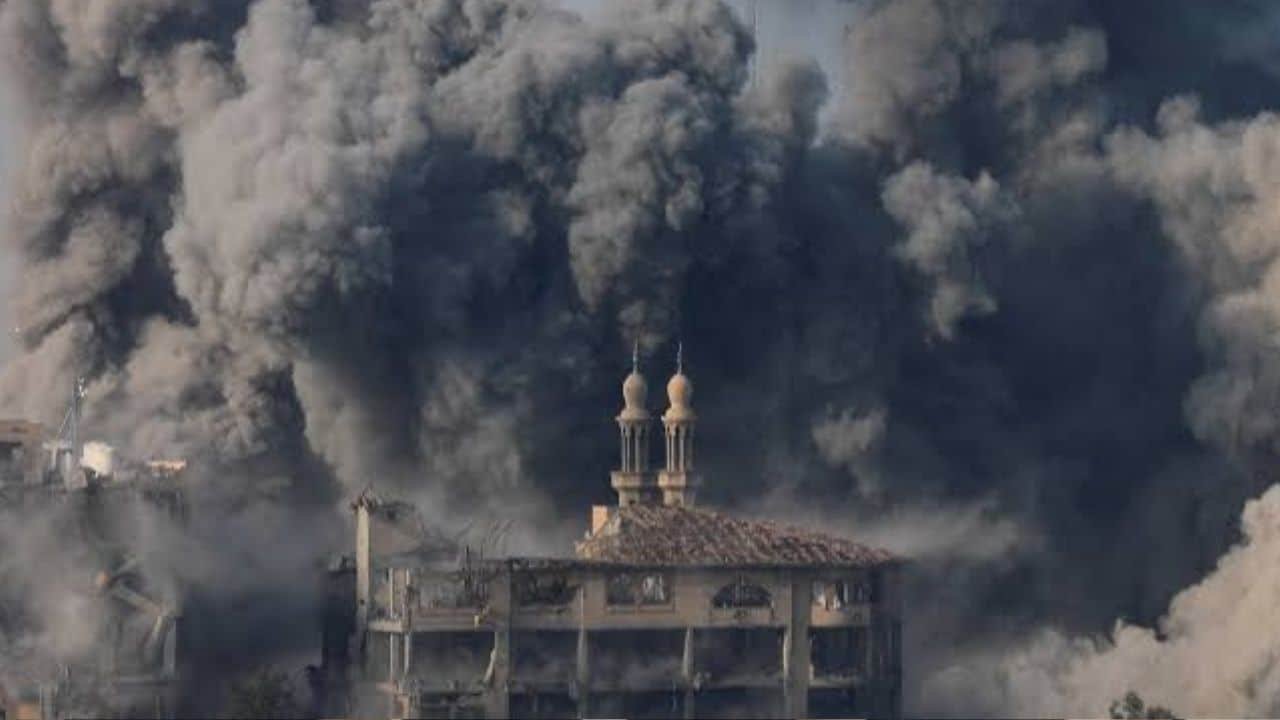
    12,000 targets in Gaza attacked

    Israeli army spokesperson Daniel Hagari has stated that more than 12,000 targets have been attacked since October 7.

    Eleven bakeries destroyed

    UN relief agency UNOCHA has reported on the destruction of 11 bakeries in Gaza that were struck by Israel since October 7.

    Now, only nine bakeries are reportedly left in Gaza as of Wednesday.

    While UNOCHA is supplying the bakeries with flour, they are, nonetheless, struggling to operate due to fuel shortages and additionally, people have to wait in long queues.

    Israel-Lebanon conflict continues

    Al Jazeera reported that the Israeli army claimed that one of its drones was shot down by a surface-to-air missile fired from Lebanon.

    The military responded by attacking the squad and the site from where the rocket was launched.

    Egypt to help evacuate ‘about 7,000’ foreign nationals

    The Foreign Ministry released a statement saying that Egypt will help evacuate “about 7,000” foreigners and dual nationals from Gaza through Rafah border.

    These 7,000 people consist of “more than 60” nationalities.

    At least 60 people detained across the occupied West Bank

    In an overnight raid by the Israeli forces, at least 60 people have been detained across the occupied West Bank.

    The total number of Palestinians detained since October 7 now crosses 1,800.

    Additionally, 132 people have been killed in the occupied West Bank while more than 2,100 are wounded.

    Israeli agricultural sector struggling

    The Ministry of Labor reported that Israel’s agricultural sector is reportedly affected with “significant damage” as thousands of foreign workers have left since October 7.

    More than a quarter of about 30,000 foreign workers working in Israel have departed while about 20,000 Palestinian agricultural workers have not been allowed to enter Israel.

    The ministry has now given a green signal to 5,000 foreign workers to overcome the shortage in the agriculture sector.

    Credits: Al Jazeera

  • 23 journalists killed in Israeli airstrikes since October 7

    23 journalists killed in Israeli airstrikes since October 7

    The Israel-Gaza escalation has resulted in the killings of more than 4,700 people in Gaza —mainly Palestinians — as increasingly heavy Israeli air raids continue following October 7 Hamas attacks on Israel.

    Committee to Protect Journalists (CPJ) has been keeping a track of journalists who have been killed, injured, detained, or missing in the Israeli-declared war.

    Amidst Israeli airstrikes, disrupted communications, and extensive power outages, journalists are at risk at all times as they cover the situation in Gaza.

    As of yesterday, 23 journalists have reportedly been killed, including 19 Palestinians, three Israelis, and one Lebanese.

    The victims are identified as Khalil Abu Aathra, Sameeh Al-Nady, Mohammad Balousha, Issam Bhar, Abdulhadi Habib, Yousef Maher Dawas, Salam Mema, Husam Mubarak, Issam Abdallah, Ahmed Shehab, Mohamed Fayez Abu Matar, Saeed al-Taweel, Mohammed Sobh, Hisham Alnwajha, Assaad Shamlakh, Shai Regev, Ayelet Arnin, Yaniv Zohar, Mohammad Al-Salhi, Mohammad Jarghoun, and Ibrahim Mohammad Lafi.

    Additionally, eight journalists are reported injured and three are missing or detained.

    CPJ has also claimed to have been investigating a number of unconfirmed reports of other journalists being “killed, missing, detained, hurt or threatened, and of damage to media offices and journalists’ home.”

    According to CPJ’s Middle East and North Africa program coordinator, Sherif Mansour, “CPJ emphasises that journalists are civilians doing important work during times of crisis and must not be targeted by warring parties,

    “Journalists across the region are making great sacrifices to cover this heartbreaking conflict. All parties must take steps to ensure their safety.”

  • Israel tells 1.1m people to evacuate Northern Gaza within 24 hours: what we know about day seven

    Israel tells 1.1m people to evacuate Northern Gaza within 24 hours: what we know about day seven

    Where do they go?

    The Gaza Strip consists of 2.3 million people. More than 1.1 million Palestinians living in the northern part of the Strip are being asked to move towards the South by Israeli forces — that too, within 24 hours as there are plans of ground operations.

    The UN has deemed the call as “impossible”, stating that it can lead to a serious humanitarian crisis: “It is ‘impossible for such a movement to take place without devastating humanitarian consequences,” the UN said.

    Israeli military sent a warning to Gaza saying, “This evacuation is for your own safety. You will be able to return to Gaza City only when another announcement permitting it is made. Do not approach the area of the security fence with the State of Israel.”

    Hamas, however, has told Palestinians to not give into the “fake propaganda”“Remain steadfast in your homes and stand firm in the face of this disgusting psychological war waged by the occupation”, stated the Hamas Authority for Refugee Affairs.

    Nowhere to sleep

    The International Committee of the Red Cross has revealed that as a large number of people in Gaza are being displaced, “hundreds of thousands have nowhere to sleep”.

    It added that more than 2 million people lack basic necessities, water and electricity; ambulances cannot reach the wounded.

    423,000 people displaced

    The United Nations has revealed that 423,378 people have been displaced after forcibly fleeing their residences in Gaza.

    The UN’s Office for the Coordination of Humanitarian Affairs (UNOCHA) said that this number has reportedly risen by an addition of 84,444 people on Thursday.

    ‘Genocide’ in Gaza, says Hamas

    In a video statement, senior Hamas official Ghazi Hamad describes the current Israeli moves as “genocide” which are being backed by the Western countries who, he added, are not seeking a resolution.

    “There is no safe area for the people in Gaza to seek refuge or shelter,” he said.

    “Every area and every building is under possible attack. Everyone is targeted and vulnerable to Israel’s killing, including women, children, the elderly and even disabled people.”

    “The Israeli leaders are giving clear instructions to their army to carry out a genocide [against] more than two million citizens in the Gaza Strip. We are facing unprecedented crimes in modern history,”

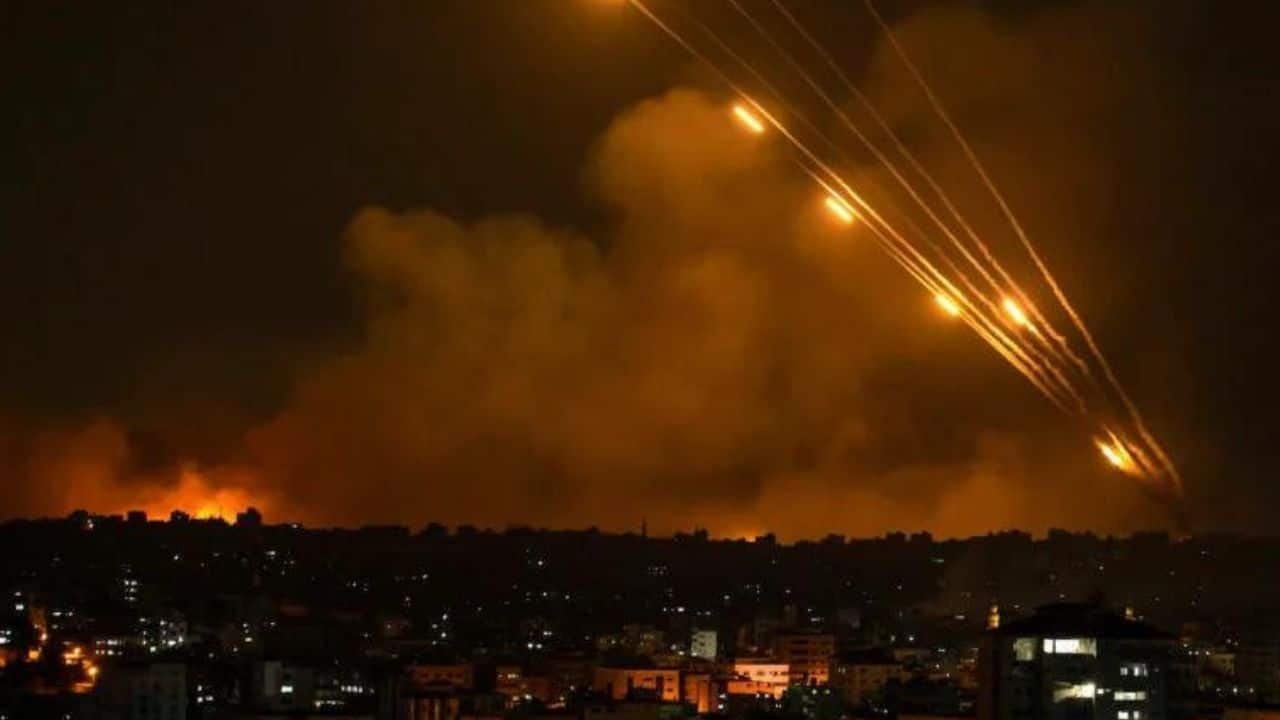
    30 airstrikes in one night

    Israel conducted 30 airstrikes during the night in a span of just one hour.

    This indicates the intensification of attacks in the northern part of the Gaza Strip after excessive attacks in the southern part, targeting Rafah.

    Use of white phosphorus

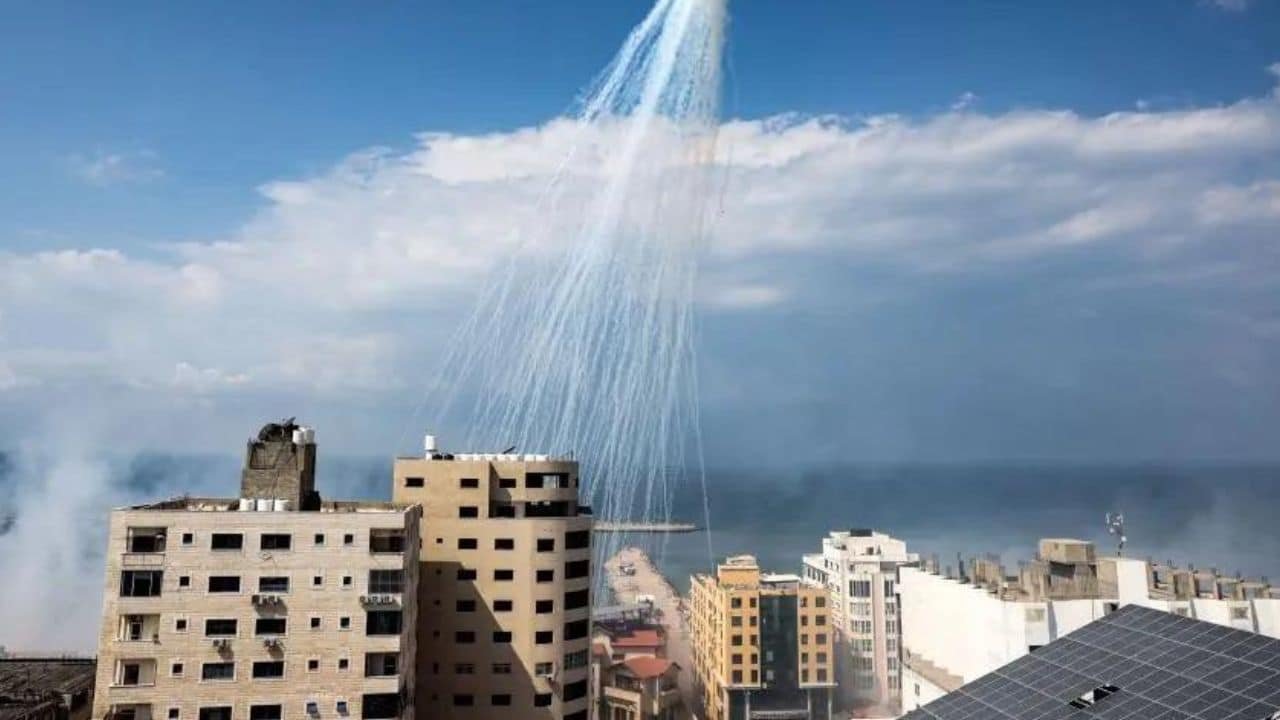
    The use of white phosphorus has now been confirmed by Human Rights Watch.

    “Human Rights Watch verified videos taken in Lebanon and Gaza on October 10 and 11, 2023, respectively, showing multiple airbursts of artillery-fired white phosphorus over the Gaza City port and two rural locations along the Israel-Lebanon border, and interviewed two people who described an attack in Gaza,” they have stated.

    Additionally, Lama Fakih, Middle East and North Africa director at Human Rights Watch explains that “Any time that white phosphorus is used in crowded civilian areas, it poses a high risk of excruciating burns and lifelong suffering,

    “White phosphorous is unlawfully indiscriminate when airburst in populated urban areas, where it can burn down houses and cause egregious harm to civilians.”

    Lebanese forced to flee too

    After Palestinians, thousands of people from southern Lebanese villages are forced to leave their houses due to high chances of Israel-Hezbollah war.

    Hezbollah is a Lebanese Shia Islamist political party and militant group. They have a frictional history with Israel and both of them have, time and again, attacked each other’s territory.

  • Human Rights Watch confirms use of white phosphorus in Gaza, Lebanon

    Human Rights Watch confirms use of white phosphorus in Gaza, Lebanon

    As Israel’s onslaught on Gaza enters the seventh day, multiple sources claimed that Israeli forces were using white phosphorus to attack Gaza and Lebanon.

    The Palestinians claimed the news to be true but many news platforms did not verify the reports.

    The use of white phosphorus has now been confirmed by Human Rights Watch.

    “Human Rights Watch verified videos taken in Lebanon and Gaza on October 10 and 11, 2023, respectively, showing multiple airbursts of artillery-fired white phosphorus over the Gaza City port and two rural locations along the Israel-Lebanon border, and interviewed two people who described an attack in Gaza,” they have stated.

    Additionally, Lama Fakih, Middle East and North Africa director at Human Rights Watch explains that “Any time that white phosphorus is used in crowded civilian areas, it poses a high risk of excruciating burns and lifelong suffering,

    “White phosphorous is unlawfully indiscriminate when airburst in populated urban areas, where it can burn down houses and cause egregious harm to civilians.”

    The United Nations has banned the use of incendiary weapons in 1972.

    “Incendiary weapons are weapons or munitions designed to set fire to objects or cause burn or respiratory injury to people through the action of flame, heat, or combination thereof, resulting from a chemical reaction of a flammable substance such as napalm or white phosphorus,” the UN says.

    Nonetheless, it is not the first time that Israel has used white phosphorus against Palestinians. One of the first recorded incidents of its use is from 2009.

  • Lebanese artist turns blast debris into symbol of hope

    Lebanese artist turns blast debris into symbol of hope

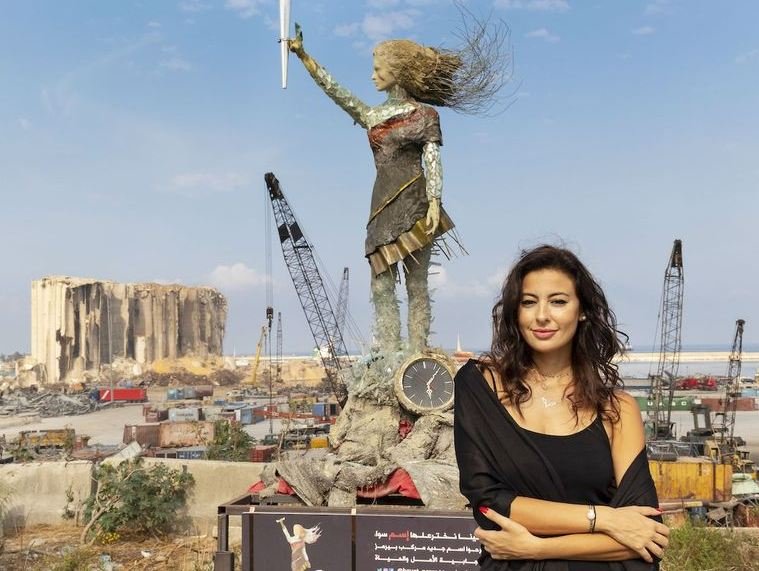
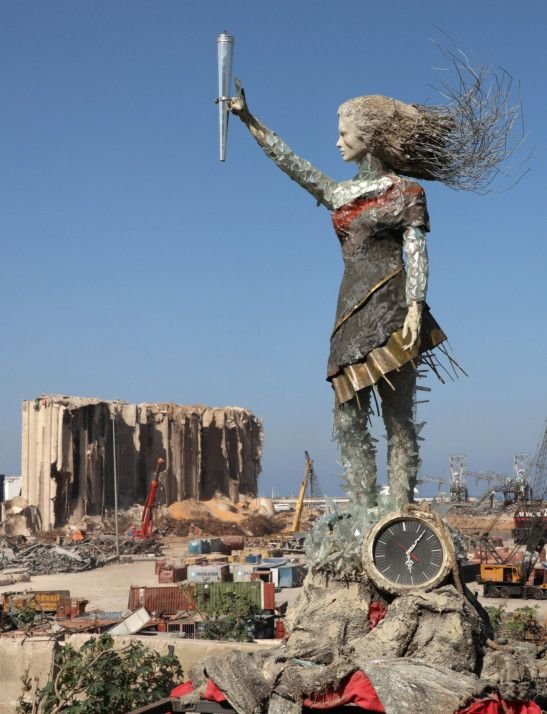
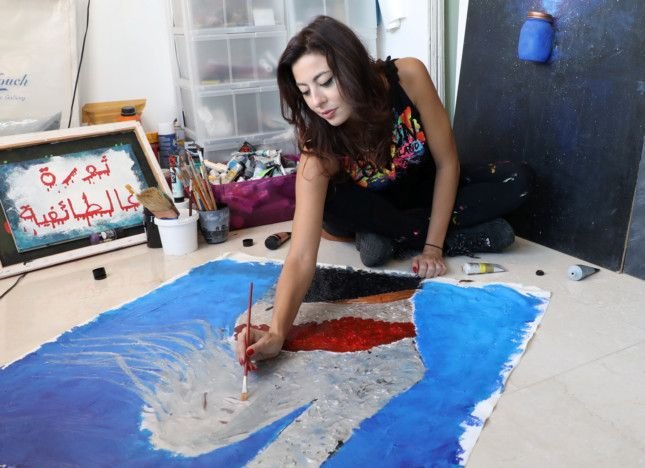
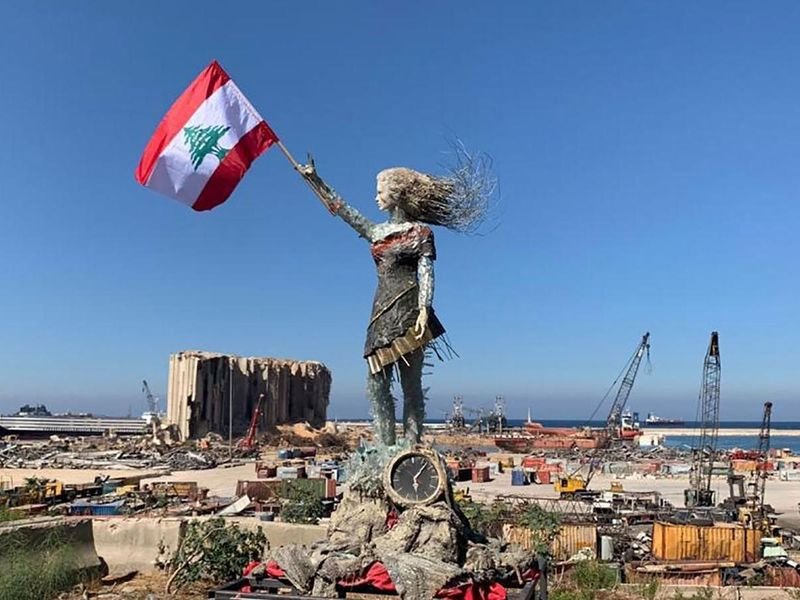
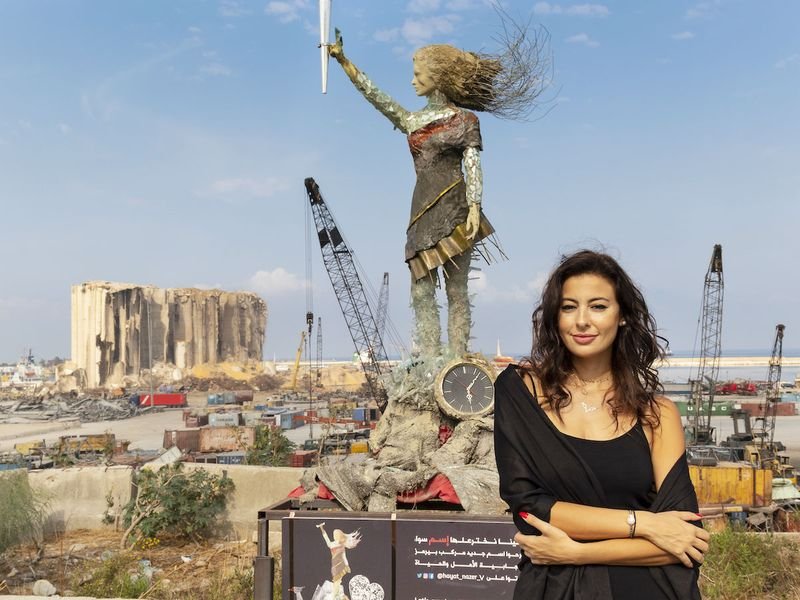
    Lebanese artist Hayat Nazer created a symbol of hope from the Beirut blast debris which shocked the world in August 2020.

    The woman statue stands nearly three meters tall with her arm raised, the wind whipping the hair away from her scarred face, and a broken clock at her feet with the hands showing 6.08, the time that a blast ripped through Beirut port on the evening of August 4.

    The statue is made of broken glass and twisted materials that belonged to people’s homes before the explosion that killed 200 and injured 6,000 and symbolizes the city’s hopes of rising from the rubble.

    “If you look at the statue, one half has a leg standing, the hand looks surrendered, there is a scar on the face with the flying hair and the clock on this side, as if the explosion is still happening,” Nazer told Reuters.

    “But the other hand and the other leg is leaning as if it is starting to walk and the hand is raised, it wants to continue, it wants to keep going and rise from the rubble. And this is the truth, this is our truth,” the 33-year-old said.

    She says those affected by the blast who saw the 2.6-metre statue, temporarily exhibited in front of the damaged port, drew strength and hope to carry on.

    Nazer had already started on a female sculpture before the blast, but volunteered to help clean up destroyed houses and streets. At night, she would return to the sculpture, using the glass and metal pieces she had collected.

    “I felt like Beirut was a woman who despite what she suffered is very strong,” she said.

  • Pakistani celebrities express shock over Beirut blast, extend prayers to those affected

    Pakistani celebrities express shock over Beirut blast, extend prayers to those affected

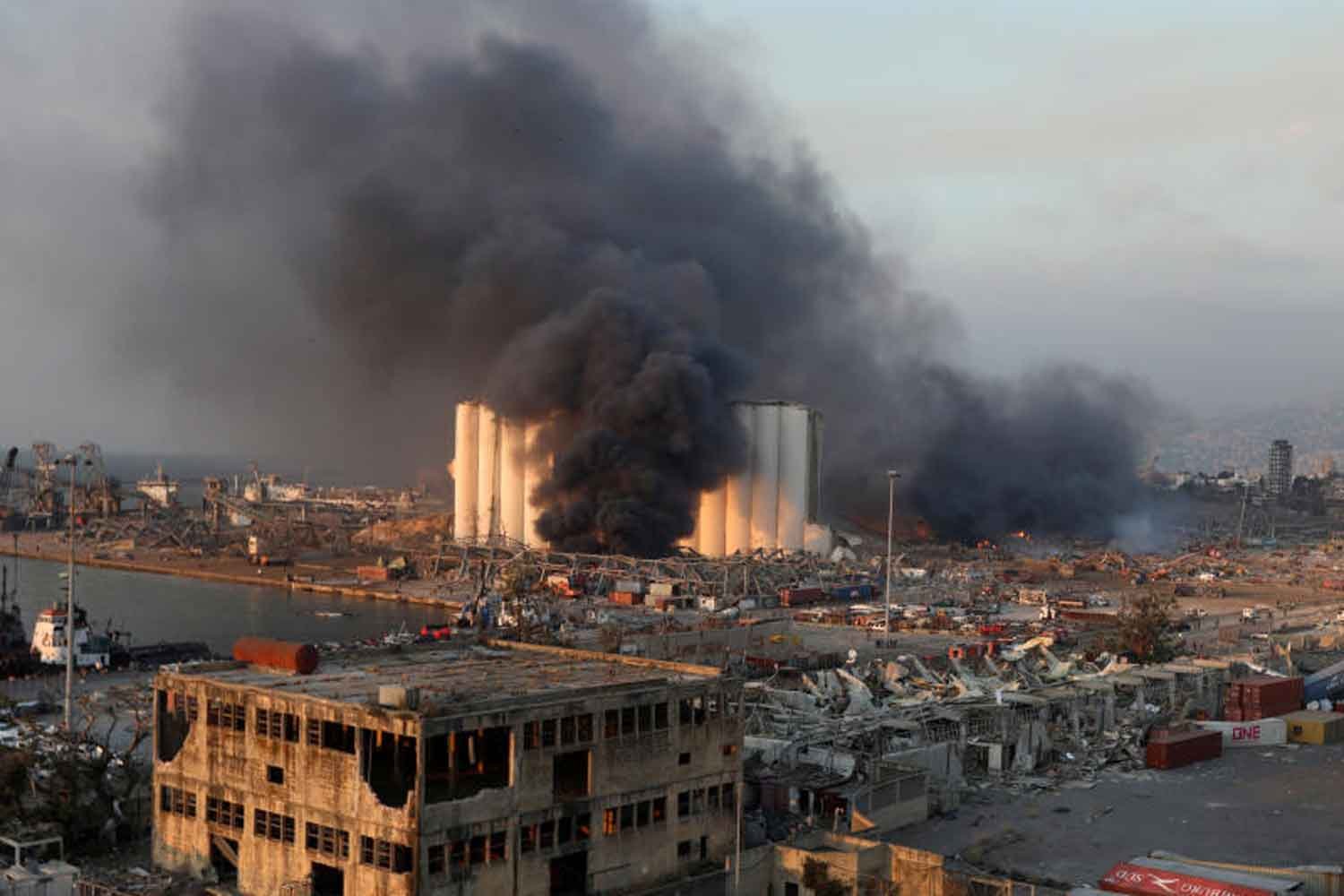
    Two enormous explosions ripped through Beirut’s port on Tuesday, wrecking buildings across the Lebanese capital. The explosions — which were heard in Nicosia, 240 kilometres (150 miles) away in Cyprus — were logged by seismologists, registering as the equivalent of a 3.3-magnitude earthquake. According to the Lebanese Red Cross, more than 100 people have been killed while over 4,000 have been injured.

    “Until now over 4,000 people have been injured and over 100 have lost their lives. Our teams are still conducting search and rescue operations in the surrounding areas,” a statement said.

    Following the devastating incident, Pakistani celebrities including Mahira Khan, Humayun Saeed, Mehwish Hayat, Hamza Ali Abbasi, Saba Qamar and Asim Azhar extended their prayers to those affected by the tragedy.

    Prime Minister Imran Khan also said that he was “deeply pained to hear” of the incident.

    https://www.instagram.com/p/CDgVXBQhBXG/

    https://www.instagram.com/p/CDfrIHBndA-/
    https://www.instagram.com/p/CDfzWpCHMoV/

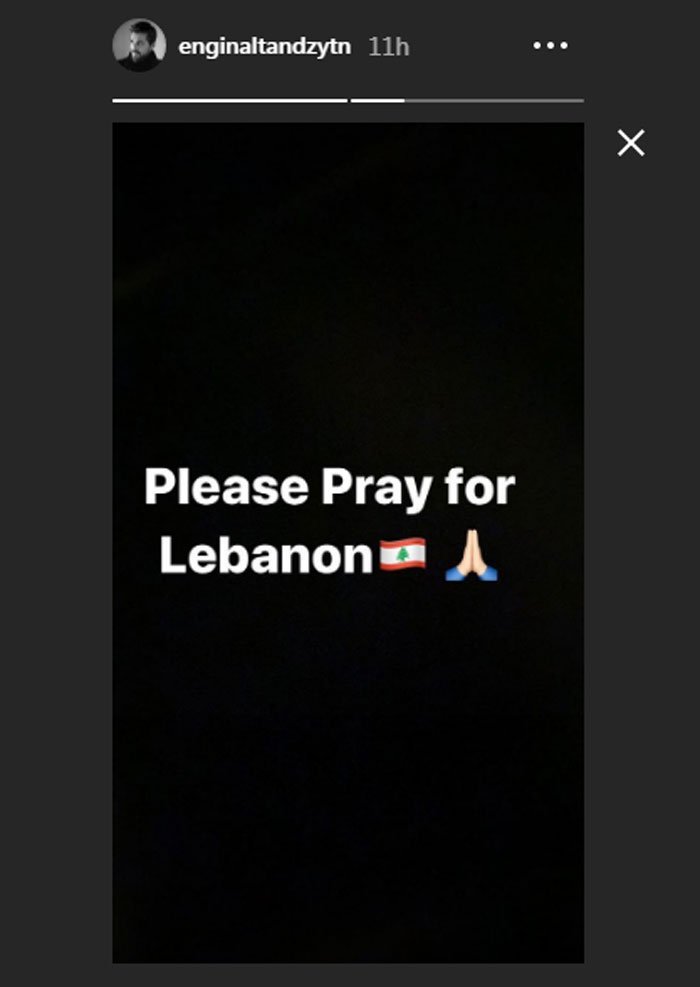
    Turkish actors Esra Bilgiç and Engin Altan Düzyatan also extended heartfelt thoughts and prayers to those affected.