Tag: lending

  • SBP hikes export financing markup rates from 11% to 13%

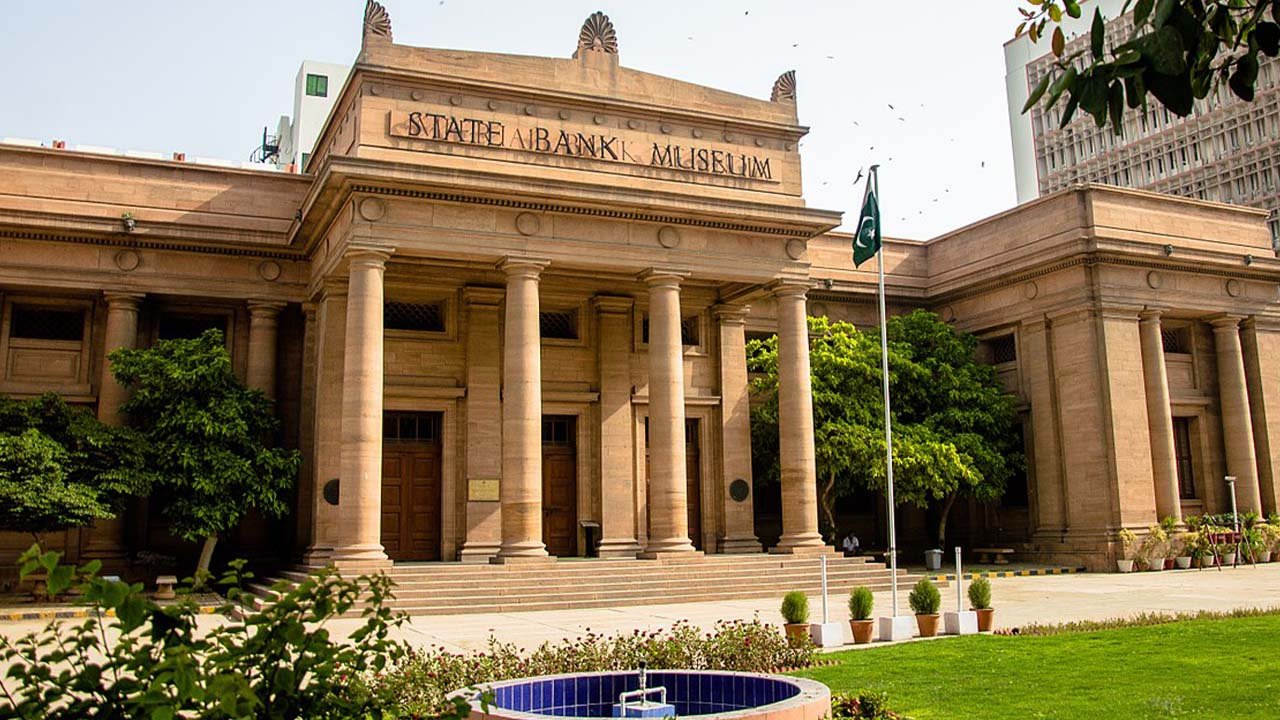
    The State Bank of Pakistan (SBP) has revised the rates of specialised lending schemes in accordance with its increased monetary policy rate of 16 per cent.

    SBP said it had decided to reduce the gap between its policy rate and the Export Finance Scheme (EFS) and Long-Term Financing Facility (LTFF) rates from the existing 5 per cent to 3 per cent, according to a circular released by the central bank.

    The notification stated that the revised tariffs will be effective from December 30, 2022.

    “Further, as mentioned in above referred circular, in [the] future with any change in the SBP policy rate, markup rates for EFS and LTFF will be revised automatically so that the gap between [the] policy rate and EFS & LTFF rates is maintained at 3 per cent,” the central bank added.

    Exporters and industrialists, who are already feeling the strain of strong inflationary pressures together with record increases in energy costs, are anticipated to see a rise in the cost of doing business as a result of higher financing rates.

  • ‘Nothing to worry about’: Dar dismisses concerns raised by Moody’s downgrading Pakistan

    ‘Nothing to worry about’: Dar dismisses concerns raised by Moody’s downgrading Pakistan

    After Moody’s Investors Service downgraded Pakistan’s sovereign credit rating on Friday, Finance Minister Ishaq Dar dismissed worries, stating there is ‘nothing to worry about’.

    “There is nothing to be worried about, I spoke with Moody’s yesterday and told them that they shouldn’t have done this. They should have consulted with us,” said Dar while talking to the media.

    The announcement follows Moody’s Investors Service’s (Moody’s) Thursday night downgrading the government of Pakistan’s senior unsecured debt rating from B3 to Caa1 for both local and foreign currency issuers.

    According to Express Tribune, the senior unsecured MTN program’s rating was similarly reduced by Moody’s, moving from (P) B3 to (P) Caa1. The future remains bleak.

    In the wake of the terrible floods that have struck the nation since June 2022, the rating agency said that the decision to lower the ratings to Caa1 was motivated by greater government liquidity, external vulnerability risks, and higher debt sustainability risks.

    The floods have significantly increased the need for social spending, compounded Pakistan’s problems with liquidity and external credit, and negatively impacted government revenue.

    According to the rating agency, Pakistan’s long-standing credit weakness of extremely weak debt affordability would continue for the foreseeable future.

    However, the Ministry of Finance vehemently contested Moody’s rating decision in its reaction. “The rating action by Moody’s is strongly contested by the Ministry of Finance as the rating action by Moody’s was carried out unilaterally without prior consultations and meetings with our teams from the Ministry of Finance and State Bank of Pakistan,” a statement issued by the ministry said.

    “Following Moody’s intimation of the rating action, the ministry held two meetings with the agency’s team over the past 24 hours, sharing data and information which clearly show a picture contradicting Moody’s rating action.

    “After a regular stock take of the economic and fiscal conditions, the Ministry of Finance informed that government policies over the last few months have helped in fiscal consolidation,” the ministry added.

    “The government had adequate liquidity and financing arrangements to meet its external liabilities.”

    Dar said that Fitch Ratings recently downgraded the UK from stable to negative. “The ratings from these agencies is essential for issuing bonds and Sukuks in the international market,” he said. He claimed that he informed Moody’s that if the organisation did not change its mind, he would provide a “befitting” response at his meeting with its representatives set for next week.

    “They (Moody’s officials) have to meet me. I told them if you don’t [reverse] this, I will give you a befitting response in our meeting next week,” he said.
  • SBP hikes interest rate by 150 basis points to control inflation

    SBP hikes interest rate by 150 basis points to control inflation

    The State Bank of Pakistan’s (SBP) Monetary Policy Committee (MPC) approved a 150 basis point increase in the benchmark interest rate, pushing it to 13.75 per cent to control inflation.

    It is worth noting that this is the maximum level of interest rate since 2011 when it was 14 per cent.

    The central bank mentioned in a statement that after the last MPC meeting, preliminary estimates indicate that growth in FY22 has been considerably higher than predicted.

    On May 23, the MPC agreed to hike the policy rate by 150 basis points to 13.75 per cent. “This action, together with much needed fiscal consolidation, should help moderate demand to a more sustainable pace while keeping inflation expectations anchored and containing risks to external stability.

    “External pressures remain elevated and the inflation outlook has deteriorated due to both home-grown and international factors. Domestically, an expansionary fiscal stance this year, exacerbated by the recent energy subsidy package, has fueled demand and lingering policy uncertainty has compounded pressures on the exchange rate”.

    “Globally, inflation has intensified due to the Russia-Ukraine conflict and renewed supply disruptions caused by the new Covid wave in China. As a result, almost all central banks across the world are suddenly confronting multi-year high inflation and a challenging outlook.”

    The MPC stated that raising interest rates will help to protect external and economic stability.

    “Since the last MPC meeting, secondary market yields, benchmark rates and cut-off rates in the government’s auctions have risen, particularly at the short end. The MPC noted that the market rates should be aligned with the policy rate and in case of any misalignment after today’s policy decision, the SBP would take appropriate action”.

    According to the report, overall inflation climbed from 12.7 per cent (year on year) in March to 13.4 per cent in April, led by consumable food products and core inflation. “The rise in core inflation reflects strong domestic demand and second-round effects of supply shocks,” it noted.

    The MPC believes that when power and fuel subsidies are phased out, inflation will spike momentarily and remain strong through FY23 before falling steeply in FY24. “This baseline outlook is subject to risks from the path of global commodity prices and the domestic fiscal policy stance,” it said.