Tag: Lesco

  • Why has load-shedding suddenly increased in Pakistan?

    Why has load-shedding suddenly increased in Pakistan?

    The electricity crisis has become more severe across the country with the start of the new year.

    Transmission systems were reportedly affected due to a technical fault at Guddu power plant and reduction in hydro power generation. Unannounced power outages in all power distribution companies (DISCOs), including LESCO, has made life difficult for people.

    The transmission system was affected by reduced power generation and heavy fog in the plains.

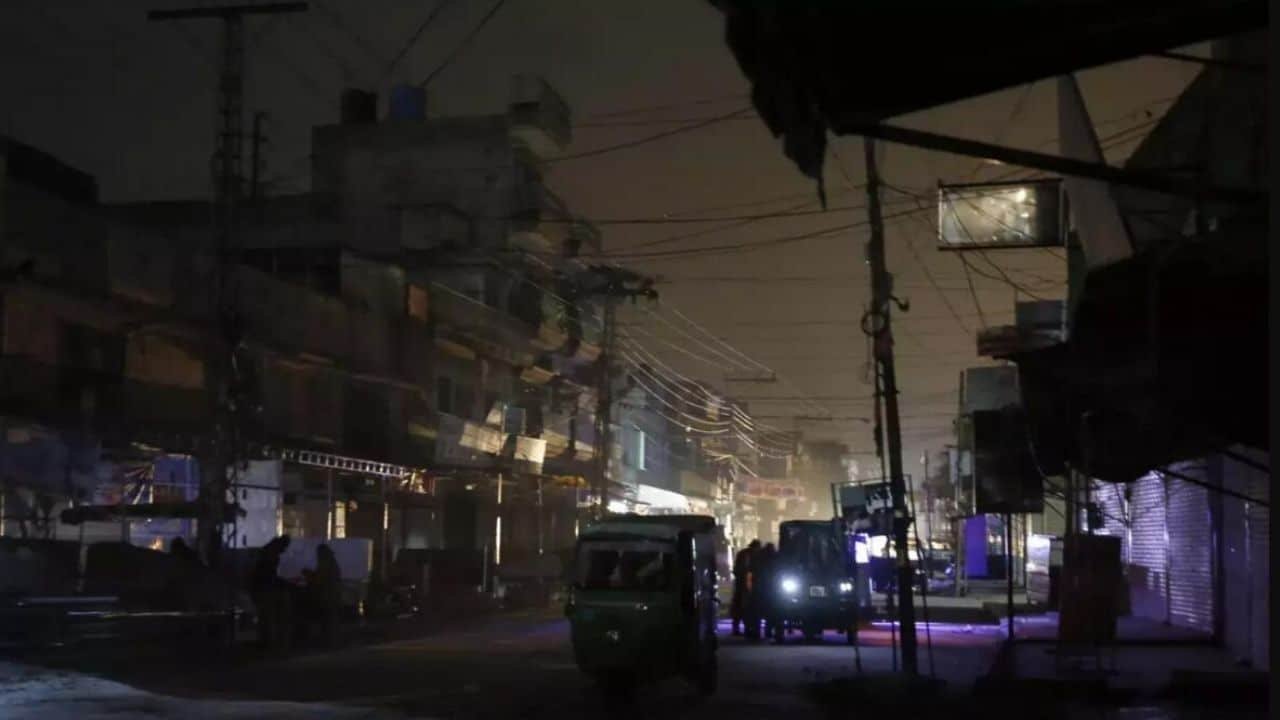
    Unannounced load shedding continues every hour in various areas of the LESCO region. Due to an increase in shortfall, the duration of load shedding in the city exceeded 12 hours.

    According to an INP from Kushmore, the breaker could not be repaired despite the passage of several hours after fire broke out in the switchyard of Guddu Thermal Power Plant following a technical fault. Sources claim that it may take 15 days to buy a new breaker.

    On the other hand, Powerhouse officials have said the alternate high transmission line also tripped due to heavy fog.

    Electricity supply to different areas of Sindh, Punjab and Balochistan remained suspended for more than five hours due to tripping of the alternative high transmission line. According to Guddu Thermal Power House officials, it is difficult to restore power from the alternate high transmission line until the sun comes out.

    Lack of electric supply for more than six hours has put a halt on businesses as well as shopkeepers, factory workers.

  • Punjab mein kahan ho rahi hai sab say ziada bijli chori?

    Punjab mein kahan ho rahi hai sab say ziada bijli chori?

    Ever wondered which district in Punjab has the highest percentage of electricity theft? Well, surprise, surprise, it is Kasur.

    Kasur has left all districts behind when it comes to power theft, as almost half of the total 20 highest loss-making grid stations of Punjab exist there, causing Rs40 billion losses annually, which is 40 percent of the total theft costing nearly Rs 100bn to Lahore Electric Supply Company (Lesco) in the province.

    LESCO has intensified operations against electricity theft in the district.

    “There are total 103 high-loss feeders in all service areas of Lesco falling in Lahore, Kasur, Okara, Sheikhupura and Nankana Sahib. Of these, 77 feeders are in Kasur alone, placing the district on top of the list in power theft,” a LESCO source told Dawn.

    Interestingly, the power thieves stopped pilferage during the daytime due to continuous raids by LESCO teams and resorted to theft during night hours.

    It is pertinent to note that when it was brought to the knowledge of the most senior officials, they directed the authorities in Lahore to suspend supply to such areas during night hours to stop the pilferage. Following this, the power supply was kept suspended for almost 12 hours on Monday night forcing the consumers to involve local politicians (former MNAs, MPAs, etc.) from Kasur and other parts of the division, who approached LESCO management.

    Meanwhile, a senior official of the Ministry of Energy (Power Division) confirmed the development, saying Kasur is like a tribal area causing billions of rupees loss to LESCO because of massive electricity theft.

    “In Punjab, the government has been facing a loss of Rs99bn in the form of power theft. Of this, about Rs40bn theft is being reported from Kasur district (Lahore Division) alone, annually,” the official says.

    There are around 20 highest loss-making grid stations in Punjab, out of which nine are in Kasur district alone, LESCO has, however, been asked not to shut the supply to the high-loss feeders after the local politicians assured of full cooperation with the field teams in eliminating power theft.

    The official says one of the reasons behind the massive power theft in Kasur is that the district includes border areas and belts along the riverbeds of Sutlej and Beas where law enforcement is a hard task.

    “These areas have almost become like tribal belts where criminals routinely flout the law. That is why they are stealing electricity without fear,” he explains.

    Meanwhile, on the 26th consecutive day of the anti-power theft drive, LESCO teams arrested 132 power thieves and detected pilferage on 501 connections in all five districts. According to a spokesman, the applications for registration of FIRs against 498 electricity thieves have been submitted to the respective police stations, out of which 391 FIRs have been registered, while 132 accused have been arrested.

    An official says the connections where power theft was detected include two industrial, nine agricultural, 13 commercial, and 477 domestic, adding that supply to all these has been disconnected. He says all the electricity pilferers have also been charged a total of 758,052 detection units worth Rs39.980 million.

    He says that separately constituted teams also recovered Rs21 million from 1,359 chronic defaulters on Tuesday.

  • Power transmission system ‘fully restored’ after major outage

    Power transmission system ‘fully restored’ after major outage

    Late on Thursday, the Ministry of Energy confirmed that all countrywide power had been “fully restored,” adding that the issue with two 500kV lines in Karachi’s south had been fixed.

    The ministry posted on its official Twitter account, “Electricity supply is being increased from alternative power plants, which will return to normal by Friday morning.”

    According to Dawn, Energy Minister Khurram Dastgir had expressed his optimism that normal electrical service would be fully restored by tonight.

    He reported power outages on Thursday morning in Karachi, Hyderabad, Sukkur, Quetta, Multan, and Faisalabad while speaking at a press conference.

    “Karachi and Quetta are priority regions now,” he said. “Nearly 8,000 MW of power went offline at around 9 AM however, the government has restored 4,700 MW,” he announced. “Restarting of power plants will consume time therefore complete resolution of the problem will take a few more hours.”

    He said that a thorough investigation had been ordered and a team had been formed for the purpose, citing the government’s worry regarding simultaneous faults in two power lines at the same time.

    “We will take action after receiving the inquiry report,” the minister said. “Due to our efforts, northern part of the country remained unaffected from the breakdown.”

    According to the Ministry of Energy, a “fault in the country’s southern transmission system” caused a significant power outage on Thursday that affected Sindh and Punjab.

    In addition to Karachi, Hyderabad, Thatta, Jamshoro, Sujawal, Badin, Mirpurkhas, Umarkot, Sanghar, Nawabshah, Matiari, Tharparkar, and Larkana, electricity was also cut off in other parts of Sindh.

    Additionally, there were power outages in a number of Punjabi cities, including Rajanpur and Rahim Yar Khan.

    “Due to an accidental fault in the country’s southern transmission system, several southern power plants are tripping in stages, which is disrupting the transmission of electricity in the southern part of the country,” said the Ministry of Energy in a tweet post.

    “The Ministry of Energy is diligently investigating the cause of the outage and the power system will be fully restored as soon as possible,” it added.

    According to reports, a technical issue has caused the Guddu Thermal Power Station in Kashmore to stop producing electricity. Technical issues at the power plant prevent the 600MW and 747MW units from running.

    The 500-KV system nationwide is not functioning, according to sources at National Transmission and Despatch Company (NTDC). They claimed that the causes are still being determined.

    The southern port city’s many neighbourhoods, including Malir, Sarjani Town, and Saddar, experienced power outages. Since 10:00 am, there has been no electricity in these neighbourhoods.

    Furthermore, there were power disruptions in places including Gulshan-e-Maymar, Federal B Area, Liaquatabad, and Super Highway.

    Baldia, Orangi Town, North Nazimabad, and North Karachi are all without electricity. In addition to this, some locations, notably the SITE Industrial Area, lack electricity.

    “There are reports of multiple outages from different parts of the city,” Imran Rana, Spokesperson, K-Electric, said in a tweet post.

    “We are investigating the issue and will keep this space posted,” he added.

    According to information provided by the Ministry of Energy, the KE’s spokesperson verified that the halt in energy supply was caused by a failure in the southern transmission system in an update released about 11:45am.

    He said that efforts to restore the supply had begun, and it would take about five hours to finish the process.
  • PM orders discos to suspend staff leaves and work nonstop to correct electricity bills

    PM orders discos to suspend staff leaves and work nonstop to correct electricity bills

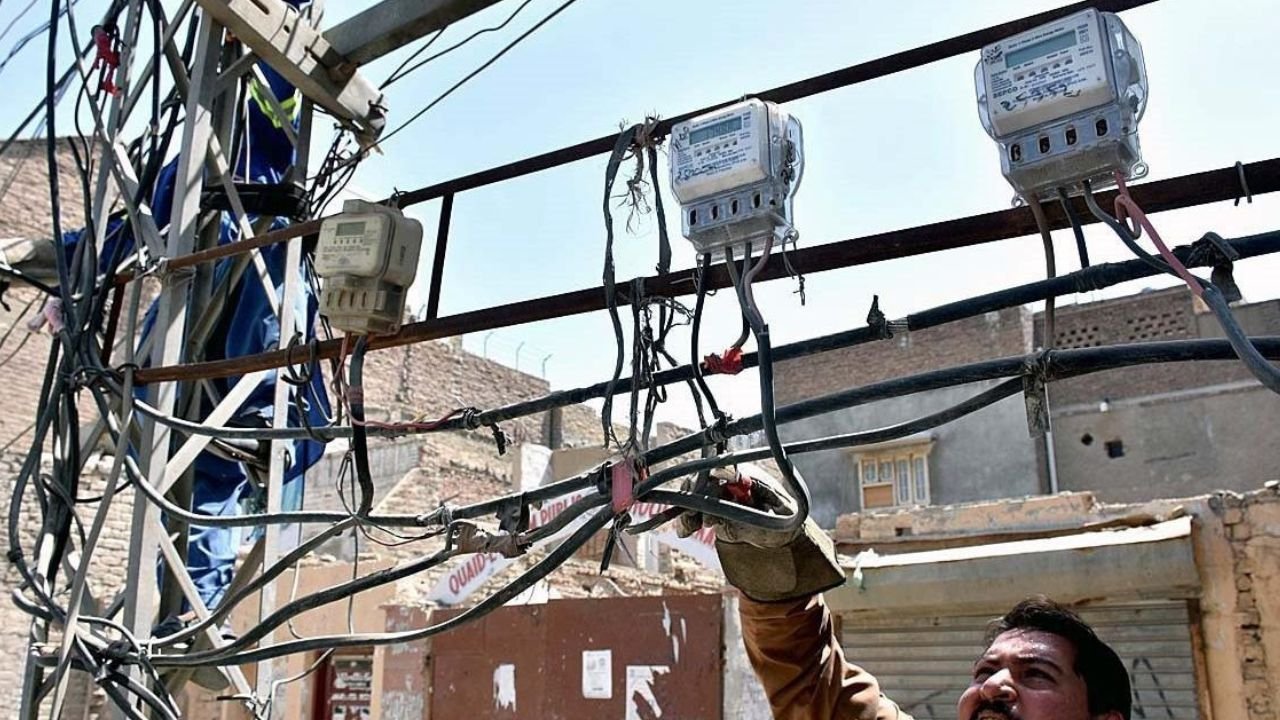
    The staff of power distribution companies (DISCOs) must work nonstop to correct the electricity bills of consumers using less than 200 units per month, following a directive from Prime Minister (PM) Shehbaz Sharif.

    He gave the order for all staff members’ leaves to be ended, the bills should be corrected right away, and a report should be given to him. In order to deposit electricity bills in the upcoming days, he continued, the banks should be instructed to stay open.

    PM Shehbaz gave the orders while presiding over a high-level meeting to address the issues facing electricity consumers.

    Furthermore, a high-level committee was formed by the prime minister to address the issues of power users.

    The gathering was informed that efforts are being made to ensure the adoption of the relief package for power consumers that the prime minister had announced. According to him, bill adjustments are being made as part of the relief for 16.6 million consumers related to the change in fuel prices.

    The relief measures must be put into effect right away, according to directives issued by the prime minister.

  • PM Shehbaz announces relief for 17 million power consumers

    PM Shehbaz announces relief for 17 million power consumers

    Prime Minister Shehbaz Sharif stated that 17 million of the nation’s electricity consumers would not be required to pay the excessive fuel cost adjustment (FCA) charges that are included in their monthly bills.

    According to Express, the prime minister outlined the rationale behind the FCA and claimed that it had resulted in a substantial increase in power rates for July and August due to high international oil prices.

    He claimed that following discussions with the IMF, PML-N leader Nawaz Sharif, and other coalition leaders, it was decided that 17.1 million energy users would not be required to pay the FCA.

    The remaining 13 million power consumers who are in a better financial situation are also being reviewed by the government, according to PM Shehbaz.

    Later, the PML-N tweeted that the relaxation will only apply to people with low electricity consumption.

    Shehbaz stated that Power Minister Khurram Dastgir will give a thorough explanation of the announcement’s process and how it would actually operate.

    The FCA exception would also apply to tube well users, who the prime minister estimated to number approximately 300,000.

    Earlier, PM Shehbaz also abolished the budget’s fixed tax on traders.

  • Fuel Cost Adjustment: Consumers protest against inflated electricity bills

    Fuel Cost Adjustment: Consumers protest against inflated electricity bills

    Power consumers protested in major cities against the government and power supply companies due to excessive residential and commercial bills that were issued under the pretext of Fuel Cost Adjustment (FCA).

    A number of Lahore residents were seen protesting outside LESCO offices, complaining about the skyrocketing electricity bills, chanting anti-LESCO slogans at Dharam Pura, Begum Kot and Ghazi Road.

    A number of farmers in Jhang also participated in a protest by burning their power bills while obstructing traffic on the Jhang Road. On the other hand, the shopkeepers and locals of Faisalabad organised a sizable protest against FESCO for billing residential and commercial customers for nearly twice the actual cost of electricity.

    PM Shehbaz demands urgent report on inflated electricity bills

    In response to complaints from the public about excessive electricity bills, Prime Minister Shehbaz Sharif ordered the relevant authorities to provide an immediate report to address the issue.

    The premier ordered the concerned officials to present a thorough report with recommendations for resolving consumer complaints against energy bills on an urgent basis.

    What is FCA?

    In addition to criticising the power supply companies, consumers are questioning the FCA charges that take up a significant portion of their monthly bills.

    Understanding the actual fuel cost (the cost of fuel in a month) and the reference fuel cost is crucial for comprehending the fuel price adjustment.

    Simply put, FCA is charged/adjusted in customers’ monthly bills to reflect the actual increase or decrease in fuel prices.

    Based on the price of fuel (such as coal, LNG, or furnace oil) used in the nation’s various energy sources, the total cost of fuel used in the production of electricity in a month (basket fuel cost) is calculated.

    The entire fuel cost for that month is therefore compared to the reference fuel cost at the end of each month, and as a result, the FCA is applied to the power bills after two months.

    The electricity bill will reflect a change in the FCA amount if the total fuel cost for that month exceeds the reference cost, while it will reflect a change in the FCA amount if the total fuel cost is less than the reference cost. We refer to this as a fuel price adjustment.

    How power suppliers calculate FCA?

    Whenever a power plant uses coal, it is possible to estimate how much coal was burnt and at what cost, as well as the total cost of the energy needed to generate the power.

    For instance, if hydel electricity generation has increased, the overall fuel price will reduce; likewise, if gas is consumed more frequently in a month due to its higher price, the fuel price would climb.

    It is also impacted by the rupee’s appreciation or depreciation. This is due to the fact that coal, LNG, and furnace oil are imported, therefore a weakening or strengthening rupee directly affects the cost as a whole.

  • Cabinet approves Rs7.91 per unit increase in power tariff

    Cabinet approves Rs7.91 per unit increase in power tariff

    After several postponements, the Federal Cabinet finally decided to approve the Rs7.91 per unit increase in the power tariff.

    The Federal Minister of Power, Khuram Dastgir, and Minister of Petroleum, Musadik Malik, made the announcement during a press conference.

    Dastgir claimed that because Prime Minister (PM) Shehbaz Sharif wanted to provide relief to the masses. The consent was not given until 45 per cent of the population had been exempted from the tariff increase.

    Musadik Malik, the minister of petroleum, disclosed that by leaving out the protected sector, the homes with consumption of less than 200 units per month, or up to 90 million people, had been left out of the price increase.

    Previously, the government’s proposal for the tariff increase was subject to the National Electric Power Regulatory Authority’s (NEPRA) reserve decision, according to Dawn.

    In accordance with the approval, the government will raise the rate by Rs3.5 per unit starting on July 26. A similar price rise will be implemented in August. The cost would then be raised by Rs0.91 per unit in October by the government, bringing the total rise to Rs7.91.

    Malik blamed the previous administration’s lack of frequent fuel adjustments and transmission losses rebasing for the sharp increase in tariffs. Fuel surcharges were raised without notifying the public at the final rebasing, which took place in February 2021.

    The power minister informed the media that the present administration had paid Rs214 billion toward circular debt, bringing the total down from Rs2,476 billion on March 31, 2022, to Rs2,253 billion on June 30, 2022.

  • Nepra approves price increase of Rs9.66 per unit for Karachi

    Nepra approves price increase of Rs9.66 per unit for Karachi

    On account of the fuel cost adjustment (FCA) for May 2022, the National Electric Electricity Regulatory Authority (Nepra) allowed K-Electric to increase its power rate by Rs9.66 per unit on Monday.

    According to Aaj News, Nepra will make the announcement following careful consideration.

    In order to transfer the financial burden of Rs22.65 billion to consumers for May 2022, K-Electric requested an increase of Rs11.34 per unit.

    Officials from Nepra questioned K-Electric during a hearing about why it wasn’t buying less expensive electricity and offered to help K-Electric establish a connection with the provincial and federal governments for this reason.

    The power distributor also questioned K-Electric’s decision not to use the inexpensive oil it had acquired for power production.

    Nepra’s representatives responded that the company was using peak hours, which are from 6:30 PM to 10:30 PM, to provide electricity and that the cost of power is much greater at these times.

    The FCA estimate for May 2022, according to K-Electric, was based on the requested rate for the month from CPPA-G and is subject to change based on a decision to be made by Nepra.

    In its FCA adjustment request, the power utility informed the regulator that it imports from outside sources and dispatches power from its own generating units (with the available fuel resources) in accordance with economic merit orders (EMOs).

  • PM Shehbaz directs power authorities to reduce load-shedding to two hours

    PM Shehbaz directs power authorities to reduce load-shedding to two hours

    Prime Minister (PM) Shehbaz Sharif instructed the power authorities on June 4 to reduce load-shedding throughout the country to two hours, alerting that he wanted results rather than explanations.

    As per a report from ARY News, PM Shehbaz Sharif, who presided over a meeting to resolve the challenge of hours-long unexpected load-shedding in the country, asked power division officials and federal ministers to do whatever was essential to reduce load-shedding to two hours per day.

    While dismissing explanations for the duration of load-shedding, PM Shehbaz stated that officials should minimise the sufferings of the general public rather than furnishing justifications.

    “I only wanted to provide relief to the masses and will not accept the ongoing situation of load-shedding,” a defiant PM stated that he will not compromise and will not allow any minister or official to relax until the problem is resolved.

    He instructed officials to work around the clock to bring power to businesses. The prime minister also aimed the finance minister to secure all necessary resources to address the problem. It is worth noting that Pakistan’s generation capacity has deteriorated, with the power disparity reaching over 7,000 megawatts.

    As per power division sources, the country’s electricity demand has risen to 27,200 megawatts due to the hot weather. The length of unannounced load-shedding across the country has also been elevated to 14 hours. “There is a nationwide power production of 20,000MW, resulting in a shortfall of 7200 MW,” they added.

    According to reliable sources, the country presently acquires 4,635 megawatts of electricity from hydropower, 1,060 megawatts from thermal power plants, and 9,677 megawatts from IPPs. Considering the findings, 3 key power companies have shuttered 16 power plants in Pakistan largely owing to a shortage of fuel.

  • Energy crisis worsens, electricity gap surpasses 7,000 megawatts

    Energy crisis worsens, electricity gap surpasses 7,000 megawatts

    The demand for electricity in Pakistan has risen to 28,200 megawatts due to the hot weather, while the supply is only 21,200 megawatts, resulting in a power shortfall of nearly 7,000 megawatts.

    According to well-placed sources, the country currently gets 4,635 megawatts of energy from hydropower, 1,060 megawatts from government thermal power plants, and 9,677 megawatts from IPPs. Additionally, due to a lack of oil, gas, and coal, numerous factories have been shut down.

    Several areas of the country are experiencing daily loadshedding of 10 to 12 hours due to the expanding shortfall, which is exacerbated by the hot heat.

    However, in locations with significant line losses, loadshedding lasts longer than 12 hours.

    The scheduled loadshedding technique is not being used due to the lack of data, according to the sources. In Karachi, K-Electric, the city’s sole electricity distribution provider, is imposing daily loadshedding of 9 to 10 hours.

    As per reports, the loadshedding will be resolved within the next several months.