Tag: Letters of Credit

  • Pak Suzuki’s fiscal year ends with Rs9.68 billion loss: Operational disruptions and low demand

    Pak Suzuki’s fiscal year ends with Rs9.68 billion loss: Operational disruptions and low demand

    Pak Suzuki Motor Company Limited (PSMCL) has reported a substantial net loss of Rs9.68 billion for the fiscal year that ended on June 30, 2023. The loss was attributed to import restrictions and weakened demand, causing a significant increase compared to last year’s Rs17.238 million loss.

    The drop in sales was due to operational disruptions caused by inventory shortages. The loss per share (LPS) reached Rs117.58 for this year, a stark contrast to the Rs0.21 LPS recorded from January to June 2022. Despite these challenges, the cost of sales remained stable at Rs39.037 billion, compared to Rs108.415 billion the previous year.

    Financial expenses surged to Rs10.141 billion from Rs1.842 billion last year, contributing to the increased losses. However, the company did manage to achieve a Rs3.238 billion profit for the quarter ending on June 30, a significant improvement from the Rs442.989 million recorded during the same quarter the previous year. Earnings per share for this quarter were Rs39.36, compared to Rs5.38 per share in the previous year.

    Experts noted that the second-quarter results exceeded expectations due to increased gross margins from car price hikes. The company also gained from finance income of Rs2.6 billion due to exchange rate gains.

    During this time, the company’s revenue dropped by 67 per cent year-on-year and 2 per cent quarter-on-quarter due to lower sales volume caused by disruptions in raw material supply and reduced demand. Despite challenges, the company achieved a 10 per cent gross profit margin in 2QCY23, a significant increase from 4 per cent the previous year.

    According to The News, the auto sector faces challenges like obtaining Letters of Credit (LCs) for imports and sluggish demand due to high prices and interest rates. Car sales declined 57 per cent year-on-year in the first month of fiscal year 2023–24, as reported by the Pakistan Automotive Manufacturers Association (PAMA). PAMA-registered car manufacturers sold only 5,092 units in July, a 16 per cent decrease from the previous month.

    Despite the challenges faced by Pakistan’s auto industry, including low sales and various disruptions, it’s worth noting that car prices in the country remain at their highest point.


  • Japanese car companies consider establishing hybrid vehicle plants in Pakistan

    Japanese car companies consider establishing hybrid vehicle plants in Pakistan

    Japan has urged Pakistan to allow the import of manufacturing equipment for vehicles due to the shortage of dollars, which has affected the issuance of letters of credit to Japanese companies operating in the country.

    Japanese firms are considering the establishment of hybrid vehicle plants in Pakistan, with plans to export the vehicles from the country in the future.

    During a meeting between Ambassador Wada Mitsuhiro and Finance Minister Senator Ishaq Dar at the Finance Division, the Ministry of Finance issued an official statement. The Vice Chairman of Toyota, Shinji Yanagi, SAPM on Finance Tariq Bajwa, finance secretary, and senior officers were also in attendance.

    The finance minister briefed the envoy on the economic challenges and priorities of the government and emphasized that Japan is one of its major development partners. The cooperation between the two countries will strengthen in multiple fields for mutual benefit. The finance minister also welcomed the investment plans of Japanese companies in Pakistan.

    Ambassador Mitsuhiro praised the government’s pragmatic policies and actions and expressed confidence in the country’s economic policies. Meanwhile, a World Bank delegation led by Mamta Murthi, Vice President of the World Bank for Human Development, met with Dar at the Finance Division.

    Murthi emphasized the importance of investing in human capital, particularly in education, health and nutrition, social protection, population control, and women’s development. She also highlighted the importance of local ownership and community participation in implementing development projects.

    The finance minister briefed Murthi on the government’s policies and programs related to key areas of human development to uplift the masses and eliminate poverty in the country. He expressed the government’s commitment to work with the World Bank to achieve their shared goals of sustainable development in Pakistan.

  • Toyota IMC announces shutdown of production plant once again due to parts shortage

    Toyota IMC announces shutdown of production plant once again due to parts shortage

    Indus Motor Company Limited (INDU), the company known for assembling and selling Toyota-brand vehicles in Pakistan, has announced the temporary shutdown of its production plant from March 24 to March 27 due to raw material and component shortages.

    In a notice to the Pakistan Stock Exchange (PSX), Indus Motor cited difficulties in opening Letters of Credit (LCs) for raw materials by banks, which have caused a disruption in the supply chain of the company and its vendors.

    As a result, the company is unable to continue its production activities due to insufficient inventory levels. This is the second time this year that Indus Motor has announced the shutdown of its plant, with the first being from February 1 to February 14 due to an inventory shortage.

    The CEO of Indus Motor, Ali Asghar Jamali, had previously acknowledged the challenges facing the local auto industry, including the restrictions on Completely Knocked Down (CKD) kits, which have resulted in manufacturers operating at only 40-45 per cent of their capacity.

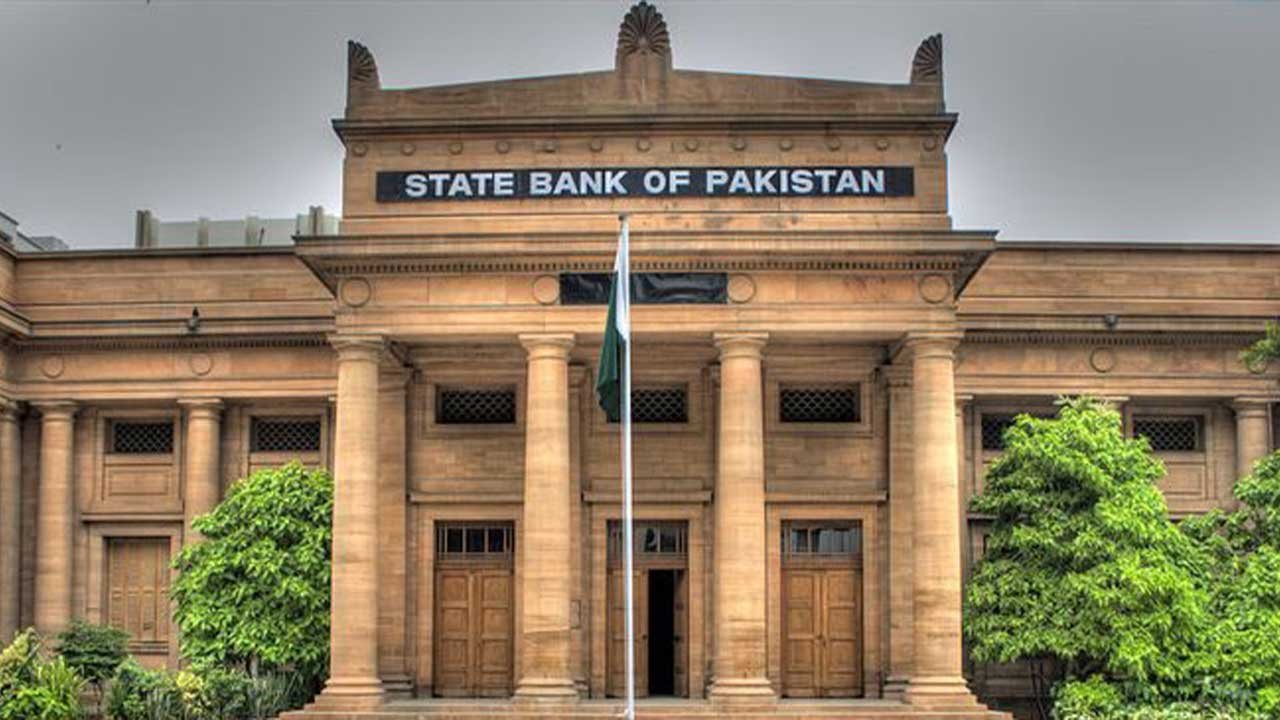
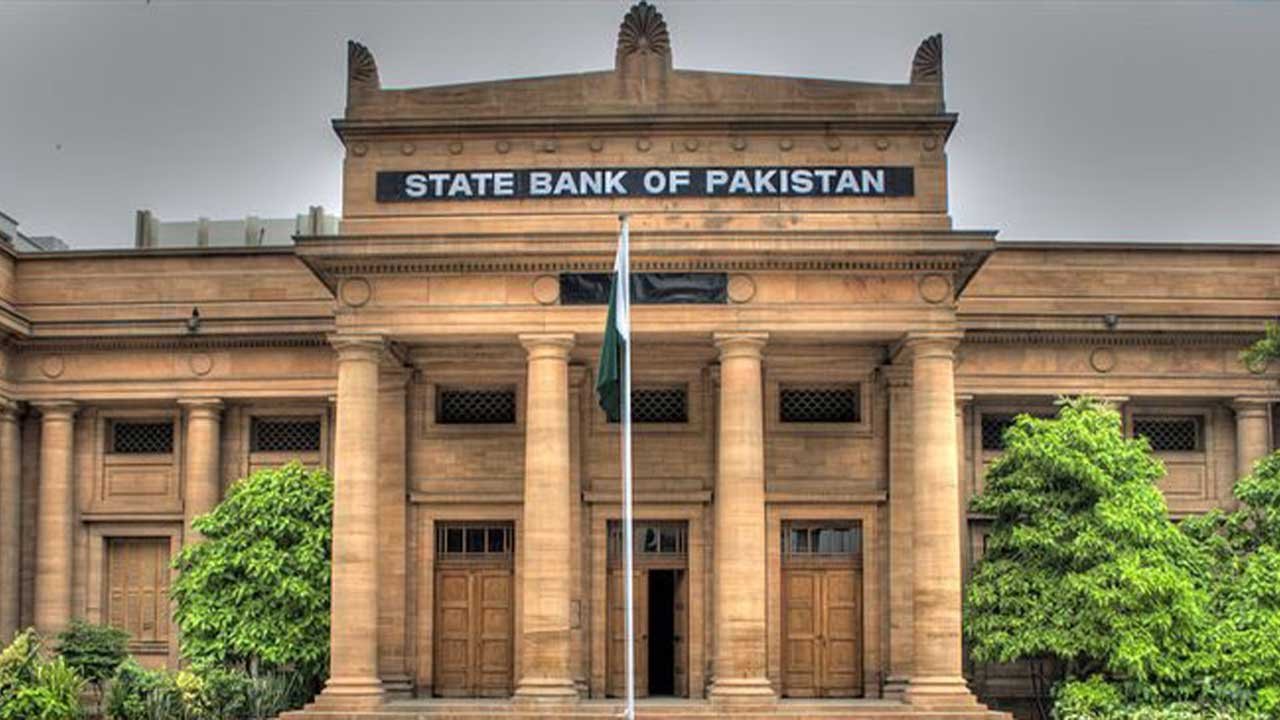
    The auto industry in Pakistan is heavily reliant on imports and has been affected by the State Bank of Pakistan’s (SBP) restrictions on the opening of LCs, following a sharp depreciation of the rupee.

    The SBP has imposed restrictions on imports due to the country’s low foreign exchange reserves, which has resulted in operational hindrances for many industries, including the auto sector.

    Although the SBP withdrew import restrictions in January, many industries are still struggling due to the dollar shortage.

  • SBP to lift import restrictions next week

    SBP to lift import restrictions next week

    The government has lifted import restrictions on commodities intended for vehicle manufacturing, mobile production, solar power equipment, and nuclear reactors for power generation projects commencing in 2023, despite Pakistan’s limited foreign exchange reserves.

    Simultaneously, authorised dealers (ADs – largely commercial banks) have been encouraged to prioritise the import of food and energy products. They should consider enabling the import of non-essential and luxury products after first providing for the necessities.

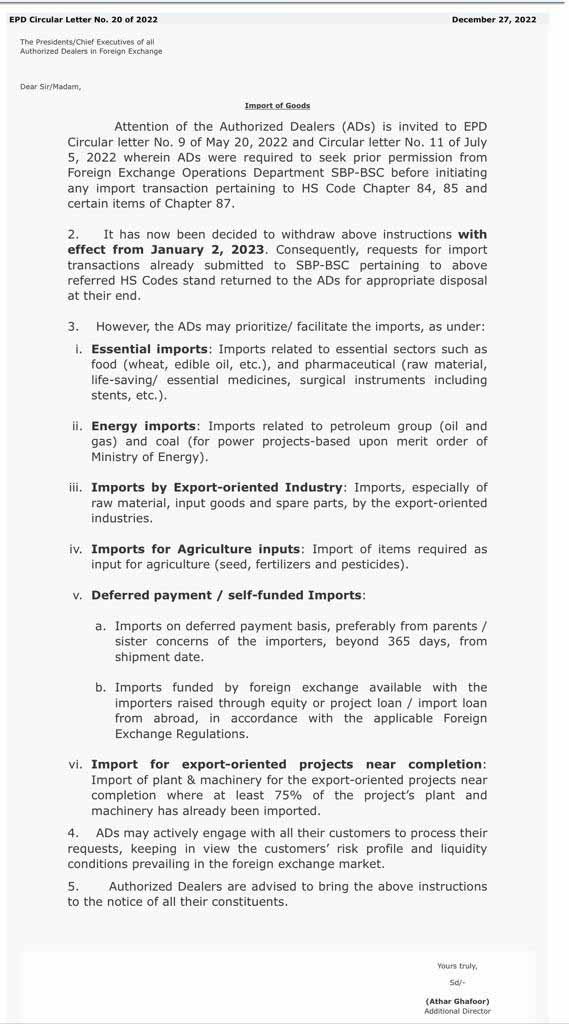
    The State Bank of Pakistan (SBP) reminded ADs on Tuesday that for the past eight months, they had been required to obtain prior permission from the Foreign Exchange Operations Department, SBP-BSC, before initiating any import transaction involving HS Code Chapters 84, 85, and certain items of Chapter 87.

    “It has now been decided to withdraw instructions (of prior permission) with effect from January 2, 2023. Consequently, requests for import transactions already submitted to SBP-BSC pertaining to referred HS codes stand returned to the ADs for appropriate disposal at their end,” the SBP said in the circular.

    Arif Habib Limited (AHL) Head of Research Tahir Abbas said that the import system may “continue to work in its present form. The removal of restrictions will not re-open imports in a full-fledged manner.”

    He stated that due to the country’s short foreign exchange reserves, the government has encouraged banks to first allow the import of necessary items before catering to others.

    The SBP advised ADs (commercial banks) to “prioritise and facilitate the import of essential sectors such as food (wheat and edible oil) and pharmaceuticals (raw material, life-saving or essential medicines, and surgical instruments, including stents).”

    According to Express Tribune, the second priority of ADs is to focus on energy imports “like oil, gas, and coal” (for power projects based on the merit order of the Ministry of Energy).

    Imports for export-oriented businesses should be prioritised as well. They should facilitate “imports, especially of raw materials, input goods, and spare parts, by the export-oriented industries,” stated the SBP. Imports of agri-inputs should be the fourth priority of ADs, as explained by SBP: “import of items required as inputs for agriculture (seed, fertilizers, and pesticides).”

  • Pakistan’s GDP growth expected to remain below 3–4% in FY23: SBP

    Pakistan’s GDP growth expected to remain below 3–4% in FY23: SBP

    In its annual economic health report released on Wednesday, the State Bank of Pakistan (SBP) slashed its predicted GDP growth from the previously disclosed range of 3–4 per cent for the current fiscal year, citing flood-induced destruction and the stabilisation policy as important contributors.

    However, the central bank stated that economic growth was stronger than anticipated in the 2021–22 fiscal year as real GDP increased by 6 per cent compared to 5.7 per cent a year earlier in its Annual Report on the State of Pakistan’s Economy, which mainly covered the previous fiscal year that ended on June 30.

    According to Geo, the GDP grew by 6 per cent in the previous fiscal year. In its monetary policy announcement from October, the SBP already reduced the economic growth to around 2 per cent.

    According to the research, increased agricultural output and a broad-based expansion of large-scale manufacturing (LSM) were the main forces behind this gain.

    Macroeconomic imbalances returned during FY22 as a result of a combination of unfavourable global and domestic circumstances.

    When widespread flooding struck a significant portion of the nation at the beginning of the current fiscal year, the SBP claimed that the economy was in the middle of a stabilisation phase.

    According to the report, the flooding was predicted to have an impact on the nation’s real economic activity through a number of channels. It was feared that losses in agriculture resulting from the destruction of crops and livestock would spread to the rest of the economy through a number of backward and forward links.

    According to the bank, the extensive devastation of infrastructure in the afflicted provinces might also harm the nation’s chances for growth this year.

    Due to the deteriorating economic climate, the SBP avoided stating a range for the growth rate of the current fiscal year. Due to the high rate of inflation and the scarcity of gas and electricity, industries have either stopped operating entirely or substantially reduced their production.

    The SBP’s restriction on the opening of letters of credit (LCs) for imports in an effort to save money is a significant contributing factor.

    In the event that the gas supply is not restored and no LCs are opened, the All-Pakistan Textile Mills Association has warned to declare layoffs within days.

    According to the textile industry, up to 500,000 people who were either directly or indirectly employed by the business have lost their jobs. However, there are no official statistics in this regard.