Tag: LGBTQ

  • Man sent to hospital after trying to set up gay club in Abbottabad

    Man sent to hospital after trying to set up gay club in Abbottabad

    A man who tried to establish a gay club has been detained in a mental hospital by local authorities.

    He had filed an application to set up the club in Abbottabad.

    In the application filed to the deputy commissioner (DC) of the city, the man said the club was to be a “great convenience and resource for many homosexual, bisexual and even some heterosexual people residing in Abbottabad in particular, and in other parts of the country in general.”

    Homosexuality is illegal in Pakistan and can be punished by two years to life in prison.

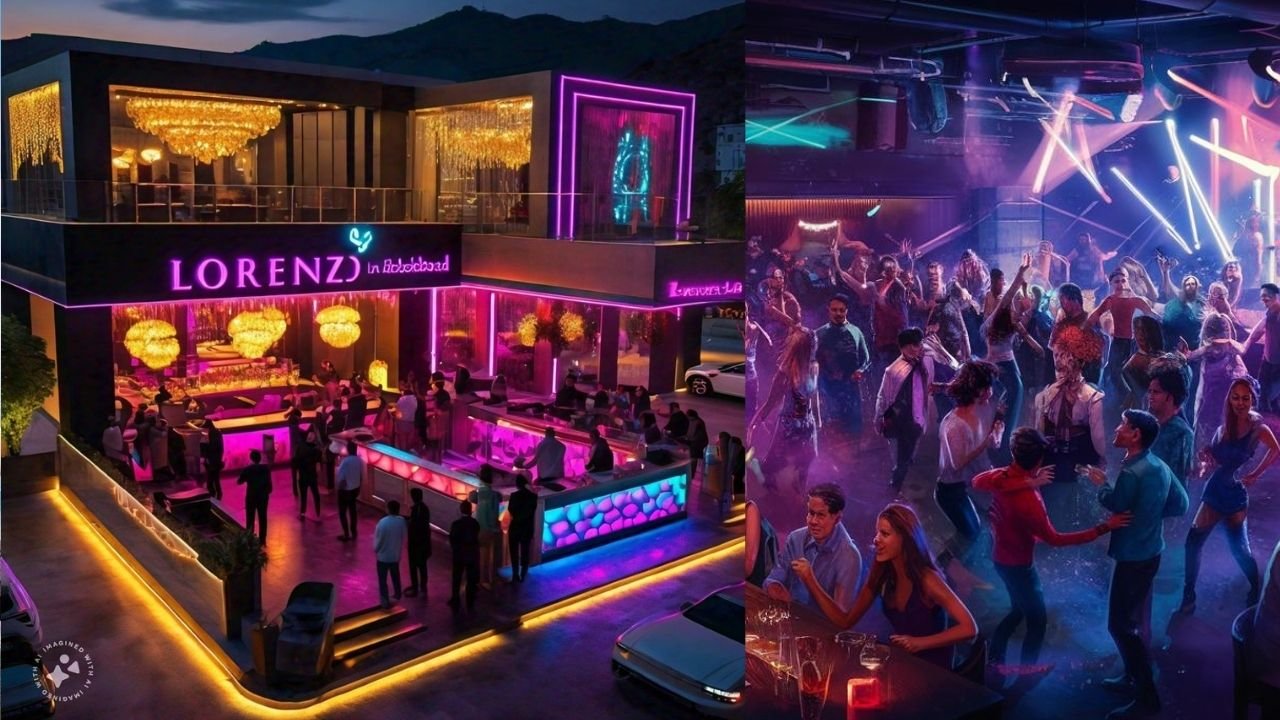
    The application stated that in “the envisaged gay club, tentatively to be called Lorenzo gay club, there would be no gay (or non-gay) sex (other than kissing).”

    “A clearly visible notice on the wall would warn: no sex on premises. This would mean that no legal constraints (even obsolete ones like [anti-sodomy] PPC section 377) would be flouted on the premises”.

    Abbottabad’s DC office confirmed to The Telegraph it had received the application for a gay club and was reviewing it like any other proposal.

  • NO, ScrapFest is not an LGBTQ event

    Social media users are demanding a ban on ScrapFest for allegedly promoting homosexuality in Pakistan. The hashtag #BanScrapFest trended on Pakistani Twitter this week, after a recent news report stated that the event is LGBTQ exclusive.

    However, Urvah Khan, one of the organsiers of the event, confirmed to The Current said that the show exclusively features artists from minority groups of Pakistan, not just based on gender and sexuality.

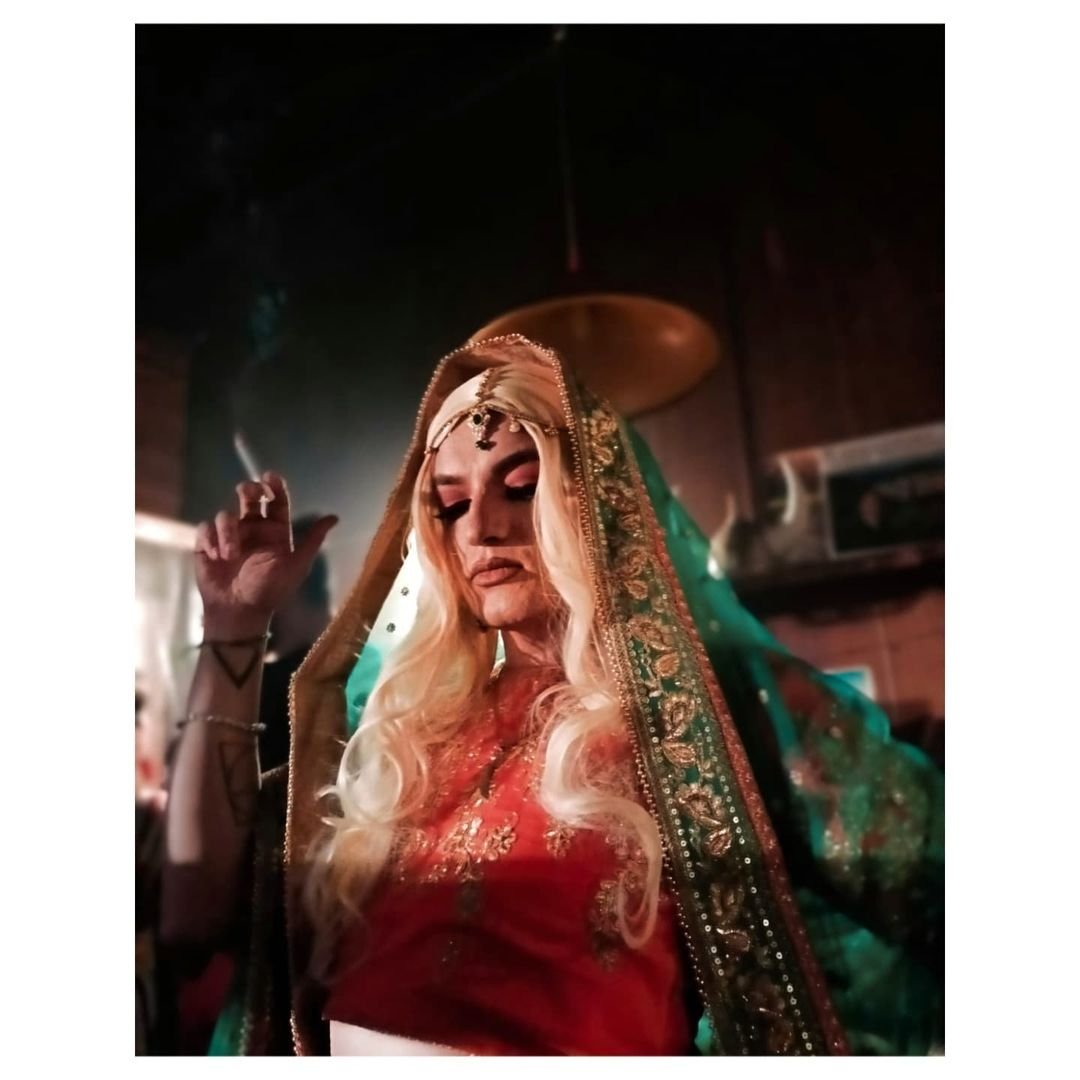
    Urvah told The Current that ScrapFest (Pakistan) is a performance based music festival showcasing artists from the trans and underground community of Pakistan. Ranging from trans singers/ dancers/ comedians, rappers and hip hop artists from Lyari to musicians and more.

    “This show exclusively features artists from minority groups of Pakistan. Not just based on gender and sexuality but also featuring artists who continue to face discrimination based on race and class”

    While talking about the reasons why the event has been shifted to a virtual venue, Khan said, “The event has been shifted virtually to ensure the physical safety of our artists and audiences. Regardless, by going virtual, now the whole world will be able to see the talent, drive, passion and commitment our artists and communities hold.”

    ScrapFest is a platform created by an artist for artists. Artists who don’t get paid opportunities to showcase their art respectfully come together on this platform to celebrate one another.

    “ScrapFest in Pakistan represents the trans and underground community here. I find it deplorable that when finally the chance to perform for a mainstream audience is given to indigenous, transgender and underground artists in order to come out of an economy of crime, abuse and violence; suddenly folks here are branding this event as such,” she said while talking about the criticism the event is being subjected to.

    “When I am in Canada, I belong to multiple minority groups myself. I do and will continue to support, empower and create performance based opportunities for any artists belonging to any marginalized community.”

    Talking exclusively to The Current, Dr Mehrub, who is hosting the event said that she has no clue how and why the event is being branded as LGBTQ exclusive.
    Mehrub continued by saying that she does not feel anything about the hate the event is getting because it has become a norm

    .
    She said that she and other transgenders are exhausted at this point. Mehrub further said that “i don’t think that the event was very well managed,” adding that if an event is including minorities and sexual minorities in the lineup one needs to understand the politics going behind it. “You need to follow certain measures and protocols,” she said.

  • Same sex relationships now legal in Tokyo

    Same sex relationships now legal in Tokyo

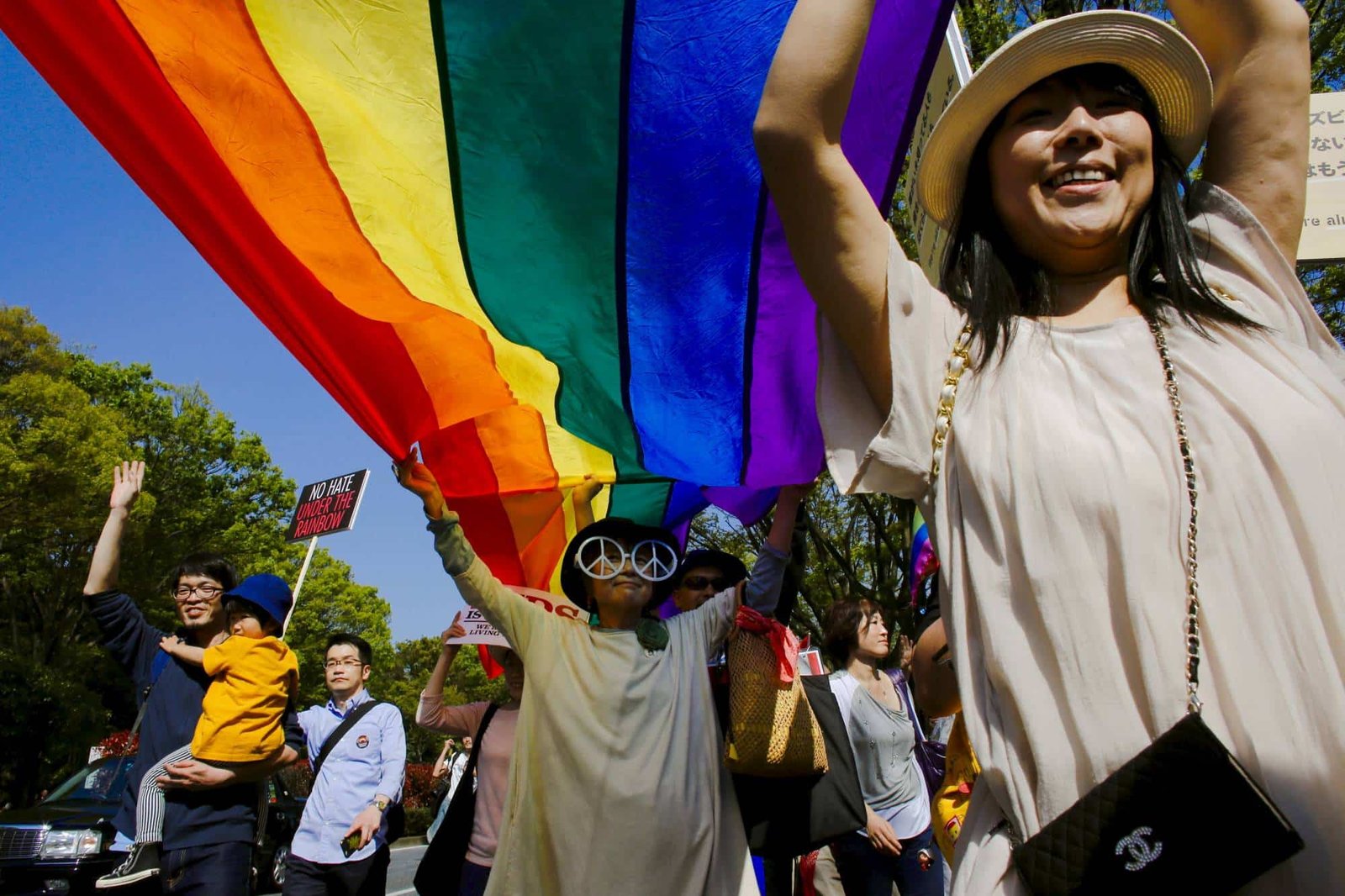
    In a nation that still forbids equal marriage, Tokyo’s metropolitan administration on Tuesday started distributing partnership certificates to same-sex couples who reside and work in the capital.

    The status allows LGBTQ partners to be considered as married couples for some public services in areas including housing, health, and welfare, even though it does not confer the same rights as a marriage.

    According to Tokyo governor Yuriko Koike, 137 couples have submitted applications for certificates as of last Friday.

    According to a survey conducted in 2021 by the public broadcaster NHK, 57 percent of the people supported gay marriage, while 37 percent opposed it.

    Japan has made progress in recent years in accepting sexual diversity.

    Today, more businesses are showing their support and homosexual characters are featured in television programmes.

  • LGBT activists allegedly sentenced to death in Iran on accusation of promoting homosexuality

    LGBT activists allegedly sentenced to death in Iran on accusation of promoting homosexuality

    A court in Iran sentenced two LGBTQ rights activists to death on allegations of encouraging homosexuality.

    According to the Hengaw Kurdish rights organisation, the two women, Zahra Sedighi Hamedani, 31, and Elham Chubdar, 24, were sentenced to death by a court in the northwestern town of Urmia.

    They were convicted of “spreading corruption on earth.” This accusation is routinely levied on individuals who are found to have violated the country’s sharia regulations.

    They were also charged with preaching Christianity and communicating with international media.

    Iran’s judiciary has confirmed the sentences but said they were connected to human trafficking and not with LGBT activism.

    “Contrary to the news published in cyberspace and the rumours that have been spread, these two individuals have been accused of deceiving women and young girls and trafficking them to one of the countries of the region,” the judiciary’s news outlet Mizan reported.

    Homosexuality is illegal in Iran, and same-sex intimacy for both men and women is officially criminalised in the penal code.

  • ‘Groped her buttocks’: German diplomat in Karachi harasses woman

    ‘Groped her buttocks’: German diplomat in Karachi harasses woman

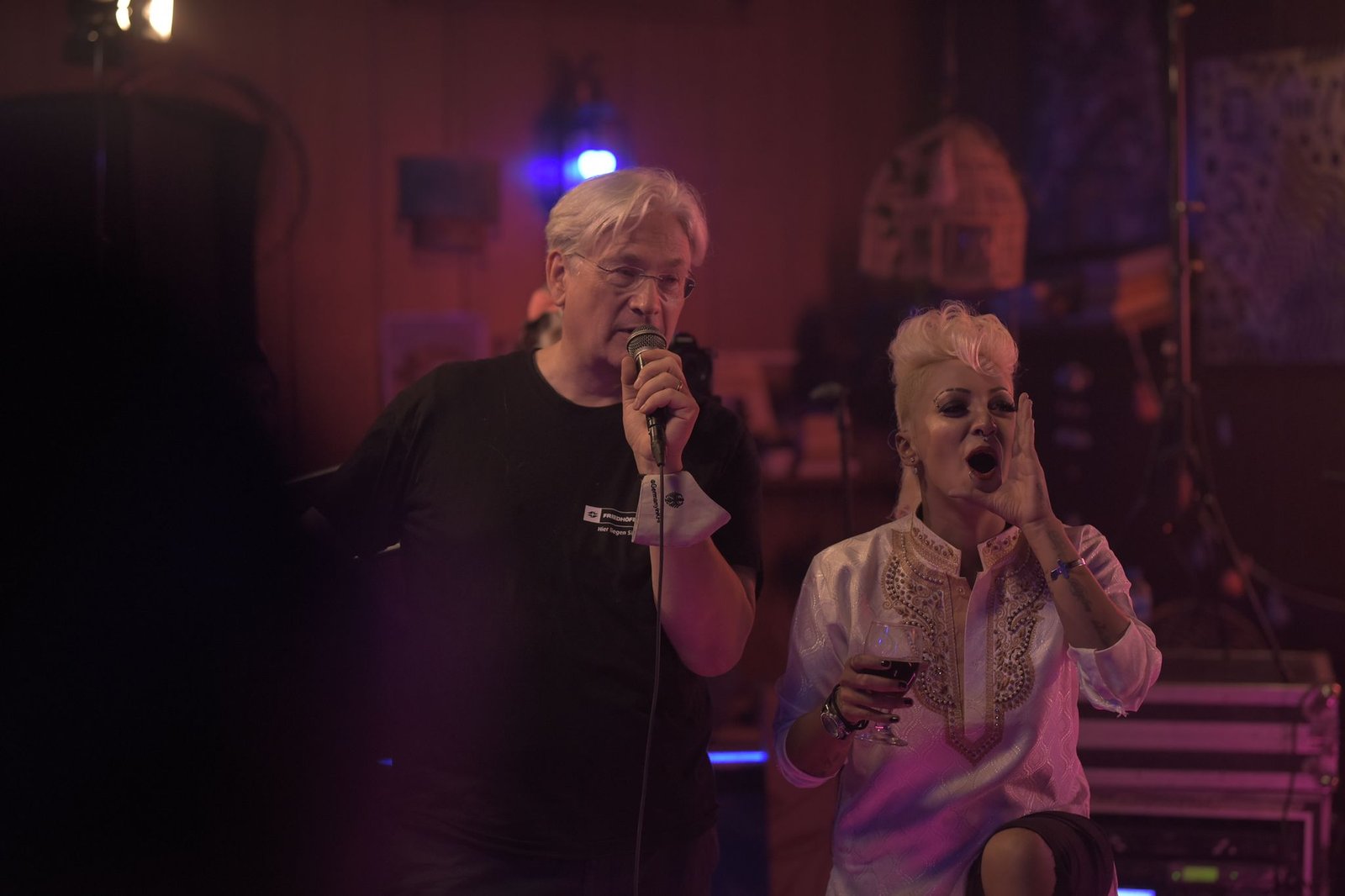
    Holger Ziegeler, a German diplomat in Karachi, has been accused of sexually harassing attendees and groping a woman at an event in Karachi. The event took place on November 13 last year and was co-funded by the German Consulate.

    “At the 2nd ScrapFest Pakistan event on November 13th/ 2021 at a privately hired venue; a woman attending was sexually harassed by one of the senior staff members from the German Consulate in Karachi,” wrote Urvah Khan in an Instagram post. She was the main organiser of the event.

    “Since my last post on this incident, the German Federal Foreign Office’s unit responsible for investigating all allegations of sexual misconduct has directly contacted me. I have provided them with the video and text evidence I mentioned was in my possession,” wrote Urvah in a separate Instagram post.

    Talking exclusively to The Current, Urvah Khan said that she organised the event ScrapFest, which promotes women and people from the LGBT community. The second event was co-funded by the German Consulate and Holger Ziegeler was German Consul General in Karachi.

    The event took place on November 13, 2021, and Urvah officially issued a statement on April 22, 2022. Three days after issuing a statement, she contacted the German Foreign Office.

    “It took a bit of time to make the statement because I needed time to speak to a victim and to convince the witnesses to come forward. We had a text message. After we found the video evidence and had collected the statements of the victims, I knew we had everything we needed.”

    Regarding the status of the investigation, she said the German Foreign Office in Berlin is investigating the matter. “They are interviewing the witnesses and the victim. We are waiting to find out what is going to happen.”

    Urvah further added that the woman who was groped by Holger Ziegeler reached out to her with the allegations the same night, and recorded her statement the next morning. “I brought it up with Holger. At first he was willing to apologise. The victim asked for a written apology as she was traumatised and did not want to see his face. He later retracted his apology and said that he did not harass her and this was a terrorist attack on his legacy.”

    He also pressurised Urvah to get rid of the evidence.

    Urvah said that when the German Consulate in Karachi was informed, they messaged her to take her Instagram posts down.

    “They did not support me or try to investigate, which is one of the reasons I reached out to the German Foreign Office in Berlin.”

    “A woman came by the stage where he groped her buttocks, then grabbed her hand.”

    Urvah added that apart from the victim who was groped, Holger’s behaviour throughout the night was unacceptable and disrespectful towards many of the attendees. Many of them came forward as witnesses about how uncomfortable they felt.

    “In terms of other attendees, he would try to go closer to them. A few of the witnesses said that they saw him trying to touch women on their body parts, on their stomachs, on their backs.”

    “There was another witness who said that he was standing in front of him while he kept touching his friend’s back. She kept putting his hand back to where it was supposed to be,” added Urvah.

    Asked why she chose to speak to an international publication, VICE, instead of a local one regarding the case, Urvah said, “Because he is a foreign diplomat, he had diplomatic immunity so that is why I was worried about PEMRA coming after an article or news item like this, and shutting it down. This is why I wanted the first article to be published in an international publication so PEMRA could not touch it.”

    “The big issue is that he thought because he co-funded the event through the German Consulate, he could behave in this manner and could get away with it,” said Urvah. “I think it’s important if we all talk about what he did and I think it’s important to have a conversation.”

    Talking exclusively to The Current, Dr Mehrub Moiz Awan, said, “I was hosting this event for a fee as requested by Urvah and a lot of my fans came specially for me.”

    While narrating what happened at the event, Mehrub said, “The white man was visibly drunk or at least tipsy and interrupted me a few times during my jokes as well. I had especially made a point to crack jokes at white people and white privilege and our own audience was loving them. He tried to be a little handsy with me as well but as I’m a Pakistani transwoman, I know how to handle such guys very well.”

    “Later I found out that a female left very upset because she was groped by the same guy. The dude actually sent Urvah a text as well that I saw with my own eyes. It said something like who’s this girl, she’s good. I want her number,” added Mehrub.

    Disclaimer: The Current is not responsible for the statements mentioned in the story.

  • First Muslim queer lawmaker elected in America

    First Muslim queer lawmaker elected in America

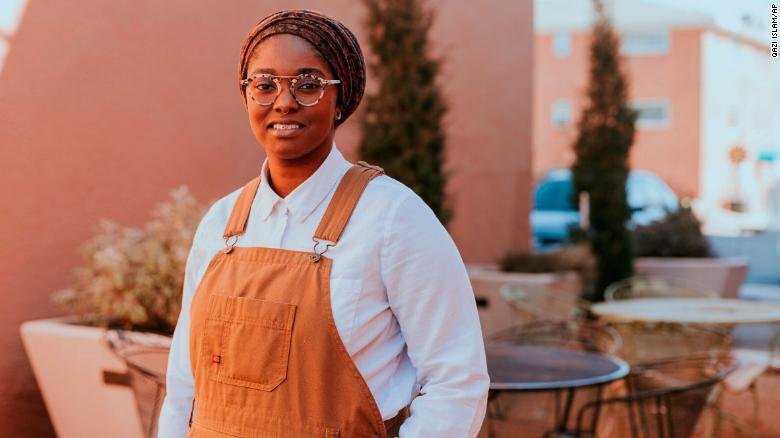
    Mauree Turner won her race for Oklahoma state House for District 88 becoming the first non-binary state legislator in US history and first Muslim lawmaker in Oklahoma.

    As per reports, Turner, 27, defeated Republican candidate Kelly Barlean to represent the district, winning about 71% of the votes, according to the Oklahoma State Election Board’s unofficial results.

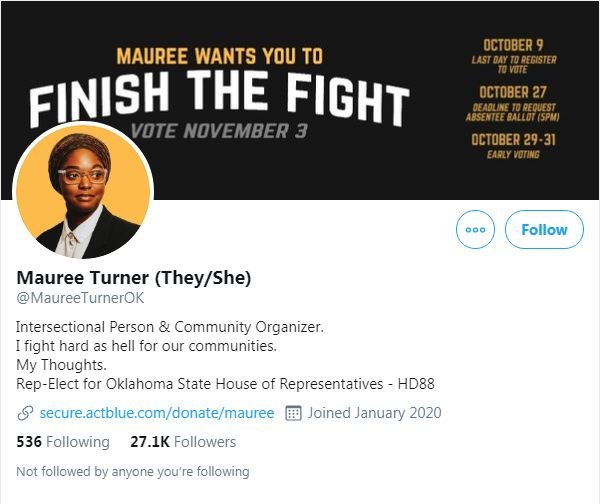
    Turner identifies as non-binary, which the National Center for Transgender Equality defines as gender understood as neither male nor female. Turner uses both they/she as pronouns, according to Turner’s Twitter profile. She used the same on her campaign website.

    According to the LGBTQ Victory Fund, a national organisation dedicated to electing LGBTQ people, there are currently four known genderqueer or nonbinary-identified elected officials serving in the US and five public LGBTQ elected officials in Oklahoma. Turner is the first non-binary person to be named to a state legislature.

    An activist, community organiser and native Oklahoman, Turner has spent most of her life fighting for issues such as immigration rights, racial justice and criminal justice. Living as a black Muslim American queer woman in the state of Oklahoma, Turner said, she experienced not being seen or heard by lawmakers. Her campaign ran on a platform of seeking to drive conversations about what inclusive

  • Pakistani Love: They wanted to dream

    Pakistani Love: They wanted to dream

    The first time I saw her, she was wearing a beautiful blue shirt, seemingly lost in a deep conversation with herself on the balcony. It was one of the most intriguing moments in my life. She stood there, lean, tall and a head full of short brown curls. I couldn’t hear what she was saying to herself and I felt this urge to lean in and listen to her. Her warm, brown eyes met mine and she gathered herself. I had entered her personal space but she didn’t seem to mind. She smiled at me, awkwardly, and went back inside. 

     I wanted to meet her again.

    It wasn’t even a question because I wasn’t allowed to ask any. I belong to a desi, typical, religious family in Pakistan. Parents who were slaves to their patriarchal mindset and bound by the stereotypical standards set by society. There was constant shame. Shame for wanting to understand myself, asking about and saying words like sex, vagina, menstruation, puberty.

     Little brown bags hiding the shame of being a natural woman. 

    If it wasn’t for my sister, I would have never had the guidance that every girl needs. 

    After I hit puberty, I realized I didn’t fit. I wasn’t like the others. And there was no one I could tell. It’s the loneliest feeling in the world. Not having the courage to tell your family who you are. Tell them there is nothing wrong with me. I just love differently. Please let me. Accept me. I’m gay. And that’s okay. 

    It was fate. There is nothing that can convince me otherwise. A few days after I saw her on the balcony, I saw Sara* in a park. I walked past her and looked back. It was her. Fidgeting with her headphones. I walked on but I felt her gaze on me. I turned around. She was staring at my legs and when she saw me look at her, face flushed pink with embarrassment. 

    I smiled. 

    “Hi.”

    “Hey.”

    “Do you…want to jog together?”

    “Sure.”

    My curly brown girl.

    I felt suffocated and I wanted to scream. 

    “I am a lesbian!” I screamed, but not out loud. In one instant, every moment, I was two different people. I sat in a room with people defining the ‘normal woman’, and I felt this heavy burden. My heart, my mind desperately wanted everyone to know. My face revealed nothing. Being part of the LGBTQ community in Pakistan is a huge struggle. I do not have the courage to come out to my family because the chances of acceptance by my religiously inclined family are very thin. 

    Can anyone hear me?

    I dreamed sometimes. I would tell my parents, my sister, sitting down in our living room, me, sitting opposite them all. 

    I’m gay, I’m different.

    The burden would magically be lifted. I would be one person.

     They would sit silently as I would die a little inside. Tears streaming down their faces. Father, stoic. Mother, silent. And a crack would emerge.

     They would smile and say, it’s okay. We love you, just the way you are.

    I would cry tears of joy. And then I would drift out of my head and the dream would walk away. It would come back but would never stay. 

    I tried to kill myself many times. 

    Maybe in death, the dream would stay on.

    “I’m from Lahore,” Sara said. 

    “Why did you move to Karachi?” I asked

    “I’m a journalist, so for work really,” she replied, “but I don’t have any friends…” 

     “You have me.”

    Sara was luckier than I was. Smarter.  She had never tried to end her life, had gone for therapy but she faced the same internal struggle. We formed a bond that I always craved. 

    She was the image that stayed on.

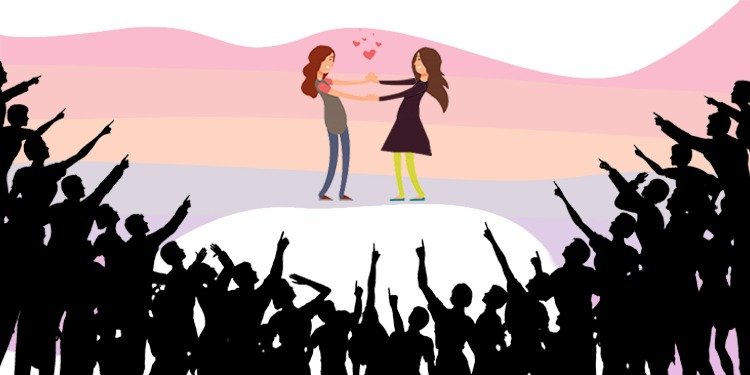
    It’s been more than a year since I told her I loved her. We are happy. But there’s a cloud that forever hangs over my head. I know nothing good ever lasts. This society cannot digest the relationship Sara* and I dream about. But for now we are lucky to have each other.

     There are so many others like us. 

    They dream.

     They want to be able to find a partner who they can bring home. Smile with, hold hands with, be with. But they can never say it. They go missing from their homes, live their lives in despair. 

    God’s mistake. 

    There is no mistake in the love I feel for Sara. But there is a sadness attached to it. My parents will never know who I love. They will never feel the love their daughter feels. They will never hold my face in their hands and know, “She is happy”. They will never accept.

    As our fingers touch in secret, there are times I let myself drift. The dream changes. I am no longer sitting in that room alone, facing my parents. I sit with Sara.

    “Abba, this is Sara. Ami, Sara,” I would nudge her. 

    She would smile, her awkward smile.

    “Salaam Sara beta, it’s so very nice to meet you.”

    *Names of the author and characters have been changed to protect their identities.