Tag: Life Top

  • Love without boundaries: Japanese woman marries Bahawalpur man

    Love without boundaries: Japanese woman marries Bahawalpur man

    A Japanese woman came all the way to Pakistan from Japan to marry a Pakistani man in Bahawalpur, who is a jeweler.

    As per reports, Kuna and Shehzad’s love story started on social media and culminated in a marriage ceremony in Bahawalpur. Kuna also converted to Islam before marriage and changed her name to Amna.

    “I want to stay with my husband in Pakistan,” she told media outlets in Bahawalpur.

    Finding matches on social media is witnessing an increasing trend in Pakistan, as many foreign citizens have moved to Pakistan to marry their soulmates.

    Recently, a woman from the Philippines married a man from Layyah.

  • Why We March

    Why We March

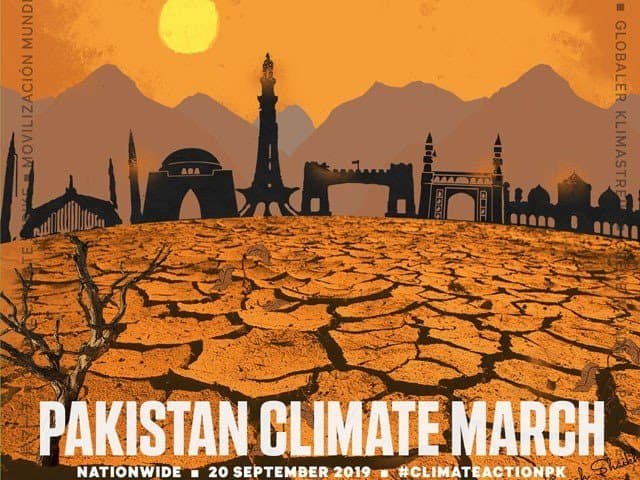
    We march because the climate crisis is existential. It involves us all, but not individually.

    The United Nations General Assembly (UNGA) is to convene on September 27.  One week ahead of the run-up to the assembly, children, students, environmental activists, NGOs and the civil society are conducting a ‘Climate March’ to draw attention to the crisis.

    Not just in New York, but in hundreds of cities across the globe.

    Why? The facts are staggering. Since agreeing to reduce greenhouse
    gas (GHG) emissions through the United Nations Framework Convention on Climate
    Change (UNFCCC) in 1992, the world has only produced more GHGs.

    Global temperatures are increasing, with each month breaking
    historical records; carbon concentrations in the atmosphere have shot over 400
    parts per million – not seen in the past 850,000 years. Back then, there was a
    species extinction event.  With animal,
    bird, insect and plant varieties in rapid decline, we are now facing the sixth extinction
    event.

    Just this year, there were wildfires in the arctic – something that has never happened before – and the scale of the ice melt in Greenland – 12.5 billion tonnes in one day in July, which wasn’t supposed to happen until 2070.

    We are seeing the global climate tilt and lose balance
    before our eyes; hence, the march.

    We are marching because the everyday discourse in Pakistan
    doesn’t register the climate crisis. People don’t know how bad it is or will
    be.

    Consider this: the half-degree difference between the limit of 1.5°C temperature increase envisioned by the Paris Agreement of 2015 and the 2°C limit envisaged by the Kyoto Protocol, means approximately 150 million deaths by 2060. That’s more than the lives lost in all the wars and battles fought in the 20th Century. And most of these deaths will be due to air pollution resulting from GHG emissions produced in the metropolitan areas of Asia and Africa.

    So unless we deal with the smog and air quality in North
    India, many of those 150 million lives will be lost in Pakistan and India.

    We are marching because of climate justice. By far, the
    responsibility of historical GHG emissions rests in the Global North, and
    within the hands of only a dozen or so businesses that have made, to paraphrase
    Greta Thunberg, obscene amounts of money by destroying the earth.

    Pakistan must stand strong with other countries and demand historical GHG inequity be addressed, but that does not relieve the country or us from our duty in the battle against the climate crisis.

    Both Pakistan and Pakistanis must realise that climate justice is just as much about equity between countries as the equity within countries. The climate crisis, worldwide, will play out not just between rich and poor countries, but between the rich and poor within every country.  The poor in Pakistan are especially vulnerable.  Nearly a quarter of the population lives below or close to the poverty line. For so many of our brothers and sisters, a climate event is all that stands between them and one meal a day.

    We march because it’s time to declare a climate emergency. We march because the climate crisis is not an “elite” issue in Pakistan or the responsibility of the developed world.  We march because students, environmental activists, academics and civil society in 22 of Pakistan’s cities are marching.  They prove that the climate crisis is well-known, that our population isn’t stupid and that the folks responsible for running the show should take the climate crisis seriously rather than focusing on the circus presently employed.

    We march, finally, because the climate crisis is existential. It involves us all, but not individually. The capitalist, consumerist and fossil fuel-driven economy that has brought us to the brink is too much for individual actions alone. The climate crisis needs collective political action. And it needs it now.

    Join the climate march at 3 pm on Friday (September 20).

    The writer is an environmental lawyer and member of the Pakistan Climate Change Council. To learn more about the march, follow @ClimateMarchPk on all social media platforms.


  • Price of plane tickets to increase after November 1

    Price of plane tickets to increase after November 1

    Bad news for all those travelling after November 1.

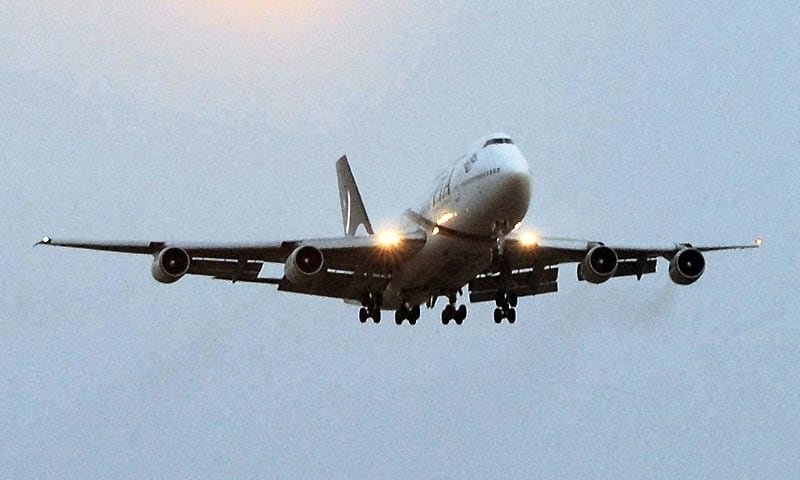
    The Pakistan Civil Aviation Authority has increased its embarkation fees and airport charges which means that plane tickets will now become more expensive. The new prices will be effective from November 1.

    According to reports, the CAA will charge Rs 2,800 as airport charges for passengers travelling abroad while foreign nationals will pay $20 each (Rs 3,127).

    The CAA has also said the charges will apply to all airports. Previously, each airport had set its own charges.

    Meanwhile, the embarkation fee for economy and business class passengers has been increased to Rs 2,000 and Rs 3,000 respectively.

    The new fees will be imposed from
    November 1, regardless of advanced bookings.

    As part of the new aviation policy,
    aeronautical charges for international flights have also been increased by 10%
    and landing charges during peak hours by 25%.

  • How to make pepper spray at home?

    How to make pepper spray at home?

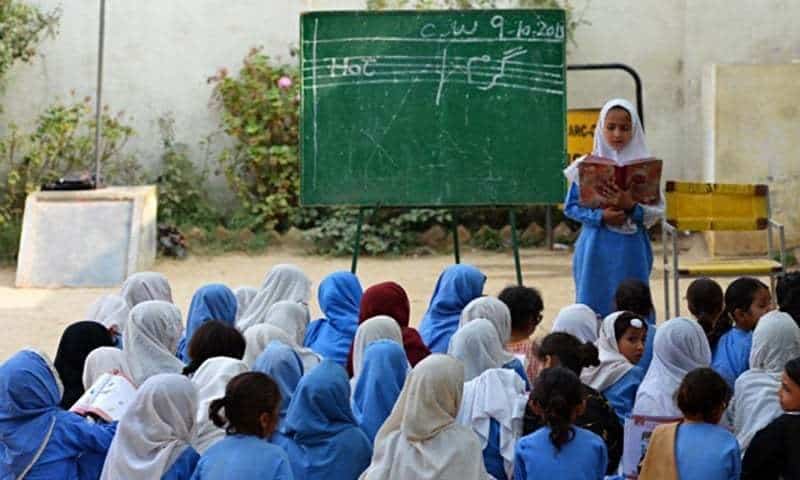
    Ali Khan Tareen has presented a better solution to avoid and lessen harassment cases. He has said that we should give pepper spray to schoolgirls to avoid harassment rather than asking them to wear an Abaya.

    The son of senior Pakistan Tehreek-e-Insaf (PTI) leader Jahangir Khan Tareen took to twitter to give us an alternative for protection of school girls from sexual harassment.

    What is pepper spray?

    Pepper spray is a chemical mixture that causes severe pain and irritation when it comes in contact with the eyes

    But the question is from where in the market we can get pepper spray? Don’t worry if you cannot find any in the market. You can even make a pepper spray at home as well. Read the instructions below to make it.

    Gather your supplies

    Pepper spray mixture can be made using
    household ingredients.

    Red chilli powder. It is recommended for its spiciness and ability to irritate the eyes.

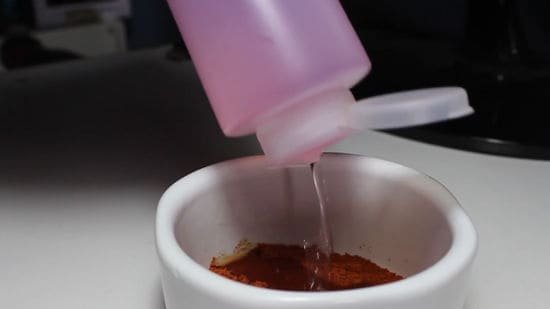
    Vegetable oil and Rubbing alcohol or spirit. These will be used to mix with the powder to make it to a sprayable substance.

    How to prepare?

    Add two tablespoons of pepper powder.

    Add spirit until the pepper has been completely submerged and then add one tablespoon of vegetable oil. You can also use baby oil.

    Leave the mixture overnight.

    Then filter your mixture with the help of the coffee filter.

    Filtering the mixture will help prevent clogging the nozzle of the spray.

    When you are done, pour the mixture in the spray bottle and you are good to go anywhere with your spray.

  • Four ways you can help your planet

    Four ways you can help your planet

    Are all the reports regarding climate change or the deteriorating environment disturbing you? Do you want to play a part in saving the Earth?

    Headlines these days are flooded with bad news about global warming, dying oceans, melting glaciers and endangered animals. Frankly speaking, the situation is quite alarming and we are more affected with it than we thought. While most of us think that one person’s actions might not make any difference, the truth is that it all begins with one person and there are actually many ways you can help.

    Here are a few suggestions on how you can play your part for Mother Earth.

    Conserve water at home

    Water wastage is one of the biggest ways humans affect the health of the planet. Taking measures to use less water is something you can start doing right away.

    Here’s how you can save water:

    • Check and fix any water leaks – a leaky spout can waste a lot of water.
    • Don’t wash dishes with the water running continuously. Use a method that requires less water to get the dishes clean.
    • Turn off the washing machine’s water supply to prevent leaks. It doesn’t need to be on all the time.
    • Don’t use too much water to water your lawn – instead, use water used elsewhere to water the lawn.
    • Don’t leave the tap running while you brush your teeth.

    Avoid plastics

    • Carry a reusable shopping bag with you in the car, in your bag all the time and use it when needed.
    • Use food containers instead of plastic bags to get food from the market.
    • Stop buying plastic water bottles. Use refillable glass water bottles.

    For more ways on how you can reduce plastic in your life, watch this video.

    Plant trees and don’t cut them

    Trees are an integral part of the ecosystem. Trees not only protect the land but the water and air, too. Plus they provide shade to your homes in the long, hot summer. If you have room in your yard, consider planting a few trees.

    Use fewer chemicals

    Chemicals used to wash our bodies, homes, cars and everything else get washed down the drain or absorbed in the grass, and eventually, end up in the water supply. Chemicals are doing real damage to waterways and aquatic life. The chemicals aren’t good for humans, either, so do your best to use fewer chemicals.

    • Use organic products like organic soap, shampoo etc.
    • Learn about alternatives to household cleaning items that do not use hazardous chemicals. For example, using a solution of 1/2 white vinegar and 1/2 waterworks as well as most commercial cleaners for basic cleaning jobs. Baking soda and salt are cheap, non-toxic cleansers, but should be used in moderation.
    • Instead of using pesticides and herbicides, find natural ways to get rid of weeds and pests.
  • Domestic dispute: Lahore man cuts wife’s nose

    A Lahori man cut his wife’s nose and shaved her head over a domestic dispute in the city’s Factory Area.

    According to reports, Sajjad Ahmad cut his wife Shazia’s nose and shaved her head after torturing her with plastic pipes, kicks and punches.

    Upon hearing Shazia and her children’s scream some neighbours rushed to their house and rescued the woman. They alerted the police and took Shazia to Lahore General Hospital. Meanwhile, Ahmad fled from the scene.

    The neighbours informed the police that Ahmad would regularly torture his wife with pipes and iron roads over petty domestic matters. She had reportedly left him twice but returned after he promised to mend his ways.

    Meanwhile, doctors revealed that Shazia had lost her nose and requires a complicated facial surgery for an artificial nose.

    Shazia told police that she was visiting one of her daughters’ in-laws in the same locality when her husband stormed in, took her back home, and attacked her with a plastic pipe. She claimed that Ahmad told her he had spent money on her health that he was to pay as a monthly installment to a shopkeeper. He then took out a knife from a cupboard and chopped off her nose.

    The police have registered a case against Ahmad and a police team has been dispatched to arrest him.

  • KP Govt withdraws compulsory Abaya order for female students

    KP Govt withdraws compulsory Abaya order for female students

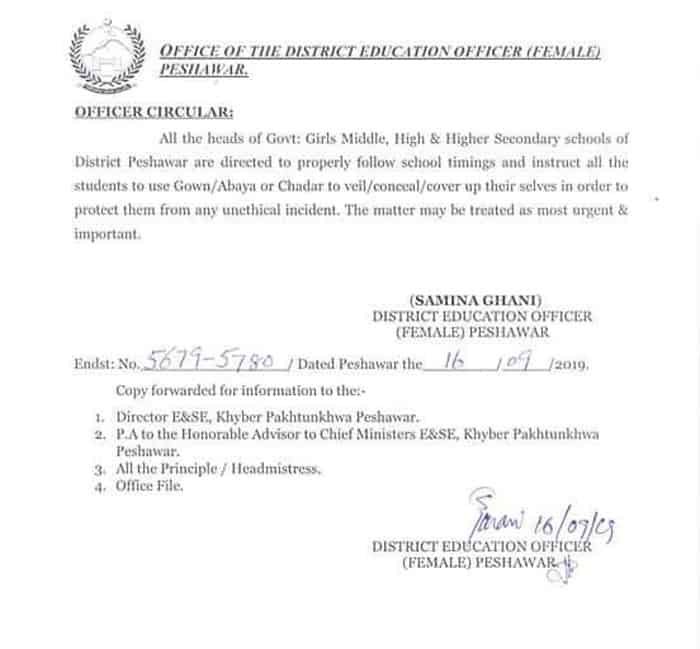
    KP
    government ordered school girls to come to school all covered up, making abayas
    compulsory for them to avoid harassment. After severe public backlash, Khyber
    Pakhtunkhwa’s Chief Minister took back the order.

    People were not happy with the authorities implying that it is women who are responsible for sexual harassment they face. Talk about blaming the victim rather than the committer.

    https://twitter.com/ayeshakhalid7/status/1172783267159973888

    After public backlash, the order was withdrawn by KP’s Chief Minister, Shaukat Yousafzai.

    Minister of Human Rights, Shireen Mazari took to twitter to raise the point that on the issue that the victims should not be restricted but the offenders should be punished.

    This isn’t the first time such an announcement came up.
    Previously, Haripur issued a similar order.

    A notice was circulated from the Peshawar District Officer enforcing compulsory Burka for school-girls’ safety.

  • Woman swallows engagement ring in her sleep

    Woman swallows engagement ring in her sleep

    A US woman swallowed
    her engagement ring in sleep while she was having a nightmare and had to
    undergo surgery to retrieve it. 

    Jenna Evans, 29, had a scary dream in which she and her
    fiancée were on a train and are attacked by some bad guys. She dreams that she
    removed her ring and swallowed it so that the attackers do not take it away.

     When Evans woke up next
    morning she was shocked to see her ring missing and realized that she had
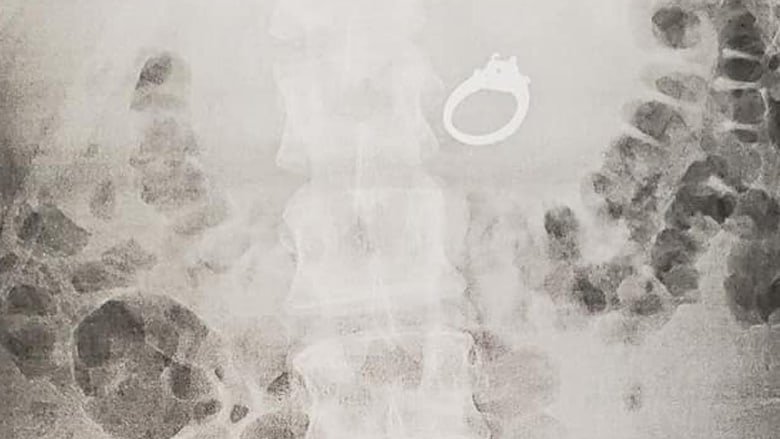
    actually swallowed the ring in her sleep. The couple went to hospital where an
    X-ray showed the 2.4-carat ring in Evans stomach.

    The worst news came
    when the woman was asked to sign release forms
    in case of her death while undergoing surgery to remove the ring.

    “Then I cried a
    lot because I would be so mad if I died. I waited a long time for that damn
    engagement ring and I will marry Bobby Howell,” BBC was quoted as
    saying Evans. Luckily, the surgery went well, and she later shared her
    experience in a Facebook post which went viral.

    “I was really happy because I don’t know if I can look at
    it and appreciate it in the same way,” Evan said.

  • Sindh’s Manchhar Lake to get a floating village

    The Sindh government has decided to restore the once active ‘village of boats’ on the almost-ruined Manchhar Lake and turn it into a model village.

    As per reports, the decision was taken on the instructions of Chief Minister Syed Murad Ali Shah who aims to bring back as many fishermen families as possible to their boat village.

    Initial working on the plan had already begun to restore the lost glory of this one of the largest freshwater lakes in the region.

    Officials said the plan to
    rehabilitate the lake was multidimensional. It included provision of safe
    drinking water, a school for the children of fishermen, a dispensary and other
    basic facilities.

    The floating model village would be a wonderful recreational place for all and plans are being made to develop and establish floating restaurants and resorts for visitors. Towers would be built for birdwatchers, in addition to fishing points, public toilets and marketplaces. Officials said such facilities would attract visitors from across the country and abroad and turn the area into a tourist hotspot.

    People had been living on boats at Manchhar Lake for centuries with scores of villages floating in the lake. However, it was heavily contaminated by the Right Bank Outfall Drain project.

  • Man accuses police of ‘stealing his 23 premium liquor bottles’

    Man accuses police of ‘stealing his 23 premium liquor bottles’

    A man has appealed to the Capital City Police Officer (CCPO), complaining that he was arrested on trumped-up charges of possessing 60 litres of local liquor, Pakistan Today reported.

    According to reports, Muhammad Javed, a resident of Okara district, stated that Lahore’s Defence-A police confiscated from him alcohol worth Rs455,000, including five bottles of Grand Fish, five bottles of Royal Flavored and 13 bottles of Gold Label.

    “Defence-A police snatched away 23 branded bottles from my car when I was driving to DD Block of Defence Phase IV,” said the appellant.

    “I was taken into custody and a false case of 60-litre local liquor was lodged against me,” he said. In addition, he said that he also had to pay Rs32,500.

    Javed inquired as to what became of the alcohol which was recovered from his possession since it would not show up in police records.

    On Sept 1, 2019,  Defence-A Police Station lodged an FIR against Muhammad Javed and charged him under The Prohibition (Enforcement of Hadd) Order, 1979-3 and The Prohibition (Enforcement of Hadd) Order 1979-4 for possession of “local liquor” on Sept 1, 2019.

    According to the FIR, an informant had told the police that Javed was carrying two barrels of local liquor and waiting for customers near Al-Fatah store in DD block, phase 4, DHA. As per the FIR, the police arrested Javed, recovered 60 litres of liquor and also impounded his vehicle.

    Defence-A Police SHO Rana Akhtar Ali denied allegations made against his department, saying that Javed is, in fact, a bootlegger and the FIR was registered on the basis of what was found from the spot.

    “60-litre liquor was recovered from the accused, who is apparently operating on someone else’s directions. We are investigating the matter and soon the real culprit(s) will also be arrested,” the SHO said.

    He further added, “He may go to anyone he wants but we stand with our stance and have solid proof.”