Tag: Life Top

  • Amazon forest burns, President Jair Bolsonaro accuses NGOs of setting fires

    Fires are raging at a record rate in Brazil’s Amazon rainforest, and the Brazilian president, Jair Bolsonaro, has accused environmental groups of setting fires, international news media outlets have reported.

    According to the reports, the skies darkened over San Paulo, Brazil, for an hour Monday afternoon after winds carried smoke from about 1,700 miles away.

    Dramatic images and videos on social media show giant plumes of smoke rising from the greenery and the hashtags Pray for Amazonas and Amazon Rainforest started trending on Twitter soon after.

    Environmental groups blame Brazil’s far-right president, Jair Bolsonaro, for the endangerment of the vital rainforest as they accused him of relaxing environmental controls in the country and encouraging deforestation.

    The scientists have warned that the increasing number of fires will strike a devastating blow to the fight against climate change.

    The research data shared from the National Institute for Space Research (INPE) shows that Brazil has seen 72,843 fires this year, with more than half in the Amazon region, making it an 80% increase compared with the same period last year.

    The Amazon is often referred to as the planet’s lungs, as it produces 20% of the oxygen in the Earth’s atmosphere and is considered vital in slowing global warming.

    It is the largest rainforest on the planet and is home to uncountable species of fauna and flora.

  • Pakistan becomes first country in South East Asia to conduct successful 5G test

    Pakistan becomes first country in South East Asia to conduct successful 5G test

    Pakistan has become the first country in South East Asia to conduct a successful 5G network test, Dunya News has reported.

    According to the reports, Chinese telecom company Zong conducted the test on Pakistan’s Independence Day (August 14), paving way for a new digital revolution in the country.

    5G is the fifth generation of cellular network technology with 10 times faster data download and upload speeds as compared to 4G, with wider coverage and more stable connections.

    The network’s home router speed has been recorded as four 4 gigabytes (GB) per second, which means that with 5G you can download a 50 GB file in just two minutes.

    It is estimated that 5G technology will bring industrial opportunities worth $1.2 trillion to South Asia and South East Asia over the next five years.

    Pakistan Telecommunication Authority (PTA) had in June, invited applications for 5G wireless network trials in the country and presented the framework for test and development of future technologies.

  • This Pakistani claims to be the founder of Bitcoin

    This Pakistani claims to be the founder of Bitcoin

    A Pakistani named Bilal Khalid, currently living in the United Kingdom (UK) has claimed to be the founder of Bitcoin, originally known as Satoshi Nakamoto.

    The true identity of Bitcoin’s founder is unknown and it is also said that Satoshi had a huge collection of coins worth almost $10 billion.

    According to the details, Bilal in a series of blogposts has provided evidence to support his claim of being Bitcoin’s creator, along with his story on what inspired him to work on digital currency.

    Bilal says that he derived the name Bitcoin from BCCI (the Bank of Credit and Commerce International) and wrote that he graduated from Al-Khair University in Pakistan, and later took online courses from Yale, Duke, and University of California-Irvine.

    He also shared the story of how he lost his coins collection, which as of right now are 10,037,062,000.00 USD, and would have made him the richest Pakistani.

    However, he says the loss was too big for him to take and that is the reason why he gave up on cryptocurrency.

  • Savour Foods sealed, fined after staff misbehaves with officials of climate ministry

    Savour Foods sealed, fined after staff misbehaves with officials of climate ministry

    Popular food joint Savour Food has been sealed and fined Rs 200,000 after their staff “manhandled, pushed and misbehaved” with officials of the Ministry of Climate Change and Pakistan Environmental Protection Agency.

    The action was taken after videos of the incident, which show a man being pushed and shoved, went viral on social media. Minister for Climate Change Zartaj Gul Wazir said that nobody is above the law and “mishandling with ministry officials will not be tolerated.”

    According to details, officials from the ministry went to the food outlet for inspection and implementation of their new ‘no plastic bags’ policy. When the officials questioned the staff, an argument ensued following which a scuffle broke out between the two parties.

    After the video of the incident went viral, people began to call for a boycott of the food outlet and arresting of the owners.

    https://twitter.com/MHBHanif/status/1163808758427860992?s=20

    Savour Foods is an extremely popular food spot in the twin cities of Islamabad and Rawalpindi. Their signature pulao kabab is a local favourite.

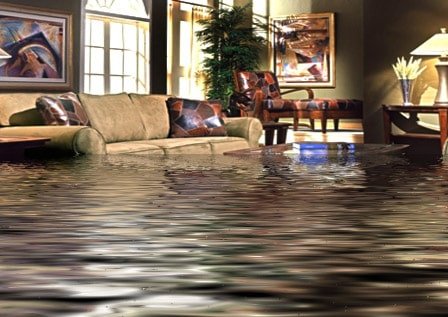
  • Tips to minimize water damage from a flood

    Tips to minimize water damage from a flood

    As
    monsoon season is in full swing and there is also a flood alert after India
    releases water in River Sutlej.  Most of us are mostly worried that water
    is going to get into our houses.

    Here are the ways you
    can protect your home.

    Before the flood: Prevent

    Clean the drains and
    gutters

    Seal the cracks (if
    any) in your house with plaster of Paris.

    Don’t dispose of fats,
    oil, grease or other objects in your sinks or toilets as they block the
    drainage systems.

    Electrical equipment
    should be at least one foot above flood level to help reduce the risk of
    electrical damage.

    Moving your valuables
    items and documents to the first or second floor will help to protect them. Or
    try to put them on higher places if you live on the ground floor.

    During
    the flood: Protect

    If the flood is imminent then these are the ways that might help to minimize the damage

    Open up windows and
    door (if it is not raining) to allow air to circulate through your home and dry
    things out

    Shut off all the
    electrical appliances if safe.

    Try to place handy electrical appliances to wooden or cement blocks.

    After a flood: Restore

    Remove the water and
    damaged material.

    Disinfect and dry
    every flood-contaminated room.

    Keep fans running. Make sure switches are dry and safe to touch.

    Most
    importantly follow all the instructions by the official departments of the
    government.

  • The Laddoo Diet

    The Laddoo Diet

    There is a new diet in town. It’s called the ‘Laddoo Diet’. We all love laddoos — especially the moti-choor variety — but we thought it only piles up pounds! Well, maybe that’s not the only thing it does. The Laddoo Diet can also lead to divorce.

    An Indian man from Uttar Pradesh has sought divorce on the grounds that his wife was feeding him laddoos every day.

    The couple has been married for 10 years and they have three children. Unfortunately, due to the advice of a tantric (shaman), the UP man’s wife was giving him four laddoos to eat in the morning and four laddoos in the evening. He was not allowed to eat anything else in between. The man approached a family court and said that he wasn’t feeling well for some time and his wife approached the ‘tantrik’ who asked her to make her husband eat only laddoos.

    Officials at the family counselling centre don’t know what to do about the wife’s superstitions.

    “We can call the couple for counselling, but we cannot treat the woman for being superstitious. She firmly believes that laddoos will cure her husband and is unwilling to accept otherwise,” said a counsellor.

    Well, who thought yummy sweets can actually lead to divorce!

  • 6 surprising sources of calcium other than milk

    6 surprising sources of calcium other than milk

    Everyone wants strong bones that will last a lifetime. Calcium is very important for both children and teens, as well as adults.

    Here is a table that will give you an idea about the number of serves of calcium-rich foods your child needs every day.

    Serves Per Day

    2-3 Years 4-8 Years 9-11 Years 12-13 Years 14-18 Years
    Boys 1.5 2 2.5 3.5 3.5
    Girls 1.5 1.5 3 3.5 3.5

    We all know that dairy products are rich in calcium but most children are not very fond of dairy products. Here is a list of food items that are rich in calcium.

    Ice cream

    You all will be surprised to know that ice cream also has a lot of calcium. Though milk and yogurt are definitely a better choice.

    Almonds

    While almonds are known to boost brain power and memory, they are also a very good source of calcium.

    Green Vegetables

    Many green vegetables such as spinach, okra and sweet potatoes are an excellent source of calcium.

    Cereals

    Cereals are a good way of adding calcium to your/ your child’s diet. Ragi, brown rice, etc are a good source of calcium.

    Fish and Meat

    Fish such as tuna, salmon, are an excellent source of calcium, while meat such as beef is also a good source.

    Eggs

    Eggs are amongst one of the first few food items that you may
    give to your baby. Eggs are rich in calcium and can be used in various forms
    and dishes.

  • Rain damages ancient Buddhist heritage site in Taxila

    Rain damages ancient Buddhist heritage site in Taxila

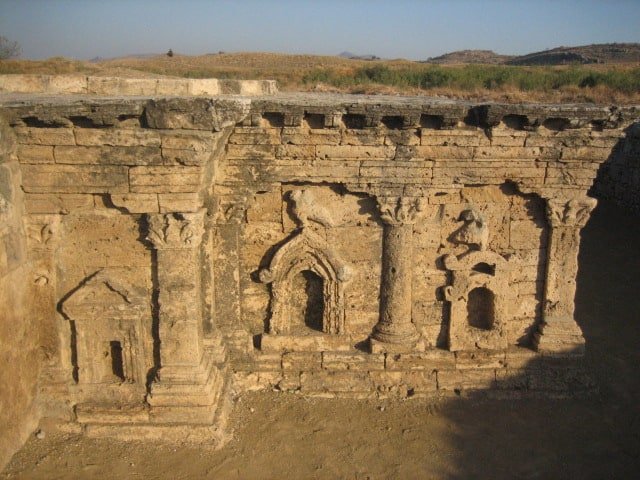
    Recent rains in the country have not only created hurdles for human life, but old heritage sites are also being affected by the storms. First, the small wooden entrance gate to the Shahi Qila in Lahore was damaged due to the rain and now the rains have damaged an ancient Buddhist heritage site in Taxila.

    As per details, the double-headed eagle Stupa located at Sirkap is crumbling fast. An architectural marvel, the double-headed eagle Stupa is made of Kanjur stone and was originally plastered with lime.

    The second city of ancient Taxila, Sirkap is significant in the archaeological history of Pakistan as it is among three of the 18 Buddhist sites of the Taxila valley with intact sculptures. The site which has relics dating back to the Achaemenid, Greek and Kushan periods has been classified as World Heritage Site by the Unesco.

    According to the curator of Taxila Museum, Sirkap was founded by the Bactrian King Demetrius, who conquered the region in the 180s BCE. The city was expanded by Gondophares who also built the famous double-headed eagle Stupa and the Temple of the Sun.

    Apart from the double-headed eagle Stupa, the recent torrential rains have also caused severe damages to scores of priceless stucco sculptures of the Buddhist period (2–5th century AD).

    The government and others responsible have not taken the necessary measures to preserve and protect these heritage sites, which these sites may soon cease to exist if things continue to be like this.

    Irshad Hussain, the deputy director of the archaeology department, said the department was facing a shortage of staff from the last 15 years as no recruitment has been made and employees were retiring every year after reaching their age limits. He said after the 18th amendment the site had been handed over to the provincial government. However, he added that the department had planned to erect a protective roof over such endangered stupas to save them from natural elements such as rain.

  • All you need to know about Congo virus

    All you need to know about Congo virus

    Crimean-Congo Hemorrhagic fever, commonly known as Congo fever, is a viral disease that spreads through tick bites. The virus infects wild as well as domestic animals like sheep and cattle.

    Humans are infected when they come in direct contact with blood or tissues from infected animals or bites of infected ticks. Crushing of infected tick could also result in infection. The infection spreads to other people if they come in contact with the patient’s infected blood or body fluids.

    According to Agha Khan Hospital, Congo virus does not survive high temperatures, and well-cooked meat does not pose any risk of transmission of the virus.

    What are ticks?

    Ticks are scientifically classified as Arachnida (a classification that includes spiders). Ticks require blood meals to complete their complex life cycles.

    Tick

    Symptoms

    A person infected with the virus may show general symptoms like high fever, headache, joint and muscle aches, nausea, stomach pain, sore eyes and loose motions. He may suffer from severe bleeding, jaundice, and photophobia (sensitivity to light).

    If you experience any of the above symptoms and suspect that you may have been exposed to, or if you work in an environment where Congo virus is likely present, seek medical advice immediately.

    Prevention

    • Reducing the risk of tick-to-human transmission:
      • Wear protective clothing (long sleeves, long trousers)
      • Wear light-colored clothing to allow easy detection of ticks on the clothes
      • Use approved repellent on the skin and clothing
      • Regularly examine clothing and skin for ticks; if found, remove them safely
      • Avoid areas where ticks are abundant and seasons when they are most active.
    • Reducing the risk of animal-to-human transmission:
      • Wear gloves and other protective clothing while handling animals notably during slaughtering and butchering procedures.
      • Routinely treat animals with pesticides two weeks prior to slaughter.
    • Reducing the risk of human-to-human transmission in the community:
      • Avoid close physical contact with CCHF-infected people;
      • Wear gloves and protective equipment when taking care of ill people;
      • Wash hands regularly after caring for or visiting ill people.
  • 2.5M polythene bags confiscated in Islamabad

    2.5M polythene bags confiscated in Islamabad

    Special teams of the Ministry of Environment have made raids in different areas of Islamabad and removed 2.5 million polythene bags during the operation.

    Since 14th August polythene bags have been completely banned in Islamabad under the Clean and Green Pakistan campaign. Teams are visiting different areas of Islamabad daily and checking stores if they are still using polythene bags.

    The ban on the use of polythene bags in Islamabad involves a permanent ban on its manufacturing, trading, and sale. The Ministry of Climate Change has introduced cotton bags as an alternative.

    The
    Sindh government has also announced plans to make the province a plastic
    bag-free by October 2019. On the other hand, Chief Minister Punjab Usman Buzdar
    has also said that the approval to ban plastic bags in the province will be
    accorded in the next meeting of the provincial cabinet.