Tag: lifetop

  • Saudi Arabia likely to allow women to perform Hajj without mehram: reports

    Saudi Arabia likely to allow women to perform Hajj without mehram: reports

    The Saudi government is considering different visa options that would allow women to perform Hajj without a male guardian, reports have claimed.

    As per Saudi law, women, are allowed to perform the annual pilgrimage only with a male guardian, while there is an exception for women older than 45, who can perform the ritual in groups.

    Reports emerging Tuesday claimed that the Kingdom’s Ministry of Hajj and Umrah is considering the option of granting visit visas for tourism and also for religious purposes, and women might be allowed to travel without male guardians.

    The official said there were about 750 Umrah and Hajj companies with licenses, but only about 500 of these were in the market and they were only running at 1% of their capacity. The Umrah sector is more profitable than the industrial sector.

  • Prince William to honour Diana on Pakistan tour with a special visit

    Prince William to honour Diana on Pakistan tour with a special visit

    With the Duke and Duchess of Cambridge, Prince William and Kate Middleton, arriving in Islamabad as part of their royal tour of Pakistan, the former will be honouring his late mother and Princess of Wales, Diana, with a special visit.

    The five-day visit to the country — which has been described by Kensington Palace as their “most complex” to date — will see William and Kate attend a series of engagements focusing on security and the effects of climate change beside education for girls and young women.

    According to reports, during the trip that will see the couple visit Islamabad, Lahore, the mountains in the north and regions bordering Afghanistan in the west, the Queen’s grandson will also seek to honour his late mother Princess Diana’s humanitarian work.

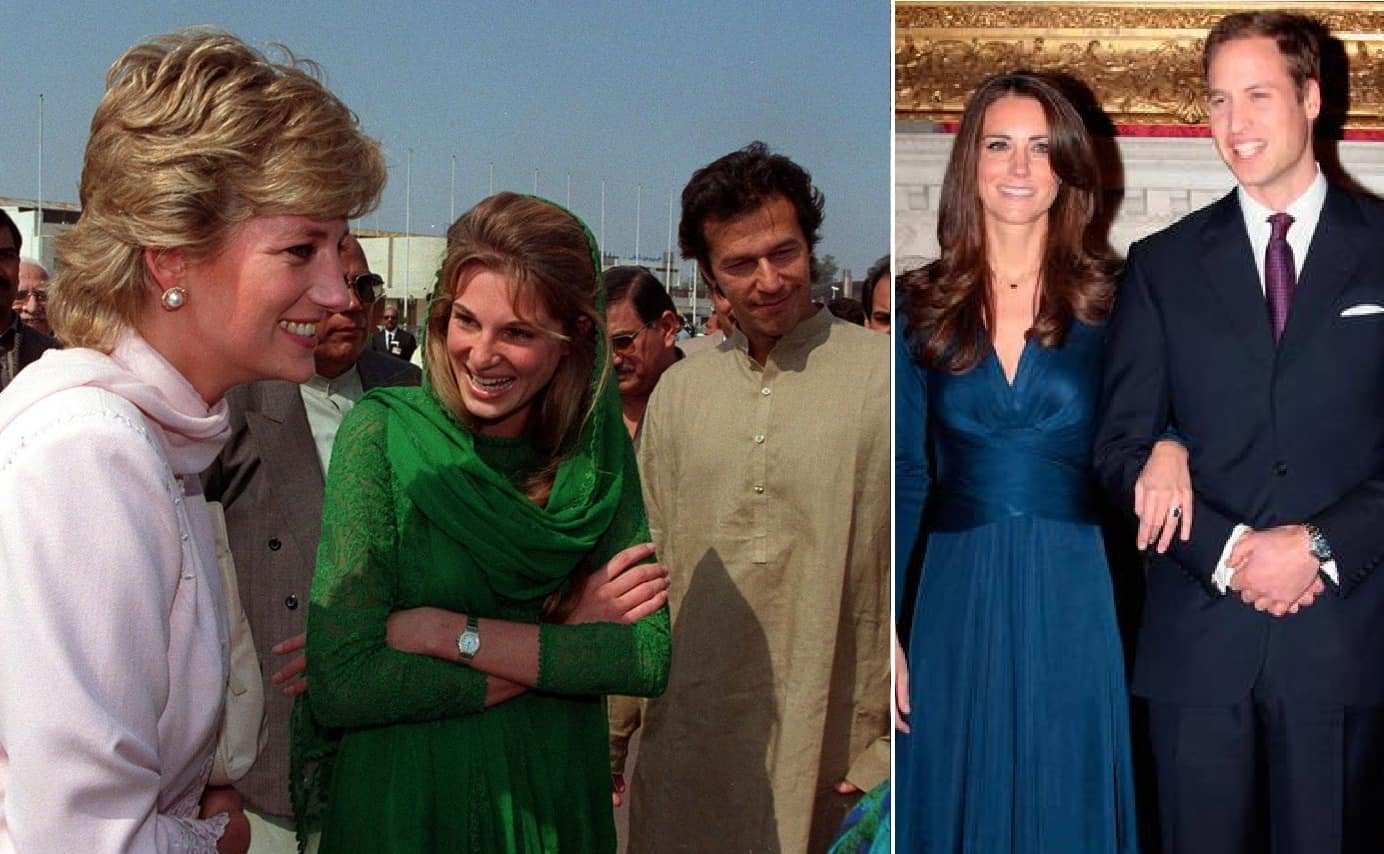
    In 1996 and 1997, shortly before she died in a fatal car accident, the princess visited the country to see her friend Jemima Goldsmith and then-husband Imran Khan, who is now the prime minister (PM).

    During the latter trip to Lahore, Diana had helped Imran with raising funds for his Shaukat Khanum Memorial Hospital.

    William is now due to meet the premier, who he has known since childhood, as well as President Dr Arif Alvi. It is also thought the Duke and Duchess, who have left their three children at home, will see sites visited by the Queen during tours in 1961 and 1997.

    “The duke and duchess will be covering a lot of ground and are keen to put Pakistan back on the map as a country that is now much safer than people expect it to be,” reports quoted a royal source as saying.

    Precise details of the trip — the first royal tour to the country in 13 years after Prince Charles and the Duchess of Cornwall — haven’t been released for security reasons.

  • Raheela: The Girl Child

    It’s the International Day of the Girl and Pakistan is shamelessly on the bottom of the global ranking in empowering them. They face death; stunted growth; violence; child labour and limited or no access to education and medical care.

    I took a dirt road two hours away from Peshawar in 2017 to find out more about how young girls with no access to education can be brought back into the gig economy.

    I spoke to about a dozen young girls and recorded their
    interviews to put a report for the people who were working to change the
    traditional set up in the conservative Khyber Pakhtunkhwa (KP) district.

    I spoke to the adolescent girls learning vocational skills like tutoring, tailoring and computer skills. Some girls between 15 and 19 were clad in burqas, others in chadors and most, in a deep sense of shame. Their body language was subdued and their presence was mild like they were a bit too grateful for the donor support I had gone to assess.

    Raheela was an unforgettable young girl. She was a Frida
    Pinto lookalike, big eyes and a chiseled jawbone with fierceness about her life
    story that both humbled and awed me. She was what we call a success story that
    we were to tout for more funding in the area of adolescent girls, where
    government support failed or was neglectful.

    Raheela had learned to make a lot of money over the past few
    months. She was given a grant to receive a brand new Singer sewing machine. The
    machine allowed her to sell clothes to local women that she sewed faster and
    better. She could now afford to send her younger siblings to school. That
    month, she made more money in thirty days than her drunk and abusive father
    made in a year.

    Many would consider this a success, but for Raheela, it meant a disrupted order of status quo that led her father to rage and episodic beatings.

    She looked at me to answer questions with a black eye that she unsuccessfully attempted to mask under a cheap concealer, three shades lighter than her wheat skin colour. I had to, so I asked her about the black-blue eye.

    Her face comes to me like a floating ghost when I hear politicians rattle their podiums and make big promises. When big men with power claim justice for the common people who are facing stagflation in the economy, I wonder if they really ever see Raheela.

    Am I ugly, bad and unworthy? She asked me in response.

    No.

    I said she was beautiful and good and worthy and that it was
    the people who exploited her that should be put away.

    She was not fearless, but she was incredibly brave.

    Today, we mark the International Day of the Girl Child, so I went back to my notes from that day I met Raheela.

    I often think of Raheela because she is far away from the
    cult of cool that many young adolescent girls her age are obsessed with. She
    cares more about how to hide her siblings when her father picks up the rod than
    she does about getting the corners of her wing eyeliner right. Her life is more
    immediate and her troubles are not imagined.

    Her face comes to me like a floating ghost when I hear politicians rattle their podiums and make big promises. When big men with power claim justice for the common people who are facing stagflation in the economy, I wonder if they really ever see Raheela. I wonder if they hear the tremble in her voice when she describes going back to a home where she faces chronic punishment for working to support her family. I wonder if they even know that in this country, girls are prematurely sexualised and prematurely made into grown-up adults when they are too young to even understand their own bodies.

    I’m going to dare to dream a world for her today because that is what the day calls for – after all the GirlForce is unscripted and unstoppable.

    If I could reimagine a world for Pakistan’s Raheela, I would dare to dream that she has a lot of hygiene. That she has access to sanitary pads that are biodegradable and safe. Many girls in the programme who enter puberty end up missing their vocational classes just because they are on their period. The norm is unsanitary cloth packs that leak and limit their mobility. I want a world where a period doesn’t signal young women’s child-bearing age, but an age that needs care and protection from people who have an exploitative mindset. Commercial sanitary pads are prohibitively expensive in rural areas and there is no education on how to maintain mobility during menstruation. As a result, menstruation is used as a weapon to ground Raheela.

    I often think of Raheela because she is far away from the cult of cool that many young adolescent girls her age are obsessed with. She cares more about how to hide her siblings when her father picks up the rod than she does about getting the corners of her wing eyeliner right.

    I would also imagine a world for her where the road to the vocational centre would not be planted with land mines of honour culture. Where the local village perverts won’t call her a slut for wandering instead of being invisible. I’d want local police to punish those men if they dare make her feel threatened. Instead, local police usually victim-blame young women who face eve-teasing and sexual harassment. Raheela was asked to go back home and fetch her abusive father before a legal complaint is lodged. She ended up not complaining and facing the men in her path day after day, passively.

    It would be rather nice if Raheela had a basic smartphone that allowed her to receive her stipend in a mobile wallet, safe from the drug-addiction ambitions of her father. A mobile wallet that allows her to buy her mother the medicines she needs to repair her mental health, her self-esteem and her social embarrassment for only giving birth to girls.

    Access to the internet would be great for Raheela. She could get socially connected to friends and family she trusts and can rely on. She could even search the latest fashion trends to remix in the clothes she designs and sells in larger cities. She could learn English, the language the internet uses and sharpen her Urdu skills using tutorials. She could search for entertainment and watch shows that give her respite from her reality. She could use YouTube to research how to manage money and do basic bookkeeping so her business can stay afloat longer.

    I’d want a world where Raheela knows that elsewhere in the universe, there are doctors who perform surgeries remotely; that holograms exist; that future jobs will focus on creativity and collaboration; that there are smart shoes that measure everything including steps. Most importantly, that she can protect her digital footprint and have her cyber world secure from prying eyes of men who can hurt her now or in the future. She could know her rights as a citizen. She would know then, that the state has promised to protect her, educate her for free and punish anyone who harms her physically. That would change her mindset.

    I want Raheela to know that clothes look better when you wear them on your back while standing up straight, chin up, shoulders back. Raheela is not ugly, not a bad person and she is not unworthy of this dream I have dreamed entirely on her behalf.

    I’d like to give her some representation in the local government, perhaps even as a citizen. She could understand that there are others like her suffering in the community and hold a town hall with them to support community involvement. Raheela could help create public pressure to have easier access to schools, transport, healthcare and plumbing by speaking up for more young women.

    I want Raheela to know that clothes look better when you wear them on your back while standing up straight, chin up, shoulders back. Raheela is not ugly, not a bad person and she is not unworthy of this dream I have dreamed entirely on her behalf.

    It’s the International Day of the Girl. Pakistan is shamelessly on the bottom of the global ranking in empowering them. Girls in Pakistan face death; stunted growth; violence; child labour and limited or no access to education and medical care.

    It’s too late for Raheela, by now she may have a few girls of her own, her father may have won at patriarchy and she may have lost at it. Can we please get this dream in a politician’s speech so it could maybe… maybe become a part of the cult of cool that some girls can never reach.

  • Amid frog meat rumours, Punjab to set up frog farms

    Amid frog meat rumours, Punjab to set up frog farms

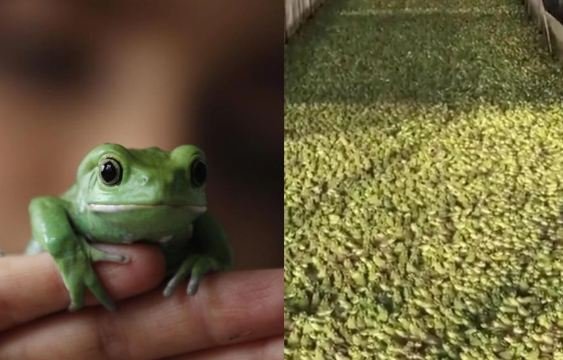
    Days after rumours regarding frog meat being used by restaurants across its provincial capital, Punjab has decided to set up frog farms, but for an entirely different purpose.

    Reports quoted Punjab Fisheries Assistant Director Mian Ghulam Qadir as saying that the department has forwarded to the government a summary in this regard. “There are no turtle or frog farms in Pakistan and medical colleges that need any [for dissection], have to go hunting for them in the wild.”

    He added that if the provincial cabinet approves the plan, besides saving time wasted in hunting, it would generate employment opportunities.

    “On top of this, breeding turtles and frogs domestically will not only preserve the species, but they can also be exported to countries like Thailand and China where they eat them,” Qadir said, adding that they are also quite expensive in the international market.

    LAHORIS BEING SERVED FROG MEAT?

    Last month, reports claimed that frog meat was being served across Lahore in shawarma and burgers. The news took social media by storm soon after pictures showing two suspects arrested with sacks full of dead frogs, started doing rounds over the internet.

    The reports were debunked by authorities upon clarification that the two arrestees were only delivering the frogs to a laboratory that supplies them to medical universities. Medical students dissect the frogs and practice suturing on them.

  • Big idea into a successful business? Read this book

    Big idea into a successful business? Read this book

    The first thing you need to know about the book “Sprint: How to Solve Big Problems and Test New Ideas in Just Five Days” is that it’s been written by the guys at Google. Jake Knapp, John Zeratsky and Braden Kowitz are three partners at Google Ventures, an organisation that helps entrepreneurs by investing in their startups.

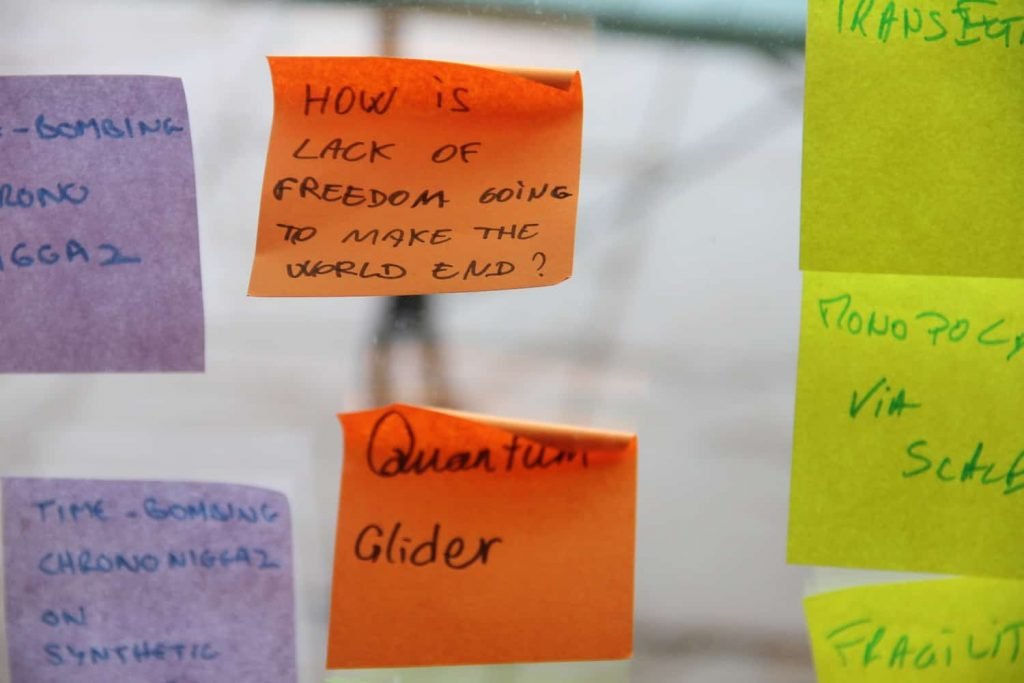
    Post it notes play a big role in the Sprint methodology

    The book isn’t tedious at all, which is what someone would expect from a book that discusses how to resolve problems. It gives you simple instructions and examples on how to sort out the issue your start up (or big firm) is facing.

    The book is very hands on, asking the reader to arrange five days for five long sessions of meetings to identify a problem, question it, work it out and test it. So in just five days, you are able to test an idea and see if it works or not.

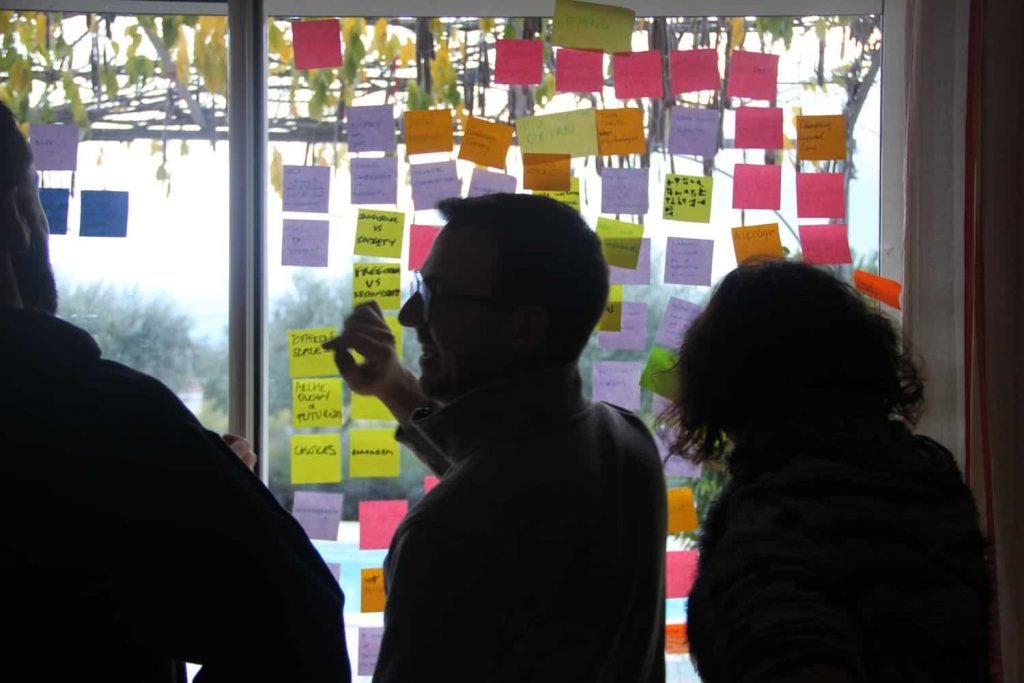
    Interactive brainstorming leads to effective meetings

    Although the method described in the book is for an already up and running startup, or a big business, the ideas and methodology can apply to one person or two. It just helps sort out a muddled idea or a difficult plan. And is a fun read too.

    Don’t want to buy or read the book? Here is the video version of what the book is all about

    We actually tried implementing the method which is why we are such big fans of it. We used the plan for day one and day two and implemented it on a small group of people who needed to resolve a problem and it was an effective way of getting the problem identified and also coming up with a solution to resolve it.

  • Dog culling: You don’t have to be an animal lover, but at least be human

    Dog culling: You don’t have to be an animal lover, but at least be human

    We starve them, kidnap them and even murder them, but the moral community that rejects the abuse of humans, does not consider what we are doing to animals as something wrong.

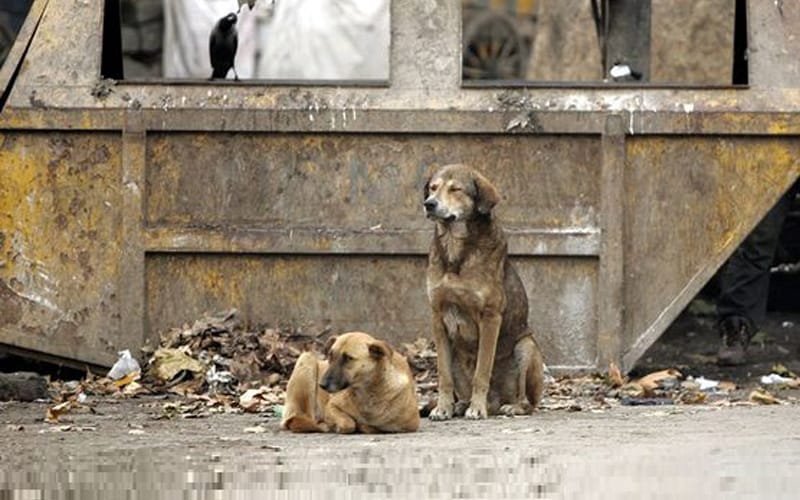
    If you reside in any of the big cities of Pakistan, you must have woken up to the sounds of gunshots every few months. Gunshots, loud whimpers, more gunshots and then complete silence… a deafening silence.

    Dog culling, which basically means to kill, takes place to reduce the population of stray dogs and the occurrence of rabies. It is a brutal and outdated practice that still exists in a few countries around the world — Pakistan being one of them.

    As per a study by the World Health Organisation (WHO) in 2010, around 97,000 dog bite cases are reported every year in Pakistan, however, there are still no exact figures of the number of deaths caused by rabies. And the governments’ solution to combating the spread of the deadly disease, is dog culling.

    Every year, thousands of dogs are brutally murdered by being shot or poisoned. The government, under the municipal department, hires ‘dog shooters’, whose only job is to kill all the dogs in any area. These shooters are given old guns, which mostly miss the target, resulting in injured dogs suffering for hours as they slowly bleed to death.

    According to the World Animal Protection (WAP), “Culling dogs is not the solution to rabies”. It is also not the solution to decrease dog population, because, for every dog that’s left, eight more puppies will be born and with the imbalance created in the environment due to dog culling, more food will be available for the new ones.

    The surviving animals will keep on reproducing and these new dogs will then move to areas that were previously made ‘dog-free’. This cycle continues every year, the dog population doesn’t decrease and nor is rabies contained. So what is the solution that can eliminate both rabies and dog population? It is TNVR.

    TNVR stands for Trap, Neuter, Vaccinate and Return. You pick up dogs from the streets, spay/neuter them so they can no longer reproduce; vaccinate them so they do not get rabies, tag them or chip them and then return them to the area they were found in. This way, stray dogs will not only be free of rabies, but their population will also gradually start to decrease.

    As per WAP, “the only way to eliminate the virus is through
    vaccination. Vaccinating at least 70% of the dogs in an area creates herd
    immunity, slowing the spread of rabies until it dies out”.

    A single female can produce up to 2,048 puppies in just four years! Now imagine the effect of spaying one female. A study in India (Reece & Chawla, 2006) reported a decrease of 31.8% to 51% in dog population in six years when 50% or 70% of the population was spayed and neutered. Meanwhile, Thailand has seen a decline of 50% in just five years.

    If we just talk about rabies drives, countries as Panama, Chile, Brazil and Argentina initiated countrywide rabies vaccine drives that have led to them being rabies-free for over 10 years now.

    One of the major reasons why no time is spent on campaigns such as TNVR is because of the public opinion regarding dogs. In our society, dogs are looked down upon, and we consider them as non-feeling, non-thinking beings.

    However, according to a 2012 University of Cambridge study, animals have a conscience, which means they think, feel and respond to the world in the same way as humans, but just because they express their emotions differently, we tend to overlook them.

    The result of this willful forgetfulness is reflected in the way we treat dogs. We stone, beat and even shoot them dead every day.

    Imagine the same for a human being;
    where he or she is starved, kidnapped, poisoned, murdered, shot or tortured. Most
    governmental bodies around the world, NGOs and individuals would agree that
    such acts are wrong. They would criminalise such acts and punish those who
    commit them.

    Sadly, the same cannot be said for animals, their abuse is accepted by the same moral community that rejects the abuse of humans. As a society, we still do not see what we are doing to animals as something wrong. We are okay with watching animals suffer; we are okay with the constant and widespread abuse of animals.

    Perhaps it is time for the citizens of this country to wake up and take a good hard look in the mirror. Have we become the very monsters we speak of? Have we become so selfish that we refuse to acknowledge the abuse that takes place outside our homes every day? Have we become so arrogant that we deny basic rights to other living beings around us? Have we completely lost humanity and compassion? But most importantly, are we even human anymore?

  • Experts question Modi’s claims as millions still relieve themselves in public

    Experts question Modi’s claims as millions still relieve themselves in public

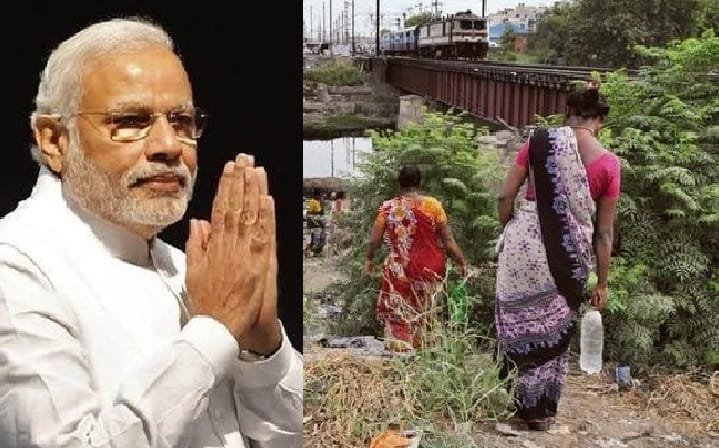
    India is to be declared “open-defecation free” by Prime Minister (PM) Narendra Modi on Wednesday evening, although experts question his bold claim that all 1.3 billion people in the country have access to a toilet, Agence France-Presse (AFP) has reported.

    Modi made his “latrines for all” pledge when he first assumed office in 2014 and is hailing the project’s success as India celebrates the 150th anniversary of the birth of independence hero Mahatma Gandhi, a sanitation champion.

    Since being elected, Modi’s government says it has built almost 100 million toilets, winning the leader plaudits abroad, including an award from the Bill and Melinda Gates Foundation last week.

    In March, the government had said fewer than 50 million people relieved themselves outside, down from 550 million in 2014, with more than 550,000 villages declared open-defecation free.

    However, experts are sceptical over his claims, citing data from rural as well as urban areas.

    “A lot of latrines have been constructed from 2014 to 2018. Latrine ownership increased from about 35 per cent to about 70 per cent,” said Sangita Vyas from the Research Institute for Compassionate Economics (RICE).

    “That increase did accelerate the reduction of open defecation but in December 2018 we estimated about half of the people in the states of Bihar, Madhya Pradesh, Uttar Pradesh and Rajasthan still defecated in the open,” she told AFP, doubting that the shortfall has been made up since.

    Many of the toilets that have been constructed are without a water connection and even when they are connected, cultural barriers stop many Indians from using them, experts say.

    Modi, 69, was set to make the grand announcement in his western home state of Gujarat today evening in front of 20,000 village chiefs.

    He was also due to visit the Sabarmati Ashram in Gujarat, where Gandhi based himself for many years, and where 10,000 jars of treated human faecal matter were to be handed to guests, the Indian Express daily reported.

    The nutrient-rich matter — sun-dried, sieved into a tea leaf-like consistency and packed into the glass jars together with seeds — will then sprout upon watering.

    Before that, Modi early on Wednesday paid his respects to Gandhi, who was assassinated the year after India gained independence from Britain in 1947, at the Raj Ghat memorial in New Delhi.

    He said on Twitter that India was expressing “gratitude to Mahatma Gandhi for his everlasting contribution to humanity. We pledge to continue working hard to realise his dreams and create a better planet”.

    Other events also took place nationwide including in a hospital room in Pune where Gandhi was operated on for appendicitis in 1924.

    As many as 600 prisoners were also set to be released in an amnesty, media reports said.

    Later on Wednesday, a year-long, 14,000-kilometre (8,700-mile) “global peace” march was due to leave Delhi bound for Switzerland and taking in 10 countries.

  • Govt to impose ‘Cleanliness tax’ on every home

    Govt to impose ‘Cleanliness tax’ on every home

    The Pakistan Tehreek-e-Insaf (PTI) government has decided to impose “cleanliness tax” on every house in Islamabad, a private media outlet has reported.

    According to reports, every year the government spends nearly Rs2 billion on the cleanliness of rural and urban areas in the federal capital, considering which the municipal corporation has now sought references on how to levy the said tax.

    The corporation has also established a committee in this regard and is aiming to collect around Rs1 billion every year.

    The tax will initially be imposed on houses in urban areas and each house, including government properties, will have to pay it.

    WATCH VIDEO:

  • A women-only hotel has opened in Spain

    A women-only hotel has opened in Spain

    Spain has opened its first women-only hotel on the island of Mallorca.

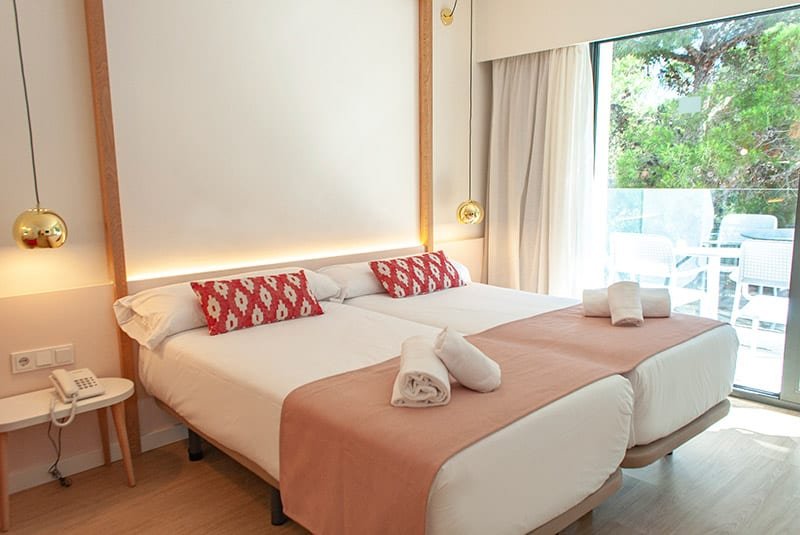
    According to The Independent, the Som Dona Hotel, near Porto Cristo, exclusively caters to women aged 14 years and above. It aims to offer “a new space for women who are looking to disconnect from the stress of daily life”.

    The four-star hotel has 39 rooms and offers a pool, spa, library and a roof-top terrace. Apart from that wellness services at the hotel include massages, treatments, a whirlpool tub and solarium, along with locally sourced food, “flexitarian gastronomy” and healthy and sustainable cuisine. Guests can also participate in excursions around the island and cultural activities.

    According to the advertisements, Som Dona welcomes women of all sexual orientations, solo travellers, couples, mothers and daughters and larger groups.

    No men, including late-night gentlemen, are allowed on the hotel premises. However, it does employ men keeping with Spanish gender discrimination laws even though priority is given to female staff.

    Women going on solo trips has seen a rise in recent years despite the fact that they have to take more factors into consideration than men. Som Hotels president, Joan Enric Capellá, said surveys conducted by the group revealed that female customers liked the idea of a women-only hotel.

    Double rooms at Som Dona start at $78 (13,000 rupees approx) per night only.

  • ‘DON’T kiss babies’: Mother-of-four whose infant son nearly died begs adults

    ‘DON’T kiss babies’: Mother-of-four whose infant son nearly died begs adults

    A mother-of-four is warning others against kissing their newborns during the flu season after her own son barely survived a severe respiratory infection.

    Ariana DiGrigorio’s son Antonio caught the flu when he was still an infant.

    For two months, they could not figure out why the symptoms persisted. Antonio was then diagnosed with respiratory syncytial virus (RSV).

    Ariana shared a heart-wrenching photo of son in the hospital with all manner of supportive and monitoring tubes and wires coming from his tiny body on Facebook, urging parents to keep their babies away from relatives’ kisses, for the infants’ good.

    RSV is a common viral infection but for the elderly, those with compromised immune systems and especially babies, the virus can be dangerous.

    Most instances of pneumonia and bronchitis in infants are triggered by RSV.

    Antonio pulled through, but it was a terrifying time for the DiGrigorio family. Antonio finally pulled through.

    ‘Don’t be the reason a baby is hospitalized (or dead) because the baby was “just so cute I had to kiss her!”‘ Ariana wrote in a Facebook post that was shared over 2,500 times.