Tag: loan

  • IMF expected to reach staff-level agreement with Pakistan soon

    IMF expected to reach staff-level agreement with Pakistan soon

    The country representative for the International Monetary Fund (IMF), Ester Perez, has called the conversations with the Pakistani government regarding the ninth review “productive.”

    “Discussions have enabled a revision to the macroeconomic outlook post floods as well as an in-depth evaluation of fiscal, monetary, exchange rate, and energy policies adopted since the completion of the combined seventh and eighth reviews,” said Perez.

    The chief of the IMF in Pakistan stated that the international lender is eager to continue discussions about policies that effectively address the requirements for assistance and recovery after the floods while also maintaining external and fiscal sustainability based on the available resources.

    Furthermore, a senior member of the Pakistani administration told The News that the IMF negotiations were doing well and that a staff-level agreement will likely be reached soon.

    The ninth review was scheduled for November 3, 2022, according to the IMF seventh and eighth review documents, which were published on the website at the end of September 2022.

    After discussions with Pakistani officials that ended on November 18, 2021, the executive board approved the sixth review on February 2, 2022. This delay was brought on by the inability to meet the ‘prior’ conditions.

    The proposed dates for the seventh and eighth reviews were set for March 4 and June 3, respectively, in the staff report that was made public following the approval of the sixth review. However, after talks that ended on May 25, 2022, the IMF executive board accepted the seventh and eighth reviews under the EFF on August 29. This delay was once again caused by the failure to meet the ‘prior’ standards.
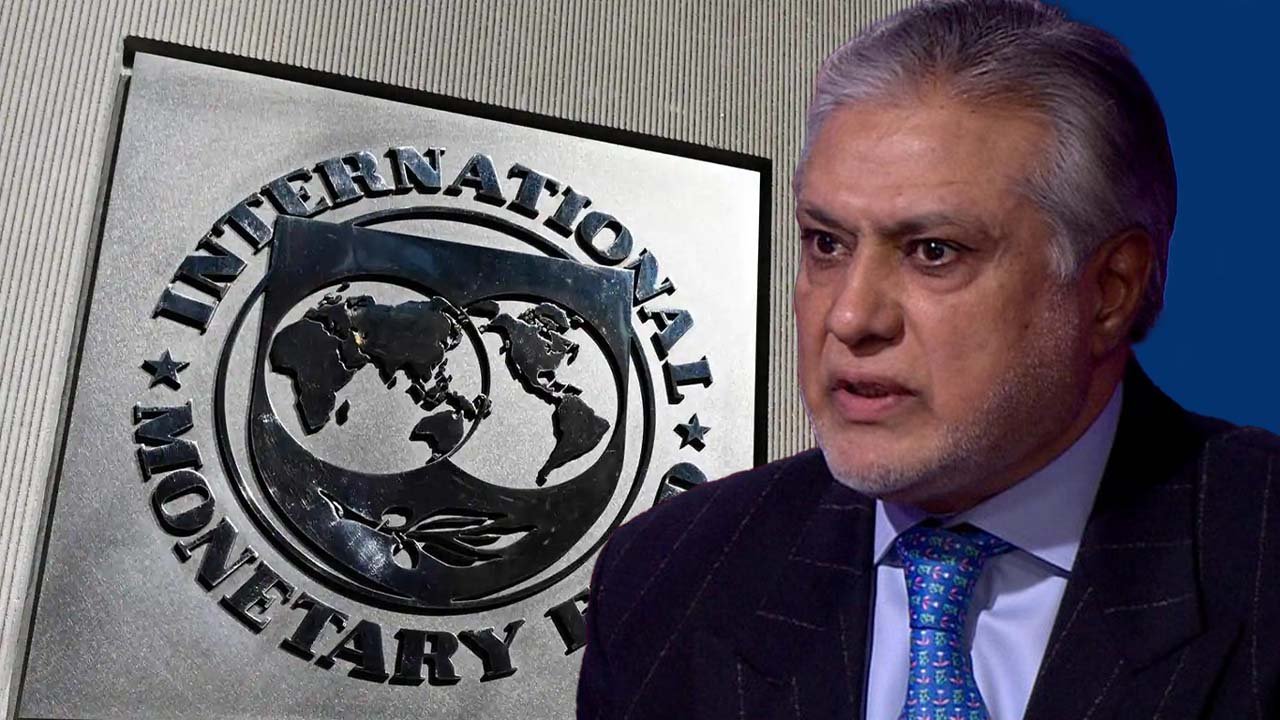

  • Pakistan is committed to completing IMF programme while meeting debt repayments on time: Ishaq Dar

    Pakistan is committed to completing IMF programme while meeting debt repayments on time: Ishaq Dar

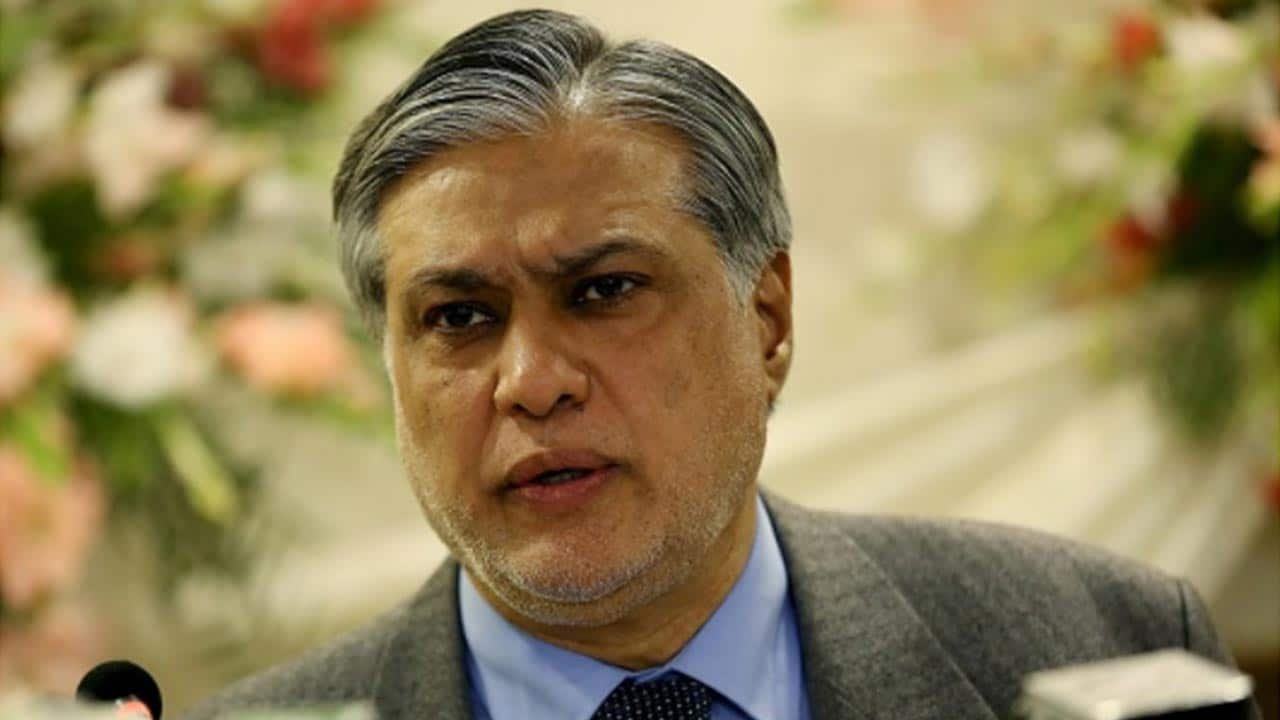
    Pakistan is committed to completing the International Monetary Fund (IMF) programme while meeting external debt repayments on time, Finance Minister Ishaq Dar said on Tuesday during a meeting with the ambassador of its top bilateral lender, China.

    The country is in desperate need of external financing as the IMF’s review for the disbursement of its next tranche of funding has been on hold since September, according to Reuters.

    Ishaq Dar, the finance minister, stated last week on local television that the IMF was “behaving abnormally” by not finishing the ninth review even though all targets had been met.

    “The Finance Minister … apprised the Chinese Ambassador that the Government remains committed to completing the IMF program while meeting all external debt repayments on time,” the finance ministry said in a statement.

    The IMF programme is “back on track,” according to a separate statement released by the finance ministry on Tuesday, and preparations for the ninth review were well underway.

    An Extended Fund Facility (EFF) bailout for Pakistan in 2019 included a $6 billion bailout that was later increased by $1 billion.

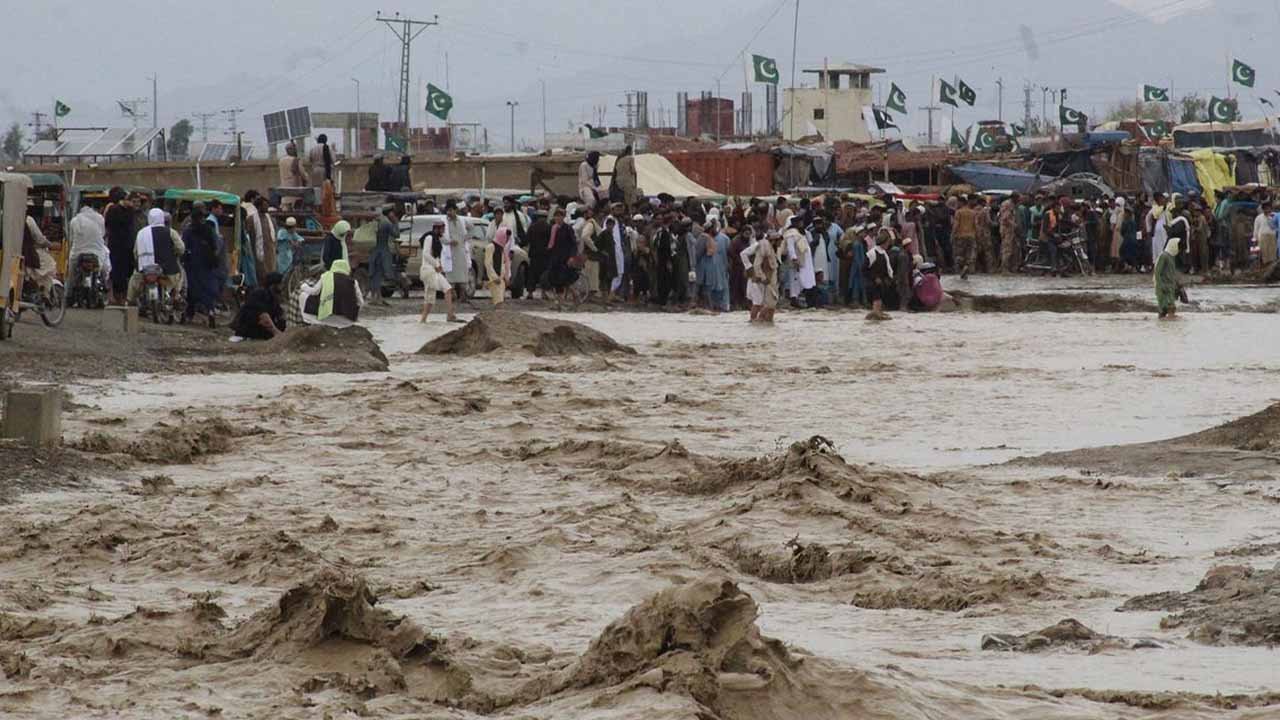
    Dar said that Pakistan’s government has a “realistic plan” for handling the costs associated with rehabilitating the areas damaged by devastating flooding a few months ago during his meeting with the Chinese Ambassador. Official estimates place the cost of flood damage at $40 billion.

    Pakistan is dealing with a balance of payments issue and a growing current account deficit. Dar announced last week that a $3 billion loan from a friendly nation will be used to bolster Pakistan’s foreign reserves, which have fallen to $7.5 billion.

    According to the finance ministry, the government has implemented austerity measures to cut non-essential spending and has prioritised energy conservation to lower its import expenses.

  • Auto financing in Pakistan declines for fourth straight month due to high interest rates

    Auto financing in Pakistan declines for fourth straight month due to high interest rates

    The number of outstanding auto loans declined for the fourth consecutive month at the end of October, according to data issued by the State Bank of Pakistan (SBP).

    At the end of November, the total amount of outstanding vehicle loan was Rs345 billion, which is Rs0.1 billion less than the Rs346 billion number for October 2021. The most recent amount owed on auto loans is 1.4 percentage points less than it was in September 2022.

    Buyers have been compelled to put off making purchases due to a sharp rise in car prices, skyrocketing interest rates, different SBP efforts to slow down auto financing, factory closures of several assemblers in recent months due to import restrictions, and delays in the delivery of vehicles.

    However, a few new automakers have recently begun to provide immediate delivery of cars in exchange for full payment following the port clearance of their imported auto kits. However, their sales may still be hampered by high pricing and a sharp rise in the benchmark interest rate last month.

    The SBP is forecasting another 100 basis point increase in the key interest rate to 16 per cent, which will cause auto demand to remain subpar for at least the coming year.

    Consumers must now make larger monthly payments on auto loans because the benchmark interest rate has increased from 7.25 per cent to 16 per cent since September 2021.

    The average 40 per cent increase in car costs since September 2021 is one of the key causes of buyer concerns.

    For instance, the price of a Honda City manual is now Rs3.77 million as opposed to Rs2.59 million in September 2021.

    In order to prevent the sale of expensive vehicles, auto loans were limited to a maximum of Rs3 million, and the length of time it took to repay them was also shortened.

  • IMF asks Pakistan to reduce expenses before loan talks

    IMF asks Pakistan to reduce expenses before loan talks

    The International Monetary Fund (IMF) has asked Pakistan to reduce expenses before talks on the ninth review of a $7 billion loan programme.

    Discussions between Pakistan and the IMF are still underway, but no party has reached a broad agreement on a revised macroeconomic framework for the current fiscal year.

    According to The News, the ninth review’s conclusion and the distribution of the $1 billion tranche might not happen until the following calendar year 2023 as a result of the ongoing negotiations.

    The discussions went on for weeks, but the two parties were unable to agree to begin policy-level discussions to wrap up the approaching ninth review by the end of November.

    Although both Pakistan and the international lender are keeping quiet and refusing to make any public statements, rumours in the background indicate that the talks broke down due to disagreements over the revised macroeconomic and fiscal framework that Islamabad had prepared and shared with the IMF.

    Pakistan must now put in a lot of effort to finish the review by the first week of December 2022. If the negotiations are successful next month, the IMF will ultimately release the next tranche in January 2023 because the Christmas and New Year holidays start after that date. The Executive Board of the multilateral lender will meet the following year to approve Pakistan’s next tranche.

    The News had approached both IMF and Finance Ministry officials to inquire about the exact schedule for the conclusion of the pending review. One close aide of Minister for Finance Ishaq Dar stated that “discussions were going on Zoom. Insha Allah soon (the review will be concluded).”

    The new macroeconomic and fiscal framework for 2022–23 is being contested by the IMF because it thinks the goals are unattainable and at odds with actual conditions.

    The government anticipated nominal growth in the range of 25 per cent, with real GDP growth of 2 per cent and an average inflation rate of 23 per cent, however, the other numbers did not line up with the revised nominal growth estimates.

    The government has not revised the $7.47 trillion yearly objective set by the Federal Board of Revenue (FBR). The IMF, however, thinks that the reduction of imports may result in a shortfall for the tax collector. Second, assuming FBR met its goal, the tax-to-GDP ratio would decline even lower because it did not equal the nominal growth statistics of 25 per cent. Third, the aim of Rs2 trillion in non-tax revenue also might not be met.

    The government had set a target of Rs855 billion before the next budget, therefore the IMF highlighted that the petroleum development levy may not completely materialise. Because the government was unable to impose a fee of Rs50 per litre on diesel and because the consumption of petroleum products fell by 21 per cent, the levy target may now be reduced downward to Rs500 billion.

    Another obstacle to reaching agreement was the government’s failure to pass legislation and reforms to the energy industry.

    Given that the State Bank of Pakistan’s (SBP) reserves currently stand at $7.8 billion, the delay in finalising the IMF agreement could exacerbate the economic problems already plaguing the nation.

  • ADB transfers $1.5 billion loan to Pakistan

    ADB transfers $1.5 billion loan to Pakistan

    Finance Minister Ishaq Dar said that the Asian Development Bank (ADB) had transferred a $1.5 billion loan to Pakistan on Wednesday.

    The loan would increase foreign exchange reserves and stop the devaluation of the rupee.

    The support from ADB will help increase the number of families receiving cash transfers from 7.9 million to 9 million, boost the enrollment of kids in primary and secondary schools, and improve the geographic reach of health services and nutritional supplies for infants under 2 years old and expectant and nursing mothers.

    With the transfer of ADB, Pakistan’s foreign exchange reserves held by the State Bank of Pakistan (SBP) have reached $9 billion.

    As of October 14, the nation’s total foreign exchange reserves were at $13.25 billion, which included SBP’s holdings of $7.597 billion, or almost five weeks’ worth of restricted imports.

    The $1.5 billion ADB loan is intended to encourage employment for people in the midst of disastrous floods and interruptions to the global supply chain while also promoting food security and social protection.

    Following the signing of the loan agreement, the ADB released a statement saying that the funding will give the government the fiscal breathing room it needs to implement its package, which is intended to help Pakistan’s poorest families, who are frequently disproportionately impacted during times of crisis.

    According to the bank, the government’s assistance includes specific initiatives to encourage gender empowerment and climate change adaptation, which have grown even more crucial in light of the most recent floods.

  • Pakistan’s default risk hits a 13-year-high, reflecting foreign investors’ lack of faith

    Pakistan’s default risk hits a 13-year-high, reflecting foreign investors’ lack of faith

    The risk of default for Pakistan, as determined by the 5-year credit default swap (CDS), increased on Tuesday by 3.07 percentage points in a single day to reach a 13-year high of 52.8 per cent, indicating that foreign investors no longer have confidence in the nation.

    Before the Covid-19 outbreak in Pakistan in February 2020, the CDS was between 5 per cent and 6 per cent.

    According to Express Tribune, owing to uncertainties surrounding the renewal of the International Monetary Fund (IMF) loan programme, it peaked at over 30 per cent in the middle of this year.

    Later, as the major lender resumed its $6.5 billion programme in late August 2022 and subsequently released a $1.2 billion tranche, the CDS experienced a small recovery.

    Today, meanwhile, it is rapidly rising once more, indicating that international investors now believe Pakistan will not be able to pay back its maturing debt.

    On December 5, 2022, the country is required to repay $1 billion to overseas investors against the maturity of the 5-year Sukuk.

    The 5-year Third Pakistan International Sukuk’s yield (rate of return) is quite high, hovering at 145 per cent. Before the Covid-19 epidemic, it was around 10 per cent.

    In addition, the yield on bonds due in 2024 and 2025 is currently high at 90 per cent and 57.5 per cent, respectively, up from a low of 10 per cent in the past.

    The country’s foreign exchange reserves have decreased by about $9 billion over the past 10 months, which has caused alarm among the foreign investors.

    They are currently only covering about 1.10 months’ worth of imports at $7.6 billion, down from $20 billion (three months’ worth of imports) in August 2021.

    Ishaq Dar, the finance minister, and Miftah Ismail, his predecessor, have taken every precaution to avoid the likely default.

    They have repeatedly reassured the foreign investors that when the time came, the nation would easily repay the maturing $1 billion in December as well as fulfil other international payment obligations.

    Foreign investors are receiving warnings from the situation that the nation may default.

    However, the leadership of the nation has fully secured the $36–40 billion needed from international lenders for the current fiscal year 2023 to pay off the nation’s approximately $21 billion in foreign debt, finance approximately $10–12 billion current account deficit, and increase its foreign exchange reserves to approximately $16 billion by June 30.

    According to experts, the country’s foreign exchange reserves will increase and confidence among foreign investors will be restored with the arrival of $1.5 billion from the Asian Development Bank (ADB) in a few days and another $500 million from the Asian Infrastructure Investment Bank (AIIB) in the current month.

    They continued by saying that the inflows should also aid in lowering bond and CDS yields.

    Experts said that Saudi Arabia was the destination of Prime Minister Shehbaz Sharif’s official visit. The host nation has declared that it is resuming its investment ambitions, which include establishing an oil refinery in Pakistan for an investment of $10 billion.

    The Kingdom’s investment choice coming to fruition will also aid in regaining the trust of foreign investors in Pakistan.

    When PM Shehbaz travels to the second-largest economy in the world in November, the nation is also anticipated to get a rollover loan from China worth $6.3 billion, they claimed.

  • Total volume of debt on Pakistan has risen to Rs49.2 trillion

    Total volume of debt on Pakistan has risen to Rs49.2 trillion

    The National Assembly was informed on Monday that Pakistan now owes a total of Rs49,200 billion.

    According to Finance Minister Ishaq Dar, as of June 30, 2022, the country had a domestic debt of Rs31,000 billion and an external debt of Rs18,160 billion.

    Indicators for the sustainability of the nation’s external debt further declined in the previous fiscal year, according to a report from the finance ministry, as a result of the government’s increased reliance on short-term loans from abroad and the risks associated with refinancing and rupee depreciation.

    For the fiscal year 2021–2022, the public debt indicators linked to debt maturity, currency risks, refinancing risks, and interest rate risks had gotten worse, according to the Annual Debt Review and Public Debt Bulletin.

    The Public Debt Management Office and the federal government did a dismal job, within a year, the overall public debt increased by Rs9.3 trillion, from Rs39.9 trillion to Rs49.2 trillion. according to Express Tribune.

    According to the finance ministry, currency depreciation caused an increase of Rs3.8 trillion as the exchange rate dropped from Rs157.3 to a dollar in June 2021 to Rs204.4 in June 2022. Budget finance requirements were the cause of the remaining increase.

    The proportion of external debt in the total public debt climbed from 34 per cent in 2020–21 to 37 per cent in the most recent fiscal year. It was approaching the 40 per cent upper limit.

  • Pakistan’s removal from FATF grey list to help with its reputation and IMF’s next review

    Pakistan’s removal from FATF grey list to help with its reputation and IMF’s next review

    Experts predict that the country’s reputation would recover and it would get a credit rating upgrade from international agencies as Pakistan was taken off the Financial Action Task Force (FATF) list of nations under increased monitoring.

    According to Geo, the removal will allow Pakistan to smoothly complete the forthcoming review of the IMF’s Extended Fund Facility since the International Monetary Fund (IMF) used the execution of FATF action plans as a structural benchmark.

    Pakistan has been removed off the FATF’s “grey list,” as was to be expected, but the nation will continue to cooperate with the organisation and the Asia Pacific Group to strengthen its anti-money laundering (AML) and counter-terrorist financing (CFT) framework. FATF made this announcement following the conclusion of its two-day meeting in Paris on Friday.

    Fitch downgrades Pakistan’s rating to CCC+

    Yet on the other side, Fitch Ratings lowered Pakistan’s Long-Term Foreign-Currency Issuer Default Rating (IDR) to “CCC+” from “B-” on Friday, which experts believe is bad news for the nation’s recovery from the mega floods. The reversal comes as the country’s fragile economy continues to face challenges from all directions.

    The company claims that sovereign states with a grade of “CCC+” or lower do not normally receive outlooks. The primary factors that contributed to a downgrading, according to the agency, were increasing liquidity and policy concerns.

    “The downgrade reflects further deterioration in Pakistan’s external liquidity and funding conditions, and the decline of foreign exchange reserves,” Fitch Ratings said. “This is partly a result of widespread floods, which will undermine Pakistan’s efforts to rein in twin fiscal and current account deficits.”

  • ADB set to approve $1.5 billion loan for Pakistan today

    ADB set to approve $1.5 billion loan for Pakistan today

    A $1.5 billion programme loan for Pakistan is slated to be approved by the Asian Development Bank (ADB) on Friday (today) as part of the BRACE (Building Resilience with Active Countercyclical Expenditure) programme.

    According to Geo, the Board of the ADB will meet in Manila to discuss whether to approve a $1.5 billion programme loan for Pakistan. It is anticipated that this loan will be disbursed after receiving permission next week, assisting Islamabad in replenishing its depleting foreign exchange reserves.

    Additionally, it is anticipated that the Asian Infrastructure Investment Bank (AIIB) will approve $500 million in co-financing, bringing the total distribution to $2 billion for the current month.

    With a projected current account deficit of $10 to $12 billion and an external debt servicing obligation of $22.9 billion, Pakistan needs $34 billion for the current fiscal year. On the flip side, the terrible floods made the already bad situation with the economy even worse.

    Pakistan suffered losses of $32.4 billion, according to the group of international donors, which also included the World Bank, ADB, UNDP, and EU. Pakistan also needed $16.2 billion for building expenditures.

    An official document states that the $1.5 billion BRACE programme loan will assist Pakistan in responding to the deepening macroeconomic crisis exacerbated by the Russian invasion of Ukraine and the catastrophic floods that have affected close to 33 million people. Prior to the latest floods, Pakistani officials had already begun work on this programme loan.

    The amount of countercyclical actions taken by the government to lessen the negative effects of cumulative external shocks, particularly on the poor and vulnerable, comes to around $2.4 billion.

  • World Bank proposes $2 billion for flood-ravaged Pakistan

    World Bank proposes $2 billion for flood-ravaged Pakistan

    The World Bank has proposed $2 billion in finance to jump-start infrastructure restoration and rebuilding following severe flooding.

    Martin Raiser, the new Vice President of the World Bank for the South Asia Region, revealed that he had just returned from his first official trip to the country that had been devastated by floods and reaffirmed his commitment to helping the Pakistani people as the floods wreaked havoc all over the nation.

    The international lender expressed regret for the loss of lives and livelihoods and stated that they were collaborating with the federal and provincial governments to offer prompt relief.

    A World Bank official also disclosed that monies from ongoing World Bank-financed programmes are being repurposed to address immediate needs in the areas of health, food, shelter, rehabilitation, and cash transfers.

    The Prime Minister, Shehbaz Sharif, has been requesting a freeze on loan repayment from the Paris Club and others, claiming that there is a huge discrepancy between what is being requested and what is actually available. He also asked the head of the UN and the leaders of Europe to help.

    Recently, the PM of Pakistan visited New York City for the UNGA. In his speech, the PM emphasised Islamabad’s predicament following the flooding disaster and pleaded with world leaders to band together and take action before it’s too late.