Tag: loan

  • ‘Our patience won’t last long’: Imran Khan wants early elections

    ‘Our patience won’t last long’: Imran Khan wants early elections

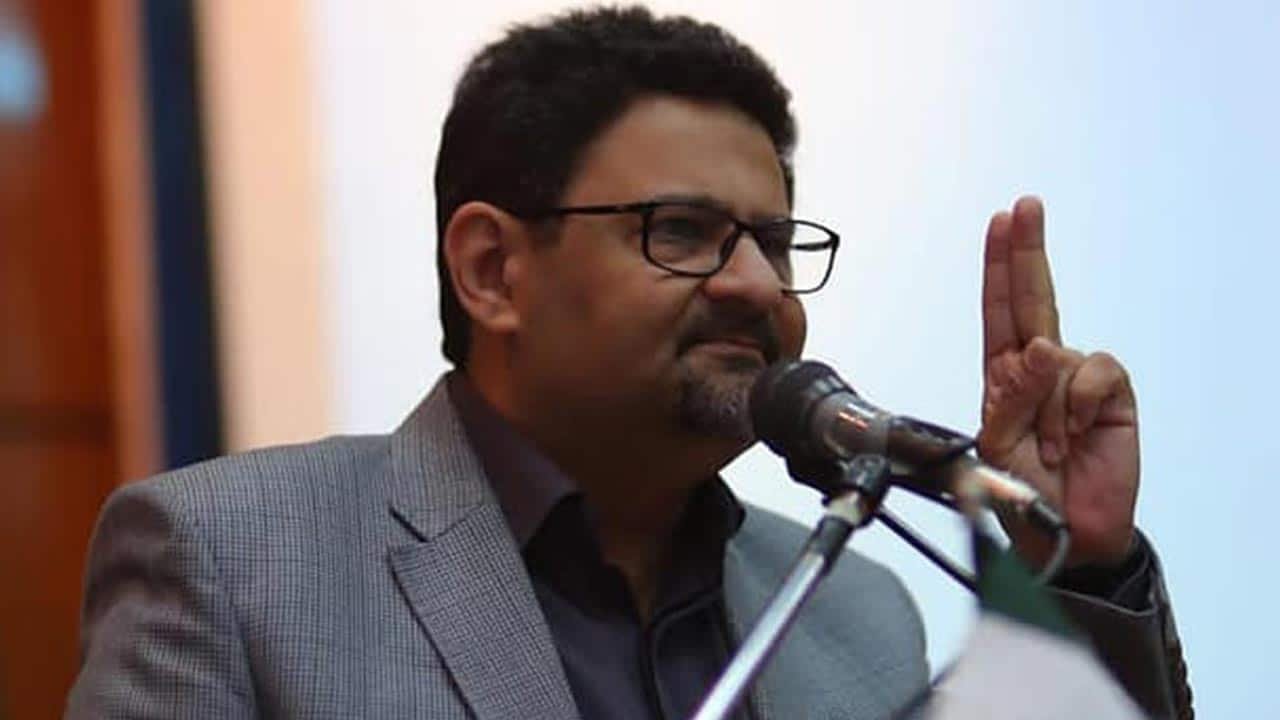
    Pakistan Tehreek-e-Insaf (PTI) Chairman Imran Khan, in an address to the nation has once again demanded early elections, warning that PTI’s patience was wearing thin.

    “If we want to save the country from discord and chaos, free and fair elections need to be announced immediately,” he said.

    “Our patience won’t last long if you continue like this, we will have to give a call to the nation,” said Khan, addressing the government.

    “If there is no political stability, the economy won’t stabilise. So I want to tell my people today that we need to have elections quickly to save Pakistan from this quagmire,” the former Prime Minister insisted, adding that it was his fear that there will be no economic progress without political stability.

    “The incumbent government does not have any credibility, both inside and outside Pakistan, especially in the financial markets,” alleged Khan, mentioning that the prices of fuel and electricity across Pakistan had reached an all-time high and warned that they would further increase in the near future.

    Unemployment is increasing, inflation is rising, and businesses are closing down, Imran said. “The danger I am seeing right now […] Our credit rating has fallen to negative […] do you know what this means? They think Pakistan doesn’t have the ability to repay and due to this, the cost of loans will increase,”‘ he warned.
  • IMF board approves disbursement of $1.17 billion in bailout funds

    IMF board approves disbursement of $1.17 billion in bailout funds

    The seventh and eighth reviews of Pakistan’s bailout programme were approved by the International Monetary Fund (IMF) board on Monday, releasing $1.17 billion to the cash-strapped nation.

    Pakistan is now set to get a $1.17 billion loan tranche from the international lender within the next six days.

    “Alhamdolillah, the IMF board has approved the revival of our EFF programme. We should now be getting the seventh and eighth tranche of $1.17 billion,” said Finance Minister Miftah Ismail in a tweet announcing the news.

    Additionally, the Finance Minister praised the Prime Minister, Shehbaz Sharif, “for taking so many tough decisions and saving Pakistan from default.”

    The previous payment was made to Pakistan in February, and the subsequent tranche was scheduled to be released following a review in March.

    However, the PTI government drastically reduced petroleum prices by providing substantial subsidies to the country, which caused the program’s fiscal objectives to be missed.

  • IMF Executive Board meeting to discuss revival of loan plan today

    IMF Executive Board meeting to discuss revival of loan plan today

    The International Monetary Fund (IMF) executive board will meet on Monday (today) to discuss the bailout plan for Pakistan.

    The 8th and 9th tranches, totaling over $1.2 billion, are anticipated to be disbursed with board approval.

    According to Geo, Pakistan also requested that the Extended Fund Facility (EFF) be increased from $6 billion to $7 billion and that the term be extended from September 2022 to June 2023.

    If the contract is approved by the board, the IMF will give Pakistan an initial payment of roughly $1.2 billion and could give up to $4 billion during the remaining months of the current fiscal year, which started on July 1.

    The board gave its approval for the transfer of $1.386 billion to Pakistan under the RFI in April 2020 to help with the economic effects of the Covid-19 shock.

    Additionally, according to The Wall Street Journal, Pakistan has secured at least $37 billion in foreign loans and investments in recent weeks, saving it from a financial catastrophe similar to that of Sri Lanka.

    The restart of the programme will greatly benefit the government led by Prime Minister Shehbaz Sharif as it will assist prevent what would be the second default in Asia this year after Sri Lanka.

    Bloomberg estimates that Pakistan would have to pay at least $3 billion in debt payment during the first half of the fiscal year 2023.

    The State Bank of Pakistan anticipates that foreign exchange reserves would increase to around $16 billion this fiscal year from $7.8 billion, thanks to the IMF loan opening the door for additional funding.

  • Jhagra responds after Miftah accuses KP govt of jeopardising IMF deal

    Jhagra responds after Miftah accuses KP govt of jeopardising IMF deal

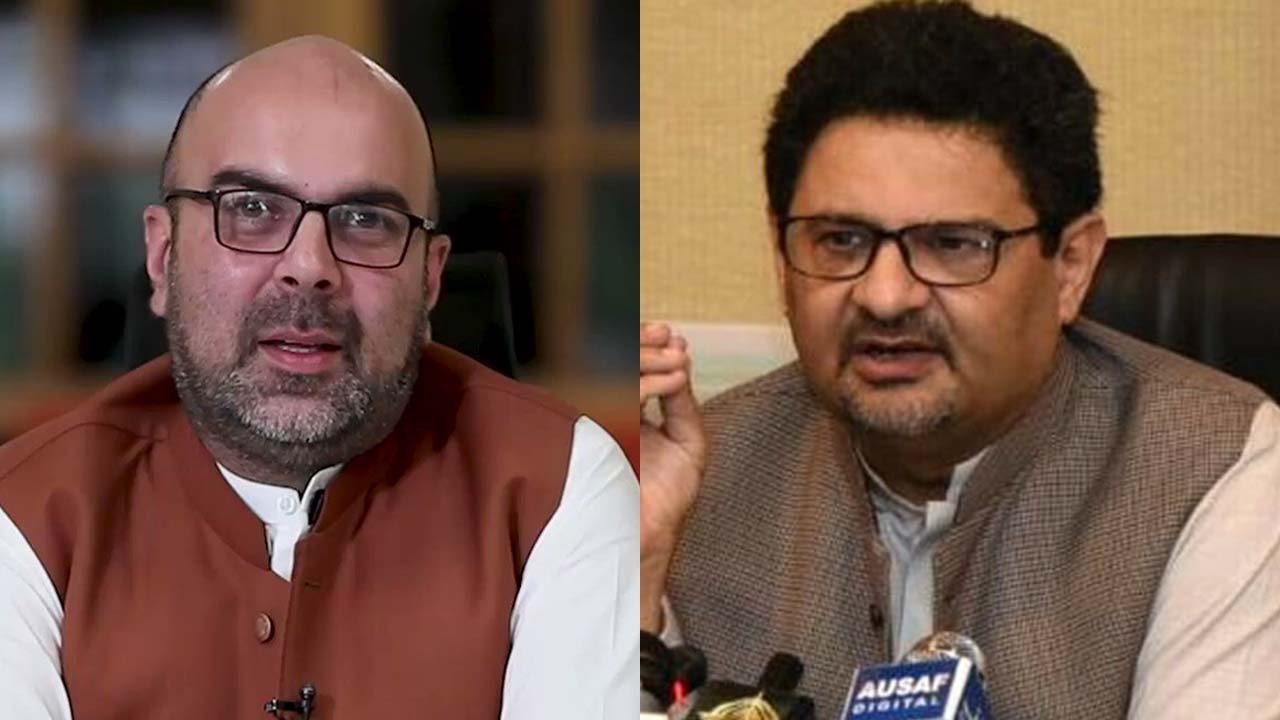
    After Finance Minister Miftah Ismail accused the KP government of plotting to derail the IMF deal in a late-night press conference, KP Finance Minister Taimur Khan Jhagra stated that the province is currently dealing with a flood scenario that takes precedence over everything else.

    In a previous letter to Miftah, Jhagra connected the payment of the Rs100 billion in alleged liabilities with the clearance of the provincial cash surplus for this fiscal year, which is a requirement of Pakistan’s agreement with the International Monetary Fund (IMF).

    This occurs just three days prior to the revival of IMF’s multibillion dollar credit programme. The K-P government has already agreed through a memorandum of understanding (MoU) to achieve the Rs117 billion cash surplus that is required by the IMF arrangement. Ismail is a co-signatory of the Letter of Intent (LoI) that was recently sent to the IMF in order to revive the programme.

    “Please note that in these conditions [floods], and without the resolution of the issues highlighted previously, for the province of Khyber Pakhtunkhwa to actually leave a surplus will be next to impossible,” Jhagra wrote in the communique sent to Miftah on Friday.

    Miftah Ismail’s call, according to Jhagra, was “interesting,” and the two will now meet on Monday to resolve their issues. However, the provincial finance minister stated it was “sad” that in Pakistan, one needed to “shout to be heard.”

    Jhagra confirmed in a series of tweets that he had actually addressed a letter to the federal finance minister and not the IMF. The provincial minister sent a letter that included images as well.

    Jhagra went on to say that despite raising the same issues with Miftah at their meeting on July 5, they decided to return the IMF MoU to Islamabad within 24 hours with the approval of the chief minister of KP.

    Jhagra added that the KP administration would never back down from advocating for a strong federation or from bringing up its concerns at the centre.

    At a late-night press conference, Miftah called the letter “deplorable.” He labelled the letter as a “conspiracy to derail the IMF programme and sink the rupee.”

    He questioned whether PTI Chairman Imran Khan, who was seeking to obliterate Pakistan and its economy out of a desire for power, had any set parameters.

  • Pakistan receives Letter of Intent from IMF, moving closer to $1.17 billion tranche

    Pakistan receives Letter of Intent from IMF, moving closer to $1.17 billion tranche

    The International Monetary Fund (IMF) has sent Pakistan the Letter of Intent (LoI), bringing the disbursement of the $1.17 tranche for the combined seventh and eighth review closer.

    Pakistan will approve the Lol and return it to the IMF. The Extended Fund Facility will now be revived right after IMF board’s approval.

    The IMF team and the Pakistani government came to a staff-level agreement (SLA) in July for the conclusion of the combined seventh and eighth tranche.

    The international lender estimates that after the Executive Board approves it, around $1,177 million will become accessible, bringing the program’s total payouts to almost $4.2 billion.

    But according to a report from last month, before the multilateral lender provides Pakistan with new funding, it was also looking to determine the level of commitment from other sources.

    The Washington-based lender wants to make sure that Pakistan won’t experience a funding shortfall following the IMF loan.

    For Pakistan, which is desperately seeking dollar inflows in the face of declining foreign exchange reserves, the IMF support is essential in addition to other forms of finance.

  • IMF to send Letter of Intent soon to release $1.17 billion tranche

    IMF to send Letter of Intent soon to release $1.17 billion tranche

    The International Monetary Fund’s (IMF) agreement with Pakistan to release two tranches totaling $1.17 billion as part of a loan facility that was stalled is nearing completion, as the Letter of Intent (LoI) from the fund may arrive in a few days.

    Pakistan is likely to receive the LoI, which the governor of the State Bank of Pakistan (SBP) and the Finance Minister, Miftah Ismail, will jointly sign, according to The News.

    The IMF mission leader had to rush to Australia for a personal engagement, according to senior officials at the Finance Ministry, thus the Fund was likely to submit the LoI “anytime soon.”

    The IMF board would also discuss adding $1 billion to a $6 billion programme agreed upon in 2019 at its meeting scheduled for August 24.

    The government may impose higher taxes on cigarettes, tobacco leaves, fertiliser, and other items in order to appease the IMF.

    Additional taxes are being considered for a variety of sectors. Through a Presidential Ordinance, tax rates on cigarettes and the processing of tobacco leaf might be increased.

  • Pakistan to overcome $4 billion external financing gap soon: SBP

    Pakistan to overcome $4 billion external financing gap soon: SBP

    In the midst of intense pressure on foreign currency reserves, Pakistan will soon close its $4 billion shortfall in external finance with the assistance of friendly nations under IMF conditions, according to Acting Governor of the State Bank of Pakistan (SBP) Dr Murtaza Syed.

    He also acknowledged that inflation will continue to be higher for the ensuing 11 to 12 months, which is why the central bank was aiming for an average inflation target of 18 to 20 per cent for the current fiscal year 2022–2023

    According to The News, acting SBP Governor Dr. Murtaza Syed stated that Pakistan has already met its gross external financing requirements of $34 to $35 billion.

    However, Islamabad is also attempting to secure confirmation of $4 billion in inflows from friendly nations like Saudi Arabia, the UAE, and Qatar. According to him, these extra dollar inflows will be used to boost foreign currency reserves and build a safety net in case of a crisis-like circumstance.

    He resisted providing a specific timeline but assured that the $4 billion finance deficit will be closed quickly. He argued that urgent attempts were being made by the government and IMF high-ups to secure confirmation from their respective nations.

    Denying that the scenario was similar to Sri Lanka, he praised Bangladesh and claimed that nation performed properly, chose to return to the IMF, and also increased utility costs while maintaining enough levels of foreign exchange reserves.

    Speaking of increasing inflation, he believed that supply interruptions abroad had set the way for a global super cycle of commodities, leaving Pakistan with no choice but to concentrate on agriculture productivity in order to secure food security.

    According to Murtaza Syed, people would have to deal with this challenging moment because there is no immediate magic wand to manage increased inflation. He said that while it is a challenging time, there is no alternative way to prevent the country from entering a more challenging situation if nothing was done.

    According to the official, the SBP has loosened the cash margin requirements for opening L/Cs for imports and offers incentives to individuals who do so. According to him, the IMF opposed trade restrictions and took action to prevent the depletion of foreign exchange reserves.

    The current pressure on foreign reserves is now anticipated to end within the next two months. He also promoted energy saving as a way to ease the burden of high import costs.

    The senior official believed that as long as the economy’s structural issues persisted, Pakistan will continue to see boom and bust cycles. He gave a recent example in which the nation’s GDP increased by 6 per cent, indicating that the overheating of the economy led to imbalances known as the budget deficit and current account deficit. Although a recession is not imminent, he continued, the economy must be managed carefully.

  • Another friendly country to confirm assurance this week: Miftah Ismail

    Another friendly country to confirm assurance this week: Miftah Ismail

    According to Pakistan’s Finance Minister Miftah Ismail, “one friendly country” has confirmed its commitment to assist Pakistan in filling the funding gap, while another nation would confirm its assurance in a day or two.

    An announcement will be made soon on this subject after confirmation.

    Earlier, the International Monetary Fund (IMF) said that Pakistan has completed the final prior action for the combined seventh and eighth reviews with the increase in the petroleum development levy (PDL).

    The IMF also stated that the board meeting is tentatively scheduled for late August once adequate financing assurances are confirmed.

    In order to prevent Pakistan from having a liquidity vacuum following the IMF loan, the international lender wants to make sure Pakistan will be able to get $4 billion in additional cash.

    The country has a $4 billion finance imbalance, according to Miftah, and the IMF wants our reserves to grow by $6 billion.

    Pakistan is in touch with friendly nations to cover the gap, and one of them has already reaffirmed its assurance. Within a day or two, the other nation will confirm as well.

    The assurances would be announced in advance of the IMF board meeting, which is slated to take place in the last week of August. According to reports, the IMF would announce the disbursement for Pakistan as soon as sufficient finance assurances are verified.

    The import bill has decreased to $4.92 billion, according to the minister. Due to this, there is now more cash coming in than going out. The market attitude has improved as a result of this.

    He believed that the Pakistani rupee had grown significantly versus the US dollar and would continue to do so.

    The Pakistani rupee made a significant recovery on Wednesday, recording its largest day-over-day gain in absolute terms against the US dollar to settle at Rs228.8, up Rs9.58 or 4.19 per cent in the inter-bank market. In the early hours of Thursday, trade, the rupee kept rising.

    On Thursday, stocks extended their gains, with analysts blaming the strong recovery of the rupee and soaring global equities for the optimistic trend.

    Read more: Dollar may drop near Rs180 after IMF tranche

    The benchmark KSE-100 index increased 356.50 points or 0.87 per cent to settle at 41,425.37 points, according to the Pakistan Stock Exchange (PSX).

    After being battered for weeks due to political and economic unrest, the local currency recovered by Rs9.59 on Wednesday, marking the highest one-day rise in decades.

  • Army chief asks US to help Pakistan secure early dispersal of loan from IMF: report

    Army chief asks US to help Pakistan secure early dispersal of loan from IMF: report

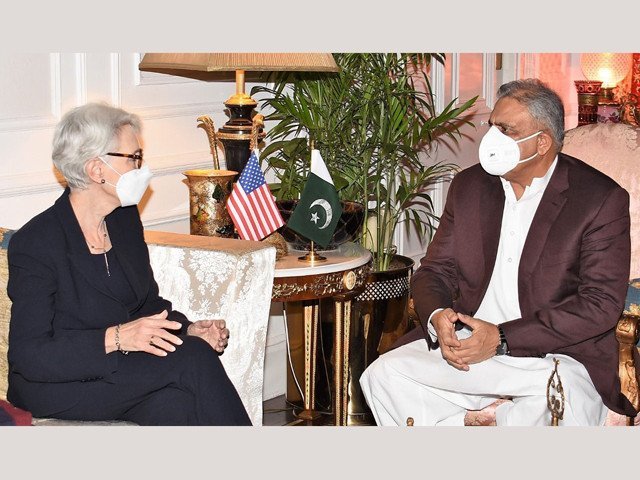
    Chief of Army Staff (COAS) General Qamar Javed Bajwa has appealed to the United States (US) to help Pakistan secure an early dispersal of $1.2 billion in funds under the International Monetary Fund (IMF) programme, reported Wajahat S Khan for Nikkei Asia.

    Gen Bajwa spoke by phone with US Deputy Secretary of State Wendy Sherman earlier this week.

    “The IMF has already granted Pakistan staff-level approval for the loan in question on July 13. But the transaction — part of the IMF’s $6 billion Extended Fund Facility for Pakistan — will only be processed after the multilateral lender’s executive board grants final approval,” said the report.

    According to an IMF official who also spoke on condition of anonymity, the IMF is going into recess for the next three weeks and its board will not convene until late August. Because of the recess, no date has been set for announcing the loan approval for Pakistan.

    “There is a major difference between staff-level approval and board approval. Our stakeholders, the countries that take the vote as to whether they are supporting this or not, make the final decision. This is a difference. So the legally binding step is a board approval, not the staff level agreement,” said the official.

    Pakistan’s former ambassador to Washington, Husain Haqqani, said, “This reflects the Pakistan army’s concerns about the state of the economy. It also reflects that the Pakistan army chief is the authority with whom the global players feel the final word rests.”

    Haqqani said that Pakistan has developed a habit of getting on an IMF plan, getting quick access to a couple of tranches, but then abandoning the deals without making the important structural and systemic changes required for further financing. This has left Pakistan little leverage with international financiers.

    “The reason why the IMF program has been delayed is that Pakistan has a track record of not keeping its word with the IMF,” Haqqani said.

    “Gen Bajwa calling the US administration, if he has done so, suggests that he is assuring the US — and through the US, the IMF — that any promises made will be kept.”

  • Pressure on Pakistani rupee may decrease in August

    Pressure on Pakistani rupee may decrease in August

    Finance Minister Miftah Ismail expressed his continued faith in Pakistani rupee’s (PKR) ability to withstand pressure despite the PKR continuing to hit historic lows versus the US dollar and suffering its biggest weekly slide in more than 20 years.

    The finance minister stated in an interview with Radio Pakistan that the political climate and the fact that import payments are being made for shipments beginning in June are both contributing factors to the pressure on the PKR.

    “Import of $80 billion were made during the last fiscal year. We are still making payments for energy commodities purchased last month. Therefore, the rupee is under pressure. However, as we are importing less in July, its effect would be reflected from next month or, I should say, next week.”

    “The rupee’s fall is connected to the political situation as well. Before July 17, the situation wasn’t like this,” he added.

    Miftah also spoke about Pakistan’s economic issues, stating that the poor export base continues to be a matter of concern.

    The local currency has continued to depreciate against the US dollar, losing 7.6 per cent last week, more than what businesses typically account for in terms of annual currency depreciation, as the inter-bank market experienced a turbulent five sessions due to renewed political uncertainty and increased worries about Pakistan’s external financing needs.

    He also revealed that one friendly country is ready for an instant investment in Pakistan.

    It is worth noting that Pakistan anticipates receiving the next International Monetary Fund (IMF) tranche before the end of the following month following the board meeting.