Tag: loan

  • Car sales up by 53.7 per cent in 2022, despite repeated price hikes

    Car sales up by 53.7 per cent in 2022, despite repeated price hikes

    The latest data provided by the Pakistan Automotive Manufacturing Association (PAMA) shows that overall car sales climbed by 53.78 per cent during the first nine months of the current fiscal year 2021-22 (July-March) compared to the same period in the past financial year.

    Keeping in view the recent figures, 172,612 vehicles were delivered in the time period under consideration, compared to 112,244 cars in the previous year. In March 2022, the country’s car sales climbed by 33.28 per cent on a year-over-year (YoY) basis when compared to the same month in 2021.

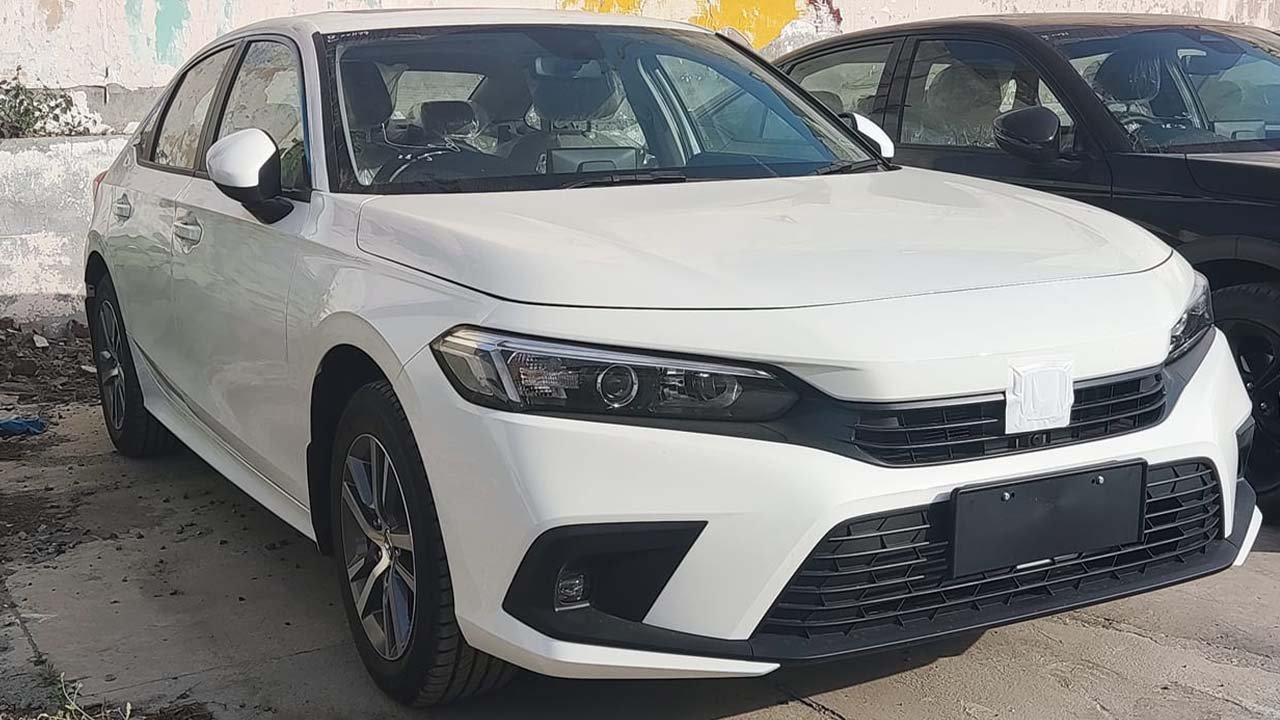
    In March 2022, car sales soared to 22,799 units, up from 17,105 units in the same month the previous year. considering the breakdown of the numbers, around 26,830 combined units of Honda Civic and City were sold in the fiscal year 2021-22, compared to 18,816 units in 2021, indicating a 42.59 per cent increase.

    The sale of Toyota Corolla and Yaris sedans increased by 24.93 per cent in the same time, rising to 43,695 units from 34,975 units the previous year. Suzuki Swift sales, on the other hand, fell by 73.78 per cent, from 1,896 units in July-March 2020-21 to 497 units. The drop witnessed in sales of Suzuki Swift was due to the production cut of the older Swift, which was scheduled to be replaced by the fourth generation in February of this year.

    Read more: Toyota Pakistan records highest monthly sales, selling 7,132 vehicles in March 2022

    With 53,241 units sold so far in the fiscal year 2022, Pakistan’s smallest engine size vehicle, the 660cc Alto, is now the most popular. It is worth noting that the mini hatchback is also the country’s ‘cheapest’ four wheeler from the big three.

  • Pakistan to import 32.7 million barrels of oil to cover petroleum needs

    Under a deferred payment agreement with the Saudi Fund for Development (SFD), Pakistan would acquire roughly 32.7 million barrels (MBL) of crude oil in 2022 to cover its petroleum product needs.

    The Pak-Arab Refinery Company Limited (PARCO) and National Refinery Limited (NRL) plan to import 16.89 and 15.81 million barrels of oil in the ongoing year, respectively.

    Crude oil worth $100 million per month may be imported under the terms of the arrangement, with payment deferred for a year. The price will be set in accordance with the existing long-term agreement between Saudi Aramco, PARCO, and NRL.

    The facility will be available for a 12-month period, which may be increased for one year. The withdrawn funds, plus the margin of 3.8 per cent, will be repaid in one annual installment in US dollars.

    Previously, In June 2021, the Saudi government agreed to pay $4.2 billion in providing economic aid to Pakistan, which was legally formalised in November. While the SFD programme has been in effect since March 7, 2022, and oil purchase has now already begun.

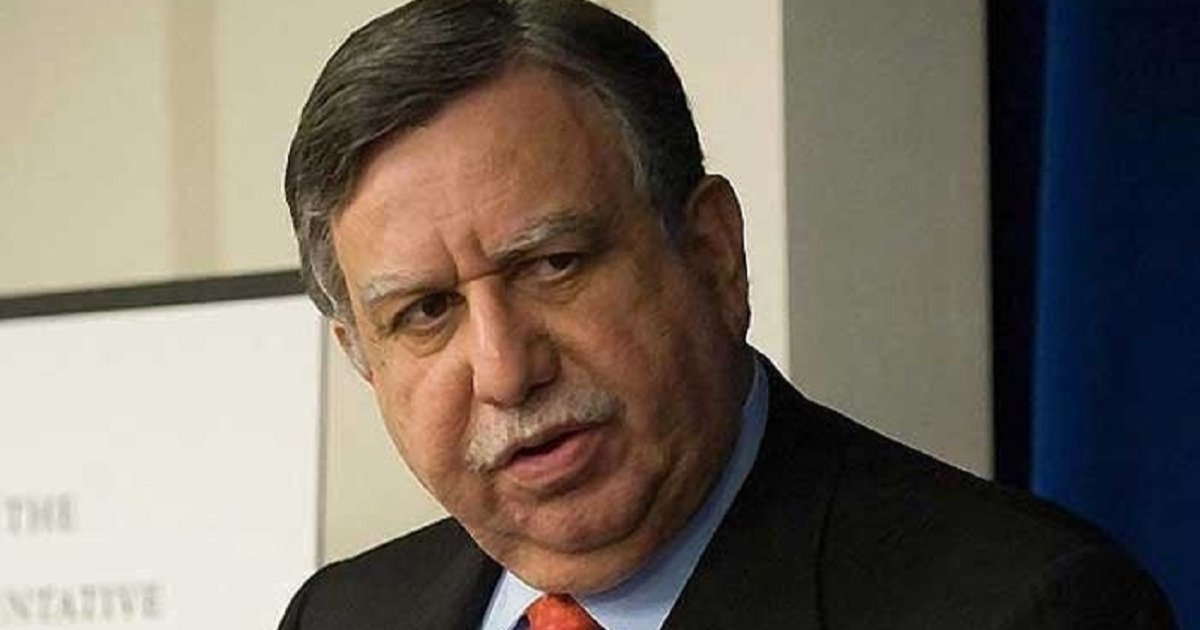
  • Shaukat Tarin returns to Washington as talks between govt and IMF progress for $6 billion loan

    Shaukat Tarin returns to Washington as talks between govt and IMF progress for $6 billion loan

    Adviser to the Prime Minister on Finance and Revenue Shaukat Tarin returned to Washington to join the on-going discussion with the International Monetary Fund (IMF), his spokesperson Muzzammil Aslam announced in a tweet.

    The director of IMF Middle East and Central Asia Department, Jihad Azour stated that the talks between IMF and the Pakistan government for the six billion dollars Extended Fund Facility (EFF) had progressed towards a “very good step”, reported Dawn.

    Earlier this week, while in New York, Tarin rejected a media report which claimed that the talks [earlier this month] have failed because of differences over a macroeconomic framework and uncertainty over the country’s economy.

    The advisor said, “Some people have created an impression in Pakistan that we have failed, and the talks have been unsuccessful. That is completely false.”

    “We are working on final details and in a few days, you will see the talks moving towards success. Give us some time and we will fix it”, he said, while adding that he and his team are committed to fixing Pakistan’s economy.

    Pakistan and the IMF held their latest talks in the US capital from October 4 to 15 for the release of a one billion dollars tranche from a six billion dollars extended loan facility, which was approved in 2019.

    Recently, the rupee hit a record low of 173.20 against the US dollar.

  • Budget explained: How it will affect you

    Budget explained: How it will affect you

    Finance Minister Shaukat Tarin unveiled the budget 2021-22. The total expenditure of the budget had been kept at Rs 8,478 billion and had set the tax collection target at Rs 5,829 billion. 

    Leader of the Opposition in the National Assembly Shehbaz Sharif and Pakistan People’s Party (PPP) chief Bilawal Bhutto Zardari were in the house. Opposition members continued to bang desks and shouted slogans of “Go Niazi Go!” as the minister spoke.

    Earlier, Bilawal met Sharif at his chamber in the assembly and they decided both parties would jointly oppose the PTI’s budget.

    Tarin began his speech by saying it was an honour for him to present the Pakistan Tehreek-e-Insaf (PTI’s) third budget.

    The minister paid tribute to the PTI government for stemming the spread of the coronavirus pandemic and taking steps to ensure businesses did not suffer massive losses in the country due to the lock downs.

    Pension

    Pensioners will get 10 per cent rise. Integrated allowance for Grade 1-5 has been raised from Rs 450 to Rs 900.

    Defence budget

    He said the defence budget of the country had been allocated Rs 1,370bn while the government had earmarked Rs 1,168 bn for development and non-development grants for provinces. 

     Subsidies

    The government had allocated Rs 682bn for subsidies to various sectors of the economy, adding that Rs 479bn had been allocated to run the civil government. 

    Coronavirus

    The government was serious in stemming the spread of the coronavirus and keeping its adverse effects at bay, adding that the government had set aside Rs100bn for it. 

    He announced the government’s initiative to earmark $1.1bn to procure coronavirus vaccines, adding that the government aimed to vaccinate 100mn people by July 2022.

    Ehsaas Emergency Cash Program

    “The government, through the Ehsaas Emergency Cash Programme, provided cash to 12mn people across the country,” he said. The finance minister announced that the government had set aside Rs260bn for the Ehsaas programme in the budget. 

    Remittances

    Tarin said remittances had increased in Pakistan to record levels, adding that these are expected to rise to $29bn by the end of this month. “This is proof of the love that overseas Pakistanis harbour for Prime Minister Imran Khan,” he said.

    Tax Collection

    Speaking about tax collection, he said it had grown by 18% and had crossed Rs4,000bn, adding that critics had no response to the government’s impressive performance in this regard. 

    Growth Sector

    Finance minister announced that the country’s economy was now entering the growth period, adding that almost every sector is growing. 

    He said Pakistan was seeing a “historic growth” in agriculture, stating that apart from cotton, all other crops saw extraordinary increases. He said that growth in the services sector helped improve numbers pertaining to poverty and had also played a major part in generation of wealth in Pakistan. 

    Tarin said the government had kept the growth target at 4.8% for the fiscal year, adding that the government will not leave the poor and the destitute at the mercy of inflation.  “Never in our economic history, were poor people able to realise their dreams,” he said, adding that PM Imran Khan wanted to uplift the poor. 

     Interest-free loans

    He said the government had decided to provide interest-free loans of up to Rs500,000 to the poor. 

     Development package

    He announced that the Public Sector Development Programme will be increased from Rs630 billion to Rs900 billion to counter the adverse impact of the coronavirus pandemic. 

    Tarin announced a development package for 14 districts in Sindh, adding that these will focus on improving education, solving the province’s water issues, and carrying out development in these districts. Rs16.5 billion have been allocated for Karachi-based projects for the fiscal year 2021-22.

    For developmental projects in Gilgit-Baltistan, the government has allocated Rs 40 billion. Meanwhile, Rs 54 billion have been allocated for Khyber-Pakhtunkhwa. Rs 601 billion will be given to South Balochistan for uplift programs, he added.

    Sales Tax

    The minister announced that the government has slashed sales tax on locally manufactured cars from 17% to 12.5%. The government has also exempted Federal Excise Duty (FED) on 850cc cars and will slash duty on electric cars.

    Tarin said the government was slashing withholding taxes on mobile phones, adding that it will be reduced to 10% at first and then 8% later. 

    If mobile phone call duration exceeds three minutes, one rupee per call in addition to the rates of duty will be charged. For SMS service, ten paisa per SMS in addition to the rates of duty will be charged.

    Tax on Internet services not approved by the Cabinet. FED reduced to 16 per cent from 17 per cent . IT and IT-enabled services given zero duty regime status. Data storage and Cloud computing included in the definition of IT enabled services.

    Third-party audit

    Tarin said the government was introducing third-party audits which would thwart the Federal Board of Revenue (FBR) harassing any individual or business entity. He said those who are found guilty of evading taxes or deliberately hiding their income will be fined severely. 

    Energy sector

    In the budget for the next fiscal year, a special plan for the elimination of circular debt would be introduced. “The government plans to reduce line losses through investment,” Tarin added. Moreover, an electric vehicle policy would also be announced.

    Development expenditures

    In the next fiscal year, the government has increased the PSDP budget to Rs 900 billion from Rs 630 billion. Tarin assured that the government would improve road infrastructure. Furthermore, through PSDP, it will invest in high return projects.

    Agriculture

    Talking about agriculture, the minister said that the agriculture sector witnessed historic growth.

    Unveiling the federal budget, the finance minister announced a national agriculture emergency program. The government plans to enhance livestock on modern lines and has decided to allocate Rs12 billion for the most important sector.

    Dasu, Diamar-Bhasha and Mohmand dams are a part of the budget. Rs91 billion have been allocated for water resources. Moreover, Rs14 billion have been allotted for the Neelum Jhelum power project. Tarin mentioned that the ML-1 project will be completed in three packages.

    Sharing the allocations for next year, he mentioned that Rs22 billion have been allocated to produce 100 MW electricity at Jamshoro. Moreover, Rs22 billion have been allocated for coal-based power projects, Rs16.5 billion for Tarbela fifth extension and Rs118 billion for different power transmission lines.

    Climate change

    The federal minister stated that Pakistan is one of the 10 countries most hit by climate change. Highlighting PM Imran’s vision of planting trees, he said Rs14 billion have been allocated for the government’s vision of “One Billion Tree Tsunami.”

    Rs 118 billion have been allotted under PSDP for the social uplift. Non-tax revenues to rise by 22% during FY22, meanwhile federal expenditures to rise 15%.

    Under the budget, $1.1 billion have been allocated for vaccine import.
  • World Bank to grant loan to Pakistan for Khyber Pass Economic Corridor

    World Bank to grant loan to Pakistan for Khyber Pass Economic Corridor

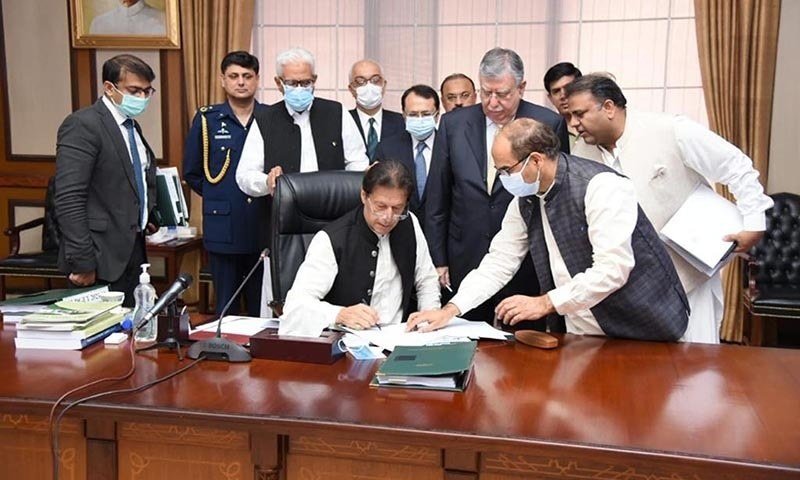
    The World Bank has allocated a loan of $406.6 million to Pakistan for the development of the Khyber Pass Economic Corridor (KPEC) Project.

    As per reports, Minister for Economic Affairs Hammad Azhar supervised the signing ceremony of the KPEC at the division.

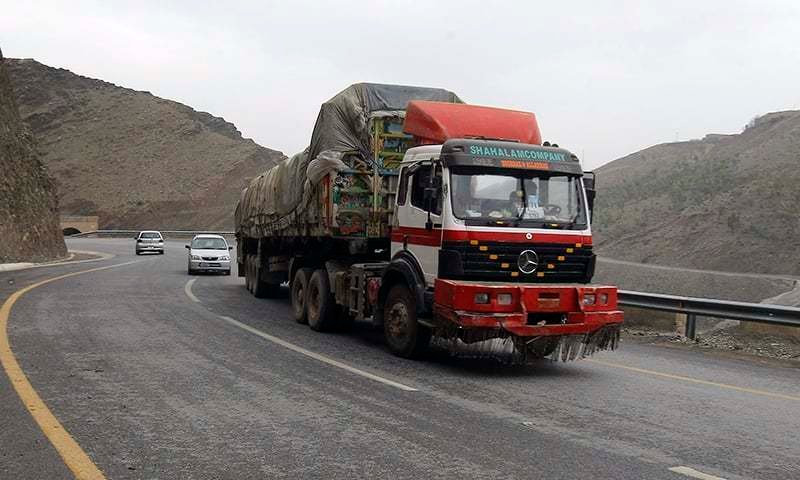
    According to the Economic Affairs Division, the project will construct a 48 km long 4-Lane, dual high-speed carriageway from Peshawar to Torkham. This project will boost economic development and improve areas adjoining expressway falling in Khyber Pakhtunkhwa province.

    The government is also planning to develop special economic zones around the corridor.

    The Khyber Pass has long been one of the most important trade routes and strategic military locations. Settled in the mountains, Khyber Pass divides Pakistan and Afghanistan forming the bridge between Central and South Asia.

  • Imran govt admits obtaining $10 billion loan within over a year

    Imran govt admits obtaining $10 billion loan within over a year

    The Prime Minister (PM) Imran Khan-led government has admitted to have obtained a total of $10.37 billion debt from different countries and international lenders up until September 30, this year.

    In a written reply to a question in the National Assembly, Minister for Economic Affairs Hammad Azhar said the Pakistan Tehreek-e-Insadf (PTI) government secured $10.37 billion from various governments and international institutions from August 14, 2018 to September 30, 2019.

    The government, during this period, received $1.54 billion from China, $151.79 million from Saudi Arabia, $68.6 million from France, $0.4 million from Germany, $62.48 million from Japan and $0.01 million from Kuwait.

    It also obtained a total of $991.2 million loan so far from International Monetary Fund (IMF) during this period.

    The government received a total $2.751 billion from multilaterals including $997.45 million from Asian Development Bank (ADB), $23 million from Asian Infrastructure Investment Bank (AIIB), $155.04 million from International Bank for Reconstruction and Development (IBRD), $556.05 million from International Development Association (IDA), $6.14 million form Islamic Development Bank (IDB), $922.84 million from IDB (short terms), $42.24 million from International Fund for Agricultural Development (IFAD), $8.36 million from Organisation of Petroleum Exporting Countries (OPEC Fund), and $39.8 million form ECOT/BANK.

    The government obtained $4.805 billion loan from commercial banks including $365 million from Ajman Bank, $2.235 billion from Consortium of Chinese banks (ICBC, CDB, BOC), $150 million from Citibank, $410 million from DIB/Noor, $195 million from DIB, $500 million from Emirates NBD, $300 million from ICBD and $650 million from Credit Suisse.