Tag: Local Currency

  • Gold price drops by Rs1,500 per tola in Pakistan amidst global market slump

    Gold price drops by Rs1,500 per tola in Pakistan amidst global market slump

    On Friday, the price of gold in Pakistan witnessed a decline of Rs1,500 per tola, losing its luster due to a decrease in the international market.

    The All-Pakistan Sarafa Gems and Jewellers Association (APSGJA) released data indicating that the price of 24-carat gold dropped by Rs1,500 per tola and Rs1,285 per 10 grammes, settling at Rs217,000 and Rs186,043, respectively.

    Concurrently, the international market saw a $10 decrease, with the yellow metal settling at $1,919 per ounce.

    Recent times have seen the gold rate in Pakistan fluctuate amidst ongoing political and economic uncertainty, as well as high inflation. Consequently, individuals tend to view this precious commodity as a secure investment and a hedge during such periods. The association’s data revealed that the price of silver remained unchanged at Rs2,550 per tola and Rs2,186.21 per 10 grammes.

    Furthermore, the data highlighted that the cost of bullion in Pakistan is Rs4,000 per tola lower than the Dubai market, indicating that the Pakistani gold market currently offers more affordable prices than the global market.

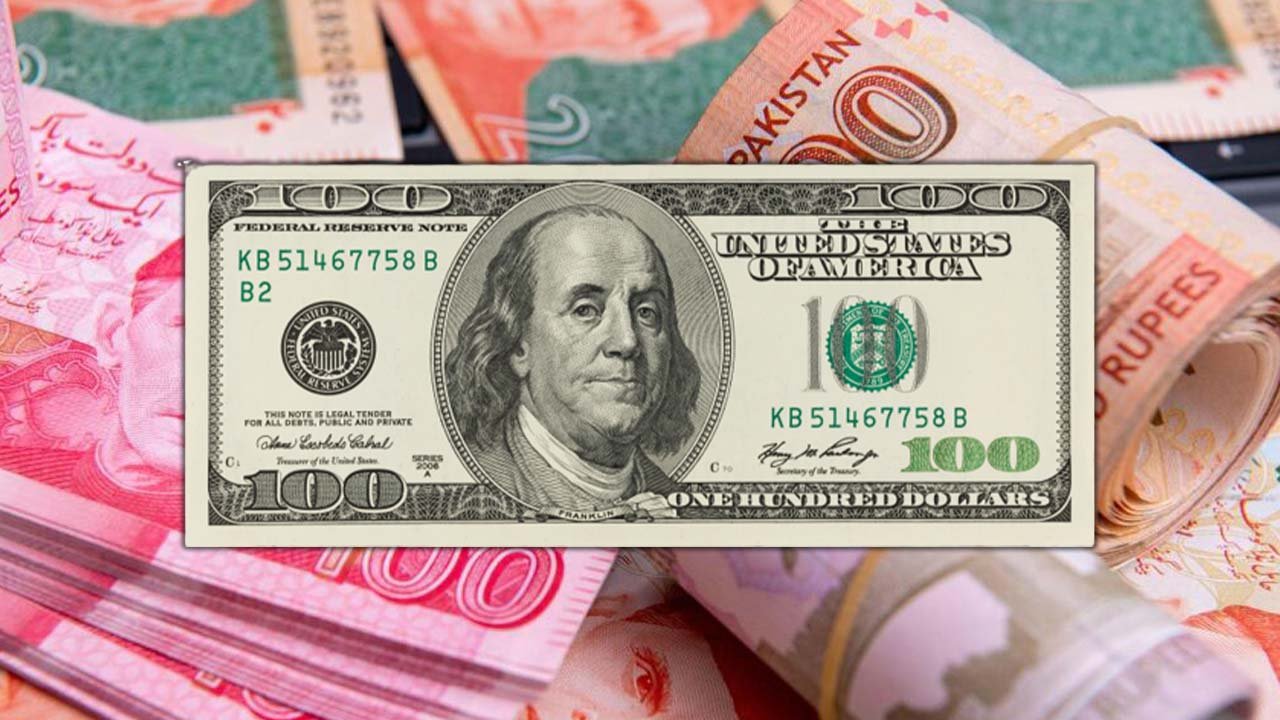
    In terms of foreign exchange, the Pakistani rupee maintained stability against the US dollar, experiencing a nominal increase of Rs0.01. The interbank market closed on Friday with the exchange rate at Rs286.74.
  • Fourth consecutive decline: Gold price drops by Rs1,800 to Rs218,700 per tola

    Fourth consecutive decline: Gold price drops by Rs1,800 to Rs218,700 per tola

    In line with the reduction in international rates, the per tola gold price in Pakistan experienced a significant decline of Rs1,800 on Wednesday. This marks the fourth consecutive day of falling prices for the precious metal.

    The All-Pakistan Sarafa Gems and Jewellers Association (APSGJA) released data indicating that the price of 24-carat gold decreased by Rs1,800 per tola and Rs1,543 per 10 grammes, settling at Rs218,700 and Rs187,500, respectively.

    Internationally, the price of gold plummeted by $17, reaching $1,934 per ounce in today’s market. Pakistan’s gold rate has exhibited volatility in recent times, largely due to ongoing political and economic uncertainty, high inflation, and currency depreciation. Amid such fluctuations, individuals often turn to gold as a safe investment and a hedge against market instability.

    While gold prices experienced a notable decline, the price of silver saw only nominal losses. Data shared by the APSGJA revealed that the price of silver fell by Rs50 per tola and Rs42.87 per 10 grammes, settling at Rs2,550 and Rs2,186.21, respectively.

    In other market developments, the local currency made nominal gains against the dollar, increasing by Rs0.24 or 0.08 per cent. The interbank market witnessed the closing exchange rate of Rs286.98 on Tuesday.

    The recent downward trend in gold prices in Pakistan reflects the influence of international market conditions. Despite these fluctuations, gold remains a sought-after investment during times of economic and political uncertainty, providing individuals with a secure and reliable asset.

  • Pakistani rupee bounces back after steep decline against dollar

    Pakistani rupee bounces back after steep decline against dollar

    During the early hours of trading on Friday, the Pakistani rupee (PKR) saw a significant recovery against the US dollar, with an increase of 4.51 per cent. The inter-bank market quoted the PKR at Rs272.78 by 11:50 am, representing an increase of Rs12.31 against the US dollar.

    This follows a steep decline of 6.66 per cent or nearly Rs19 to settle at an all-time low of Rs285.09 against the US dollar on Thursday.

    On Thursday, the State Bank of Pakistan’s Monetary Policy Committee (MPC) raised the key policy rate by 300 basis points (bps) to 20 per cent, aiming to curb inflation.

    The committee also emphasized the need for energy conservation measures to ease pressure on the external account and meet import requirements. The MPC expects this decision to stabilize inflation expectations and bring it to a medium-term target of 5 per cent-7 per cent by end-FY25.

    Globally, the US dollar eased back from a 2-1/2-month high against the yen on Friday, and weakened toward its first weekly loss since January against major peers. This comes as traders tried to gauge the path for Federal Reserve policy.

    According to Geo, the dollar index, which measures the currency against the yen, euro, and four other major peers, fell 0.11 per cent to 104.85, from its peak of 105.36 earlier this week. The index has decreased by 0.36 per cent since last Friday.

    Meanwhile, oil prices, a critical currency parity indicator, dropped on Friday, but remained poised for a weekly gain due to renewed optimism regarding China’s demand recovery, outweighing concerns over growing crude inventories in the US and tighter monetary policy in Europe.

    This is an intraday update.

  • Intraday update: Pakistani rupee drops to all-time low of Rs270 against US dollar

    Intraday update: Pakistani rupee drops to all-time low of Rs270 against US dollar

    According to information provided by the Forex Association of Pakistan (FAP), the Pakistani rupee depreciated by an additional Rs7.4 after falling to a record low last week, trading at Rs270 per dollar in the interbank market at approximately 1:30 pm on Monday.

    From Friday’s close of Rs262.6, this represents a loss of more than 2.5 per cent.

    The decline of the rupee was blamed on a lack of dollars by Zafar Paracha, general secretary of the Exchange Companies Association of Pakistan (ECAP). He said that the dollar supply had not been resumed. Even though there is no agreement, we do not know where the banks will obtain their supplies.

    The SBP deputy governor assured representatives of exchange businesses last week that commercial banks would be instructed to provide money to the exchange companies.

    “There is a lot of panic in the market.” If dollars are received, it will cool down a bit. “As long as the market doesn’t settle, people will not sell their remittances or export proceeds,” Paracha said.

    The current spell of depreciation came after the coalition government ended its control on dollar’s price in order to convince the International Monetary Fund (IMF) officials to revive the $7 billion loan programme.

  • Pakistani rupee drops by 0.35% to close at Rs221.43 versus dollar

    Pakistani rupee drops by 0.35% to close at Rs221.43 versus dollar

    As investors await the US Federal Reserve’s decision on the policy rate, the Pakistani rupee (PKR) depreciated by 0.35 per cent against the greenback on Wednesday.

    According to the State Bank of Pakistan (SBP), the local unit appreciated by Rs0.78 and ended the day at Rs221.43.

    The Pakistani rupee enjoyed gains against the US dollar on Tuesday, and it ended the day at Rs220.65 after rising by Rs0.24 (or 0.11 per cent) in the interbank market.

    Gains were recorded when market confidence improved as a result of discussions held by Finance Minister Ishaq Dar with senior bank and exchange company executives.

    However, in a significant development, according to the most recent data released by the Pakistan Bureau of Statistics (PBS) on Tuesday, consumer price index (CPI)-based inflation increased to 26.6 per cent on an annual basis in October 2022 as opposed to an increase of 23.2 per cent in the previous month and 9.2 per cent in October 2021.

    Globally, the US dollar slipped on Wednesday as investors awaited the US Federal Reserve’s policy decision amid speculation it might indicate a slowdown in future rate hikes. The central bank will soon release its policy statement with investors widely expecting a 75 basis points (bps) rate hike, the fourth such increase in a row.

    The dollar index – which gauges the greenback against a basket of six counterparts that includes the yen, euro and sterling – eased 0.2 per cent to 111.28, but was not far below Tuesday’s high of 111.78, the strongest level since October 25. The index has fluctuated widely around the 112 level since its retreat from a two-decade high of 114.78 at the end of September.

    Oil prices, a crucial gauge of currency parity, increased on Wednesday after data from the sector revealed a surprising decline in US oil supplies, indicating that demand is still strong despite sharp interest rate increases that are slowing down global development.

  • PKR suffers losses against USD for 5th consecutive day

    PKR suffers losses against USD for 5th consecutive day

    The State Bank of Pakistan and the government were unable to stabilise the exchange rate as the Pakistani rupee lost value for the fifth straight day on Monday after falling 46 paisas against the US dollar in the interbank market.

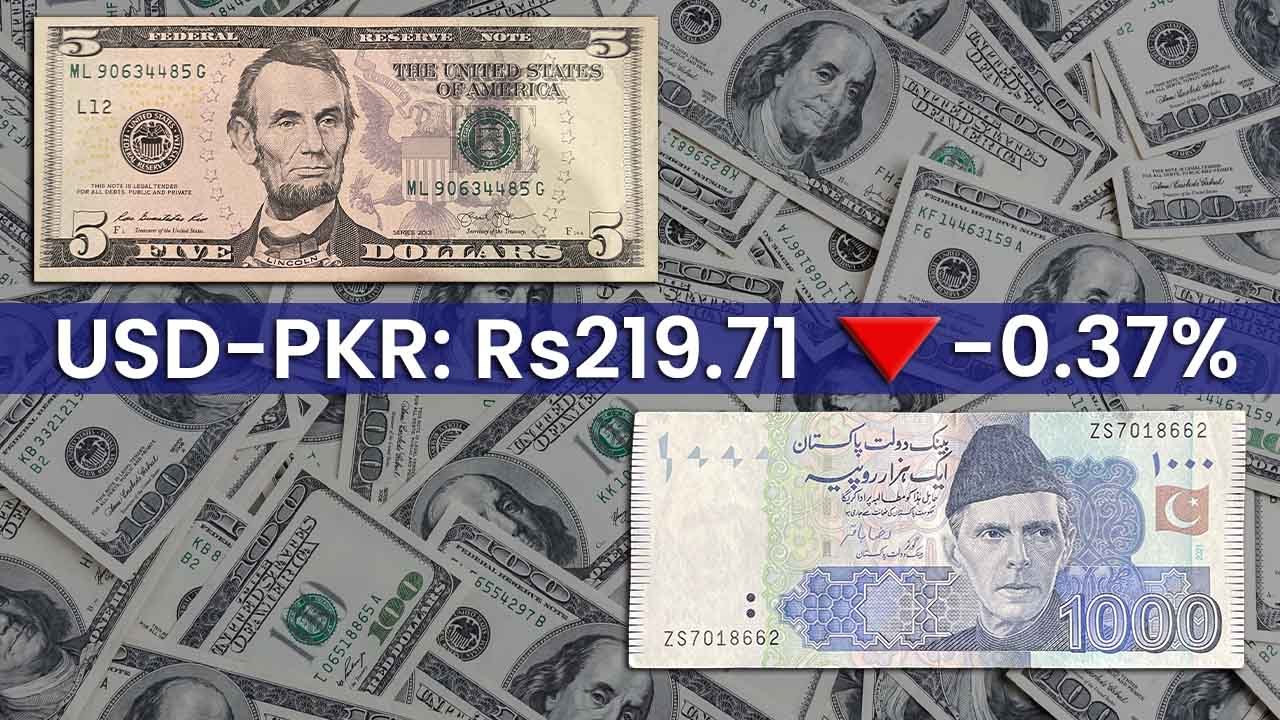
    State Bank of Pakistan reports that the local unit decreased by 0.37 per cent to close at Rs219.71.

    The closing price in the interbank market, according to the Exchange Companies Association of Pakistan (ECAP), was Rs220 as opposed to Rs219.50 in the previous trading session.

    US dollar dropped 30 paise in the open market, closing at Rs225.70 as opposed to Rs226 the previous session. Its price on October 11 was Rs219

    The optimistic market sentiments that appeared following the nomination of Ishaq Dar as finance minister in anticipation of his potential to secure dollar inflows appeared to have disappeared.

    In FY23, Pakistan would need around $32 billion to pay for its foreign debt, mostly to service it, as well as to close its current account deficit. In a recent interview with a foreign news outlet, the finance minister stated that he will seek to reschedule approximately $27 billion in non-Paris Club debt, the majority of which is owed to China.

  • Pakistani rupee gains Rs2.13 to close at Rs221.91

    Pakistani rupee gains Rs2.13 to close at Rs221.91

    In line with improved market sentiment, the Pakistani rupee (PKR) kept strengthening versus the US dollar, closing at Rs221.91 on Wednesday in the inter-bank market.

    According to the State Bank of Pakistan (SBP), the local currency appreciated by 0.96 per cent or Rs2.13 against the dollar to settle at Rs221.91.

    The uptick on Wednesday marked the seventh straight rebound for the currency, which last month touched an all-time low of Rs239.94 against the US dollar. Since then, it has increased by almost 8 per cent.

    Pakistani rupee significantly increased last week, rising 6.8 per cent to settle at Rs224.04 in the interbank market.

    The rupee maintained its strength throughout the week as Pakistan reported a smaller trade deficit and a significantly lower import bill in July, relieving pressure on the currency that had previously been battered by the dollar.

    The International Monetary Fund (IMF) also stated that the board meeting is tentatively scheduled for late August once adequate financing assurances are confirmed.

    An official source in Abu Dhabi later emphasised in a public statement the UAE’s plan to invest $1 billion in Pakistani businesses across a range of economic and investment sectors, bringing Pakistan one step closer to closing what the IMF refers to as a financial gap.

    Market analysts anticipate significant growth in the upcoming days, assuming Pakistan manages to arrange its finance requirements.

  • Hyundai sedan prices raised up to Rs830,010 amid rupee devaluation

    Hyundai sedan prices raised up to Rs830,010 amid rupee devaluation

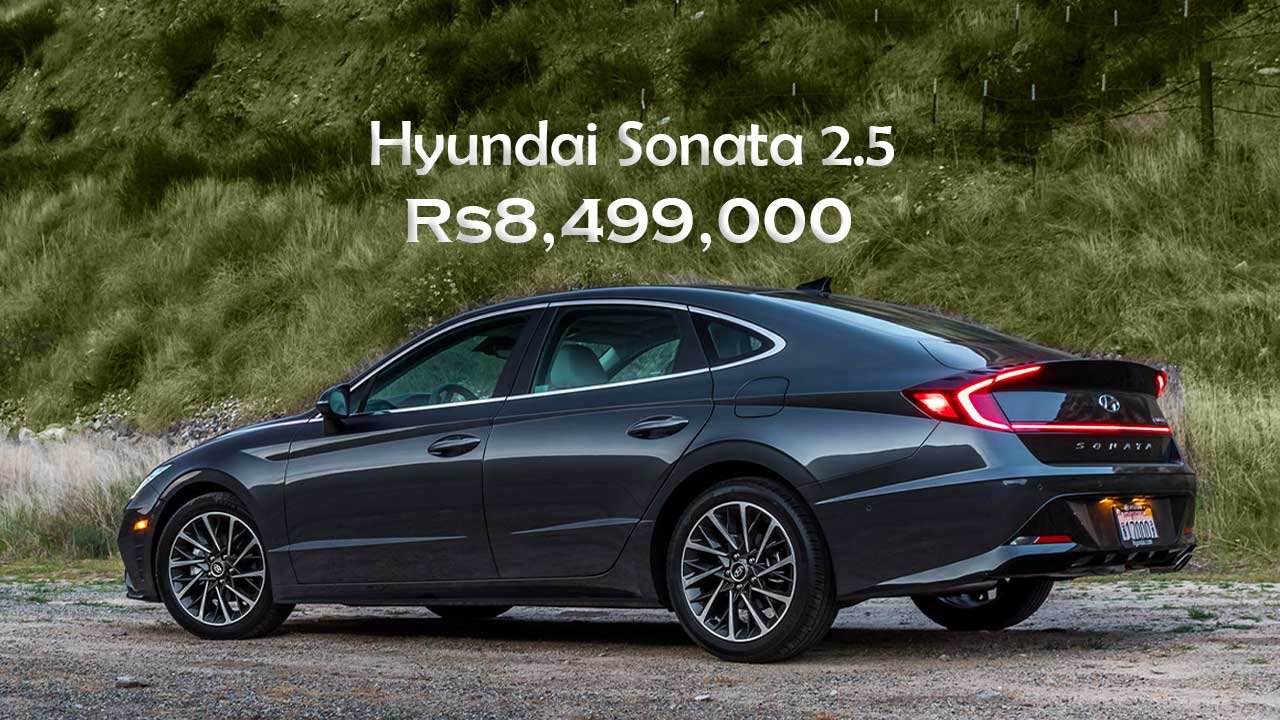
    Hyundai Nishat, like other automakers, has announced a major hike in costs for the Elantra and Sonata variants as a result of the unstable local currency and increased tax rates.

    The updated price for the Hyundai Elantra 2.0 is Rs5,499,000 (including CVT) compared to the old rate of Rs4,998,490 after an increase of Rs500,510. The new price for the Hyundai Elantra 1.6 in Pakistan is Rs5,099,000 (including CVT) compared to the old rate of Rs4,341,9900 after an increase of Rs757,010.

    The revised price of the Hyundai Sonata 2.0 is Rs7,899,000 (with CVT) in Pakistan, up Rs830,010 from the previous rate of Rs7,068,990, while the updated price of the Hyundai Sonata 2.5 is Rs5,499,000 (including CVT), down Rs571,510 from the previous rate of Rs7,927,490.

    Due to local currency devaluation, logistical expenses, tax rate increases, and overall economic uncertainty in the nation, Pakistan’s auto sector is struggling.

    During intraday trade today, the Pakistani Rupee (PKR) lost value against the US Dollar (USD) and fell below the Rs238 mark. The local currency was trading at Rs238.50 in the open market at noon after losing more than Rs5.57 in relation to the dollar.

    Major automakers have been compelled by these problems to lower their production goals in Pakistan. While Honda Atlas Cars Limited (HACL) and Kia Lucky Motor Corporation Limited (KLMCL) are switching to single-shift manufacturing schedules, Toyota Indus Motor Company (IMC) has ceased production for an unknown length of time.

  • Pakistani rupee falls to Rs233 per US dollar in the interbank market

    Pakistani rupee falls to Rs233 per US dollar in the interbank market

    The Pakistani rupee (PKR) continued to fall on Tuesday as the country’s political turmoil worsened, trading at Rs233 to the dollar in the interbank market.

    Today, the US dollar gained Rs3.12 versus the local currency, compared to the previous day’s finish of Rs229.88, which was an all-time high at the time.

    The local currency has been under pressure for the past week due to increased political tensions in the country following the July 17 by-elections in Punjab, which the PTI easily won. Also, the rupee has been one of the world’s worst performers, falling 30.2 per cent since the beginning of 2022.

    PKR had its worst week in more than two decades, ending on July 22, highlighting investor fear that a $1.2 billion loan tranche from the IMF approved last week could not be enough to alleviate the balance of payment crisis.

    Fears of Pakistan defaulting on its foreign repayments remain in the market, despite the central bank’s guarantee that the country would comfortably cover its funding obligations as long as an International Monetary Fund (IMF) loan programme remained in place.

    The rupee fell by nearly 8 per cent last week, the most in a single week since October 1998.

  • Pakistani rupee plunges to Rs227 against US dollar at midday trading

    Pakistani rupee plunges to Rs227 against US dollar at midday trading

    On Thursday, the rupee’s decline against the US dollar reached an all-time low of Rs227 in the interbank market.

    Experts blame the losses on political unrest and the fact that the dollar is bolstering against other currencies as well, according to DAWN. On Wednesday, the rupee had a closing value of Rs224.92.

    According to the Foreign Exchange Association of Pakistan (FAP), the local currency fell by Rs2.08 to Rs227 versus the US dollar when the session started today at 10:57 AM.

    According to experts, the country’s political unrest had reduced investor confidence, which had caused importers to worry and “unnecessarily” buy dollars from the market. He claimed that as a result, there was an increase in the interbank market’s demand for dollars.

    Furthermore, over the past week, the dollar’s value had increased against over 40 currencies, including the British pound and the Japanese yen, which had an impact on the local market’s use of the rupee, according to Bostan.

    After reaching Rs211.93 on June 22, the local currency climbed to Rs204.56 in the first week of July. When the country’s staff-level agreement with the international lender was reached on July 15, it briefly appreciated but again continued to depreciate against the US dollar.