Tag: Local manufacturing

  • Pakistan’s mobile phone imports soar by 181% amid local manufacturing challenges

    Pakistan’s mobile phone imports soar by 181% amid local manufacturing challenges

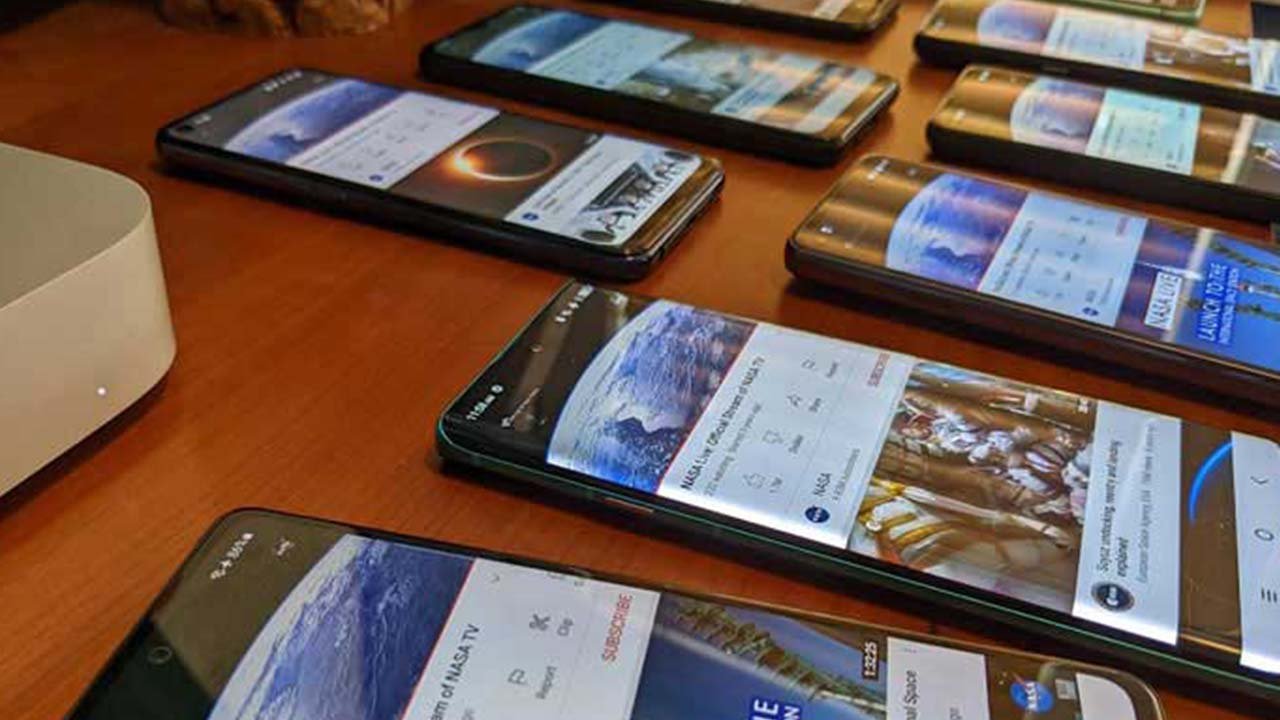
    Pakistan’s mobile phone imports surged by 181.26 per cent during the first nine months (July-March) of the fiscal year 2023-24, reaching $1.301 billion, according to the Pakistan Bureau of Statistics (PBS). 

    This significant increase is in stark contrast to the $462.700 million recorded during the same period in the previous fiscal year.

    Despite this year-long surge, March 2024 saw a slight decline in mobile phone imports on a month-on-month (MoM) basis, with imports totaling $153.051 million, a 4.87 per cent decrease from February 2024’s $160.90 million.

    However, on a year-on-year (YoY) basis, mobile phone imports experienced a remarkable 930.92 per cent growth in March 2024, as compared to $14.846 million in March 2023.

    The overall telecom imports also reflected similar trends. During the first nine months of the fiscal year, total telecom imports reached $1.623 billion, representing a 117.90 per cent increase from $744.971 million during the same period of the previous fiscal year.

    On a YoY basis, telecom imports rose by 422.58 per cent, totaling $189.042 million in March 2024 compared to $36.175 million in March 2023. However, on a MoM basis, telecom imports saw a slight decline of 1.13 per cent in March 2024, down from $191.201 million in February 2024.

    Meanwhile, local manufacturing and assembling of mobile handsets continued to be an area of focus. During the first two months (January-February) of the calendar year 2024, local plants manufactured or assembled 6.1 million mobile handsets, which included 2.78 million 2G and 3.35 million smartphones. 

    This was in stark contrast to the 0.3 million units that were imported commercially during the same period.

    In February 2024, local plants manufactured or assembled 3.83 million mobile handsets, significantly higher than the 0.06 million units imported commercially. 

    Notably, the Pakistan Telecommunication Authority (PTA) reported that 60 per cent of mobile devices on the Pakistan network are smartphones, while the remaining 40 per cent are 2G.

    Despite robust local manufacturing efforts, official data indicated that local manufacturing and assembling of mobile handsets declined by around four per cent during the calendar year 2023. 

    This decline is attributed to challenges in importing mobile phone accessories due to restrictions on the opening of letters of credit (LCs). 

    Nonetheless, commercial imports of mobile handsets increased during this period, suggesting a shift in strategy to meet the demand for mobile phones in the face of supply chain disruptions.

    The data presents a complex picture of Pakistan’s mobile phone industry, with significant growth in imports and shifts in local manufacturing dynamics. 

    The continued growth in imports highlights the demand for mobile technology, while local manufacturing faces challenges that could shape the future of the telecom sector.
  • ECC greenlights 25% sales tax increase on domestic cars

    ECC greenlights 25% sales tax increase on domestic cars

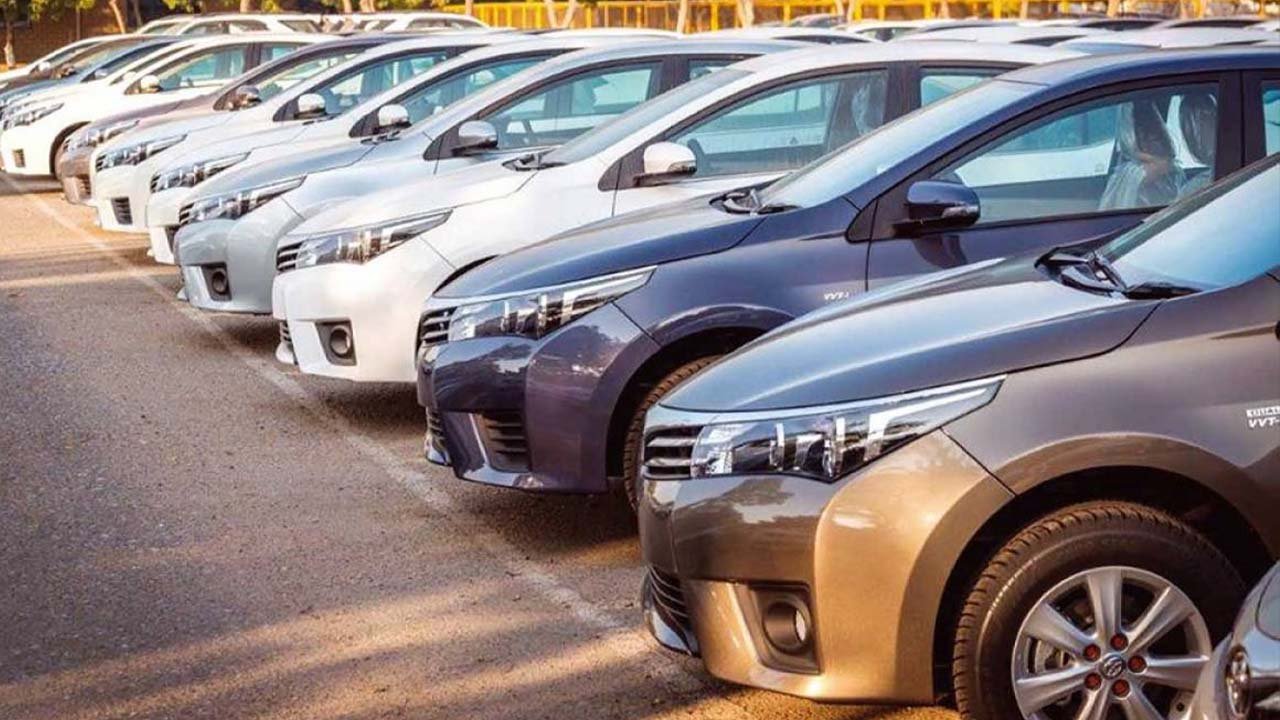
    In a significant development, the Economic Coordination Committee (ECC) of the Cabinet has given its nod to a proposal for increasing the sales tax on vehicles manufactured and assembled within the borders of Pakistan.

    The decision was finalised during a pivotal ECC meeting held in the capital city on Wednesday.

    The proposal, presented by the Federal Board of Revenue (FBR), suggested an elevation in the sales tax applicable to the auto sector, particularly on vehicles produced and assembled domestically.

    Following a comprehensive deliberation, the ECC cabinet sanctioned the process for determining a 25 per cent sales tax rate on locally manufactured and assembled vehicles.

    As per the endorsed proposal, vehicles valued at Rs4 million or equipped with 1400 cc engines will be subject to a 25 per cent sales tax.

    This taxation structure is anticipated to persist in the upcoming budget, signalling potential implications for consumers as a result of the price hike.

    The imposition of a 25 per cent sales tax on 1400cc vehicles is expected to have a direct impact on the pricing structure, leading to a potential surge in vehicle costs. The ECC’s decision aligns with ongoing efforts to streamline fiscal policies in the country.

    In addition to this decision, the ECC also greenlit a substantial subsidy of Rs7,492.75 million under the Ramazan Relief Package 2024.

    Chaired by Caretaker Finance Minister Shamshad Akhtar, the meeting aimed to address the financial aspects of the relief package, particularly subsidising the targeted beneficiaries of the Benazir Income Support Programme (BISP).

    According to a press statement issued by the finance ministry, the subsidy allocation is part of the budget for 2023–24, with a primary focus on providing support to those identified under the BISP. This move underscores the government’s commitment to social welfare initiatives.

    Furthermore, the ECC approved a proposal related to the “Permission to Import Wheat and Export of Wheat Flour under the Export Facilitation Scheme 2021.” This decision, brought forth by the Ministry of Commerce, reflects the government’s strategic measures to balance wheat supply and demand dynamics in the country.

    The ECC meeting signifies a pivotal moment in shaping economic policies, with decisions that carry far-reaching implications for both the automotive sector and social welfare initiatives in Pakistan.

    The approved proposals are poised to contribute to the broader economic landscape and address pertinent challenges in the nation’s fiscal framework.

  • SBP to lift import restrictions next week

    SBP to lift import restrictions next week

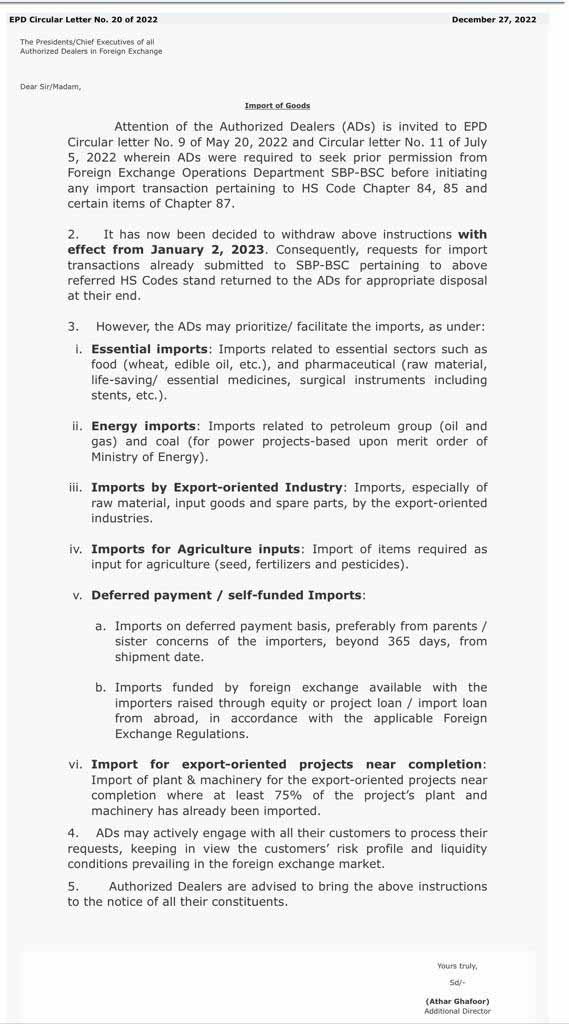
    The government has lifted import restrictions on commodities intended for vehicle manufacturing, mobile production, solar power equipment, and nuclear reactors for power generation projects commencing in 2023, despite Pakistan’s limited foreign exchange reserves.

    Simultaneously, authorised dealers (ADs – largely commercial banks) have been encouraged to prioritise the import of food and energy products. They should consider enabling the import of non-essential and luxury products after first providing for the necessities.

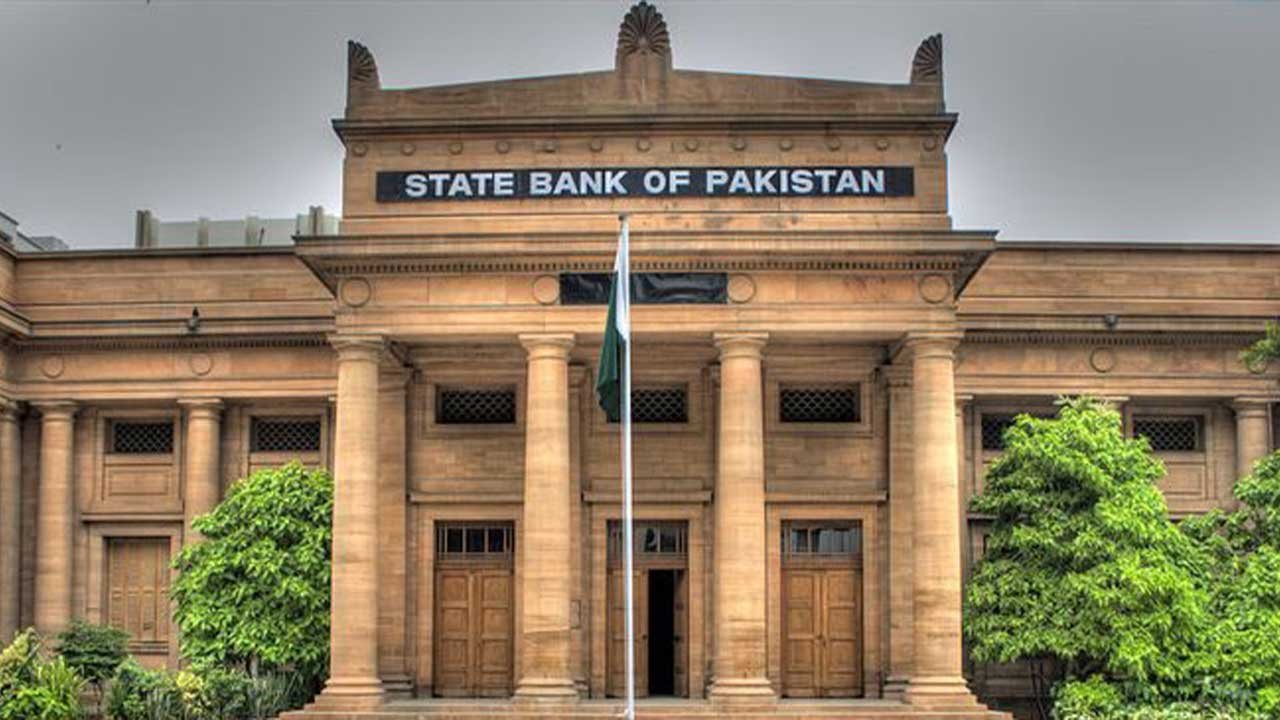
    The State Bank of Pakistan (SBP) reminded ADs on Tuesday that for the past eight months, they had been required to obtain prior permission from the Foreign Exchange Operations Department, SBP-BSC, before initiating any import transaction involving HS Code Chapters 84, 85, and certain items of Chapter 87.

    “It has now been decided to withdraw instructions (of prior permission) with effect from January 2, 2023. Consequently, requests for import transactions already submitted to SBP-BSC pertaining to referred HS codes stand returned to the ADs for appropriate disposal at their end,” the SBP said in the circular.

    Arif Habib Limited (AHL) Head of Research Tahir Abbas said that the import system may “continue to work in its present form. The removal of restrictions will not re-open imports in a full-fledged manner.”

    He stated that due to the country’s short foreign exchange reserves, the government has encouraged banks to first allow the import of necessary items before catering to others.

    The SBP advised ADs (commercial banks) to “prioritise and facilitate the import of essential sectors such as food (wheat and edible oil) and pharmaceuticals (raw material, life-saving or essential medicines, and surgical instruments, including stents).”

    According to Express Tribune, the second priority of ADs is to focus on energy imports “like oil, gas, and coal” (for power projects based on the merit order of the Ministry of Energy).

    Imports for export-oriented businesses should be prioritised as well. They should facilitate “imports, especially of raw materials, input goods, and spare parts, by the export-oriented industries,” stated the SBP. Imports of agri-inputs should be the fourth priority of ADs, as explained by SBP: “import of items required as inputs for agriculture (seed, fertilizers, and pesticides).”

  • MG to launch locally assembled HS in Pakistan soon

    MG to launch locally assembled HS in Pakistan soon

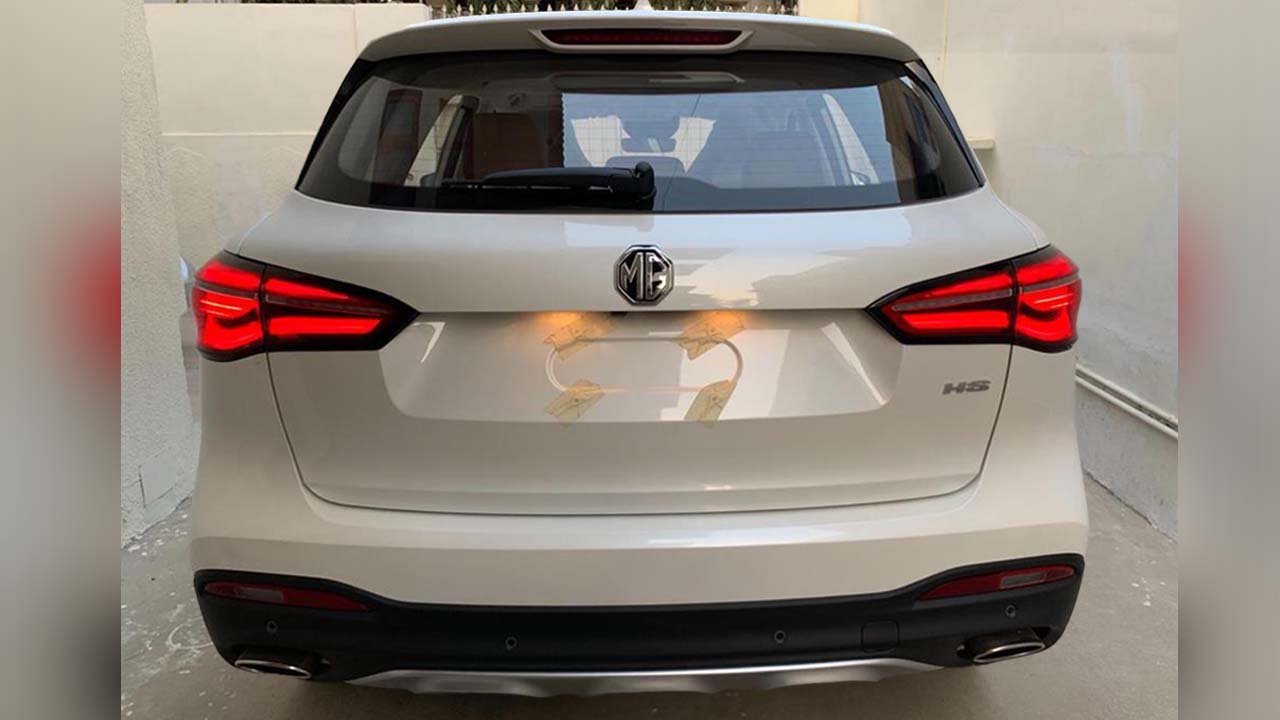
    Finally, MG Pakistan intends to introduce the locally built MG HS model in Pakistan very soon. Previously, the automaker exclusively offered the crossover SUV in the country as Completely Built Units (CBU) or imported models.

    According to Pakwheels, there were certain technical difficulties that prevented the government from granting the company a license. Although given that Pakwheels indicated that MG Pakistan is set to introduce the locally manufactured MG HS in Pakistan, it appears that the issue has been resolved.

    It was discovered that the government has granted the company a license, and the launch is just around the corner. Sources also stated that Pakistan will receive local HS in a matter of days, or maybe a few weeks.

    If true, this is fantastic news for the local auto market since MG HS has become a popular choice among Pakistanis despite its hefty price tag. The MG HS PHEV currently costs Rs8.5 million, while the MG HS turbo variant is priced at Rs8.9 million.

    For those unaware, the MG HS is equipped with MG Pilot, which is a comprehensive suite of driver-assist technologies. It complements the driver, lends a helping hand, and gives you added confidence on the road.

    MG PILOT’s advanced driver assistance features constantly sense your surroundings and look for unseen hazards. It offers a selection of warning and alert features to assist the driver while maintaining the highest safety standards, as shown by the 5-star Euro ANCAP rating given to the MG HS.

    Here are some unique features of the MG HS:

    1. Active Emergency Braking (AEB) – Automatically braking to assist with avoiding a collision with a vehicle, bicycle or pedestrian.
    2. Lane Keep Assist (LKA) – Detects lane markings ahead and warns the driver; will assist with steering to keep within the lane.
    3. Adaptive Cruise Control (ACC) – Maintains the speed set by the driver, automatically adjusting to other traffic.
    4. Traffic Jam Assist (TJA) – Automatically follows the vehicle in front in slow traffic.
    5. Blind Spot Detection (BSD) – Whenever there is a vehicle in the driver’s blind spot, a visual signal will show in the door mirror.
    6. Intelligent High Beam Assist – Automatically switches to low beam when it detects a vehicle ahead.
    7. Intelligent Speed Limit Assist – Actively detects speed limit signs and alerts the driver of the current speed limit.
  • High hopes for Pakistan with aim to start local manufacturing of Sputnik V vaccine

    High hopes for Pakistan with aim to start local manufacturing of Sputnik V vaccine

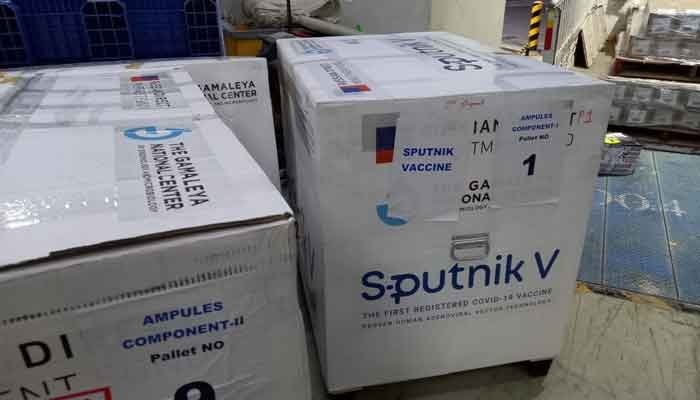
    Pakistan is all set to start the local manufacturing the Russian COVID-19 vaccine Sputnik V in collaboration with Russia in the coming months.

    Foreign Minister Shah Mehmood Qureshi, during a joint press conference with his Russian counterpart on Wednesday, said Pakistan was looking forward to Russian collaboration for the local production of the Sputnik V vaccine.

    The Russian FM said his government had provided 50,000 doses to Pakistan and intended to provide more than 150,000 doses in the coming weeks.

    Russian Foreign Minister Sergey Lavrov had arrived on Tuesday for a two-day visit in Islamabad, where he was received by Shah Mehmood Qureshi.

    FM Lavrov also expressed satisfaction over an increase in bilateral trade that reached $790 million over the last year.

    Earlier, the Drug Regulatory Authority of Pakistan (DRAP) had approved the emergency use of the Russian vaccine.

    Two doses of it are currently being administered across private facilities in major cities for around Rs13,000.

    It has an efficacy rate of over 91%.