Tag: Local Production

  • Pakistan sets sights on $5 billion smartphone exports by 2029

    Pakistan sets sights on $5 billion smartphone exports by 2029

    Pakistan’s mobile phone industry is experiencing a significant boom, with plans to export smartphones worth $500 million in the next two years and an ambitious target of $5 billion in the next five years, according to the Federal Minister of IT and Telecom, Dr Umar Saif.

    The announcement was made during the Pakistan Mobile Summit 2024, a collaborative effort between the Ministry of IT and Telecom and mobile phone manufacturers.

    Dr Umar Saif, speaking at the summit, drew parallels with neighbouring India, which currently exports mobile phones worth $10 billion annually.

    He expressed confidence in enhancing Pakistan’s presence in the global mobile phone market and outlined steps being taken to boost smartphone exports manufactured within the country.

    During the summit, the minister disclosed that 35 companies have been licenced to assemble smartphones of different brands.

    Furthermore, a comprehensive policy is in the works to facilitate the local production of complete phones and some of their components.

    This initiative is expected to not only strengthen the local industry but also contribute significantly to Pakistan’s standing in the international mobile phone market.

    Dr Saif highlighted the progress made so far, indicating that approximately 90 million mobile phones have been assembled in Pakistan over the past two years.

    Additionally, the country has successfully exported around 250,000 mobile phones, amounting to a value of $15 million. These figures showcase the growing capabilities of Pakistan’s mobile phone manufacturing sector.

    The minister emphasised the need for sustained efforts to capitalise on the industry’s potential and underscored the importance of innovation and competitiveness to further enhance Pakistan’s share in the global market.

    As the country moves forward, there is a concerted push to not only meet but surpass the set export targets, contributing significantly to the national economy and establishing Pakistan as a key player in the international mobile phone industry.

    The success and growth of the mobile phone industry align with the government’s broader vision for economic development and technological advancement, showcasing Pakistan as a competitive player in the global digital landscape.
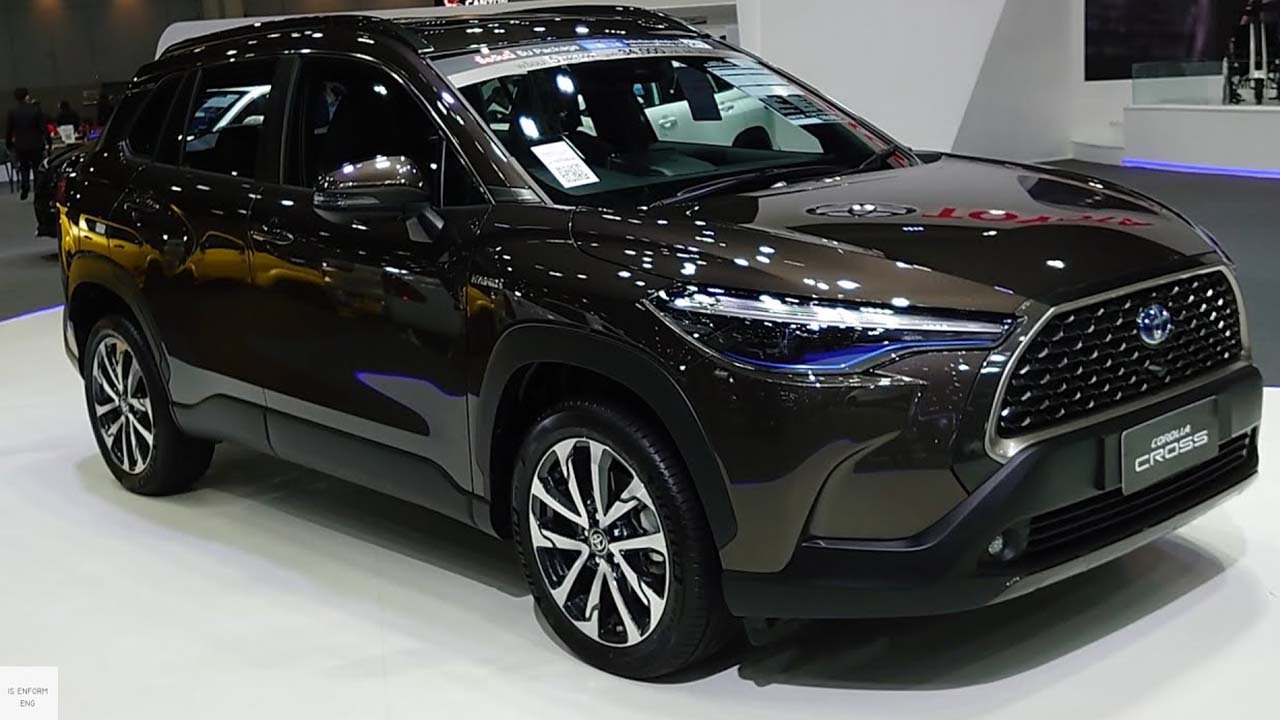
  • Toyota IMC unveils locally-made Toyota Corolla Cross Hybrid in Pakistan

    Toyota IMC unveils locally-made Toyota Corolla Cross Hybrid in Pakistan

    Indus Motor Company (IMC) celebrated the launch of the 4th generation Toyota Corolla Cross Hybrid Electric Vehicle (HEV) at its manufacturing facility in Karachi.

    This marks a significant achievement for IMC, emphasising the ‘Made in Pakistan’ initiative and showcasing the strong bond between Japan and Pakistan. Notable figures present at the ceremony included Federal Secretary Asad Rehman Gilani, Toyota’s top leadership and the Japanese Ambassador to Pakistan, Mitsuhiro Wada. 

    Yoshiyuki Takai, expressing optimism about the Corolla Cross HEV’s reception in Pakistan, highlighted the environmental benefits of increased hybrid vehicle adoption.

    Gilani, on behalf of the government, congratulated IMC and reiterated the commitment to support hybrid and electric technologies, aligning with the Auto Policy 2021–26. IMC’s CEO, Ali Asghar Jamali, emphasised the company’s dedication to sustainability, revealing an investment exceeding $100 million in manufacturing the first locally produced HEV.

    The Corolla Cross HEV boasts a smooth and efficient 1800-cc engine with hybrid and gasoline options. Jamali also outlined IMC’s contribution to the local automobile sector, encompassing a comprehensive value chain, part manufacturers, authorised dealerships, and a substantial workforce of over 450,000 people.

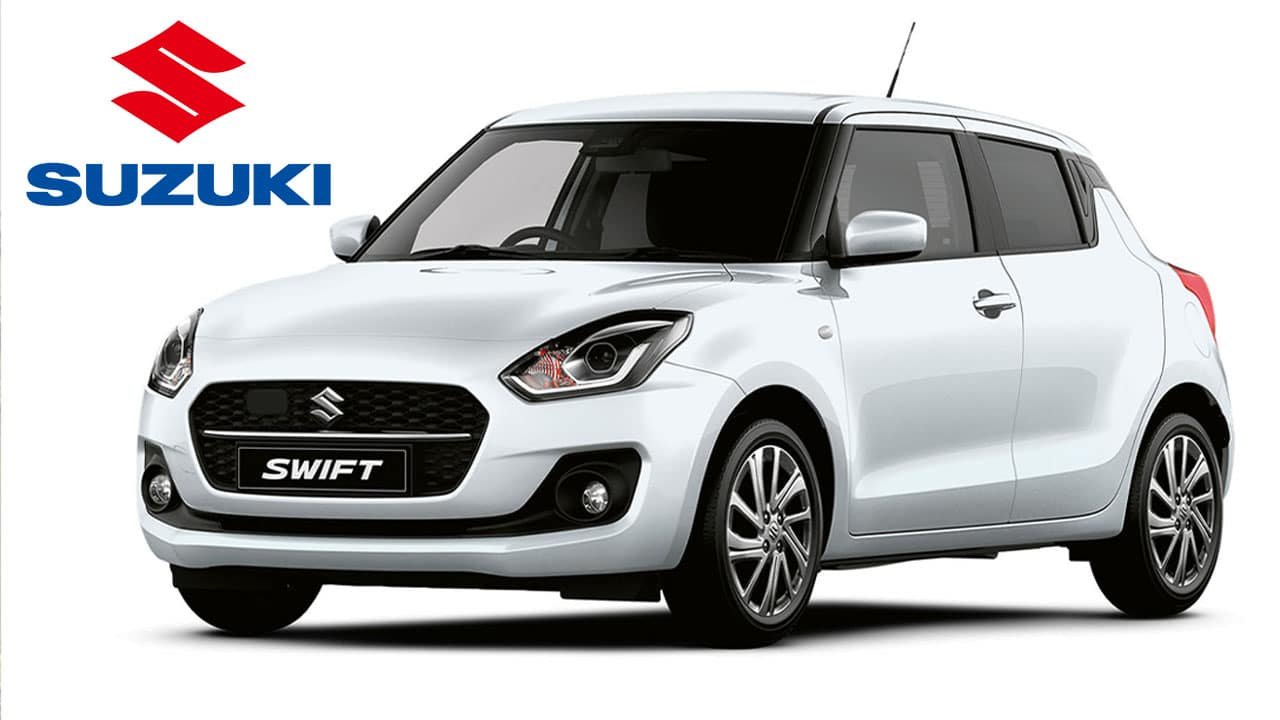
  • Inventory shortage forces Pak Suzuki to temporarily halt operations

    Inventory shortage forces Pak Suzuki to temporarily halt operations

    Pak Suzuki Motor Company (PSMC) announced on Wednesday that it will temporarily halt operations at its automobile plant from February 13th to 17th, due to an insufficient inventory.

    The management of Pak Suzuki, the local assembler, manufacturer, and marketer of Suzuki vehicles and related spare parts, has informed the Pakistan Stock Exchange (PSX) that it will temporarily cease operations at its automobile plant from February 13th to 17th, 2023, due to an ongoing shortage of inventory.

    The company’s motorcycle plant, however, will remain in operation. This decision follows a previous temporary shutdown of the automobile plant from January 2nd to 6th and January 16th to 20th, also due to inventory constraints.

    PSMC has reported that the recent introduction of a prior approval mechanism for imports by the State Bank of Pakistan (SBP) has negatively impacted the clearance of its import consignments, leading to a shortage of inventory.

    As a result, PSMC has suspended new bookings for its motorcycles starting January 20th, due to supply chain constraints and an uncertain production outlook. The company has stated that bookings will resume when the situation improves and it is able to serve fresh customers.

    Pakistan’s auto industry, which heavily relies on imports, is facing a crisis as the SBP has imposed restrictions on the opening of Letters of Credit (LCs) due to the persistent depreciation of the rupee. The country’s depleted reserves have resulted in operational challenges for various industries.

  • Honda City 1.2 manual now costs more than Rs4.3 million after latest price hike

    Honda City 1.2 manual now costs more than Rs4.3 million after latest price hike

    Honda Atlas Cars Limited (HACL) has once again raised its car prices for the second time in two weeks. The company attributed the increase to rising inflation and a depreciating local currency.

    Below are the new prices for all Honda cars:

    Car Old Price (Rs) New Price (Rs) Hike (Rs)
    City 1.2 M/T 4,069,000 4,329,000 260,000
    City 1.2 CVT 4,199,000 4,469,000 270,000
    City 1.5 CVT 4,449,000 4,739,000 290,000
    City Aspire 1.5 M/T 4,629,000 4,939,000 310,000
    City Aspire 1.5 CVT 4,799,000 5,119,000 320,000
    Civic 1.5T M-CVT 6,849,000 7,299,000 450,000
    Civic Oriel 1.5T M-CVT 7,099,000 7,599,000 500,000
    Civic RS 1.5T LL-CVT 8,099,000 8,649,000 550,000
    HR-V VTi 1.5 6,399,000 6,799,000 400,000
    HR-V VTi S 1.5 6,599,000 6,999,000 400,000
    BR-V S 1.5 5,299,000 5,649,000 350,000

    The automobile industry is facing challenges due to foreign exchange limitations and parts supply issues. The Pakistan Association of Automotive Parts and Accessories Manufacturers (PAAPAM) and the Pakistan Automotive Manufacturers Association (PAMA) have jointly sent a letter to the Governor of the State Bank of Pakistan (SBP), Jameel Ahmed, highlighting the dire situation.

    In the letter, the organizations state that the industry is facing the brink of collapse due to restrictions imposed by the SBP on imports and a lack of support from banks in the automotive sector. This has resulted in sporadic plant closures and lay-offs among assemblers and suppliers.

    The joint letter from PAAPAM and PAMA advised that failure to take corrective action would result in negative consequences such as widespread job loss, reduction in government income, the shutdown of car assembly plants, and capital loss. The letter emphasized that the negative effects of the letter of credit (LC) issue have contributed to the collapse of the automobile industry.

  • Pak Suzuki increases motorcycle prices by up to Rs25,000

    Pak Suzuki increases motorcycle prices by up to Rs25,000

    Pak Suzuki Motor Company Ltd. (PSMCL) has increased motorcycle prices by Rs20,000-25,000, effective February 1st.

    The new rate for GD110 S, GS150, GSX125, and GR150 is Rs264,000, Rs286,000, Rs384,000, and Rs410,000.

    However, the company’s communication to authorised dealers lacked any explanation for the price increase.

    PSMCL had temporarily ceased taking new bike orders as of January 20 due to supply chain constraints based on imports and unpredictable production capacity in the current economic climate.

    Read more: Latest Suzuki car prices

    Pak Suzuki has been enjoying a smooth journey, recording sales of 20,762 units in FY23 compared to 18,030 at the same time last fiscal year, as sales of all two-wheeler assemblers have remained flat due to rising prices, quality problems, and affordability difficulties.

    The assembler of Hi-Speed motorcycles has also increased the rate by Rs25,000 of 150cc Infinity and 200cc Freedom followed by a Rs2,500-Rs3,500 hike in 70cc-125cc motorcycles.

  • Pak Suzuki announces second plant closure in less than 10 days due to parts shortage

    Pak Suzuki announces second plant closure in less than 10 days due to parts shortage

    Due to a persistent lack of imported components and accessories, Pak Suzuki Motor Company Ltd (PSMCL) has prolonged the factory shutdown from January 9 to 13 after keeping manufacturing operations paused from January 2 to 6.

    However, the business stated in a stock filing on Friday that the motorbike facility will continue to be in operation.

    The State Bank of Pakistan’s restrictions on obtaining prior approval for imports, including completely knocked-down (CKD) kits, have prevented PSMCL from opening its production facilities for 30 days since August 2022. This has negatively impacted the clearance of shipments from the port and resulted in shortages of parts and accessories.

    On the fate of employees because of persistent plant closure and plummeting sales of vehicles, a PSMCL official claimed that “so far no company’s employees have been terminated.”

    In 5MFY23, Pak Suzuki’s sales decreased by 35 per cent to 37,042 units from 57,200 in the same time the previous fiscal year.

    On Friday, the Lahore Chamber of Commerce and Industry (LCCI) and the Pakistan Association of Automotive Parts and Accessories Manufacturers (PAAPAM) both voiced their concerns regarding Millat Tractors’ decision to cease operations for an indefinite period of time due to declining sales and delayed sales tax refunds.

    In a joint statement, PAAPAM Senior Vice Chairman Usman Aslam Malik and LCCI President Kashif Anwar observed that “we should save Pakistan first, then politics, before we reach the point of no return.”

    Both leaders urged the administration and the opposition parties to get together and talk about how to resolve the nation’s crisis.

    They pointed out localization as the long-term answer to economic issues. The removal of imports must be given first priority, followed by the removal of export.

  • Pakistan’s biggest tractor manufacturer announces to shut down operations

    Pakistan’s biggest tractor manufacturer announces to shut down operations

    The biggest manufacturer of agricultural machinery in Pakistan, Millat Tractors Limited, has stated that it will cease operations starting on January 6 and continuing till further notice, citing weak demand and cash flow issues.

    Details indicate that Millat Tractors, a producer of agricultural machinery and tractors, informed the Pakistan Stock Exchange (PSX) of the situation in a letter.

    “Due to continuing reduced demand for tractors and cash flow constraints, the company will remain closed from Friday, January 6, 2023, till further notice,” the statement added.

    The development occurred as a number of other businesses recently declared a shutdown or reduction in operations in Pakistan due to a decline in demand, a scarcity of inventory, or issues with the supply chain.

    The federal government’s import restrictions forced KSB Pumps Company Limited (KSBP) to close its production facility in Pakistan earlier on January 3.

    Due to the import ban, KSB announced that operations at its Hasanabdal factory would be temporarily suspended beginning January 2, 2023. The company also informed the Pakistan Stock Exchange of their decision.

  • Pak Suzuki discontinues Bolan’s AC variant after one year

    Pak Suzuki discontinues Bolan’s AC variant after one year

    Pak-Suzuki Motor Company (PSMC) will no longer sell the Suzuki Bolan’s AC variant. After almost 15 years, this variation was finally introduced last year, and tragically, its production will cease once again.

    The company’s decision to stop producing the AC variant of the Suzuki Bolan is a blatant indication that it has failed to pique consumer interest for a variety of reasons, some of which include its inflated cost and the extraordinarily uncomfortable ride.

    Despite all of these factors, other variants of Suzuki Bolan are extremely common in Pakistan and are seen running on almost every road and in every city.

    The first Suzuki Bolan with AC was introduced in 2006-2007, however it was a flop due to overheating, poor engine performance, and subpar AC.

    Moreover, the Bolan’s engine is housed underneath the driver’s seat, which makes it extremely challenging for the driver and front passenger to sit, particularly when the engine is hot.

    Despite expectations that the AC variation would be successful this time, it was not able to attract buyers.

  • Pak Suzuki suffers losses of Rs17.23 million due to rising production costs

    Pak Suzuki suffers losses of Rs17.23 million due to rising production costs

    Pak Suzuki Motor Company Ltd. (PSMC) reported its half-yearly results, which were completed on June 30, 2022. The company reported a net loss of Rs17.23 million against a net profit of Rs1.19 billion, according to the automaker’s latest filing on the Pakistan Stock Exchange (PSX).

    According to Mettis Global, the company’s sales revenue climbed 30 per cent YoY, from Rs66 billion to Rs112, 62 billion, mostly due to volumetric growth and pricing increases.

    As a result of growing input costs and the significant depreciation of the local currency, the gross margins during 1HFY22 decreased from 5.98 per cent to 3.74 per cent.

    Regarding the company’s primary expense heads, distribution and marketing costs came in at Rs1.64 billion, up 30 per cent YoY, while administration costs dipped to Rs1.48 billion, up 11 per cent YoY.

    In contrast to Rs866 millionn in 1HFY21, the company additionally received Rs1.56 billion in other income.

    Furthermore, as a result of rising interest rates, finance costs increased by 6.2x YoY, from Rs292 million to Rs1.8 billion.

    The company also paid Rs767.84 million in taxes, which represents an increase of 57 per cent YoY because of the impact of super taxes.

  • Govt lifts import ban on luxury goods with heavy duties

    Govt lifts import ban on luxury goods with heavy duties

    On the recommendation of the International Monetary Fund (IMF), the Federal Minister for Finance and Revenue, Miftah Ismail, announced lifting of the ban on the import of luxury and non-essential goods on Thursday. He added, however, that the Regulatory Duties (RDs) would be increased significantly to deter the import of such items.

    “It is requirement of the international community that there should be no ban so we are lifting ban on all products. But simultaneously the duties I am going to impose would not let these commodities to enter into Pakistan as finished goods,” according to Finance Minister.

    According to the minister, RDs would be increased three times, or to the highest degree conceivable, and may potentially increase by up to 400 to 600 per cent or more.

    Keeping in view his duty to offer basic and vital goods to the nation’s citizens, he said that the prime minister was against the importation of luxury goods, according to APP.

    To comply with the IMF, international agreements, and World Trade Organization, he claimed the restriction had been lifted. Although import taxes would be applied on expensive food, clothing, and other items, anyone still wishing to import is free to do so.

    He said that the available resources will be used to give the people of the country grain, wheat, cotton, and edible oil rather than iPhones or fancy cars. He claimed that Pakistan did not have a lot of money to spend on the import of opulent things.

    The finance minister stated in response to a question that the levies on completely built-up (CBU) automobiles, appliances, imported meat and salmon, as well as other luxuries, would increase. He explained that the government’s goal was to limit imports while adhering to the requirements of the International Monetary Fund (IMF) and other international accords, not to promote the import of such goods.

    On the other hand, since the Completely Knocked Down (CKD) kits are not considered luxury items, their import will resume without any caveats. However, its positive impact on the sales figures will be seen after a few months.

    According to the finance minister, Pakistan and the fund have been in lengthy negotiations. The IMF board is due to convene on August 29 and will decide whether to accept Pakistan’s programme because it has already complied with all requirements and performed all necessary preliminary steps.

    He said that friendly nations like Saudi Arabia, Qatar, and the United Arab Emirates helped arrange the $4 billion cash for strengthening the nation’s foreign exchange reserves. China also agreed to roll over $2 billion in loans, and Saudi Arabia agreed to roll over its own assets. According to him, the finance need has been satisfied.

    According to the minister, the requirement for the electricity tariff has also been met, thus there won’t be any non-funding subsidies.

    In addition, he said that the government was expected to get Rs42 billion from retail tax, but when the decision was reversed, the objective was cut to Rs27 billion, and the Rs15 billion shortfall will be filled by increasing the tax on tobacco and cigarettes.

    Moreover, taxes on tobacco and cigarettes will bring in Rs36 billion. Tier-2 cigarettes’ tax will rise from Rs1,850 to Rs2,050 per 1,000 cigarettes, while Tier-1 cigarettes’ tax would rise from Rs5,900 to Rs6,500 per 1,000 cigarettes. The green leaf Cess has also been raised from Rs10 per kg to Rs380.

    According to Bloomberg’s report, the Pakistani Rupee was the best performing currency in the world during August, and the Pakistan Stock Exchange continued to be the top performing stock market in the world, therefore the minister believed that the country’s economy was strengthening.

    The minister stated that the government was implementing a policy of self-reliance in order to stay within its means, reduce the fiscal deficit, and raise imports to a level equal to exports plus remittance in order to control the current account deficit.