Tag: Localization

  • Toyota manufacturer in Pakistan halts car production amid parts shortage

    Toyota manufacturer in Pakistan halts car production amid parts shortage

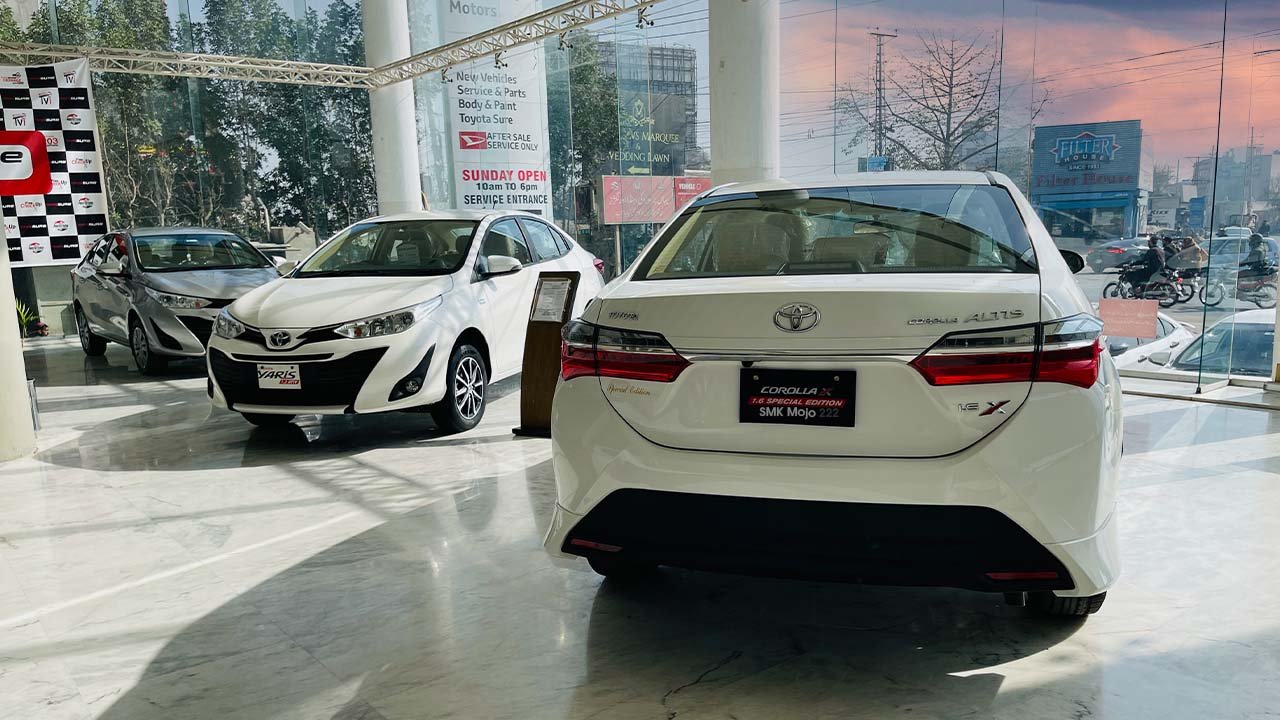
    Indus Motor Company (IMC), the manufacturer of Toyota vehicles in Pakistan, has declared a temporary shutdown of its production plant for a duration of six days.

    The decision stems from the company’s concern over low inventory levels and a shortage of essential components, as disclosed in a formal notice submitted to the Pakistan Stock Exchange (PSX).

    The notice specified, “Based on the current low level of inventory of manufactured vehicles and the shortage of parts and components for vehicle manufacturing, due to supply chain challenges, the company has decided to close its production plant from March 6th, 2024, to March 11th, 2024 (both days inclusive).”

    Pakistan’s automotive sector is grappling with various challenges, including the nation’s sluggish economic growth, surging inflation rates, and elevated borrowing costs, all of which are contributing to a decline in vehicle sales.

    To address these challenges, Indus Motor Company recently announced its board’s approval of an investment of approximately Rs3 billion.

    This investment aims to enhance the localization of production, a crucial step in the company’s broader strategy to consistently increase the localization of parts and components in locally manufactured vehicles. 

    This temporary shutdown underscores the broader challenges facing the automotive industry in Pakistan and reflects IMC’s proactive approach to managing its production in response to current market conditions.

  • Pak Suzuki CEO reveals plan to export upgraded cars meeting WP-29 standards 

    Pak Suzuki CEO reveals plan to export upgraded cars meeting WP-29 standards 

    Hiroshi Kawamura, the Chief Executive of Pak Suzuki Motor Company Ltd. (PSMCL), recently shared insights into the company’s endeavours to enhance the export capabilities of their cars, aligning them with numerous WP-29 standards. This significant development was reported by The News on Friday. 

    During the second round of interactive meetings with key decision-makers, conducted under the Suzuki Motors banner, Kawamura underscored the transient nature of economic challenges. He reaffirmed the company’s unwavering commitment to delivering cost-effective vehicles to the ordinary citizens of Pakistan. Furthermore, he disclosed that the company was actively engaged in the development of hybrid vehicle variants. 

    In attendance at the meeting were prominent part manufacturers, and they unanimously advocated for the promotion of localization within the automotive industry while simultaneously pursuing global market expansion. In a call for collaborative efforts, Kawamura emphasised the vital need for collective action in addressing the mounting crises faced by the automotive sector, stating, “It is imperative to take stock of the escalating crisis collectively for the automotive industry. Nothing can be achieved without local partners.” 

    During the meeting, Usman Aslam Malik, Senior Vice Chairman of the Pakistan Association of Automotive Parts and Accessories Manufacturers (PAAPAM), expressed unwavering support for original equipment manufacturers (OEMs) in their endeavours to export auto components. 

    It is important to note that WP-29 standards represent a distinctive global regulatory forum operating under the auspices of the UNECE Inland Transport Committee. Three UN Agreements, adopted in 1958, 1997, and 1998, provide the legal foundation enabling contracting parties (member countries) participating in WP-29 sessions to establish regulatory frameworks governing motor vehicles and their equipment.

    These encompass UN Regulations, appended to the 1958 Agreement; United Nations Global Technical Regulations (UN GTRs), linked to the 1998 Agreement; and UN Rules, annexed to the 1997 Agreement.