Tag: lockdown

  • Schools to reopen in districts with less than 5% covid positivity ratio: NCOC

    The National Command and Operations Centre on Wednesday allowed the reopening of schools in districts with less than five per cent coronavirus positivity ratio.

    The meeting reviewed the ongoing situation of coronavirus in the country.

    Key decisions

    From May 24, outdoor restaurants will be opened daily till 11:59 pm, and takeaway will be allowed 24/7.

    The tourism sector will be allowed to operate under strict coronavirus protocols.

    Outdoor marriage ceremonies with a limit of 150 individuals will be permitted.

    Opening of educational institutions from June 7 (other than those opened from May 24).

    Meanwhile cinemas, indoor dining, indoor gyms, amusement parks, shrines, all kinds of festivals, cultural and other events shall remain banned till further notice.

    June 1 onwards, several sectors will be allowed to open after a review meeting on May 27.

    In addition to this, the NCOC decided all SSC and HSSC exams will be held after June 20, while conducting professional and non-professional exams would take place on a case-to-case basis on recommendations from the Ministry of Education.

    The forum decided that wearing masks would remain compulsory.

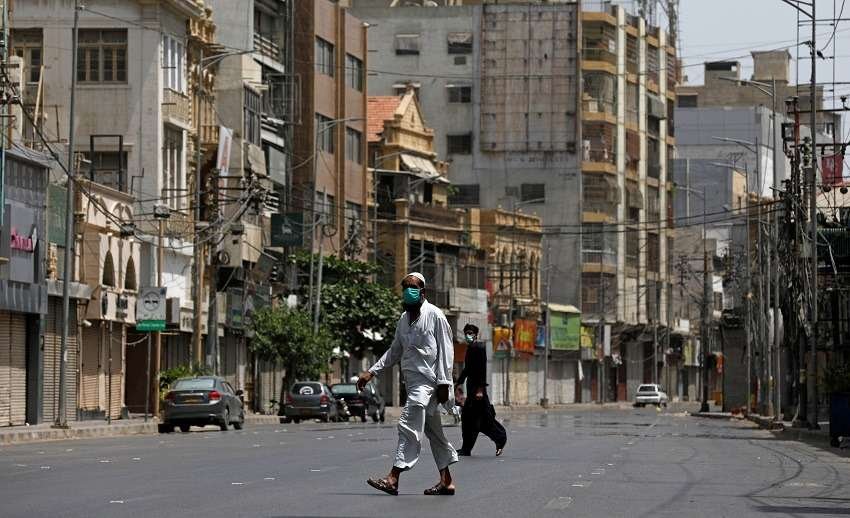
    The NCOC had earlier imposed a lockdown in the country during the Eid holidays in order to stop the spread of the virus amid the deadly third wave.

  • Eid in lockdown: Do’s and Don’ts

    Eid this year will be different again due to rising cases of coronavirus and lockdown rules. However, this doesn’t mean that Eid will be boring. Here’s a list of do’s and don’ts you should follow this Eid to remain safe and healthy and make the most of your holiday.

    What you should NOT do this Eid

    Don’t go outside

    Stay indoors as much as possible don’t go outside and socialise. Meeting with friends or family or going into large gatherings can put you and your loved one’s health and life at risk. Find some activities to do indoors!

    Do not hug

    As Firdous Apa put it, “No Jhapiyaan and Papiyaans” this Eid. While we all are missing human touch and hugging our loved ones, what’s the point of doing so when it puts everyone at risk?

    Don’t overeat

    After fasting for almost a month, many people ending up overindulging and overeating on Eid. Experts suggest that we should give our bodies some time to adjust to the change and should take small meals.

    What to DO this Eid

    Spend time with your family

    If there is one thing the COVID-19 pandemic has taught us is the importance of family. Though we do miss going out, the lockdown is also a blessing in disguise as it allows you to spend time with your family. Spend quality time with the family by playing boardgames, cooking Eid dinner together or having a movie night.

    Save your Eidi

    If you are among the lucky ones who get Eidi, instead of spending all your Eidi on something insignificant save it for the future.

    Dress Up

    Staying indoors should not stop you from dressing up. Dress up in your favourite outfit, put on some makeup and take some fun pictures of yourself with your siblings and family. Check out this guide to taking Instagrammable pictures here.

    Video call your loved ones

    While we cannot meet our loved ones in person this Eid, we surely can talk to them over phone or over video call. Set up a Zoom meeting with your family across the world and engage with them. We promise that it will leave you with a fuzzy feeling.

    Last but not the least, do whatever makes you feel good but stay safe, Eid Mubarak!

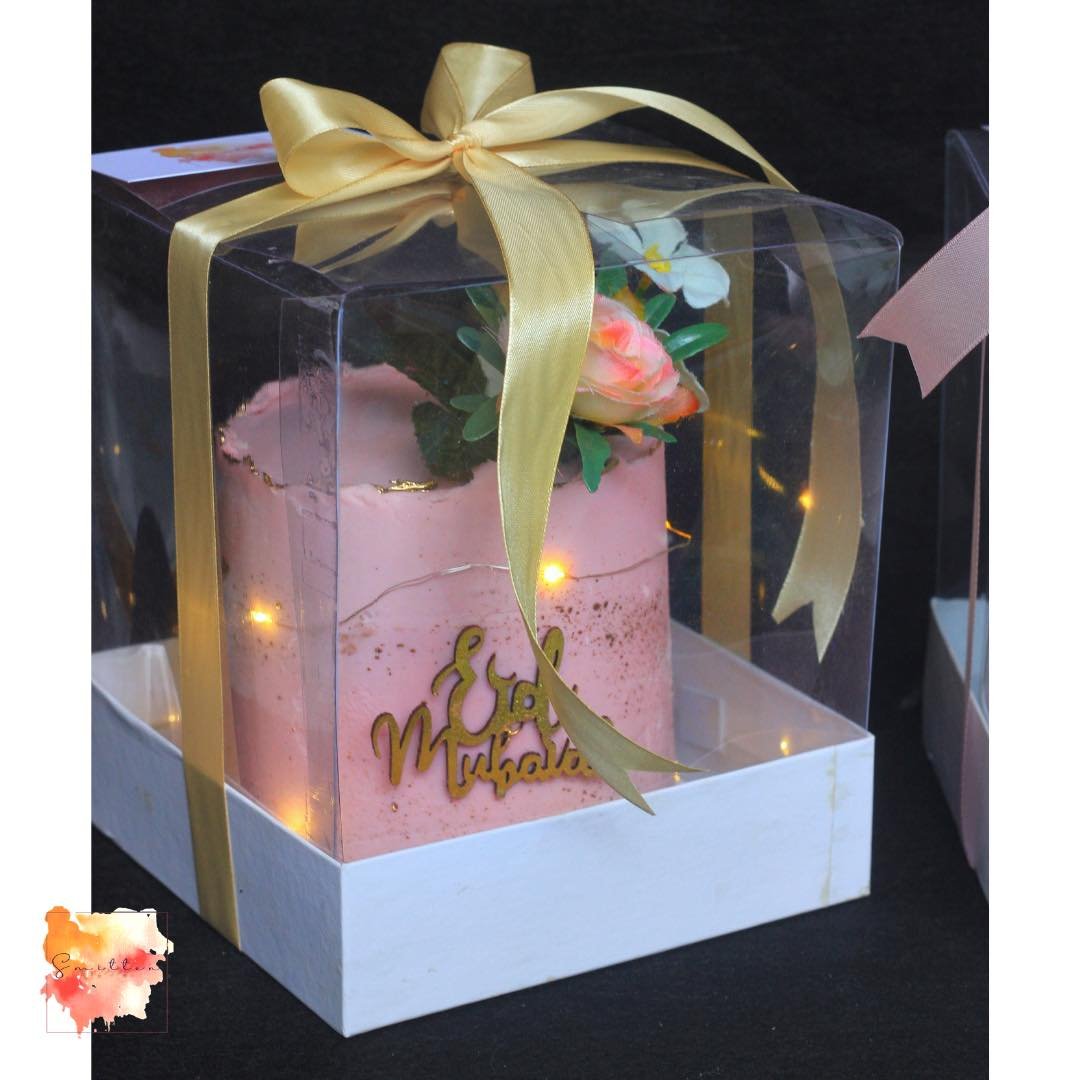
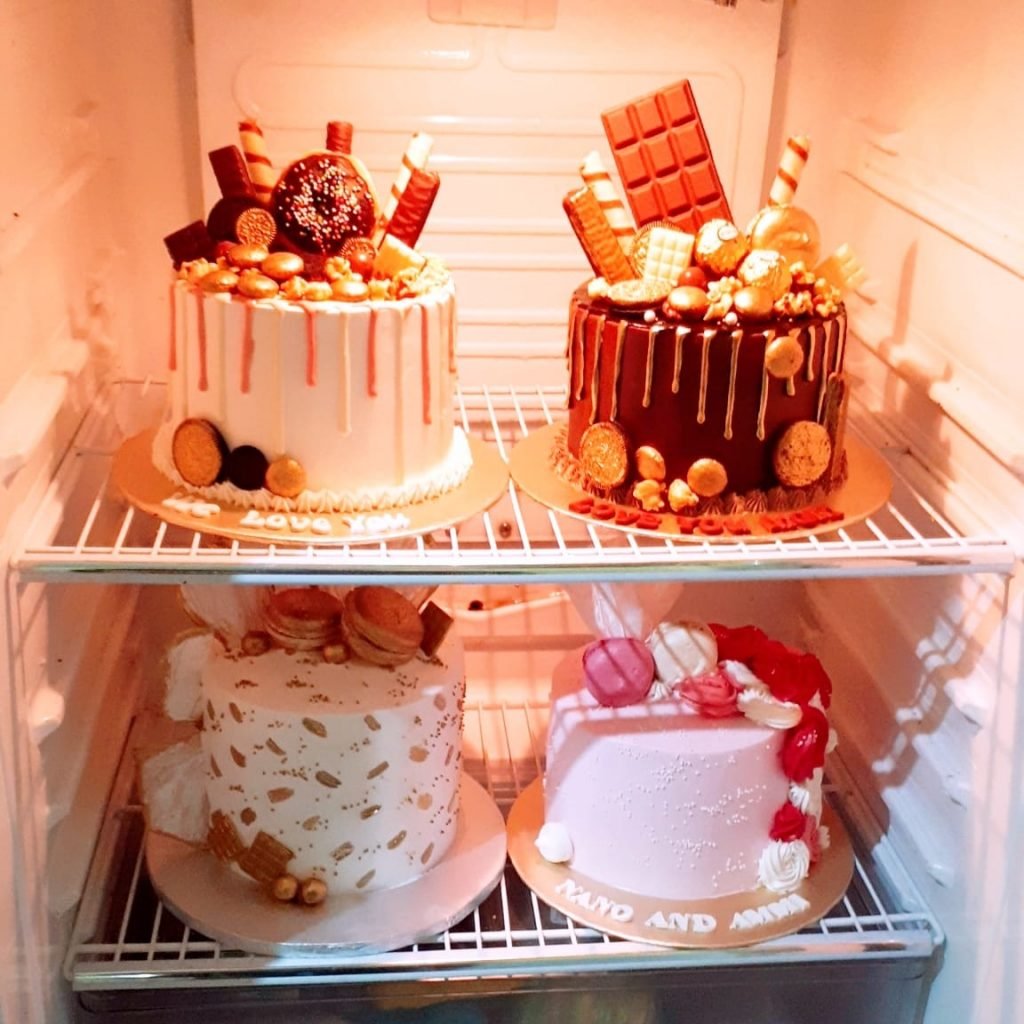
  • Need an Eid cake? Here’s where you can order from

    Need an Eid cake? Here’s where you can order from

    While Eid ul-Fitr celebrations this year will be different due to the ongoing pandemic and restrictions, one thing that remains constant is starting the day with something sweet. Though everyone must follow SOPs and avoid going out unnecessarily that doesn’t mean we give up on our sweet tooth.

    Most home-based businesses are now fully booked for Eid but here are a few places where you can order an Eid cake online and have them delivered to your doorstep.

    Lahore

    Sweet Bites of Lahore and Bakers

    Facebook Page: https://www.facebook.com/Shazoo.creations/

    The CAKES BY Sabeen

    Facebook Page: https://www.facebook.com/thecakesbysabeen/

    The Batter Half Kitchenette

    Moments Bakery

    Nibbles

    Islamabad

    Crooked Cakess by Sara

    Sweet Hut

    Karachi

    Cook It Perfect

    Whisked Away

    Smitten

    Facebook Page: https://www.facebook.com/SmittenbyB/

  • Two-week lockdown in 20 cities by May 3?

    Two-week lockdown in 20 cities by May 3?

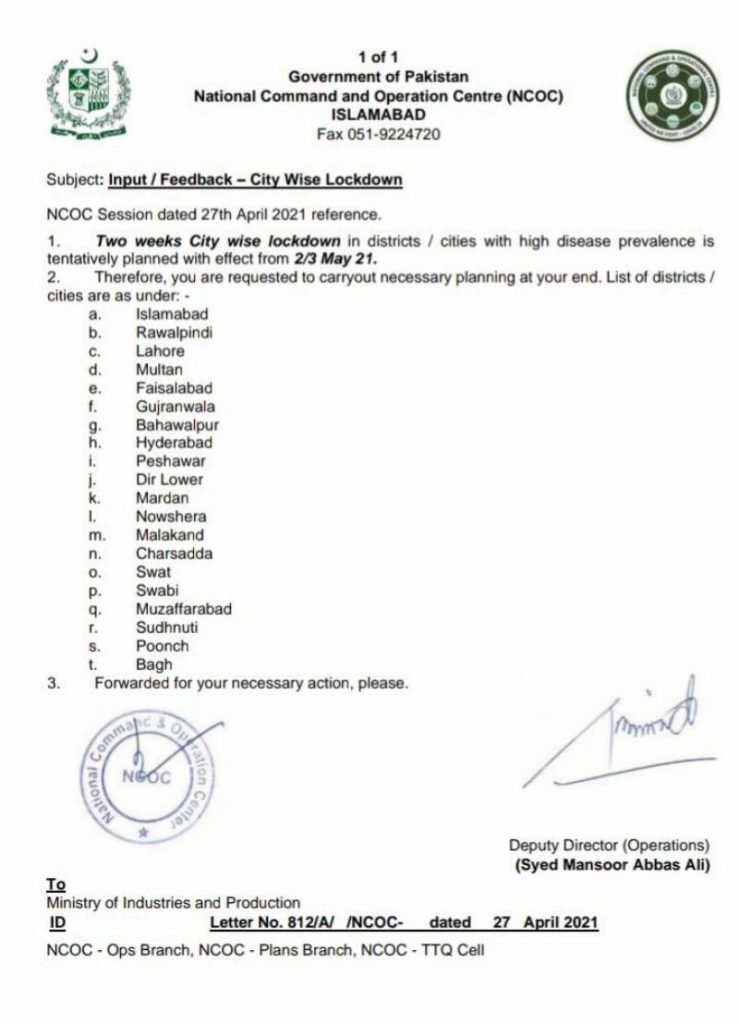
    The National Command and Operation Centre (NCOC) has sought input of provincial governments for a two-week lockdown in 20 cities.

    Pakistan’s top monitoring body wrote letters to the provincial authorities where the coronavirus situation is extremely bad and the restrictions imposed by the authorities have failed to stem the spread.

    Within the past 24 hours, Pakistan has recorded its highest tally of both single day deaths and infections, 201 and 5,292, respectively.

    The letter titled ‘Input / Feedback — City Wise Lockdown’ came after a meeting of the body on Apr 27.

    In the letter, the authorities directed that a two-week city-wise lockdown in affected districts was cautiously planned and provinces need to carry out necessary planning at the earliest.

    The most-affected cities where the lockdown could be imposed include Islamabad, Rawalpindi, Lahore, Multan, Faisalabad, Gujranwala, Bahawalpur, Hyderabad, Peshawar, Dir Lower, Mardan, Nowshera, Malakand, Charsadda, Swat, Swabi, Muzaffarabad, Sudhnuti, Poonch and Bagh.

    The letter also comes amid warnings from the government in case people continue to flout COVID-19 SOPs and the third wave situation continues to worsen.

  • Shaniera Akram’s emotional note for husband on being apart is relatable

    Shaniera Akram’s emotional note for husband on being apart is relatable

    Shaniera Akram’s emotional note for Wasim Akram on being away for 145 days is highly relatable if you are someone living away from your family, husband or loved ones.

    Sharing a picture of herself and Wasim, Shaniera said: “145 days we have been apart! The longest ever. Although my heart is breaking everyday I have strength and believe that this world will end its suffering soon as there are those who have lost way more than us. InshAllah we have the love that knows no boundaries.”

    “I pray that everyone stays safe, wears a mask and gets vaccinated as soon as possible so that life can continue as normal,” she said further. “I will do my best to be a good mother, citizen and keep my charity and work to help Pakistan as much as I can from here. My prayers to those during this Holy month of Ramadan who are suffering, struggling, in longing or sadly saying goodbye to loved ones.”

    “Missing you Wasim, more than you could imagine. You are our everything,” added Shaniera.

    Read more – Shaniera Akram heartbroken over plastic mess on the beach

    Shaniera, who is originally from Melbourne, Australia, went to her home city in January and due to the coronavirus pandemic, she could not return to Karachi where she lives with her husband and children.

  • COVID-19: Punjab to impose lockdown in districts with over 12% positivity rate

    COVID-19: Punjab to impose lockdown in districts with over 12% positivity rate

    The Punjab government has decided to impose lockdowns in districts with a COVID-19 positivity rate of more than 12 per cent from April 1 to control the spread of the virus.

    Talking to media, Punjab Chief Minister Usman Buzdar said  the lockdown will continue till April 11. He added that this will be reviewed by the cabinet committee on COVID-19 after seven days.


    The Punjab districts with a positivity rate higher than 12pc, as of March 28, include:

    Lahore – 17pc

    Faisalabad – 15pc

    Rawalpindi – 15pc

    Multan – 12pc

    Sargodha – 12pc

    Sialkot – 12pc

    Districts/cities with positivity higher than 8% are:

    Buzdar stated that the provincial government will not enforce any limitations on economic activities or industries. “The construction, transport, goods and industrial sectors will continue to operate as per regular according to standard operating procedures (SOPs),” he said.

    A complete ban will be imposed on wedding events and other gatherings in the province. “It was also decided to close down the mass transit transport system which includes the Orange Line Metro Train and the Speedo bus service.”

    There will be also a complete ban on indoor and outdoor dining at all restaurants and hotels, Buzdar said. “However, takeaway and home delivery will be allowed.”

    He said that the same restrictions will be applied  on sporting, cultural and social activities. “Parks will be closed. Commercial timings for bazaars and markets will be till 6pm, while shops will remain closed two days of the week.”

    Buzdar urged people to follow SOPs strictly. “You will protect yourself and your family members by wearing face masks,” he said.

    Pakistan is currently fighting against the third wave of COVID-19 with a total tally of 659,116.  The country reported 4,525 cases and 41 deaths on Monday.

  • COVID-19: Here’s what you can and cannot do amid lockdown in Punjab

    COVID-19: Here’s what you can and cannot do amid lockdown in Punjab

    Amid a drastic rise in COVID-19 cases in Punjab, the provincial government has decided to reimpose numerous restrictions in different districts of the province.

    Punjab Chief Minister Usman Buzdar tweeted an update on the new restrictions, saying that COVID-19 cases, especially the UK variant, were spreading across the province rapidly.

    “According to the advice of health experts, starting from Saturday night, we have decided to implement strict coronavirus SOPs in districts with over 5% positivity rate for the next 15 days,” he wrote.

    Later, the Punjab health department issued a notification listing restrictions across the province.

    “The positivity rate in some cities is constantly rising and third wave is looming, which poses a serious and imminent threat to public health,” read the notification, adding that the restrictions are being put in place under the Punjab Infectious Diseases (Prevention and Control) Act 2020.

    Meanwhile, here’s what you can and cannot do during the lockdown:

    • All commercial activities, establishments and markets will close by 6 pm on weekdays and completely closed on weekends.
    • This excludes medical services, general stores, bakeries, milk and meat shops, tire puncture shops, fruit and vegetable shops, tandoors, petrol pumps, oil depots, LPG outlets and filing plants, agriculture machinery workshops and spare parts shops, printing press, call centres (with 50% staff and no public dealing).
    • Complete ban on indoor and outdoor dining in Lahore, Rawalpindi, Sargodha, Faisalabad, Multan, Gujranwala and Gujrat and only takeaway/ home delivery will be allowed in these cities. Only takeaway and home delivery from restaurants will be allowed.
    • Wedding halls are to remain closed in Lahore, Rawalpindi. Sargodha, Faisalabad, Multan, Gujranwala and Gujrat from March 15. Only outdoor functions will be allowed with a maximum of 300 guests.
    • Parks will close at 6 pm.
    • Offices are to follow a 50% work from home policy.
    • Cinemas and shrines will stay closed.
    • Indoor gatherings have been banned. Outdoor gatherings are allowed with a maximum of 50 people in Lahore, Rawalpindi, Sargodha, Faisalabad, Multan, Gujranwala and Gujrat and 300 persons (outdoor) in the rest of the province for a maximum of two hours.
    • Sports and all cultural activities will still be banned.
    • Industrial activities and establishments are exempt from these restrictions
  • Punjab government to reimpose COVID restrictions to curb virus spread

    Amid a drastic increase in COVID-19 cases in Punjab, Chief Minister Usman Buzdar has announced that Covid-related restrictions will be reimposed in the province.

    “Coronavirus, especially the UK- variant is spreading alarmingly in some cities of Punjab,” stated the Punjab CM, adding that strict SOP’s will be implemented in regions where positivity rate is more than 5 percent, for the next 15 days, starting from Saturday night.

    According to the notification, indoor weddings and dining will be banned in those regions, whereas educational institutes, parks, shrines will be closed in areas with high positivity rate. In addition to that, markets will close at 6pm.

    CM Buzdar further added that a detailed notification in this regard will be issued by health department later.

    Buzdar added that he has advised the health department to speed up the process of vaccination for old age citizens.

    The notification was issued after CM Buzdar chaired the meeting of the cabinet committee for the eradication of corona and expressed concern over the increase in the number of patients in Lahore and other districts, reported APP.

  • Peshawar imposes smart lockdown in several areas

    Peshawar imposes smart lockdown in several areas

    The local administration in Peshawar on Saturday has imposed a smart lockdown in different areas of the city after a surge in COVID-19 cases.

    According to details, the lockdown has been imposed in:

    • YakaToot Bazar
    • Hayatabad Phase 4, streets 4,5 and 6
    • Hayatabad Phase 3, streets 1 and 2
    • Warsak Road
    • Khushal Town

    People in the aforesaid areas have been asked to avoid unnecessary movement.

    Meanwhile, Pakistan has reported 2,432 new infections during the last 24 hours.

    In the past 24 hours, 45 people lost their lives taking the death toll to 10,908.  2,793 patients have recovered from the virus in a day.

    The country has reported 516,770 cases so far.

  • ‘TikToker’ is now a real word

    ‘TikToker’ is now a real word

    Collins Dictionary has officially recognised TikToker as a real-world, describing it as “someone who shares content on the social media platform TikTok”. TikTok is an app that can be used for creating and sharing short videos. It was initially launched as Douyin in September 2016 in China. The following year, the app was launched by ByteDance for markets outside of China.

    TikTok is one of the most popular social media apps in Pakistan. According to some estimates, the app has been installed 43 million times in Pakistan, with 14.7 million of those coming in the year 2020 alone.

    Other words which have been taken from social media and introduced in the dictionary include ‘BLM’, ‘Mukbang’ and ‘Megixt.

    BLM, short for ‘Black Lives Matter’ was widely used on the internet during the recent black lives matter protests, while the term ‘Mukbang’ originating in South Korea refers to people who broadcast videos of themselves eating large quantities of food.

    ‘Megixt’, which refers to the withdrawal of the Duke and Duchess of Sussex from royal duties, has also been given the status of a real word.

    Meanwhile, Collins has announced ‘lockdown’ as its Word of The Year in 2020 following a dramatic increase in its usage during the spread of COVID-19.

    Lexicographers (a person who compiles dictionaries) said they picked the word because it had become synonymous with the experience of populations across the world as governments look to curb the coronavirus pandemic.

    Because of the way the pandemic has affected the daily use of language, six of Collins’ 10 words of the year in 2020 are related to the global health crisis.

    ‘Coronavirus’, ‘social distancing’, ‘self-isolate’ and ‘furlough’ as well as ‘lockdown’ and ‘key worker’ were included in the longer list of 10 words of the year.

    Helen Newstead, a language consultant at Collins, said: “Lockdown has affected the way we work, study, shop, and socialise. With many countries entering a second lockdown, it is not a word of the year to celebrate but it is, perhaps, one that sums up the year for most of the world.”

    Collins defines ‘lockdown’ as “the imposition of stringent restrictions on travel, social interaction, and access to public spaces”.