Tag: losses

  • IMF to help Pakistan after World Bank and UNDP assess flood damages

    IMF to help Pakistan after World Bank and UNDP assess flood damages

    The International Monetary Fund stated that it is awaiting the assessment reports from the World Bank and UNDP as well as the economic destruction brought on by the country’s severe flooding before determining how it might assist Pakistan.

    According to Geo, the international lender announced that as part of the preparations for the upcoming review, it will also dispatch a delegation the following month after the annual meetings.

    But the IMF made it clear that it would hold off until the UNDP and World Bank completed their assessments of the damages.

    At a news conference in Washington on Thursday, Jihad Azour, the IMF’s Director of the Middle East and Central Asia Department, stated that “We were saddened by the loss of human as well as livelihood in Pakistan with the flood, and we present, and we reiterate our condolences to the people of Pakistan. The Fund has been very supportive of Pakistan over the last few years. We have a programme with Pakistan that has been extended and increased in size.

    According to Azour, the Fund took these actions to provide Pakistan more flexibility during the Covid-19 crisis in order to help the government deal with the confluence of shocks.

    When talking about subsidies, the director remarked “Targeted subsidies that promote certain products have not been found to be highly beneficial. It has shown to be extremely regressive, “added he.

    Azour said that the Fund urges Pakistan and other nations to stop giving out ineffective subsidies that waste money. He further emphasised that the IMF supports nations in allocating these resources to those who are in most need.
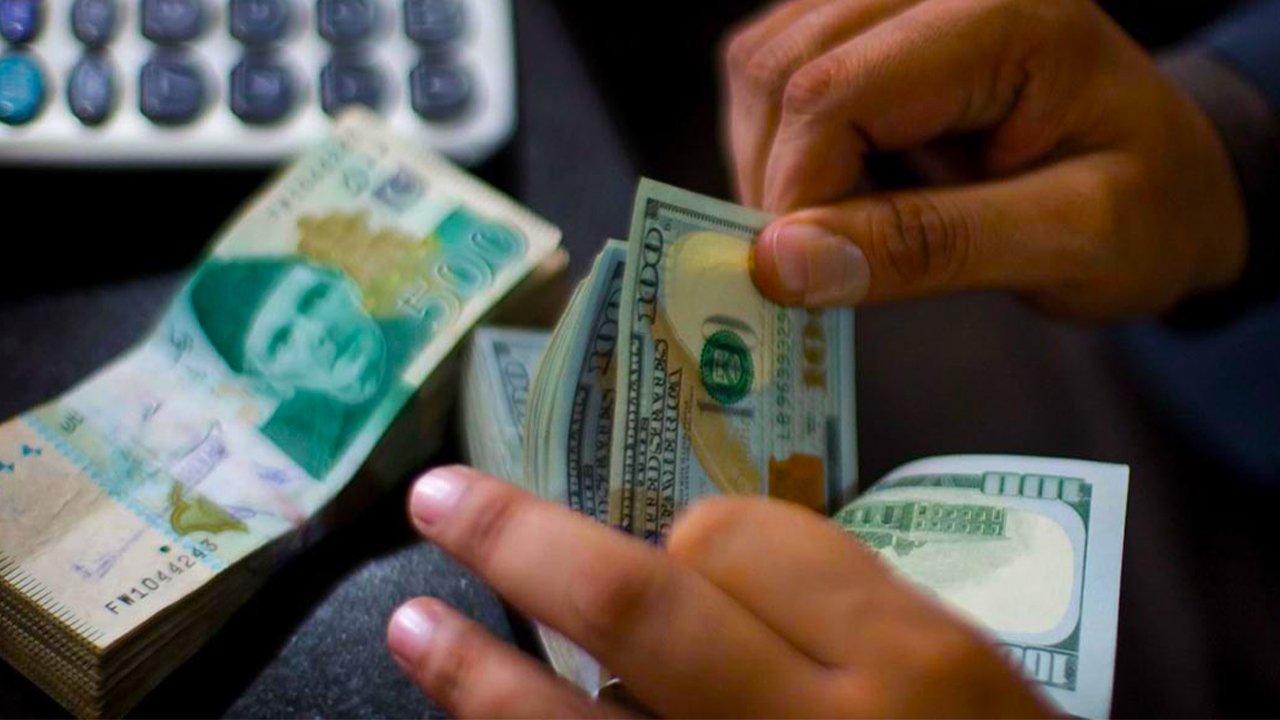
  • Pakistani rupee finally snaps 13-day winning streak versus US dollar

    Pakistani rupee finally snaps 13-day winning streak versus US dollar

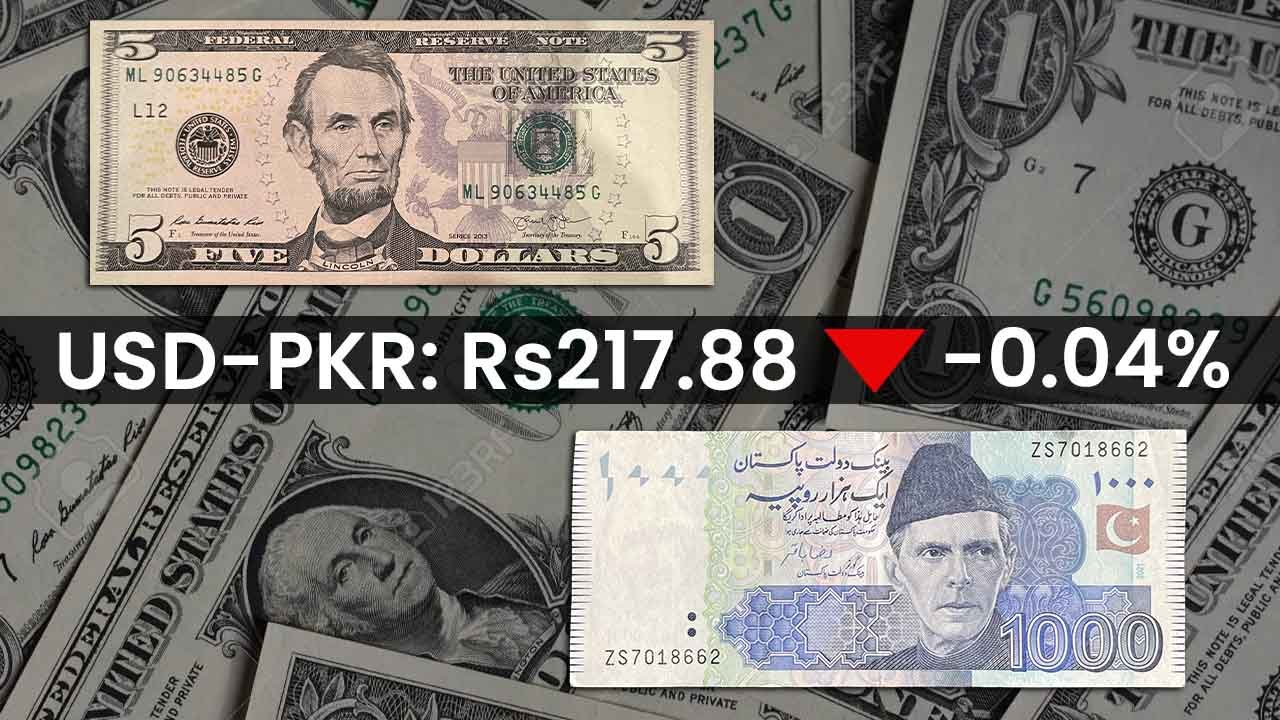
    The Pakistani rupee (PKR) on Wednesday finally stopped rising against the US dollar after 13 sessions as it dropped by 0.04 per cent in the inter-bank market.

    It dropped nine paisas in today’s interbank market to settle at Rs217.88, depreciating by 0.04 per cent against the USD. During today’s open market session, the local currency was quoted at a day low of Rs217.65 against the US dollar.

    The recent increase in the value of the rupee is linked to a change in sentiment and the central bank’s operations against participants in currency speculation.

    On Wednesday, as traders prepared for US inflation data and its implications for future Federal Reserve rate hikes, the dollar reached new 24-year highs internationally.

    After the International Monetary Fund (IMF) predicted that Pakistan’s inflation rate will be 19.9 per cent in 2023 as opposed to 12.1 per cent in 2022, the rupee halted its 13-day winning run.

    The lender predicted Pakistan’s GDP growth rate would be 3.5 per cent in 2023 compared to 6 per cent in 2022, however this does not take the current floods into account.

    Wednesday also saw a global decline in oil prices for the third day in a straight as investors feared the impact of increasing COVID-19 regulations in China and mounting global economic threats on fuel demand.

  • PKR continues losing ground against dollar amid fears of widening trade deficit

    PKR continues losing ground against dollar amid fears of widening trade deficit

    In the interbank market during the first hours of trading on Monday, the Pakistani rupee was trading between Rs229 and Rs230 versus the US dollar.

    When intra-day trading began at 11:00 AM, the rupee was quoted at Rs229.88, depreciating by 0.31 per cent against the US dollar.

    The rupee had a terrible prior week, falling against the US dollar in the inter-bank market to close at Rs228.18 after losing value in each of the five sessions for a total loss of almost 4 per cent.

    In the interbank market during the first hours of trading on Monday, the Pakistani rupee was trading between Rs229 and Rs230 versus the US dollar.

    When intra-day trading began at 11:00 AM, the rupee was quoted at Rs229.88, depreciating by Re0.70 or 0.31 per cent against the US dollar.

    The rupee had a terrible prior week, falling against the US dollar in the inter-bank market to close at Rs228.18 after losing value in each of the five sessions for a total loss of almost 4 per cent.

    The dollar index, which compares the value of the dollar to six important rival currencies, held steady at Rs108.82, retreating from a two-decade high achieved on Wednesday. In the previous session, it fell to Rs108.35, its lowest level since August 30.

    Investors remain cautious ahead of Tuesday’s release of the US CPI data, despite the fact that Fed officials continued to use hawkish language on Friday, the last day before a period of silence prior to the Federal Open Market Committee’s meetings.

    A significant factor in currency parity, oil prices fell on Monday as the outlook for global fuel demand was overshadowed by COVID-19 limitations in China and the possibility of future interest rate increases in the US and Europe.

  • Pakistan continues to face liquidity crunch despite IMF programme’s revival

    Pakistan continues to face liquidity crunch despite IMF programme’s revival

    Even though the International Monetary Fund (IMF) programme has resumed after a seven-month hiatus, Pakistan continues to struggle with a major dollar liquidity crunch as the catastrophic floods have exacerbated the macroeconomic conditions.

    According to Geo, since many politicians and economists advocated for Pakistan to ask the IMF for a Rapid Financing Instrument (RFI) or Natural Calamity Response-related Funding Facility, the Pakistani government has not yet submitted a new request in anticipation of the Washington-based international lender’s unenthusiastic response.

    After being put on hold in February 2022 by the previous PTI-led government’s provision of unfunded fuel and energy subsidies, the IMF project under $6.5 billion was restarted in late August.

    Since then, there has been pressure on Pakistan’s currency; nevertheless, the recent devastating floods have hurt the economy, contrary to what experts had anticipated would happen with the restart of the IMF programme.

    The rupee has dropped 9 per cent against the US dollar in recent days due to intense pressure on the currency rate.

    According to reports, the issue has gotten worse as demand for imports has multiplied and there are not enough dollars in the country. Pakistan’s macroeconomic risks are not going away without greater dollar inflows.

    The early estimates of damages have now increased to almost $18 billion as a result of the severe flooding, with Pakistan’s agriculture industry taking the biggest hit.

    The worst agricultural performance will put pressure on rising import demand for commodities, and if Pakistan cannot attract the appropriate levels of dollar inflows, food shortages may occur in the ongoing financial year.

    In contrast to the projected aim of 3.9 per cent for the current fiscal year 2022–2023, the agriculture growth could remain zero or perhaps turn negative.

  • Pakistani rupee extends losses, nearing Rs219 against dollar

    Pakistani rupee extends losses, nearing Rs219 against dollar

    After closing at Rs218.38 on Wednesday, the Pakistani rupee (PKR) dropped further versus the US dollar on Thursday morning during the intraday trade.

    As of 11:00am, the rupee depreciated by Rs0.61 or 0.27 per cent against the US dollar to Rs218.99 during intraday trading.

    It is worth noting that the local unit has been witnessing a downward trend since the beginning of this week. PKR fell on Wednesday for the third straight session showing a decline of 0.33 per cent.

    The fall occurs amid news that Pakistan’s cash-strapped economy may receive support from an investment of $3 billion by the Qatar Investment Authority, one of the biggest sovereign funds in the world.

    Oil prices, a crucial factor in determining currency parity, increased on Thursday as supply fears mounted in the wake of delays to Russian exports, the potential for major producers to reduce output, and the partial suspension of a US refinery.

    US West Texas Intermediate crude increased 42 cents, or 0.4 per cent, to $95.31 a barrel, while Brent crude increased 59 cents, or 0.6 per cent, to $101.81 per barrel.

    On Wednesday, the PKR declined by Rs7 for both buying and selling against the USD on the open market, finishing at Rs227 and Rs229, respectively.

  • Pakistani Rupee crashes to a record low against US dollar 

    After a fourth consecutive session of losses on May 10, Pakistan’s currency hit an all-time low in the interbank market due to a lack of clarity on foreign cash inflow and a stronger US dollar.

    The rupee ended the day at Rs188.66, down Rs1.13, or 0.60 per cent, according to the State Bank of Pakistan (SBP). After a 0.48 per cent decline on Monday, the rupee finished at Rs187.53. Prior to Tuesday, the PKR’s lowest closing was Rs188.18 on April 7, 2022.

    Oil prices, a key indicator of currency parity, dipped in tumultuous trade on Tuesday as the market weighed the impact of expected European Union penalties on Russian oil against demand concerns stemming from China’s coronavirus lockdowns, a strong dollar, and rising recession threats.

    Read more: Pakistani rupee nearing an all-time low

    Despite the decline, the price of oil remains far above $100 per barrel, a high level for oil-importing nations like Pakistan, which is already grappling with a growing current account deficit and dwindling foreign exchange reserves.

  • PKR continues losing streak against US dollar, sheds Rs1.48

    PKR continues losing streak against US dollar, sheds Rs1.48

    The Pakistani currency plummeted further against the US Dollar (USD) on April 20, with losses reported on the interbank exchange. At the completion of today’s session, the Pakistani rupee (PKR) lost Rs1.48 versus the US dollar.

    It declined by 0.80 per cent versus the greenback, closing at Rs185.92, after shedding Rs1.90 in the interbank market on Tuesday, April 19th, and concluding at Rs184.44. During today’s open market session, the Indian rupee (INR) fell to an intraday low of Rs185.95 over the US dollar.

    The local currency weakened against the dollar as businesses remained under pressure amid the ongoing dialogue between Pakistan and the International Monetary Fund (IMF). The Pakistani government is likely to undertake certain difficult and problematic steps in order to revive the local economy.

    Read more: PKR declines against US Dollar after winning for a week

    Oil prices rallied following steep losses the previous day as concerns about tighter supply from Russia and Libya arose, although industry data showed a decline in US crude inventories in the previous week.

  • PIA likely to face losses over Rs100 billion amid bans, coronavirus

    PIA likely to face losses over Rs100 billion amid bans, coronavirus

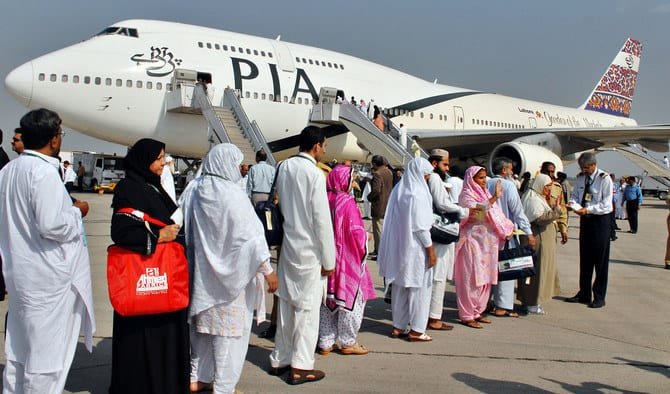
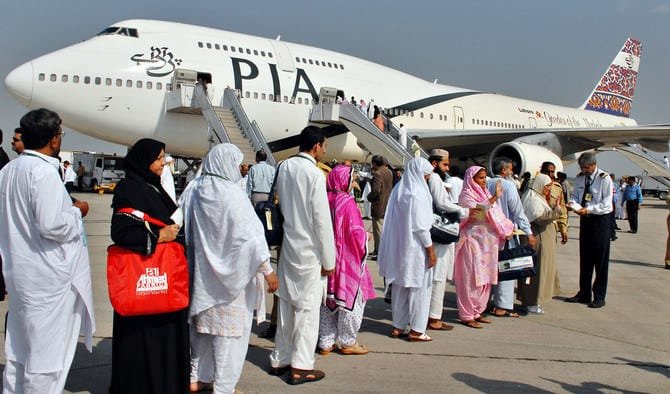
    The Pakistan International Airlines (PIA) is expected to incur losses over Rs100 billion due to suspension of international flights amid the fake licences controversy and the coronavirus pandemic.

    As per details, the national carrier is expected to incur losses up to Rs100 billion due to ban on flight operations by the United Kingdom (UK), European Union (EU) and the United States (US). The target of revenue for the current year was set at Rs196 billion.

    Moreover, PIA would also suffer losses of up to Rs12 billion in terms of Hajj operations this year after the Saudi authorities decided to hold the annual pilgrimage on a limited scale, while the airline is also facing losses up to Rs9 billion due to closure of Umrah operations.

    It is pertinent to mention here that that on July 10, PIA Chief Executive Officer (CEO) Air Marshal Arshad Malik had apprised Prime Minister (PM) Imran Khan regarding the status of ongoing dialogues with European Union Aviation Safety Agency (EASA) for the resumption of flight operation. He had also given a briefing to the premier regarding the restructuring process of the national carrier.

    Malik had reportedly presented a comprehensive plan to PM Imran for turning PIA into a profitable national entity and the premier had directed the PIA CEO to expedite the reform process of the national flag carrier.

    He had also summoned the framework for reform agenda within seven days.

  • Coronavirus: PIA suffers Rs2 billion loss

    Coronavirus: PIA suffers Rs2 billion loss

    The Pakistan International Airlines (PIA) has suffered a loss of Rs2 billion following the suspension of flights to Saudi Arabia in the aftermath of the coronavirus-triggered temporary ban on Umrah.

    PIA officials told reporters on Tuesday that the airlines’ schedule had been seriously disturbed as tickets of 50,000 passengers had been cancelled so far. They further said that 34 flights to Medina and 13 to Mecca were scheduled weekly for business visa and iqama holders despite fewer passengers.

    Meanwhile, after Iran and Qatar, PIA has decided to temporarily suspend flight operations to Italy to keep a check on coronavirus.

    PIA spokesperson Abdullah Hafeez said in a press release that the national carrier had temporarily suspended its flight operation to and from Milan till March 31. However, he said the passengers having the nationality of any European country could travel to Paris by PIA flights.

    He said on reaching Paris, the passengers would have to manage their onward journey on their own.  The passengers, who had reserved their seats for Pakistan from Milan, would have to travel to Paris on their own to catch a PIA flight.

  • Coronavirus: Airlines may lose up to $113 billion

    Airlines could lose up to $113 billion in revenues this year due to the coronavirus, equivalent to the damage experienced by the industry during the financial crisis, AFP quoted a trade body as warning.

    The dire prediction came as Flybe — a British airline — collapsed into bankruptcy with the virus, which has killed over 3,200 people worldwide, dealing a fatal blow to the ailing regional carrier.

    With the disease now rapidly spreading outside China, demand for air travel is nose-diving globally, spelling serious trouble for many already struggling carriers. In a new assessment of the impact, the International Air Transport Association (IATA) estimated revenue losses to airlines’ passenger business of between $63 billion and $113 billion in 2020.

    The higher figure is for a scenario where the virus spreads more widely, and would be equivalent to the hit to the industry during the 2007-2008 global financial crisis, the group warned.

    The “industry’s prospects in much of the world have taken a dramatic turn for the worse”, said IATA head Alexandre de Juniac, and appealed to governments for support. “Airlines are doing their best to stay afloat,” he said. “As governments look to stimulus measures, the airline industry will need consideration for relief on taxes, charges and slot allocation. These are extraordinary times.”

    Flybe had narrowly avoided going bust in January when the United Kingdom (UK) government agreed to review air passenger duty paid by its customers — and shareholders pledged extra investment.

    But it finally collapsed after the government reportedly refused a rescue loan for £100 million ($128 million).

    In further bad news Thursday, Norwegian Air scrapped its 2020 earnings guidance after earlier predicting a return to profit following several years of losses.

    Other recent high-profile aviation industry casualties in Europe include French carriers Aigle Azur and XL Airways, as well as Slovenia’s Adria Airways.

    Meanwhile, travel analytics company ForwardKeys said the number of new flight bookings to Europe fell by 79 percent in the final week of February due to the outbreak.

    IATA’s assessment was far bleaker than just two weeks ago, when it forecast revenue losses would come in at $29.3 billion. But since then the virus has spread rapidly outside China, and has now reached some 80 countries and territories, infecting more than 95,000 people. The vast majority of global deaths and infections are in China, which quarantined entire cities, temporarily shut factories and closed schools indefinitely after the virus emerged.

    IATA predicted that worldwide passenger revenues would fall between 11 and 19 percent this year. The impact on Asia-Pacific carriers will be bigger than during the Severe Acute Respiratory Syndrome (SARS) outbreak in 2002-2003, as the Chinese travel market is far bigger now, said IATA chief economist Brian Pearce.

    Like the new virus, SARS emerged in China before spreading to numerous countries, killing hundreds. A plunge in oil prices caused by the virus could cut airlines’ fuel costs by up to $28 billion this year, which would provide some relief but would not have a significant impact, the body added.