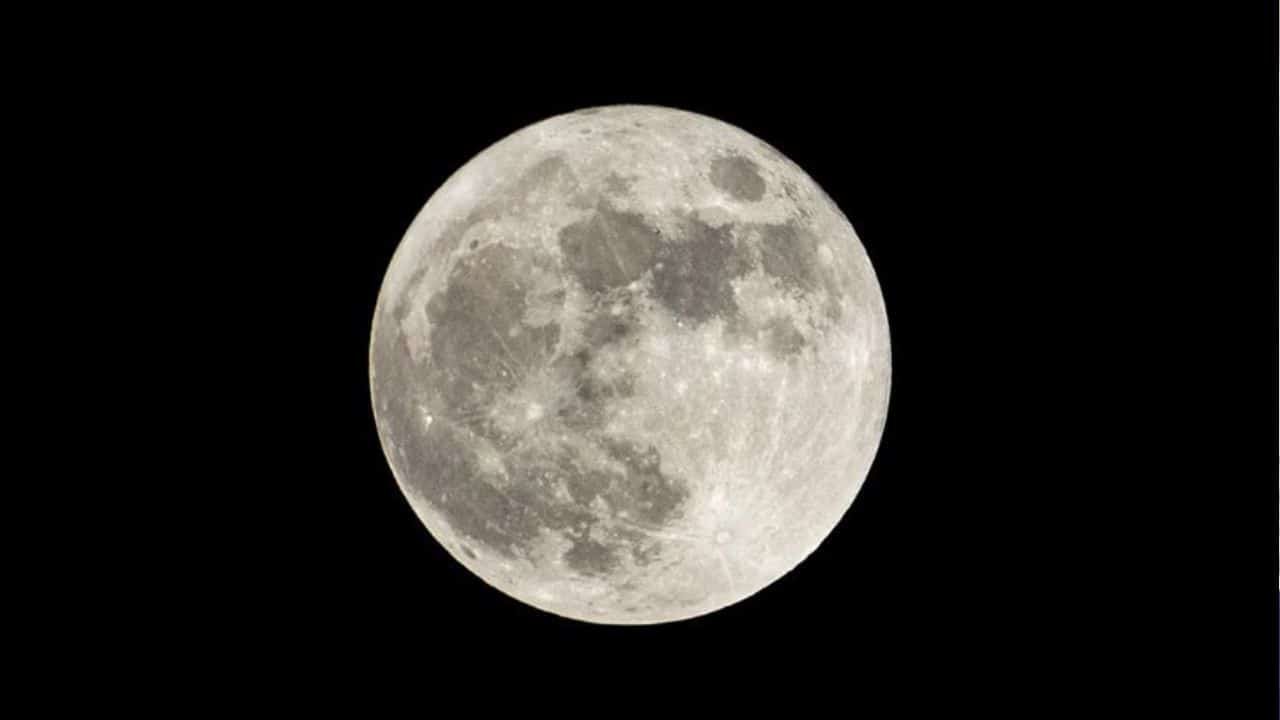
A celestial extravaganza is set to bedazzle sky watchers this month with not one, but two spectacular supermoons, beginning with the Sturgeon Moon tonight, August 1st, and culminating in a rare super Blue Moon at the month’s end.
Visible in various parts of the world, including the United States and Saudi Arabia, tonight’s supermoon, coined the Sturgeon Moon, will rise less than 226,000 miles away from Earth, as per USAToday.
This supermoon will make the lunar orb appear 14% larger and 30% brighter than an ordinary full moon, according to Pakistani space scientist Dr. Jawed Iqbal. The Sturgeon Moon, named after the large fish found in the Great Lakes, will reach its zenith at 2:32pm ETD Tuesday, as reported by the Old Farmer’s Almanac.
In Makkah, Majed Abu Zahra, the president of the Astronomical Society in Jeddah, forecasts the supermoon to peak at 9:30pm local time. Sky gazers can look towards the southeast after sunset to capture this magnificent sight.
Supermoons, scientifically known as perigean full moons, occur when a full moon coincides with its perigee, the closest point to Earth in its elliptical orbit. This makes the moon appear larger and brighter than a typical full moon. While supermoons typically occur three to four times annually, this month’s double spectacle is indeed a rare treat.
The second supermoon, a super Blue Moon, will illuminate the skies on August 30, promising to be the largest and brightest of 2023 due to its exceptionally close distance of 222,043 miles to Earth, nearly 17,000 miles closer than average. This super Blue Moon will peak close to sundown in the U.S., offering another chance for enthusiasts to marvel at the moon’s magnified radiance.
However, if missed, the next opportunity to witness a super Blue Moon will not arrive until August 2032, almost nine years from now. While Blue Moons – the second full moon in a calendar month – recur approximately every two and a half years, Blue Supermoons, like the one expected this month, occur far less frequently, the last one having occurred back in December 2009.
This extraordinary series of lunar events offers a golden opportunity for all sky-watchers to enjoy the night sky’s grandeur, serving as a vivid reminder of the fascinating phenomena that our celestial neighborhood continually offers.