Tag: luxury items

  • Another IMF condition met as Pakistan imposes 25% sales tax on luxury items

    On Tuesday, the federal cabinet led by Prime Minister Shehbaz Sharif approved the imposition of a 25 per cent sales tax on luxury items, fulfilling a condition set by the International Monetary Fund (IMF) for the revival of the $7 billion Extended Fund Facility (EFF) that had been stalled for months.

    The cabinet approved the 25 per cent general sales tax (GST) on luxury items through a circulation summary. The Federal Board of Revenue will issue a formal notification in the coming days, and the new rate will be applicable from March 1.

    The list of items subject to the 25 per cent GST includes aerated water and juices, imported cars, mobile phones, pet food, sanitary and bathroom wares, carpets (excluding Afghanistan), chandeliers and lighting devices or equipment, chocolates, cigarettes, confectionery items, corn flakes, cosmetics, shaving items, tissue papers, crockery, decorative devices, doors and window frames, fish, footwear, fruits and dry fruits, furniture, home appliances (CBU), luxury leather jackets and apparel, mattress and sleeping bags, frozen or processed meat, musical instruments, arms and ammunition, shampoos, sunglasses, tomato ketchup and sauces, and travel bags and suitcases.

    The federal government also imposed a 25 per cent GST rate on locally manufactured luxury vehicles of 1,400cc and above. The FBR has estimated that it will collect an additional Rs15 billion in taxes through the enhanced GST rate of 25 per cent in the four-month period.

    According to sources, Pakistan and IMF held virtual negotiations on Monday to revive the loan program that had been stalled for months. During the meeting, the lender expressed satisfaction with the country’s measures, while Pakistan insisted on early finalization of the staff-level agreement.

    The negotiations were moving positively as the Fund did not place any new demands during the virtual session. The State Bank of Pakistan (SBP) informed IMF representatives about the estimated collection of foreign exchange reserves of $10 billion until June, and sources claimed that Pakistan had achieved future targets before the staff-level agreement.

    It is worth mentioning that the government has expedited the implementation of IMF demands to unlock the loan tranche for the country’s economic recovery.

  • ‘How dare you’: Miftah Ismail gets furious at public event when asked about getting a BMW

    Former Finance Minister Miftah Ismail lost his cool and got furious at Karachi Literature Festival on Sunday when asked about allegedly obtaining a BMW when he was the minister a few months back.

    Responding to a question, the former minister responded by saying: “How can you say I had a BMW and accuse somebody like this? How dare you talk to me that I had a BMW?”

    Miftah noted that these “false” accusations led to people in jail.

    “I was in jail for five months without being guilty of anything so I don’t appreciate people telling me that I have done something wrong,” said the former finance czar.

    “My sister, wife and daughter cried when I was in jail so you should take it back,” Miftah told the person.

    Setting the record straight, the Pakistan Muslim League-Nawaz leader also said he used to drive his personal car and bear fuel expense when he served as the finance minister.

    Miftah Ismail held the post of finance minister when the incumbent coalition government took charge in April. However, he was replaced by Nawaz’s close aide Ishaq Dar in September last year. Since then, it’s been speculated that some factions within the party are not happy with Miftah.

  • From soap to air tickets: What’s getting costlier after mini-budget?

    From soap to air tickets: What’s getting costlier after mini-budget?

    The Federal Board of Revenue (FBR) has issued an SRO to increase the standard 17 per cent general sales tax (GST) to 18 per cent, which will collect taxes worth Rs115 billion. The remaining Rs55 billion will be generated through other measures mentioned in the Finance (Supplementary) Bill 2023.

    The top tax collection authority stated in the notification that the 18 per cent GST would be applicable to consumer packaged goods, which include various items used in everyday life.

    Following the increase in GST, the following items will experience a hike in their prices:

    • Biscuits
    • Jam
    • Jelly
    • Noodles
    • Edible oil
    • Coffee
    • Chocolates
    • Make-up
    • Shampoos
    • Creams
    • Lotion
    • Soap
    • Toothpaste
    • Hair colour
    • Hair removal cream
    • Hair gel
    • Shaving foam
    • Shaving gel
    • Shaving cream
    • Shaving blades
    • Computers
    • Laptops
    • Electronic gadgets
    • Smartphones
    • iPods
    • TVs
    • LEDs
    • LCDs
    • Juicers
    • Blenders
    • Other electronic machinery
    • Car shampoos
    • Car polishes
    • Perfumes
    • Children’s toys

    In addition to the aforementioned actions, the government intends to raise the Goods and Services Tax (GST) on luxury items from 17 per cent to 25 per cent. The Federal Excise Duty (FED) on first and business class air tickets will be increased to either Rs20,000 or 50 per cent, whichever amount is higher.

    Marriage halls will be subject to a ten percent withholding adjustable advance income tax, and the FED on soft drinks, sugary drinks, and cement will also be increased.

  • Donald Trump ka Toshakhana case: Investigators look for expensive gifts taken by Trump

    Donald Trump ka Toshakhana case: Investigators look for expensive gifts taken by Trump

    Many expensive gifts that were given to former president Donald Trump and his family by foreign leaders are being investigated by congressional investigators.

    According to those with knowledge of the situation, the National Archives, one of the institutions tasked with preserving presidential gifts, has been approached for assistance by the House Oversight Committee in locating the artifacts.

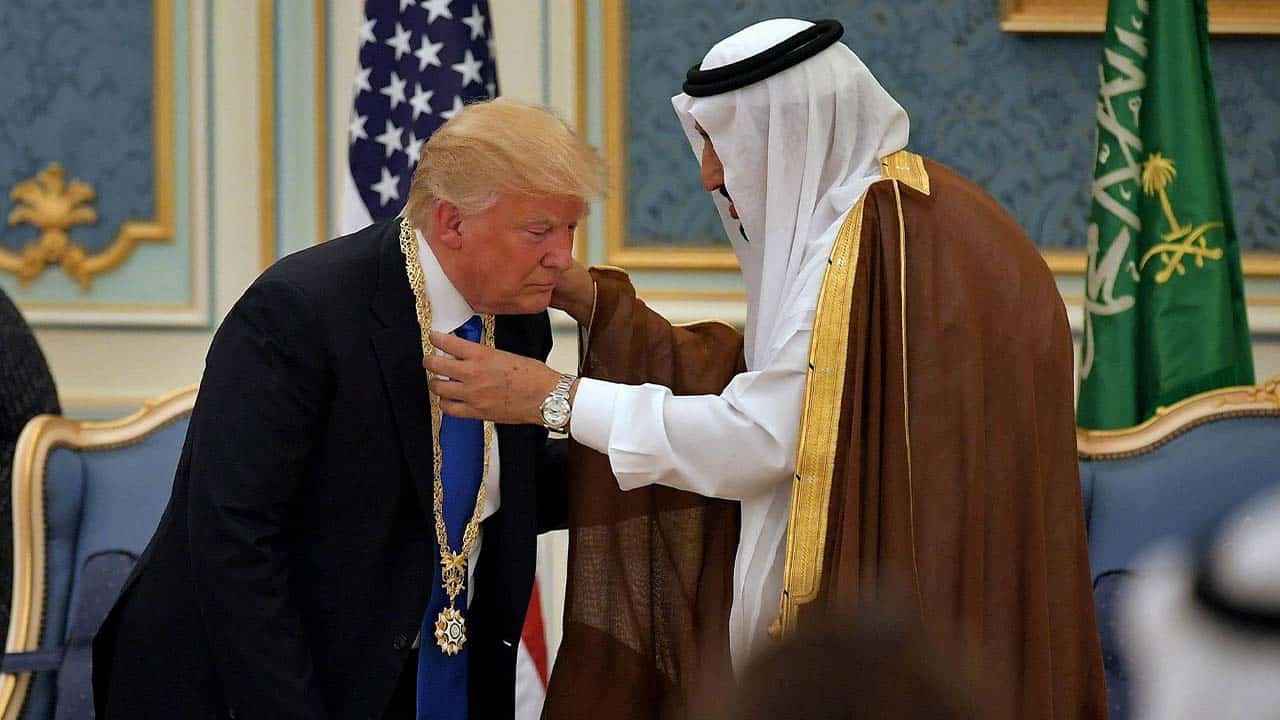
    An individual who spoke on condition of anonymity said that the gifts were unusual and included golf clubs from the Japanese Prime Minister Shinzo Abe, a soccer ball from the 2018 World Cup from Russian President Vladimir Putin, a gold-plated Horus collar from Egypt’s president, a huge painting of Trump from El Salvador’s president, and a $6,400 King Abdulaziz al Saud collar, a ceremonial honour from Saudi Arabia, according to The Washington Post.

    People familiar with the request believe that the dozens of gifts are worth at least $50,000 as a whole. According to sources familiar with the request, the committee has requested the archives to determine if the presents are among those that were legally obliged to be transferred from the White House to the archives at the end of Trump’s presidency. According to a Trump adviser, the committee is also interested in hearing from Trump’s team on its record-keeping practises.

    A representative for the Oversight Committee refused to comment other than to note that the inquiry is still underway, so it’s unclear why the committee asked for these particular things. Additionally, the Archives declined to comment, leaving it unknown as to how far along the search for these items is and whether or not any of the presents on the list were truly accounted for.

    Both the Trump administration’s gift-handling staff and a spokesman for the president did not reply to requests for comment.

    Following the discovery of troves of documents from Trump’s Mar-a-Lago residence, including extremely sensitive intelligence about China and Iran, agents launched an inquiry into whether he and his advisers improperly handled classified documents.

    The Foreign Gifts and Decorations Act, a 1966 law that forbids presidents and other government officials from personally keeping gifts from foreigners worth more than $415 unless they pay for them, was the subject of a separate investigation this summer by the Oversight committee at the request of its chairwoman, Rep. Carolyn B. Maloney.

    Anyone who wrongfully retains the presents is not subject to any specific criminal punishment under the law. But according to ethics experts, depending on the situation, criminal prosecution might be necessary.

    “If you have a very valuable item that you are obligated by law to turn over to the federal government and you fail to do that, I don’t know that would preclude a criminal action — we’ve just never seen it done,” said Virginia Canter, the chief ethics counsel at CREW, an ethics watchdog organization.

    Items that were presented to members of the Trump family but may not have been properly reported to the State Department are among the items the Oversight committee has requested from the Archives. Additional items that were reportedly in the Trumps’ executive residence in the White House, the West Wing, or other places near the end of the administration, such as Trump Tower or Mar-a-Lago, are items that were most likely given in 2020, according to a person familiar with the situation.

    The White House failed to provide the State Department with a list of gifts that officials received from foreign governments before leaving office, according to the New York Times, which broke the story that the State Department was unable to fully account for gifts that Trump and other White House officials received during their final year in office. According to testimony gathered by the committee, the office was in complete disorder.

    Maloney’s committee is currently attempting to account for particular gifts. Various dresses from Oman, a bust of Mahatma Gandhi, an Afghan rug, a crystal ball, and various jewellery items, including diamond and gold earrings, are also included in the extensive request sent to the Archives. It also includes a marble slab commemorating the opening of the U.S. Embassy in Jerusalem, an antique framed signed photo of Queen Elizabeth II, a marble photo of the monarch from the early 1900s, a bust of Gandhi, an Afghan rug, and a bust of Gandhi

    A 2012 congressional research study states that the White House Presents Unit typically keeps track of all domestic and international gifts received by the president and the first family, as well as the gift’s value. A representative may pay the full worth of a gift if they want to keep it.

    If not, the gift is taken to the Archives, where it is kept for presidential libraries. The park service of the Department of the Interior receives gifts intended for the White House, whereas the General Services Administration receives gifts that are not intended for the Archives or the president’s personal collection.

    A distinct list of all presents from a foreign government to a federal employee is published each year by the Office of Protocol in the State Department. Trump “failed to comply with the law requiring foreign gift reporting” during his final year in office, according to data provided by the State Department, Maloney said in a letter asking for a review of Trump’s gifts to acting archivist Debra Steidel Wall in June.

    “The Department of State noted that during the Trump Administration, the Office of the Chief of Protocol failed to request a listing of foreign gifts received in 2020 from the White House. The Department is no longer able to obtain the required records,” Maloney wrote to the Archives.

    Maloney asked for all records and information pertaining to gifts received by Trump or members of his family from the final year of the Trump administration, as well as all correspondence between the Archives and Trump, his family, and White House staff regarding foreign gifts. This information included the location and value of the gifts, the identity of the donor, and any gift reporting.

    The Trump administration’s record-keeping procedures have a pattern that includes the failure to account for presents.

    The FBI seized a number of things during their August raid on Trump’s Mar-a-Lago Club and house that were labelled as “gifts.” It’s unclear whether the seized items were lawfully transferred to Mar-a-Lago after being provided to Trump by foreign countries when he was president.

    The Washington Post has previously reported that White House officials expressed worries about the presents that Trump had received as president that were still in the White House rather than being properly turned over to the National Archives in the final days of his administration.

    The Post has previously reported that Trump departed the White House with a variety of objects, including a scale model of the proposed makeover of Air Force One and a miniature replica of one of the black border wall slats with an engraved inscription on top. Trump’s correspondence with Kim Jong Un, who is the leader of North Korea, was found in 15 boxes of materials that the National Archives retrieved from Mar-a-Lago in January. Trump had earlier called these letters “love letters.”

    “This president was very much into holding onto things,” said a former Trump White House staffer who was involved with record management and spoke on the condition of anonymity to discuss private conversations. “Mementos and gifts are a big thing with him. Throughout his whole life he has created mementos.”

    According to John Kelly, a former chief of staff at the White House, when Trump was in office, he always sought to keep gifts from foreign heads of state.

    Kelly said that while he had given his staff instructions on how to record gifts from foreign leaders when offered the chance to purchase the items, Trump vehemently refused to do so. Kelly said that “Trump was adamant that they were his gifts, and he said that he couldn’t understand why he couldn’t keep them.”
  • Govt imposes 100% penalty surcharge to release banned imported items

    Govt imposes 100% penalty surcharge to release banned imported items

    The federal government has approved the release of imported goods with a penalty surcharge of 100 per cent of assessed value that arrived at the ports after June 30.

    The federal government has reportedly permitted the release of all imported products and imposed fines of up to 100 per cent on goods that had arrived at ports by the end of July notwithstanding limitations.

    Finance Minister Miftah Ismail made the announcement during a news conference, noting that the restrictions were put in place in response to the International Monetary Fund’s (IMF) requirements.

    Vehicles, mobile phones, home appliances, and other property may now be released with a 100 per cent penalty surcharge.

    Other imported items were permitted with payment of a premium of up to 35 per cent, according to the announcement. Items received after June 30 and up to July 31 will be released with a penalty surcharge of 25 per cent.

    Three months after the limitation was put in place, the federal government earlier on August 18 relaxed the ban on the importation of luxury and non-essential goods.

  • Govt lifts import ban on luxury goods with heavy duties

    Govt lifts import ban on luxury goods with heavy duties

    On the recommendation of the International Monetary Fund (IMF), the Federal Minister for Finance and Revenue, Miftah Ismail, announced lifting of the ban on the import of luxury and non-essential goods on Thursday. He added, however, that the Regulatory Duties (RDs) would be increased significantly to deter the import of such items.

    “It is requirement of the international community that there should be no ban so we are lifting ban on all products. But simultaneously the duties I am going to impose would not let these commodities to enter into Pakistan as finished goods,” according to Finance Minister.

    According to the minister, RDs would be increased three times, or to the highest degree conceivable, and may potentially increase by up to 400 to 600 per cent or more.

    Keeping in view his duty to offer basic and vital goods to the nation’s citizens, he said that the prime minister was against the importation of luxury goods, according to APP.

    To comply with the IMF, international agreements, and World Trade Organization, he claimed the restriction had been lifted. Although import taxes would be applied on expensive food, clothing, and other items, anyone still wishing to import is free to do so.

    He said that the available resources will be used to give the people of the country grain, wheat, cotton, and edible oil rather than iPhones or fancy cars. He claimed that Pakistan did not have a lot of money to spend on the import of opulent things.

    The finance minister stated in response to a question that the levies on completely built-up (CBU) automobiles, appliances, imported meat and salmon, as well as other luxuries, would increase. He explained that the government’s goal was to limit imports while adhering to the requirements of the International Monetary Fund (IMF) and other international accords, not to promote the import of such goods.

    On the other hand, since the Completely Knocked Down (CKD) kits are not considered luxury items, their import will resume without any caveats. However, its positive impact on the sales figures will be seen after a few months.

    According to the finance minister, Pakistan and the fund have been in lengthy negotiations. The IMF board is due to convene on August 29 and will decide whether to accept Pakistan’s programme because it has already complied with all requirements and performed all necessary preliminary steps.

    He said that friendly nations like Saudi Arabia, Qatar, and the United Arab Emirates helped arrange the $4 billion cash for strengthening the nation’s foreign exchange reserves. China also agreed to roll over $2 billion in loans, and Saudi Arabia agreed to roll over its own assets. According to him, the finance need has been satisfied.

    According to the minister, the requirement for the electricity tariff has also been met, thus there won’t be any non-funding subsidies.

    In addition, he said that the government was expected to get Rs42 billion from retail tax, but when the decision was reversed, the objective was cut to Rs27 billion, and the Rs15 billion shortfall will be filled by increasing the tax on tobacco and cigarettes.

    Moreover, taxes on tobacco and cigarettes will bring in Rs36 billion. Tier-2 cigarettes’ tax will rise from Rs1,850 to Rs2,050 per 1,000 cigarettes, while Tier-1 cigarettes’ tax would rise from Rs5,900 to Rs6,500 per 1,000 cigarettes. The green leaf Cess has also been raised from Rs10 per kg to Rs380.

    According to Bloomberg’s report, the Pakistani Rupee was the best performing currency in the world during August, and the Pakistan Stock Exchange continued to be the top performing stock market in the world, therefore the minister believed that the country’s economy was strengthening.

    The minister stated that the government was implementing a policy of self-reliance in order to stay within its means, reduce the fiscal deficit, and raise imports to a level equal to exports plus remittance in order to control the current account deficit.

  • ECC lifts import ban on goods except CBU vehicles, mobiles and appliances

    ECC lifts import ban on goods except CBU vehicles, mobiles and appliances

    The Cabinet’s Economic Coordination Committee (ECC) has decided to lift the import ban on all items other than completely built units (CBUs) of automobile, mobile, and home appliances and to permit the import of 200,000 metric tonnes of wheat.

    The increase in petroleum dealers’ margin from Rs4.90 per litre and Rs4.13 per litre, respectively, to Rs7 per litre was also approved at the meeting chaired by Finance Minister Miftah Ismail.

    The Pakistan Petroleum Dealers Association (PPDA), according to sources, has asked the government for an immediate revision of their margins due to inflation, increases in staff salaries and utility costs, etc.

    They have asked that the margins be revised to Rs6.90 per litre including 15 per cent profit (effectively Rs7.94 per litre). The PPDA then used the media to announce a nationwide strike that would begin on July 18, 2022, with the demand that their margins be increased to 6 per cent of the current selling price (effectively, Rs13.81 per litre for MS and Rs4.16 per litre for HSD).

    On the orders of the prime minister, Musadik Malik, the minister of state for petroleum, and Shahid Khaqan Abbasi, the former minister for petroleum, immediately began communication with the PPDA. On July 16 and 17, 2022, several rounds of negotiations took place in Karachi.

    During negotiations, the Secretary of Petroleum and the Chairman of OGRA both remained present. The PPDA changed its position during negotiations and requested that the margins be raised to Rs9.23 and Rs9.46/litre on MS and HSD, respectively, with immediate effect.

    The negotiating team acknowledged that a dealer with daily sales of less than 200,000 litres cannot operate the business profitably on current margins, and that such losses serve as a motivator for dishonest behaviour.

    After lengthy negotiations, the PPDA finally agreed to margins of Rs7 per litre for both MS and HSD. Based on this agreement and the promise that the revised margins will take effect in August 2022, the PPDA cancelled its call for a strike on July 18, 2022.

    The commitment made to the dealers in November 2021 is still less than this agreed-upon margin (4.4 per cent of sales price).

    The 4th international wheat tender for 2022, which was announced and opened on July 25, has prompted the Ministry of National Food Security and Research to ask for urgent advice. The Trading Corporation of Pakistan (TCP) issued its fourth tender on May 19, 2022, in order to secure 200,000 metric tonnes of imported wheat on a CFR basis, it was announced at the meeting.

    The ECC has approved the direct payment of $11.6 million as compensation/goodwill to the company M/s China Gezhouba Group International Engineering Co. Ltd (CGGC) through the Ministry of Foreign Affairs in response to a proposal from the Ministry of Water Resources for a compensation package for the Chinese casualties at the Dasu Hydro Power project.

    The ECC determined that the compensation/goodwill package’s amount, which is US$ 11.6 million, will remain the same as per the ECC’s earlier decision from January 21, 2022.

    it also approved the proposal to switch both the Fatima Fertilizer (Sheikhupura Plant) and Agritech plants to domestic gas on a summary moved by the Ministry of Industries and Production.

    According to the ministry, RLNG is provided to both SNGPL-based plants on a cost-sharing basis, and the gas rate for running these plants is calculated using a variable contribution margin (VCM).

    Both plants have asked the Ministry to revise the VCM and cap the GST at the price paid by the plants due to rising fuel prices and other factors. The proposal to switch both plants to domestic gas was approved by the ECC following discussion in accordance with the Federal Cabinet’s and ECC’s earlier decision.

    The Ministry of Petroleum, Ministry of Finance, Ministry of Food Security, and Ministry of Industries & Production were further instructed by the ECC to determine the gas price/VCM for the fertilisers The ECC also decided that sales tax could be applied to the actual gas cost that the company is paying.

    The Ministry of Commerce also provided a summary stating that the Cabinet approved the ban on the import of approximately 33 classes/categories of goods in order to reduce the current account deficit (CAD), which was on the rise.

    The decision caused an overall decrease in imports of the prohibited goods of over 69 per cent, or from $399.4 million to $123.9 million. Due to serious concerns expressed by significant trading partners regarding the imposition of the ban and taking into account the fact that the ban has had an impact on supply chains and the domestic retail industry, a review meeting was also held to review the ban after two months.

    The government’s ongoing efforts have resulted in a significant decrease in imports, so the ECC decided to lift the ban on imported goods other than auto, mobile, and home appliance CBUs.

    Additionally, all held-up shipments (aside from those that still fall under the banned category) that arrived at the ports after July 1, 2022, may be cleared with the payment of a 25 per cent surcharge.

  • Government will soon lift the import ban on certain items

    Government will soon lift the import ban on certain items

    The government will lift the import ban on some items in the upcoming weeks, according to Finance Minister Miftah Ismail, but restrictions for cellphones, cars, and home appliances will remain in place.

    He stated that the Commerce Ministry has sent a summary to the federal cabinet for removing restrictions on the import of non-essential and luxury items while speaking at a seminar about the performance of state-owned enterprises (SOEs) here in the federal capital.

    According to the finance minister, the decision was made in light of a lower import bill as a result of restrictions placed on the import of new machinery and raw materials, as well as lower oil prices on the global market. “In the upcoming months, we anticipate a decrease in petroleum product imports. Lower imports will enable Pakistan to conserve its foreign currency, he continued.

    He continued by saying he was hopeful for higher dollar inflows compared to outflows starting in the upcoming month, which would ease pressure on the local currency.

    “Imports in Pakistan as of July 25 were $3.758 billion and our total imports are likely to be $4.824 billion. This number will be less than our exports plus remittance”, he had written on Twitter a day earlier.

    The ban on 30 categories and 83 Customs headings was reportedly requested to be lifted by the finance minister on Tuesday to Prime Minister Shehbaz Sharif.

    He did, however, suggest that the Commerce Ministry keep the ban on completely built units (CBUs), cars, and home appliances in place.

    Speaking with Profit, sources said that between May 19 and July 19, 2021, Pakistan imported CBU automobiles, mobile phones, and home appliances worth Rs399 million. However, after the ban was imposed on May 19, 2022, the trend of importing these items decreased.

    Pakistan imported goods worth Rs123 million between May 19 and July 19, 2022, a difference of Rs276 million compared to the corresponding months of the previous fiscal year.

    It is important to note that the government has outright banned the import of cars, mobile phones, home appliances, dry fruits (aside from those from Afghanistan), crockery, shoes, chandeliers, lights (except energy savers), headphones, and loudspeakers.

    Some items on the list included condiments, doors and window frames, travel bags and suitcases, sanitary ware, fish and frozen fish, preserved fruits, tissue paper, furniture, shampoos, confectionery, luxury mattresses, and sleeping bags, jams and jellies, cornflakes, toiletries, heaters, blowers, sunglasses, kitchenware, aerated water, frozen meat, juices, pasta, ice cream, cigarettes, shaving supplies, luxury leather apparel, and musical instruments.

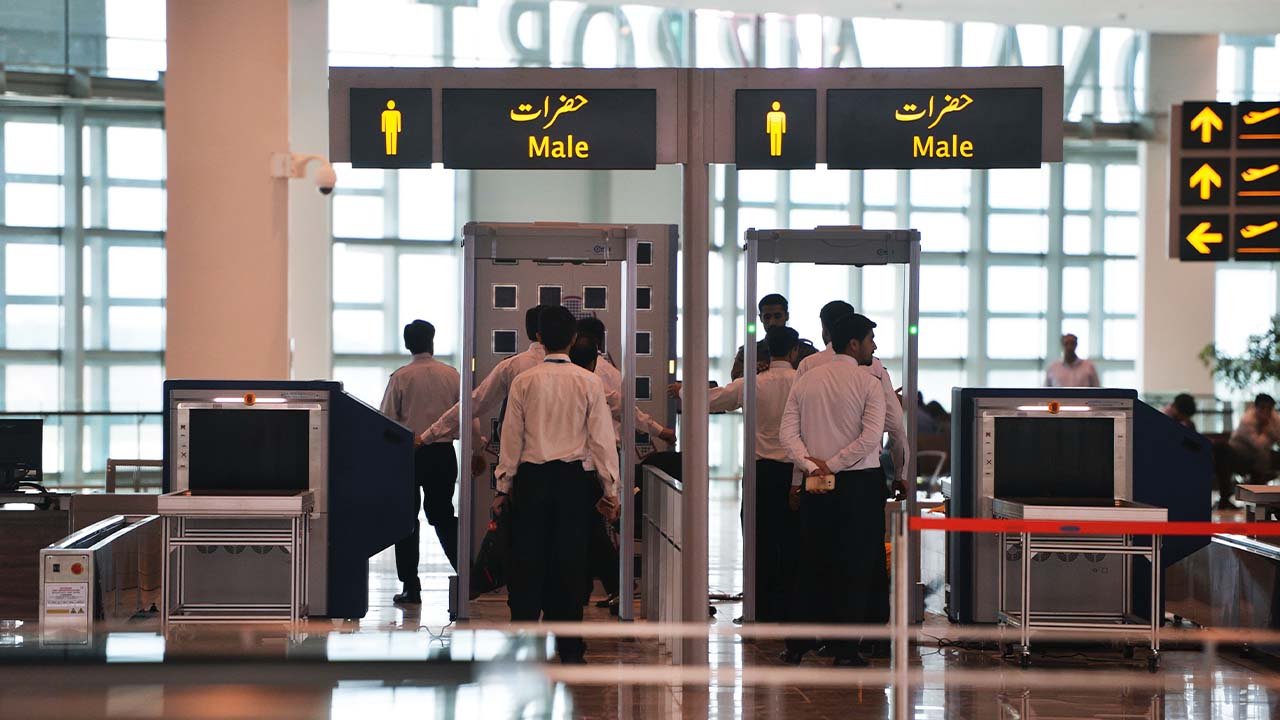
  • Pakistan Customs intensifies inspection at all international airports

    Pakistan Customs intensifies inspection at all international airports

    Pakistan Customs has intensified goods inspection at all international airports to prohibit the smuggling of recently banned commodities. The federal government prohibited the items in SRO No. 598(I)/2022, issued May 19, 2022, by revising the Import Policy Order, 2022.

    This 24-hour monitoring at international terminals to prevent smuggling has already resulted in multiple confiscation of these items disguised as legitimate passenger baggage.

    Banned commodities like foodstuff, fruits, sanitary wares, used mobile phones, and branded shoes were found in commercial quantities during scanning and inspection at Jinnah International Airport in Karachi on May 23, 2022.

    The aforementioned items were detained/seized in accordance with Sector 168 of the Customs Act of 1969 for violating SRO No. 598(I)/2022 (Import Policy Order, 2022) and Sections 16 and 139 of the Customs Act of 1969.

    While applauding Pakistan Customs’ efforts, the Chairman of the Federal Board of Revenue (FBR) reaffirmed the FBR’s unwavering determination to strengthen policing strategies at all airports, seaports, and land border stations to ensure the avoidance of trafficking of goods, including newly banned items.

    Finance Minister Miftah Ismail and FBR Chairman, on the other hand, have issued instructions not to bother genuine passengers bringing in goods in non-commercial/small quantities for personal use, and to assist such passengers at airports to the greatest extent permitted by law.

    People in Pakistan were outraged by the Customs move, particularly those who had been thoroughly scanned and shared their side of the story on social media.