Tag: m2

  • SBP report reveals Rs140 billion decline in Pakistan’s broad money supply

    SBP report reveals Rs140 billion decline in Pakistan’s broad money supply

    As of July 26, 2024, Pakistan’s broad money supply, known as M2, has decreased by Rs140.43 billion week-on-week, bringing the total to Rs35.15 trillion, according to provisional data from the State Bank of Pakistan (SBP).

    This represents a notable reduction from Rs36.56 trillion recorded at the end of the previous fiscal year in June 2024, marking a decline of Rs1.41 trillion.

    A closer look at M2 components reveals a decrease in currency circulation. As of the latest report, currency in circulation has fallen by Rs158.06 billion week-on-week to Rs9.07 trillion. Compared to the end of June 2024, this reflects a reduction of Rs83.01 billion from Rs9.15 trillion.

    The proportion of currency in circulation relative to M2 stands at 25.81 per cent, down from 26.15 per cent the previous week and slightly higher than 25.04 per cent in June 2024.

    Total deposits held with banks have reached Rs25.93 trillion, showing a week-on-week increase of Rs18.1 billion. However, this figure marks a decrease of Rs1.31 trillion since the start of the fiscal year. It is important to note that these deposits exclude inter-bank deposits, government deposits, and foreign constituents.

    Currency in circulation includes all banknotes and coins held by the public and financial institutions. In Pakistan, M2 is the primary measure of broad money, calculated on the liability side as the sum of currency in circulation, total non-government sector deposits (including residents’ foreign currency deposits), and other deposits with the SBP.

    On the asset side, M2 comprises net domestic assets and net foreign assets of the banking system, including both the SBP and scheduled banks.

  • National Highway Authority increases toll tax

    The National Highway Authority (NHA) has issued a notification on increase in toll tax.

    According to the notification, toll tax for cars has been increased from Rs 30 to Rs 40, for wagons from Rs 50 to Rs 70, and for buses from Rs 100 to Rs 130.

    The toll tax for articulated trucks has been increased from Rs 250 to Rs 350, an increase of Rs 100.

    The toll tax on the Lahore to Abdul Hakeem Motorway (M3) has been increased to Rs 500 for cars, Rs 750 for wagons, and Rs 2,500 for trucks.

    On the Faisalabad to Multan Motorway (M4), the toll tax for cars has been increased to Rs 650, for wagons to Rs 1,000, and for trucks to Rs 3,200.

    The toll tax on the M5 motorway has been fixed at Rs 900 for cars, Rs 1,300 for wagons, and Rs 4,500 for trucks.

  • Dhund nay kar dia safar mushkil

    Dhund nay kar dia safar mushkil

    A thick blanket of heavy fog has descended on different parts of Pakistan, severely impacting visibility and causing widespread transportation disruptions.

    Adverse weather conditions have compelled authorities to take precautionary measures, resulting in the closure of main highways and affecting air travel.

    The impact of the fog extends beyond Lahore, spreading as far as Mandi Bahauddin, Pindi Bhatian, Kot Addu, and Uch Sharif.

    Residents and commuters in these regions are urged to exercise caution and adhere to any instructions issued by local authorities.

    Sialkot and its surrounding regions, including Pasrur, Daska, and Sambrial, are grappling with reduced visibility levels, significantly disrupting traffic flow. Commuters are advised to stay informed about the latest weather updates and road closures to ensure their safety.

    The fog has not only affected ground transportation but has also disrupted air travel. Multiple flights have been canceled, and others delayed, impacting cities in Sindh and Punjab.

    The closures of major motorways, including the M2, M3, M4, M5, and M11, further compound transportation challenges.

    In addition to the transportation disruptions, the air quality in Lahore has deteriorated, earning the city the unfortunate distinction of being the most polluted in the world.

    Meanwhile, dense fog in various cities of Sindh and Punjab has led to operational challenges for flights. The Pakistan International Airliner (PIA) spokesperson emphasizes the importance of obtaining flight information from the PIA Call Centre before heading to the airport, considering the potential disruptions caused by the fog.

    Over the past week, a total of 32 flights destined for Faisalabad, Multan, Lahore, and other Punjab airports had to be redirected to Islamabad International Airport due to the prevailing fog conditions.

    “Severe fog ongoing in the country has affected PIA flights from Lahore, Multan and Sialkot airport,” the airline’s spokesperson, Abdullah Khan, said in a statement, adding the PIA apologized for any inconvenience caused due to these operational challenges.

    “Low visibility and intensity of fog pose difficulties in flight operations,” he added. “Flights from Lahore, Multan, and Sialkot may be canceled, changed or delayed due to fog.”

    Khan noted that flight operations were usually affected in these cities in winter.

    “All passengers are urged to obtain information about their flights from the PIA call center before heading to the airport,” he added.

    Unusual Winter Conditions Across Northwest India:

    Meanwhile, across Northwest India, including Punjab and Uttar Pradesh, a thick blanket of fog has descended, impacting visibility levels. Despite the fog, winter temperatures are milder than usual for this time of the year.

    The India Meteorological Department (IMD) reports that night temperatures in north-western states remain higher than normal, with at least 2-3°C above-normal readings in several regions. Delhi recorded a minimum temperature of 7.8°C, one degree above normal, with daytime temperatures reaching 22°C.

    Meteorologists attribute the warmer winter to the absence of strong western disturbances, traditionally responsible for winter rainfall over North India. Additionally, global warming is increasingly influencing weather patterns throughout the year, delaying the onset of winter and reducing the intensity of cold waves.

  • Planning to travel on the motorway? You’ll be paying more for it now

    Planning to travel on the motorway? You’ll be paying more for it now

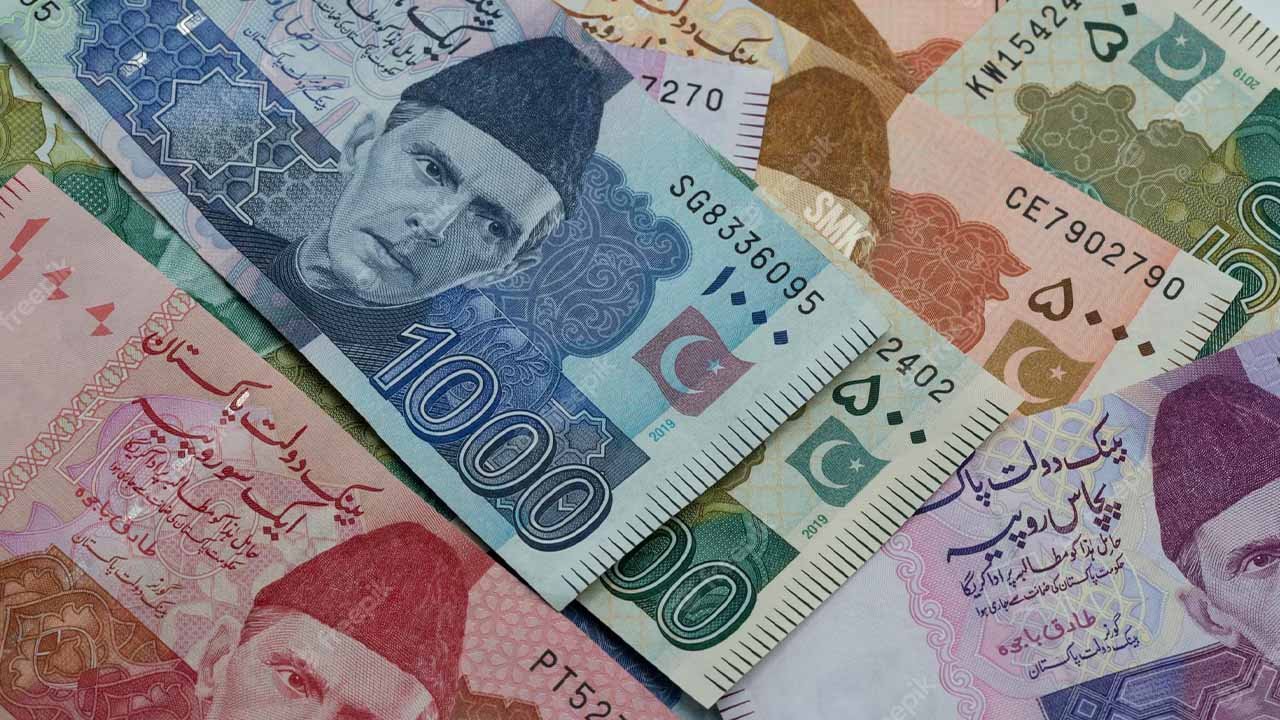
    The toll tariff for the Lahore-Islamabad Motorway (M2) underwent a 10 per cent increase, with the new rates becoming effective starting from Saturday, August 26th, 2023.

    The decision to revise the toll rates comes as the National Highways Authority (NHA) releases an official notification, citing the execution of a concession agreement with M/s Motorway Operations and Rehabilitation Engineering (Private) Limited, a subsidiary owned by the Frontier Works Organisation (FWO). 

    The agreement, which was formalised on April 23, 2014, pertains to the modernisation and overlay of the Lahore-Islamabad Motorway (M-2) under the Build-Operate-Transfer (BOT) framework. The agreement spans two decades.

    As per the terms stipulated in the concession agreement, an escalation of 10 per cent in toll rates is set to be implemented from the second operational year onward. Thus, from the 26th of August 2023 to the 25th of August 2024, the revised toll rates are set to take effect.

    According to the official notice provided by the NHA, the revised toll rates are outlined as follows:

    • Car/Jeep/Pickup: Rs1,100, equivalent to Rs3.07 per km
    • Van: Rs1,840, equivalent to Rs5.15 per km
    • Coaster: Rs2,590, equivalent to Rs7.22 per km
    • Coach: Rs3,690, equivalent to Rs10.29 per km
    • Truck: Rs4,800, equivalent to Rs13.39 per km
    • Trailer: Rs6,170, equivalent to Rs17.22 per km

    The decision to raise toll rates by 10 per cent reflects the ongoing economic trends in Pakistan, where a range of commodities and services have experienced notable price increments. 

    The revised toll rates are envisaged to contribute to the sustainability and enhancement of the Lahore-Islamabad Motorway infrastructure, supporting ongoing operational and maintenance efforts.

    As Pakistan grapples with economic dynamics, this adjustment in toll rates underscores the authorities’ focus on maintaining and improving critical transportation networks across the country.

  • Apple may launch a folding iPad in 2024: Apple analyst

    Apple may launch a folding iPad in 2024: Apple analyst

    According to a recent report by analyst Ming-Chi Kuo, Apple is expected to launch a foldable iPad in 2024. According to Kuo, the next iPad will not be released this year, and mass manufacturing of the new iPad Mini will start in Q1 of 2024.

    These iPads will be manufactured by Anjie Technology and will contain a carbon fiber kickstand at their back.

    Apple will “continue benefiting from the growing trends of foldable devices, equipped with kickstands in the future,” said Kuo.

    It’s likely that the kickstand Kuo mentioned will be fixed in the iPad case since foldables can easily stand without the need for a kickstand. On the other hand, the foldable iPad might not be as stable and need a kickstand at its back for support.

    While the tech giant is currently experiencing a 15 per cent decline in tablet shipments, analysts believe that the release of the first foldable iPad will be a big break for the company.

    The bigger displays and OLED panels of the new iPad Pro tablets, which were also introduced, are likely to make them broader for hand usage.

    A foldable tablet can significantly improve portability because it can be difficult to carry usual tablets because they often do not fit in pockets. Apple users will soon be able to carry their iPads with ease thanks to the folding iPad.

  • Apple witnesses highest sales growth in PC segment

    Apple witnesses highest sales growth in PC segment

    Apple MacBooks are increasingly being purchased by more people. Apple’s sales have significantly increased compared to the previous year, despite the fact that it offers the most expensive products in the global tech market.

    This is a blatant example of why customers tolerate the fact that the company sells everything at a heftier price tag but also offers top-notch quality at the same time.

    The PC market experienced a 15 per cent fall in the second quarter of 2022 compared to the same period last year, and it has now repeated itself, according to market researcher International Data Corporation (IDC).

    In 2022, Lenovo continues to dominate the PC industry, followed by HP and Dell. Apple comes in at number four, while ASUS is positioned at the bottom of the top 5. The only firm on the list to experience a 40 per cent growth over that time was Apple; all the others had a decline.

    The most recent IDC report reveals a further 15 per cent decline in PC shipments. For clarity, servers, tablets, and 2-in-1 convertibles are not considered “PCs” in this research; only desktops, laptops, and workstations are.

    Positively, the overall number of shipments to consumers and distributors was 74.3 million, down from the previous quarter but up from Q1.

    In 2022, it was still difficult to find PC components, which led to price increases and higher Average Selling Prices (ASP) for all computers. However, the ASP decreased in Q2 and Q3, which Linn Huang, research vice president of Devices & Displays at IDC, claims is a sign of “a market in retreat.”

  • Apple unveils all-new MacBook Air, powered by new M2 chip

    Apple unveils all-new MacBook Air, powered by new M2 chip

    At Apple’s Worldwide Developers Conference (WWDC), on May 6, the tech giant unveiled a new MacBook Air model.

    The MacBook Air is Apple’s most popular notebook, and the new design is expected to improve Mac sales in the coming quarters.

    As per Canalys, the Mac product line has been growing substantially in recent years, with shipments increasing by nearly 28 per cent in 2021 vs just under 15 per cent for the total market.

    Apple’s Mac lineup has witnessed increasing sales, owing to the pandemic forcing people to buy laptops to work or go to school from home, as well as Apple’s decision to using its own CPUs rather than Intel’s, which has considerably extended battery life.

    The new MacBook Air is still a slim and light laptop, weighing in at 2.7 pounds, but it has a new style that includes a continuous thickness rather than the tapering wedge form that has been popular in recent years.

    The M2 chip, which was revealed Monday and would be quicker and more power-efficient than Apple’s previous chip, is at its heart. It comes with two USB-C Thunderbolt ports for connecting monitors and peripherals, as well as a headphone jack and a MagSafe magnetic charging connector.

    The 13.6-inch screen has been somewhat increased, but there is now a cutout around the camera, similar to the notch on iPhones. The videoconferencing camera has been improved to provide better colour and quality.

    Apple’s conventional silver, grey, and gold tones, as well as a new matte black called Midnight, are all available on the new model.

    Pricing

    The new MacBook Air costs more than the previous model, starting at Rs242,000 ($1,199) vs Rs200,000 ($999)  for the previous model, which is still on sale. The most powerful configuration costs Rs503,000 ($2,499).

    In recent weeks, the company has had difficulty maintaining Macs in stock due to substantial production disruptions caused by Covid lockdowns in Shanghai, China.

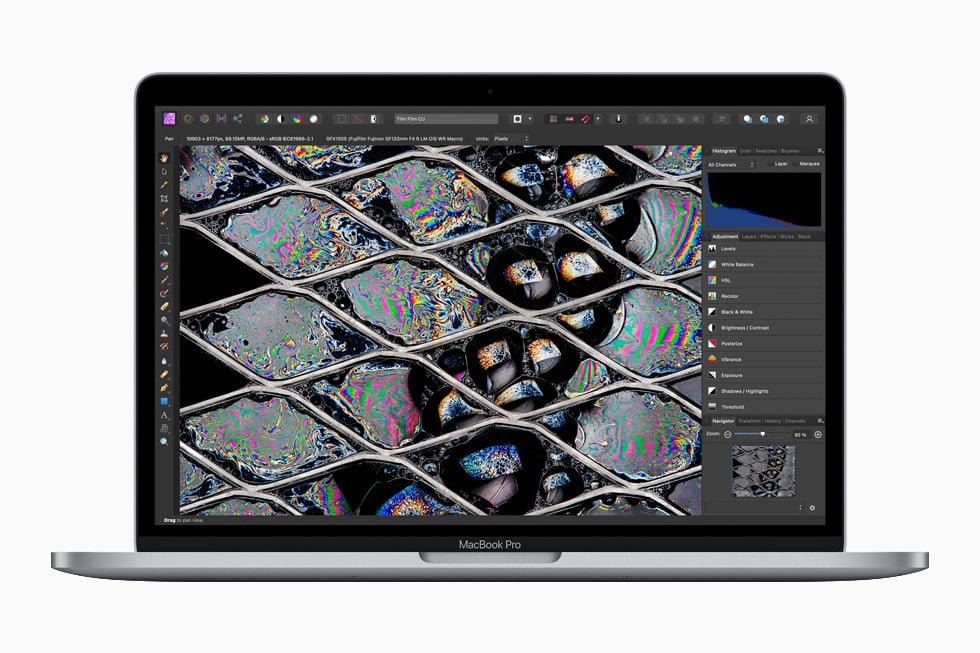
    A 13-inch MacBook Pro was also unveiled, but it was not ready for testing on Monday. Both new MacBooks will be available in July, according to Apple.

  • Apple to launch new Macs with next-generation M2 chips

    Apple to launch new Macs with next-generation M2 chips

    Apple is planning to release the next-generation Apple Silicon chip for its laptops, almost two years after introducing the first Macs using its own silicon. The company is presently testing third-party programmes on at least nine new Mac models equipped with an M2 processor.

    Unreleased Macs have been spotted in app logs, to sources familiar with the situation, implying that Apple is currently conducting final tests on the new PCs before revealing them to the public. The new M2 processor will be used in all new Macs, which are slated to be released later this year.

    A MacBook Air, MacBook Pro, and Mac mini with an M2 chip; new MacBook Pros with the M2 Pro and M2 Max chips; and a Mac Pro with an Apple Silicon chip ‘successor to the M1 Ultra processor’. Apple has been working on the new Macs for a while now.

    Surprisingly, it appears that Apple is still testing a new Mac mini with the M1 Pro CPU seen in the current MacBook Pro generation. Apple had planned to release high-end versions of the present Mac mini with the M1 Pro and M1 Max CPUs, according to 9to5Mac’s sources, but they were likely canceled to make way for the Mac Studio.

    Read more: Elon Musk offers $43 billion to acquire Twitter

    The Studio Display firmware contains references to a new Mac mini model, thus it’s probable that at least some of these Macs will be released soon. Apple could unveil two new Macs in June at WWDC 2022.