Tag: Machine learning

  • Privacy concerns mount as X reveals intent to employ user data for AI training

    Privacy concerns mount as X reveals intent to employ user data for AI training

    The social media platform formerly known as Twitter has recently faced scrutiny following reports by Bloomberg, revealing plans to gather biometric data, job information, and educational backgrounds from its users. A newly-released privacy policy confirms that ‘X’ intends to utilise this data, along with other personal information it collects, for the purpose of training machine learning algorithms, as first observed by Alex Ivanovs at Stackdiary.

    The privacy policy explicitly states that the company will employ the information it gathers, in combination with publicly accessible data, to support the training of its machine learning and artificial intelligence models. Elon Musk has acknowledged this change but has assured users that only publicly available information will be collected, excluding private messages.

    Notably, ‘X’ doesn’t have any publicly declared AI ambitions, but its owner, Elon Musk, does. He recently launched a company called ‘xAI,’ which aims to explore the fundamental aspects of the universe. This suggests a potential link between users’ biometric data and Musk’s ambitious scientific pursuits, as indicated on the xAI homepage, which mentions collaboration with ‘X’ to advance their shared mission.

    Another plausible scenario is Musk’s expressed desire to challenge LinkedIn, a platform he has criticised as “cringe.” ‘X’ appears to be collecting job and education histories from its user base, aligning with Musk’s vision for a more appealing professional networking platform.

    Lastly, there is the possibility that ‘X’ might consider selling user data to boost its revenue, given its limited advertising income. However, it’s essential to note that there is currently no concrete evidence to support this theory, and historically, Twitter primarily used collected user data for its own benefit rather than sharing it with third parties.
  • Dukaan CEO lays off 90% of his support staff in favour of AI chatbot

    Dukaan CEO lays off 90% of his support staff in favour of AI chatbot

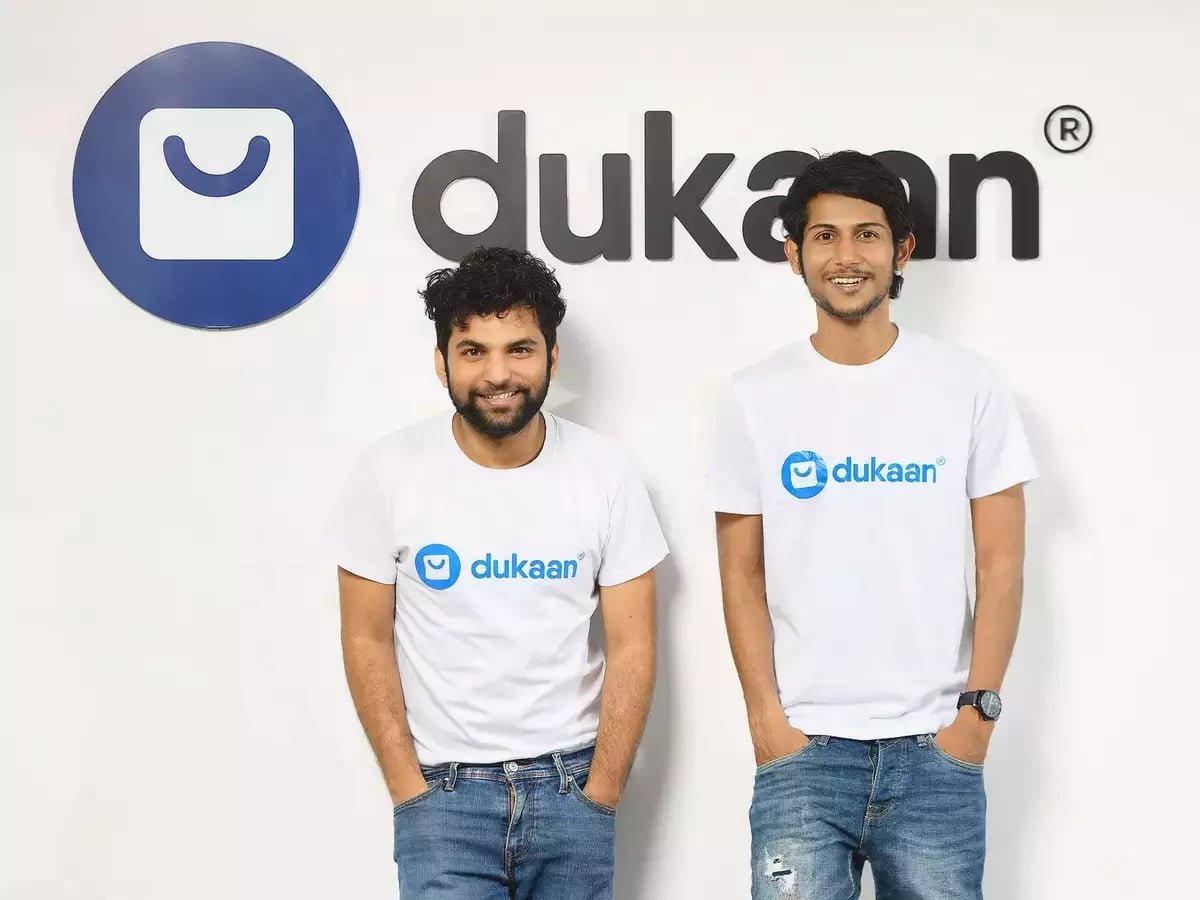
    Suumit Shah, founder and CEO of Bangalore-based e-commerce startup Dukaan, announced via his Twitter account that he has laid off 90% of his customer support staff in favour of using an AI chatbot. 

    The bot was built by one of the firm’s data scientists, and according to Shah was able to respond to initial queries instantly, compared to the average staff time of one minute and 44 seconds.

    In his tweet, Shah admitted that the layoffs were “tough, but necessary”, explaining that given the state of the economy, startups are prioritising “profitability”.  

    Customer Support has apparently been a long-time struggle for Dukaan. In a conversation with CNN, Shah said that the company had cut the cost of its customer support function by 85% after introducing AI technology. He reasoned that this part of the business had been problematic for some time, with delayed responses and limited availability of staff at critical times, among other issues.

    That’s what prompted Shah to come up with the idea to create a personal AI-assistant for Dukaan, which would answer customer queries instantly, precisely, and from anywhere. Dukaan’s AI-lead Ojasvi Yadav stepped up to the plate.

    According to Shah’s Twitter thread, just a day after the bot was launched, Dukaan’s AI chatbot ‘Lina’ had resolved 200 lives chats and 1400 support tickets. The success of Lina propelled the team to create Dukaan’s new product ‘BOT9.ai’. It is an AI assistant, that can learn the ins-and-outs of a business, and answer customer queries instantly, 24/7. 

    As Shah tweeted, “it’s less magical, sure, but at least it pays the bills!”

    Considering the era of AI we are in now, and the general widespread layoffs by tech giants, Shah’s decision had been met with much criticism. However, Shah continued to justify the layoffs by emphasizing how AI technology can optimise their operations. 

    Moreover, Shah believes that allocating employees’ expertise to areas requiring critical thinking, while relegating routine tasks to AI-powered chatbots, improves efficiency while also allowing for a better allocation of human resources.

    Many Twitter users were enraged at the apparent pride in Shah’s tweets. One user tweeted, “You disrupted the lives of 90% of your support team & you’re celebrating it in public. You also likely destroyed your customer support (disprove with good CSAT for the bot) – all for a basic ChatGPT wrapper. This is a new low even for you.” 

    While the announcement may read as apathetic, it is not surprising that major companies are turning to AI to improve general performance and efficiency in what are considerably quite routine tasks. 

    According to a report from outplacement firm Challenger, Gray & Christmas, which looks at layoffs across every industry, around 5% of May’s job cuts in 2023 were directly related to artificial intelligence. 

    Are you worried AI is going to replace you at work?

  • Google’s healthcare tech uses AI to predict heart disease with just an eye scan

    Google’s healthcare tech uses AI to predict heart disease with just an eye scan

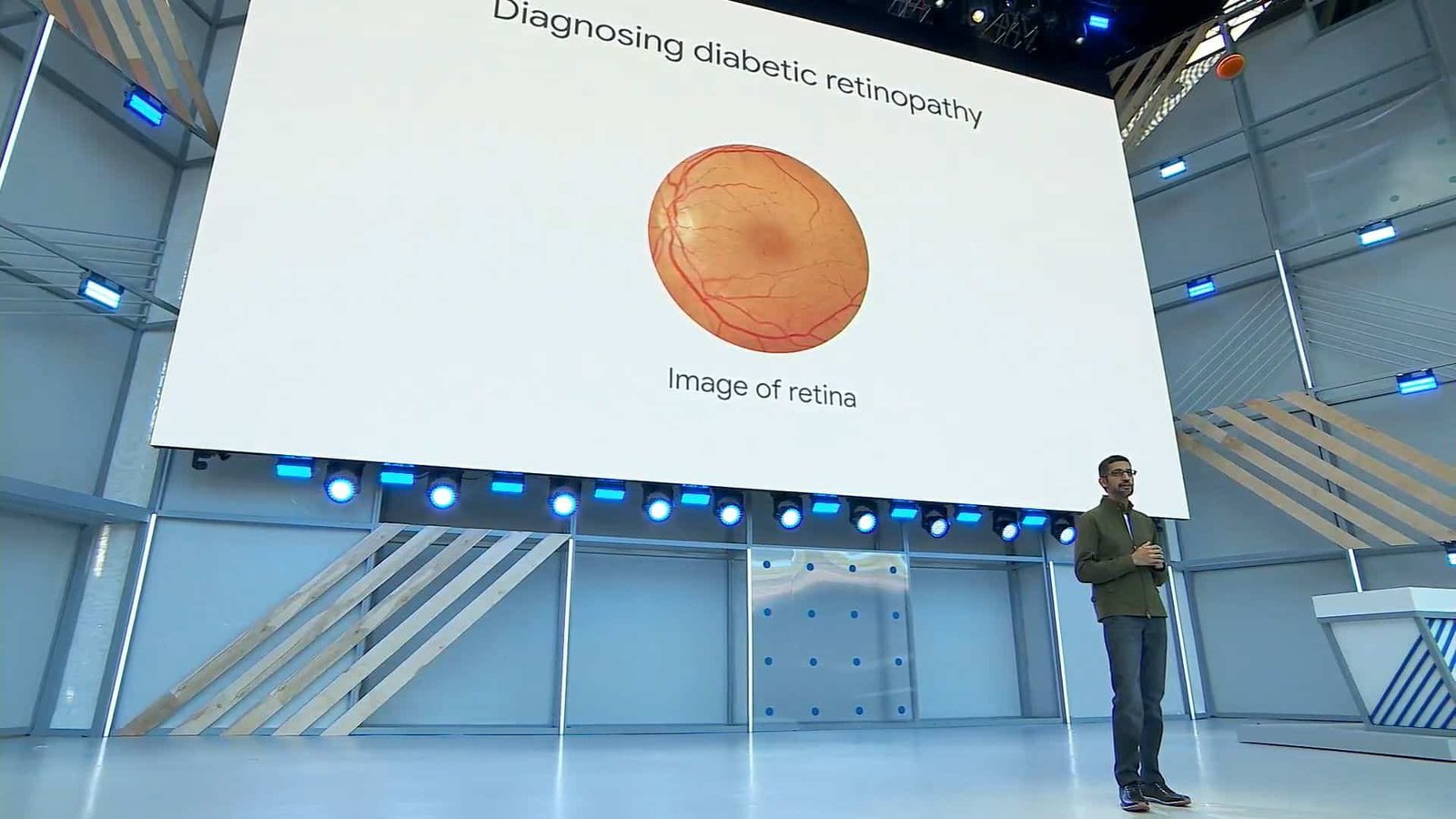
    Google’s Artificial Intelligence (AI) diagnosis of diabetic retinopathy (a leading cause of blindness) has shown things in the retinal scans that “human beings didn’t know to look for”, according to CEO Sundar Pichai. The AI eye scans hold information with which Google can predict the five year risk of someone having a heart attack or a stroke.

    At last year’s Google IO, CEO Sundar Pichai announced GoogleAI, a culmination of the company’s efforts to bring the benefits of AI to everyone. DermAssist, Google’s AI program that detects and provides diagnosis for skin conditions, will be available on Google browser by the end of this year.

    Google had also been running field trials across hospitals in India, where Google used deep learning to help doctors diagnose diabetic retinopathy. Pichai says the field trials have been going very well, with AI offering expert diagnoses to places where trained doctors are scarce.

    As luck would have it, the very same eye scans that have helped successfully diagnose diabetic retinopathy also hold vital information that GoogleAI could use to predict the five year risk of an individual having an adverse cardiovascular event.

    Although the idea of looking into someone’s eyes to diagnose the condition of their heart sounds unusual, it actually draws from established research. The rear interior wall of the eye (the fundus) is full of blood vessels that reflect the body’s overall health. Information such as someone’s age, their biological sex, whether or not they smoke, their BMI and systolic blood pressure is readily available to doctors through a simple eye scan.

    According to Pichai, this could be the new basis for a non-invasive way of detecting cardiovascular risk. He says Google will be working with their partners to field trials.

    Another exciting AI-health related development is that AI can help in the prediction of medical events. Machine learning can go in and analyse over 100,000 data points per patient (obviously, more than one doctor could ever do), and then quantitatively predict the chance of readmission 24-48 hours to advance. This is hugely beneficial as it gives doctors more time to act.

  • Google’s skin search app to be launched in 2023

    Google’s skin search app to be launched in 2023

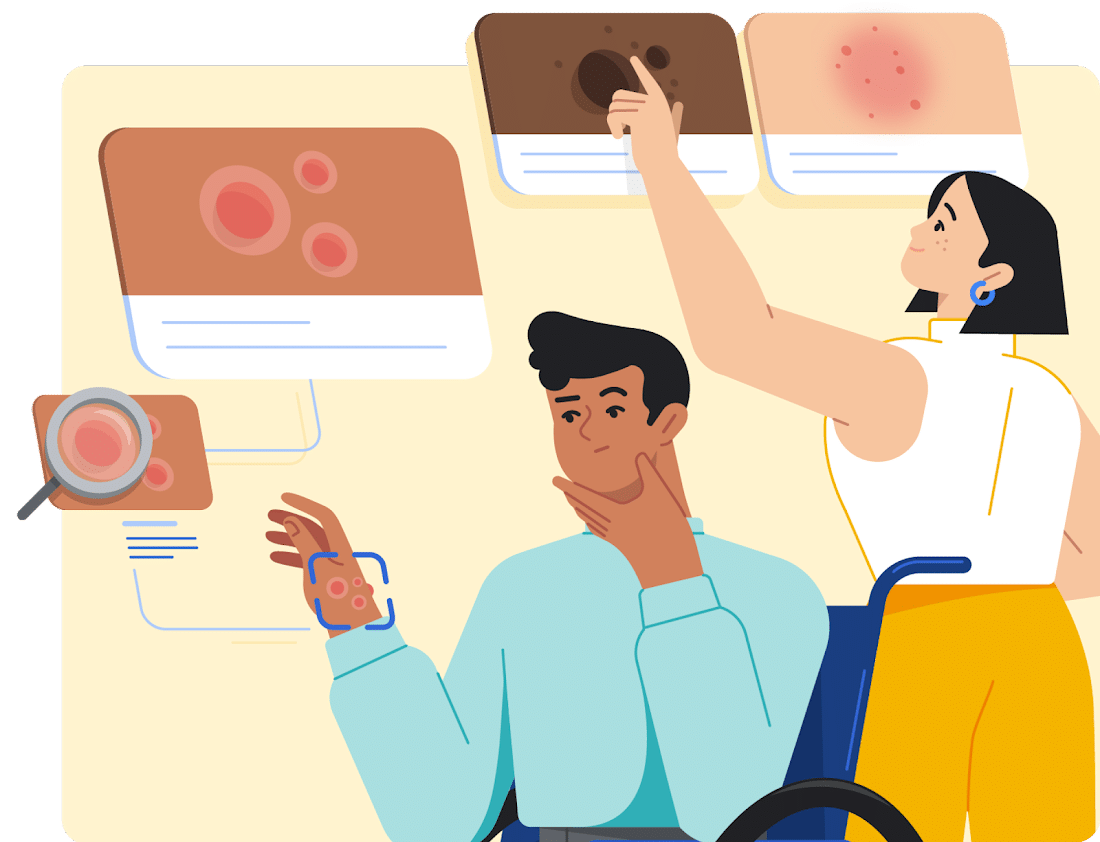
    In its 2023 Keynote, Google announced its CE marked Class 1 Medical Device DermAssist. It is a guided skin search app that helps users find personalized information about skin concerns through a fast and simple process.

    After receiving billions of skin-related searches each other, Google used its expertise in organizing information, artificial intelligence, and collaboration with partners to build DermAssist.

    How does it work?

    The process is simple: you upload up to three photos of your skin, hair or nail condition from different angles. Then you answer a few short questions about your symptoms, and DermAssist does the rest.

    Trained using millions of skin images, DermAssist can identify 288 skin, hair, and nail conditions and can identify more than 90% of the most commonly searched-for skin conditions. Furthermore, Google assures that DermAssist is being developed to work accurately across all skin tones, skin types, and more.

    Google’s research demonstrates that the underlying technology can help clinicians better identify skin conditions across all populations.

    DermAssist is the culmination of years of machine learning research, dermatologist-reviewed content, user testing, and product development.

    Would you keep going to a dermatologist once DermAssist is available on your Google browser?

  • Google’s Bard is a more powerful, accurate AI chatbot than ChatGPT

    Google’s Bard is a more powerful, accurate AI chatbot than ChatGPT

    Google has opened up access to Bard, its AI-powered chatbot, to English speakers in many parts of the world. The waitlist for access to the chatbot has been removed after two months of limited testing.

    Some people believe that Bard is simply a clone of ChatGPT, but this is not the case. Bard is much more advanced than ChatGPT, as it has access to the latest news and events. This allows Bard to provide more comprehensive and informative responses to users’ questions.

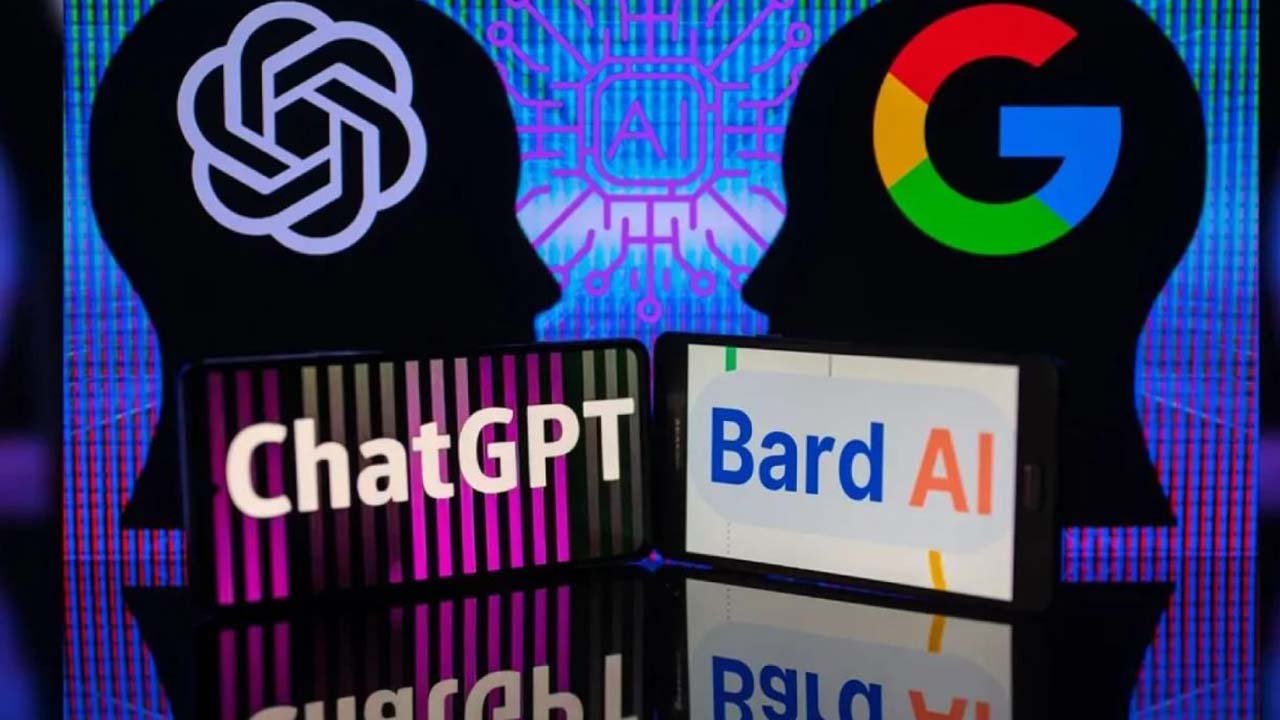
    Bard and ChatGPT 4 are both large language models, also known as conversational AI or chatbots. They are trained on massive datasets of text and code, and they can communicate and generate human-like text in response to a wide range of prompts and questions.

    However, there are some key differences between the two models.

    Bard

    1. Bard is trained on a massive dataset of text and code that includes information from the internet. This gives Bard a wider range of knowledge to draw from, and it allows Bard to answer questions in a more comprehensive and informative way.
    2. Bard is also able to access and process information from the real world through Google Search. This gives Bard a real-time view of the world, and it allows Bard to keep its answers up-to-date.
    3. Bard is designed to be informative and comprehensive. It is trained on a massive dataset of text and code, and it is able to access and process information from the real world through Google Search. This gives Bard a wide range of knowledge to draw from, and it allows Bard to answer questions in a comprehensive and informative way.

    ChatGPT 4

    1. ChatGPT 4 is trained on a massive dataset of text, but it is not trained on information from the internet. This means that ChatGPT 4 has a more limited range of knowledge, and it may not be able to answer questions as comprehensively as Bard.
    2. ChatGPT 4 is also not able to access and process information from the real world. This means that ChatGPT 4’s answers may not be up-to-date.
    3. ChatGPT 4 is designed to be creative. It is trained on a massive dataset of text, and it is able to generate human-like text in response to a wide range of prompts and questions. This makes ChatGPT 4 a good tool for generating creative content, such as poems, code, scripts, musical pieces, email, letters, etc.

    Bard and ChatGPT 4 are both powerful large language models. They can both communicate and generate human-like text in response to a wide range of prompts and questions. However, Bard has a wider range of knowledge, it is able to access and process information from the real world, and it is designed to be informative and comprehensive. ChatGPT 4 is designed to be creative. Ultimately, which model is better for you depends on your needs.

    It is currently unknown whether Bard will remain free. Google has not made any announcements about its plans for Bard’s pricing model. However, it is possible that Google may choose to make Bard a paid service in the future. This is because Bard is a very powerful and versatile tool that could be used for a variety of purposes, such as generating content, writing code, and translating languages. As such, Google may believe that it can charge a premium for access to Bard.

    On the other hand, Google may also choose to keep Bard free. This is because Google has a history of providing free access to its products, such as Gmail and Google Drive. Additionally, Google may believe that making Bard free will help to promote its other products and services.

    Ultimately, it is up to Google to decide whether Bard will remain free or not. However, it is likely that Google will make a decision about Bard’s pricing model in the near future.

  • Alibaba launches AI model ‘Tongyi Qianwen’ as ChatGPT rival for enterprise testing

    Alibaba launches AI model ‘Tongyi Qianwen’ as ChatGPT rival for enterprise testing

    Alibaba has launched its long-awaited ChatGPT rival, “Tongyi Qianwen,” for enterprise testing. The launch is not open to the general public but is restricted to a few eligible enterprises. Currently, the company is extending invitations to enterprise users only to participate in experience testing. Interested users can submit their applications via the official website, and those who meet the eligibility criteria will be considered for participation.

    “Tongyi Qianwen” is a highly advanced AI model designed to understand and respond to human commands. It serves as an efficient assistant and can even generate ideas. The model is being developed by Alibaba’s advanced research institute, the DAMO Academy. For many years, Alibaba DAMO Academy has been involved in cutting-edge scientific research fields such as natural language processing (NLP) and has been developing large models since 2019.

    Alibaba plans to integrate its AI large-scale model technology with the DingTalk productivity tools. Alibaba’s large-scale model is scheduled to be launched on April 11 at the 2023 Alibaba Cloud Summit, along with several industry-specific application models that will follow. Additionally, it has been reported that the company is set to release a large model, which could be comparable to ChatGPT 2.5, in the second half of this year.

    Alibaba DAMO Academy is the research and development arm of Alibaba Group, one of the world’s largest e-commerce companies. The academy was founded in 2017 and focuses on cutting-edge research in areas such as machine learning, artificial intelligence, natural language processing, and quantum computing. The academy has several research centers located in China, the United States, Israel, Singapore, Russia, and other countries.

    The goal of the academy is to use its research to support Alibaba’s businesses and to make significant contributions to the academic and scientific communities. The academy has partnerships with leading universities and research institutions around the world and collaborates with top researchers in various fields.

  • AI shocks experts by writing passing college paper in 20 minutes

    Artificial Intelligence (AI) has delivered results in many areas like medicine, defence, law enforcement, and education. But AI has shocked the researchers by producing an award-winning research paper.

    According to the reports, an online educational research provider performed a trail to analyse the capacity of the deep learning language prediction model known as GPT-3.

    A panel of professors was asked to create writing prompts. The prompts were then assigned to a group comprising of graduate and undergraduate level writers, apart from the GPT-3 model.

    The experts concluded that the AI writing capability closely mimics human writing in terms of syntax, grammar and word frequency.

    “Even without being augmented by human interference, GPT-3’s assignments received more or less the same feedback as the human writers,” said the report.

    Moreover, the deep learning tool completed the assignment in less time, i.e., between three and 20 minutes. Whereas it took human to complete the assignment in three days.

    The report expresses doubt about AI’s capacity to take over in this particular area. Despite its revolutionary output, GPT-3 will not earn college degrees on its own anytime soon.

    When put up against human writers, GPT-3 secured some passing grades but failed to nail creative writing.