Tag: Mahsa Amini

  • Iran sentences man to death for posts during 2022 protests

    Iran sentences man to death for posts during 2022 protests

    An Iranian court has sentenced a man to death over content he posted online during 2022 protests over the death in custody of an Iranian-Kurdish woman, the judiciary said Tuesday.

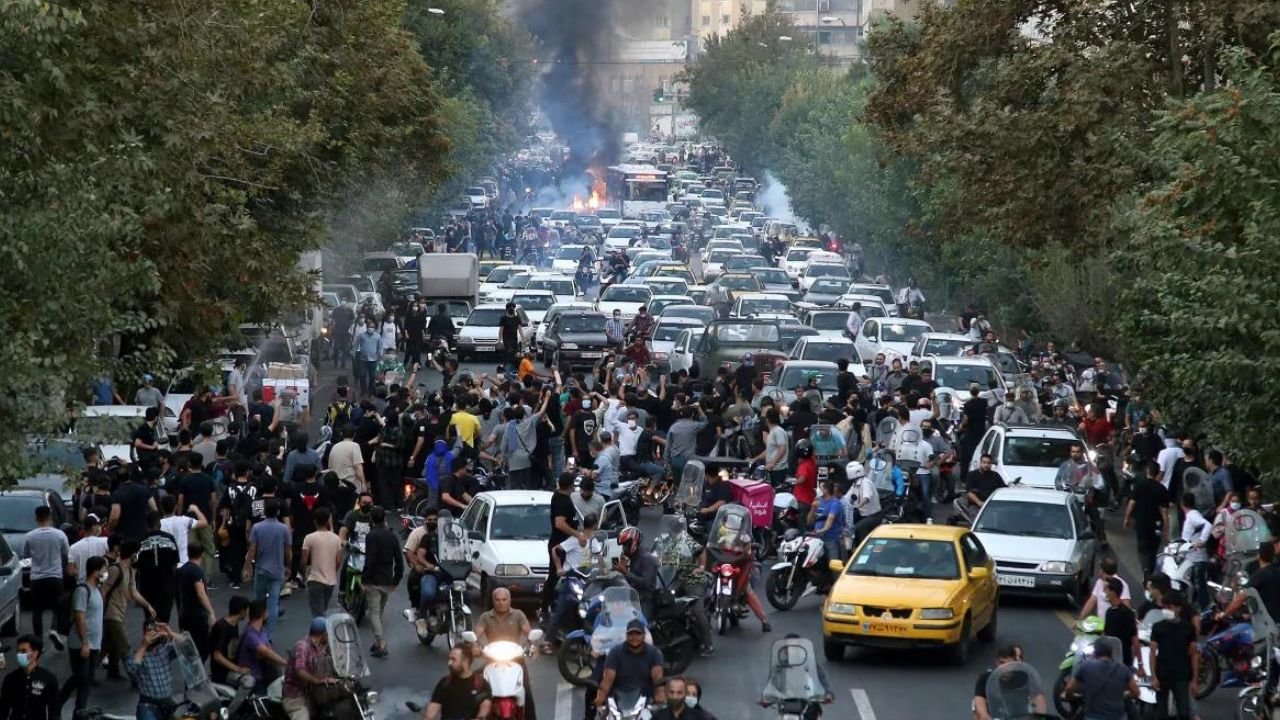
    Iran was gripped by months-long protests over the death of Mahsa Amini, 22, after she was arrested for an alleged breach of the strict dress code for women.

    The judiciary’s Mizan Online website said Mahmoud Mehrabi was found guilty of posting content that included guidance on how “to use homemade weapons and called for the destruction of public property”.

    He was convicted of “inciting people to commit killings and insulting religious sanctities”, it added.

    Lawyer Babak Farsani said Mehrabi was found guilty of the capital offence of “corruption on earth”. He can appeal against the sentence before the Supreme Court.

    The months-long protests sparked by Amini’s death saw hundreds of people killed in street clashes, including dozens of security personnel.

    Thousands were arrested as authorities moved to quell what they branded foreign-instigated “riots”.

    Last month, an Iranian court sentenced popular rapper Toomaj Salehi to death for supporting the demonstrations.

    Nine men have been executed in protest-related cases involving killings and other violence against security forces.

    Amnesty International says Iran executed 853 people in 2023, the highest total since 2015.

  • Iranian teen has expired after allegedly being beaten up over violation of hijab laws

    Iranian teen has expired after allegedly being beaten up over violation of hijab laws

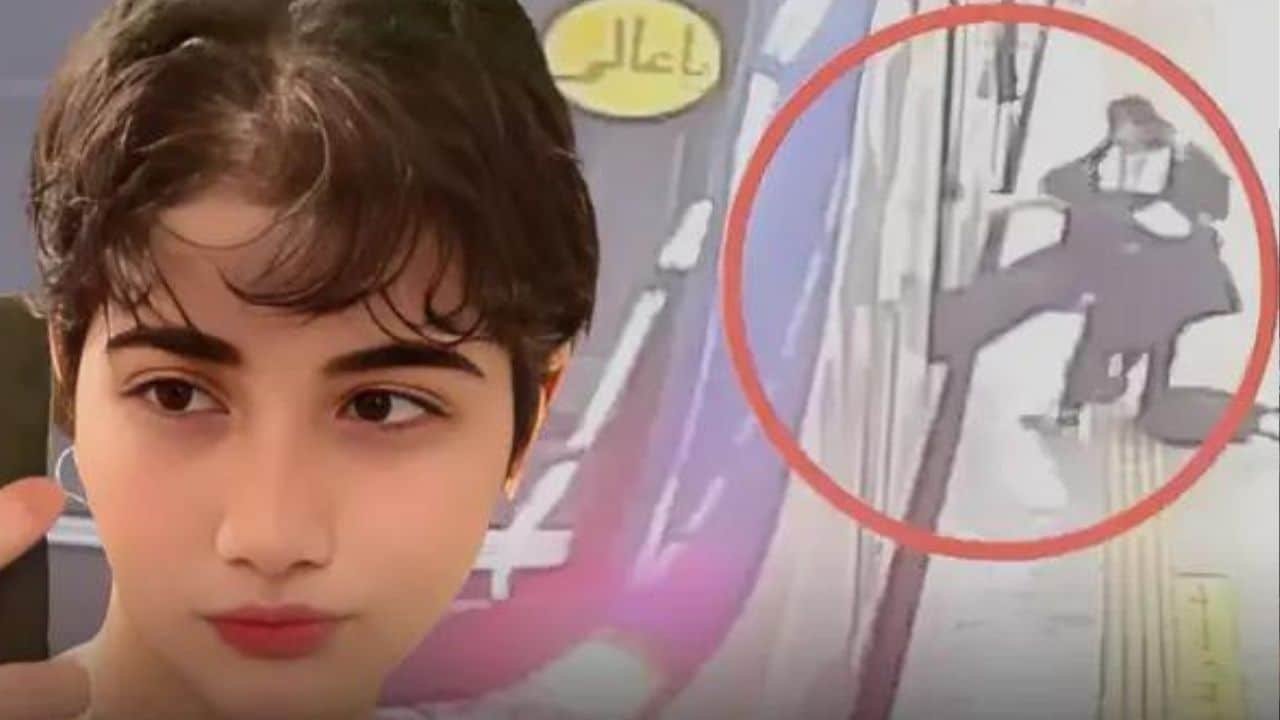
    Update : “Armita Garawand, a student in Tehran, died an hour ago after intensive medical treatment and 28 days of hospitalisation in intensive care,” reported the Borna news agency affiliated with the youth ministry.

    The 17-year-old ethnic Kurd, who was declared “brain dead” a week ago, had been hospitalised at Fajr Hospital in Tehran since October 1 after she fell unconscious on the metro.

    In September, lawmakers voted in favour of toughening the penalties, which include jail sentences of up to 10 years for women who violate the dress code.

    The reformist daily Ham Mihan called on the authorities to “allow independent media to investigate” the incident in order to persuade the public.

    Previously it was reported that Armita Geravand, a 16 year old in Tehran, is allegedly the latest victim of Iranian morality police. In a controversial incident that took place in a metro station, she is likely to be “brain-dead” as reported by state-media. 

    Iranian authorities have vehemently denied any such claims of altercation on the Tehran Metro station with the female policers. They say that the girl collapsed due to low blood pressure. 

    Humanitarians such as Kurdish-Iranian Hengaw groups have claimed otherwise of the reason behind the teenager’s collapse. They made her hospitalisation public, showing her pictures in an unconscious state and alleging that the teen had not undergone any operations owing to her fragile health condition. She was admitted to the hospital on October 1 and since then she has been in a critical condition under a tight security presence. Her mother was also reportedly arrested around the hospital but was released afterwards. Her father has told the Hengaw group that he has been informed by the medical team that “her brain is no longer functioning and there is no hope of recovery.”

    As for the footage published by Iranian  Media it can be seen that an unconscious body has been dragged out of the train by the female officers. Amnesty International has opined that there is “mounting evidence of a cover-up” because the analysis shows that the footage has been edited with the frame rate increased and over three minutes of footage is missing. They believe that the family and friends affirming state narrative are saying this under duress. They have not been allowed to visit her and even the journalist who went in to report was detained briefly. 

    The stringent hijab laws in Iran became a point of controversy with the death of 22 year old Mahsa Amini, last year in September 2022. The extremely controversial and unfortunate near-dead condition of this young girl has further raised concerns. 

    Just a couple of days ago, two Iranian Journalists were sentenced to long periods of imprisonment on charges of covering the protests held all across the country after Amini’s death. 

    To read more: https://thecurrent.pk/iran-sentences-two-women-journalists-for-covering-mahsa-aminis-protests/

  • Iran sentences two women journalists for covering Mahsa Amini’s protests

    Iran sentences two women journalists for covering Mahsa Amini’s protests

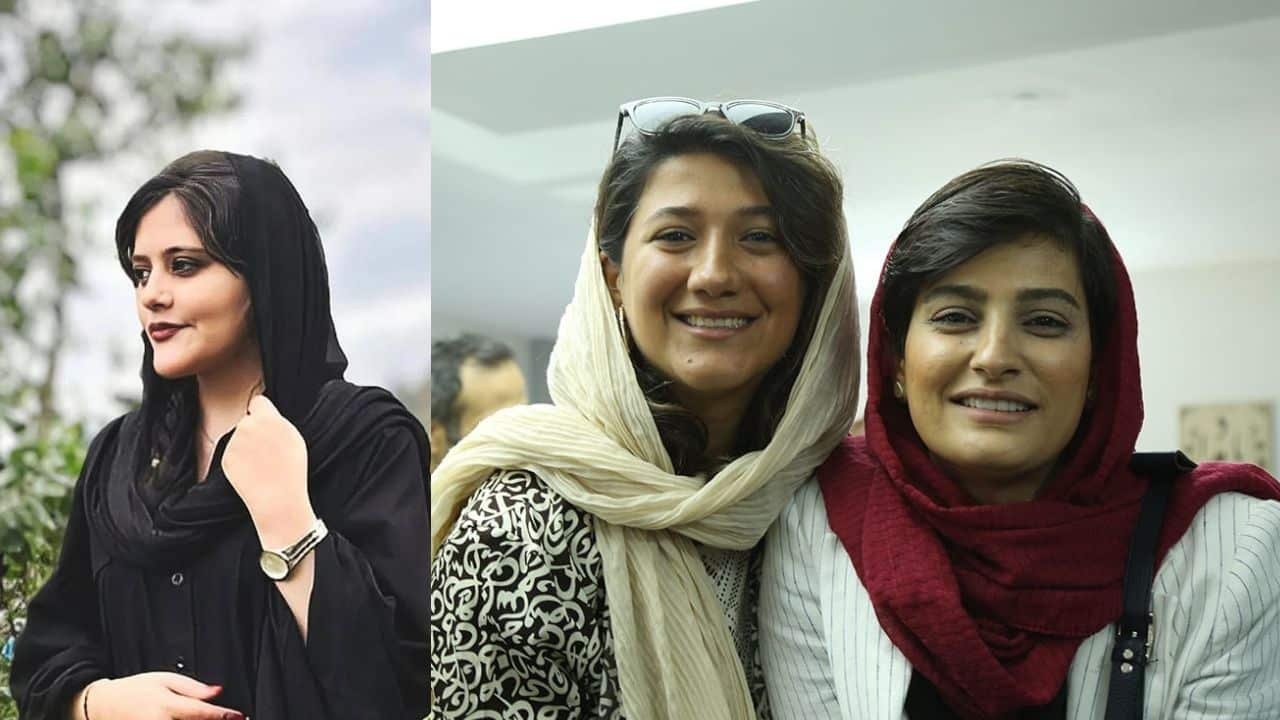
    Two female journalists in Iran have been sentenced to a long period of imprisonment on national security charges after they covered Mahsa Amini protests.

    In September 2022, 22-year-old Mahsa Amini was taken into custody by Iran’s morality police for violating ‘Islamic dress code’ and refusing to wear a hijab. She died in police custody. Huge protests then burst out across the country.

    Days after the protests, Niloofar Hamedi and Elaheh Mohammadi were arrested while their trials started in May.

    Both were reporting for reformist newspapers.

    Hamedi had posted an image on social media of Amini’s parents holding each other and crying at the hospital where she died, while Mohammadi reported on her funeral from Amini’s hometown.

    According to the official news website of the Iranian judiciary, Hamedi and Mohammadi will serve sentences of 13 years and 12 years in prison, respectively.

    Hamedi’s preliminary sentence is seven years in prison for “cooperating with the hostile government of the United States” whereas Mohammadi has received six years for the same offence.

    They both received an additional five years in prison for “collusion to commit crimes against the country’s security” and a one-year sentence for “propaganda against the establishment of the Islamic Republic of Iran”.

    Hamedi has also been sentenced to a two-year ban on “membership in political parties or groups, being active on social media, or working in media,” reports Al Jazeera.

    “In the cases of both aforementioned individuals, there is proven evidence of links with some entities and individuals linked with the US government, which was done knowingly and in following anti-security policies,” the judiciary website said.

    The sentences, however, are subjected to appeal and thus, can be reduced.

  • Iran’s ‘morality police’ back in action 10 months after nationwide protests 

    Iran’s ‘morality police’ back in action 10 months after nationwide protests 

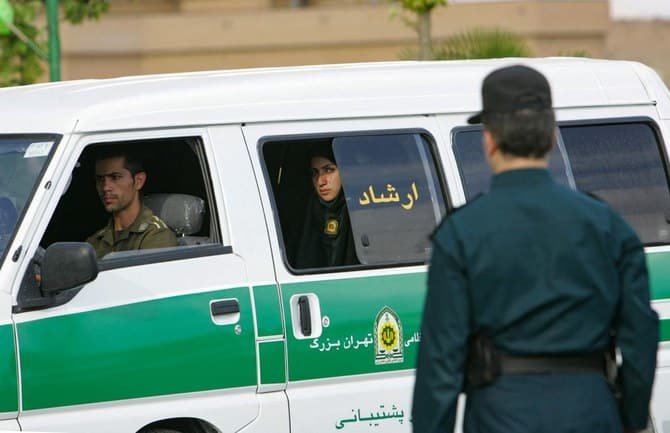
    Iran’s notorious morality police have resumed patrolling the streets of the country, after policing efforts had been scaled back following nationwide protests that broke out across the country last year. 

    Following the death of 22-year-old Kurdish woman Mahsa Amini while she was held in police custody, tens of thousands of Iranians took to the streets to protest, in what some analysts say was the ‘biggest challenge‘ posed against the government since the 1979 Islamic Revolution.

    During the mass protests, which lasted for months, the morality police were largely absent from Iranian streets, refraining from highly confrontational methods of enforcing mandatory hijab laws that were imposed shortly after the ‘79 revolution. There were even some reports – later denied – that they had been disbanded.

    The protests largely died down earlier this year, after a brutal crackdown in which more than 500 protestors were killed and nearly 20,000 detained by authorities. 

    Saeid Montazeralmahdi, the spokesperson for the Iranian law enforcement force, confirmed on Sunday that police patrols were now operational on foot and with vehicles to crack down on people whose head covering is not deemed appropriate in the Islamic Republic, according to Al-Jazeera.

    The Guardian reported that in Tehran, morality police has been seen patrolling the streets in marked vans.

    For the past few months, morality police have also been employing surveillance cameras with face-recognition software to identify hijab violators. The violators are given warnings, fines, or sent to appear in court.

    Mahsa Amini was detained last year on September 13th, on accounts of violating the draconian dress code law the Iranian government has in place, which mandates women wearing the hijab. According to authorities, Mahsa Amini was not wearing her hijab ‘properly’.

    Witnesses reported that she was beaten by morality police after her arrest in Tehran. The morality police maintain that Mahsa Amini suffered a heart attack and died. 

    Demonstrators initially gathered outside Kasra hospital in Tehran, where Amini was being treated. Human rights groups reported that security forces deployed pepper spray against protesters and that several were arrested.

    This year alone, there have been many high-profile hijab related incidents, including an incident in Mashadd, where a man dumped yoghurt on two women for not wearing the hijab properly. All three parties were arrested by authorities.

  • Iranian students harassed, given disciplinary hearings for refusing to wear hijab at university

    Iranian students harassed, given disciplinary hearings for refusing to wear hijab at university

    As women across Iran continue to protest against strict hijab laws, universities have taken stringent measures by suspending and initiating violent crackdowns against female students to suppress the uprisings, The Guardian has reported.

    More women have posted video recordings of themselves dancing or walking without the hijab, while several students spoke to the publication to reveal that at least 60 students have been banned from their university, called at disciplinary committee hearings and harassed on campus for not wearing the hijab.

    According to the Student Council of Iranian Universities, at least 40 female students have been conditionally suspended from their campuses for failing to follow the hijab rule. While The Human Rights Activists (THRA) in Iran reported that at least 64 students have been suspended and three expelled.

    Nine suspended activists told the publication that arrests of young women are on the rise, and they were warned of serious consequences if they did not adhere to the mandatory policy of wearing their hijab.

    “We’re being mass banned from the campus for refusing to wear a hijab, and in the past few days there has been a violent crackdown on us for peacefully sitting in protest,” said a student who was studying in a university in Tehran. She further revealed that security officials had violently thrown women out of classrooms.

    Another anonymous student from Mashhad spoke about her suspension for protesting on the 40th day of Mahsa Amini’s death:

    “I have been slapped with repeated temporary suspensions for protesting on the 40th day of Mahsa Amini’s death. Considering that I will be suspended again next semester, I will fall behind a whole year. I dream of studying abroad, but unfortunately, given the current situation, my future is dark.”

    Another student’s account revealed that sharing social media posts related to Mahsa Amini’s death could have severe consequences leading to being suspended and failing their courses, as violent crackdowns continue to rise in Iran.

    “Three days after I shared a post about death sentences, the university security team confiscated my phone after raiding our residence hall,” spoke a student from Tehran. “They also collected protest posters or anything related to the ongoing revolution and warned us of worse consequences.

    “I doubt the officers barging into our dormitories are from the university’s security team. I’ve never seen them before. The next day, I was temporarily suspended along with three of my friends.”

    Another student in Tehran revealed: “The university administration is acting like an extended arm of the Islamic Republic. I was preparing my applications for a master’s in the EU, but I fear I’ll neither receive a recommendation letter, nor will I receive the relevant grades necessary for my application. I’ve been warned by my university’s administration that I’ll get zero grades if I don’t apologise and retract my social media posts in support of the revolution.”

    Professors who support the protests have also been violently attacked or expelled from campuses.

    The protests in Iran began in September 2022 after the brutal death of 22 year old Mahsa Amini, who was severely beaten by Guidance Patrol officers for refusing to wear a hjijab. She later passed away in a hospital from her injuries. Since then, nation wide protests began through out Iran as the slogan ‘Zen, Zendagi, Azaadi’ was adapted as a protest against human rights violations committed by the Iranian government.
  • Male Iranian pharmaceutical employees start wearing hijabs to protest against sexist govt policy

    Iranian-American journalist Masih Alinejad has shared a clip of male pharmaceutical workers actively resisting a sexist policy introduced by the Iranian Drug & Food Administration which had ordered women to start wearing black veils at their workplaces. Alinejad wrote in a tweet:

    “Iran’s Food & Drug Administration has ordered pharmacies to force their female staff to wear black veils at workplace. Iranian men are mocking this order and supporting their female colleagues by wearing hijab. Compulsory hijab is the main pillar of a religious relationship. Together we will bring this wall down.”

    Alinejad called for international pharmacists to support their Iranian colleagues in their fight for gender equality, as many women have lost their jobs because they protested against compulsory hijab laws:

    “I call on international pharmacists to support their Iranian colleagues. Many women lost their job for the crime of resisting compulsory hijab laws. Forcing women to wear hijab is an insult to all women and men across the globe. Human rights is a global matter. Show your solidarity.”

    Compulsory hijab has been in the eye of the storm in Iran, leading to strikes and demonstrations across Iran after the death of 22 year old Mahsa Amini, who died under custody of the morality police after refusing to abide by the strict hijab rules. Many women continue to remove their hijab in order to protest against the compulsory law, stating that it denies them social and political freedom.

    Speaking to RFE, an unnamed psychologist said: “Women see it as their absolute right, a right they have been denied for years. I’m protesting the status quo.”

  • Iran President declines interview by CNN anchor who refuses to wear hijab

    Iran President declines interview by CNN anchor who refuses to wear hijab

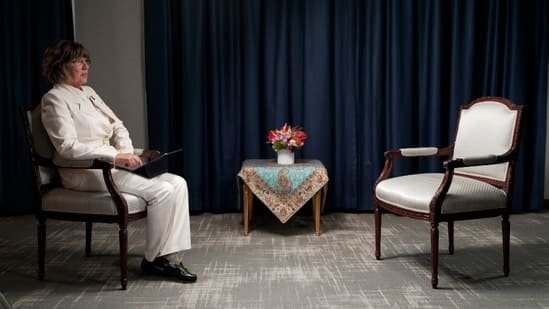
    Iranian President Ebrahim Raisi didn’t turn up for a CNN interview when the interviewer, Christiane Amanpour, refused to wear a hijab during the taping.

    Amanpour took to Twitter to explain the incident, stating that the interview was long planned and this would have been President Raisi’s first-ever interview on US soil. However, things didn’t go as planned.

    “An aide came over and said that the President is suggesting that I wear a headscarf because it’s the holy months of Muharram and Safar”, she said while adding that the aide made it clear that the “Interview would not happen if Amanpour did not wear a headscarf”.

    She said that she “politely declined”, stressing that she was in New York, where there is no law or tradition regarding headscarves. “I pointed out that no previous Iranian president has required this when I interviewed them outside Iran,” she pointed out.

    The journalist concluded by saying that because of the situation going on in Iran, it would have been an “important moment” to speak with President Raisi

    “And so we walked away. The interview didn’t happen. As protests continue in Iran and people are being killed, it would have been an important moment to speak with President Raisi.”

    Anti-government protests erupted across Iran last week over the death of 22-year-old Mahsa Amini while in custody, after having been arrested by Iran’s morality police on an accusation of violating the law on head scarves.

    However, Iranian officials have claimed that Amini died after suffering a “heart attack” and falling into a coma, but her family has said she had no pre-existing heart condition.

    Following the incident, thousands of people have taken to the streets. In the videos which are circulating on social media, women can be seen cutting their hair and burning their hijabs as a protest. According to media outlets, at least eight people have been killed in the demonstrations.

    It is pertinent to mention that since the 1979 Islamic Revolution, it has been compulsory for women to wear the hijab in Iran.