Queen Elizabeth II, the longest-reigning monarch in British history, breathed her last on Thursday in Balmoral Castle, United Kingdom (UK) at the age of 96.
In 1961, Queen Elizabeth visited Pakistan. She was accompanied by her husband, Duke of Edinburgh Prince Philip. She visited Karachi, Peshawar, Quetta, Lahore, and other areas of the country.
Queen Elizabeth in Pakistan, credit @GettyImages – 1961 Queen Elizabeth waved to the crowds as she rode in a convertible through the streets of Karachi. 1/n pic.twitter.com/DD76MK0He6
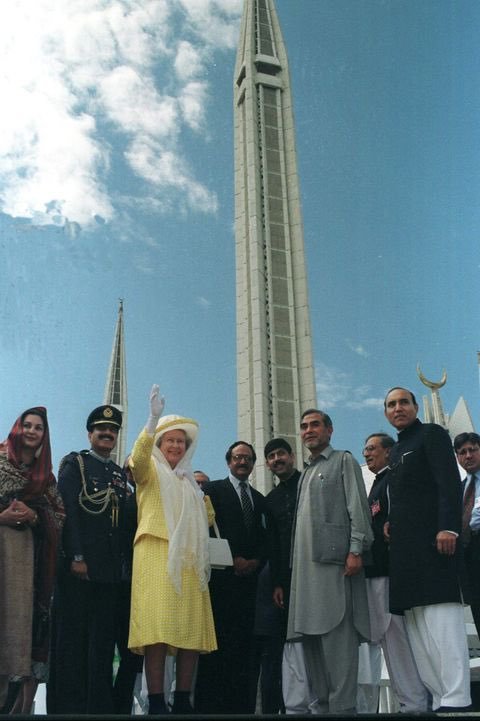
The Queen next visited Pakistan 36 years later in 1997 when the country was celebrating 50 years of independence. She was again accompanied by her husband, Prince Philip.
Here is the list of the Pakistanis who met Queen Elizabeth II during her lifetime.
In 1974, Queen Elizabeth met Imran Khan, who was a cricketer back then. In the picture, she can be seen shaking hands with Khan.
In 1997, Queen Elizabeth met former Prime Minister (PM) Nawaz Sharif (who was in power at the time) when she visited Pakistan for the second time. During her visit, knighthood was given to Sharif by the British monarch.
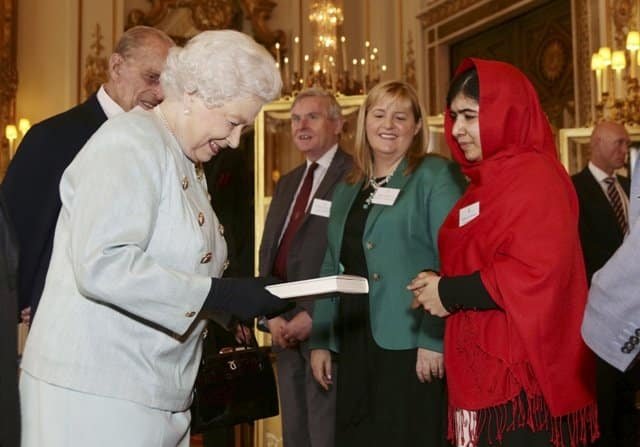
In 2013, the Queen and Prince Philip invited Pakistan’s young activist Malala Yousafzai to a reception at the Buckingham Palace, where they met and chatted for a short time.
Malala, who was accompanied by her father, Ziauddin Yousafzai, presented the Queen with a copy of her newly published memoir, titled “I am Malala”.
Before the start of the International Cricket Council’s (ICC) World Cup 2019, all team captains met The Queen. At the time, Pakistani cricket team captain Sarfraz Ahmed also met her at the Buckingham Palace.
Nobel Laureate and Women’s Education Rights Activist Malala Yousafzai has reacted to the closing of girls’ high schools in Afghanistan. Taking to Twitter, Malala wrote, “I had one hope for today: that Afghan girls walking to school would not be sent back home. But the Taliban did not keep their promise. They will keep finding excuses to stop girls from learning – because they are afraid of educated girls and empowering women.”
She also used the hashtag #LetAfghanGirlsLearn
I had one hope for today: that Afghan girls walking to school would not be sent back home. But the Taliban did not keep their promise. They will keep finding excuses to stop girls from learning – because they are afraid of educated girls and empowered women. #LetAfghanGirlsLearn
The Taliban administration yesterday announced that girls’ high schools in Afghanistan will be closed, and no female child above the sixth grade will be allowed to attend school. The announcement came only a few hours after they reopened for the first time in nearly seven months.
Nobel Laureate and Women’s Education Rights Activist Malala Yousafzai, in a recent essay, Please stop telling us how to dress, has talked about the criticism and pressure women have to face on the choice of their dressing.
Malala, sharing some text from her essay on her Instagram, wrote: “Years ago I spoke against the Taliban forcing women in my community to wear burqas – and last month I spoke against Indian authorities forcing girls to remove their hijabs at school. These aren’t contradictions – both cases involve objectifying women. If someone forces me to cover my head, I will protest. If someone forces me to remove my scarf, I will protest.”
“Whether a woman chooses a burqa or a bikini, she has the right to decide for herself. Come and talk to us about individual freedom and autonomy, about preventing harm and violence, about education and emancipation. Do not come with your wardrobe notes,” she added.
“Someday I might make changes to my wardrobe. I also might not. But exploring and understanding clothing will remain part of my life, as will defending every woman’s right to determine what she wears. I love my patterned, floral shalwar kameez. I love my jeans too. And I am proud of my scarves,” she wrote while concluding her essay.
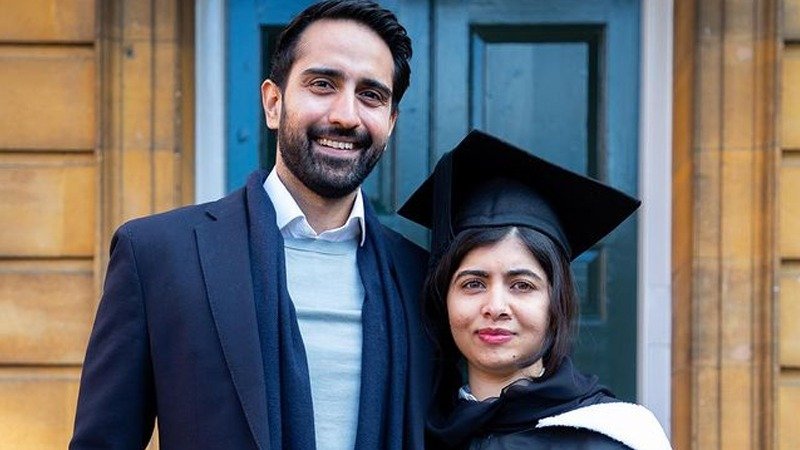
Nobel laureate and women’s education rights activist Malala Yousafzai’s husband Asser Malik revealed where the newlyweds first met. “The place we first met felt a little more special on Malala’s graduation day,” he wrote in an Instagram post while congratulating Malala on her graduation.
Today marks a precious day in my life. Asser and I tied the knot to be partners for life. We celebrated a small nikkah ceremony at home in Birmingham with our families. Please send us your prayers. We are excited to walk together for the journey ahead. : @malinfezehaipic.twitter.com/SNRgm3ufWP
Earlier Malala also opened up about how she met Malik. ““In the summer of 2018, Asser was visiting friends at Oxford and we crossed paths. He worked in cricket, so I immediately had a lot to discuss with him. He liked my sense of humour. We became best friends. We found we had common values and enjoyed each other’s company. We stood by each other in moments of happiness and disappointment. Through our individual ups and downs, we talked and listened to each other. And when words failed, I sent him a link to our horoscope compatibility, hoping the stars could help reinforce our connection,” Malala writes in the article.
The couple made their second public appearance earlier this month on November 23, at the opening of Andrew Lloyd Webber’s stage musical, Cinderella.
It was an amazing experience watching Andrew’s spectacular take on Cinderella. The energy of the actors and the wonderful music and stage designs were just some of the elements of the outstanding performance. #Cinderellapic.twitter.com/h7joBreOJF
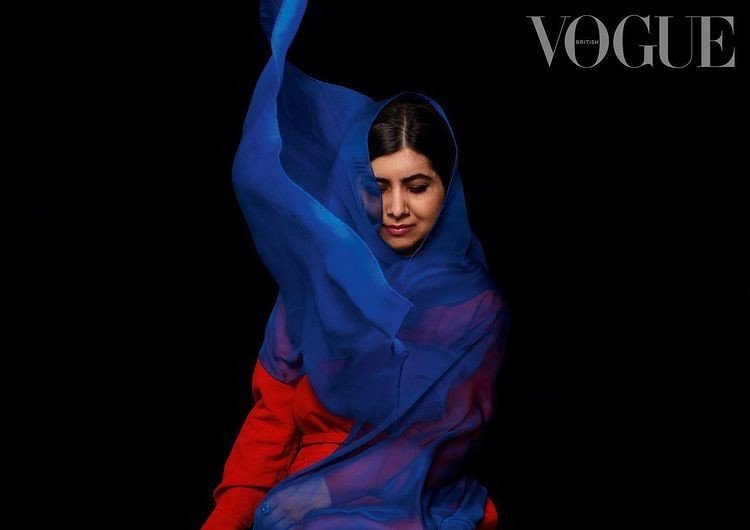
In a personal essay written for British Vogue Nobel Peace Prize Winner Malala Yousafzai talks about her marriage with Asser Malik, her comments about partnership vs. marriage and how she met the guy she married this week.
“In the summer of 2018, Asser was visiting friends at Oxford and we crossed paths. He worked in cricket, so I immediately had a lot to discuss with him. He liked my sense of humour. We became best friends. We found we had common values and enjoyed each other’s company. We stood by each other in moments of happiness and disappointment. Through our individual ups and downs, we talked and listened to each other. And when words failed, I sent him a link to our horoscope compatibility, hoping the stars could help reinforce our connection,” Malala writes in the article.
Addressing the controversy in an interview where Malala talks about a partnership instead of marriage, Malala says, “Knowing the dark reality many of my sisters face, I found it hard to think of the concept of marriage. I said what I had so often said before – that maybe it was possible that marriage was not for me.”
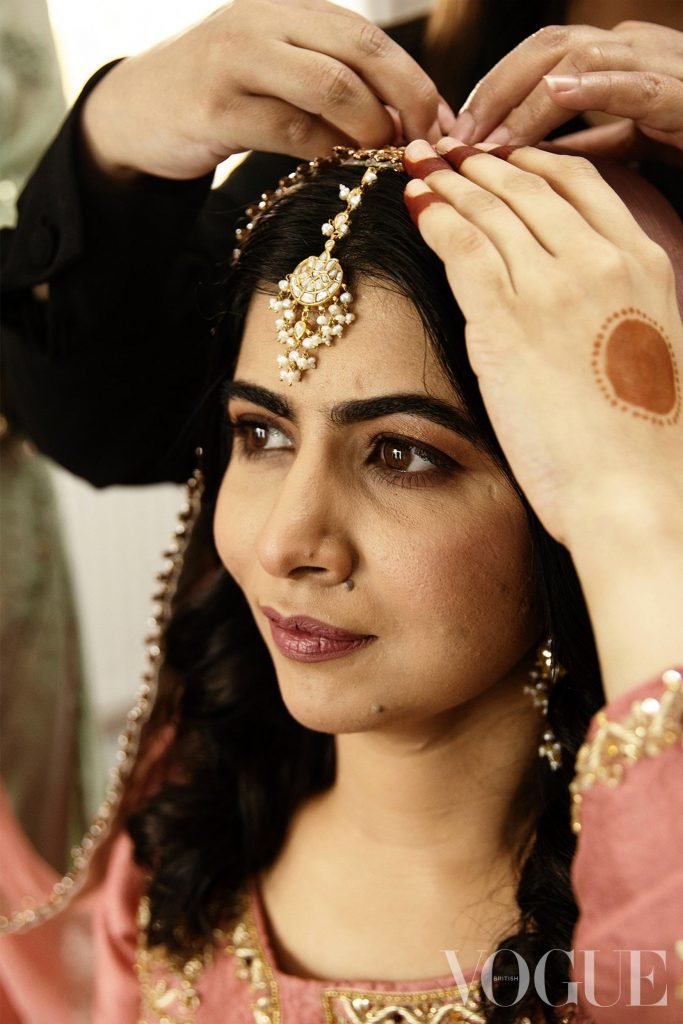
Malala Yousafzai at her Nikkah. Image Courtesy: British Vogue
Finding friendship and love in Asser, Malala, who says she did not expect to be married before she was 35-years-old, changed her mind. “With education, awareness and empowerment, we can start to redefine the concept of marriage and the structure of relationships, along with many other social norms and practices. Culture is made by people – and people can change it too. My conversations with my friends, mentors and my now partner Asser helped me consider how I could have a relationship – a marriage – and remain true to my values of equality, fairness and integrity.”
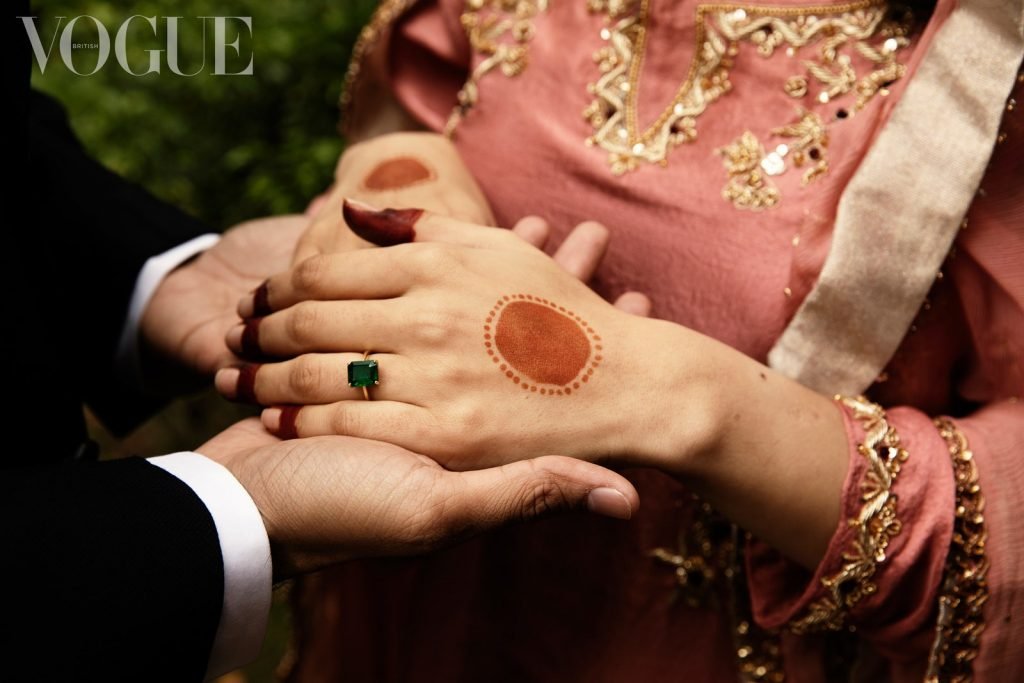
Discussing how the Nikkah took place, Malala says it was a wholly family affair. “It was a small affair and group effort. My mother and her friend got my wedding clothes from Lahore, Pakistan. Asser’s mother and sister gave me the jewellery I wore. My father booked the food and decorations. My assistants organised photographers and a make-up artist. My three best girlfriends from school and Oxford took off work and travelled to be there. I put henna on my hands myself, after discovering I was the only one of my family and friends who had the talent! Asser spent several hours in the mall with me the day before the ceremony, buying his pink tie and pocket square and my sandals. My little brothers even wore suits.”
Malala did her own mehndi for the event
And how does she feel about her future? Malala writes that, “In Asser, I found a best friend and companion. I still don’t have all the answers for the challenges facing women – but I believe that I can enjoy friendship, love and equality in marriage. “
Malala looked radiant in a tea-pink shalwar kameez while Asser Malik wore a black suit with a matching tea-pink tie to compliment Malala’s dress.
July 12, 2021, Asser wished Malala on her 24th birthday by tweeting, “Happy Birthday to the most amazing @Malala. @iamsrk had to make a necessary cameo of course.”
June 23, 2019, AsserMalik shared a picture with Malala on his Instagram profile with the caption,” Best day at @homeofcricket with Waqar Younis, @aslitareen, and @malala #CWC19.”
Skilled in Sports Management and developing unique concepts and ideas, Asser brought the world’s largest amateur cricket league (LMS) in Pakistan.
He is currently serving as the General Manager High Performance at the Pakistan Cricket Board (PCB).
His formative education is from Aitchison College and then he went to Lahore University of Management Science (LUMS) to pursue a bachelor’s in Economics and Political Science.
Malala Yousafzai met American actor Angelina Jolie and praised her for writing a book on children’s rights. The book is about making children aware of the injustice around them and to teach them how to stand against injustice.
Malala, while sharing the pictures with Jolie, wrote, “I’m proud of my friend Angelina Jolie and Amnesty International for writing Know Your Rights, a book to give children the knowledge they need to stand up to injustice in their own lives and around the world.”
“To the children and young people who are reading this: You have rights that are equal in status to that of any adult”, she added.
Mala continued by saying, “No one has the right to harm you, to silence you, to tell you what to think or believe, to treat you as if you don’t matter, or to prevent you from participating fully in society.”
Malala Yousafzai, Pakistani activist for female education and the youngest Nobel Prize laureate, penned down a heartfelt piece reminding the world of her dreadful experience nine years ago, when she was shot by the Taliban for raising her voice for girl’s education.
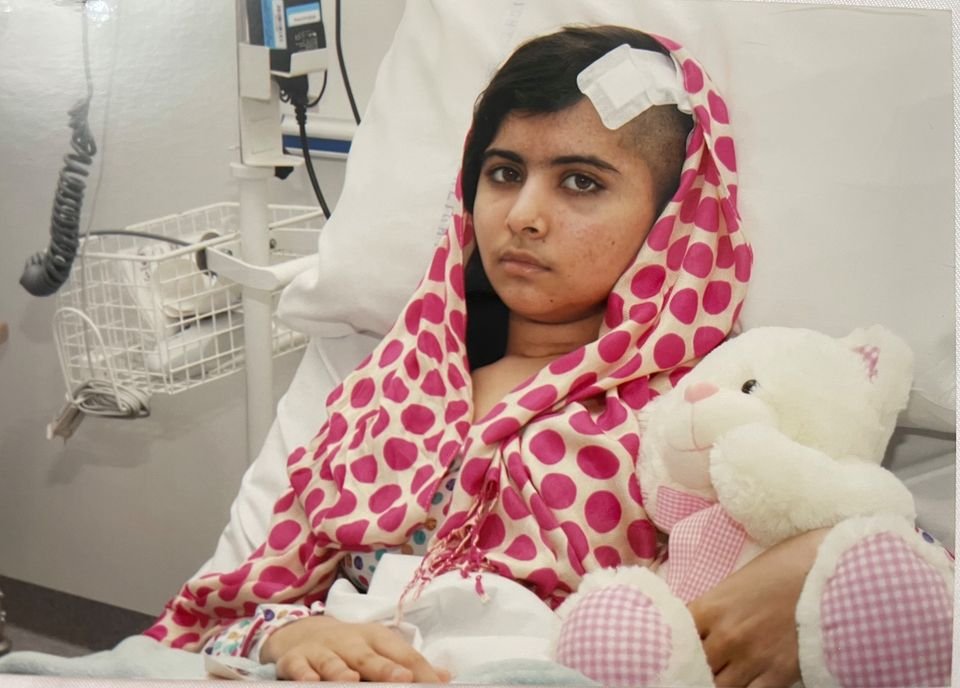
“In October 2012, a member of the Pakistani Taliban boarded my school bus and shot one bullet into my left temple. The bullet grazed my left eye, skull, and brain – lacerating my facial nerve, shattering my eardrum and breaking my jaw,” wrote Malala.
“The emergency surgeons in Peshawar, Pakistan removed my left temporal skull bone to create space for my brain to swell in response to the injury. Their quick action saved my life.”
Malala at the hospital post her surgery in 2012
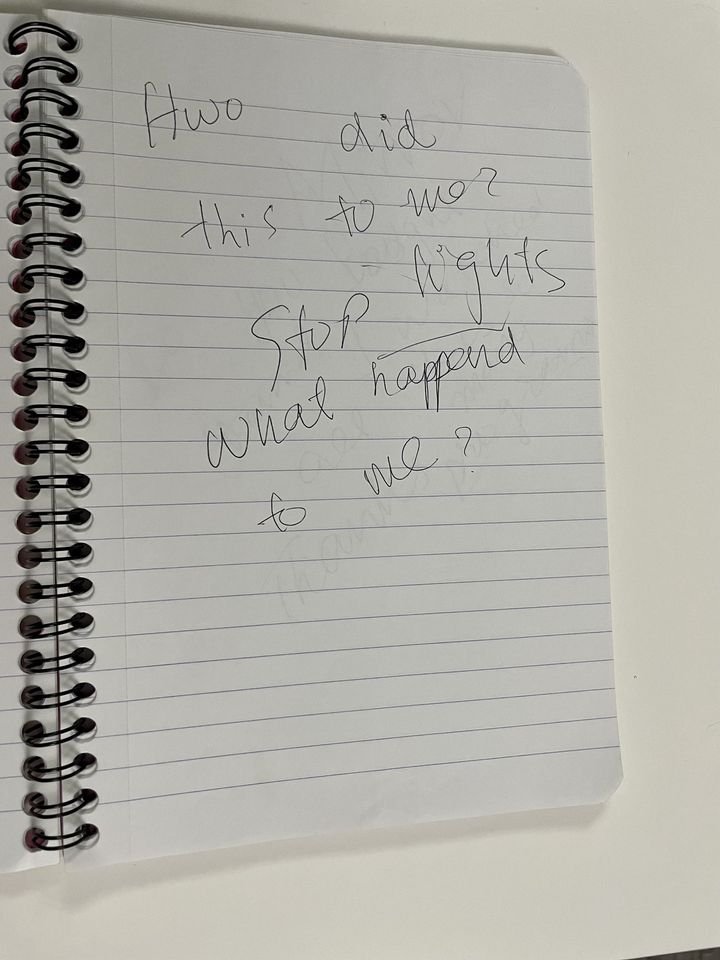
“Days later I still couldn’t speak, but I started to write things in a notebook and show them to everyone who came to my room. I had questions: What happened to me? Where is my father? Who is going to pay for this treatment? We don’t have money.”
Remembering her experience nine years ago, Malala wrote, “I tried to stay calm. I told myself, When they discharge me, I will find a job, earn some money, buy a phone, call my family, and work until I pay all the bills I owe to the hospital.”
“I touched my abdomen; it felt hard and stiff. I asked the nurse if there was a problem with my stomach. She informed me that when the Pakistani surgeons removed part of my skull bone, they relocated it in my stomach and that, one day, I would have another surgery to put it back in my head.”
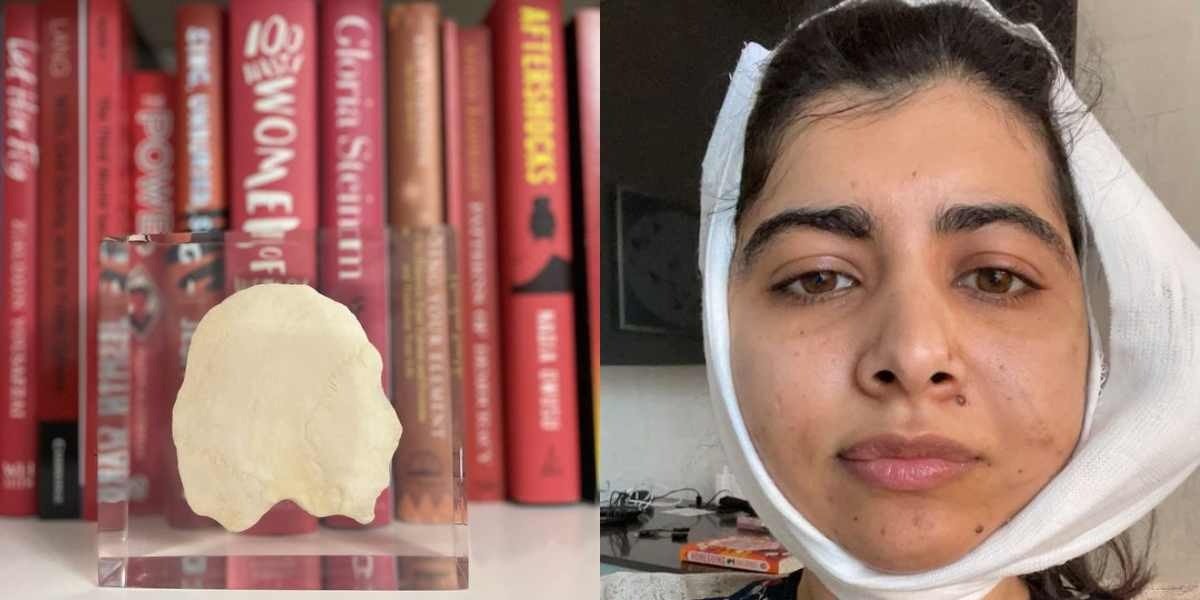
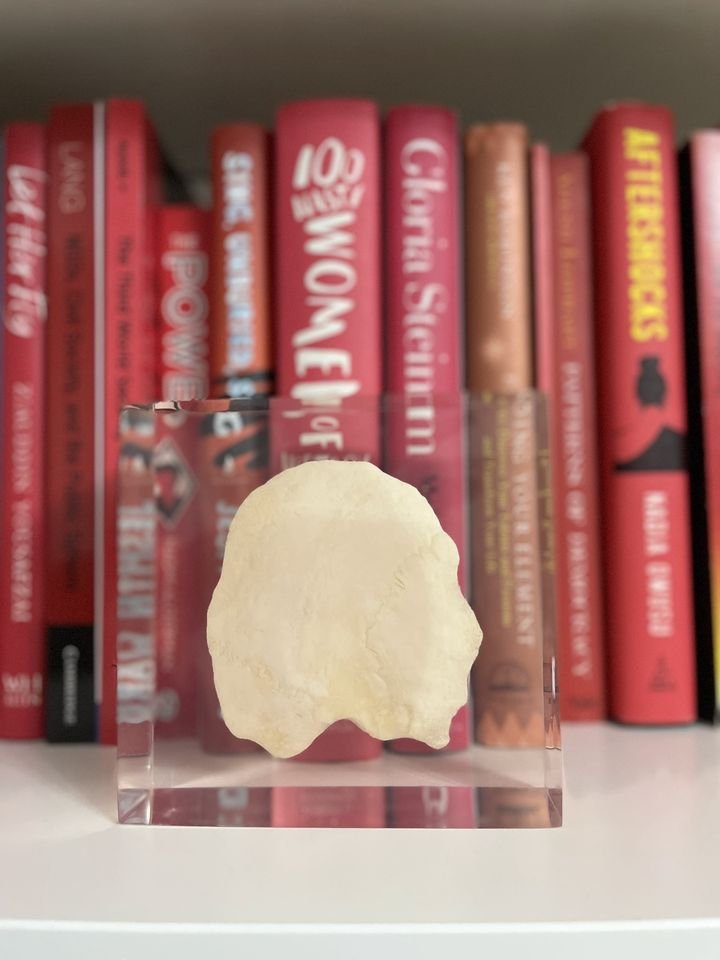
“But the UK doctors eventually decided to fit a titanium plate where my skull bone had been, reducing the risk of infection, in a procedure called a cranioplasty. They took the piece of my skull out of my stomach. Today it sits on my bookshelf,” wrote Malala.
Malala’s skull bone, residing on her bookshelf
“A few months after the nerve surgery and with regular facial massage, my symmetry and movement had improved a little. If I smiled with my lips closed, I could almost see my old face. I covered my mouth with my hands when I laughed – so people wouldn’t see that one side didn’t work as well as the other. I avoided staring in the mirror or watching myself on video. In my own mind, I thought I looked fine. I accepted the reality and was happy with myself,” says Malala.
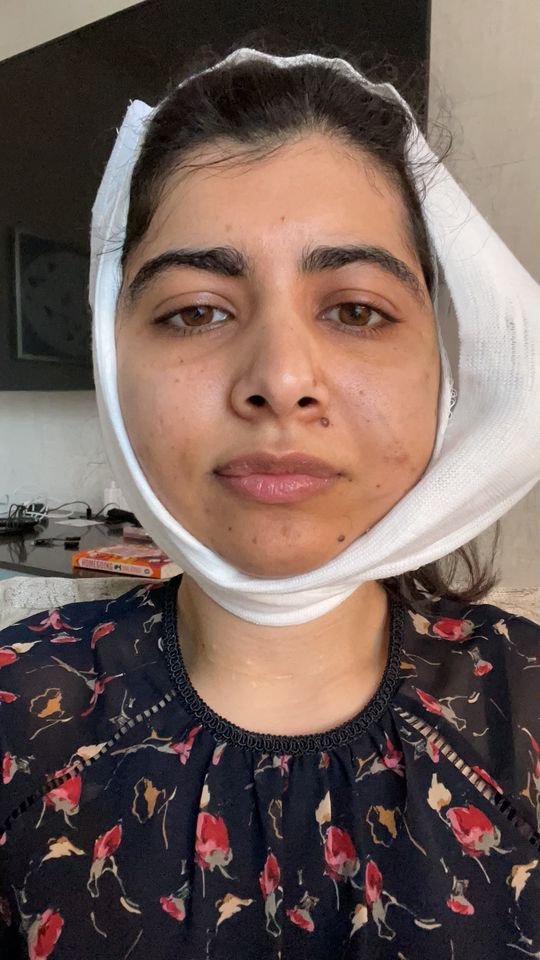
“On August 9 in Boston, I woke up at 5:00am to go to the hospital for my latest surgery and saw the news that the Taliban had taken Kunduz, the first major city to fall in Afghanistan. Over the next few days, with ice packs and a bandage wrapped around my head, I watched as province after province fell to men with guns, loaded with bullets like the one that shot me,” wrote the activist.
Malala after her recent surgery in Boston
“As soon as I could sit up again, I was making phone calls, writing letters to heads of state around the world, and speaking with women’s rights activists still in Afghanistan. In the last two weeks, we’ve been able to help several of them and their families get to a safe place. But I know we can’t save everyone,” writes Malala.
“Nine years later, I am still recovering from just one bullet. The people of Afghanistan have taken millions of bullets over the last four decades. My heart breaks for those whose names we will forget or never even know, whose cries for help will go unanswered,” wrote Malala Yousafzai.
Federal Minister for Information Fawad Chaudhry had a telephonic conversation with Pakistani Nobel Laureate Malala Yousafzai. During the conversation, Malala expressed her concern over the situation of women in Afghanistan as the Taliban took over Kabul on Sunday and said that Pakistan should play its role in women’s education in Afghanistan.
Malala said that she also wrote a letter to Prime Minister Imran Khan in this regard.
Fawad Chaudhry assured Malala that Pakistan will play its role in promoting education in Afghanistan. He also said that Pakistan is providing educational facilities to almost 6,000 Afghan refugee children.
Yesterday, Malala tweeted, “We watch in complete shock as Taliban takes control of Afghanistan. I am deeply worried about women, minorities and human rights advocates.”
“Global, regional and local powers must call for an immediate ceasefire, provide urgent humanitarian aid and protect refugees and civilians,” she added.
We watch in complete shock as Taliban takes control of Afghanistan. I am deeply worried about women, minorities and human rights advocates. Global, regional and local powers must call for an immediate ceasefire, provide urgent humanitarian aid and protect refugees and civilians.
Malala Yousafzai, a name that evokes different emotions – from pride to love to respect to a need to protect her from everything that is vile. Malala is the youngest Nobel laureate and the second Pakistani to win the Nobel after Dr Abdus Salam. Unfortunately, both Pakistani Nobel laureates have been vilified by many in Pakistani society – Dr Salam for being for being an Ahmadi and Malala for just being Malala.
Malala’s recent interview to British Vogue has created quite a controversy yet again. So much so that the Khyber Pakhtunkhwa Assembly has even asked Malala to explain her comments regarding partnership. This despite the fact that Malala’s father, Ziauddin Yousafzai, explained in a tweet that Malala’s comments were taken out of context by the media and social media and have been spread in a negative way.
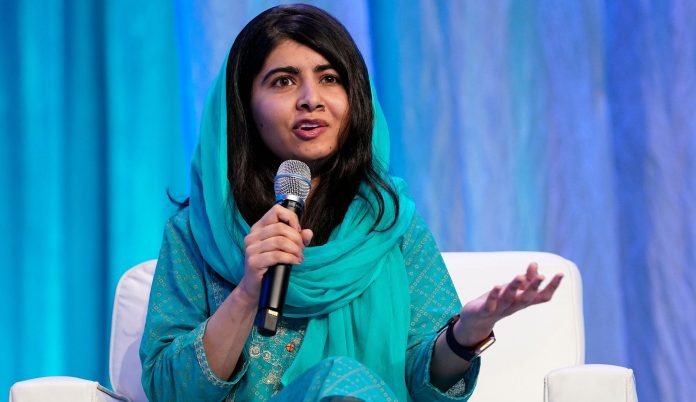
The 23-year-old young girl spoke about several issues – from relationships to wearing a dupatta to politics to college life. In her interview, the young Nobel Laureate defended her choice to wear a dupatta (scarf) to cover her head. “And Muslim girls or Pashtun girls or Pakistani girls, when we follow our traditional dress, we’re considered to be oppressed, or voiceless, or living under patriarchy. I want to tell everyone that you can have your own voice within your culture, and you can have equality in your culture.” She also talked about marriage and how she is unsure about getting married. She was quoted as asking why marriage “can’t just be a partnership”. Several people on social media and our very own Khyber Pakhtunkhwa Assembly have taken this as an opposition to the concept of nikkah or marriage. It seems quite obvious that as any other young girl of the same age, Malala is unsure of what being married entails. She is asking why marriage is seen as just a contract or signed papers and not a partnership… a partnership that is more about companionship, similar values, compatibility, etc. She did not say anything about nikkah or a live-in relationship, which is how her words are being misconstrued and misinterpreted. It is quite appalling to see the way Malala is being attacked for an innocent query.
This is of course not the first time that Malala is targeted so viciously on social media. That she barely survived a brutal assassination attempt by the Taliban is questioned by the anti-Malala brigade. They call it a ‘drama’. Well, they should be glad that none of them have had to go through this brutality. When Malala released a statement on Israel and Palestine, she was questioned for why it was not worded more strongly. Of course these Twitter warriors did not know that Malala has done far more for the children of Gaza than any one of them. Back in 2014, she gave $50,000 for the reconstruction of Gaza schools. In May this year, Malala donated $150,000 for children in Gaza. But who can argue with social media warriors and conspiracy theorists with logic?
Let Malala live her life and give her a break. She does not owe anyone an explanation. Long Live, Malala, our pride!