Tag: Manufacturing

  • Car sales increase in Pakistan despite high prices, economic challenges

    Car sales increase in Pakistan despite high prices, economic challenges

    In a surprising turn of events, the soaring prices of cars in Pakistan have not deterred buyers, as car sales experienced a notable uptick in February 2024.

    According to data released by the Pakistan Automotive Manufacturers Association (PAMA), car sales edged up by 1.94 per cent, reaching 7,953 units, compared to 7,802 units recorded in January 2024.

    This positive momentum follows a robust performance in the preceding month, where car sales hit their highest mark since December 2022.

    Analysts attribute this continued growth to the momentum generated by the new year, which has carried over into February.

    Year-on-year comparisons reveal a substantial increase, with car sales spiking by 2.18 times compared to February 2023, when only 3,642 units were sold.

    However, despite this recent surge, cumulative sales for the first eight months of fiscal year 2024 stand at 46,417 units, marking a 40.93 per cent decline from the same period last year.

    Similarly, the production of passenger cars has witnessed a significant downturn, with 8MFY24 recording 48,402 units, reflecting a 40.84 per cent decrease compared to the previous fiscal year.

    In February alone, production plummeted by 16.77 per cent month-on-month, totaling 8,002 units, down from 9,614 units in January 2023.

    Nonetheless, on a year-on-year basis, production saw a remarkable surge of 69.97 per cent, indicating a shift in manufacturing trends.

    Despite these fluctuations, the automotive landscape faces challenges, notably with Pak Suzuki Motor Company announcing two price hikes within a span of ten days in response to increased sales tax.

    The repercussions of these adjustments on sales are anticipated to unfold in the coming weeks, as the market adapts to the new pricing structure.

  • Toyota manufacturer in Pakistan halts car production amid parts shortage

    Toyota manufacturer in Pakistan halts car production amid parts shortage

    Indus Motor Company (IMC), the manufacturer of Toyota vehicles in Pakistan, has declared a temporary shutdown of its production plant for a duration of six days.

    The decision stems from the company’s concern over low inventory levels and a shortage of essential components, as disclosed in a formal notice submitted to the Pakistan Stock Exchange (PSX).

    The notice specified, “Based on the current low level of inventory of manufactured vehicles and the shortage of parts and components for vehicle manufacturing, due to supply chain challenges, the company has decided to close its production plant from March 6th, 2024, to March 11th, 2024 (both days inclusive).”

    Pakistan’s automotive sector is grappling with various challenges, including the nation’s sluggish economic growth, surging inflation rates, and elevated borrowing costs, all of which are contributing to a decline in vehicle sales.

    To address these challenges, Indus Motor Company recently announced its board’s approval of an investment of approximately Rs3 billion.

    This investment aims to enhance the localization of production, a crucial step in the company’s broader strategy to consistently increase the localization of parts and components in locally manufactured vehicles. 

    This temporary shutdown underscores the broader challenges facing the automotive industry in Pakistan and reflects IMC’s proactive approach to managing its production in response to current market conditions.

  • Pakistan’s mobile phone imports skyrocket, surpassing $987 million in first half of FY 23-24

    Pakistan’s mobile phone imports skyrocket, surpassing $987 million in first half of FY 23-24

    Pakistan has witnessed a remarkable surge in mobile phone imports, reaching $987.539 million during the first half (July–January) of the fiscal year 2023–24. 

    This marks a substantial growth of 138.08 per cent compared to the same period in the previous fiscal year, where imports totaled $414.800 million.

    The data, released by the Pakistan Bureau of Statistics (PBS), underscores the country’s increasing reliance on imported mobile devices.

    In January 2024 alone, Pakistan’s mobile phone imports rose by 10.70 per cent on a month-on-month basis, totaling $194.928 million, compared to $176.093 million in December 2023. 

    Year-on-year comparisons reveal an even more staggering growth of 275.15 per cent in January 2024, compared to $51.960 million in January 2023.

    The overall telecom imports into Pakistan during July–January 2023–24 amounted to $1.243 billion, showcasing a robust 93.06 per cent growth compared to the same period in the previous fiscal year. 

    Year-on-year, the growth in overall telecom imports stood at an impressive 197.07 per cent, reaching $232.709 million in January 2024, compared to $78.336 million in January 2023.

    Despite challenges faced by the local manufacturing sector, including a decline of around four per cent in local manufacturing and assembling of mobile handsets during the calendar year 2023, commercial imports of mobile handsets increased. 

    Official data revealed that local manufacturing plants produced 21.28 million mobile handsets in 2023, compared to 21.94 million in 2022 and 24.66 million in 2021. However, commercial imports rose from 1.53 million in 2022 to 1.58 million in 2023.

    Moreover, of the locally manufactured and assembled mobile handsets in 2023, 13 million were 2G devices, and 8.28 million were smartphones. 

    According to the Pakistan Telecommunication Authority (PTA), 59 per cent of mobile devices in Pakistan are smartphones, while 41 per cent are 2G devices.

    Despite the challenges faced by the local manufacturing sector, the significant growth in mobile phone imports underscores Pakistan’s increasing reliance on imported devices, contributing to the country’s evolving telecom landscape.

  • Pakistan’s key industries report 3.63% output increase

    Pakistan’s key industries report 3.63% output increase

    In November 2023, Pakistan’s Large Scale Manufacturing Industries (LSMI) experienced a notable monthly growth of 3.63 per cent, reaching a production index of 114.85, as reported by the Pakistan Bureau of Statistics (PBS).  

    This marks an increase from the October 2023 figure of 110.83. 

    On an annual basis, LSMI output demonstrated a year-on-year rise of 1.59 per cent, contrasting with the November 2022 recorded index of 113.05. 

    However, when considering the cumulative data for the first five months of Fiscal Year 2024 (5MFY24), LSMI exhibited a marginal decline of 0.8 per cent when compared to the corresponding period in the previous year. 

    Various sectors played a significant role in contributing to this overall decline of -0.80 per cent. Notable contributors to the growth include food (0.53), garments (3.18), petroleum products (0.43), chemicals (0.32), pharmaceuticals (1.56), and cement (0.17).  

    Conversely, sectors such as tobacco (-0.80), textiles (-2.48), paper and board (-0.11), iron and steel products (-0.09), electrical equipment (-0.45), automobiles (-1.70), and furniture (-1.65) experienced contractions. 

    The provisional quantum indices of LSMI for November 2023, based on the 2015-16 reference year, have been formulated using the latest data provided by the relevant source agencies. 

  • Pakistan navigates economic turbulence in 2023: A year of challenges and resilience 

    Pakistan navigates economic turbulence in 2023: A year of challenges and resilience 

    2023 posed significant challenges for Pakistan’s economy, characterised by a sharp slowdown, escalating inflation, and a near-default situation. However, amidst the turbulence, glimpses of progress emerged, suggesting a potential path towards recovery. 

    To meet International Monetary Fund (IMF) conditions, the government undertook stringent fiscal reforms, such as raising taxes and cutting subsidies. Despite being unpopular, these measures were deemed necessary to control the budget deficit and rein in inflation. 

    The latter part of the year witnessed positive indicators. Inflation, though still elevated, began to exhibit a downward trend. The agricultural sector experienced a robust comeback, particularly in cotton and rice production, while large-scale manufacturing showed a modest improvement. 

    Despite these positive developments, Pakistan’s economic recovery remains precarious. The global economic slowdown and geopolitical tensions continue to pose external challenges. Internal factors, such as political uncertainty and ongoing security issues, further contribute to the risks. 

    Throughout 2023, Pakistan consistently made headlines, grappling with economic crises, food shortages, mass protests, political arrests, and election-related upheavals. Here’s a recap of the key events in Pakistan during the year: 

    In 2023, Pakistan faced new lows, with the Pakistani rupee hitting an all-time low, surpassing the PKR 300 mark against the US dollar in August. Foreign reserves with the State Bank of Pakistan (SBP) dwindled to a concerning $3.1 billion in January 2023. 

    The country struggled to secure funding from the IMF, leading the SBP to raise interest rates by 300 basis points to 20 per cent, the highest since October 1996. Additional taxes were introduced, accompanied by increases in gas and electricity prices. Despite occasional reductions, petrol prices remained above Rs250 per litre. 

    The Consumer Price Index (CPI) reached an unprecedented 38.0 per cent YoY in May 2023, as per the CEIC database. Although it moderated to 26.9 per cent YoY in October, essential items like milk and onions became prohibitively expensive. 

    To combat inflation, Pakistan launched a free flour scheme, particularly in Punjab, under the Ramzan package. However, a tragic stampede in Karachi in April-March resulted in over 10 casualties at a free food distribution centre. 

    In a significant development, Pakistan secured a staff-level agreement with the IMF for a $3 billion, nine-month standby arrangement (SBA). The IMF executive board is set to convene on January 11, 2024, to consider final approval for the next $700 million tranche. 

    Summing up 2023 for Pakistan, the year was marked by elevated bank credit costs, volatile energy supplies, import restrictions, political instability, and weakened law and order. While some sectors, such as sugar, fertilisers, cement, and IT services, performed relatively well, others, like textiles, automotive, and pharmaceuticals, faced considerable distress. 

    Entrepreneurs faced unprecedented challenges, with a myriad of crises affecting the business landscape. Experts described the first six months as particularly challenging, citing uncertainty, a balance of payments crisis, and a shortage of foreign exchange. 

    The latter half of the year saw some alignment of factors, but challenges persisted, including inflation, unemployment, and continued monetary policy tightening. Despite these, there was improvement in donor relationships, credit rollovers, and foreign exchange inflows. 

    The automotive industry faced an extremely challenging year with import restrictions and demand suppression contracting the market. Despite absorbing the impact, optimism prevails for long-term gains from the envisioned economic restructuring. 

    For sustainable economic growth, Pakistan must commit to fiscal prudence, structural reforms, and export diversification. Investments in human capital, especially in education and healthcare, are crucial for long-term success. 

    In the backdrop of Pakistan’s economic challenges, its relations with neighbouring countries, particularly Afghanistan and India, continue to play a pivotal role in shaping the economic landscape.

    Islamabad’s interactions with Kabul and New Delhi remain tense, adding another layer of complexity to the existing economic challenges.

    Pakistan faces persistent challenges in its relationship with Afghanistan, characterized by sporadic skirmishes along the Afghanistan-Pakistan border.

    These clashes, involving Pakistani and Taliban forces, result in temporary cross-border closures and gunfire exchanges.

    In September 2023, a key closure led to an estimated $1 million loss over one week. Diplomatic efforts to curb cross-border attacks and pressure the Taliban demonstrate the evolving nature of these regional ties.

    Furthermore, Pakistan’s implementation of the Illegal Foreigners Repatriation Plan in late 2023 triggered widespread public unrest, particularly impacting nearly 2 million undocumented Afghan refugees.

    The policy raised concerns about its implications for cross-border trade and travel, leading to protest campaigns along the Chaman-Spin Boldak border.

    Unlike the Russia-Ukraine war, the ongoing Israel-Palestine conflict has had a limited economic impact on Pakistan. The main consequence is an increased cost, which, fortunately, has remained around six per cent thus far.

    Officials in the planning ministry and the State Bank closely monitor Middle East developments, formulating strategies to mitigate potential adverse impacts on the economy.

    While the likelihood of an Arab oil embargo is low, vigilance is crucial, especially for a country with a fragile economy. Contingency plans should be in place to address various possible scenarios, considering the potential for disruptions in global markets and supply chains.

    Global conflicts and economic stability

    Conflicts worldwide, including the Russia-Ukraine war, have demonstrated the potential for disruptions in fuel and food prices. Middle East nations, as key global oil suppliers, significantly influence Pakistan’s economy.

    The intensifying Middle East conflict poses challenges, impacting oil prices, currency fragility, and potential cost escalations in goods and services.

    Given Pakistan’s historical ties with Western countries, including FDI, the conflict raises concerns about the stability of the economy. The textile industry emphasises the necessity for early elections and a stable elected government to effectively address challenges arising from the conflict.

    Business organisations, such as the Federation of Pakistan Chamber of Commerce and Industry (FPCCI), view the situation as evolving and refrain from taking a stance at this point.

    The president of Pakistan’s textile industry advocates for early elections and a stable government to address challenges effectively.

    Economists highlight Pakistan’s susceptibility to oil price fluctuations and the potential impact of the Gulf crisis on remittance inflows.

    While some businesses anticipate no major shift in consumer preferences regarding Western brands, concerns linger about negative sentiments affecting certain brands. Calls to boycott Western brands may arise, although consistent follow-through remains uncertain.

    In the midst of these regional and global challenges, Pakistan’s economic resilience is being tested. Successful navigation through these complexities requires strategic planning, continued reforms, and a steadfast commitment to stability and prosperity.


  • Robot mistakes man for box, crushes him to death

    Robot mistakes man for box, crushes him to death

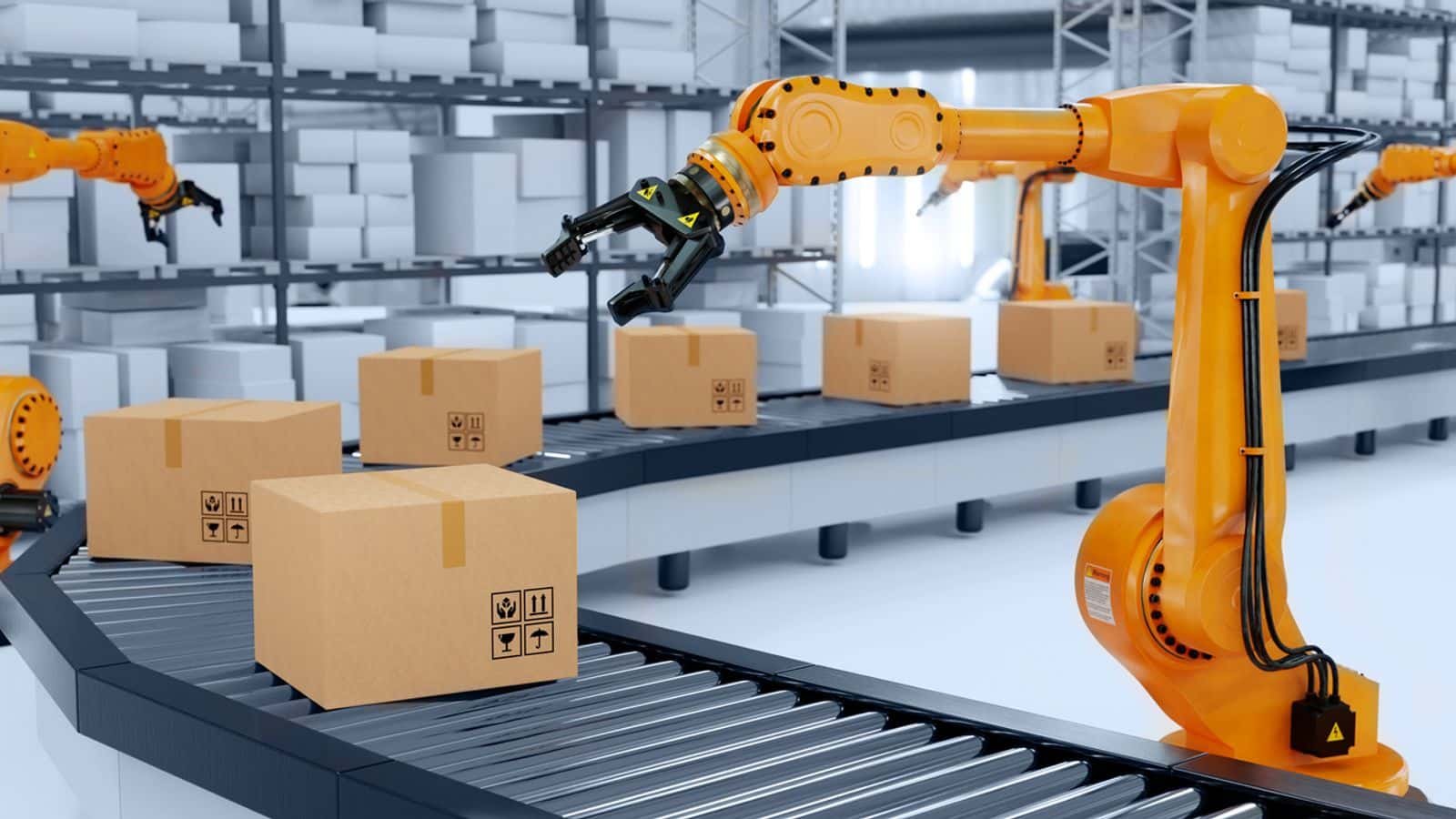
    A South Korean man was misidentified as a box by a robot that crushed him to death, local media has reported.

    The incident took place when the worker, reportedly in his 40s, was inspecting the robot’s sensor at a warehouse for agricultural products.

    Yonhap news agency reports that the robot was lifting boxes of bell peppers when it mistook the man for a receptacle.

    According to police sources, the “Mechanical arm pushed the man’s upper body onto a conveyor belt and crushed his face and chest”.

    The man later died in hospital.

    In an official statement released by the Donggoseong Export Agricultural Complex, the plant owner, called for a “precise and safe” system to be established.

    Sky News reports that in March, another South Korean man in his 50s, endured serious injuries after getting trapped by a robot while working at a vehicle parts manufacturing plant.

  • Here’s why Toyota Indus Motor Company is halting car production for one month

    Here’s why Toyota Indus Motor Company is halting car production for one month

    Indus Motor Company (IMC), the leading manufacturer of Toyota vehicles in Pakistan, has announced a temporary production suspension lasting a month due to inventory shortages.

    The company informed the Pakistan Stock Exchange (PSX) of this development.

    Starting on October 17 and concluding on November 17, 2023, Toyota IMC has chosen to halt production in response to insufficient inventory of vehicles and parts stemming from supply chain challenges.

    The company has stated that they will keep stakeholders informed of any adjustments to this plan. This marks the ninth production closure announcement by Indus Motor this year. In the previous month, the company ceased plant operations from September 28 to October 9 due to similar inventory issues.

    In its most recent financial report, Indus Motor recorded a profit-after-tax (PAT) of Rs9.66 billion for FY23, representing a nearly 39 per cent decline compared to the earnings of Rs15.8 billion in the preceding year’s corresponding period.

    The Pakistani auto sector, heavily reliant on imports, has encountered hardships due to government measures to restrict imports and limit LC issuance. Elevated financing costs and substantial car price hikes have also dampened consumer demand.

    In the first quarter of FY24, sales figures reached 20,983 units, reflecting a 40 per cent decrease compared to the same period in the prior year.

    The Pakistani automotive industry is grappling with dwindling demand, primarily attributed to soaring prices, costly auto financing, and increased taxes, all contributing to a year-on-year decline in sales.

  • Inventory challenges lead Indus Motor Company to halt Toyota car production in Pakistan

    Inventory challenges lead Indus Motor Company to halt Toyota car production in Pakistan

    Indus Motor Company Limited, the firm responsible for the assembly of Toyota vehicles in Pakistan, has recently announced a temporary suspension of its production operations until October 9. This significant decision was formally communicated through a notice submitted to the Pakistan Stock Exchange (PSX).

    The rationale behind this temporary cessation of production is primarily linked to the company’s current vehicle inventory status. Indus Motor Company Limited has set the production plant’s closure period from September 28 through October 9 to address these concerns.

    This pause in production is the latest in a series of similar actions undertaken by the company. Previously, Indus Motor Company Limited had temporarily halted production from August 25 to September 6, attributing it to reduced demand and inventory challenges. Additionally, the company faced a production plant shutdown from July 21 to August 3, driven by complications in the importation of raw materials, logistical hurdles in clearing consignments, and disruptions in the supply chain from select international vendors.

    These issues collectively hampered the company’s supply chain, leading to insufficient inventory levels to sustain uninterrupted production. Furthermore, a similar production hiatus had occurred earlier, from June 26 to June 27, with the same underlying reasons.

  • Toyota resumes production after system malfunction halts operations 

    Toyota resumes production after system malfunction halts operations 

    Toyota Motor is set to resume production at its assembly plants in Japan on Wednesday after a recent system malfunction forced a halt in domestic production. The disruption not only affected the world’s largest-selling automaker but also caused disruptions across its supply chain.

    Toyota’s plans to restart operations across 25 production lines in twelve plants within its home market are scheduled to begin on Wednesday morning. The last two plants will come back online in the afternoon.

    The automaker is currently investigating the root cause of the system failure, which prevented Toyota from procuring the necessary components for its production.

    This setback impacted approximately one-third of Toyota’s global production capacity. Toyota’s domestic production was in the process of recovering from output cuts attributed to semiconductor shortages.

    Toyota experienced a 29 per cent increase in output during the first half of the year, marking its first such growth in two years.

    Industry experts have pointed out the challenge Toyota faces in making up for the production loss due to the system outage. One potential strategy could be running extra shifts, although the automaker was already operating at full capacity.

    The system failure also had a cascading impact on other companies within the Toyota Group. Toyota Industries, a group firm, reported partial suspension of operations at two engine plants due to the automaker’s system glitch.

    This incident shed light on Toyota’s reliance on just-in-time inventory management, which aims to minimize costs but leaves the company vulnerable to supply chain disruptions.

    While the exact cause of the malfunction is still being investigated, it underscores the sensitivity of modern manufacturing processes to unforeseen interruptions.

    The broader context in Japan includes reports of harassing phone calls received by businesses and government offices, possibly due to geopolitical factors. These calls have been linked to China and the decision to release treated radioactive water from the damaged Fukushima nuclear power plant into the Pacific Ocean.

  • Output of Pakistan’s main industries declines by over 10%

    Output of Pakistan’s main industries declines by over 10%

    The economic landscape of Pakistan has faced a notable setback, with the Large Scale Manufacturing Industries (LSMI) output experiencing a decline of 10.26 per cent during the fiscal year 2022–23 when compared to the same period in 2021–22. This concerning information has been revealed by the Pakistan Bureau of Statistics (PBS), shedding light on the current state of the country’s industrial sector.

    The provisional Quantum Index numbers of the large-scale manufacturing industries (QIM) further underscore this decline. Specifically, the LSMI output took a significant hit in June 2023, plummeting by 14.96 per cent compared to June 2022. However, there is a glimmer of hope, as the output experienced a slight uptick of 0.98 per cent in comparison to May 2023.

    Diving into the specifics, the LSMI Quantum Index Number (QIM) for June 2023 has been estimated at 112.21, while the QIM for the period of July–June 2022–23 stands at 114.83. These numbers provide a quantitative overview of the challenges faced by the manufacturing sector during this time frame.

    The foundation for these indices lies in data provided by several key agencies, including the OCAC, Ministry of Industries and Production, Ministry of Commerce, and Provincial Bureau of Statistics (BoS). Their collaboration has enabled the creation of the provisional quantum indices of LSMI for June 2023, based on the 2015–16 base year.

    Various industries have played a role in shaping this decline, with notable contributors including food (-1.14 per cent), tobacco (-0.65 per cent), textiles (-3.65 per cent), garments (2.79 per cent), petroleum products (-0.89 per cent), chemicals (-0.52 per cent), pharmaceuticals (-1.85 per cent), cement (-0.86 per cent), iron and steel products (-0.24 per cent), electrical equipment (-0.54 per cent), and automobiles (-2.21 per cent).

    Analysing the production trends over a larger period, July–June 2022–23, as compared to July–June 2021–22, reveals a mixed picture. While there have been increases in production for wearing apparel, furniture, and other manufacturing (football), there have also been notable decreases in food, tobacco, textile, coke, and petroleum products, pharmaceuticals, chemicals, non-metallic mineral products, machinery and equipment, automobiles, and other transport equipment.

    Industries that demonstrated growth during the July-June period include wearing apparel (27.16 per cent), leather products (1.29 per cent), furniture (35.51 per cent), and other manufacturing (football) (28.99 per cent). However, sectors such as food (6.90 per cent), beverages (6.43 per cent), tobacco (28.36 per cent), textiles (18.68 per cent), and many others have faced declines, indicating a complex and multifaceted economic situation.

    In particular, the petroleum products industry has witnessed a substantial decline of 13.39 per cent during July–June 2022–23. High-speed diesel and furnace oil also experienced negative growth, with decreases of 17.09 per cent and 14.65 per cent, respectively. On the other hand, jet fuel oil managed to buck the trend with a growth rate of 6.63 per cent, suggesting a nuanced narrative within the energy sector.

    Cement production, a crucial indicator of construction and infrastructure activity, also faced a decline of 13.67 per cent during July–June 2022–23, highlighting potential challenges in these sectors.

    As Pakistan navigates through these economic fluctuations, stakeholders and policymakers will need to closely analyse the contributing factors to these declines and strategize effectively to bolster the country’s manufacturing sector, ensuring sustainable growth and resilience in the face of challenges.