Tag: March 2024

  • Pakistan’s exports surge by 8.93% to Rs22.91 billion

    Pakistan’s exports surge by 8.93% to Rs22.91 billion

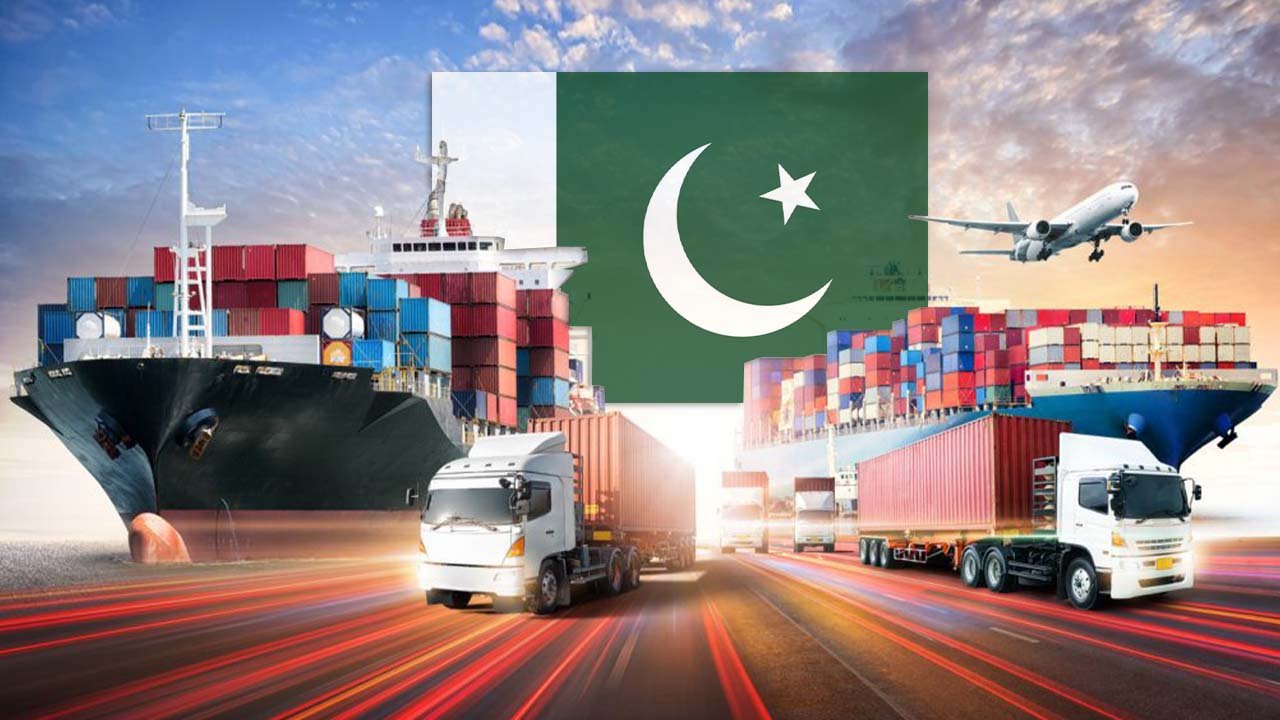
    Pakistan’s export sector has shown a notable surge, with an 8.93 per cent increase recorded in the initial nine months of the current fiscal year (2023–24) compared to the corresponding period in the previous year.

    Data released by the Pakistan Bureau of Statistics (PBS) indicates that exports soared to $22.914 billion from July to March (2023–24), marking a significant rise from the $21.036 billion recorded during the same timeframe in 2022–2023.

    Conversely, imports experienced a decline of 8.65 per cent, dropping to $39.944 billion from $43.724 billion in the previous year.

    This resulted in a notable improvement in the trade deficit, which amounted to $17.030 billion for the first nine months of the current fiscal year, showcasing a substantial decrease of 24.94 per cent from the $22.688 billion recorded during the corresponding period last year.

    Analyzing the performance for March 2024 against March 2023, exports registered a notable uptick of 7.99 per cent on an annual basis, climbing from $2.366 billion to $2.555 billion.

    Conversely, imports surged by 25.86 per cent, reaching $4.726 billion compared to $3.755 billion in March 2023.

    In terms of month-to-month performance, while exports in March 2024 experienced a marginal decline of 1.08 per cent from February 2024’s $2.583 billion, imports demonstrated a noteworthy increase of 9.25 per cent from the $4.326 billion recorded in February 2024, as per PBS data.

    Pakistan, exports, trade deficit, fiscal year 2023–24, economic growth, Pakistan Bureau of Statistics, imports, March 2024, global trade, commerce, trade statistics,

  • Govt expected to increase petrol price by Rs3.5 for first half of March

    Govt expected to increase petrol price by Rs3.5 for first half of March

    In a possible move that could impact consumers, the government is considering a hike in petrol prices by Rs3.5 per litre for the initial half of March 2024.

    As of the latest estimates until February 27, 2024, the ex-refinery price of petroleum has seen a noticeable rise, reaching Rs195.75 per litre. This reflects an increase of approximately Rs3.58 compared to the preceding fortnight’s price of Rs192.17 per litre.

    Contrary to petrol, there might be no significant adjustment in the price of high-speed diesel (HSD), with the government likely to maintain the current rate due to marginal changes in its pricing structure.

    The national currency has experienced a modest appreciation against the USD since the previous fortnight’s decision, settling at a weighted average rate of approximately PKR 279.37 per USD.

    It is crucial to highlight that, with two more sessions pending before the next pricing update, the final prices will be subject to global market fluctuations and exchange rate variations.

    The official announcement revealing the new prices is scheduled for midnight on February 29, 2024. If approved, these adjustments will remain effective for the first half of March. 

  • Pakistan’s credit rating maintained by Fitch at ‘CCC’ amidst financing challenges

    Pakistan’s credit rating maintained by Fitch at ‘CCC’ amidst financing challenges

    Fitch Ratings, a US-based credit rating agency, has maintained Pakistan’s Long-Term Foreign-Currency Issuer Default Rating (IDR) at ‘CCC,’ according to a statement released on Wednesday.

    The ‘CCC’ rating indicates significant external funding risks due to elevated medium-term financing requirements, notwithstanding some stabilisation and Pakistan’s commendable performance on its current standby arrangement (SBA) with the International Monetary Fund (IMF), as explained by Fitch.

    While anticipating scheduled elections in February and prompt negotiation for a subsequent IMF programme after the SBA concludes in March 2024, Fitch cautioned about potential delays and uncertainties regarding Pakistan’s ability to achieve this.

    Fitch emphasised the potential vulnerability of recent reforms and the prospect of renewed political volatility in the wake of the upcoming elections. Regarding the ongoing IMF programme, Fitch expressed confidence in the unproblematic approval of the recent staff-level agreement (SLA) by the IMF board.

    Fitch’s assessment highlighted the positive outcomes of the programme review, including sustained fiscal consolidation, energy price reforms despite public backlash, and strides towards adopting a more market-driven exchange rate regime.

    However, Fitch also pointed out risks associated with policy implementation, citing a historical pattern of parties across the political spectrum in Pakistan failing to implement or reversing reforms agreed upon with the IMF.