Tag: market conditions

  • Toyota manufacturer in Pakistan halts car production amid parts shortage

    Toyota manufacturer in Pakistan halts car production amid parts shortage

    Indus Motor Company (IMC), the manufacturer of Toyota vehicles in Pakistan, has declared a temporary shutdown of its production plant for a duration of six days.

    The decision stems from the company’s concern over low inventory levels and a shortage of essential components, as disclosed in a formal notice submitted to the Pakistan Stock Exchange (PSX).

    The notice specified, “Based on the current low level of inventory of manufactured vehicles and the shortage of parts and components for vehicle manufacturing, due to supply chain challenges, the company has decided to close its production plant from March 6th, 2024, to March 11th, 2024 (both days inclusive).”

    Pakistan’s automotive sector is grappling with various challenges, including the nation’s sluggish economic growth, surging inflation rates, and elevated borrowing costs, all of which are contributing to a decline in vehicle sales.

    To address these challenges, Indus Motor Company recently announced its board’s approval of an investment of approximately Rs3 billion.

    This investment aims to enhance the localization of production, a crucial step in the company’s broader strategy to consistently increase the localization of parts and components in locally manufactured vehicles. 

    This temporary shutdown underscores the broader challenges facing the automotive industry in Pakistan and reflects IMC’s proactive approach to managing its production in response to current market conditions.

  • Daraz Group plans layoffs amid market challenges

    Daraz Group plans layoffs amid market challenges

    In an internal communication obtained by Reuters on Tuesday, Alibaba-owned e-commerce platform Daraz Group revealed its decision to implement layoffs across the company.

    Acting CEO James Dong stated that the move aims to “adopt a more streamlined and agile structure” to address challenges faced by the company in the market.

    While the memo did not specify the exact number of individuals affected by the layoffs, it acknowledged the necessity of saying farewell to numerous valued members of the Daraz family.

    The company, operating in Pakistan, Bangladesh, Nepal, Sri Lanka, and Myanmar, declined to provide details on the percentage or absolute number of employees impacted.

    Last year, Daraz employed 3,000 individuals globally. However, the company had to reduce its workforce by 11% due to various challenges, including difficult market conditions, the Ukraine crisis, supply chain disruptions, inflation, higher taxes, and reduced government subsidies.

    James Dong emphasised the group’s commitment to addressing the market’s unprecedented challenges and stated, “Despite our efforts to explore different solutions, our cost structure continues to fall short of our financial targets. Facing unprecedented challenges in the market, we must take swift action to ensure our company’s long-term sustainability and continued growth.”

    Dong outlined the group’s strategy moving forward, highlighting a focus on improving the consumer experience.

    This involves diversifying the offerings of value-for-money products, expanding product categories, and enhancing the operational efficiency of sellers on the Daraz platform.

    The company, founded in Pakistan in 2012 as an online fashion retailer, was acquired by Chinese internet giant Alibaba in 2018. James Dong assumed the role of acting CEO in January, succeeding outgoing CEO Bjarke Mikkelsen.

    Mikkelsen had previously noted that Pakistan and Bangladesh are the group’s largest markets.

    Daraz Group, encompassing e-commerce, logistics, payment infrastructure, and financial services, serves more than 30 million shoppers, boasts 200,000 active sellers, and collaborates with over 100,000 brands, according to company statements provided to Reuters.

  • Gold price sees Rs1,700 per tola dip on last trading day

    Gold price sees Rs1,700 per tola dip on last trading day

    In the final trading session of the week, the per-tola price of 24 karat gold in Pakistan witnessed a notable decrease, sliding by Rs1,700. The precious metal was traded at Rs216,000, compared to its previous rate of Rs217,700.

    Similarly, the price of 10 grammes of 24 karat gold experienced a decline of Rs1,458, settling at Rs185, as opposed to its earlier value of Rs186,643.

    Meanwhile, the prices of 10 grammes of 22-karat gold also observed a dip, reaching Rs169,753 from Rs171,089, according to a report by the All Sindh Sarafa Jewellers Association.

    The per-tola and ten-gramme silver prices remained unchanged, standing at Rs2,600 and Rs2,229.08, respectively.

    On the global front, the price of gold faced a decrease of $15 in the international market, falling to $2,059 from its previous value of $2,074, as reported by the Association.

    These fluctuations in the precious metals market highlight the dynamic nature of the economic landscape, influencing both domestic and international trade.

    Investors and consumers alike are keeping a close eye on these developments as they navigate the ever-changing market conditions.

  • SBP-held forex reserves surge to $7.76 billion in December

    SBP-held forex reserves surge to $7.76 billion in December

    In the week concluding on December 22, 2023, Pakistan witnessed a substantial increase in its total liquid foreign reserves, reaching a noteworthy $12,855.7 million.

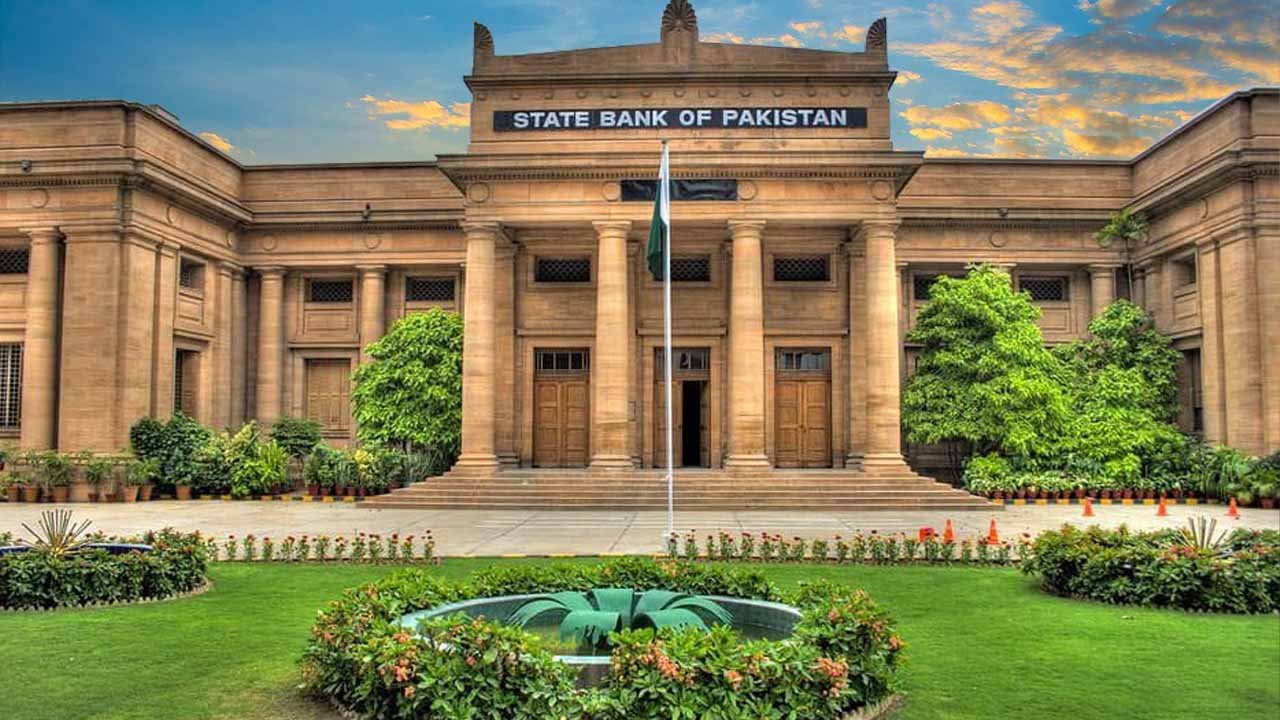
    This surge was reported by the State Bank of Pakistan (SBP), which highlighted that the central bank’s reserves saw a remarkable uptick to $7,757.1 million during the same period.

    The SBP revealed that the surge in reserves, amounting to $852 million, was primarily attributed to official inflows from the Government of Pakistan received during the week under review.

    Simultaneously, commercial banks in the country reported net foreign reserves amounting to $5,098.6 million, further contributing to the overall resilience of Pakistan’s financial position.

    This positive development follows the previous week’s figures, ending on December 15, 2023, where the total liquid foreign reserves were recorded at $12,068.4 million.

    During this period, the central bank held reserves worth $6,904.8 million, with commercial banks reporting net foreign reserves of $5,163.6 million.

    In contrast to the positive financial indicators, Pakistan’s auto industry faced significant challenges in 2023, marked by a sharp decline in car sales of up to 55 per cent. Factories involved in manufacturing car parts also experienced a substantial production cut of 70 per cent.

    The persistent challenges in the auto sector were attributed to the exchange rate crisis, causing a decline in income until the previous year.

    The repercussions of reduced car sales were not limited to impacting the national Treasury; they also resulted in a noticeable decrease in revenue from products.

    An essential factor in this context is the adjustment made by automobile companies following a decrease in the value of the US dollar against the Pakistani rupee.

    In the closing months of 2023, these companies responded by slashing the prices of their units, reflecting the dynamic interplay between economic forces and market conditions.