Tag: market trends

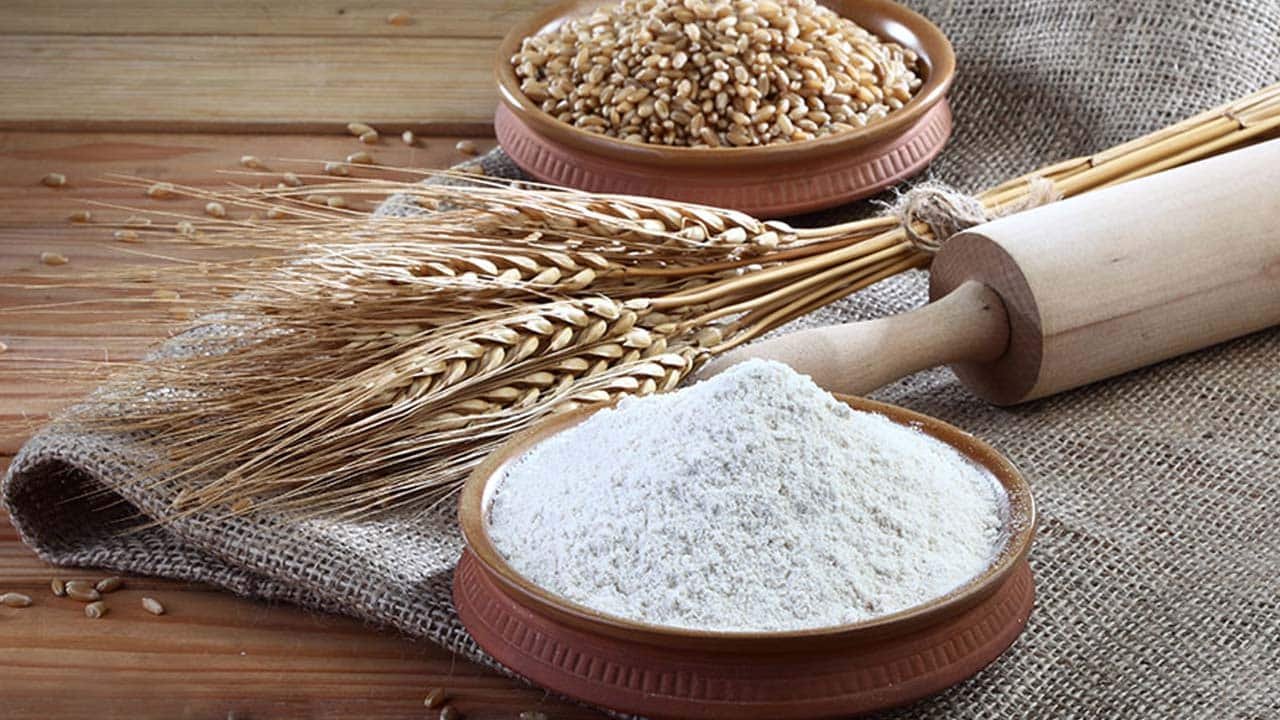
  • Price of 10kg flour bag reaches nearly Rs1,500 

    Price of 10kg flour bag reaches nearly Rs1,500 

    The price of ‘chakki’ flour has recently experienced an increase of Rs10 to Rs12 per kilogramme in Hyderabad, the second-largest city in the province of Sindh.  

    Consequently, the price of a 10-kg sack of flour has risen from Rs1,350 to Rs1,470.  

    In an official statement, ‘chakki’ owners explained that the surge in prices is attributed to the increased cost of wheat. They clarified that the price of a 100-kg sack of wheat has escalated by Rs3,000, elevating it from Rs8,500 to Rs11,500.  

    According to their assertions, the prevailing market rate for a 100-kg sack of wheat is Rs12,000.  

    Earlier this month in Karachi, the retail price of flour was established at Rs127 per kilogramme following successful negotiations between Karachi Commissioner Salim Rajput and the flour mills association.  

    During the discussions, the association agreed to retail the flour at Rs127 and wholesale it at Rs120 per kilogramme in the city.  

    Furthermore, the wholesale market prices were set at Rs130 per kilogramme for fine flour and Rs134 per kilogramme for retail.  

    Meanwhile, there has been a noticeable increase in prices for sugar, flour, and other essential commodities at utility stores nationwide.   

    The reported prices reveal that sugar is priced at Rs155 in utility stores, compared to Rs142.54 in the open market, representing a Rs12.46 disparity.  

    Similarly, a 20-kg bag of flour is priced at Rs2,840 in utility stores, with an open market price of Rs2,706.32, reflecting a Rs133.68 difference. 
  • Gold price in Pakistan surge with global trend, reach Rs216,500 per tola

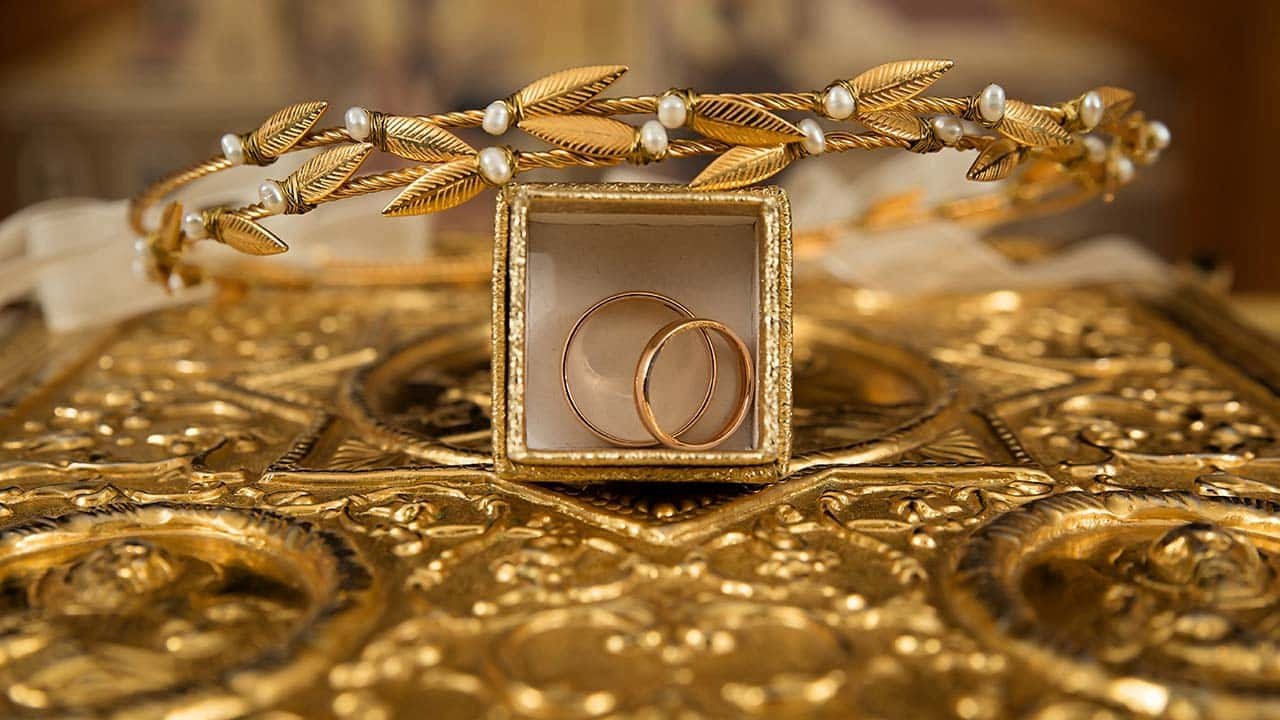
    Gold price in Pakistan surge with global trend, reach Rs216,500 per tola

    On Friday, gold prices in Pakistan experienced a notable uptick, mirroring the global surge in rates. 

    The precious metal attained a value of Rs216,500 per tola, marking a substantial single-day increase of Rs2,200. 

    As reported by the All Pakistan Gems and Jewellers Sarafa Association (APGJSA), the 10-gramme gold reached Rs185,614, reflecting a rise of  Rs1,886. 

    This shift follows a decline of Rs500 in gold prices on Thursday, settling at Rs214,300 per tola. 

    According to APGJSA, the international gold rate exhibited a $20 increment on Friday, reaching $2,006 with a $20 premium. In comparison, the previous day witnessed a closing rate of $1,986. 

    In contrast, silver prices remained steady at Rs2,550 per tola on the same day, exhibiting resilience in the face of fluctuations observed in the gold market. 

  • Global market impact: Gold price in Pakistan drops by Rs2,400 per tola

    Global market impact: Gold price in Pakistan drops by Rs2,400 per tola

    On Thursday, gold prices in Pakistan experienced a decline, mirroring the global market trend.

    The value of the yellow metal reached Rs211,800 per tola, marking a decrease of Rs2,400. 

    The 10-gram gold was traded at Rs181,584, reflecting a Rs2,058 drop, as reported by the All Pakistan Gems and Jewellers Sarafa Association (APGJSA). 

    In the preceding session, gold prices had risen by Rs200, settling at Rs214,200 per tola.

    The international gold rate, accompanied by a $20 premium, was established at $1,968 on Thursday, indicating a $20 reduction in the global market, according to APGJSA. 

    In the midst of these changes, silver rates remained steady at Rs2,580 per tola in Pakistan.

  • Pakistan Stock Exchange crosses 47,000-mark after five weeks

    Pakistan Stock Exchange crosses 47,000-mark after five weeks

    The Pakistan Stock Exchange (PSX) enjoyed a favourable trading session on Wednesday, with its key KSE-100 Index surging above the 47,000 level for the first time in five weeks. This uptrend was primarily driven by the robust performance of the banking sector.

    Throughout the trading session, the KSE-100 Index remained firmly in positive territory, ultimately settling at 47,079.83. This represented a notable gain of 323.03 points, or 0.69 per cent. The last instance the benchmark index closed above the 47,000 mark was on August 28.

    In a post-market report, Ismail Securities, a prominent brokerage house, attributed the positive momentum in the equity market to increased liquidity, particularly within the banking sector.

    On the preceding day, Tuesday, the KSE-100 Index managed to eke out a 0.28 per cent gain in a session characterised by a relatively narrow trading range.

    Shares of 342 companies were traded, with 172 witnessing an increase, 134 recording a decline, and 36 remaining unchanged.

    Topline Securities, another respected brokerage house, envisions the KSE-100 Index approaching the 50,000 level in a potential “pre-election rally.” They expressed their belief that the Pakistani market could experience an 8–10 per cent surge in the lead-up to the elections, assuming a smooth election process and the approval of the IMF tranche in November, stating this in an earlier note.

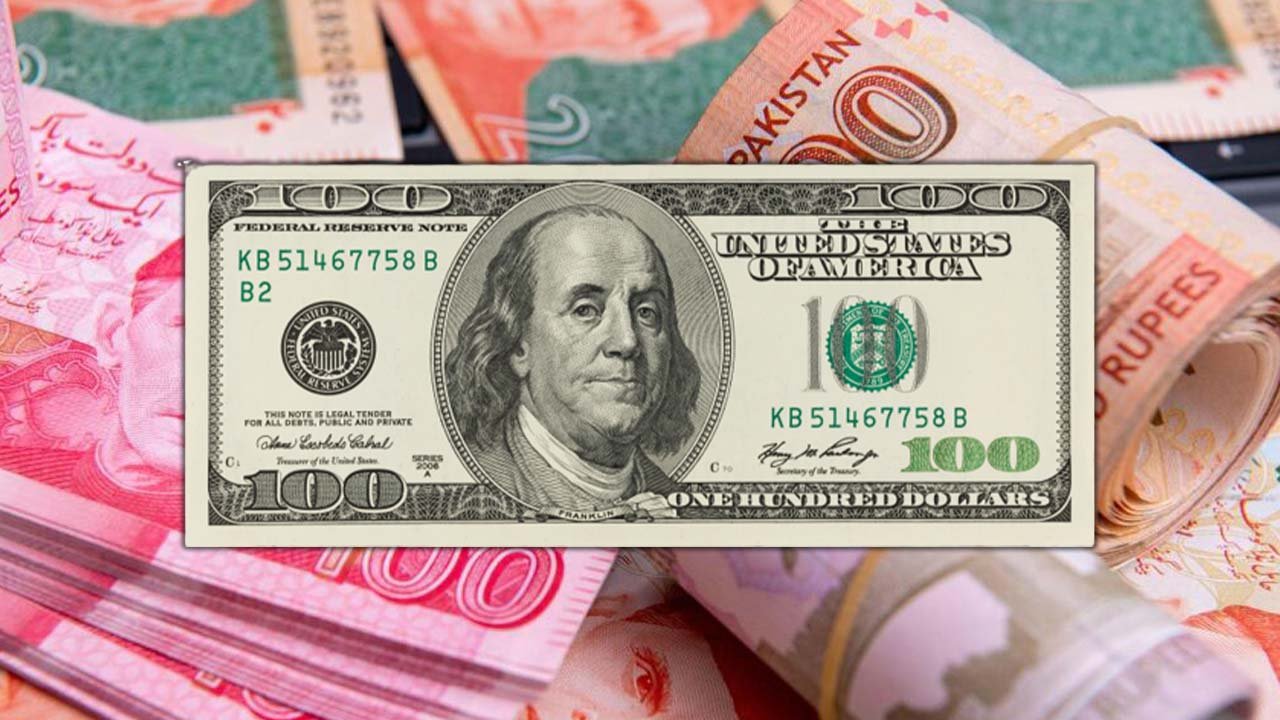
    Simultaneously, the Pakistani rupee continued its strengthening trend against the US dollar, registering a 0.37 per cent gain in the interbank market on Wednesday. According to the State Bank of Pakistan, the rupee settled at 284.68 after an increase of Rs1.04, marking the 20th consecutive appreciation against the greenback.

    Trading activity also saw an uptick, with the all-share index volume rising to 330.2 million shares from Tuesday’s 213.2 million. The value of traded shares also increased, reaching Rs7.3 billion compared to Rs6.1 billion in the previous session.

  • Pakistani rupee claims top spot as best-performing currency worldwide 

    Pakistani rupee claims top spot as best-performing currency worldwide 

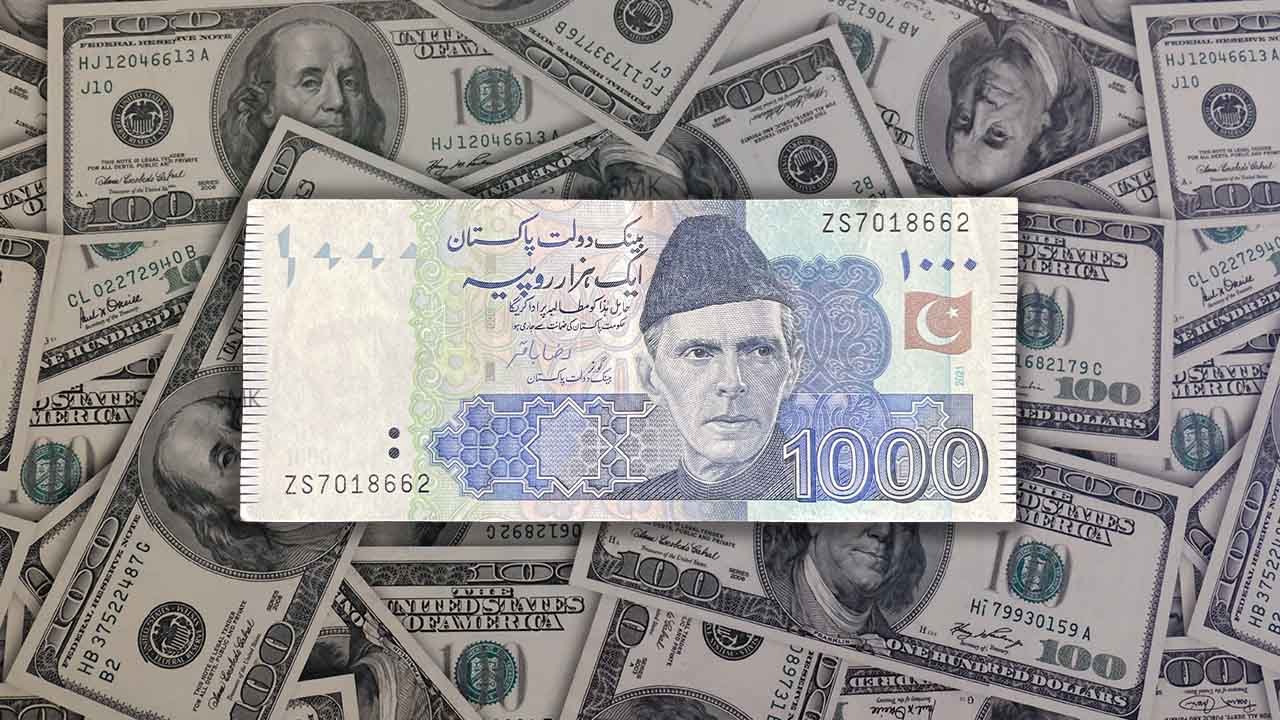
    Amidst a determined crackdown on smuggling and illegal financial activities, the Pakistani rupee has emerged as the world’s top-performing currency for September. During this remarkable month, the rupee’s value surged from Rs305.54 against the US dollar on August 31st to Rs287.74 on September 28th, a notable increase of Rs17.8 or 6.2 per cent.

    Impressively, this positive trend persisted for 17 consecutive trading sessions, resulting in an overall gain of nearly 7 per cent since hitting its lowest point at 307.1 on September 5th. 

    It’s essential to note that the currency market was closed on Friday, September 29th. In terms of global currency performance, the Mauritian rupee secured the second position with a modest appreciation of 0.7 per cent, while the Hong Kong dollar claimed third place, showing a slight improvement of 0.2 per cent throughout September. These figures are based on data from the brokerage house Arif Habib Limited (AHL), reported on a recent Friday. 

    Financial experts attribute this remarkable rupee surge to a series of government measures aimed at curbing dollar smuggling and currency hoarding. Additionally, during the same month, the State Bank of Pakistan (SBP) introduced structural reforms targeting the Exchange Companies (ECs) sector. These reforms included a directive for commercial banks to establish their own ECs as wholly-owned subsidiaries and an increase in the minimum capital requirement for ECs from Rs200 million to Rs500 million. 

    Notably, the Pakistani rupee recorded substantial gains in the inter-bank market, appreciating by 6-9 per cent against three major currencies – the US dollar, UK Pound, and Euro – over the past few weeks. Even in the open market, the rupee showed a significant upswing of 11-13 per cent, effectively eliminating the premium associated with the open-market rate. This is particularly impressive given that the US Dollar index reached a 10-month high. 

    This strengthening of the rupee aligns with the commitment made by Pakistani authorities in July when they entered into a vital $3 billion Stand-By Arrangement (SBA) with the International Monetary Fund (IMF). This agreement was pivotal in averting a potential sovereign default and required the adoption of a market-based exchange rate, which has now proven to be a pivotal factor in the rupee’s impressive resurgence. 

  • Rice exports from Pakistan decline by 17.33% in first two months of current fiscal year 

    Rice exports from Pakistan decline by 17.33% in first two months of current fiscal year 

    During the initial two months of the current fiscal year, a total of 340,237 metric tonnes of rice, with a market value of $233.991 million, were exported. This marked a notable contrast with the previous year’s corresponding period, which recorded exports of 507,144 metric tonnes of rice valued at $283.056 million.  

    According to data provided by the Pakistan Bureau of Statistics, rice exports from July to August 2023 witnessed a 17.33 per cent decline in comparison to the same period in the previous year. 

    However, within this timeframe, Basmati rice exports experienced 8.29 per cent growth. Approximately 79,257 metric tonnes of Basmati rice, valued at $94.733 million, were exported, compared to the previous year’s figures of 84,709 metric tonnes at a cost of $87.480 million. 

    Concurrently, the nation achieved earnings of $39.338 million by exporting approximately 20,539 metric tonnes of fish and fish preparations, showing an improvement from the previous year when 15,922 metric tonnes of these products were exported, amounting to $38.086 million. 

    Read more: WhatsApp to introduce animated avatars for video calls soon 

    It is noteworthy that overall food group exports in the first two months of the current fiscal year registered a modest decrease of 1.65 per cent. The total value of food commodities exported during this period amounted to $711.748 million, contrasting with the previous year’s export value of $723.696 million for the same duration. 

    On the other hand, food group imports into the country during the initial two months of the current fiscal year witnessed a substantial decline of 26.91 per cent when compared to the corresponding period of the previous year. From July to August 2023, food imports decreased from $1.783 billion to $1.303 billion. 

  • Pakistani rupee slides to Rs297.13 against US dollar on first day of the week, losing Rs1.35

    Pakistani rupee slides to Rs297.13 against US dollar on first day of the week, losing Rs1.35

    The Pakistani rupee (PKR) continued its decline against the US dollar on the first working day of the week. PKR went down by 0.45 per cent, which is about Rs1.35, and closed the day at Rs297.13 in the interbank market, as reported by the State Bank of Pakistan.

    This shows that over the past five trading sessions, the Pakistani rupee has lost a total of Rs8.64. It’s important to note that on the previous Friday, the rupee had closed at Rs295.78 after losing 0.86 paisas, which is about 0.29 per cent.

    Looking at last week, from Tuesday to Friday, the Pakistani rupee experienced a significant loss of Rs7.29. This indicates a period of notable fluctuation for the rupee in the foreign exchange market.

  • Gold price in Pakistan increases by Rs4,000 to Rs208,000 per tola ahead of Muharram

    Gold price in Pakistan increases by Rs4,000 to Rs208,000 per tola ahead of Muharram

    In anticipation of the upcoming month of Muharram, which signifies the start of the new Islamic year, gold prices in Pakistan experienced significant gains on Thursday.

    Data provided by the All-Pakistan Sarafa Gems and Jewellers Association (APSGJA) reveals that the price of 24-carat gold rose by Rs4,000 per tola and Rs3,429 per 10 grammes, settling at Rs208,000 and Rs178,326, respectively.

    Simultaneously, the international market witnessed a surge in the price of gold, with a $13 increase, reaching $1,959 per ounce. This rise in gold rates can be attributed to prevailing political and economic uncertainties, as well as high inflation in Pakistan. During such periods, individuals often turn to gold as a safe investment and hedge against market volatility.

    As the month of Muharram approaches, there is typically an upswing in the buying and selling of this precious commodity, leading to increased demand. Supporting this trend, APSGJA data reveals that the price of silver rose by Rs50 per tola and Rs42.87 per 10 grammes, settling at Rs2,600 and Rs2,229.08, respectively. Notably, the previous day witnessed a decline in the bullion price by Rs500 per tola and Rs429 per 10 grammes.

    Furthermore, the local currency demonstrated minimal gains of 0.37 per cent against the US dollar in the interbank market today, as reported by the State Bank of Pakistan (SBP). The rupee closed at Rs276.46 against the dollar.

  • Fourth consecutive decline: Gold price drops by Rs1,800 to Rs218,700 per tola

    Fourth consecutive decline: Gold price drops by Rs1,800 to Rs218,700 per tola

    In line with the reduction in international rates, the per tola gold price in Pakistan experienced a significant decline of Rs1,800 on Wednesday. This marks the fourth consecutive day of falling prices for the precious metal.

    The All-Pakistan Sarafa Gems and Jewellers Association (APSGJA) released data indicating that the price of 24-carat gold decreased by Rs1,800 per tola and Rs1,543 per 10 grammes, settling at Rs218,700 and Rs187,500, respectively.

    Internationally, the price of gold plummeted by $17, reaching $1,934 per ounce in today’s market. Pakistan’s gold rate has exhibited volatility in recent times, largely due to ongoing political and economic uncertainty, high inflation, and currency depreciation. Amid such fluctuations, individuals often turn to gold as a safe investment and a hedge against market instability.

    While gold prices experienced a notable decline, the price of silver saw only nominal losses. Data shared by the APSGJA revealed that the price of silver fell by Rs50 per tola and Rs42.87 per 10 grammes, settling at Rs2,550 and Rs2,186.21, respectively.

    In other market developments, the local currency made nominal gains against the dollar, increasing by Rs0.24 or 0.08 per cent. The interbank market witnessed the closing exchange rate of Rs286.98 on Tuesday.

    The recent downward trend in gold prices in Pakistan reflects the influence of international market conditions. Despite these fluctuations, gold remains a sought-after investment during times of economic and political uncertainty, providing individuals with a secure and reliable asset.

  • Gold price declines by Rs1,700 to Rs234,500 per tola amidst weakening rupee

    Gold price declines by Rs1,700 to Rs234,500 per tola amidst weakening rupee

    The price of gold in Pakistan continued its downward trend on Monday, having lost a cumulative sum of Rs1,100 per tola throughout the previous week. The All Pakistan Sarafa Gems and Jewellers Association (APSGJA) provided data indicating that the rate of 24-carat gold declined by Rs1,700 per tola and Rs1,457 per 10 grammes, reaching Rs234,500 and Rs201,046 respectively.

    On the international front, the price settled at $1,945 per ounce after a decrease of $1. The safe-haven bullion traded within a narrow range in the global market due to an agreement reached by US Democrats and Republicans to raise the federal debt ceiling, thereby averting a potential US default, which would have been unprecedented.

    Moreover, recent data suggested that the US Federal Reserve would raise interest rates for the 11th consecutive time in June. Consequently, the value of the US dollar surged, negatively impacting the gold price.

    These factors, coupled with ongoing political and economic uncertainty, high inflation, and currency depreciation, contributed to the volatility of the gold rate in Pakistan. As a result, individuals turned to purchasing the precious metal as a safe investment and a hedge.

    In the interbank market, the Pakistani rupee experienced a decrease of Re0.27 or 0.09 per cent against the US dollar on Monday, closing at Rs285.42, according to data from the State Bank of Pakistan.

    Furthermore, data shared by the jewellers’ association revealed a decline in the price of silver, which had remained relatively stable in the previous week. The rate of silver fell by Rs50 per tola and Rs42.87 per 10 grammes, reaching Rs2,850 and Rs2,443.41 respectively.