Tag: markhor

  • U.S. citizen hunts down markhor with license

    U.S. citizen hunts down markhor with license

    Another foreign hunter has hunted down a markhor in Pakistan with a license that preservation experts say helps in increasing the population of the endangered animal.

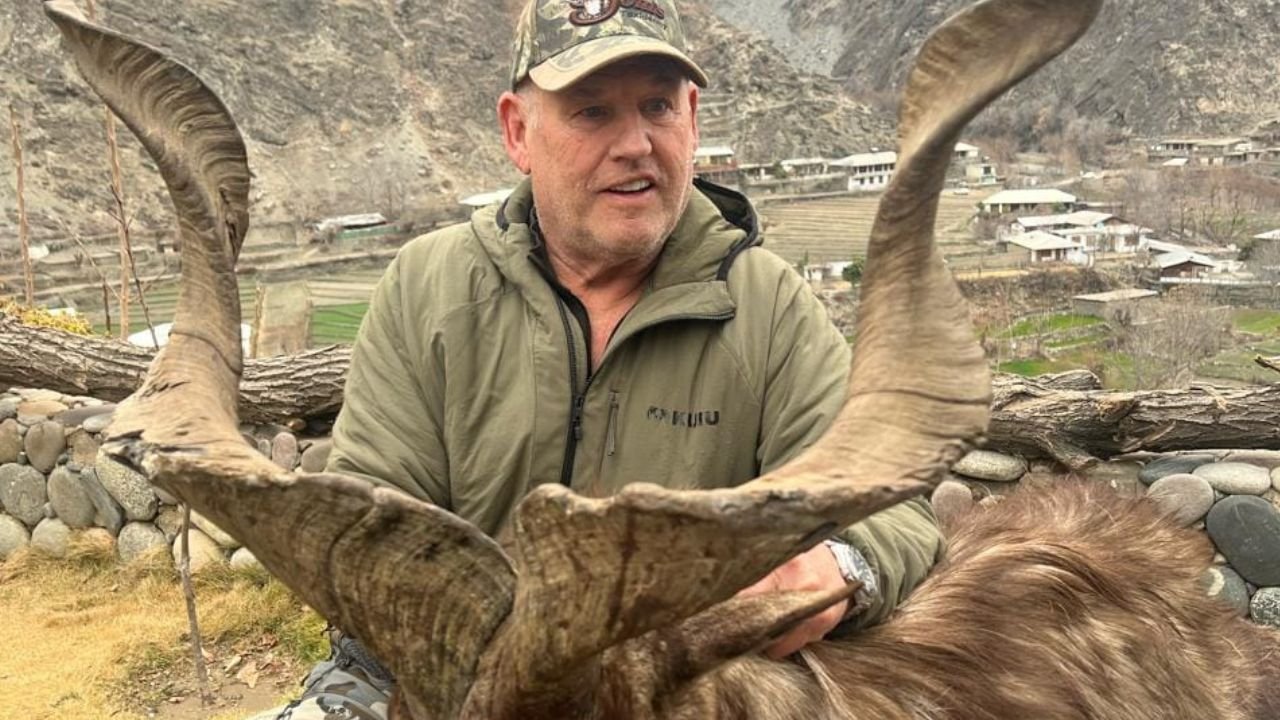
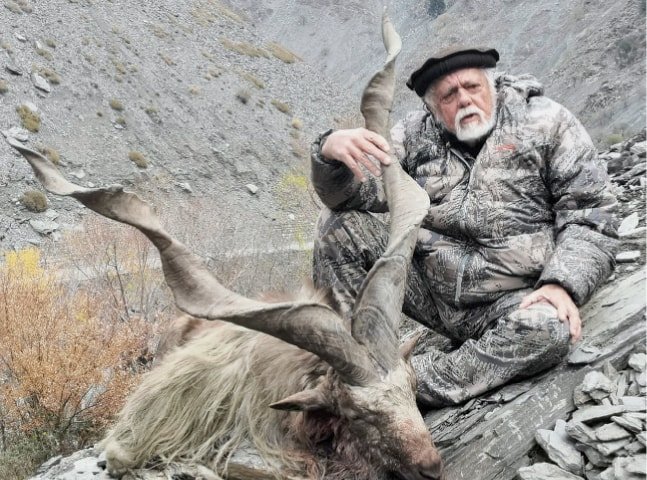
    During the third trophy hunt, an American citizen, Robert Myles Hall, hunted a Kashmiri Markhor at the Gahirat-Golen community game for a trophy permit of $125,000.

    The animal was reportedly about eight years old while the horns of the giant four-legged wild goat was around 38 inches.

    According to Geo news, officials have claimed that the population of Kashmir Markhor has increased during the recent years, owing to community-based conservation.

    Three hunting trophy licences are issued every year for Markhor hunting. 80 per cent of the total price is divided among local communities and 20 per cent is granted to the national exchequer.

    Markhor is kept under the protection of local as well as international law like the Convention on International Trade in Endangered Species (Cites).

    In October last year, 2023, Deron James Millman won a bid of $232,000 — the highest in history.

  • Markhor hunting permit auctioned for $212,000

    Markhor hunting permit auctioned for $212,000

    Khyber Pakhtunkhwa’s departments of Climate Change, Forestry, Environment and Wildlife Department on Monday auctioned four liscences for the hunting of Kashmir Markhor in Chitral and Kohistan districts with the highest ever bid recorded at $212,000. The bids for the second, third and fourth were $185,000, $135,900 and $135,000 respectively.

    A week ago, on October 26, the bid for hunting the prized Astore Markhor was conducted in Gilgit Baltistanunder GB Forest, Park and Wildlife Department, which fetched a record $186,000. This was followed by $181,000 for second, $177,000 for the third and $171,000 for the fourth.

    The national animal of Pakistan, Markhor, found in the Northern Areas of Khyber Pakhtunkhwa and Gilgit Baltistan, is a species at near risk of extinction. Trophy hunting programs are conducted to help the local communities preserve the species and it’s habitat.

    80 per cent of the proceeds go to the development of local communities, their education and healthcare while the remaining is deposited into government’s treasury.

    However, Wildlife and Climate experts are extremely critical of these trophies for they believe that this is worsening the already dreadful condition of rare species. Even though the Hunting Guidelines specify that only old Markhors are to be hunted to make room for younger ones to procreate, violations of these rules are often observed in the form of killing of young species and the use of inappropriate weaponry.

  • VIDEO: Man in Chitral jumps into river to save baby Markhor from drowning

    VIDEO: Man in Chitral jumps into river to save baby Markhor from drowning

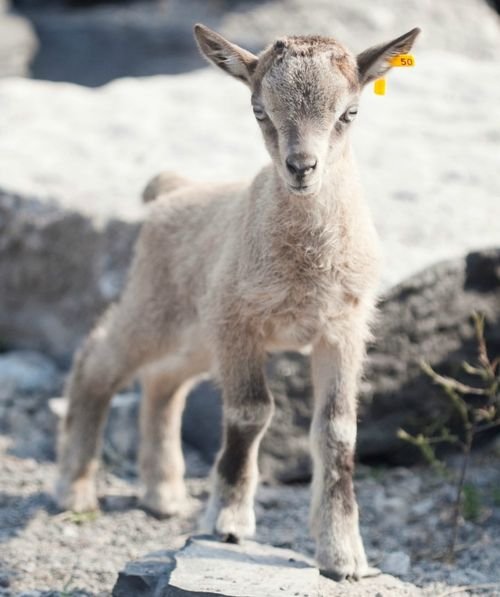
    A young man from Chitral dived into the river to save a baby Markhor from drowning. 

    According to reports, the Markhor was drinking water from the river when it slipped into the deep water. The youth who witnessed the scene, instantly jumped into River Chitral to save it from drowning.

    He successfully rescued the animal from river water. 

    Read more – Injured young markhor released into the wild after treatment

    Chairman Pakistan Red Crescent KP, Lt Gen Muhammad Hamid Khan has appreciated the youth for saving the Markhor. He said the young man put his own life in danger and saved an animal.

    “Red Crescent pays salute to such brave and caring youth,” he added.

  • Injured young markhor released into the wild after treatment

    A three-year-old young Astore Markhor, who fell from a cliff, was released into its habitat three days after it was rescued and after receiving full treatment for the injuries.

    According to the Gilgit-Baltistan wildlife department, the markhor had fallen from a cliff in Jutial Nullah area three days ago. Locals had discovered the markhor and handed it over to the wildlife department, who shifted it to the veterinary hospital in Gilgit for treatment.

    Doctors at the hospital said that the injured markhor received minor injuries in its legs and was suffering from fever. It received treatment for three days after which the doctors felt that it was well enough to be released into the wild.

    However, the wildlife staff will keep an eye on the young goat till it rejoins its herd.

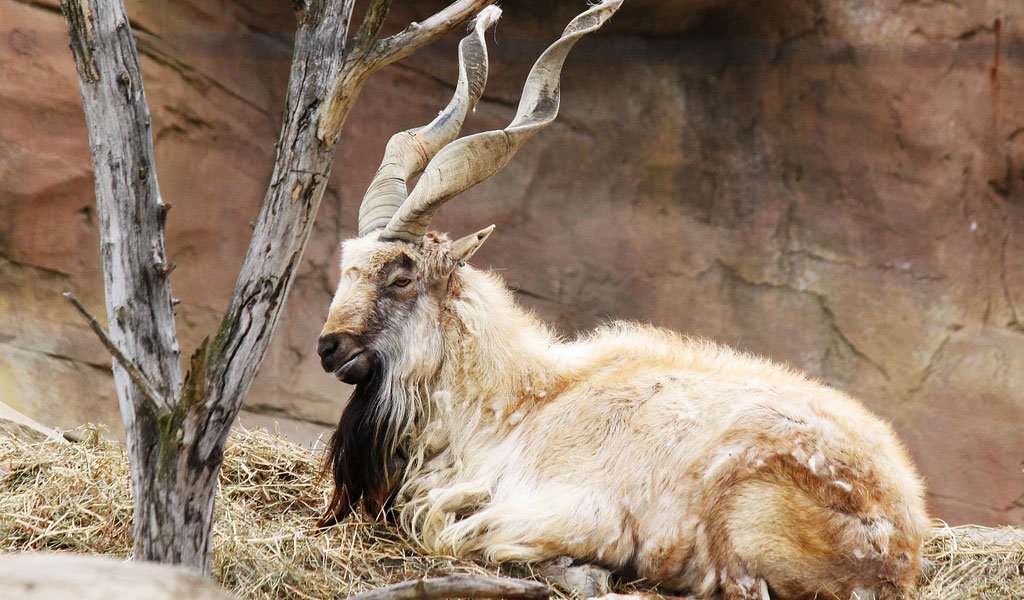
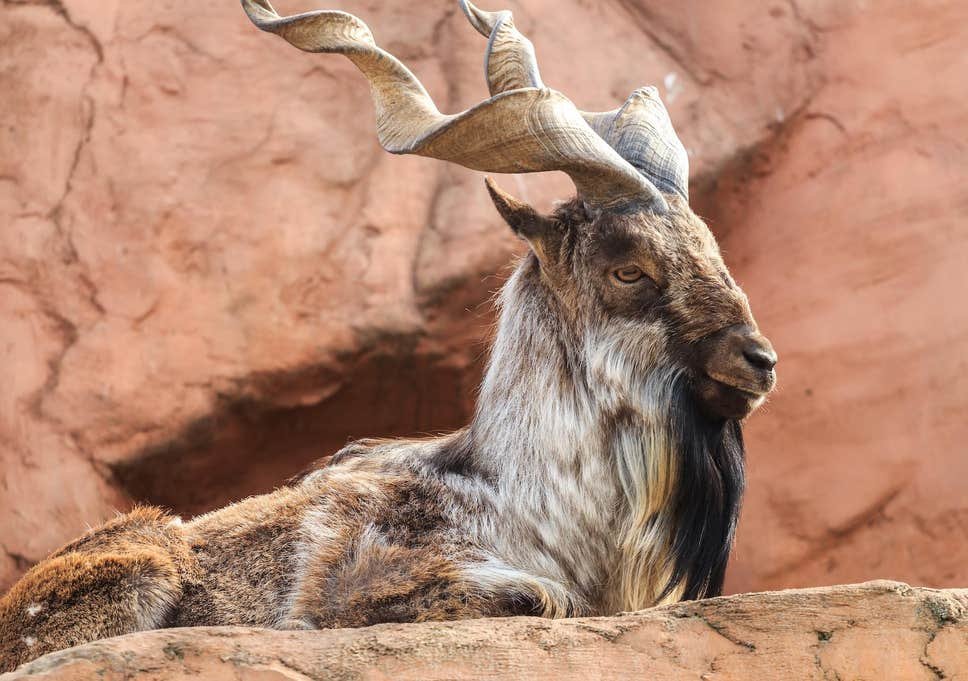
    Pakistan’s national animal, markhor, is a large Capra species native to Central Asia, Karakoram and the Himalayas. According to the International Union for Conservation of Nature’s (IUCN) Red List, it is listed as a near-threatened species since 2015.

    Its horns are a highly sought after trophy. On December 12, an Italian citizen hunted the first Markhor of the season. According to the Gilgit – Baltistan wildlife department, Carlo Pasco successfully hunted a markhor from the conservation area.

    The hunter paid $85,000 as permit fee for hunting the rare wildlife species. The Wildlife department claims that 80% of the amount paid by hunters is given to the local community to invest in themselves and the conversation of these animals.

  • Chitral citizens booked over disrupting US hunter

    Chitral citizens booked over disrupting US hunter

    A case was registered against three people in Chitral for meddling into the hunt of a United States (US) citizen, who was hunting Markhor in the area. 

    As per reports, the district forest
    officer (DFO) in the area said that an American hunter visited the Toshi-II
    game reserve in Chitral to hunt Markhor.

    “He obtained a permit for trophy hunting after paying a fee of US$150,000.”

    As soon as the US citizen set up his
    prey and was ready to shoot it a citizen fired a warning shot that made the
    animal run away.

    “The fire caused the hunter to change
    his location,” DFO said adding that three people were booked in the case over
    the violation.

    On December 12, an Italian citizen hunted the first Markhor of the season. According to the Gilgit – Baltistan wildlife department, Carlo Pasco successfully hunted a markhor from the conservation area.

    The hunter paid $85,000 as permit fee for hunting the rare wildlife species. The Wildlife department claims that 80% of the amount paid by hunters is given to the local community to invest in themselves and the conversation of these animals.

    The markhor is a large Capra species in
    Central Asia, Karakoram and the Himalayas. It is listed as one of the
    endangered species since 2015.

  • Spanish hunter pays $83,500 to kill season’s third markhor in Gilgit

    Spanish hunter pays $83,500 to kill season’s third markhor in Gilgit

    A Spanish hunter in Gilgit has killed the third markhor of the season after paying a whopping $83,500 as the permit fee, ARY reported.

    According to Gilgit-Baltistan (GB) Wildlife Department, Carlo Pasco successfully hunted a flared-horned markhor in the conservation area.

    The hunting fees for different local species were decided in November last year as the Wildlife Department auctioned off the permits for markhor for $83,500. In 2018-19, the hunters paid $110,000 for hunting the animal.

    The Wildlife Department claims that 80 per cent of the amount paid by hunters is given to the local community to invest in themselves and the conversation of these animals. The remaining 20 per cent is deposited to the national exchequer.

    Pakistan’s national animal, markhor, is a large Capra species native to Central Asia, Karakoram and the Himalayas. According to the International Union for Conservation of Nature’s (IUCN) Red List, it is listed as a near-threatened species since 2015.

    Earlier on December 12, an Italian citizen had hunted the first markhor of the season.

  • Kashmir Markhor trophy-hunted in Chitral

    Kashmir Markhor trophy-hunted in Chitral

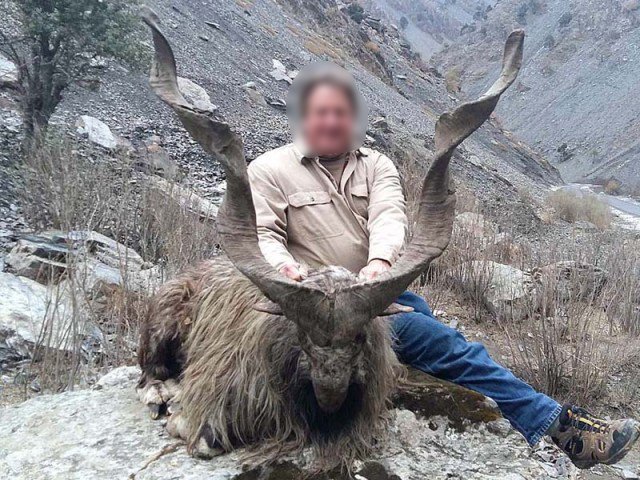
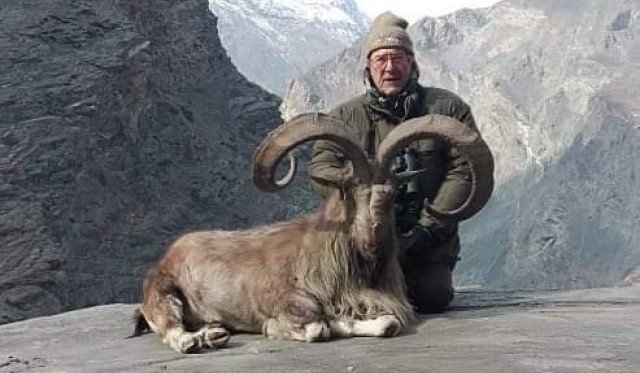
    American hunter Joe Lawrence Walreven hunted a 48-inch long Kashmir Markhor in Toshi Conservancy in Lower Chitral.

    According to reports, the hunt was done after a permit worth $140,000 was obtained from the wildlife department.

    The divisional forest officer of wildlife division, Mohammad Idrees, shared that the 82-year-old hunter faced no difficulty in finding an animal for hunting as he spotted and earmarked a 10-year-old markor within an hour after he disembarked from his vehicle on Garam Chashma Road near Chitral city.

    Joe reportedly “wasted no time in shooting the animal” and achieved his trophy skillfully. He fired a shot at the markhor from a distant range by his Remington rifle. The animal fell down instantly.

    Last week, Italian hunter Carlo Pasco hunted the season’s first Markhor trophy in Skardu town. According to reports, Pasco successfully hunted a flared-horned markhor after paying a permit fee of $85,000.

    Meanwhile, last month, it was reported that the wildlife department of Gilgit Baltistan has auctioned four licenses for hunting the markhor, the official national animal of Pakistan after the Ministry of Climate Change agreed to the licenses, including for trophy hunting of the much in demand flare-horned Astore markhor, a large goat species native to Pakistan.

    Each license was sold for over $80,000, of which 80 percent will go to the villages where the hunt takes place for developing their infrastructure.

  • Season’s first markhor hunted in Skardu

    Season’s first markhor hunted in Skardu

    Italian hunter Carlo Pasco has hunted the season’s first Markhor trophy in Skardu town.

    According to reports, Pasco successfully hunted a flared-horned markhor in Skardu.

    The hunter had paid a permit fee of $85,000 to hunt a markhor in the region.

    Late last month, it was reported that the wildlife department of Gilgit Baltistan has auctioned four licenses for hunting the markhor, the official national animal of Pakistan after the Ministry of Climate Change agreed to the licenses, including for trophy hunting of the much in demand flare-horned Astore markhor, a large goat species native to Pakistan.

    Each license was sold for over $80,000, of which 80 percent will go to the villages where the hunt takes place for developing their infrastructure.

  • $80,000 trophy hunting licenses issued for rare Astore markhor

    $80,000 trophy hunting licenses issued for rare Astore markhor

    The wildlife department of Gilgit Baltistan has auctioned four licenses for hunting the markhor, the official national animal of Pakistan.

    According to a report in Arab News, the Ministry of Climate Change agreed to the licenses, including for trophy hunting of the much in demand flare-horned Astore markhor, a large goat species native to Pakistan. Under the government’s scheme, 12 licenses for markhors are issued every year in Pakistan, four in Gilgit Baltistan.

    Each license was sold for over $80,000, from which 80 percent will go to the villages where the hunt takes place for developing their infrastructure. A total of $500,000 was reportedly raised from the auction.

    The report, quoting president of a wildlife conservation community in Astore, Abdul Sami, further said that the before the licensing was introduced two decades ago, both residents and influential people would just hunt the animals for fun and meat.

    Sami shared that the licensing has benefited rural communities, as the money from permits becomes their development funds.

    “We have built schools, hospitals, water supply systems, and maternity homes from the trophy hunting scheme in the area,” Sami said, disapproving criticism against markhor hunting.

    Earlier this year in February, a photograph of American hunter Bryan Kinsel Harlan posing with an Astore markhor he killed had invited social media outrage. Harlan had reportedly paid a record $110,000 to shoot it on a tourist expedition to Pakistan’s northern Himalayan region of Gilgit-Baltistan.

    Meanwhile chief conservator Zakir Hussain claimed that the markhors would have been extinct had it not been for the licensing program. The population of markhors in the Astore Valley is currently 2,500. According to the wildlife department’s data, the markhor population in the province has increased to over 6,000 from a mere 200 in the 1990s.

    Trophy hunting season runs from November to April. As markhors prefer cold, they can usually be found at the height of 8,000-11,000 feet, however, during winters they descend to 5,000-6,000 feet.

    Markhor hunting usually takes place at dawn or dusk. Hunting of female and young animals below the age of six is strictly forbidden. The age of the markhor is determined by its horns, the older the markhor is, the bigger its horns will be. Markhors live about 15 years on average. The hunter is accompanied by wildlife department officials who ensure that everything is done as per the law.