Tag: marriages

  • ‘You can never have the perfect man,’ says Mathira

    ‘You can never have the perfect man,’ says Mathira

    Television host Mathira, known for her being bold and vocal, recently appeared as a guest on the Rukhsat podcast, where she shared her thoughts on the wrongs in marriages today.

    “First of all, we should know that there’s nothing called an ideal couple. I’ve learned this: you can never have the perfect man, and you can never have the perfect girl, but you can have a person that you feel safe with,” she said.

    “True love is when you feel safe with someone when you can act like your six-year-old, and you can understand that sometimes, even at your worst and even at your best. We also need to understand that a relationship is not 50/50. When your partner is down, you need to do extra work. Sometimes you’ll have to be 70, you’ll have to take it. But then when things go balanced and when you’re down, they need to do the same for you,” she explained.

    “We need to teach our kids one thing: when you get into something with the mental goal of perfection, stop trying to be perfect. You need to be transparent. Whoever you are, he/she accepts you with all your jadedness, with all your flaws, then you can elevate that person and be like, ‘You’ve seen all my flaws; now I will look past your flaws.’

    “So it becomes an exchange. You both will be like, ‘I have this issue; I will try to work on it.’ This is what you call teamwork, balancing each other’s loopholes, like you’re there for each other”, she advised.

    Mahira also pointed out a major misconception in society, saying, “We need to understand that sex is not everything, it’s just a small part of life, it’s not life, people can get used to a toxic relationship, and it’s like heroin. The biggest misconception in Pakistan is that women are more attracted to it.”
  • ‘I don’t remember my first wedding’: Noor Bukhari opens up about past marriages 

    ‘I don’t remember my first wedding’: Noor Bukhari opens up about past marriages 

     
    Former actress and model Noor Bukhari, known for her roles in hits films like ‘Mujhe Chaand Chahiye’ and ‘Ghar Kab Ao Gay’, has shared details of her past marriages and talked about how her life changed.

    Bukhari appeared on Hafiz Ahmed’s podcast in a recent episode where she said, “I don’t remember my first wedding, I don’t even want to remember. All my marriages were love marriages, which was a mistake. Right now, everything seems to be blurred in my mind. Alhamdulillah I’m happy in my current marriage.”
     
    In response to a question about rumor and speculation, Noor elaborated, “Rumors were spread about my marriages. I have only been married twice before, so it doesn’t matter if they say I was married ten times.”
     
    Talking about her family life, Noor firmly said: “My husband Aun Chaudhry is the father of my three children. I have two daughters and a son. Muhammad Ali Raza is one year old, Sheherbano is four, and the eldest daughter is eleven.”
    Noor Bukhari’s journey from a famous actress to a devoted mother and wife marks a new, fulfilling chapter in her life, one she embraces with happiness and gratitude.
    Here is the link to the full episode:

  • Nikkahkhwan to pay fine of Rs. 30,000 if found involved in ceremonies playing music

    Nikkahkhwan to pay fine of Rs. 30,000 if found involved in ceremonies playing music

    A committee of religious scholars in a village called Tabi Murad in Lakki Marwat have imposed a ban on playing any sort of music in engagement and marriage ceremonies, while also barring clerics from offering funeral prayer for those who arrange such programs or else they will have to pay a huge fine of Rs30,000.

    In a strict warning, endorsed by 30 local scholars, it is stated that a hafiz or a cleric should not officiate a Nikah if they are playing music. To make it more stern, they have asked the clerics to not attend funeral rites of those who play music in their ceremonies. The clerics are cautioned to confirm these facts before solemnising marriages.

    Locals have appreciated the decision because they believe that these programs disrupt the peace of the area while the scholars have stressed that this ban is imposed on the repeated requests of the residents of the village.

  • Indonesia bans sex outside marriage

    Indonesia’s parliament has approved a new criminal code that bans sex outside marriage—an act for which people can be jailed.

    Under the law, unmarried couples caught having sex can be jailed for up to a year. They are also banned from live-in relationships, with perpetrators facing jail time of up to six months. Adultery will also be an offense for which people can be jailed.

    The new code will apply to locals as well as foreigners with critics calling the law a “disaster” for human rights.

    However, the code will not come into effect for three years to allow for implementing regulations to be drafted. Currently, Indonesia bans adultery but not premarital sex.

    A 28-year-old Muslim woman said that she is now at risk for living with her partner for the past five years, reports BBC.

    According to international media, researcher Andreas Harsano, said there were millions of couples in Indonesia without marriage certificates, “especially among Indigenous peoples or Muslims in rural areas” who had married in specific religious ceremonies.

    It is pertinent to mention that these changes have come after a rise in religious conservatism in the Muslim-majority country.

    Several protests have also been carried out after the passing of this law. However, it’s expected that the new law will be challenged in court.

  • Pakistani woman creates board game to help girls ‘escape’ an arranged marriage

    Pakistani woman creates board game to help girls ‘escape’ an arranged marriage

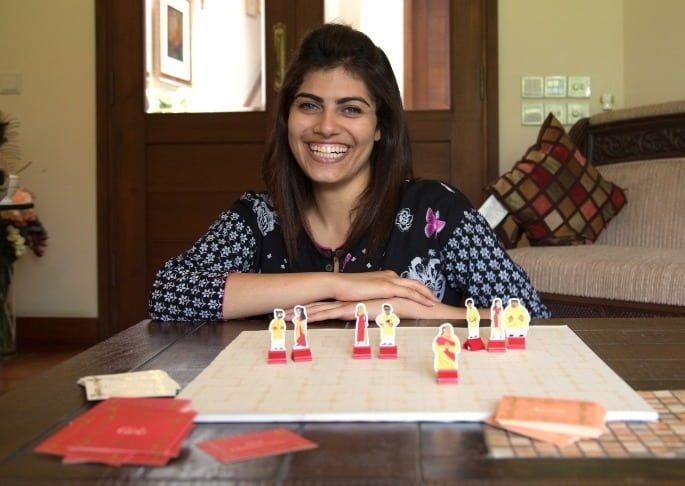
    When Nashra Balagamwala’s Pakistani family started pressuring her into an arranged marriage, she decided to get creative to avoid the myriad of suitors being foisted upon her.

    Nashra Balagamwala

    Like many young women in South Asia, she was targeted by older women, nicknamed ‘Rishta aunties’, who wanted to pair her up with eligible men. Arranged marriages — where a couple are matched by family members — are common in South Asia. Netflix’s recent series Indian Matchmaking shed light on the topic and became an instant hit trending in both Pakistan and India.

    Read more – ‘Indian Matchmaking’: Who is Sima Taparia from Mumbai?

    Speaking of her own experience, Nashra said, “It truly started when I was 18, right as my sister got married … literally, the day of the wedding, all the aunties started coming up to me and saying, ‘You’re next, you’re next.”

    “I’d wear the fake engagement rings, or whenever an auntie was looking I’d pour an extra helping of food on my plate,” she said, as the matchmakers considered women who didn’t watch their figure to be less desirable brides.

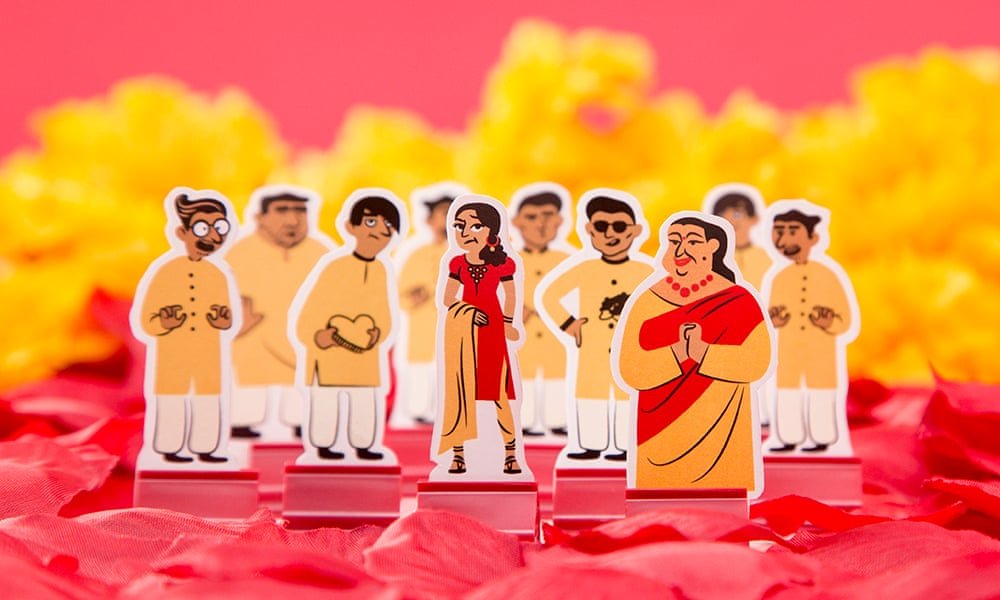
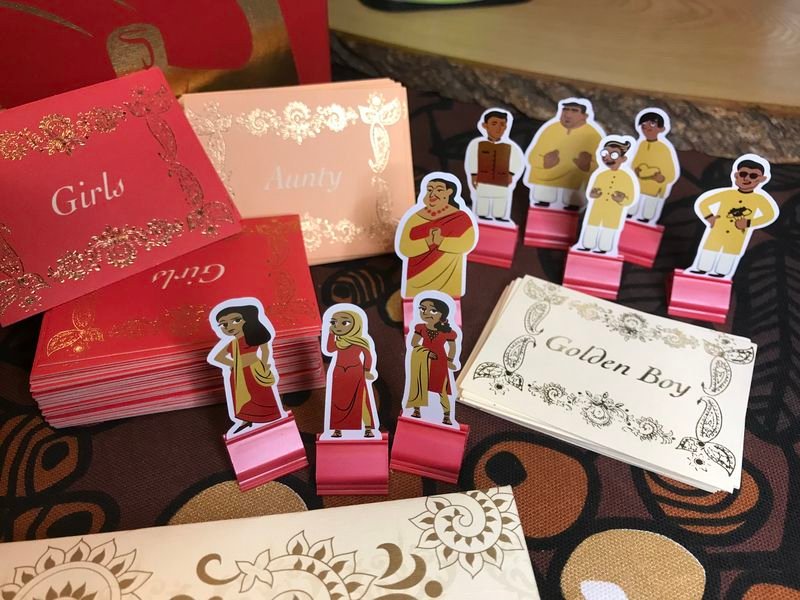
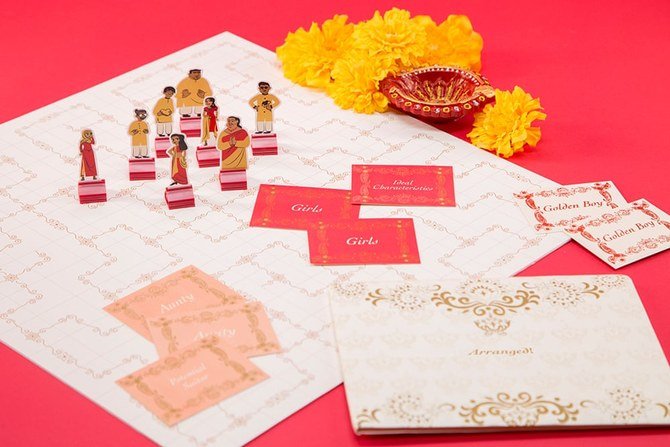
    Those real-life strategies inspired her to create the board game “Arranged!” where players take the role of teenage girls trying to escape an ‘auntie’, which features in Gamemaster, a documentary about aspiring game designers released this month.

    Wanting a different life, Balagamwala convinced her family to allow her to wait until she was 21 — and as she reached the deadline as a student at Rhode Island School of Design in the United States, she came up with the idea for the game.

    “When I was going back for the winter break, my parents had a boy lined up for me to meet,” she said.

    “So to de-stress from that I started creating this list of all the crazy things I used to do, or that my cousins used to do, to try to discourage the Rishta aunties.”

    In “Arranged!,” the girls attempt to deter auntie by drawing cards with commands like getting a tattoo, wearing a sleeveless shirt, talking about pursuing a career, or being seen hugging a male friend.

    But cards like being able to make a perfectly round roti flat bread, or having a sister who is known to be very obedient to her in-laws, move auntie closer to a player.

    When the board game was released in 2017, it drew anger from some acquaintances in Pakistan — but the media attention also made Balagamwala an undesirable wife in the eyes of the aunties and convinced her family to stop pressing her to marry.

    On the contrary, she was contacted by dozens of young women, mostly from India, who said the game helped them to start conversations with their families and opened their eyes to the stress they felt.

    “Now they’re like, ‘You do you, find your own guy,” laughed Balagamwala, who is currently studying for a master’s degree exploring the links between design and social justice at Harvard University.

    “There is still a little bit of that stress in their hearts and minds where they are like, ‘Oh my God, she’s 27 and there’s no boy on the horizon’ so I think that stresses them out,” she added.

  • 1981 to 2017: Imran Khan paid a few hundred rupees tax in some years

    1981 to 2017: Imran Khan paid a few hundred rupees tax in some years

    Prime Minister (PM) Imran Khan paid only a few hundred rupees tax in some years and almost Rs4.7 million in 37 years from 1981 to 2017 — a period during which he was exempted from tax for a couple of years, The News has reported.

    According to reports, the highest ever tax paid by PM Imran was in 2010 when he paid Rs1,883,033, while the second-highest income tax amount paid by the Pakistan Tehreek-e-Insaf (PTI) chief was Rs562,554 that he paid in 2011.

    Babar Sattar, counsel for Justice Qazi Faez Isa on Monday raised questions and highlighted that for some years his client’s wife has paid even more tax than the premier. He mentioned Khan’s 2017’s annual tax return when he paid Rs103,763 and argued before the Supreme Court (SC) that how could such a person raise a finger at others.

    According to an investigation carried out by The News to determine how much tax Imran has paid every year since he was registered as a taxpayer in Pakistan, against the principle set by the Prime Minister’s Office (PMO) in a recent reference against the SC judge, the premier himself never declared the bank accounts or the foreign assets held by his children or wives even during the years corresponding to their married life.

    The President of Pakistan, on recommendations of the PMO, has sent a reference to the Supreme Judicial Council (SJC) against Justice Isa, alleging that he hasn’t declared the assets held by his wife and children in the United Kingdom (UK) and thus he should be sent home.

    In his letter to the president, Justice Isa had maintained that his wife and children were not dependent on him, living in UK and he was not under the obligation of declaring any assets held by them. However, the principle set by the PMO, was different.

    Keeping in the view the principle set by the PMO, scrutiny of tax record of PM Imran shows that he never declared any foreign bank accounts or assets held by his ex-wife Jemima Goldsmith during the years of their marriage. Not only this, the now premier never declared any foreign bank accounts or foreign assets held by his two sons, who are now in their twenties. Imran did the same in cases of his second wife Reham Khan and third wife Bushra Bibi.

    PM Imran married Goldsmith on June 21, 1995. Both separated through a divorce on June 22, 2004. Under the principle defined by the PMO in Justice Isa’s case, the PTI chief was supposed to declare all bank accounts and foreign properties held in Goldsmith’s name in tax years 1994-95 to 2003-04. However, a careful examination of his tax record of the said period revealed that Imran never declared any bank accounts or assets owned by his first wife abroad.

    Not only this, Imran has two sons Sulaiman (born 1996) and Kasim (born 1999) and the PTI chief was also supposed to declare any bank accounts held by them or the assets in their names. However, he never declared them in his tax returns.

    Imran announced his marriage with Reham Khan on January 6, 2015, and divorced her on October 30, 2015. So he was supposed to declare bank accounts and other assets in Reham’s name, locally or abroad, in his annual tax returns for the tax years 2014-15 and 2015-16, but he hasn’t.

    Moreover, he announced his marriage with Bushra Bibi on February 18, 2018. Under the principle defined by his office, he was supposed to declare assets in his third wife’s name in the annual tax returns and Wealth Statement for tax year 2017-18, but only mentioned that as he was recently married, he was not annexing her details.