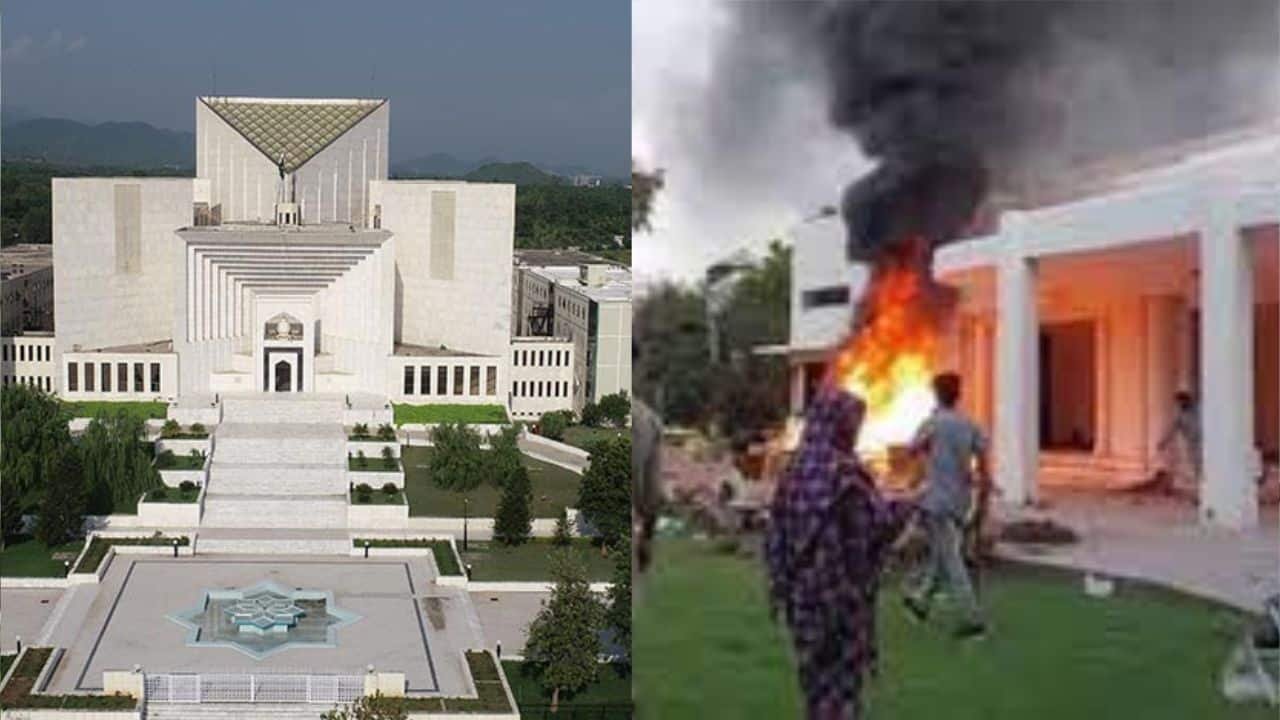
Tag: May 9 riots

  • Shah Mahmood Qureshi transferred to Kot Lakhpat jail

    Shah Mahmood Qureshi transferred to Kot Lakhpat jail

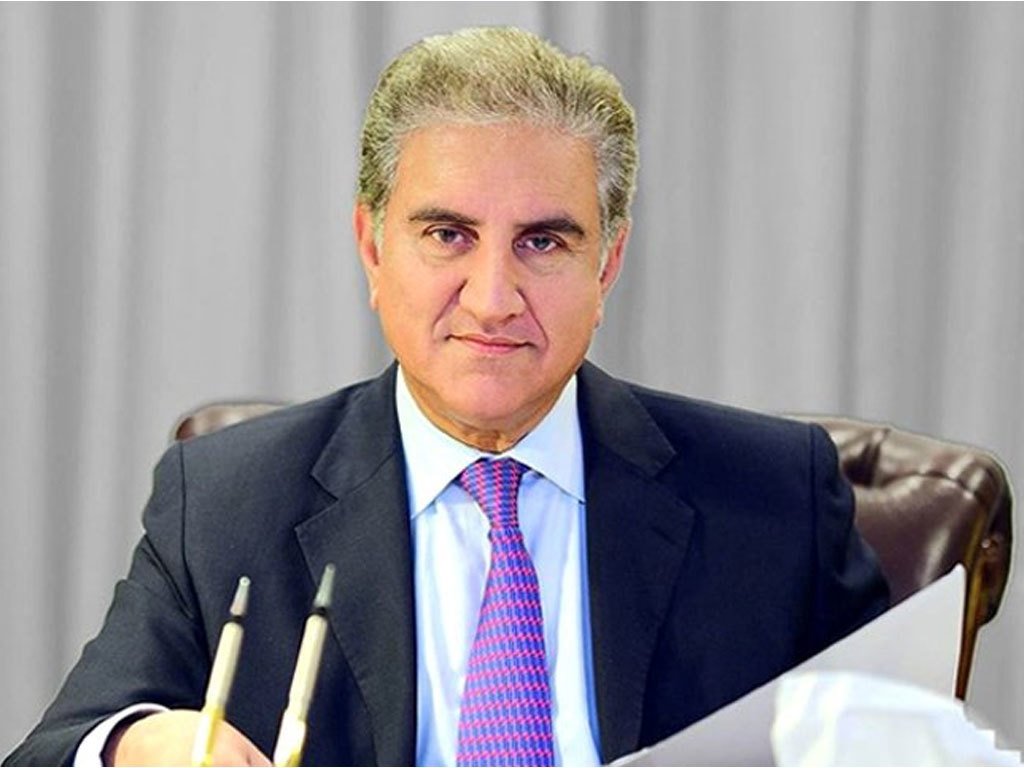
    Pakistan Tehreek-e-Insaf (PTI) vice chairman Shah Mahmood Qureshi was relocated from Adiala Jail in Rawalpindi to Kot Lakhpat Jail in Lahore, as reported by ARY News.

    The former foreign minister will appear before the anti-terrorism court at the Lahore prison.

    Shah Mahmood Qureshi is currently in jail in connection with the May 9 cases, and the police have interrogated the incarcerated former foreign minister.

    Earlier, the court remanded him into judicial custody for his alleged involvement in the May 9 riots.

  • PTI’s Gandapur wants to meet army, ISI chiefs for talks

    PTI’s Gandapur wants to meet army, ISI chiefs for talks

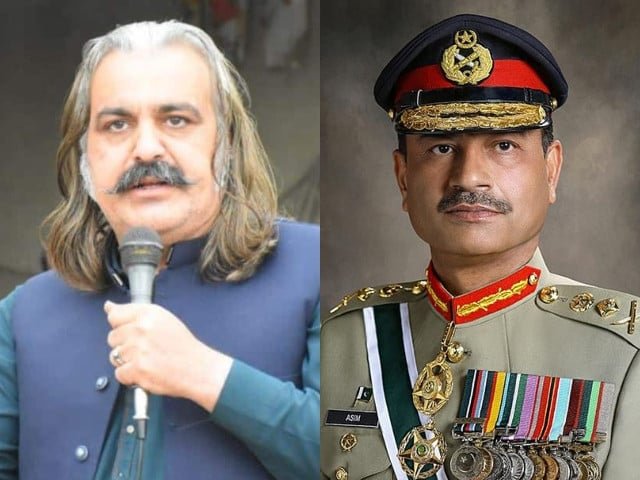
    Following Pakistan Tehreek-e-Insaf (PTI) expressing willingness to indulge in dialogue, Chief Minister Khyber Pakhtunkhwa (KP) Ali Amin Gandapur, after meeting incarcerated former Prime Minister Imran Khan at Adiala jail, said on Monday during his media talk that he wanted to meet Army Chief Gen Asim Munir and Director General Inter-Services Intelligence (ISI) Nadeem Anjum.

    CM Gandapur told journalists that Imran Khan hadn’t ever refused talks with other stakeholders, regretting that no one responded to Khan’s call for dialogues, confirming that the talks with the establishment or political parties have not yet started.

    He also stated that terms and conditions will not be changed for talks, adding that his party demanded recovery of its stolen mandate and a commission to investigate May 9 riots.

    “I want to meet the army chief and the DG ISI,” he said, clarifying that he met top military leadership on multiple occasions but those meetings were not one-on-one.

    The Chief Minister also criticized the newly launched Azm–e–Istehkam operation, confirming that the last apex committee meeting did not discuss military action.

  • Imran Khan gives Arif Alvi important task

    Imran Khan gives Arif Alvi important task

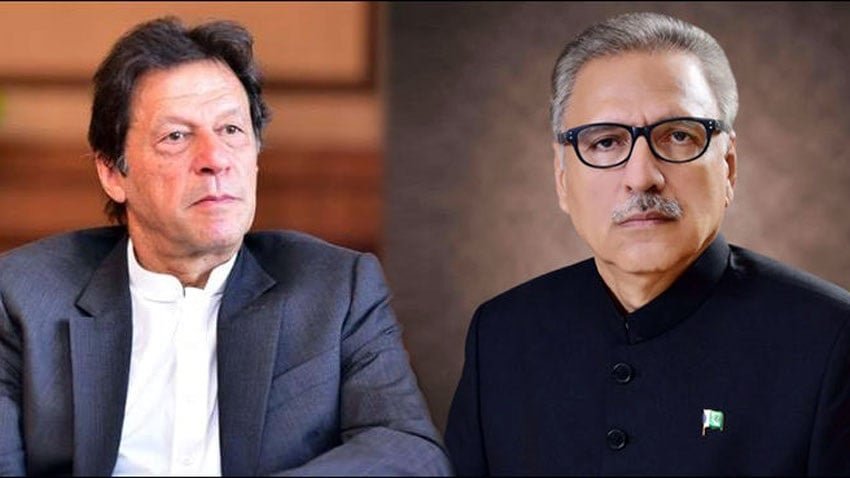
    Pakistan Tehreek-e-Insaf (PTI) founder chairman Imran Khan took a major step in his recent meeting with former president Dr Arif Alvi at Adiala jail by assigning an important responsibility to him.

    PTI secretary general and opposition leader in parliament, Omar Ayub Khan, confirmed to journalists that Alvi is working actively to bridge the gap between PTI and the establishment.

    The decision to assign the responsibility to Dr Arif Alvi came a day after the PTI founder refused to apologise for May 9 riots.

    However, Dr Arif Alvi said, while talking to the media, that Imran Khan is still ready to make sacrifices for the nation and the country. He also stated that some PTI workers were involved in the May 9 incidents, but wiping out the entire party was wrong.

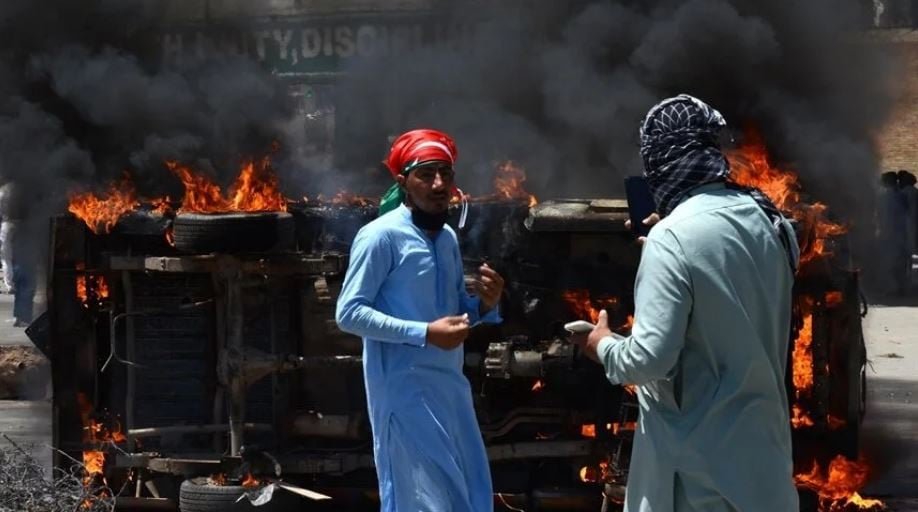
    The May 9 violence was triggered across the country after deposed Prime Minister Khan’s arrest in the £190 million settlement case last year.

  • Army releases 20 PTI workers arrested in May 9 riots

    Army releases 20 PTI workers arrested in May 9 riots

    Chief of Army Staff (COAS) General Asim Munir has approved the release of 20 convicts involved in the May 9 riots by granting them a special relaxation.

    The Chief allowed the convicts to go free before Eid-ul-Fitr, leading to their release on April 6 and 7.

    The list released by the Army showed that among those freed, are eight residents of Rawalpindi, three from Lahore, five from Gujranwala, three from Dir, and one from Mardan.

    None of the convicts had completed their sentences and were released only on the orders of COAS.

    Violent clashes and riots had erupted across the country after the arrest of Pakistan Tehreek-e-Insaf founder Imran Khan.

    On December 23, a Supreme Court bench headed by Justice Amin-ud-Din Khan had allowed the resumption of military trials.

    The released convicts had stayed in custody for various periods up to 10.5 months.

  • SC seeks details of military trials of civilians

    SC seeks details of military trials of civilians

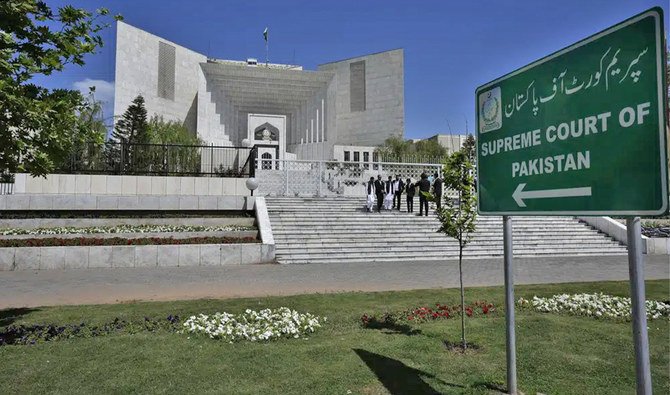
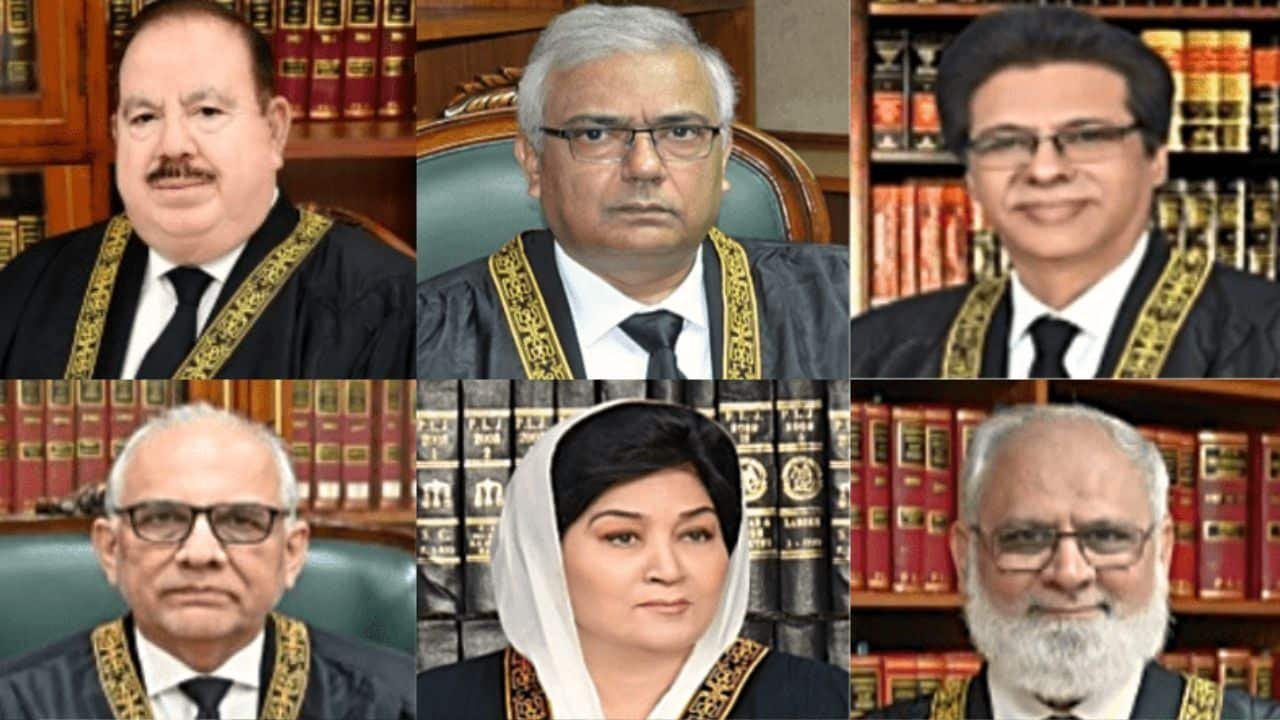
    The Supreme Court (SC) has sought details of civilians being tried in military trials over their alleged role in May 9 riots. A six-member bench — led by Justice Aminuddin Khan and including Justice Muhammad Ali Mazhar, Justice Syed Azhar Hasan Rizvi, Justice Shahid Waheed, Justice Musarrat Hilali and Justice Irfan Saadat Khan — heard a set of intra-court appeals (ICAs) against its Oct 23 unanimous ruling nullifying the military trials of civilians.

    The case references 103 civilians currently in army trials for their alleged involvement in attacks on army installations.
    It is important to note that last year, a five member bench had unanimously declared military trials of civilians as null and void.

    However, on December 13, ruling on an appeal filed by the then-caretaker federal government and provincial governments of Punjab, KPK, Balochistan, in a 5-1 majority verdict, the SC conditionally suspended its previous ruling.

    Recently, former CJP Jawad S. Khawaja, who is one of the petitioners to challenge military trials, had requested for an early hearing, stating that continued presence of civilians in military custody was worrying. His counsel also objected to the size of the bench saying, “It is my request to the court to urge the SC committee to constitute a nine-member bench.”

  • Civilians to be tried in military court; Supreme Court decides

    Civilians to be tried in military court; Supreme Court decides

    The Supreme Court has, by a majority of 5-1, suspended its October 23 order that declared the trials of civilians in military courts null and void regarding the May 9 riots.

    The decision came in response to intra-court appeals (ICAs) filed by the federal and provincial governments, as well as the defense ministry, challenging the earlier verdict.

    A six-member bench of the Supreme Court, headed by Justice Sardar Tariq Masood and comprising Justice Aminuddin Khan, Justice Muhammad Ali Mazhar, Justice Syed Hasan Azhar Rizvi, Justice Musarrat Hilali, and Justice Irfan Saadat Khan heard the set of intra-court appeals.

    Justice Hilali differed with the majority decision.

    On October 23, a five-member apex court bench headed by Justice Ahsan unanimously admitted the pleas and nullified the government’s decision to try civilians in military courts in connection with the May 9 riots which erupted after the arrest of Pakistan Tehreek-e-Insaf (PTI)-then chairman Imran Khan.

    Four judges out of the five declared that Section 2(1)(d) of the Army Act and 59(4) (civil offences) are “ultra vires the Constitution and of no legal effect”.

    “Without prejudice to the generality of the foregoing the trials of civilians and accused persons, being around 103 persons […] shall be tried by criminal courts of competent jurisdiction established under the ordinary and/or special law of the land in relation to such offences of which they may stand accused,” the short order read.

    Following its verdict, the federal and the provincial governments along with the defence ministry filed intra-court appeals (ICAs). However, the caretaker government of Sindh refused to file any plea against the SC order.

    Justice Masood, who faced objections regarding his inclusion in the bench, refused to recuse himself.

    Former Chief Justice Jawwad S Khawaja and others had raised concerns about Justice Masood’s previous expressions on the matter, but the judge maintained his position.

    The Supreme Court’s recent decision to suspend the October 23 verdict means that the trials of 103 civilians will continue, with the final ruling conditional upon the Supreme Court’s subsequent orders.
  • Supreme Court declares trial of civilians in military courts null and void

    Supreme Court declares trial of civilians in military courts null and void

    The Supreme Court (SC) on Monday has declared trials of civilians in military courts null and void.

    A five-member bench of the Supreme Court has announced its decision on applications challenging the military trial of civilians involved in the May 9 riots.

    In the short verdict, the court ordered that 102 individuals detained under the Army Act should face trial in civilian courts. It additionally dictated that any trial of a civilian in a military court is considered invalid.

    The apex court’s bench — headed by Justice Ijaz Ul Ahsan, and comprising of Justice Munib Akhtar, Justice Yahya Afridi, Justice Sayyed Mazahar Ali Akbar Naqvi and Justice Ayesha Malik — heard petitions filed by PTI chief Imran Khan and others on Monday.

    The Attorney General of Pakistan (AGP), Mansoor Usman Awan, completed his arguments and he had focused on jurisdiction of military courts to try civilians under the Army Act.

    The day before, the federal government had notified the top court that military trials of civilians had already begun.