Tag: media freedom

  • EU report highlights rights issues and corruption in Pakistan

    On Tuesday, the European Commission and the European External Action Service (EEAS) jointly revealed a monitoring report on Pakistan’s Generalised Scheme of Preference, or GSP Plus.

    The report expressed concerns about forced disappearances, torture, and limitations on media freedom in Pakistan, which are seen as violations of international treaties.

    It urged Pakistan to enforce laws protecting economic, social, and political rights and raised reservations about the misuse of anti-corruption rhetoric for political purposes.

    Despite civilian rule since 2008, the report highlighted the military’s disproportionate role in politics and the economy.

    Covering 2020–2022, it focused on the May 9 riots and subsequent trials in military courts, recognising legislative progress but emphasising the need for improved practical implementation.

    Furthermore, the report read that although initial measures have been undertaken to limit the application of the death penalty, additional steps are required to bring them in line with international standards.

    This entails introducing a comprehensive revision of the mercy petition procedure.

    “It has undeniably increased awareness of human rights at the grassroots level, of labour rights within businesses and export supply chains and of the significance of environmental considerations and good governance.

    However, the full potential of the GSP+ benefit can only be realised by diversifying Pakistan’s exports to include more value-added products”, remarked EU Ambassador to Pakistan H.E. Dr Riina Kionka about the report.

    Pakistan attained GSP Plus status in January 2014, following the ratification of 27 international conventions and a commitment to their implementation.

    The GSP Plus incentive provides Pakistan with zero-rated or preferential tariffs on nearly 66 per cent of tariff lines, thereby bolstering the country’s capacity to export to the EU market.
  • PM Khan strongly dislikes Pakistani media: Foreign Policy report

    PM Khan strongly dislikes Pakistani media: Foreign Policy report

    “Pakistan’s government is tightening its control of media with laws and oversight bodies that critics say enhance its power to censor and punish journalists. New laws potentially extend control to social media such as YouTube and Twitter, snuffing out investigative journalism and critical commentary,” says a report published in Foreign Policy (FP) magazine.

    The report says that Prime Minister Imran Khan “has long had deep antipathy for the media and rarely voices support for journalists who are attacked or disappeared for their work”. It adds that Committee to Protect Journalists (CPJ) Asia programme coordinator, Steven Butler, was denied entry to Pakistan in 2019. “Journalists who find outlets abroad to publish their work and provide income are branded foreign agents intent on the destruction of the Pakistani state,” says the FP report.

    “Our society is a democratic society, and people do realise why these journalists are not on air, are not speaking, why their voices are not being heard,” said Asma Shirazi. “These critical voices are a blessing in democracies. But now that they are not there, there is a huge gap. And people know this, they see this, and they know why it is.”

    Self-censorship by journalists is an insidious consequence of the harassment, she said. “But we have been here before. We know how to deal with it—we keep fighting.”

    PECA Ordinance 2022

    In February, the Prevention of Electronic Crimes Amendment (PECA) Ordinance 2022 was promulgated by President Arif Alvi. Talking exclusively to The Current, Information Minister Fawad Chaudhry said, “A person who forwards fake news over WhatsApp can be fined and go to jail under the new law.”

    Civil society, political collectives, journalists and rights activists condemned the new PECA Ordinance.

    Islamabad High Court (IHC) Chief Justice Athar Minallah said that it seems like no one told the premier that there are laws for contempt other than PECA. “It seems like PM Khan was not assisted correctly over PECA Ordinance,” said Justice Minallah, adding that the law is used against critics here.

    PM Khan defends PECA Ordinance

    “The PECA law was made in 2016. We are only amending it,” said PM Khan on Monday. He said that “filth” such as child pornography was being shared on social media. He also accused journalists of taking money and blackmail.

    Joint statement by Amnesty International and Human Rights Watch

    On Monday, Amnesty International and Human Rights Watch (HRW) said in a joint statement that the government’s amendment to its cybercrimes act “is the latest in a concerted campaign to restrict freedom of expression and stifle dissent”.

    “PECA has been used to silence freedom of expression on the pretext of combating ‘fake news,’ cybercrime, and misinformation,” said Nadia Rahman, acting deputy regional director for South Asia at Amnesty International. “This amendment not only violates the Pakistan Constitution, but also puts anyone who questions the government or other state institutions at further risk. It particularly endangers journalists, human rights defenders, and political opponents who run the risk of prosecution for merely doing their jobs.”

    “The Prevention of Electronic Crimes Act neither protects the public from legitimate cybercrime concerns nor respects fundamental human rights,” said Patricia Gossman, Asia associate director at Human Rights Watch. “The new amendments will further embed violations of basic rights with a thin veneer of legality.”

  • President Alvi addresses joint session in NA amid media protest

    President Dr Arif Alvi addressed a joint sitting of parliament on Monday, marking the start of the fourth parliamentary year of the National Assembly amid chaos outside parliament.

    The President of Pakistan congratulated the members of parliament at the start of the new legislative year and expressed hope that democratic values and the “tradition of tolerance” flourish in Pakistan.

    Amid loud protests by the Opposition, President Alvi said: “Despite you making noise, you will have to accept the reality.”

    Dr Alvi briefly discussed the country’s progress and shed light on various topics.

    Electronic Voting Machines (EVMs)

    President Alvi stressed the need to introduce electoral reforms in order to bring transparency to elections in Pakistan.

    Financial Action Task Force (FATF)

    “People paying tax in such large numbers shows complete trust in government policies,” Alvi said, congratulating the government for devising and implementing laws and procedures to address FATF requirements.

    Sexual harassment cases

    Alvi said the government had paid “special attention” to the rights of women.

    “In recent days, incidents of sexual violence against women emerged due to which everyone is sad and I think it is a national responsibility to take steps to curb such incidents,” he said.

    President Alvi added that the government had taken measures to stop such violence and it was also society’s responsibility to play its role. “Making videos while an [harassment] incident is taking place does not suit the Pakistani society, so it will have to protect women so they can wander freely.”

    Corruption

    Because of corruption and wrong priorities, we were not only deprived of progress but also left behind in the world in human development indicators,” Alvi said.

    Health Sector

    He said that “18 million families were benefitting from the health cards so far”.

    “Pakistan is going towards universal health coverage, he added while praising the government’s efforts,” he concluded.

    Kamyab Jawan Programme

    The President noted that the government had set aside Rs260bn through which 12 million families will be given cash income, while Rs100bn had been earmarked for the Kamyab Jawan Programme to give loans to the youth to start businesses.

    Opposition walkout

    During his address, the Opposition kept booing and at last walked out of the session.

    The Opposition also accused the Pakistan Tehreek-e-Insaf (PTI) government and National Assembly (NA) Speaker Asad Qaiser of violating the Constitution by not allowing a debate on the presidential address through­out the third parliamentary year, which ended on August 13.

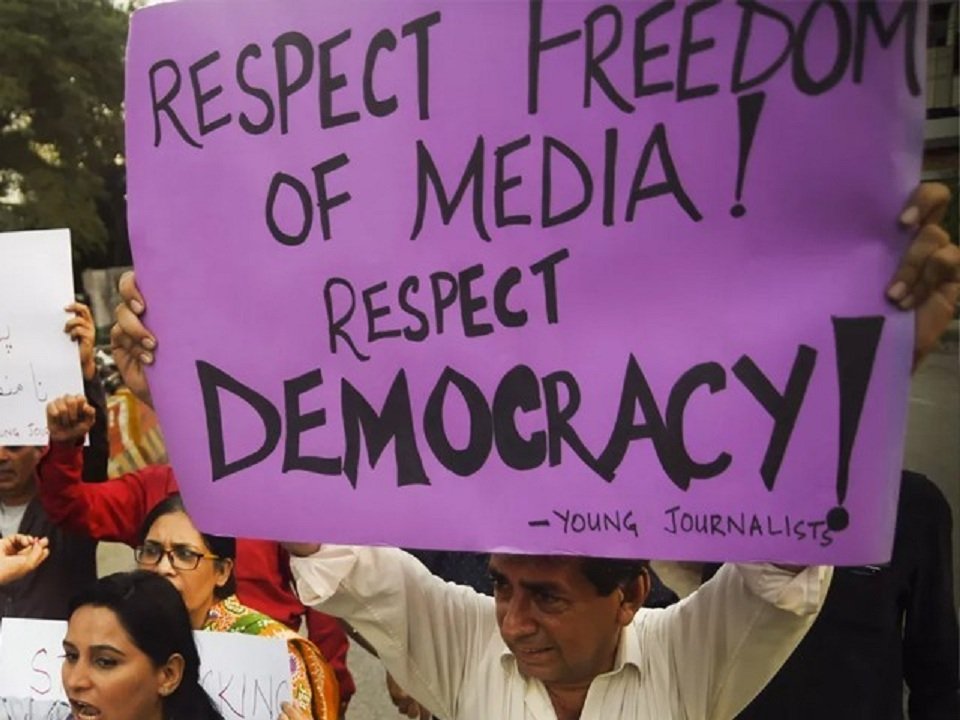
    Politicians including Shehbaz sharif Bilawal Bhutto-Zardari, Shahid Khaqan Abbasi, Sherry Rehman, Mian Raza Rabbani and Ahsan Iqbal joined the protest and showed solidarity with the journalists.

    “Thanks to all friends and well-wishers who were sending messages of solidarity the whole night whole day, we just finished a 24 hours protest camp in front of the parliament against threats to media and new proposed law for legalising censorship in Pakistan,” Hamid Mir tweeted, mentioning the end of the protest.

    President Alvi did not mention the journalists’ protest against the Pakistan Media Development Authority (PMDA).

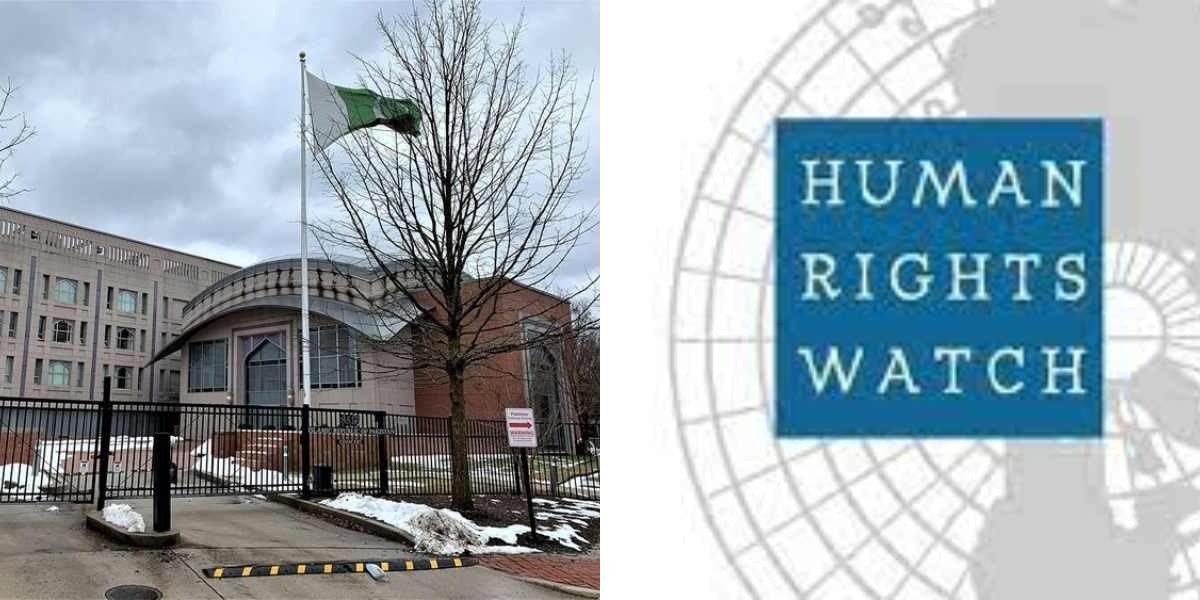
  • “Human Rights Watch’s statement based on gossip”, Pakistan challenges report on media bill

    “Human Rights Watch’s statement based on gossip”, Pakistan challenges report on media bill

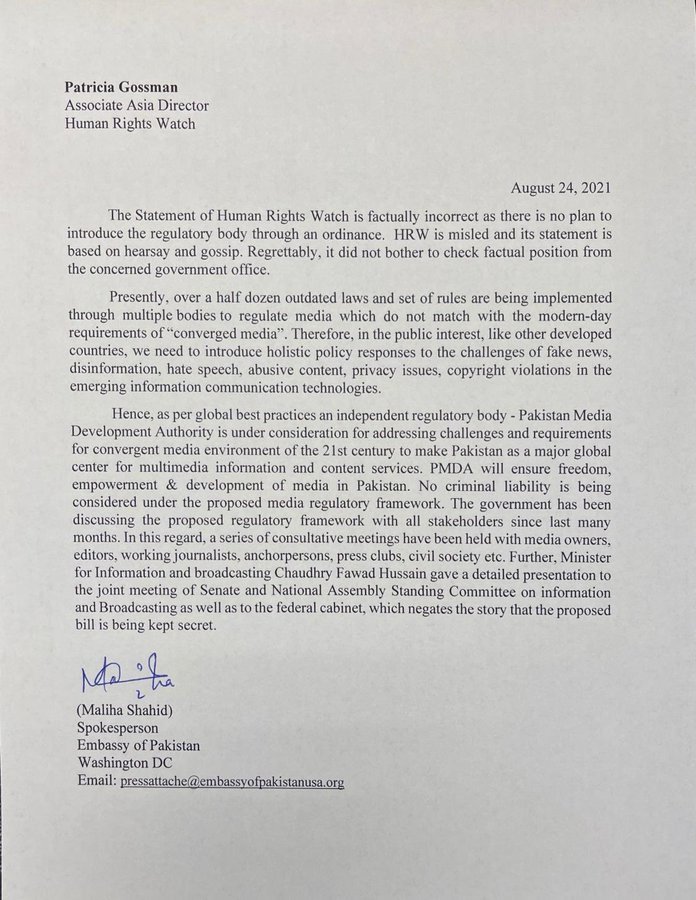
    Pakistan responded to a dispatch by the Human Rights Watch (HRW) Associate Asia Director, Patricia Gossman, on the proposed media bill. Pakistan condemned the claims of the organisation and termed the statement “factually incorrect”.

    “The statement of Human Rights Watch is factually incorrect as there is no plan to introduce the regulatory body through an ordinance,” read the letter from Pakistan’s Embassy in Washington DC.

    The letter further added, “HRW is misled and its statement is based on hearsay and gossip.”

    “In the public interest, like other developed countries, we need to introduce holistic policy responses to the challenges of fake news, disinformation, hate speech, abusive content, privacy issues, copyright violations on the emerging information communication technologies.”

    The letter further states, “Hence, as per global best practices and independent regulatory body – Pakistan Media Development Authority is under consideration for addressing challenges and requirements for convergent media of the 21st century to make Pakistan a major global center for multimedia information and content services.”

    Patricia Gossman took to Twitter and wrote, “Wow. You have identified no inaccuracies in our article and you have failed to provide a draft of the law. What are you hiding?”

    https://twitter.com/pagossman/status/1430426802049196036

    Meanwhile, in its statement, HRW said, “The government claims an ordinance setting up the Pakistan Media Development Authority (PMDA) would replace the ‘fractured’ regulatory environment and fragmented media regulations currently in place. The proposed PMDA would bring all media in Pakistan – print, television, radio, films, and digital media – under one regulator.”

    The proposed law would also increase government control by allowing government officials to be appointed to key positions.

    With journalists under relentless attack for doing their jobs, the Pakistan government needs to stop trying to control reporters and instead start protecting media freedom, added HRW.

  • Fawad Chaudhry, Shireen Mazari condemn attack on journalist

    Federal Minister for Information and Broadcasting Fawad Chaudhry and Minister for Human Rights Shireen Mazari on Wednesday condemned the attack on journalist Asad Ali Toor, by unidentified men.

    As per the official account of the Ministry of Information and Broadcasting, SSP Islamabad has been directed to probe the attack and bring the perpetrators to justice.

    As per Asad Ali Toor’s video statement, three unidentified men broke into his apartment and tortured him. The three assailants can be seen leaving Toor’s apartment in the CCTV footage, reported BBC Urdu. Journalist Shahbaz Zahid also posted the CCTV footage on Twitter.

    Chairman Pakistan People’s Party (PPP) Bilawal Bhutto-Zardari also called for a full and transparent inquiry of the incident.

    Amnesty International has also urged authorities to take urgent steps for the safety of media workers in Pakistan.

    Journalists from around the country have condemned the attack and expressed solidarity with Toor.

    The federal cabinet in April approved the Protection of Journalists and Media Professionals Bill. Last year, journalist Matiullah Jan was abducted in Islamabad but was released after 12 hours while last month, senior journalist Absar Alam survived an assassination attempt in Islamabad. The Freedom Network’s annual state of press freedom report released in April 2021 highlighted a dramatic escalation in the climate of intimidation and harassment of journalists and the media in Pakistan.

  • Israeli air strike destroys the offices of Al Jazeera and AP in Gaza

    An Israeli airstrike destroyed a high-rise building in Gaza City that housed offices of the Associated Press (AP), Al Jazeera and other media outlets on Saturday, Associated Press has reported.

    The 12-storey Al-Jalaa building crashed down to earth as the result of the air strike.

    As per media reports, the building’s owner received a call from the Israeli military warning that it would be hit an hour before the air strike.

    https://twitter.com/LinahAlsaafin/status/1393524934861856769

    The Israeli military did not immediately provide comment on the incident. The building also contained a number of apartments and other offices.

    Israeli bombardment of Gaza, a Palestinian terrority, is the worst the world has seen in years. As the world celebrated Eid, Gaza continued to bleed and Israeli barbarism didn’t end. Palestinians are voicing their fear and concern on social media for the world to know what it looks like to be a Palestinian right now.

  • Politicians, journalists mark #WorldPressFreedomDay

    World Press Freedom Day is observed every year on May 3 and this year’s theme is ‘Information as a Public Good’. To mark the day, politicians, journalists and other key figures have stepped forward to call for freedom of press and media.

    United Nations Secretary-General António Guterres was also among those who marked this day. In his message, Guterres urged all governments to do everything in their power to support a free, independent and diverse media.

    Politicians and journalists from Pakistan including Federal Minister for Information and Broadcasting Fawad Chaudhry and Special Assistant to Chief Minister Punjab on Information and culture Firdous Ashiq Awan also shared messages to mark the day and paid rich tributes to journalists.

  • PTI issues list of ‘good’ and ‘bad’ journalists, deletes tweet after backlash

    PTI issues list of ‘good’ and ‘bad’ journalists, deletes tweet after backlash

    In another attack on press freedom, an official Twitter handle of Pakistan Tehreek-e-Insaf (PTI) Lahore issued a list of ‘bad’ journalists on social media, calling them “anchors/mediamen building narratives for the corrupt”.

    “Let take these name loud and clear,” read the tweet with hashtag ‘HardTalkNotCapitalTalk’.

    A little context of the tweet: the said hashtag started trending on social media site after an interview of Pakistan Muslim League-Nawaz leader Ishaq Dar, wherein he was grilled by Stephen Sackur in his characteristically inquisitorial style.

    The trolls subsequently took to Twitter to celebrate the humiliation meted out to Dar and launched attacks on Pakistani mediapersons, especially Hamid Mir who hosts Capital Talk on Geo, for ostensibly being ‘too lenient to the corrupt’ Sharifs and other opposition politicians.

    So, who are these ‘bad journalist’ accused by the ruling party of promoting ‘corrupt narratives’? According to the list, Hamid Mir, Asma Shirazi, Naseem Zahra, Najam Sethi, Talat Hussain, Mansoor Ali Khan, Gharidah Farooqi, Javed Ch, and Saleem Safi are the ‘bad journalists’.

    Most of the mentioned journalists are critical of government policies and other transgressions.

    ‘GOOD JOURNALISTS’

    But the PTI Lahore account also shared a list of journalists who they thought were “fighting the war of truth and justice” i.e. “good journalists”.

    These journalists are Imran Khan, Maleeha Hashmey, Sabir Shakir, Kashif Abbasi, Ghulam Hussain, Sami Ibrahim, Shifa Yousafzai, Mooed Pirzada, Abdul Qadir, and Waqar Malik.

    The official handle asked its followers to “appreciate brave and bold journalists fighting the war of truth and justice” instead of the ‘bad’ journalists who promote corruption.

    The journalists and media organisations took exception to the tweets by the official handle of the PTI’s Lahore chapter. The Coalition For Women In Journalism condemned the “vicious attacks of PTI trolls against these brave women journalists”.

    The list was also condemned by Mansoor Ali Khan, who said such lists put journalists in the harm’s way. Whereas Amber Rahim Shamsi commented on the list of “good journalists”, saying: “When those in power become comfortable with a journalist, it’s because the journalist isn’t asking uncomfortable questions.”

    Subsequently, a member of PTI social media issued “apologies”, saying it was done by a “regional account”.

    According to Human Rights Watch, “In Pakistan, arbitrary arrest, detention, and baseless criminal prosecutions are used as instruments of press censorship” among other things.

    In Aug this year, women journalists released a joint statement on attacks on women in media in Pakistan, which said that vicious attacks through social media were being directed at women journalists and commentators in Pakistan, making it incredibly difficult for them to carry out their professional duties.

    In the following month, daughter of late poet Fahmida Riaz, in protest against the alleged abduction and torture of journalists and writers by the state, declined the presidential award that the government had announced for her late mother.

  • Cable operators directed to shut down Geo TV

    Cable operators directed to shut down Geo TV

    Soon after Dr Firdous Ashiq Awan’s press conference on the arrest of Jang/Geo Group owner Mir Shakilur Rehman, cable operators started receiving directions to shut down Geo TV’s broadcast or shift the channel to last numbers, the private media outlet has reported.

    The channel was shifted to last numbers in various cities and its broadcast was also disrupted after Dr Firdous’ presser. Geo’s News Director Rana Jawad said that the directives to cable operators had come from the Pakistan Electronic Media Regulatory Authority (PEMRA). 

    “Cable operators are being asked to change Geo’s position [on TV channel numbers]. Shifting the channel to the last numbers means shutting down its broadcast,” he said.

    Jawad said these instructions were also given to the main cable operator in Islamabad and that no legal basis was provided for the action. He said that PEMRA was threatening to take legal actions against cable operators who did not comply with the instructions. 

    He said that Geo tried to contact PEMRA chairman for clarification on the matter but he could not be reached. Jawad added that a cable operator in Islamabad had shifted Geo from number 7 to 71 and that cable operators in other cities were following suit. 

    “This is being done at a time when the editor-in-chief of the Jang/Geo Group has been arrested by NAB,” he said. “This [censorship] is a manifestation of the conspiracy to shut down, silence and end media,” he added.